I. Scene Positioning and Key Priorities for Different Procurement Stakeholders
Emergency relief sleeping bags are fundamental protective supplies for post-disaster temporary shelters, emergency evacuation centers, and international aid distribution sites. The essential difference between cross-border aid sleeping bags used in the field and household or camping versions is that they must withstand bulk storage, high-frequency distribution, multi-stage transit, and long-term use across different climate zones.
Standing in different roles, stakeholders reviewing the same batch of bulk procurement of emergency relief sleeping bags focus on quite different priorities.
International NGOs and humanitarian aid organizations care most about delivery timelines, cross-border customs clearance capability, and the ability to meet donor accountability requirements. Government emergency procurement departments prioritize standards compliance, completeness of quality inspection reports, and project regulatory adherence. Foreign trade distributors and system integrators focus more on pricing structure, supply continuity, and breadth of one-stop sourcing options. The selection logic throughout this article is designed to address the shared needs of all these roles, with notes at critical decision points flagging items that are "especially important for NGOs and government departments."
II. Materials and Safety Standards: How Do You Determine Whether a Batch of Sleeping Bags Meets Disaster Relief Grade?
The material evaluation of disaster-grade emergency sleeping bags should center on the core criterion of "suitable for continuous use in humid, crowded, and semi-open environments while remaining easy to sanitize" — not on comfort as the primary measure.
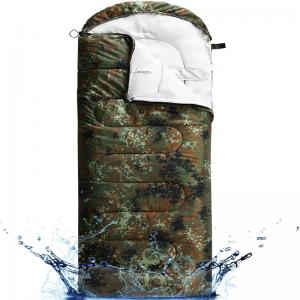
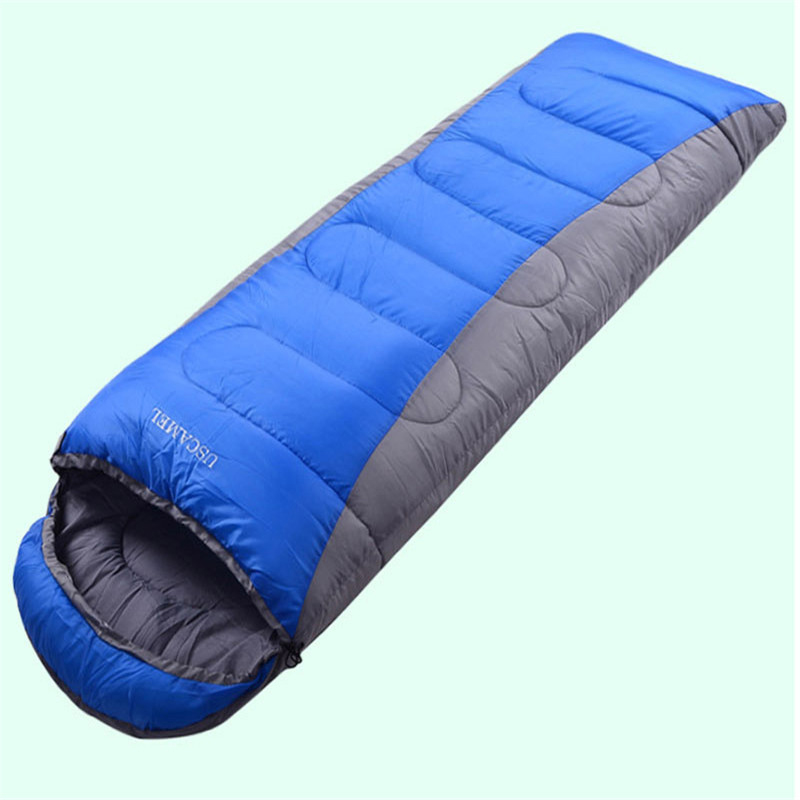
Waterproof polyester shell combined with hollow fiber fill is the most common configuration for large-scale distribution of emergency relief sleeping bags. It offers a balanced cost-performance ratio, adequate moisture resistance for typical shelter scenarios, fill material that is easy to clean and sanitize, and a unit weight that falls in the lightweight-to-moderate warmth range, keeping logistics costs relatively manageable.
High-density nylon shell combined with composite fill offers greater shell abrasion resistance, making it more suitable for scenarios requiring frequent folding, packing, and use on rough surfaces — though the unit weight is higher, which has some impact on container loading capacity and freight costs.
Flame-retardant treated versions are primarily specified for settlement areas with open-flame risks, or for government stockpile projects with explicit fire compliance requirements. The required flame-retardant grade should be written into the technical specification, with corresponding test reports requested accordingly.
On the safety standards side, OEKO-TEX certification (textile harmful substance safety) is a widely applied baseline requirement in cross-border aid projects, covering chemical residue and heavy metal content indicators — particularly critical for children and vulnerable populations. amfori BSCI certification reflects the supplier's social responsibility compliance status, and is explicitly required in supplier pre-qualification processes of some UN agencies and European NGOs.
In enclosed or densely occupied settlement sites, if the material itself emits an irritating odor, or releases harmful volatile compounds when exposed to moisture and heat, this typically triggers issues during the first inspection at the destination. The more prudent approach is to require a declaration of conformity or relevant test report at the sample stage, rather than pursuing the matter after bulk cargo has already arrived at port.
IV. Specification Classification and Selection: How to Choose the Right Configuration for Your Project Scenario?
Basic warmth versions are suitable for temperate to mildly cold environments and are generally prioritized for large-scale standardized distribution. Medium warmth enhanced versions are suitable for cold-season or high-altitude settlement sites, with higher fill weight than basic versions and a wider temperature application range. Child and special-population adapted versions require separate requirements for dimensions, zipper safety, and material feel; it is not advisable to simply substitute adult versions.
A simple two-tier selection approach is recommended: first define the basic version specification and quantity for the majority of adult beneficiaries, then set an enhanced version ratio separately for high-risk groups such as infants and young children, patients with chronic conditions, and personnel in extreme cold positions. Using a 1,000-person settlement camp as a reference baseline, a combination of 70%–80% basic versions and 20%–30% enhanced versions can cover most scenarios. A buffer stock of approximately 10%–15% above the theoretical requirement is advisable to account for transit losses and later population additions.
When there is uncertainty about the actual effectiveness of a particular specification, the more prudent approach is to arrange a small-batch sample trial in the target scenario first, confirm suitability, then proceed to full-volume procurement — avoiding the situation where a large batch arrives and proves unsuitable.
V. Price and Total Cost: Comparing Unit Price Alone Is the Most Common Mistake in Cross-Border Projects
For cross-border NGO aid sleeping bag procurement, unit price is only one component of total cost. The following items are frequently overlooked.
Logistics costs and container utilization rate: Two products with identical unit price quotes but a 20% difference in packed volume can produce a noticeably different landed cost at the destination port.
Hidden costs of failed inspection: Bulk cargo failing inspection at arrival may mean return shipping at substantial reverse freight cost, destruction resulting in budget loss, or project milestones delayed across the board. Clearly specifying inspection standards, non-conforming goods handling, and breach-of-contract liability in the contract clauses before signing is the most direct way to control this risk.
Time costs of customs clearance delays: Without donation certificates, end-use statements, certificates of origin, and other documents prepared in advance, customs clearance may be extended by several weeks, directly affecting the delivery milestones committed to in the project.
The complete calculation of total cost is: unit price multiplied by quantity, plus sea freight, plus customs and destination port charges, plus potential re-inspection rework costs, plus project management costs attributable to delays.
VI. Storage and Transit Protection: End-to-End Protection from Factory to Destination
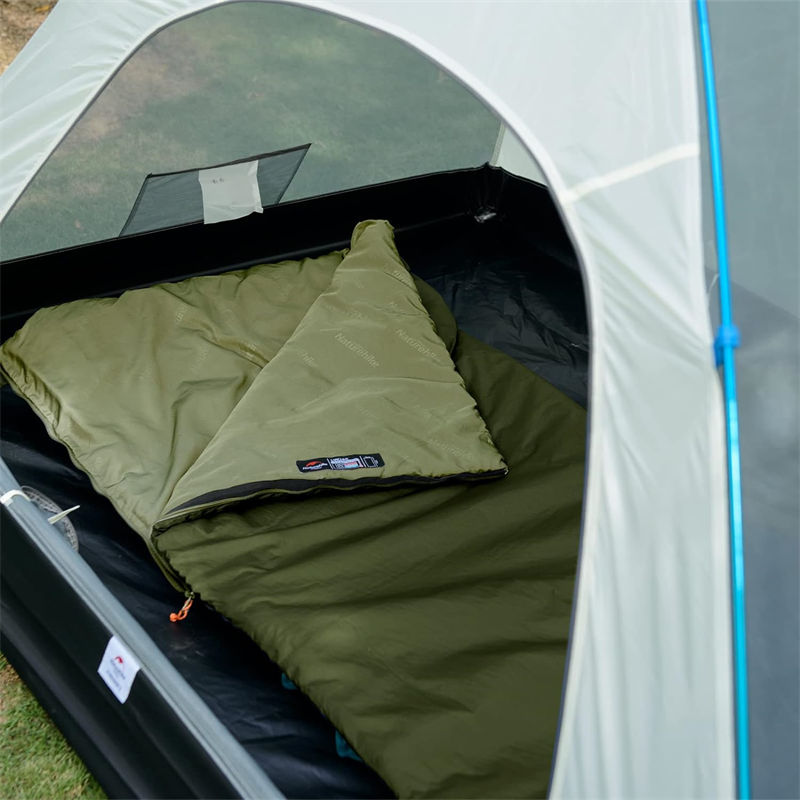
International sea freight aid sleeping bags on trans-equatorial routes or transiting high-temperature ports may experience container temperatures briefly exceeding 50°C, which can have some long-term impact on fill material performance. It is advisable to specify in the contract that each unit be packaged in an individual moisture-proof bag, with moisture-proof lining paper in the outer carton, and clear markings on the box face for moisture protection, sun protection, and prohibition of heavy stacking.
After arrival at the destination warehouse, palletized floor storage is recommended, with adequate ventilation, controlled stacking height, and strict avoidance of mixing with sharp objects. For long-term stockpile projects, a materials inventory ledger indexed by batch number and receipt date should be established, with a periodic sampling inspection mechanism built in to facilitate rotation management and donor audits.
Six-Step Procurement Process (For Standard Cross-Border NGO Projects)
If you are currently drafting an emergency relief sleeping bag tender technical annex or an internal procurement standards draft, you may contact us through this site's contact form with a brief project background description. We can provide de-identified technical clause examples for internal benchmarking purposes, subject to the final terms of the formally signed contract between both parties.
VIII. Common Procurement Pitfalls and Warnings
Pitfall Type 1: Substituting verbal confirmation for a written technical specification
Inquiry stages handled through email with only general verbal confirmation of color, quantity, and approximate dimensions, without a formal specification document. If bulk cargo arrives with fill weight below specification, incorrect label language, or packaging not meeting donor requirements, the cost of rework or claims often exceeds the cost of re-procurement. The prevention approach is to attach a one-page technical specification to the inquiry from the outset, ensuring both parties share a common understanding of requirements before the contract is signed.
Pitfall Type 2: Failing to verify destination country import requirements in advance
Assuming customs documentation requirements based on past project experience without specifically verifying the destination country's aid goods import policy — resulting in non-compliant certificate of origin format, missing duty exemption application materials, and customs clearance extended by several weeks, directly affecting the project's committed delivery milestone. The prevention approach is to confirm the complete documentation checklist with a freight forwarder experienced in that destination country before signing the contract, and to specify the responsibility allocation for document preparation within the contract itself.
Pitfall Type 3: Full-quantity single shipment with no contingency plan
Packing the entire quantity into a single shipment for operational simplicity. If that shipment encounters customs examination or destination port congestion, the entire project supply chain is cut off. For medium-to-large projects — typically 1,000 units or more — a split-shipment strategy is advisable: ship approximately 30%–40% as the initial advance batch, with the main body of goods following after the initial batch has been inspected and confirmed, reducing the systemic risk of full-quantity delays.
IX. Why Do Cross-Border NGOs Tend to Prefer Chinese Supply Chains When Procuring Emergency Relief Sleeping Bags?
In the global emergency supply procurement landscape, Chinese suppliers have structural advantages in several areas that are particularly well-suited to medium-to-large cross-border NGO projects.
Complete industrial chain and one-stop sourcing capability: The raw materials, fabrics, fill materials, and packaging accessories surrounding emergency relief sleeping bags are geographically concentrated, making it straightforward to source sleeping bags alongside emergency thermal blankets, disaster relief folding beds, moisture-proof mats, and other complementary supplies within a single project. For many cross-border project teams, consolidating primary materials and accessories through a single sourcing relationship is far more time-efficient than managing multiple factory negotiations and separate customs clearance processes.
Large-scale production capacity and urgent order response: Most established factories can handle orders ranging from several thousand to tens of thousands of units. In the face of urgent production scheduling triggered by sudden disasters, prioritized production can to some extent shorten standard lead times, subject to specific capacity and current order conditions.
Mature foreign trade service infrastructure: A large number of Chinese export factories are well-versed in FOB, CIF, EXW, and other mainstream trade terms, and can assist in preparing certificates of origin, packing lists, inspection certificates, and a complete set of cross-border customs clearance documents, reducing the risk of port delays.
Alignment with NGO pre-qualification certifications: Some Chinese suppliers already hold OEKO-TEX and amfori BSCI certifications, enabling a faster response to supplier pre-qualification requirements and shortening the qualification review cycle.
A growing number of NGOs and international aid organizations are moving toward incorporating capable Chinese integrated suppliers into framework agreements. The core rationale is reducing communication channels, lowering logistics coordination costs, and improving consistency of standards across the complete supply package.
X. YRF Emergency Relief Supplies — Recommended Solution
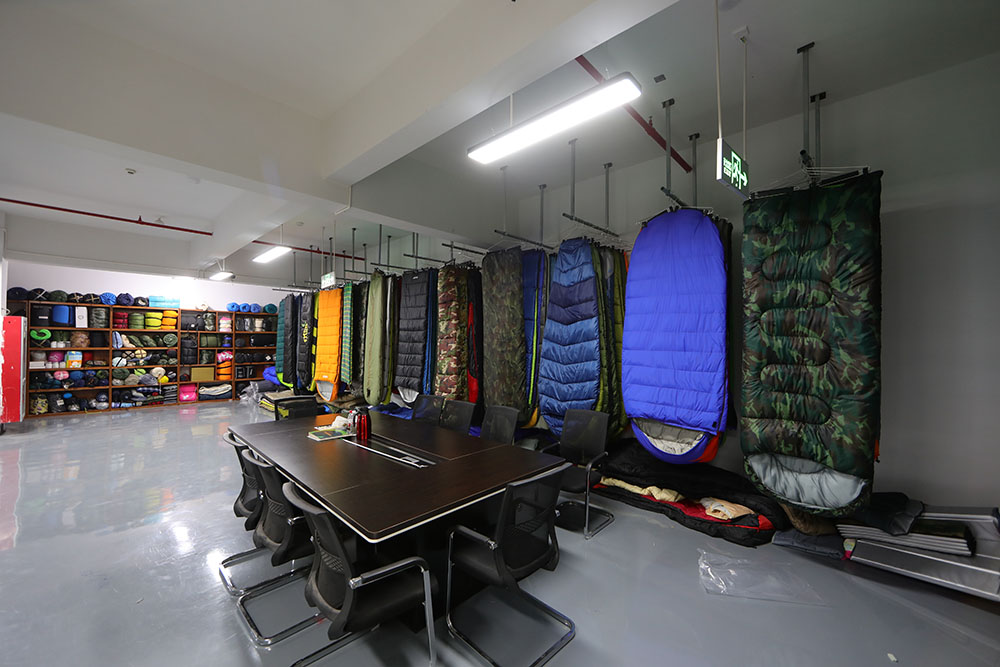
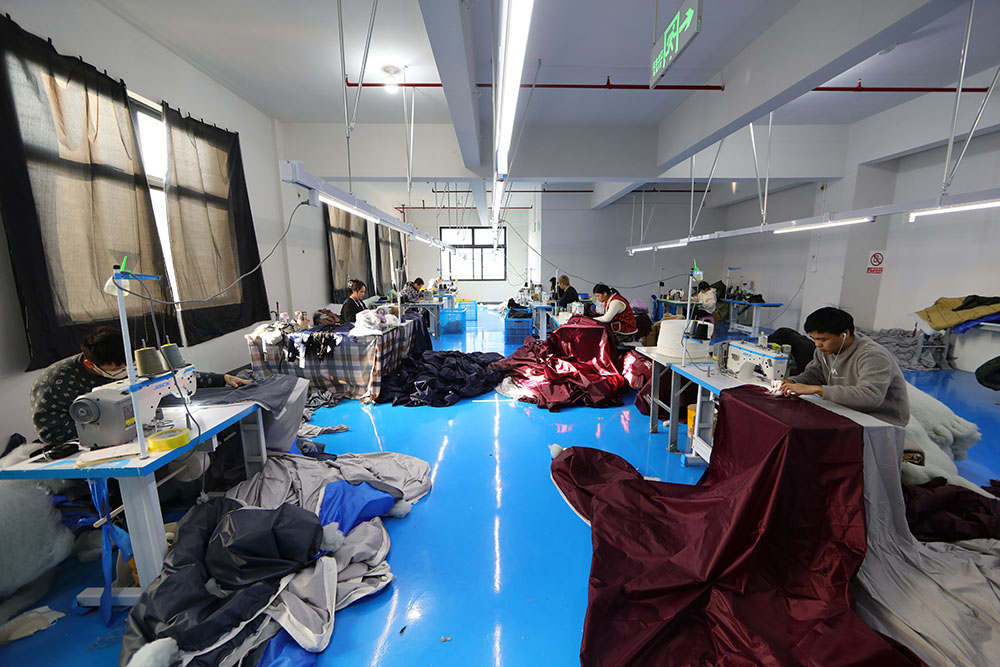
YRF Emergency Relief Supplies is a China-based source factory with emergency relief supplies as its core product line, and has established mature supply experience in NGO international aid sleeping bags and related settlement supplies.
Certification and compliance: YRF can provide product configurations compliant with OEKO-TEX standards for emergency relief sleeping bags, and holds amfori BSCI certification, meeting the supplier pre-qualification requirements of certain UN agencies and European NGOs.
Tender and qualification support: Parameter sheets, test reports, and product specification documents commonly required at the tender stage of international projects can be provided, supporting procurement organizations in referencing them as technical scoring criteria within tender documents.
Foreign trade and customs clearance cooperation: FOB, CIF, and EXW trade terms are supported. Assistance with preparing certificates of origin, inspection certificates, and other customs clearance documents per destination country requirements is available, coordinated with long-term logistics partners for container loading and customs clearance arrangements.
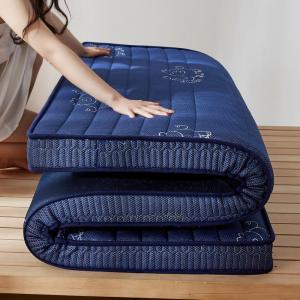
One-stop sourcing capability: In addition to emergency relief sleeping bags, YRF can simultaneously supply emergency thermal blankets, disaster relief folding beds, moisture-proof mats, emergency tent accessories, and more — suitable for NGO project teams seeking to complete multi-category bundled procurement through a single supplier.
Split-shipment delivery support: Arrangements can be made for split-shipment delivery per project requirements, supporting the procurement organization's advance batch verification and main goods follow-up plan, reducing the systemic risk of full-quantity single-shipment.
For procurement teams currently preparing cross-border aid projects, YRF is worth including in the candidate supplier shortlist for further evaluation through sample review and qualification document verification. For a structured overview of the major Chinese emergency relief sleeping bag supplier landscape, please refer to Top 10 China Emergency Relief Sleeping Bag Manufacturers | 2026 Authoritative Procurement Recommendations on this site.
XI. Closing Summary and Next-Step Action Recommendations
Procuring emergency relief sleeping bags as a cross-border NGO is less about "buying a batch of goods" and more about managing a complete supply chain from a factory in China to the distribution point at the destination. Getting four things right — clearly articulating the scenario, writing the specification in detail, locking in contract terms, and having a contingency plan for split shipments — eliminates the majority of inspection failures and customs clearance delays that commonly occur in these projects.
Next-Step Action List (Ready to Execute):
(1)Prepare a one-page requirements brief — Confirm destination climate, beneficiary count and population composition, duration of use, and donor identification requirements; use this as the starting point for all subsequent communication
(2)Draft a technical specification — Reference this article's material and specification modules to list material requirements, certification requirements, and packaging language and labeling requirements; attach to the RFQ from the outset
(3)Request samples and qualification documents from 2–3 candidate suppliers — Focus verification on OEKO-TEX and amfori BSCI certification status, tender documentation readiness, and FOB / CIF / EXW trade term support
(4)Confirm the destination country customs clearance document checklist with your freight forwarder — Lock in the required document types and responsibility allocation before the contract is signed
(5)Design split-shipment provisions in the contract — Agree on the advance batch shipment ratio, main goods follow-up milestone, and non-conforming goods handling procedures
To obtain de-identified technical clause examples or a sample arrival inspection checklist, contact YRF Emergency Relief Supplies through this site's contact form with a brief project background description. Examples are provided without reference to any specific client information and are for general reference purposes only — all final terms are subject to the formally signed contract between both parties.
Long-tail keywords: emergency relief sleeping bags、cross-border aid sleeping bags、bulk procurement of emergency relief sleeping bags、disaster-grade emergency sleeping bags、OEKO-TEX certification、amfori BSCI certification、international sea freight aid sleeping bags、split-shipment strategy、supplier qualification review、contract clause design、cross-border customs clearance documents、NGO international aid sleeping bags、emergency relief sleeping bag tender technical annex、emergency thermal blankets、disaster relief folding beds、emergency supply procurement
Авторське право © Custom Disaster - Relief Bedding: Tents, Sleeping Bags, Blankets Всі права захищені
професійна команда для обслуговування !