Категорії
Last updated: November 21, 2026 · High wind emergency kit
A high wind emergency kit protects buildings before the storm and crews after it. Bulk tarps, roof covers, work gloves, work boots and anchoring tools turn a windstorm from a damage event into a managed response, for families, shelters and municipal warehouses.
A well-rounded loadout combines bulk tarps gloves and anchoring tools into one sealed bin per home, school or depot.
This guide covers what to stock, how many tarps per building, and which tools a cleanup crew must carry, so the kit is ready before the wind arrives.
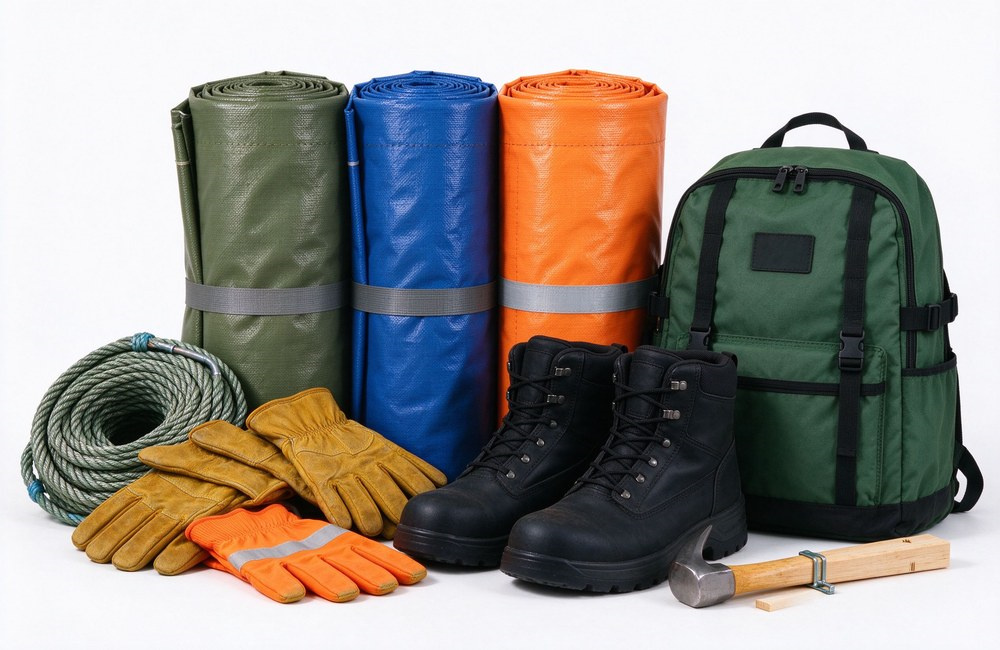
High wind emergency kit family scene with bulk tarps and roof covers staged at a home, heavy duty tarps ready before the storm arrives
 |

|
Windstorms announce themselves hours before they hit, and that lead time is the whole point of a kit. Tarps anchored before the storm keep roofs and windows dry; gloves and boots staged before the wind stops keep cleanup crews working safely.
This page covers the complete bulk kit for families, shelters and municipal teams.
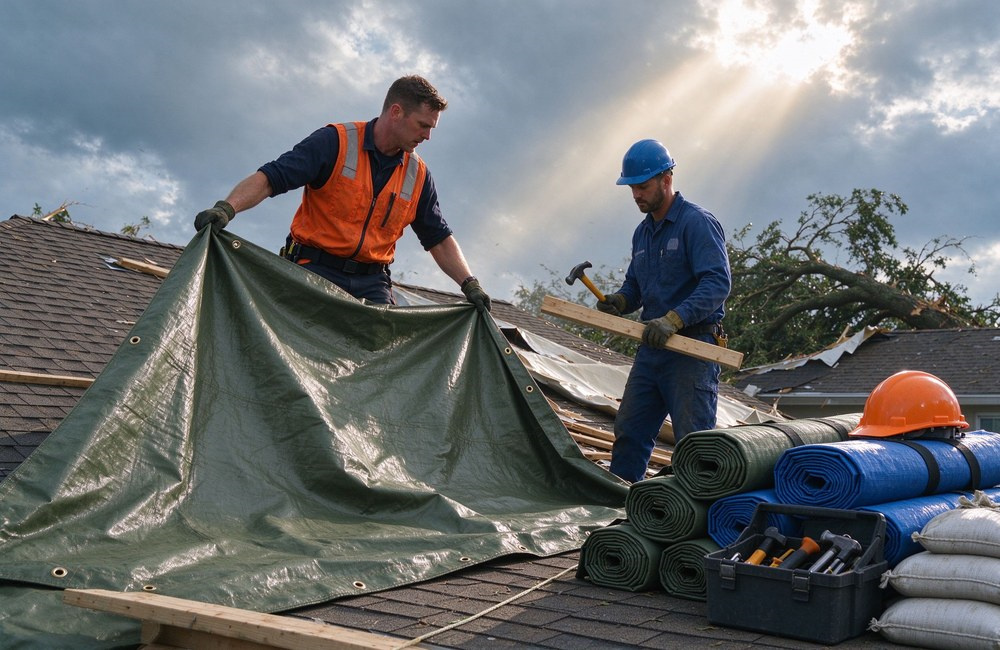
High wind roof tarp rescue at a house, crew securing a heavy duty tarp over wind damaged roof sections with grommets and ropes
The sections follow the real sequence of a windstorm: understanding what the wind actually damages, protecting the building with tarps, protecting the crew with gloves and boots, and anchoring everything against the next gust.
Each section lists quantities, sizing and the tools that make the kit usable.
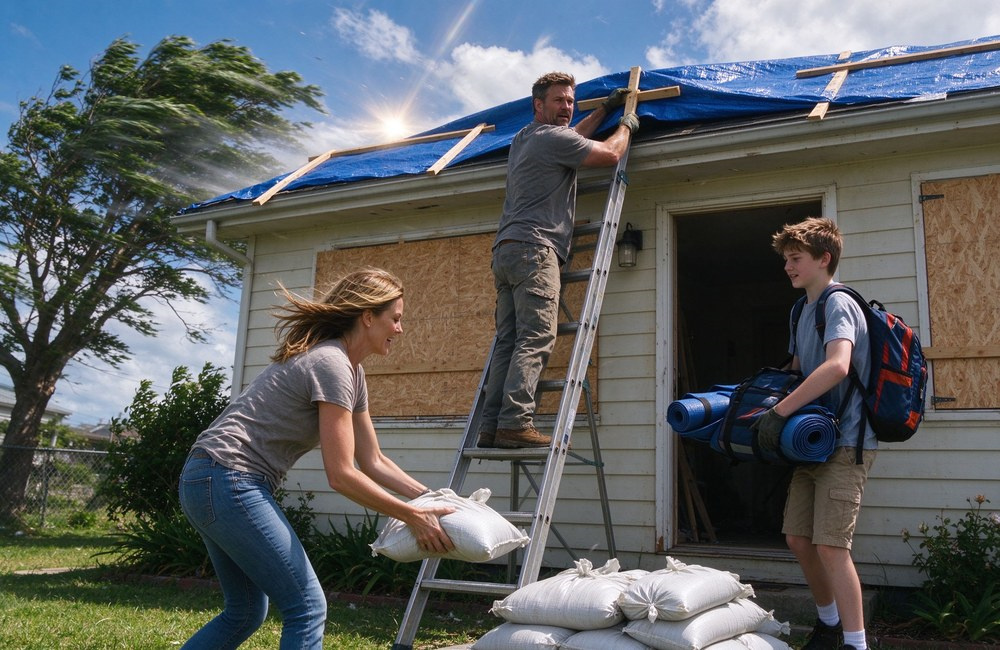
Family securing a home before high wind, bulk tarps tied over windows and doors with anchoring ropes and sandbags ready for the storm
This guide is written for organizations and households together. You will see bulk quantities and per-building ratios, because a municipal warehouse protecting 50 buildings makes different decisions than one family.
Where numbers appear, they match standard windstorm planning and can be adjusted to your site.
By the end, you will know which items matter most, how many tarps a building needs, what the cleanup crew must wear, and which official sources to check before and during the storm.
The final sections give a procurement checklist you can hand to your supplier.
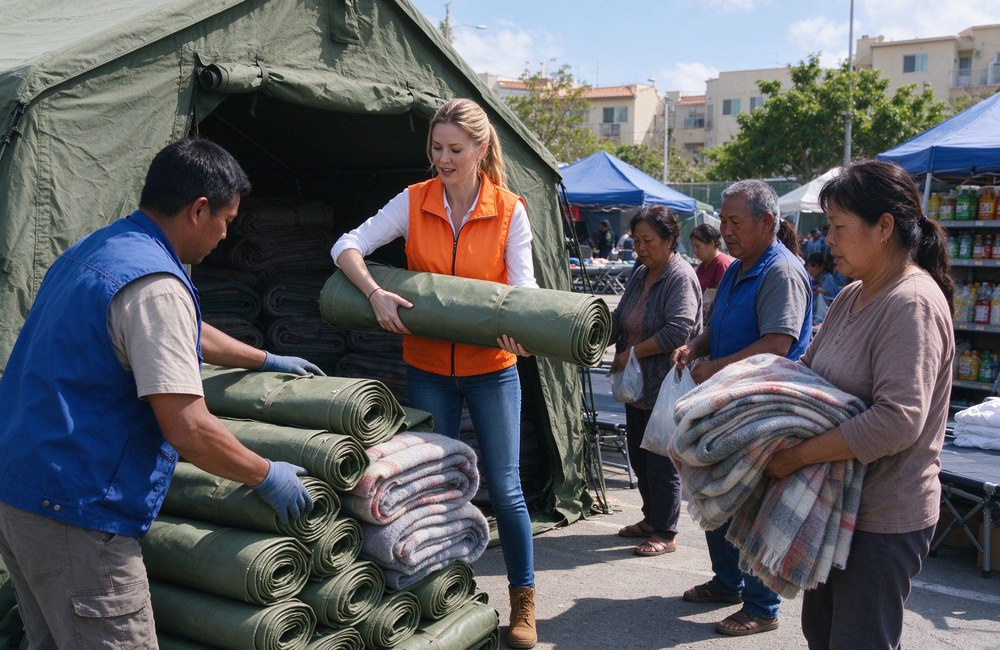
High wind relief distribution line, volunteers handing out tarps, gloves and emergency supplies to families after the storm passes through the area
Preparedness is measured in anchored tarps and stocked gloves. A family that secured the roof before the storm rides out the wind with a dry home; a crew that waits until the debris falls works through it unprotected.
For organizations, the same rule applies at larger scale: a high wind emergency kit with bulk tarps per building turns a windstorm into a managed response, and management is what saves roofs and crews.
High wind damages in three ways at once: flying debris breaks windows and panels, pressure differences lift roofs, and falling trees take out power lines and access routes.
Each failure lets water in, and water damage after the wind is often more expensive than the wind itself.
Preparedness starts before the storm, when anchoring tarps and staging windstorm preparedness supplies is still a calm job.
Wind damage is not one event: it is gusts that pull at a tarp seam, panels that peel in sequence, and debris that keeps moving for hours.
A family that anchors tarps at the first warning and a crew that stages tools at the shelter both buy the calm hours that matter, because the worst failures happen in the first hour.
Unprepared organizations face three failures at once: roofs leak within hours of the first gust, cleanup crews work without gloves and boots and stop for injuries, and families wait unprotected while supplies are still in boxes.
Each failure compounds because a windstorm is measured in hours, not days.
A pre-built kit with bulk tarps, wholesale work gloves and anchoring tools avoids all three, and it is cheaper to stock before the season than to buy after the storm, when freight is delayed and prices climb.
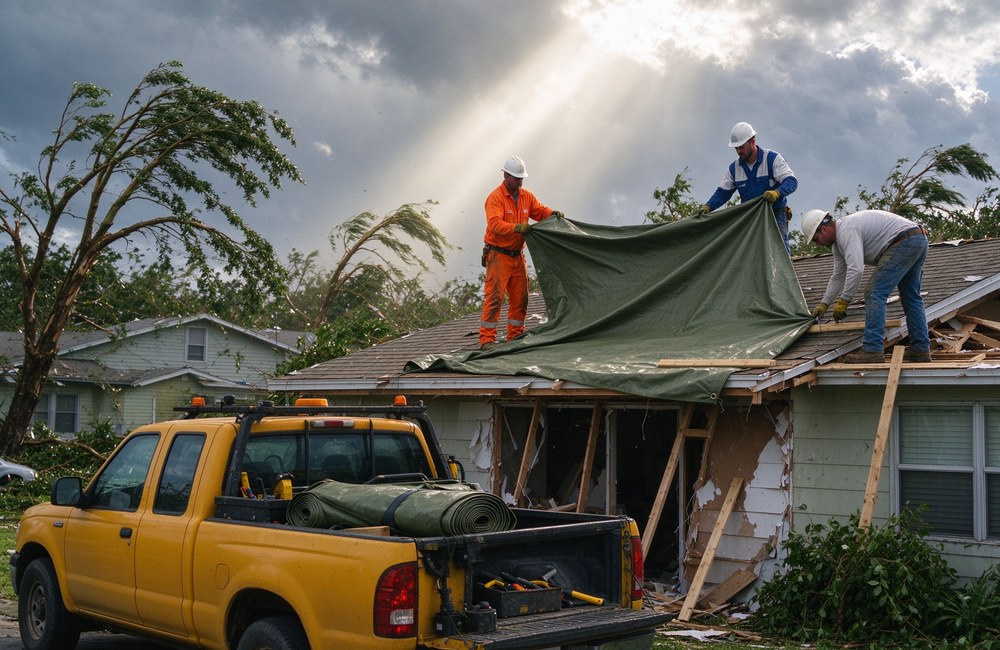
High wind crew working on a roof tarp installation, workers in gloves and boots covering a wind damaged roof with heavy duty tarps
A kit earns its space by matching the failure list. Tarps, gloves, boots and anchoring tools each answer one specific type of damage, and the kit works when every crew member knows which tool answers which failure.
Loose objects become projectiles: garden furniture, roof tiles, fence panels and tree limbs. The tarp layer protects openings, and the crew layer protects people clearing the debris.
Gloves with grip handle glass and metal edges, and cut-resistant pairs cover the sharpest work. Debris is the first failure to prepare for, because it starts the moment the wind rises.
Pressure difference lifts roofs and impact breaks windows, and both let water in. Temporary roof covers with heavy duty tarps close the gap fast, and grommet-and-rope anchoring holds them through the next gust.
The tarp module answers this failure, and it is the one that saves the building itself.
After the wind stops, the injuries begin: cut hands on broken glass, punctured feet on nails and straps, and strains from lifting heavy panels.
Wholesale work gloves, bulk work boots with steel toes, and anchoring tools that reduce manual lifting answer this failure. Crew safety is a supply decision, made before the storm, not a discipline problem after it.
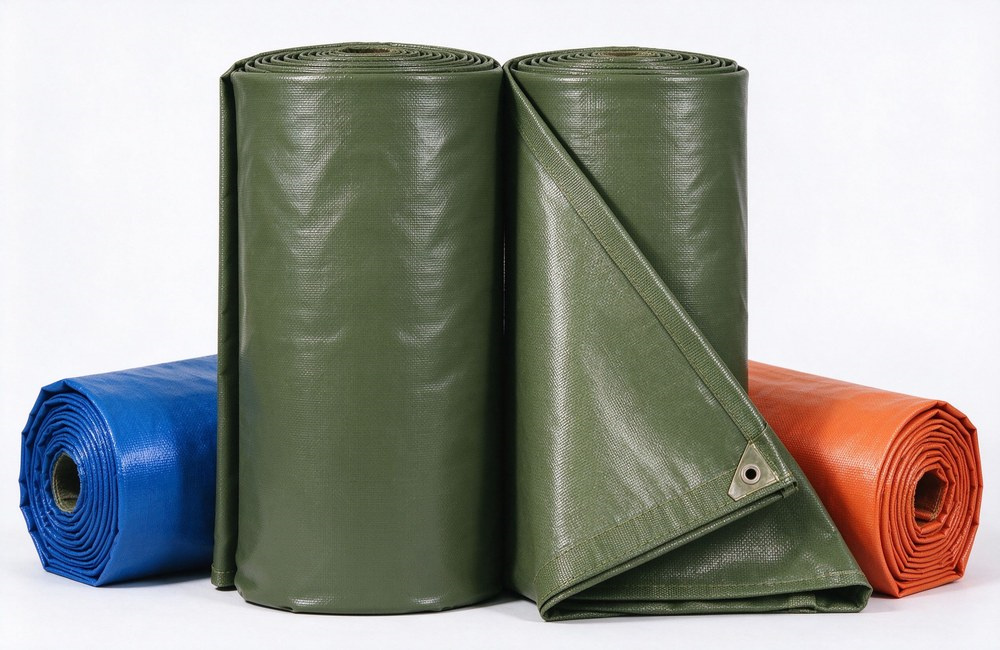
Heavy duty tarps in white rolls stacked in a warehouse, bulk tarp supplies ready for windstorm distribution to homes and buildings
Tarps are the backbone of a high wind emergency kit. The right material, the right quantity per building and the right storage turn a roll of fabric into a working roof cover, and the comparison below shows why material choice matters as much as size.
A useful reference is the Red Cross survival kit supplies checklist, which lists the core water and shelter items most household and crew kits should cover. The same bulk tarps gloves and anchoring tools standard applies to every tarp order.
PVC tarps handle the heaviest wind and water loads, with welded seams and reinforced edges that resist tearing. PE tarps cover the everyday roof and window work at lower cost, and oxford fabric adds a soft, flexible layer for interior protection.
Most kits run a mix: PVC for roofs, PE for windows and freight covers, and the decision follows the surface being protected.
Material choice is a load decision, not a taste decision: PVC carries the heaviest roof and water loads, PE covers the everyday windows and freight, and oxford protects interiors.
The comparison below lays the three fabrics side by side so the kit buyer can match the tarp to the surface.
Quantity planning starts with the building count: one heavy duty tarp per roof section, two per average building for staging, and ten percent extra for damaged sections discovered during the storm.
Schools and municipal warehouses multiply by their building list and keep the estimate visible at the supply point.
A written quantity plan beats a warehouse guess when the first gust hits.
Tarps stored wrong degrade quietly: folded tight in heat, they stick together, and UV exposure weakens the fabric. Store rolls upright on pallets in a cool dry room, check seams and grommets at every season change, and rotate stock by using the oldest first.
A tarp that has sat for three years must pass the same pull test as the day it arrived.
The table below compares the main tarp materials:
| Tarp Material | Best Use | Wind Rating | Storage |
|---|---|---|---|
| PVC heavy duty | Roof covers, heaviest load | Highest | Upright, cool dry |
| PE | Windows, freight covers | Medium | Upright, cool dry |
| Oxford | Interior protection | Low | Flat, dry |
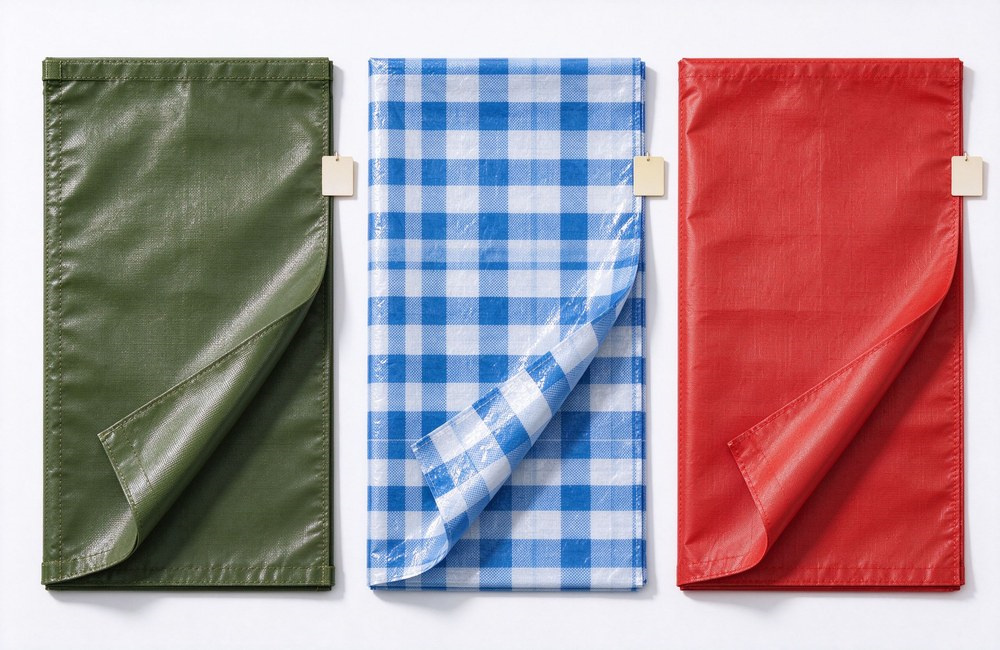
Tarp material comparison of PVC, PE and oxford fabric, samples laid side by side for windstorm kit selection by the buyer
Gloves are the cheapest injury prevention in the kit and the most used. Wholesale work gloves cover the crew, cut-resistant pairs cover the sharp work, and the right sizing keeps every worker protected through a long cleanup day.
Leather gloves handle the heavy lifting: tarps, panels, roof debris and tool work, with grip that holds in wet conditions and protection that lasts through a full deployment.
Order wholesale in crew sizes, stage them at every work point, and count them at shift end like tools.
Wind debris is full of edges: broken glass, torn metal panels and split wood. Cut-resistant gloves add a second layer for the sharp work, and crews pair them under or over the leather pair depending on the task.
The rule is simple: any hand that touches debris touches a glove first.
Bulk glove orders fail when sizing is guessed. Collect the crew size list before ordering, buy in the four sizes that cover ninety percent of workers, and keep a mixed dozen at every supply point for the unexpected helper.
Label the rack with sizes so the right pair is a ten-second find, not a search.
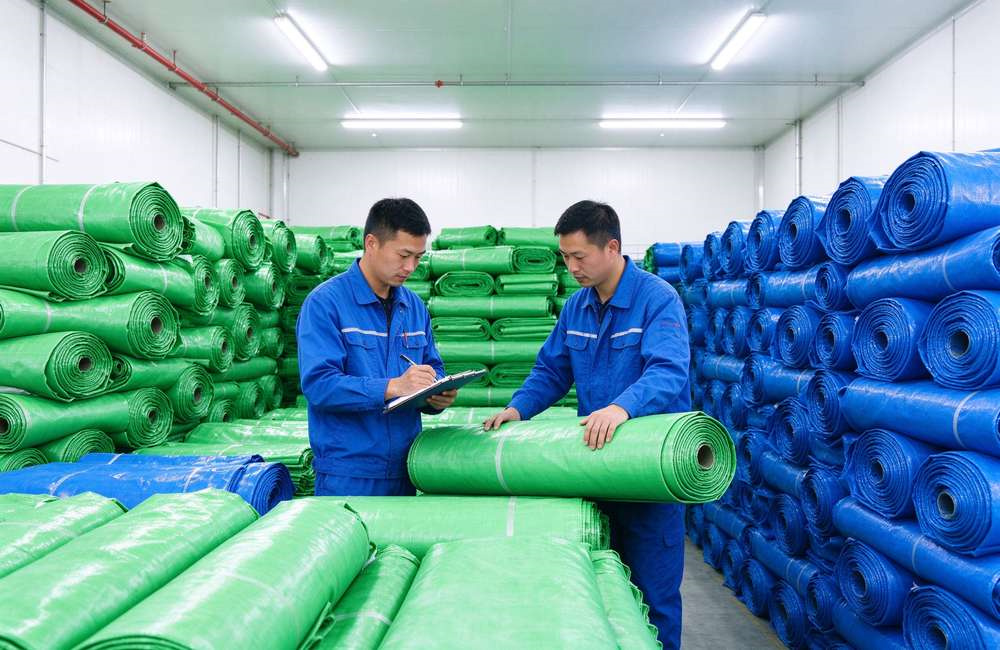
Tarp warehouse stockpile check, staff checking inventory of rolled tarps and supplies at a municipal warehouse before the wind season begins each year
Feet take the hidden damage of a windstorm: nails in wet wood, broken straps and uneven panels. Bulk work boots with steel toes and anti-penetration soles keep the crew standing through the cleanup, and the right sizing keeps the whole team working.
Steel toes protect against falling panels and lifted tarps, and anti-penetration soles stop the nails and debris that hide in the mud.
Boots also hold grip on wet roofs and ramps, which is where most windstorm falls happen. Require both features in the bulk order and verify the spec on the sample pair.
Mixed crews need mixed sizes: order in the range that covers the team, keep pairs in the half-sizes that fit most workers, and stage a spare rack at the shelter for volunteers.
Like gloves, the boot rack is labeled by size, and the coordinator logs what is used so the reorder matches the real crew.
Boots deployed in mud and rain need care before the next storm: rinse, dry away from direct heat, check soles and laces, and store off the floor.
A boot that dried cracked fails in the next deployment, and the inspection is part of the seasonal check with the tarps.
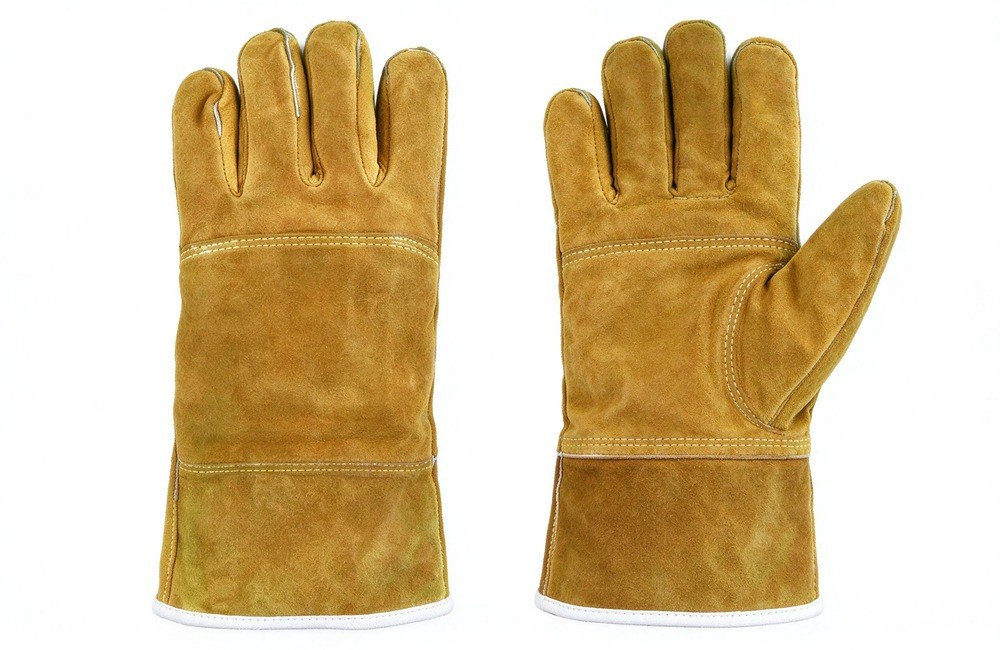
Leather work gloves in white background, wholesale gloves for handling and lifting debris during high wind cleanup work shifts across crews
A tarp without an anchor is a sail. The anchoring module - battens, grommet tools, ropes and sandbags - is what holds the roof cover through the wind, and every crew module carries the same set so the repair is standard at every site.
The batten method spreads the load: wooden battens run along the tarp edge, grommets take the rope, and the rope anchors to a fixed point on the building.
This spreads the pull across the whole edge instead of tearing one eyelet, and it is the method crews are trained on before the storm.
Flat surfaces need weight: ropes across the tarp, sandbags on the edges and tie-downs at every corner. The weighting kit - rope lengths, sandbags and fixing tools - is packed in one module, so a crew takes one box and has everything a roof needs.
Every module carries the same list: ten battens, twenty grommet repairs, two rope coils, ten sandbags and a tool pouch. The list is printed inside the lid, so the module is inventoried in five minutes and every crew knows what it holds without asking.
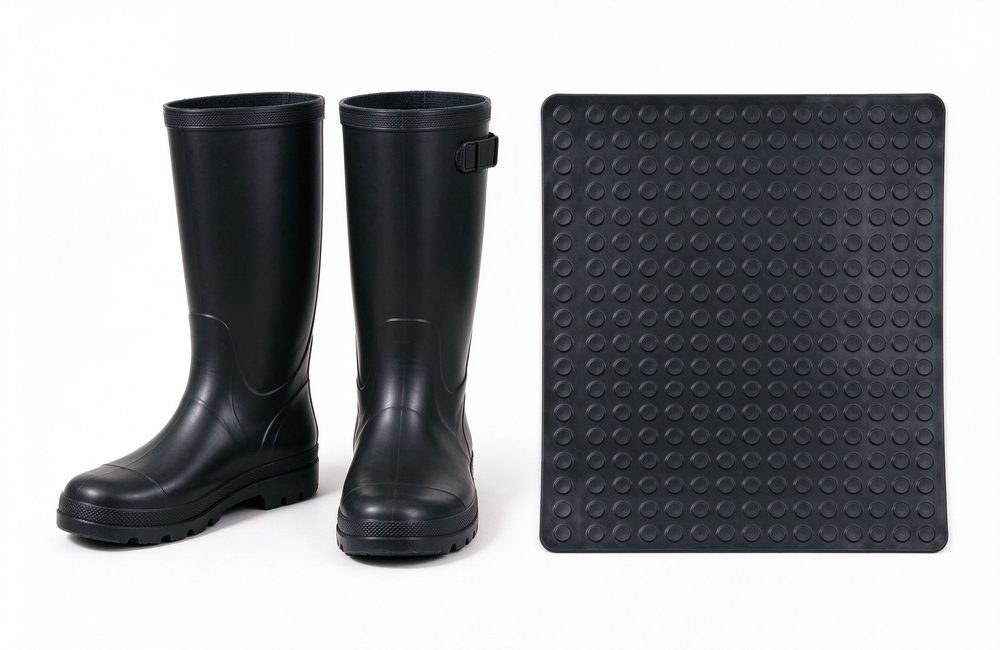
Steel toe work boots in white background, bulk boots for debris cleanup crews after a windstorm deployment period in the field
The family kit brings the layers together: one tarp set for the roof and windows, one pair of gloves per adult, one pair of boots for the work, and the anchoring tools that hold it all.
The family baseline below is the same list used by shelters, scaled to one household.
Per household: two heavy duty tarps, one PE tarp for windows, two pairs of leather gloves, one steel toe boot pair, one anchoring tool module and a roll of repair tape.
Stage the set in a labeled corner of the garage so it is inventoried in minutes and moved to the roof in seconds.
The first 72 hours define the stock: tarps for every building section, gloves for every expected helper, boots for every assigned worker and anchoring supplies for the full repair list.
Write the 72-hour list on the kit shelf, because the first three days are when the crew is smallest and the work is largest.
|
Category |
Per-Home Item |
Notes |
|
Tarp and Anchor |
8x10 ft tarp, 50 ft rope, duct tape |
Grommets pre-punched |
|
Hand Protection |
Cut-resistant gloves, work gloves |
Steel-toe boots for cleanup |
|
Visibility |
Flashlight, spare batteries |
Test quarterly |
|
Survival |
3L water, 72h food, first aid |
Rotate each quarter |
|
Warmth |
Emergency blanket, rain shell |
Power-loss chill |
Per-home minimum for 72 hours in a high wind emergency kit; add a weather radio, a waterproof pouch for documents and a storm whistle for signaling crew during power outages.
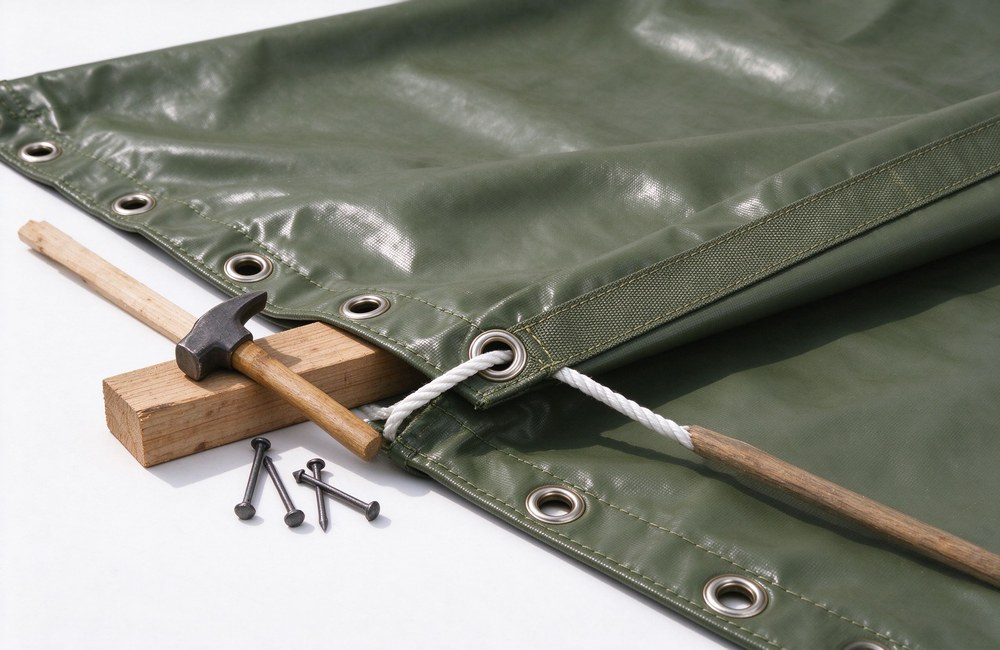
Tarp grommet fixing detail close up, reinforced eyelets and ropes on a heavy duty tarp for windstorm anchoring repair work
Shelters and municipal warehouses scale the family kit: bulk tarps per building, wholesale gloves per crew, boots per team and anchoring modules per response zone. The institutional plan below turns individual reserves into a shared response system.
Institutional stock levels are set by the response plan: tarps for every protected building, gloves for every crew member across all shifts, boots for the assigned teams and modules staged at each zone.
The coordinator reviews the levels at every season change, because the building list grows and the stock must grow with it.
Bulk tarp sourcing needs verification before the order: material spec, seam and grommet quality, UV and tear test reports, and the sample pair inspected by the coordinator.
Request samples before the bulk order, keep the test reports with the order file, and store the sample with the stock as the field reference.
A kit works inside a plan, not beside it. The emergency operations plan names the coordinator, the staging points and the crew assignments, and the kit fills the supply role.
Review the plan and the kit together at every season change, so the response is one system instead of two separate lists.
|
Category |
Per-Site Item |
Notes |
|
Tarps |
20x30 ft PVC tarps, grommets |
Per building |
|
Anchoring |
Rope, sandbags, battens |
Roof and flat-surface weight |
|
Tools |
Pry bars, bolt cutters, hard hats |
Crew cleanup kit |
|
Power |
Generator, CO alarm, lighting |
Required where structures are involved |
Inventory site bins at the start of storm season and after any real wind warning; restock within ten working days and inspect tarp grommets and rope for UV damage before the next front.
Procurement decides whether the kit arrives before the storm or after the damage. The confirmation list below covers the points that change an order: material spec, sizing, packaging, lead time and documentation.
Confirm each point in writing: material and weight spec, grommet and seam quality, glove and boot sizing list, packaging that survives storage, and a lead time that ends before the wind season.
Request samples before the bulk order, collect test reports at order time, and keep the checklist with the contract so the delivery is checked against the agreement, not against memory.
Budget by the building and the crew, not by the roll: cost per roof section for tarps, cost per worker for gloves and boots, and one anchoring module per response zone.
The line-item budget survives the review better than a total number, and it shows the coordinator exactly what each dollar protects.
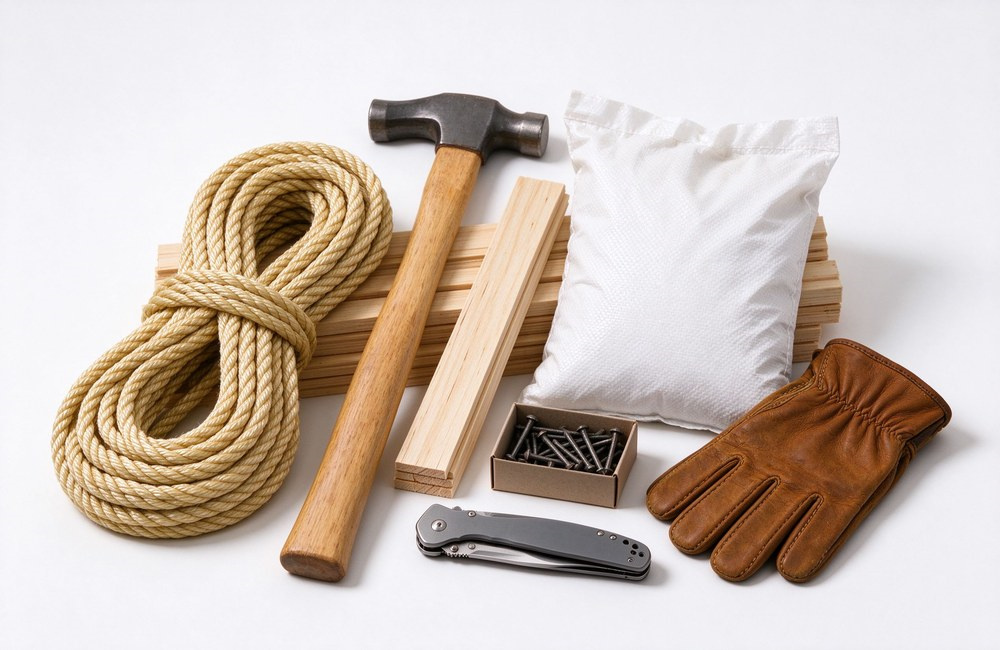
Tarp anchoring tool kit with ropes, sandbags, batten and grommet tools arranged for temporary roof repair work at a site
Check these trusted pages before storm season and again when a wind warning is issued. NWS high wind safety guidance covers wind warnings, loose-object hazards and evacuation steps for homes and businesses.
The Red Cross survival kit supplies checklist lists the core water, shelter and warmth items every household and cleanup crew should cover before a windstorm arrives.
High wind events develop in minutes, driven by thunderstorm downdrafts, squall lines and offshore gales. They tear off roof shingles, snap tree limbs and flip unsecured loads before most residents finish securing their yards.
Every exposed building needs a consistent windstorm response gear bin staged before storm season. The four buyer groups below buy in volume and share the same core configuration.
Crews clearing fallen trees and sheet metal after a gust front need steel-toe boots, cut-resistant gloves and hard hats staged in every depot, plus bulk spares for multi-day cleanup.
Schools on open plains and exposed campuses secure roofs, windows and loose signage before the warning. A school-grade windstorm response gear bin includes tarps, duct tape, work gloves and flashlights for staff.
Shelters distributing meals and bedding during wind events order bulk tarps, rope and sandbags in sealed, numbered bins so each family pack can be handed out in minutes.
Farms and barns face loose sheet metal, grain bin vents and fencing. They stock windstorm relief equipment at the barn door, with restock cycles tied to storm season. The same windstorm relief equipment standard applies to every farm on the cooperative.
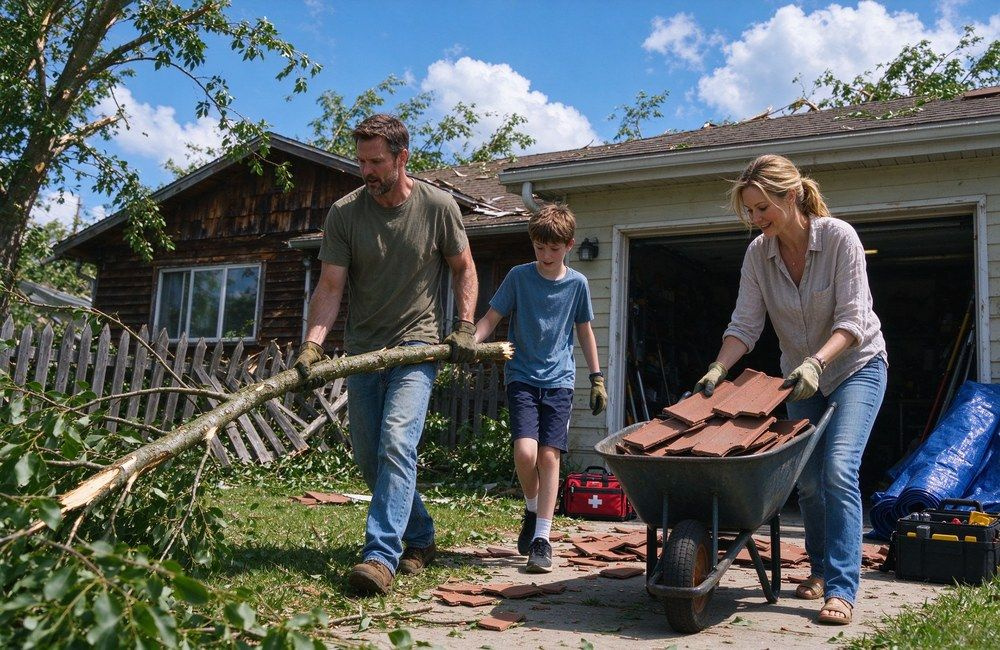
Family yard cleanup after high wind, household members clearing debris with gloves and bins into labeled piles for pickup the next morning
By the time a wind warning is posted, hardware store shelves are bare and freight is delayed. Buy tarps, rope and sandbags weeks ahead of storm season and stage them in sealed bins.
A complete tarp repair kit lives in every cleanup vehicle.
General-purpose gloves do not stop glass and rusted sheet-metal cuts. Use cut-resistant gloves rated for cleanup work, and pair them with steel-toe boots that resist nail punctures.
A tarp without grommets and batten straps rips loose in the first gust. Pre-punch grommets, run rope through them and weight the edges with sandbags on flat roofs.
After a windstorm, inspect roofs, gutters and electrical panels before re-occupying a building. Document damage, log repairs and rotate the kit before the next front.
Buying bulk wind damage repair supplies means matching the kit tier to the building roof area and crew size, not over-ordering one-size-fits-all bins that waste budget and shelf space.
Households, shelters and municipal depots differ in roof exposure and crew size. The comparison table below matches three kit tiers to typical buyers, so procurement officers can quote one consistent configuration per building or depot.
|
Kit Level |
Best For |
Core Contents |
Sourcing Note |
|
Home Wind Pack |
Single family home, 3 to 5 people |
8x10 ft tarp, rope, duct tape, work gloves, flashlight, first aid, water |
Sealed bin in the garage |
|
Campus or Shelter Kit |
School, shelter or municipal depot, 50 to 200 people |
Home pack plus 20x30 ft tarps, sandbags, pry bars, hard hats, steel-toe boots |
Numbered bins per building |
|
Bulk Storm Deployment |
Public works yard, relief convoy, regional warehouse |
Campus kit plus generator, CO alarm, lighting tower, pallets of tarps and bulk wind damage repair supplies |
Palletized windstorm relief equipment, OEM labeling available |
Most buyers start with the Campus or Shelter Kit for one pilot building, then scale to the Bulk Storm Deployment level once the annual anchoring drill proves the configuration works.
Tarps, rope and boots live in dust, rain and UV. A short care routine keeps every high wind emergency kit ready for the first gust, and it extends the life of tarps, gloves and boots across multiple storm seasons.
For orders above 200 kits, we provide OEM private-label packaging, custom color tags and site-numbered bins for any tarp repair kit deployment.
Volume pricing on tarp repair kit orders is quoted once your crew count and storm-season length are on file. The same tarp repair kit standard applies to every cleanup vehicle. Minimum order quantities and lead times are quoted per contract once your component list and storm-season schedule are confirmed.

Procurement team reviewing PVC and PE tarp material samples at a supplier sample display before a bulk windstorm relief order
Bulk tarps per building, wholesale work gloves and bulk work boots per crew, anchoring modules per response zone, and repair tape for the first 72 hours. Add a written quantity plan and a named coordinator.
Run battens along the tarp edge, take the rope through the grommets, and anchor to a fixed point on the building. Add ropes across the surface and sandbags on the edges for flat roofs and open areas.
PVC tarps have welded seams and reinforced edges for the heaviest roof work; PE tarps cover everyday roof and window protection at lower cost. Most kits run a mix, with PVC on roofs and PE on windows and freight.
One heavy duty tarp per roof section, two per average building for staging, and ten percent extra for damage found during the storm. Multiply by the building list and keep the estimate visible at the supply point.
Cleanup crews work through gloves at high rates, and every helper needs a pair at the supply point. Wholesale ordering keeps per-unit cost low and covers the mixed sizes a crew actually needs.
Yes. Steel toes protect against falling panels and lifted tarps, and anti-penetration soles stop the nails and debris hidden in wet ground. Both features belong in the bulk order specification.
Quality PVC tarps last several years when stored upright on pallets in a cool dry room. Check seams and grommets at every season change and rotate stock by using the oldest first. Keep a tarp repair kit in each cleanup vehicle to patch torn grommets and torn corners in the field.
Ten battens, twenty grommet repairs, two rope coils, ten sandbags and a tool pouch. Print the list inside the lid so the module is inventoried in five minutes.
Yes. The tarp, glove, boot and anchoring layers transfer directly to hurricane and tornado response. Adjust the quantities to the building list and add the specific warnings for your region.
Run a distribution line: tarps and anchoring supplies first, gloves and boots second, repair tape third. Log every handout and report the numbers at shift end so the reorder matches the real use. The same windstorm preparedness supplies standard is rolled out to every shelter and municipal depot.
PVC heavy duty tarps with welded seams and reinforced edges are the standard for temporary roof covers in high wind. Anchor with battens, grommet ropes and sandbags to hold through the gusts.
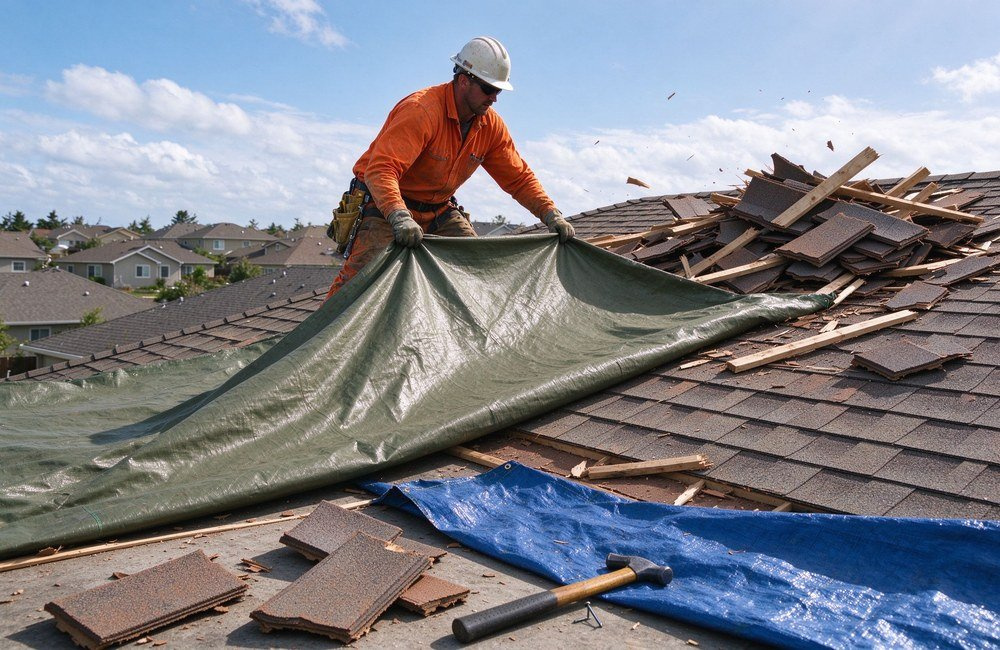
Roof repair with debris protection after high wind, crew clearing wind damage and covering the roof section with tarps before the rain arrives
A tarp module that has never been opened fails at the worst time. Run one anchoring drill before the wind season: cover a training roof, time the install, count the tools.
Fix the gaps in the order, then repeat the drill at the season change.
Update wind warning subscriptions when the season changes, keep a printed contact sheet in every module, and confirm the emergency operations plan still matches current building and crew lists. Small annual updates keep the whole system usable for years.
A high wind emergency kit is not a product list; it is a decision made in advance. Anchor the tarps, glove the crew, stock the boots and review the plan once a year. When the wind rises, the kit does the thinking.
Дружні посилання :
Авторське право © Custom Disaster - Relief Bedding: Tents, Sleeping Bags, Blankets Всі права захищені
професійна команда для обслуговування !