Категорії
Core principle: Always compare six cost layers together — product, unit packing, outer packing, main transport, destination services, and correction cost. A supplier who looks cheaper on one layer may be more expensive on another.
Landed cost is the total cost of getting blankets to your agreed destination, not just the price per piece. For relief blankets, it breaks into six layers:
When two suppliers quote different totals, the difference usually comes from one of these six layers — not from the blanket unit price alone. Compare all six on the same product and packing basis before deciding.

Import duties vary by destination country and product classification. Blankets typically fall under HS code 6301.40 (electric blankets are different — 6301.10). Duty rates range from 0% in many developing countries to 10–20% in some markets. Always check the current duty rate with your customs broker or local authority — a 5% duty difference on a $50,000 order is $2,500.

Cargo insurance typically costs 0.1–0.3% of the declared cargo value. For a $50,000 blanket shipment, that is $50–150. Some suppliers include insurance in their price; others leave it to you. Always confirm whether insurance is included and what it covers (total loss only, or partial damage too).
Beyond freight, expect these destination charges per shipment:

These fees can add $500–1,500 to a single blanket shipment. For small orders under $5,000, these fixed fees can represent 10–30% of the total — always factor them in.
Quick landed cost estimate:
Landed cost per piece = (Unit price × Quantity) + (Total volume × Freight rate per m³) + (Cargo value × Duty %) + Insurance + Port fees + Inspection + Bank fees
Divide the total by quantity to get cost per piece. Run this for at least two packing options (standard vs vacuum) before deciding.
Two quotations are not comparable if they describe different blankets. A lower unit price may simply mean a smaller size, lower GSM, lighter material, or simpler finishing.
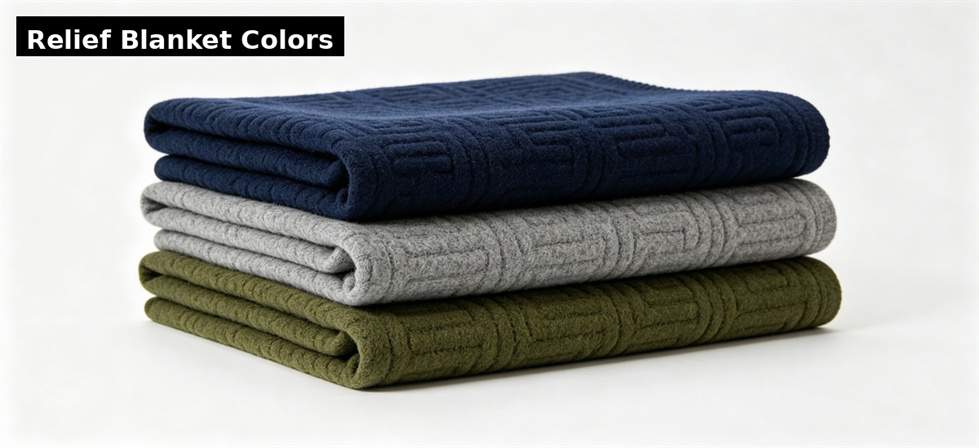
Before comparing cost, lock down these product details on every quotation:


If a supplier offers an alternative setup, put it on a separate line. State what changed and how it affects piece weight, packing volume, and freight. Do not mix it into the same comparison row.
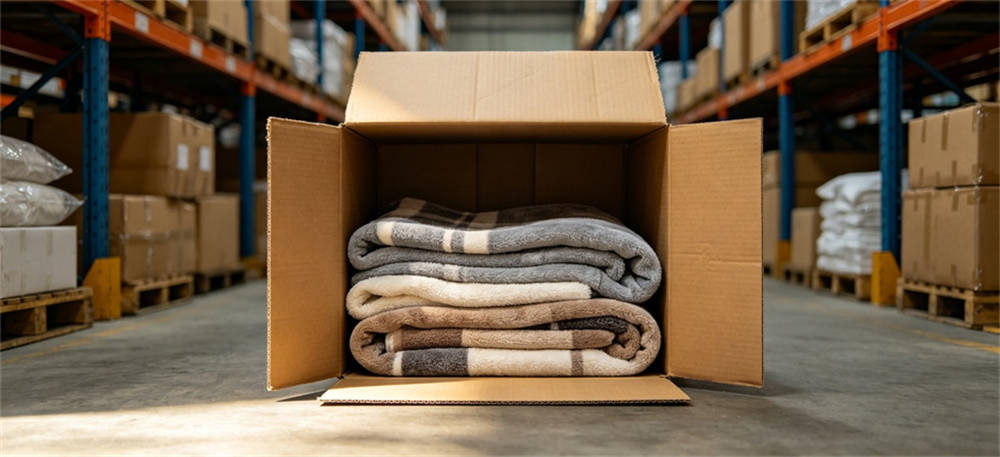
Freight is charged by volume or weight, whichever is higher. For blankets — which are bulky but light — volume is usually the deciding factor. The carton data determines how many blankets fit in a container, and therefore how much freight each blanket carries.
Request these carton details from every supplier:
Typical relief blanket packing data (for reference, confirm with your supplier):
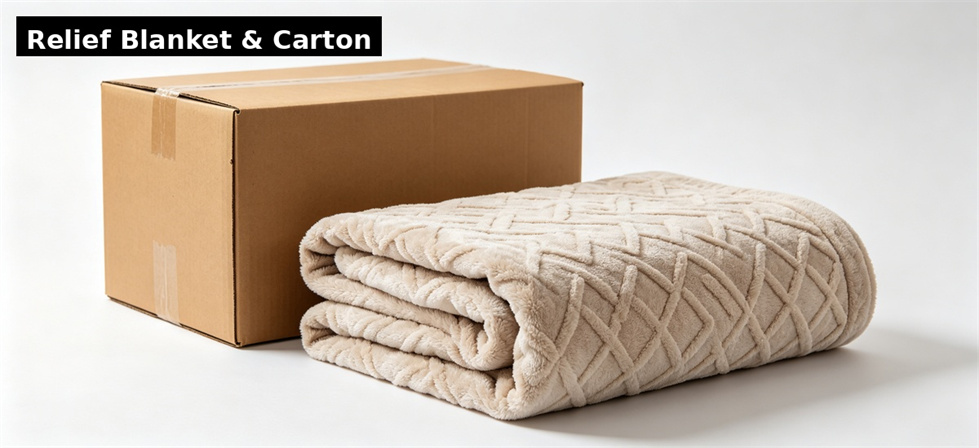
|
Setup |
Pieces/Carton |
Carton Size |
Carton Volume |
20ft Container (≈28m³) |
|
300 GSM flannel, standard fold |
20 pcs |
60×40×40 cm |
0.096 m³ |
≈290 cartons / 5,800 pcs |
|
300 GSM flannel, vacuum packed |
40 pcs |
60×40×40 cm |
0.096 m³ |
≈290 cartons / 11,600 pcs |
|
800 GSM wool blend, standard fold |
10 pcs |
60×40×50 cm |
0.120 m³ |
≈230 cartons / 2,300 pcs |
|
500 GSM raschel, standard fold |
12 pcs |
60×40×45 cm |
0.108 m³ |
≈260 cartons / 3,120 pcs |
▶For institutional procurement requirements such as government material stockpiles, prison accommodation and military camps, we support large‑volume wholesale supply of emergency relief blankets. We strictly comply with project technical specifications to guarantee consistent supply capacity. To learn key points for institutional bulk purchasing, please refer to our article Emergency Disaster Relief Blankets | For Government Stockpiles, Correctional Facility Blankets & Military Camps – Bulk Wholesale Supply.

These are industry averages. Your supplier's actual carton data may differ based on fold method, compression, and carton strength. Always use the supplier's measured carton data, not a theoretical estimate, for freight comparison.
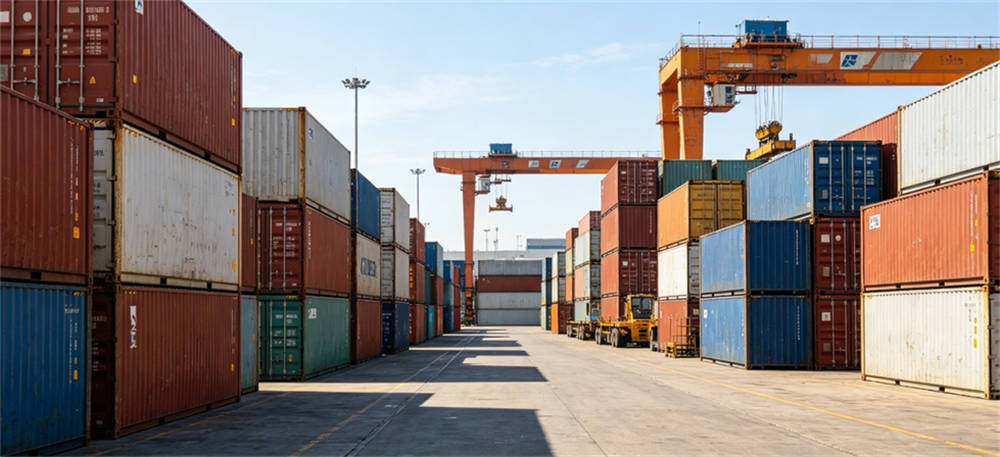
FCL (Full Container Load): You pay for the whole container. Best when your shipment fills at least 70% of a container. A 20ft container holds about 28 m³, a 40ft holds about 58 m³.
LCL (Less than Container Load): You share container space with other shippers and pay by volume. LCL rates are usually 20–50% higher per m³ than FCL, but you only pay for the space you use. For small orders under 15 m³, LCL is often the only practical option.
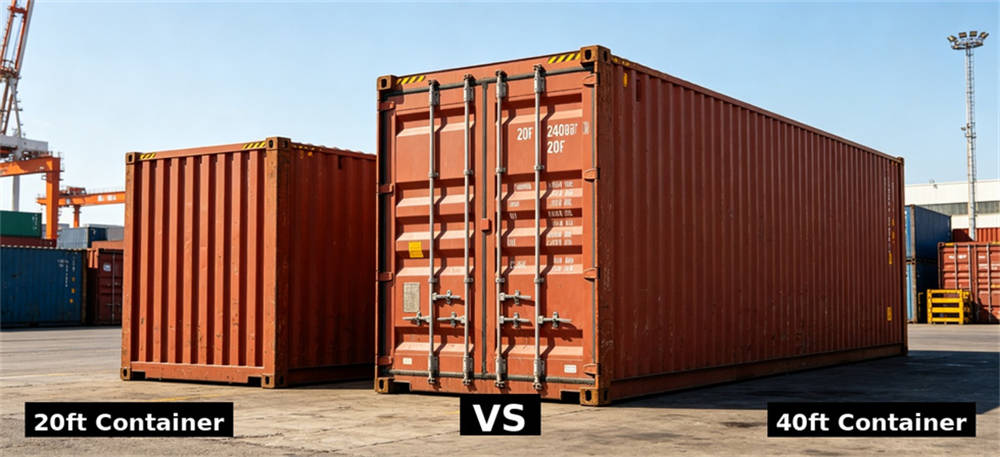
For a 10,000-piece order of 300 GSM flannel with standard packing (48 m³), you need a 40ft container. With vacuum packing (24 m³), you fit in a 20ft — cutting the container cost roughly in half.
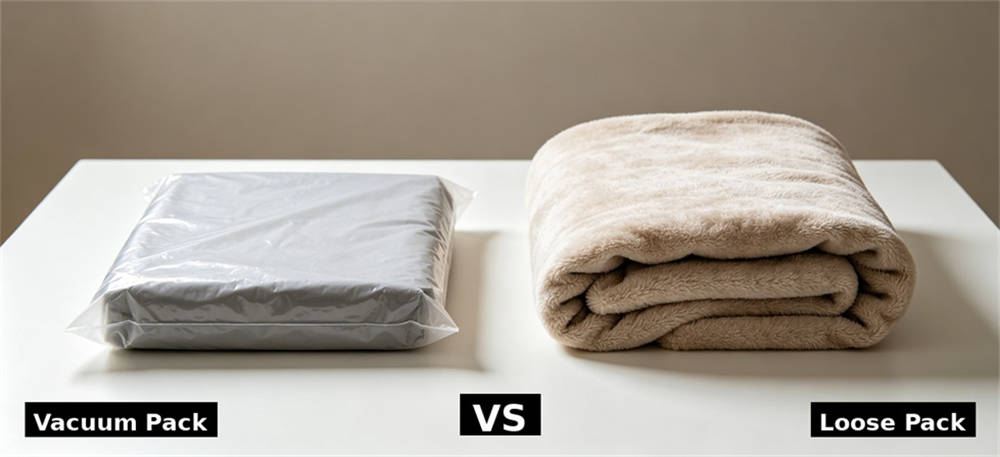
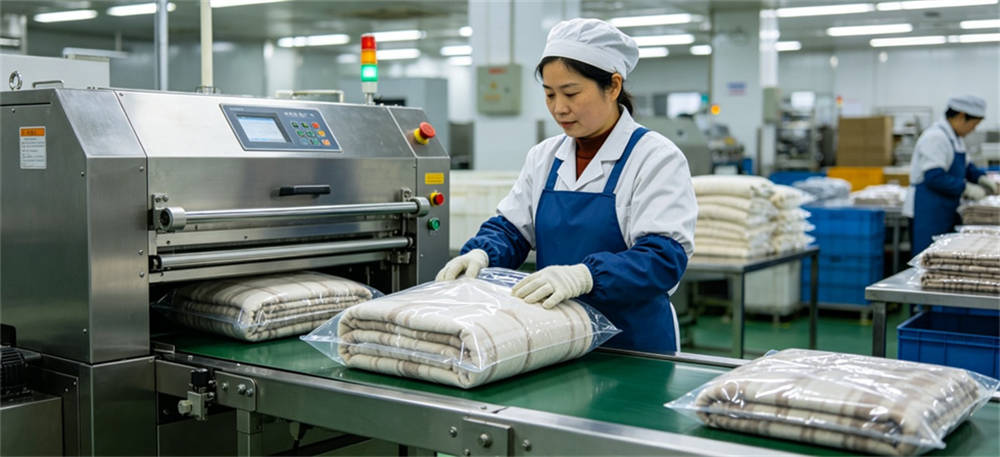
Notice the vacuum packing difference: the same 300 GSM flannel fits twice as many pieces per carton when vacuum packed. This can cut the freight cost per blanket by roughly half for sea freight. Vacuum packing adds a small unit cost, but for large sea-shipment orders it almost always pays off.
|
Material / GSM |
Unit price (est.) |
Freight per piece (sea) |
Duty + fees (est.) |
Est. landed cost per piece |
|
Polyester flannel 250 GSM, vacuum |
$1.80 |
$0.15 |
$0.15 |
≈$2.10 |
|
Polyester flannel 300 GSM, standard |
$2.50 |
$0.35 |
$0.20 |
≈$3.05 |
|
Polyester flannel 300 GSM, vacuum |
$2.60 |
$0.18 |
$0.20 |
≈$2.98 |
|
Raschel 500 GSM, standard |
$3.50 |
$0.55 |
$0.30 |
≈$4.35 |
|
Wool blend 800 GSM, standard |
$6.00 |
$0.85 |
$0.50 |
≈$7.35 |
These are illustrative figures for sea freight from China to a typical African or Middle Eastern destination. Actual costs vary by route, season, quantity, and current freight rates. The key insight: a $0.10 higher unit price with vacuum packing can result in a lower landed cost per blanket than a cheaper unit price with standard packing.
 |

|
▶ Wool blanket, natural disasters, warmth, good price. Click this title link to view warmth‑related performance indicators, multiple size options, favorable bulk price and supply arrangement for natural disaster relief procurement.
Different delivery arrangements include different amounts of work and cost. Comparing them directly by number is misleading. Here is what each common setup covers:
Ex-port (buyer arranges freight): The supplier delivers goods to the port of origin and loads them. You arrange and pay for ocean freight, insurance, destination port charges, customs, and local delivery. The price looks lower, but you have more work and more cost after the ship leaves.

Supplier-arranged sea freight to port: The supplier pays for ocean freight and insurance to the destination port. You still handle destination port charges, customs clearance, and local delivery. This is easier than arranging your own freight, but the supplier controls the freight rate — you cannot shop around.
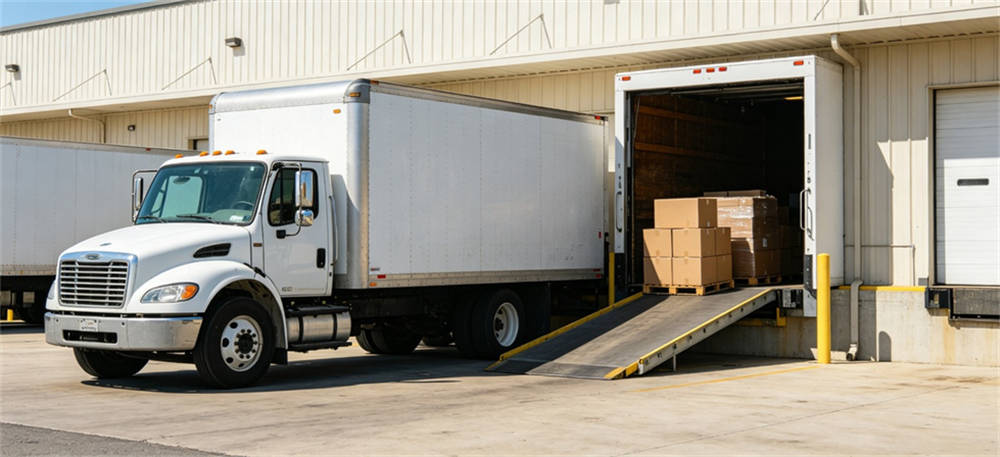
Delivered to door (all costs included): The supplier handles everything up to your door, including customs duties and local delivery. The total is the easiest to read but usually the most expensive, and you have least visibility into the freight breakdown.
There is no universally best arrangement. If you have a reliable forwarder, arranging your own freight lets you control cost. If you want simplicity and the supplier's freight rate is competitive, supplier-arranged freight may work. Compare all options under the same product, packing, quantity, and destination to see the real difference.
|
Cost item |
Ex-port (buyer arranges freight) |
Supplier-arranged sea freight |
Delivered to door |
|
Goods value |
$25,000 |
$25,000 |
$25,000 |
|
Origin port + loading |
$400 |
Included |
Included |
|
Sea freight |
$2,000 (your forwarder) |
$2,200 (supplier's rate) |
Included |
|
Insurance |
$50 (your policy) |
$60 (supplier's) |
Included |
|
Destination port + clearance |
$800 (you pay) |
$800 (you pay) |
Included |
|
Import duty (5%) |
$1,250 (you pay) |
$1,250 (you pay) |
Included |
|
Last-mile delivery |
$300 (you pay) |
$300 (you pay) |
Included |
|
Estimated total |
$29,800 |
$29,610 |
$30,500–32,000 |
Delivered-to-door is easiest to budget but usually 3–8% more expensive because the supplier adds a margin on freight and duties. Ex-port gives you the most control but requires your own forwarder and customs broker. These are illustrative figures for blanket orders — actual differences depend on route, volume, and supplier margins.
For relief blankets, sea freight is the standard for large orders. Air freight is used only when timing is critical — and it costs significantly more.
As a rough industry reference, air freight can cost 5 to 10 times more per kilogram than sea freight for the same route. Because blankets are bulky, air freight is charged by volumetric weight, which makes the gap even larger.
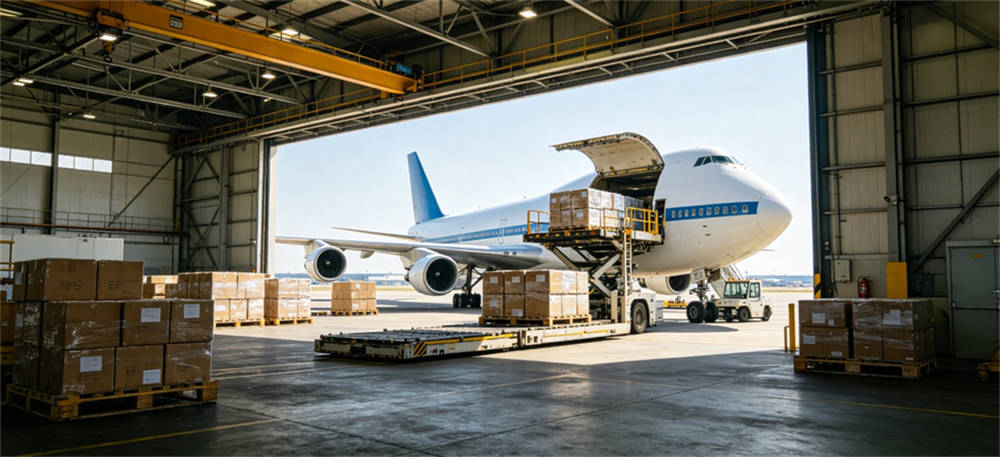
When air freight makes sense:
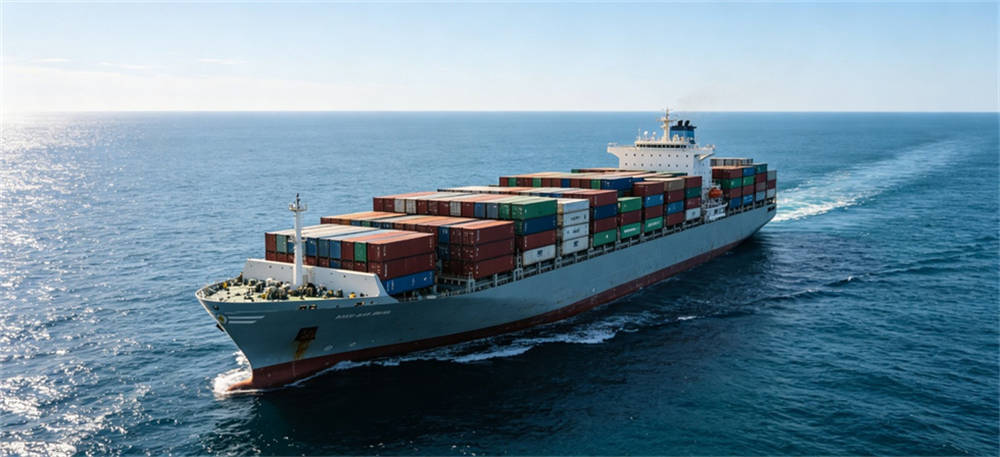
When sea freight is the right choice:
Sea freight rates fluctuate significantly by season. Peak season (August–October, before year-end holidays) can add 20–50% to base rates. Port congestion at major hubs can add detention and demurrage charges of $100–300 per container per day. Always build a 10–15% contingency into your freight estimate for peak season or uncertain routes.
|
Route from China |
Low season |
Peak season |
Transit time |
|
To East Africa (Mombasa/Dar es Salaam) |
$1,200–2,000 |
$2,000–3,500 |
25–35 days |
|
To West Africa (Lagos/Tema) |
$1,500–2,500 |
$2,500–4,000 |
30–40 days |
|
To Middle East (Jebel Ali/Dammam) |
$800–1,500 |
$1,500–2,500 |
15–20 days |
|
To Europe (Rotterdam/Hamburg) |
$1,000–1,800 |
$1,800–3,000 |
30–35 days |
|
To North America (LA/New York) |
$1,500–2,500 |
$2,500–4,000 |
20–35 days |
Rates change weekly — always request a current quote from your forwarder. These figures are for blanket order planning and comparison only.
For a 10,000-piece order of 300 GSM flannel (standard packing, 48 m³), a 20% freight increase adds about $700 to the total — or $0.07 per blanket. A 50% increase adds $1,750 — $0.18 per blanket. With vacuum packing (24 m³), the same increases cost half as much per blanket. This is why packing efficiency matters more when freight rates are high.
If a quality issue is discovered after shipment, air-freighting replacement stock can cost $5–15 per blanket — 2–5 times the sea freight cost. This is why pre-shipment inspection and sample approval are worth the time and expense.
Always ask the supplier for both air and sea estimates when timing is uncertain. The gap may be smaller than you think for nearby destinations, or larger than expected for remote ones.
Relabelling, repacking, and replacing incorrect units are common hidden costs in relief blanket orders. They usually happen because the product, label, artwork, or packing did not match what was ordered.
Common rework scenarios and typical cost drivers:
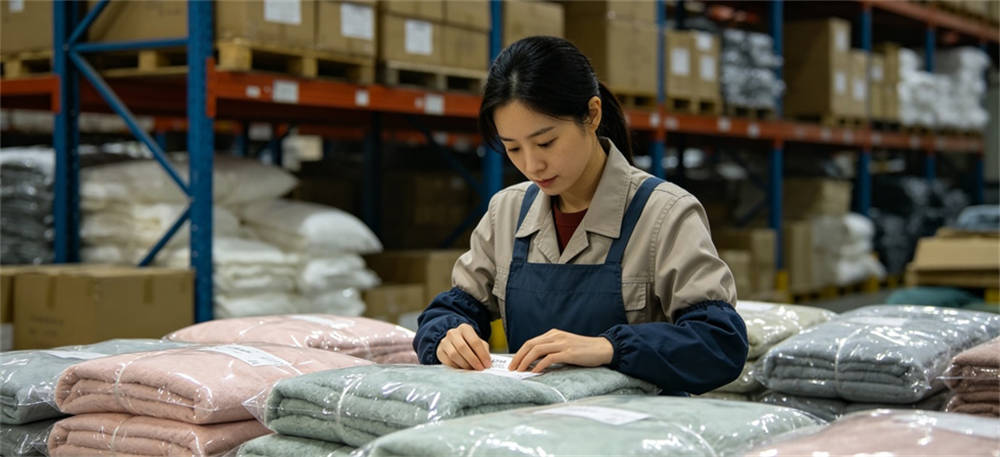
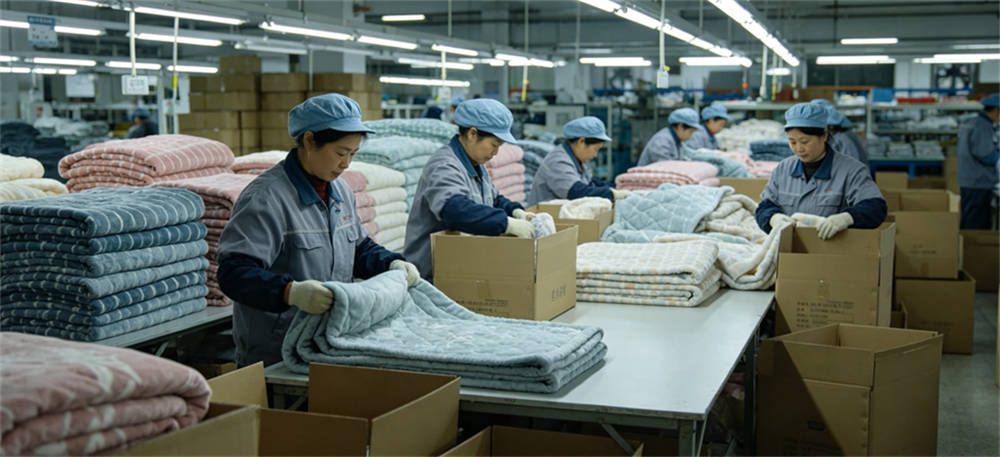
The best way to prevent rework cost is to stop it before production: approve a physical pre-production sample, confirm label artwork in writing, and request a trial-packed carton before mass production starts. A small amount of time at this stage prevents much larger costs later.

When comparing suppliers, ask how they handle rework if a discrepancy is found. A supplier who takes responsibility for correcting their errors is worth more than a slightly lower unit price from one who does not.
For a holistic understanding of how emergency relief blankets are positioned and configured within the overall emergency material system, read our article The Complete Guide to Emergency Relief Blankets | Post-Disaster Resettlement · Government Stockpiling · NGO Aid (2026). It helps you build a complete knowledge chain from foundational awareness to detailed product selection.
Splitting an order into multiple shipments can solve timing or storage problems, but it adds cost. Each shipment has its own freight, documentation, port handling, and preparation charges.
When split delivery makes sense:
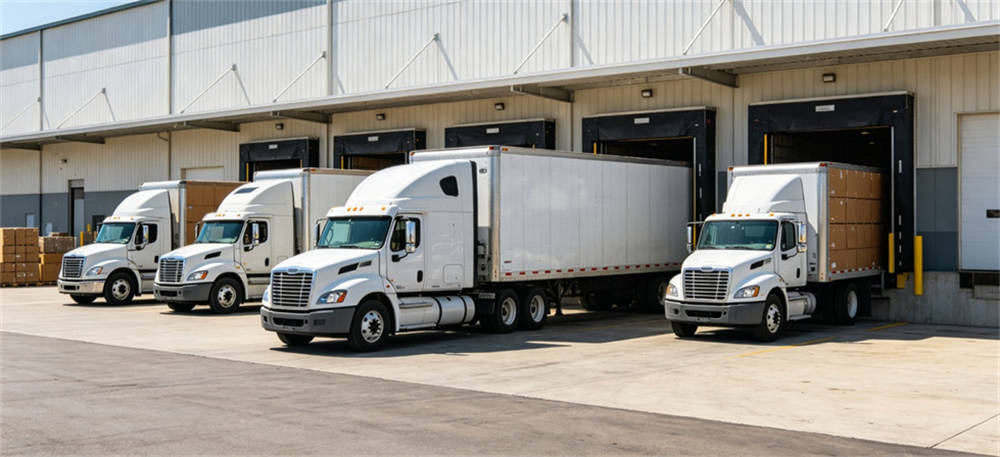
When it adds cost without benefit:
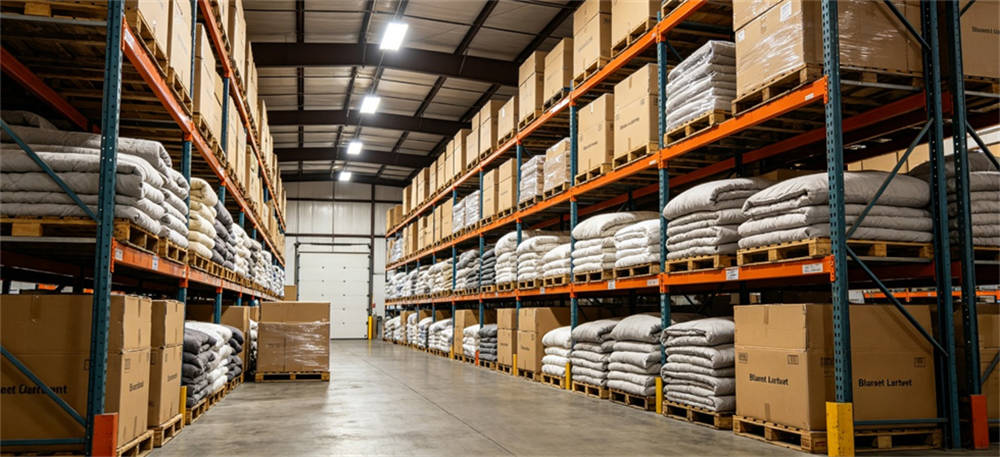
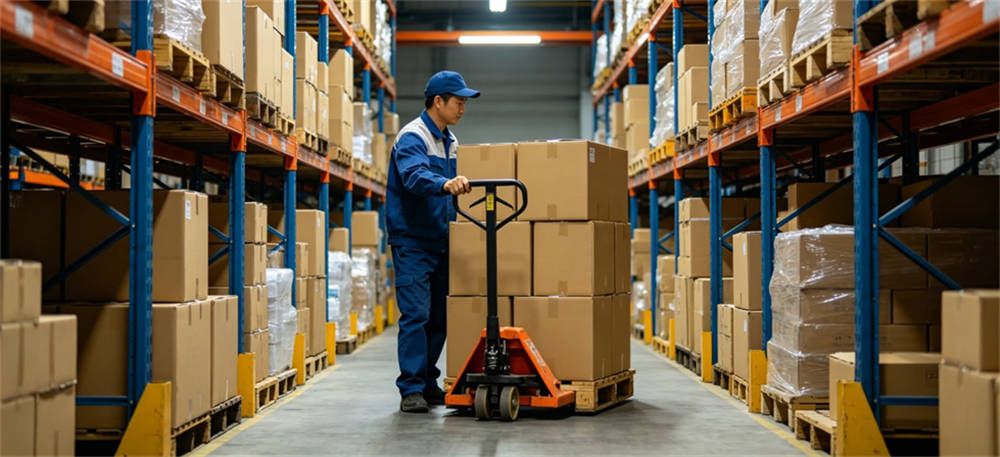
Compare one full shipment against the requested split pattern using the same total quantity and product setup. If the split adds 15–25% to the freight and handling cost, make sure the operational benefit is worth it.
Here is how the cost layers work for a typical order. These are illustrative figures to show the structure — actual costs vary by route, season, and supplier.
|
Cost Layer |
Standard Packing (20/carton) |
Vacuum Packing (40/carton) |
Difference |
|
Blanket unit price (est.) |
$2.50 × 10,000 = $25,000 |
$2.60 × 10,000 = $26,000 |
+$1,000 (vacuum bag) |
|
Cartons needed |
500 cartons × $1.50 = $750 |
250 cartons × $1.50 = $375 |
-$375 |
|
Total volume |
48 m³ (40ft container) |
24 m³ (20ft container) |
Half the space |
|
Sea freight (est.) |
$3,500 (40ft) |
$2,000 (20ft) |
-$1,500 |
|
Insurance (0.2% of value) |
$50 |
$52 |
+$2 |
|
Destination handling (500 vs 250 cartons) |
≈$1,000 |
≈$500 |
-$500 |
|
Import duty (est. 5% of goods value) |
$1,250 |
$1,300 |
+$50 |
|
Estimated total |
$31,550 |
$30,227 |
-$1,323 |
|
Cost per blanket |
$3.16 |
$3.02 |
-$0.14 |
Key takeaway: Vacuum packing adds $0.10 per blanket for the bag but saves $0.14 per blanket in freight, carton, and handling. Net saving: $0.04 per blanket, or $400 on a 10,000-piece order. For larger orders or higher freight rates, the savings are proportionally larger. These are illustrative figures — always request actual quotes from your supplier and forwarder.
Most blanket suppliers quote in US dollars. If your budget is in euros, pounds, or local currency, exchange rate movements can change your actual cost. A 5% currency movement on a $30,000 order is $1,500. For large orders, consider locking the exchange rate with your bank (forward contract) or building a 3–5% currency contingency into your budget.
|
Item |
Unit cost (est.) |
Notes |
|
Inner polybag |
$0.02–0.05 per piece |
Standard or vacuum bag |
|
Vacuum bag |
$0.08–0.15 per piece |
Thicker material, vacuum sealing labour |
|
Export carton (5-ply) |
$1.00–2.00 per carton |
Depends on size and strength |
|
Woven label / care label |
$0.02–0.05 per piece |
Custom printing adds cost |
|
Carton marking / sticker |
$0.01–0.03 per carton |
Printed or adhesive |
Landed cost to the port is not the same as cost to your warehouse. Last-mile trucking from port to warehouse typically costs $150–500 per container depending on distance. Storage at destination warehouses charges $5–15 per pallet per week — a 40ft container holds about 20 pallets, so storing for 4 weeks can add $400–1,200. For reserve stockpile projects, factor in 3–12 months of storage cost.
Send every supplier the same inquiry template with these items filled in:

Ask each supplier to state clearly what is included and what is excluded. If they offer an alternative, request it on a separate line with the changes noted.
Put all replies into the same six-layer cost structure. Mark freight and destination values as estimates until final carton data is confirmed. Use one currency and one quantity basis for the comparison.

Finish with scenarios rather than one number: a base scenario (standard packing, one shipment), a packing-upgrade scenario (vacuum packing), and a split-delivery scenario if relevant. This lets you see exactly which decision changes the cost.
At YRF Textile, we provide complete carton data and packing options with every wholesale blanket quotation. We quote both standard and vacuum packing so you can compare the real landed cost, not just the unit price. Our team can also help with blanket product selection, sleeping bags, mattresses, and folding beds for complete shelter kits.
We provide measured carton dimensions, pieces per carton, gross weight, and total volume for every order setup. Contact us with your quantity, destination, and delivery requirements for a comparable quotation.
|
Customisation |
Added cost per piece (est.) |
Lead time impact |
|
Standard colour (navy/grey/olive) |
$0 (included) |
None |
|
Custom Pantone colour |
$0.10–0.30 |
+5–10 days (dye lot) |
|
Woven label with logo |
$0.05–0.15 |
+3–5 days (label production) |
|
Embroidery logo |
$0.20–0.50 |
+5–7 days |
|
Custom size (non-standard) |
$0.15–0.40 |
+3–5 days |
|
Vacuum packing |
$0.08–0.15 |
+2–3 days |

A pre-shipment inspection costs $200–500. If it catches a label error, colour mismatch, or packing discrepancy before the container leaves, it can save $2,000–10,000 in rework, air freight replacement, or port detention. For orders over $20,000 or first-time suppliers, inspection almost always pays for itself. For repeat orders with proven suppliers, you may inspect every third shipment.
Blanket quotations are typically valid for 15–30 days because raw material prices and freight rates change. Rush orders (production in under 10 days) may incur a 10–20% expediting fee if the factory needs to rearrange its production schedule. Always confirm the quotation validity date and whether rush production is available before committing to a blanket delivery deadline.

The lowest unit price is rarely the lowest total cost for relief blankets. Freight, packing, duties, insurance, port fees, and rework can add 20–40% to the ex-factory price of a blanket order. Always compare the full six-layer landed cost, use actual carton data (not estimates), and run at least two packing scenarios (standard vs vacuum) before deciding. A few hours of comparison work can save thousands of dollars on a bulk blanket order.
It is the total cost of getting blankets to your agreed destination under a defined delivery arrangement. It includes the goods, packing, freight, destination services, import duties, insurance, port fees, and any realistic correction cost. The exact items depend on whether you arrange freight yourself or have the supplier deliver to your door. A simple formula: Unit price + Freight per piece + Duty + Fees + Insurance = Landed cost per piece.
A lower price may cover a different material, GSM, size, or packing. It may also exclude labels, cartons, or freight that another supplier includes. Align the product and packing first, then compare the remaining cost layers. A supplier at $2.40 per piece with poor carton data may end up at $3.20 landed, while one at $2.50 with efficient vacuum packing may land at $2.95.
Only as an estimate. Freight depends on package count, dimensions, gross weight, route, mode, and timing. Use the supplier's measured carton data once available, and update the estimate. Early estimates should be clearly labelled as estimates, not confirmed amounts. Build a 10–15% contingency for peak season or uncertain routes.
Pieces per carton, outer dimensions, gross weight, net weight, and total carton count. Also confirm which product setup the packing data applies to — do not reuse carton data from a different size or GSM. Ask for both standard and vacuum packing options so you can compare landed cost.
Compare them for the same product, packing, quantity, destination, and timing. Buyer-arranged freight leaves freight control to you; supplier-arranged sea freight includes ocean freight and insurance; delivered-to-door includes everything. There is no best option — it depends on whether you want to control freight cost or prefer simplicity.
Yes, as a risk scenario rather than a fixed charge. Do not add a made-up rework cost to every quote. Instead, check how each supplier prevents mismatches between product, label, artwork, and packing, and ask who handles corrections if a discrepancy occurs.
No. It may reduce storage pressure or match a schedule, but it adds freight, handling, documentation, and preparation per lot. Compare one shipment against the split pattern using the same total quantity. Choose split delivery only when the operational benefit justifies the added cost.
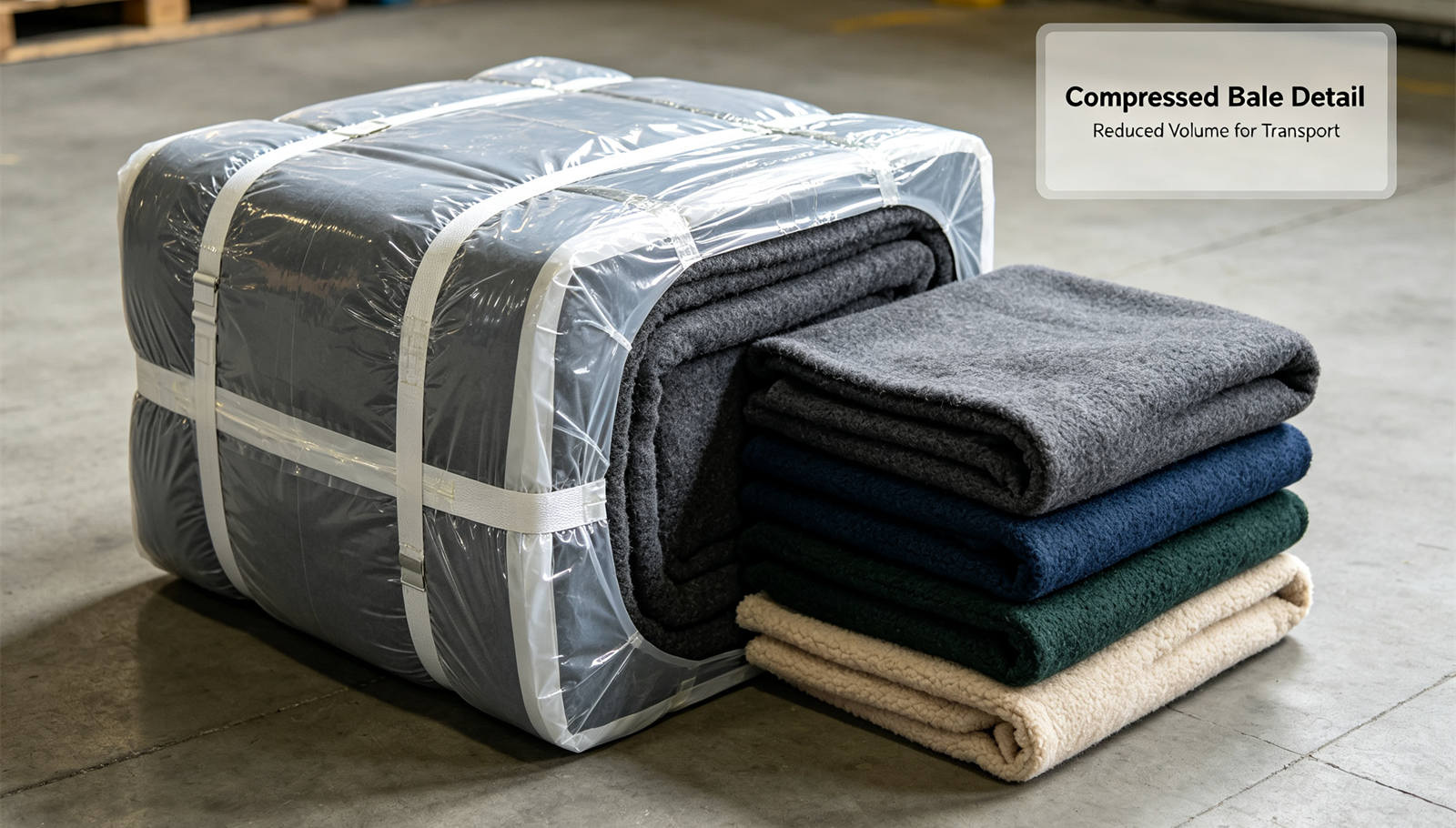
For large sea-shipment orders, usually yes. Vacuum packing roughly doubles the pieces per carton, which halves the volume and the freight cost per blanket. The small added cost of vacuum bags is typically offset by freight savings. For small air shipments or orders where storage is not constrained, standard packing may be sufficient.
LCL (Less than Container Load) means you share container space with other shippers and pay by volume. LCL rates are 20–50% higher per m³ than FCL (Full Container Load), but you only pay for the space you use. For orders under 15 m³ (about 3,000 standard-packed flannel blankets), LCL is often the only practical option. Above 20 m³, FCL is usually cheaper.
Blankets typically fall under HS code 6301.40 with duty rates ranging from 0% to 20% depending on destination. A 5% duty on a $25,000 order is $1,250. Always check the current rate with your customs broker — duty rates change and some countries have preferential rates for certain origins.
With standard folding, approximately 5,800 pieces (20 per carton, 290 cartons). With vacuum packing, approximately 11,600 pieces (40 per carton, same carton count). These are industry averages — confirm with your supplier's actual carton dimensions.
Air freight is appropriate for emergency response with 7–14 day deadlines, small trial orders under 500 pieces, or replacement shipments. For planned orders over 1,000 pieces with 30–60 day lead time, sea freight is almost always more economical. Air freight charges by volumetric weight (L×W×H÷6000), which makes bulky blankets very expensive to ship by air.
Approve a physical pre-production sample, confirm label artwork in writing, request a trial-packed carton before mass production, and verify the bulk matches the approved sample before shipment. These steps take a few days but prevent much larger correction costs later.
Yes, if storage is a real cost for your project. A bulky setup occupies more warehouse space even if the unit price looks attractive. Use the carton dimensions and storage period from your project. Do not assume all destinations charge the same storage rate — verify locally.
▶If you want to understand the functional positioning and configuration logic of emergency relief blankets within the overall emergency‑material system from a holistic perspective, check our article How to Order Emergency Relief Blankets in Bulk: From RFQ to Shipment. It helps you build a complete knowledge chain from basic awareness to detailed product selection.
Send us your quantity, blanket setup, destination, and delivery requirements. We will provide both standard and vacuum packing options with complete carton data so you can compare the real total cost.
 |

|
Дружні посилання :
Авторське право © Custom Disaster - Relief Bedding: Tents, Sleeping Bags, Blankets Всі права захищені
професійна команда для обслуговування !