Категорії
Food poisoning outbreaks in emergency shelters, mass feeding sites, and disaster settings turn a manageable situation into a public health emergency. Relief organizations staging food poisoning emergency supplies — hydration, oral care, sanitation, and outbreak response gear — can contain cases before they spread. This guide covers what frontline health responders actually need, what to stock in bulk, and how to prevent shelter outbreaks before they start.
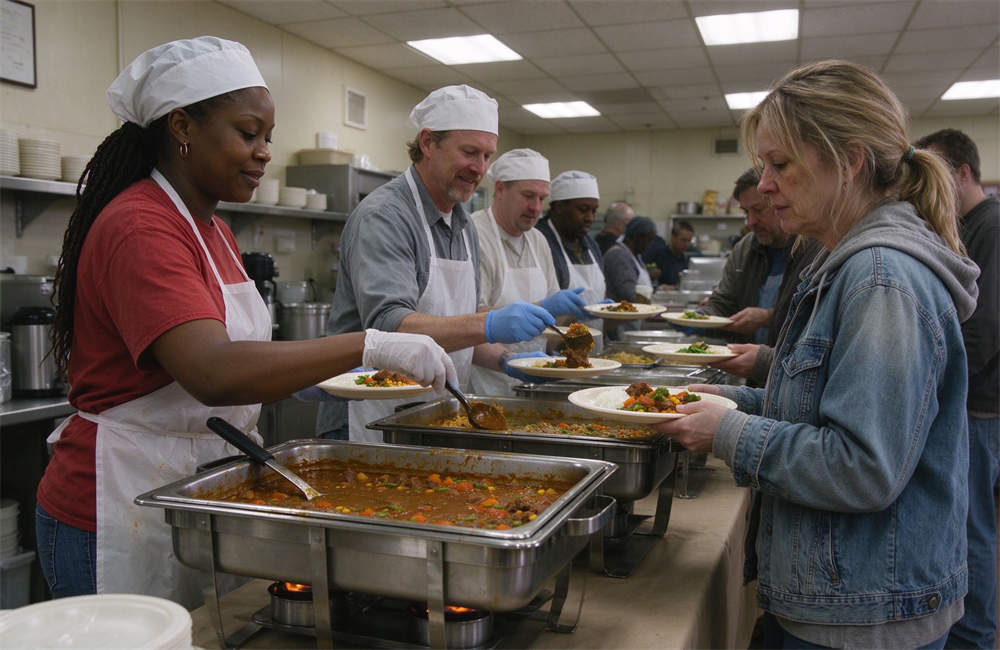
Volunteer serving hot meals in shelter kitchen.
Every disaster that displaces people creates conditions where foodborne illness spreads. Power outages spoil refrigerated food. Crowded shelters mean shared surfaces. Field kitchens handle hundreds of meals a day in imperfect conditions. The CDC estimates that foodborne illnesses sicken 48 million Americans every year, and disaster settings are among the highest-risk environments.
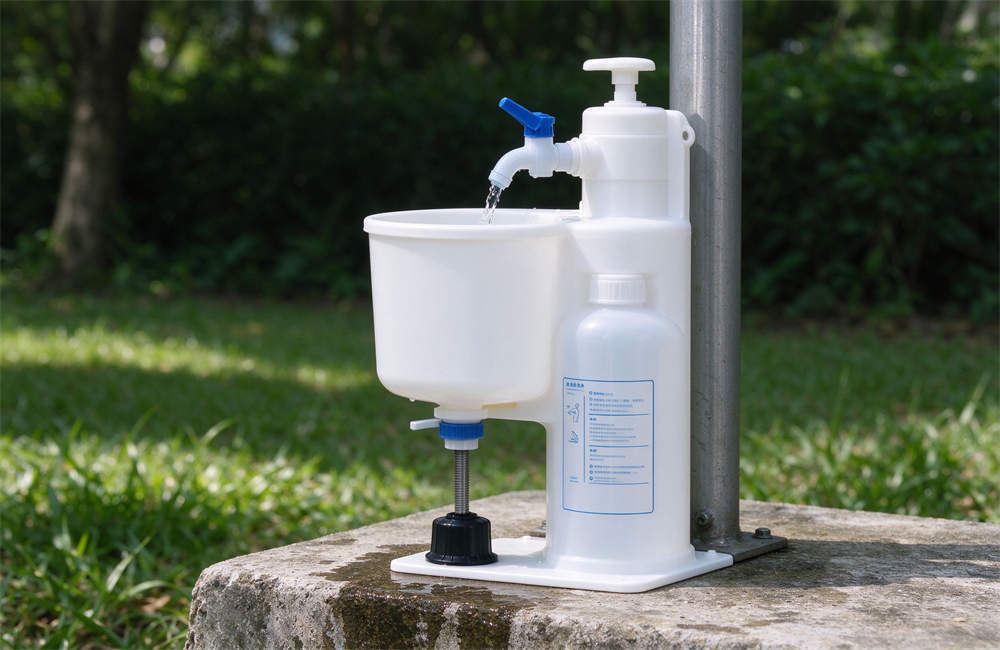
Portable emergency eyewash station unit.
For relief organizations, food poisoning isn't a single event you respond to — it's a set of conditions you prevent. The right supplies, the right hand-washing setup, the right temperature monitoring, and the right education keep a shelter from becoming an outbreak site. When an outbreak does happen, having the right response gear on hand means the difference between 10 cases and 100.
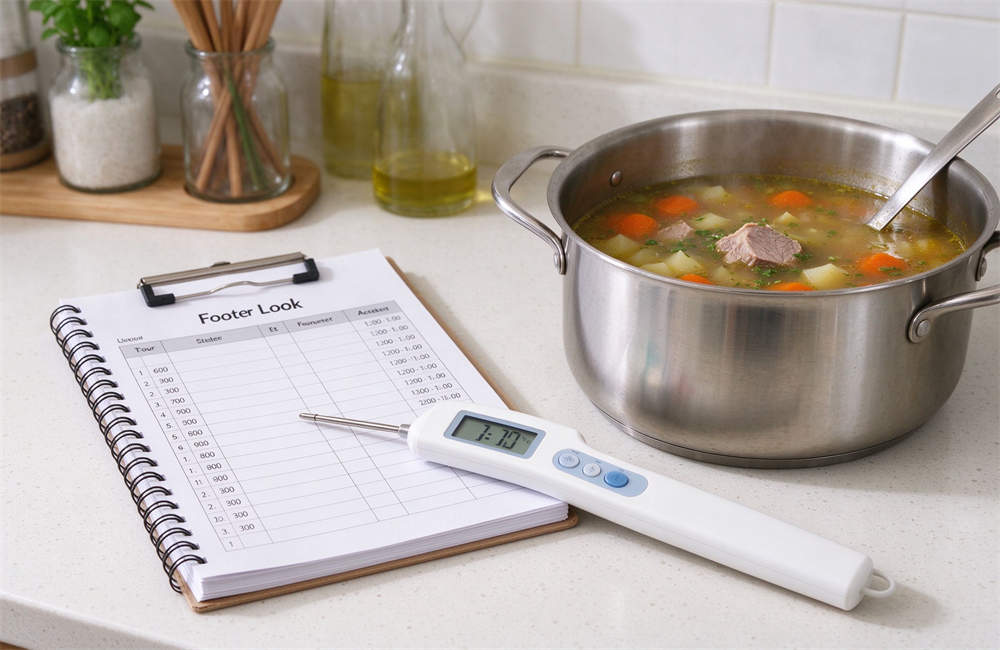
Food thermometer and temperature logbook.
On this page
Foodborne illness in emergency settings isn't bad luck — it's predictable. The WHO lists the conditions that turn a shelter into an outbreak site: power outages that spoil refrigerated food, crowded hand-washing stations, ill food handlers who can't afford to stay home, and shared surfaces that nobody sanitizes. Disasters hit exactly the communities where these conditions already exist, then make them worse.
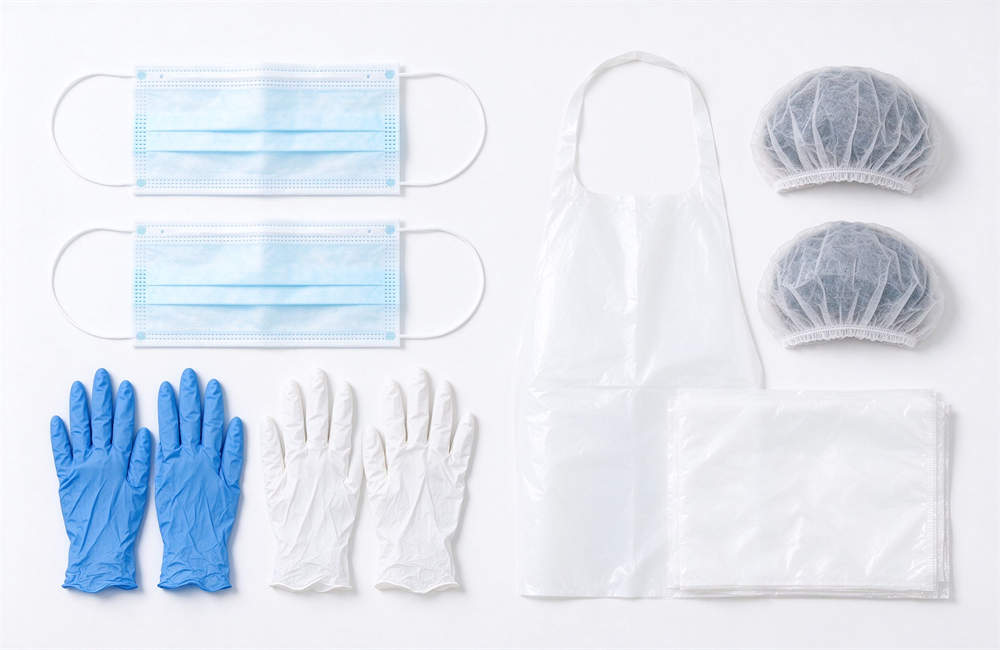
Food handler PPE: masks, gloves, hair nets, aprons.
The good news: most of these conditions are preventable with cheap supplies and basic protocols. A $20 food thermometer, a $10 hand-washing station, and a stack of paper towels prevent more outbreaks than the fanciest medical response. The FDA Food Code and USDA food safety guidelines provide the baseline rules that every shelter kitchen should follow. The relief organizations that think about food safety before the disaster are the ones that don't end up with an outbreak on their hands.
The most common foodborne illness in shelters is norovirus — highly contagious, spreads fast in crowded settings, and survives on surfaces for days. After that comes Salmonella from undercooked food, E. coli from contaminated water, and Campylobacter from poultry. Each has slightly different presentation, but the first response is the same: hydration, isolation, and sanitation.
When you're triaging a sick person in a shelter, the suspected organism changes what you watch for:
|
Pathogen |
Typical Source |
Symptoms |
How It Spreads |
|
Norovirus |
Contaminated surfaces, sick food handlers |
Vomiting, diarrhea, 12-48 hrs |
Fecal-oral, aerosolized vomit |
|
Salmonella |
Undercooked poultry, eggs |
Diarrhea, fever, cramps, 6-72 hrs |
Fecal-oral, contaminated food |
|
E. coli O157:H7 |
Contaminated water, undercooked beef |
Bloody diarrhea, 1-10 days |
Fecal-oral, very low infectious dose |
Norovirus is the shelter emergency for food poisoning emergency supplies planning — it spreads through the air when someone vomits, and you can't wash it away with hand sanitizer. If multiple people in the same shelter start vomiting within 24 hours, assume norovirus and isolate the whole area immediately.
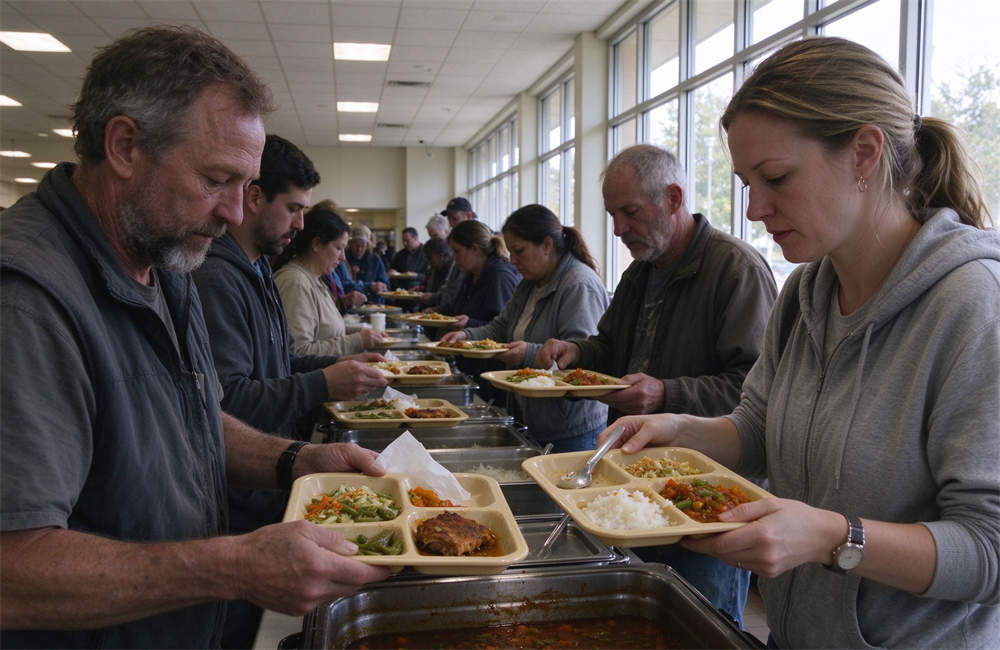
Bright cafeteria: people lining up for meals.
Hand washing is the single most effective shelter food safety intervention. Not hand sanitizer — washing with soap and water. Alcohol-based sanitizer doesn't kill norovirus, which is the most common shelter outbreak pathogen. Every shelter feeding site needs actual portable hand washing stations with soap and water, not just sanitizer dispensers. We supply bulk hand washing stations for emergency feeding programs.
What to stock in bulk:
Portable hand-washing stations. Foot-pump operated stations that don't require plumbing. One station per 50 people in the feeding area. We supply these in kit form with soap and paper towel refills for a week of use.
Soap and paper towels. Plain bar soap or liquid hand soap — not anti-bacterial, just plain soap. Paper towels are more effective than air dryers for food safety because people actually dry their hands.
Surface sanitizer and wipes. Food-contact surface sanitizer (not household bleach, which leaves residue) and disposable wipes for tables, counters, and serving lines.
Gloves and hairnets. Disposable nitrile gloves for food handlers, and hairnets to keep hair out of food. Cheap, but they make a measurable difference.
A hand-washing station isn't just a jug of water. Public health regulations require all five elements at every feeding site:
1. Potable water. Clean drinking water, not water from a storage bladder that's been sitting in the sun. A foot-pump station holds 40L and empties when it's empty — refill it daily.
2. Soap. Plain liquid soap in a wall dispenser. Anti-bacterial soap isn't needed and can contribute to resistance. Just soap.
3. Paper towels. Cloth towels spread germs. Disposable paper towels in a wall dispenser, and a covered trash can for used ones.
4. Signage. A sign that says "WASH HANDS BEFORE EATING" in the languages your shelter population speaks. People wash their hands when they're reminded.
5. Wastewater catch. A basin under the spout that catches gray water, so it doesn't run into the shelter floor. Empty it every 4 hours.
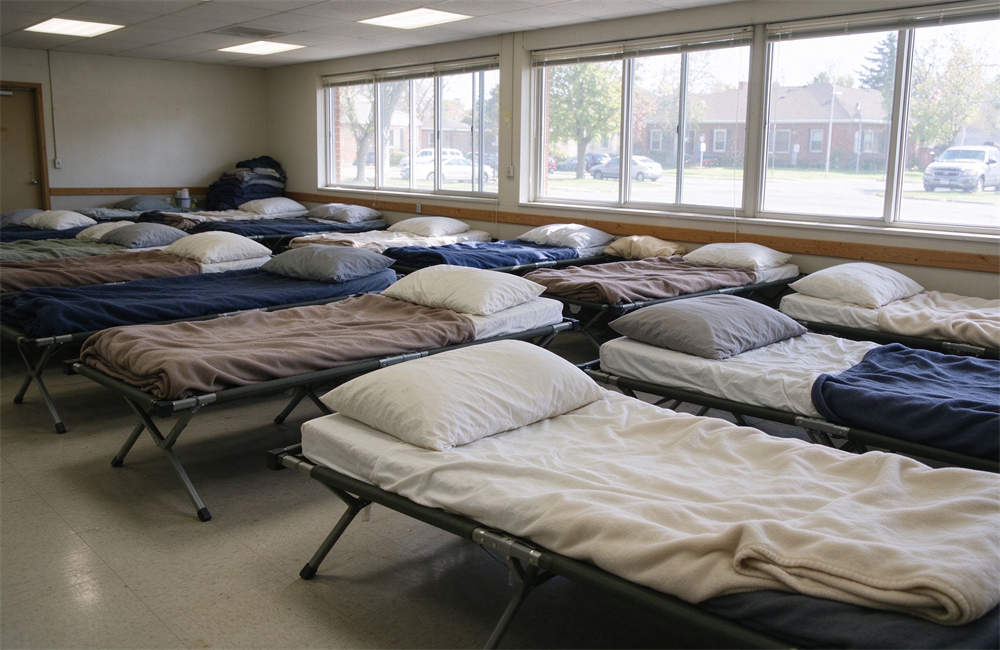
Rows of folding cots in bright shelter interior.
When someone gets food poisoning, the first treatment is oral rehydration. IV fluids are for severe cases — most people recover with oral rehydration salts and rest. Relief shelters should have oral rehydration supplies on hand for the first 24 hours while people wait for medical attention.
Note: We focus on the hydration and shelter side — water cups, rehydration supplies, hygiene kits — not on medications. Antidiarrheals and antibiotics are medical decisions made by clinicians, not relief volunteers. What we supply is the baseline hydration that keeps people from getting worse while they wait.
Every shelter should also have a quiet corner or separate area where people who are sick can rest away from the general population. A cot, a blanket, a trash can, and a bottle of water. That single isolation bed stops more secondary spread than any amount of sanitizer.
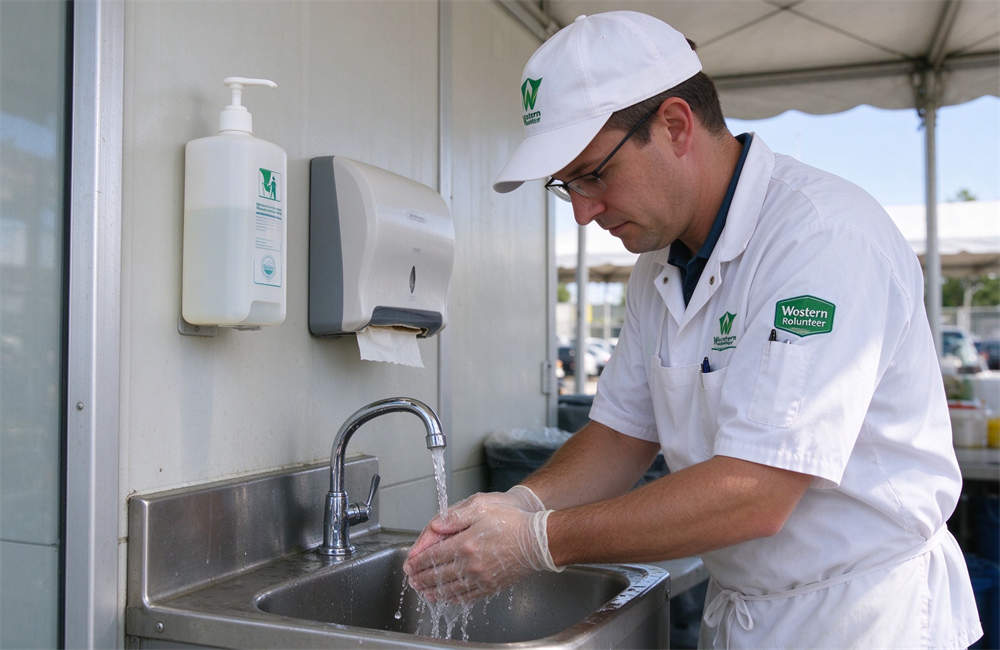
Volunteer washing hands at handwash station.
The #1 cause of foodborne illness in field kitchens is temperature abuse. Food held too warm grows bacteria. Food thawed too slowly grows bacteria. Food reheated unevenly grows bacteria. A $20 food thermometer prevents more outbreaks than anything else you can buy.
The safe temperature rules are straightforward. Refrigerators must stay at 40°F (4°C) or below, tracked daily with a min/max thermometer. Freezers at 0°F (-18°C) or below. Hot holding must stay at 140°F (60°C) or above, checked every 2 hours with a probe thermometer. Cold holding stays at 40°F or below. Poultry must reach 165°F (74°C) in the thickest part. Thawing happens under refrigeration, never on the counter.
We supply food safety thermometers — waterproof digital probe thermometers that survive a kitchen environment, and min/max refrigeration thermometers that track the warmest and coldest point all day. Every field kitchen should have two probe thermometers (one for cooking, one for holding) and one min/max in each refrigerator.
The logbook matters as much as the thermometer. If the health inspector shows up and you have a week of food safety temperature logs, you're fine. If you have nothing, you're shutting down. Pre-printed temperature log pads are cheap, and they keep the kitchen honest.
Per FDA food safety guidelines, perishable food in the "danger zone" (40–140°F / 4–60°C) follows a simple rule:
2 hours: If food has been in the danger zone for more than 2 hours, throw it out. Don't taste it. Don't reheat it. Don't serve it.
4 hours: If the ambient temperature is above 90°F (32°C), the window shrinks to 1 hour. Hot outdoor kitchens in summer have zero margin.
For shelter operators: write the time food comes out of the cooler or off the stove on a piece of tape. If anyone asks "is this still okay?" you look at the tape, not the food. When in doubt, throw it out. A $10 batch of ruined food is cheaper than an outbreak that shuts down the shelter.
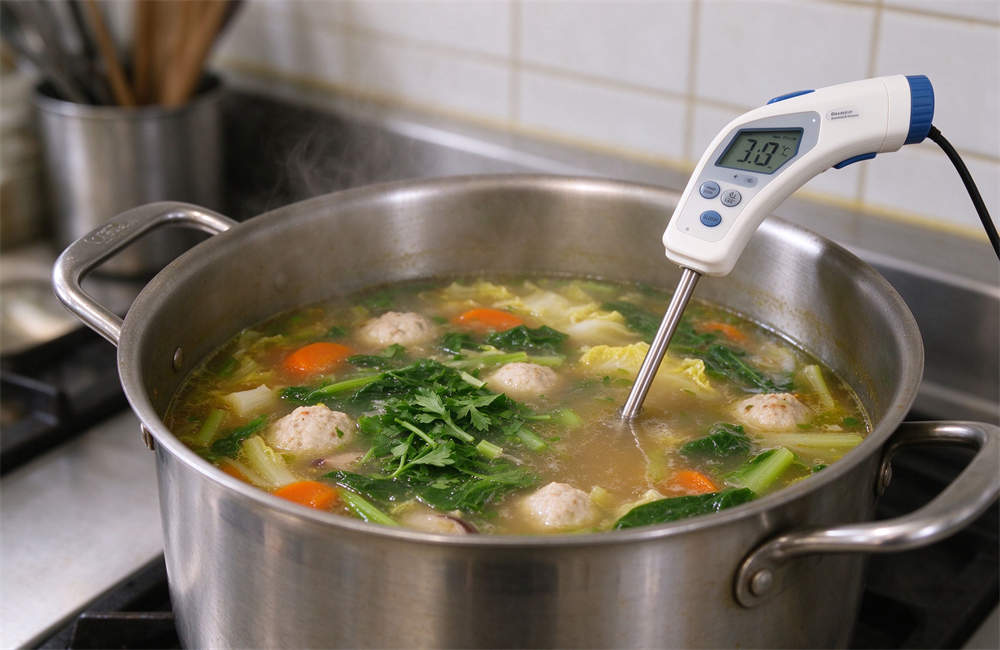
Thermometer checking soup pot internal temperature.
Running a field kitchen for hundreds of people a day is different from cooking at home. The supplies scale differently, and the margins for error are thinner. Here's what we supply for field feeding operations:
Food storage containers. Stackable, NSF-rated plastic containers for dry storage and refrigerated storage. Labeled, dated, and sized for the quantities you're handling.
Serving line supplies. Disposable food service gloves, serving tongs, sneeze guards for the serving line, and disposable trays or plates. The goal is to minimize hand-contact with food.
Cleaning supplies. Three-compartment sink setup (wash, rinse, sanitize), dish soap, sanitizer test strips to confirm the sanitizer concentration is right, and dish racks for air drying.
Garbage and waste. Lined trash cans with lids, food waste bins separate from general waste, and enough bags to handle the volume. Uncovered food waste is a pest magnet and a pathogen spreader.
The way people move through the food line matters more than most operators realize. The line must be one-way — no backtracking, no cross-traffic between clean and dirty zones.
The feeding line flows one direction only, in this order. At the entrance, check for illness symptoms — no sick people in line. Next comes hand washing: soap and water for at least 20 seconds, and the station must be at the entrance, not the exit. Then food pickup: the server wears gloves and a mask, and there's no self-service at protein or dairy stations. Then tray and utensils: individually wrapped, no shared utensil bins. Then seating: 4-6 people per table, spaced apart, no communal family-style serving. Finally exit: trash disposal and a hand sanitizer station, with tables sanitized between seatings.
For 500 people, you need two parallel lines, not one long line. One line with 250 people creates a bottleneck, and people start skipping hand-washing because they're hungry. Two short lines move people through in 10 minutes. We supply complete shelter feeding program equipment — hand washing stations, gloves, masks, serving utensils, and sanitizing supplies.
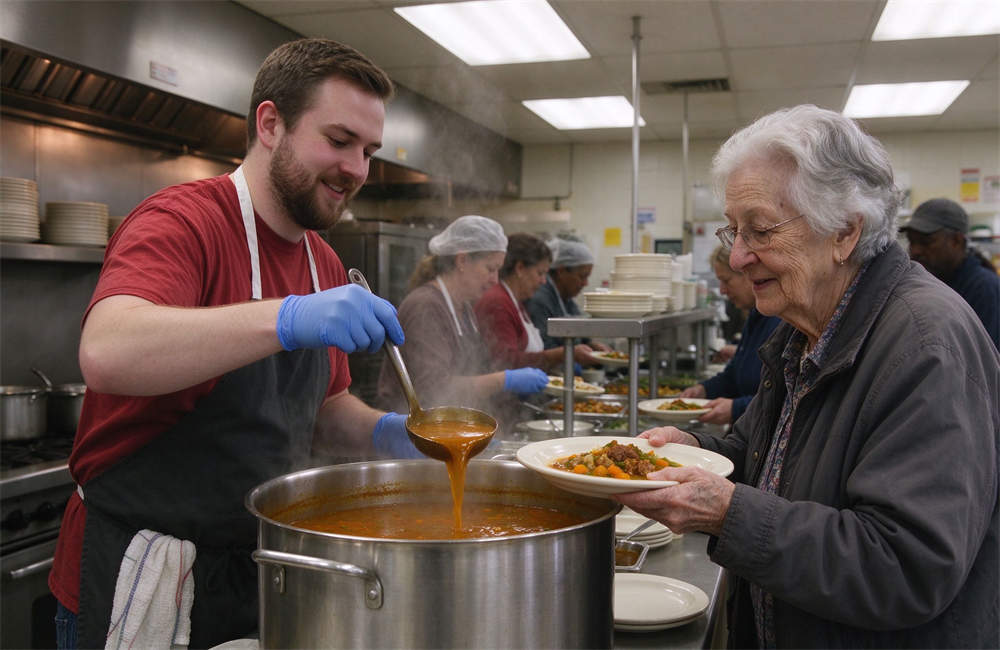
Volunteer serving hot soup to elderly resident.
When an outbreak hits, you need gear immediately, not next week. A pre-built food poisoning outbreak response kit — stored in a labeled tub, ready to grab — turns a chaotic scramble into a controlled response.
What's in the kit:
- Additional hand-washing stations (2 extra, for hot zones)
- Cases of rehydration salts and bottled water
- PPE: masks, gloves, gowns for staff dealing with sick residents
- Cleaning supplies: bulk sanitizer, disposable wipes, biohazard bags
- Log sheets: who's sick, what they ate, when symptoms started
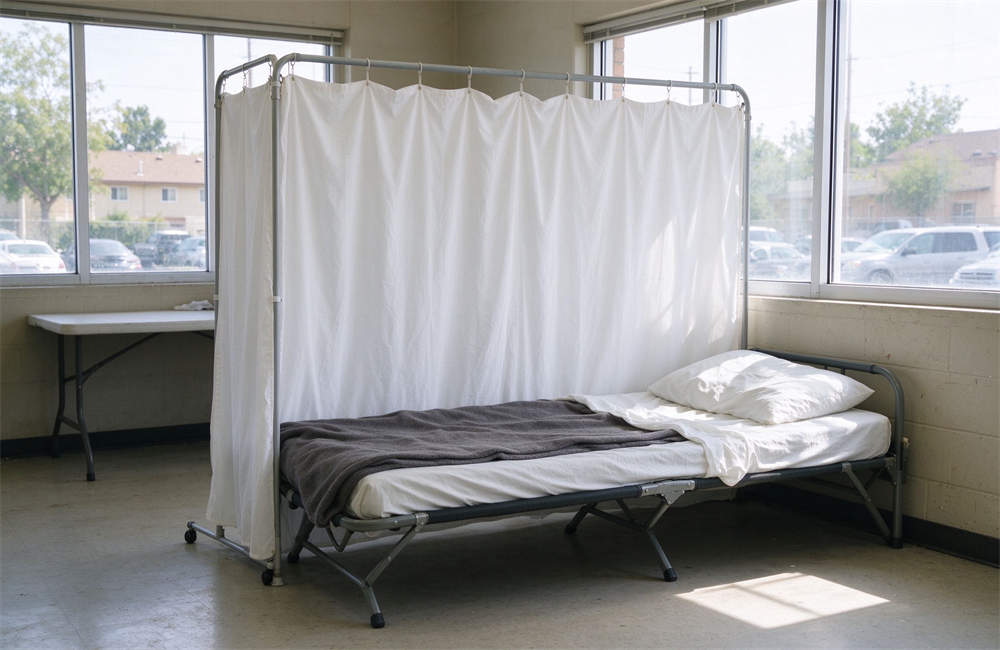
- Privacy screens for the isolation area
We build custom outbreak response kits to your shelter size. A 50-person shelter needs one kit. A 500-person shelter needs three, stored in different locations so one contaminated area doesn't take out all the supplies.
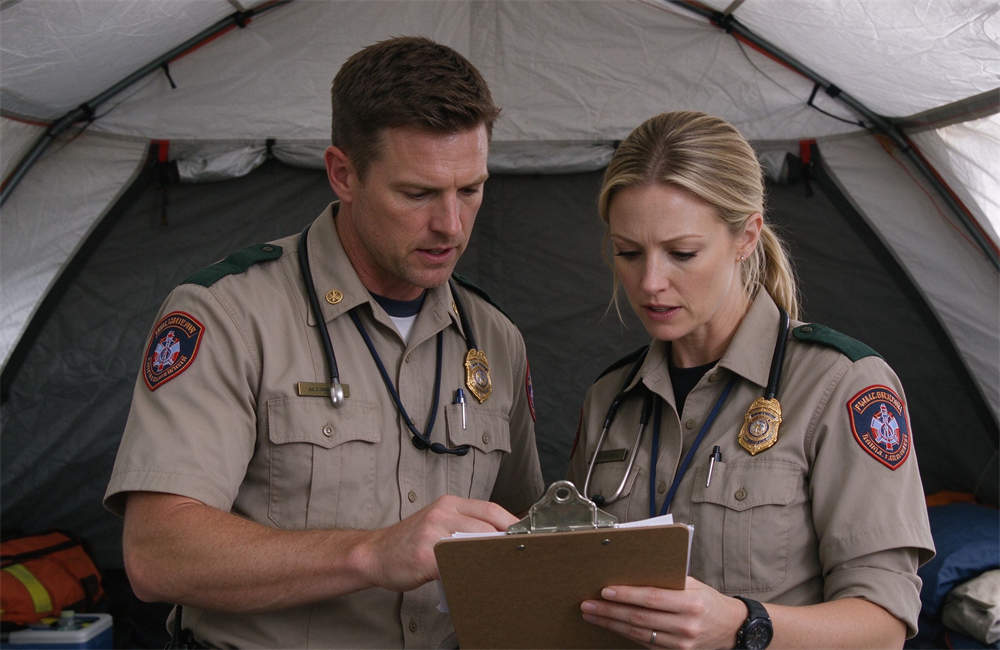
Staff discussing outbreak cases in shelter.
The hardest call for a shelter manager is when to stop feeding people. But continuing to serve food in an active outbreak makes it worse. Here are the thresholds to watch. If three or more people get sick from the same meal shift, shut down hot food service — that's the outbreak threshold, don't wait for ten. If the water supply is compromised, shut down the kitchen entirely because no water means no hand washing and no safe food. If the fridge is above 40°F for more than four hours, toss all refrigerated food because bacteria grow rapidly in the danger zone. If a staff member shows symptoms, send them home immediately because sick food handlers spread pathogens fast. If food temperature hasn't been checked for two hours, reject the batch because unknown temperature means unsafe to serve.
When you shut down, switch to sealed, pre-packaged meals only — no cooking, no shared utensils, no buffet style. Individual meals in sealed packaging, one per person, eaten away from the crowd. It's boring, but it stops the outbreak from spreading further.
Every professional kitchen keeps a 48-hour food sample retention of every batch served. It's not complicated — you put a small portion of each food item in a labeled bag, date it, and keep it refrigerated for 48 hours. If someone gets sick, public health can test the exact food that was served.
For field kitchens, food sample retention is even more important because the kitchen is makeshift. We supply labeled sample bags, a dedicated mini-fridge for samples, and pre-printed log sheets. It costs almost nothing and it's the difference between "we think it was the chicken" and "we know it was the chicken."
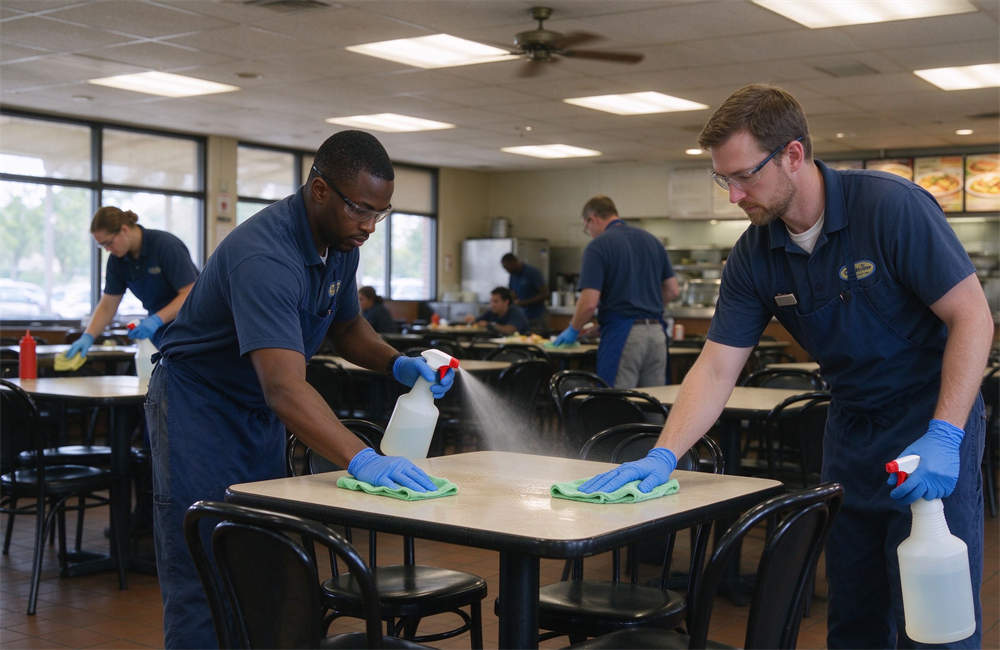
Staff disinfecting tables and surfaces.
Food safety starts with water. If the water supply is compromised, every food safety measure in the kitchen is wasted. After disasters, municipal water systems are often compromised — boil water notices go out, and people need safe drinking water.
We focus on water storage — foldable water bladders, jerry cans, and bulk bottled water — not on water treatment itself (that's a separate specialized category). For shelters, the math is simple: 1 gallon per person per day for drinking, plus another gallon for hand washing and food prep. A 500-person shelter needs 1,000 gallons a day minimum.
Food storage after power outages is its own discipline. When the power goes out, a closed refrigerator keeps food cold for 4 hours. A closed freezer keeps food for 48 hours. After that, food in the temperature danger zone (40–140°F) needs to be thrown out. When in doubt, throw it out — that's the food safety mantra. We supply the coolers and ice that extend that window, but we don't supply the food itself.
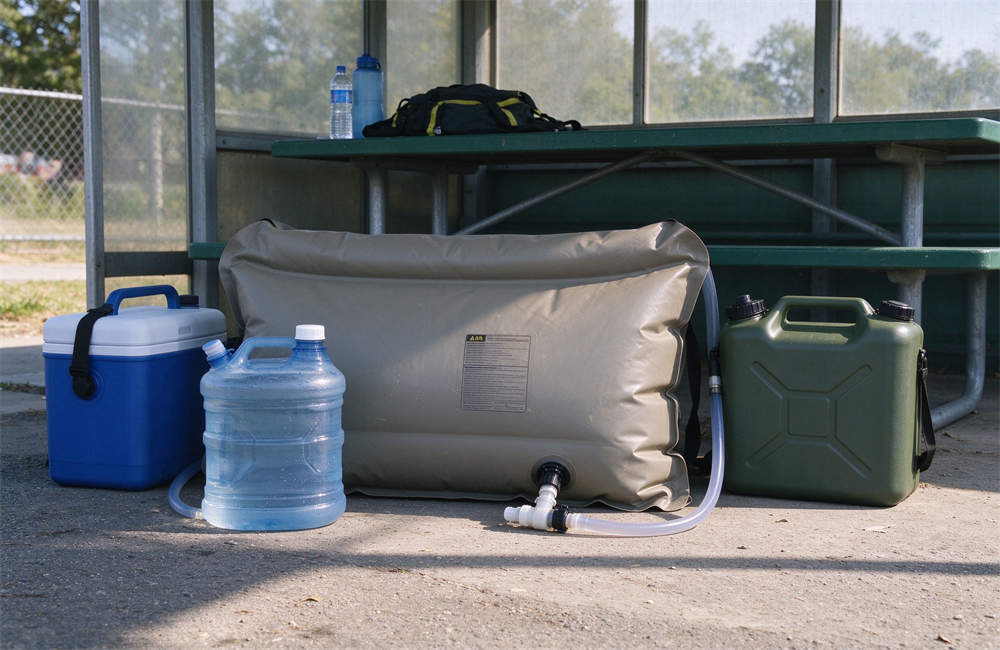
Foldable water bladder tanks in multiple sizes.
Relief shelters have a captive audience. People are sitting around with nothing to do. That makes it the perfect time to put up food safety signage — in multiple languages — that people actually read while they're waiting in line for food. We supply bilingual signage as part of our emergency shelter sanitation supplies packages.
Signs to post:
- "Wash hands with soap and water for 20 seconds" at every hand-washing station
- "Sick? Don't cook. Tell a volunteer." in the kitchen area
- "When in doubt, throw it out." near food storage
- "Report diarrhea or vomiting to a volunteer." near the shelter entrance
We print custom signage in the languages your community speaks. Plain language, big font, pictures for people who can't read. The goal is not to win design awards — it's to communicate the one thing people need to know before they touch food.
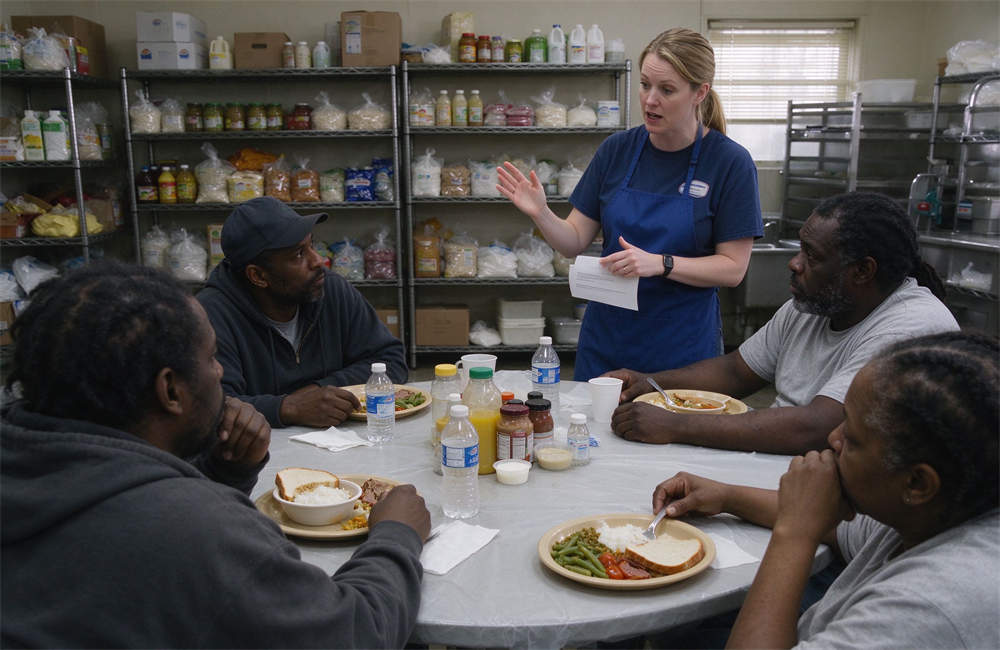
Volunteer conducting food safety training session.
Field kitchens and cleanup crews deal with chemicals — sanitizer concentrates, degreasers, industrial cleaners — that splash into eyes or onto skin. Every shelter kitchen needs an emergency eyewash station within 10 seconds' walk of where chemicals are used.
We supply emergency eyewash stations for relief kitchens and field operations, in five configurations. A combination shower plus eyewash unit is best for a permanent kitchen or chemical storage area, and it needs plumbing for continuous flow. A wall-mounted eyewash only fits a small kitchen or prep area, also plumbed. A portable 8-gallon unit works for a temporary shelter with no water line — you fill it manually and it provides about 15 minutes of flushing. A portable 16-gallon unit fits a remote field site with a larger crew, giving a full 15 minutes plus reserve. For winter shelters or unheated garages, we supply freeze-protected, heat-traced units that stay usable in sub-zero temperatures.
The rule: eyewash stations must deliver 15 minutes of continuous flushing. Test them weekly, flush the lines monthly, and post a sign that says "TESTED [DATE]" so inspectors can see it's maintained. We supply the stations and the maintenance log sheets.
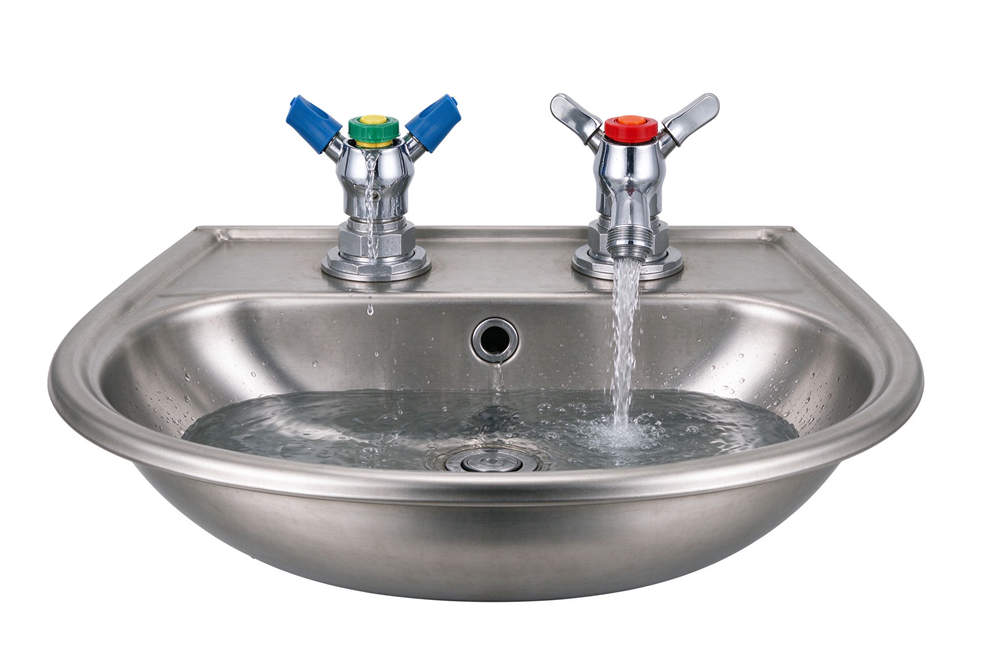
Stainless steel combination eyewash and shower station.
Relief volunteers aren't medical providers, but you're often the first person someone tells about symptoms. Here's the triage rule every volunteer should know:
|
Symptoms |
What You Do |
|
Mild stomach upset, no fever, no blood |
Give water, rehydration salts, rest in isolation area, monitor |
|
Diarrhea or vomiting, persistent |
Refer to on-site medical clinic, keep isolated, log symptoms |
|
Blood in stool, high fever, signs of dehydration |
Call 911 immediately, this is an emergency |
|
Multiple people sick with same symptoms |
This is an outbreak — notify shelter lead and health department immediately |
The "multiple people" rule is the one people miss when setting up outbreak response kits. Three people with the same GI symptoms in a 24-hour window is an outbreak until proven otherwise. Don't wait for ten people. Three triggers the health department call.
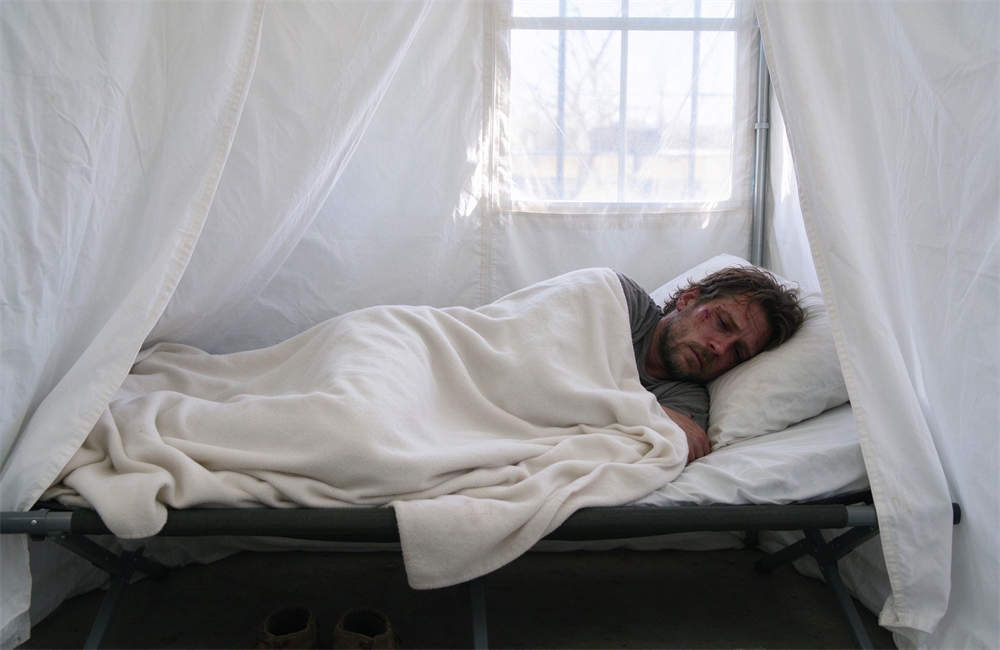
Patient resting on isolation cot with clean blanket.
Shelter food safety supplies are inexpensive compared to the cost of an outbreak. Here's a starting budget for a 200-person shelter:
|
Item |
Quantity |
Estimated Cost |
|
Portable hand-washing stations |
4 |
$1,200 |
|
Food thermometers (probe + min/max) |
6 |
$180 |
|
Hand soap + paper towels (month) |
1 case each |
$300 |
|
Surface sanitizer + wipes (month) |
1 case each |
$250 |
|
Outbreak response kit |
1 |
$800 |
|
Temperature log pads |
12 |
$60 |
|
Custom signage (printed) |
1 set |
$200 |
Total: around $3,000 to set up a 200-person shelter with bulk food safety supplies. Compare that to the cost of a single norovirus outbreak — CDC puts a single outbreak's medical and business costs at hundreds of thousands of dollars — and this is the cheapest insurance you'll ever buy.
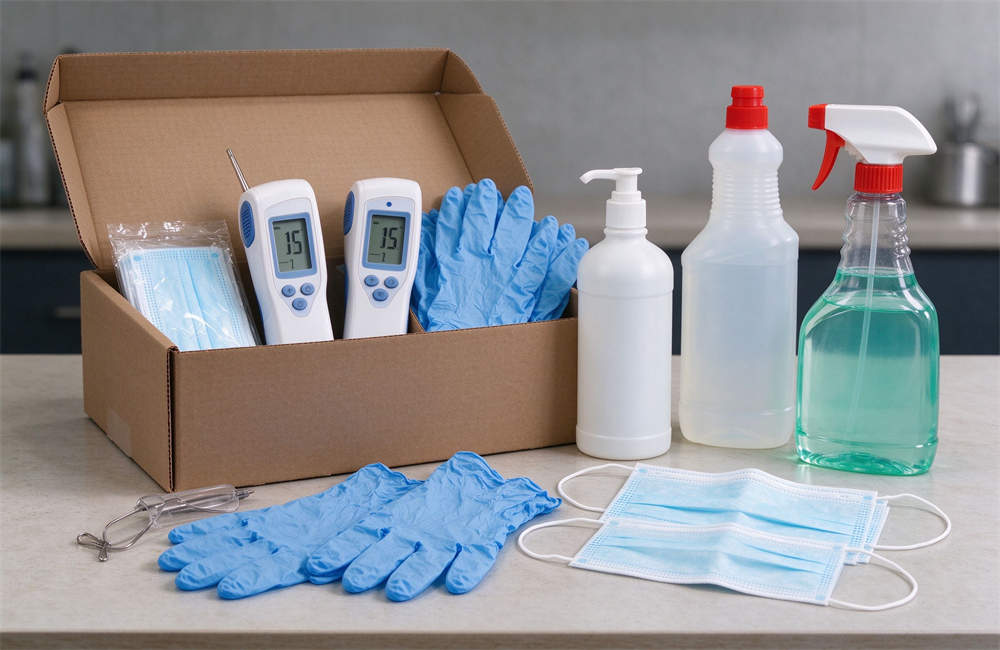
Open box of bulk food safety emergency supplies.
As a manufacturer supplying relief shelters worldwide, here's what you can expect when you work with us:
Food-grade products, full certification. Everything that touches food is food-safe rated — NSF, FDA, or equivalent. We provide the certification documentation with every order, so your procurement team has everything they need for health department audits.
Flexible quantities for shelter sizes. A 50-person shelter doesn't need a pallet of soap. We sell in case quantities so you buy what you actually use — from small pilot programs to large county-wide operations.
Custom signage and printing. Your logo, your languages, your protocols. We print to your spec — we've done bilingual English/Spanish signage for Texas shelters, French/English for Quebec teams, and more.
Stock on hand, fast shipping. We keep the basics in our warehouse and ship in days — because when a shelter opens, you need supplies that day, not next month.
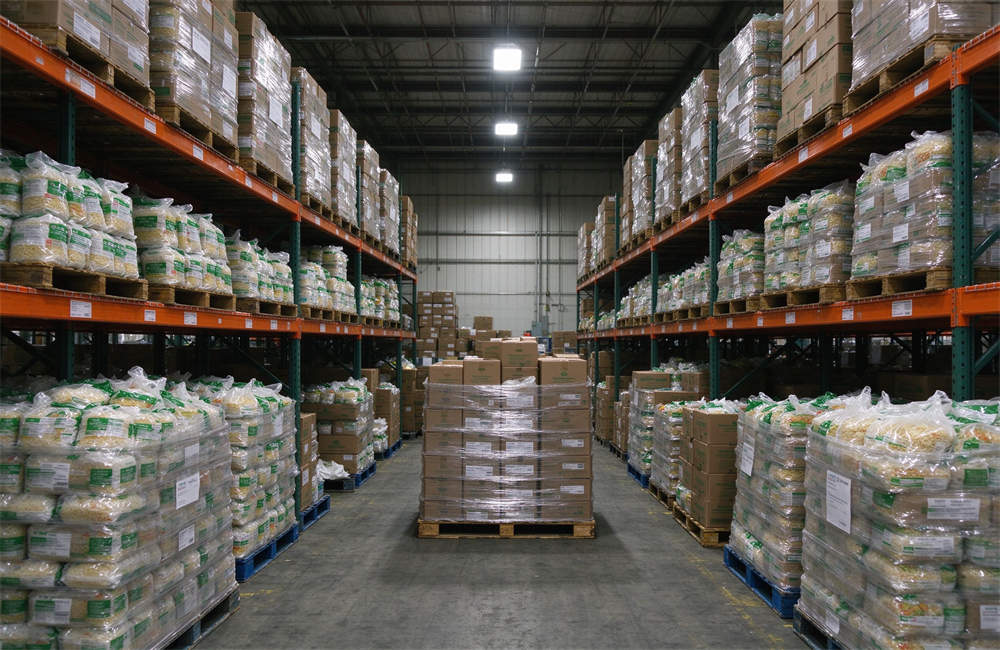
Warehouse: food safety supplies on organized shelves.
Tip 1: Hand washing comes first. Sanitizer is a backup, not a replacement. Every feeding site needs actual soap and water — hand sanitizer alone doesn't kill norovirus. We supply portable hand washing stations for emergency feeding programs.
Tip 2: Logs matter as much as thermometers. A thermometer without a log is decoration. We include printed temperature log sheets with every thermometer order — so your team starts logging from day one.
Tip 3: Sick staff stay out of the kitchen. Make it explicit: if you're sick, you don't cook. We supply isolation gowns and masks so sick staff can still help — just not with food.
Tip 4: Have an isolation area. One cot in the corner for sick residents stops the spread. We see shelters that set this up early have far fewer outbreak cases.
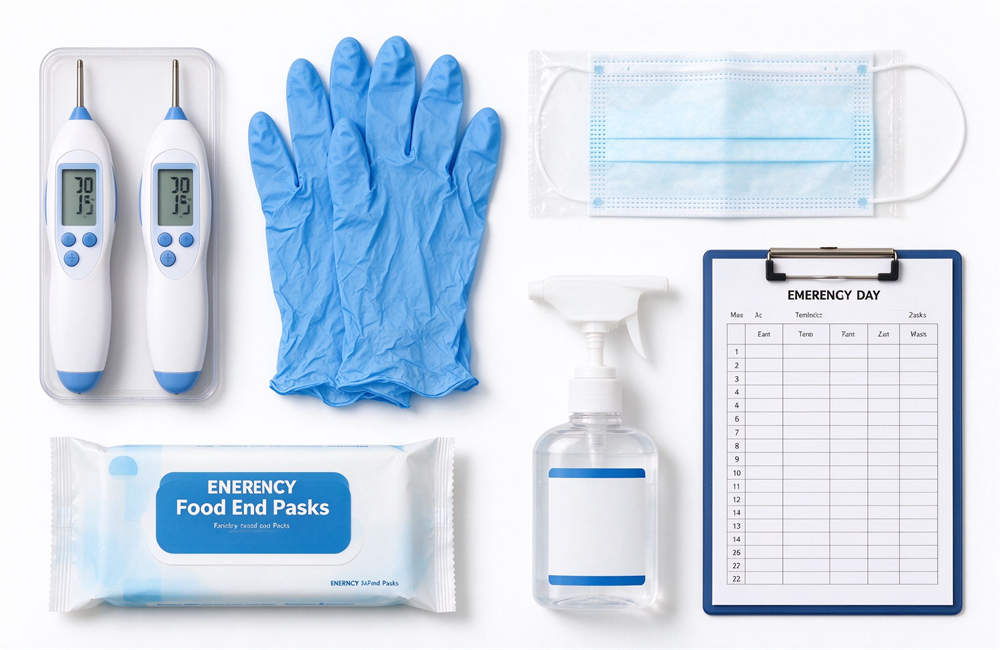
Food safety kit: thermometer, gloves, masks, wipes.
One station per 50 people in the feeding area, minimum. If the shelter is at capacity, add more. People won't walk across the shelter to wash their hands — put the station right where people get food.
Hot food at 140°F (60°C) or above. Cold food at 40°F (4°C) or below. The temperature danger zone is 40–140°F — bacteria double every 20 minutes in that range. Don't hold food in the danger zone for more than 2 hours.
No, not in the shelter. Pathogen testing is a lab thing, done by the health department when an outbreak is suspected. Your job is to prevent the conditions that grow pathogens, not to run a lab.
Get them into the isolation area, give them water and rehydration salts, monitor them, and refer to medical care if it's severe. Log what they ate and when symptoms started. If multiple people are sick, call the health department. Having foodborne illness response kits ready means you can act fast.
Closed refrigerator: 4 hours. Closed freezer: 48 hours. After that, when in doubt, throw it out. Don't taste food to see if it's bad — you can't see, smell, or taste the bacteria that make you sick. This is why emergency food safety supplies include so many thermometers and log sheets.
Yes, within 10 seconds' walk of where chemicals are used. Sanitizer concentrates and degreasers splash. We supply portable 8-gallon eyewash units for temporary kitchens — no plumbing needed, just fill and go.
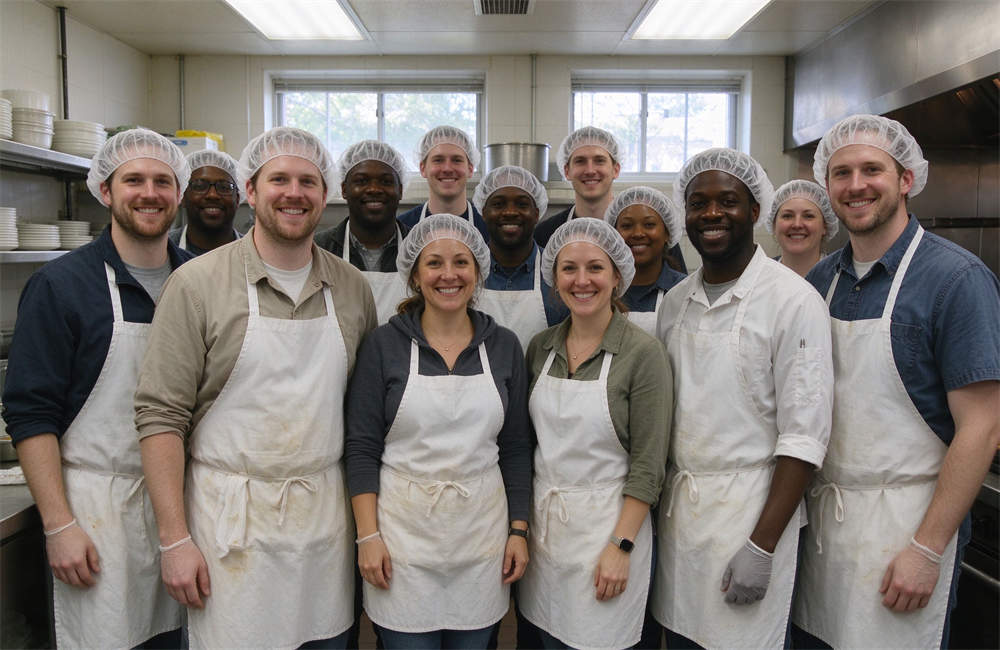
Relief kitchen volunteer team group photo.
Stocking up on food poisoning emergency supplies for your shelter?
We work with shelter operators, public health departments, and relief organizations worldwide.
 |

|
Bulk food safety and shelter supplies from a China-based manufacturer. CE / FDA certified. Shipping worldwide.
Дружні посилання :
Авторське право © Custom Disaster - Relief Bedding: Tents, Sleeping Bags, Blankets Всі права захищені
професійна команда для обслуговування !