Категорії
Last updated: November 4, 2026
Construction Work Light Setup for Night Job Sites
Lighting Setup Guide
A construction work light must deliver enough lux by task, be laid out by zone and positioned after dark: this guide covers lux levels, rig layout and step-by-step night site lighting setup for safe, efficient work on any job site.
Choosing the right work light for construction decides whether a night shift stays safe and productive.
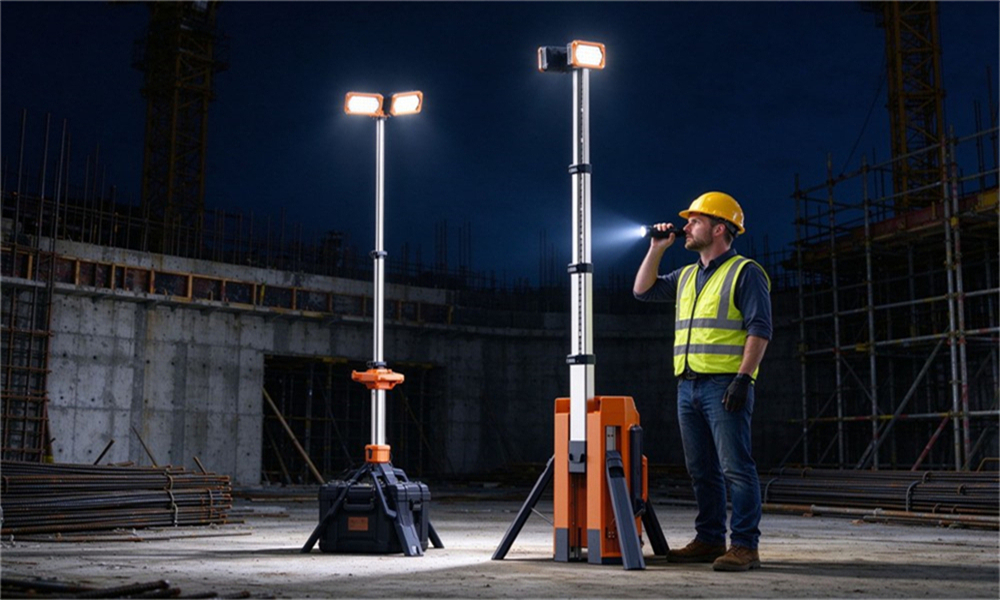
This guide shows how much light a site needs, how to lay out construction site lighting by zone, and where to position lighting rigs after dark. It applies OSHA 1926.56 and EN 12464-1 lux targets so a construction work light covers concrete pours, rebar zones, access roads and night shifts without glare or dark pockets.
We compare diesel and solar towers, explain how to choose construction site lighting for your project, and list night work lighting safety notes aligned with OSHA construction lighting standards.
Specifications below are planning ranges. Exact wattage, lumen output and runtime are confirmed in your contract, so you can plan a tender or a rental fleet without being locked to a single figure.
Whether you light a disaster camp, a night shift or a remote checkpoint, the goal is the same: even, glare-controlled light where people work, with quiet operation and zero on-site exhaust.
Compare the configurations below, then send your site dimensions and night-shift hours for a matched model shortlist. Every figure on this page is a planning range, confirmed in your contract.
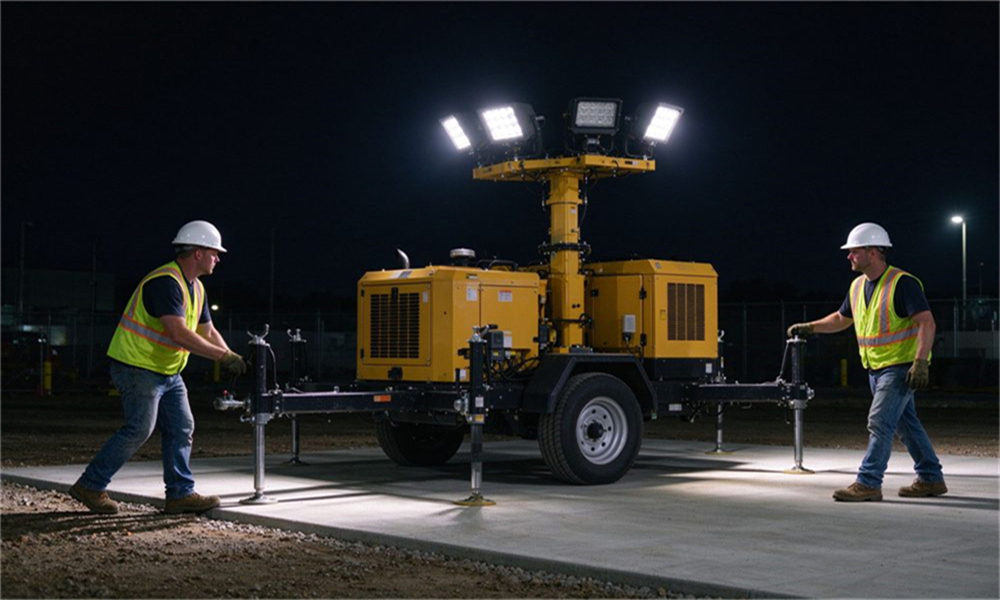
Most night construction lighting delays do not come from bad weather or missing materials.They come from poor lighting.
A job site that looks fine in daylight can turn into a shadowed, uneven space after the sun goes down, and that is exactly when errors, rework and near misses spike.
A well chosen work light for construction fixes this before it becomes a safety incident.
The goal is not to flood the whole site with glare, but to put the right amount of light exactly where people are working, while keeping walkways, crane paths and equipment access visible.
Construction site lighting falls into three layers.
Area lighting covers large zones with tall construction flood lights, task lighting concentrates light on close detail work, and emergency lighting equipment keeps exits and routes usable if the main power drops.
On a typical night shift, your crew moves between these layers, so your equipment has to cover all three without creating dark corners or blinding pools.
Planning this temporary lighting for construction site on paper first, then adjusting on site, is what separates a smooth night pour from a frustrated crew.
Look at an active compound from above: the brightest light sits over the main work face, while softer spill covers access roads and storage.
Towers are placed off the work zone so shadows fall away from the task.
This rule, keep the light behind you and ahead of the work, prevents most visibility problems that slow a night crew.
It also reduces the double-darkness when a worker walks between two bright towers.
Before you choose any fixture, map the night shift.Write down which trades are working, what tasks they are doing, and where people will walk.
A rebar crew needs even, diffuse construction lighting across a wide slab.An electrical or finish crew needs a tight, bright beam on a small panel.
Matching the work light to the task, rather than buying one generic unit for the whole site, is the fastest way to raise quality and cut complaints.
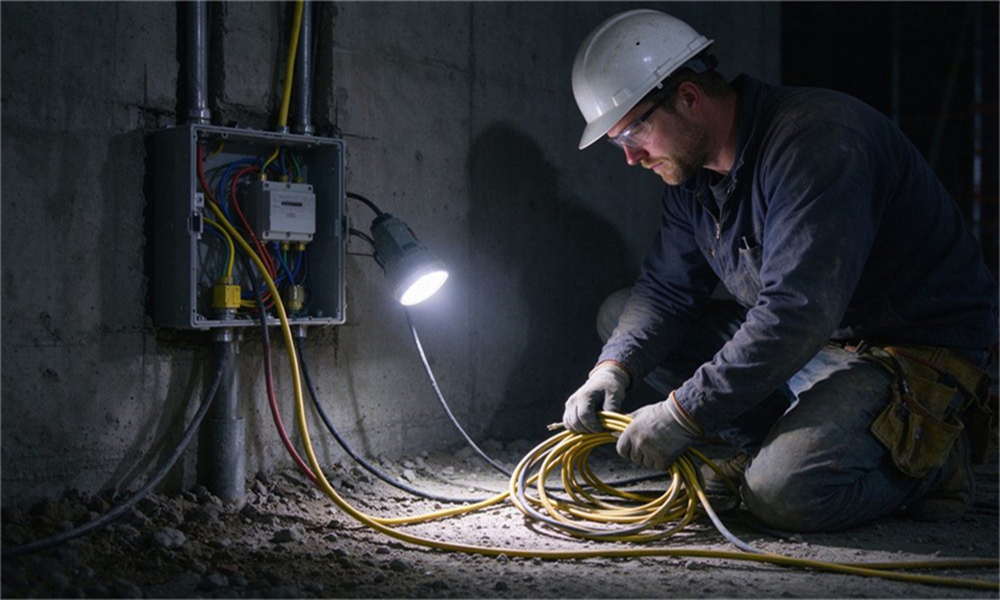
Task lighting is where a lot of sites go wrong.A tall tower cannot light the inside of a distribution box or the underside of a slab.
That is why focused, rechargeable work light units matter so much.
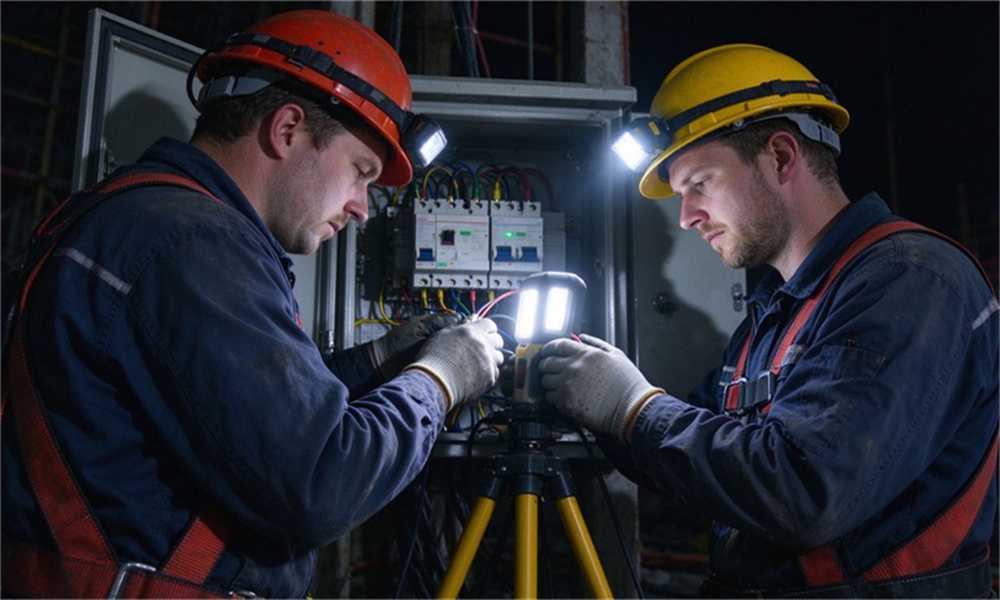
A rechargeable unit on a tripod can be moved to the exact spot, angled to avoid glare in the worker's eyes, and run through a whole shift.
Treat these as standard kit, not as an afterthought, and close-up mistakes drop sharply from the first night.
Night shifts exist for good reasons: concrete pours run after dark to beat heat, urban sites work at night to limit traffic, and some projects need extra hours.
Whatever the reason, your construction site lighting plan must match the shift.A site lit for a quiet maintenance crew is under-prepared for a full concrete crew moving steel and pumps.
Match light intensity to work intensity, not to the clock.
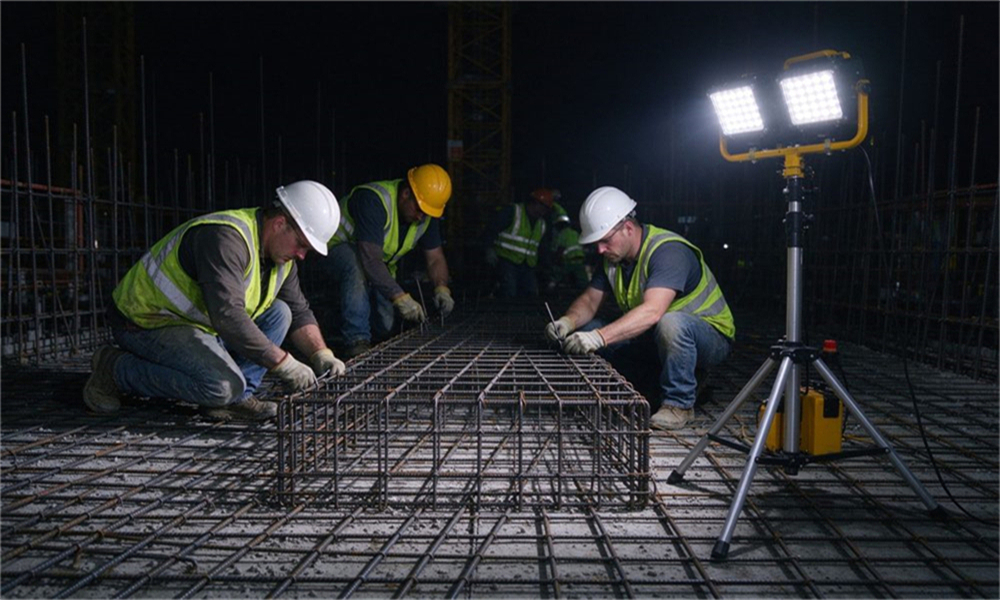
One of the first questions a foreman asks is simple: how bright is bright enough?Too little light forces workers to guess at detail and raises fatigue.
Too much construction site lighting wastes fuel, drains batteries and creates glare that is just as dangerous.
The practical answer uses lux levels, a measure of how much light actually lands on a surface, matched to the task.
Choosing the right work light for construction starts here, because a tower's total wattage means little without a target lux level on the ground.
General site movement, walkways and vehicle routes need a low but even level.Active work faces need several times more.Fine detail work, such as electrical termination or inspection, needs more again.
The table below gives practical target ranges you can adjust to your own tasks.
These are planning figures, not legal minimums, but they are a reliable starting point for any night setup.
|
Work task |
Target lux range |
Recommended light type |
Notes |
|
Walkways, access roads, storage yards |
20 to 50 lux |
Tall flood lighting rig |
Even spill, avoid dark corners |
|
General excavation, formwork, concrete pour |
50 to 100 lux |
Mobile LED lighting rig |
Cover the whole work face |
|
Rebar fixing, steel erection, masonry |
100 to 150 lux |
LED tower plus task fill |
Reduce long shadows |
|
Electrical, piping, finish, inspection detail |
200 to 300 lux |
Focused rechargeable work light |
Direct at the small task area |
The jump from walkway to fine detail is huge: a walkway needs a faint safety outline, while a wiring task needs light strong enough to read small markings.
This is why one tower per zone rarely satisfies every trade.
The smart layout uses one main construction flood lighting rig for the area level, then adds focused portable flood light units wherever close detail happens.
Equipment choice follows the same logic.Diesel construction flood lighting rigs run all night and handle large, open sites.These construction flood lights are the workhorse for remote greenfield pours.
Solar towers run silent with no refueling, ideal near offices or residential areas.Portable lifting units cover smaller or shifting zones.
The next table compares these temporary lighting sources at a glance so you can pick the right mix before nightfall.
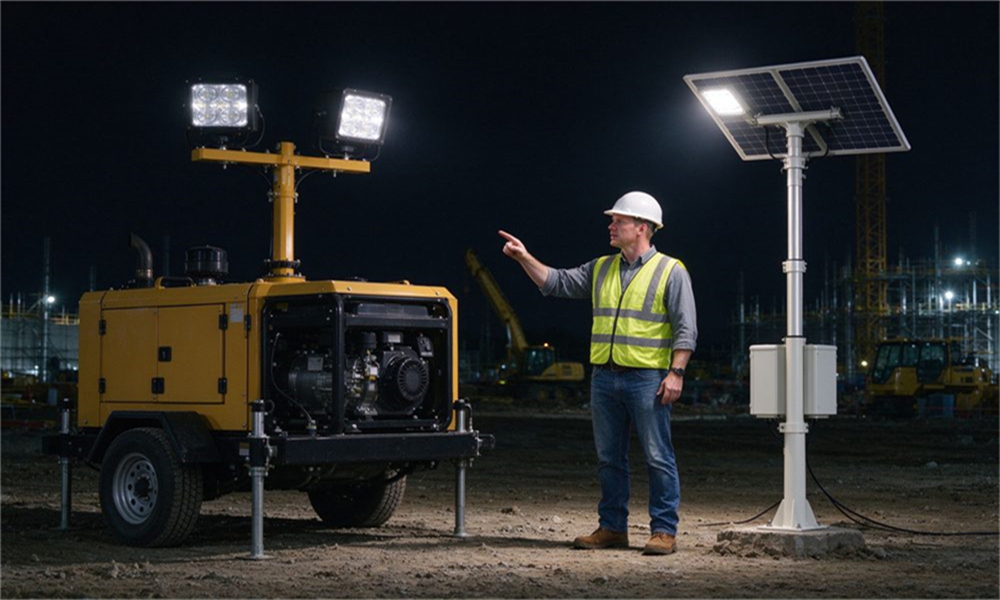
|
Equipment type |
Suited for |
Runtime |
Portability |
|
Diesel lighting rig |
Large open sites, all night pours |
Long, refuel on site |
Towed, set once per zone |
|
Solar lighting rig |
Quiet or off grid areas, low emission sites |
Overnight on battery |
Towed, no fuel needed |
|
Portable lifting flood light |
Small or moving task zones |
Battery per shift |
Easy carry and reposition |
Most successful sites run a hybrid.One or two towers hold the base level across the compound, while three to five portable units follow the active work.
This keeps temporary construction lighting flexible as the crew moves from slab to structure to fit-out.
It also means you never over-light an empty zone just to keep one small task visible.
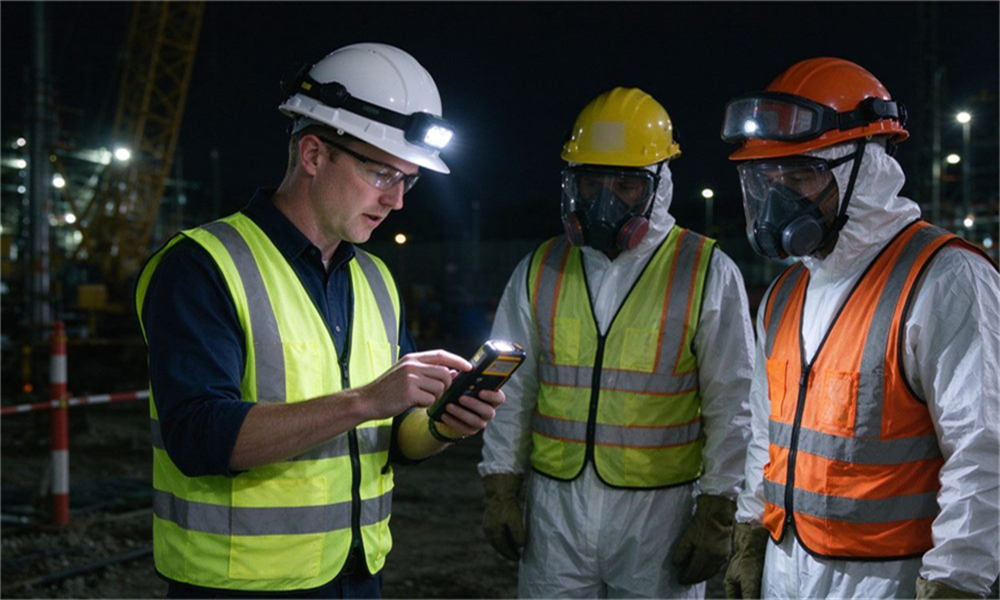
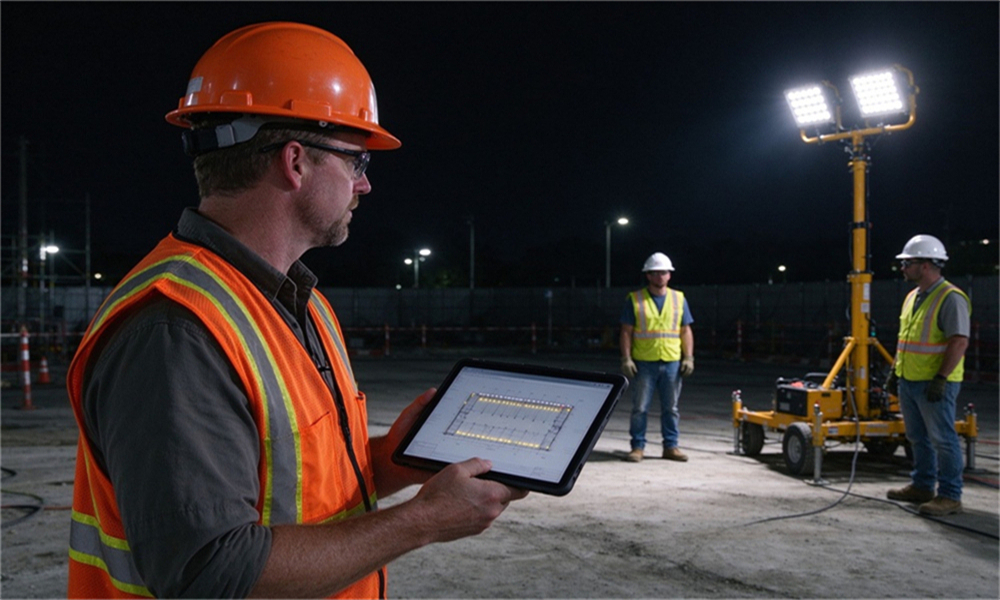
To confirm a layout delivers the numbers, use a light meter.
Hold it flat on the work surface, read lux at center and edges, then move towers until the weakest point clears your target.
This takes ten minutes and gives you proof if an auditor asks how the light was verified.
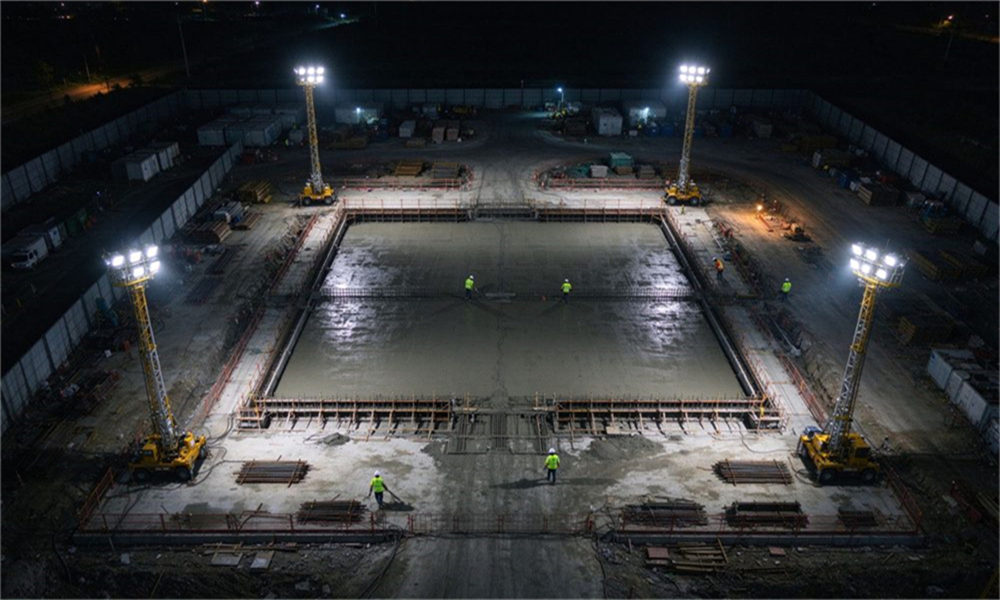
A site is not one flat surface.It is a stack of zones, each with its own lighting needs, and good construction site lighting treats them separately.
The open slab, the interior structure, the material yard and the crane or vehicle route all behave differently under light.
If you treat them as one area and aim all towers at the same spot, you will over-blight one zone and leave another dark.
The open work face, such as a slab pour or steel erection, takes the main construction site lighting towers.
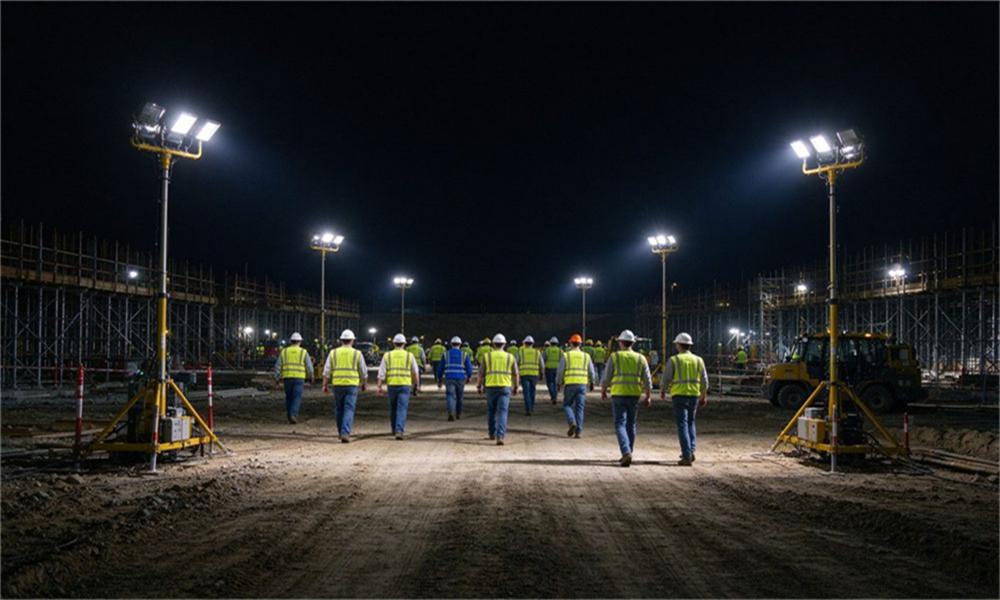
Place towers just outside the working perimeter, behind the crew, angled inward so shadows fall away from the task.
Two towers on opposite corners usually balance the light better than one bright center.
Keep them clear of the pour line, crane radius and any lifting path, because misplaced construction flood lights become a trip or strike hazard the moment equipment swings.
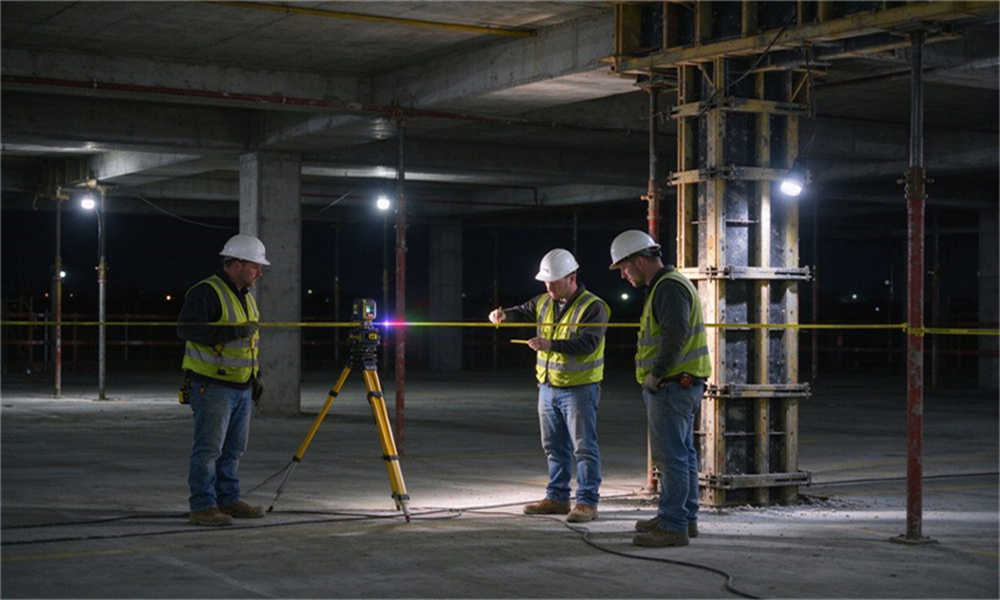
Interior and enclosed zones are harder.Light does not reach inside a half-built parking garage or a formed core from an outside tower.
Here you drop portable lifting flood light into the space: use temporary string runs, tripod work lights and portable lifting units that can be carried through door openings.
The portable lifting flood light design is built for exactly this, extending to working height and folding back down for the next floor.
Without these portable flood light units, crews end up working by phone torch, which is both unsafe and slow.
The material yard and access roads need less light but must stay predictable.A worker walking from slab to batch plant should never step through a dark gap.
Use lower-powered towers or spill light so the route reads clearly, and never let a main construction flood lighting rig shine into a driver’s eyes.
The mast height of your construction site lighting towers changes everything.A mast extended to full height throws a wide, soft pool across a big area, but loses close detail.
A shorter mast gives harder, brighter light near the base but shadows out quickly.On a wide slab, run masts high for coverage.
On a tight task zone, drop the mast and add a focused unit.
Adjusting height on the night shift is the fastest tuning tool you have, so pick towers with easy, smooth mast extension.
|
Work zone |
Recommended lighting setup |
Coverage goal |
Main watch out |
|
Open slab or steel erection |
Two towers on opposite corners |
Even 100 lux over the face |
Keep clear of crane radius |
|
Interior structure, cores, garages |
Tripod and portable lifting lights |
Reach every room or floor |
No dark door gaps |
|
Material yard and access roads |
Lower spill light from main towers |
Predictable 30 to 50 lux route |
Avoid glare into drivers |
|
Crane and lifting paths |
Separate warning and area light |
Visible load and rigging |
No tower inside swing radius |
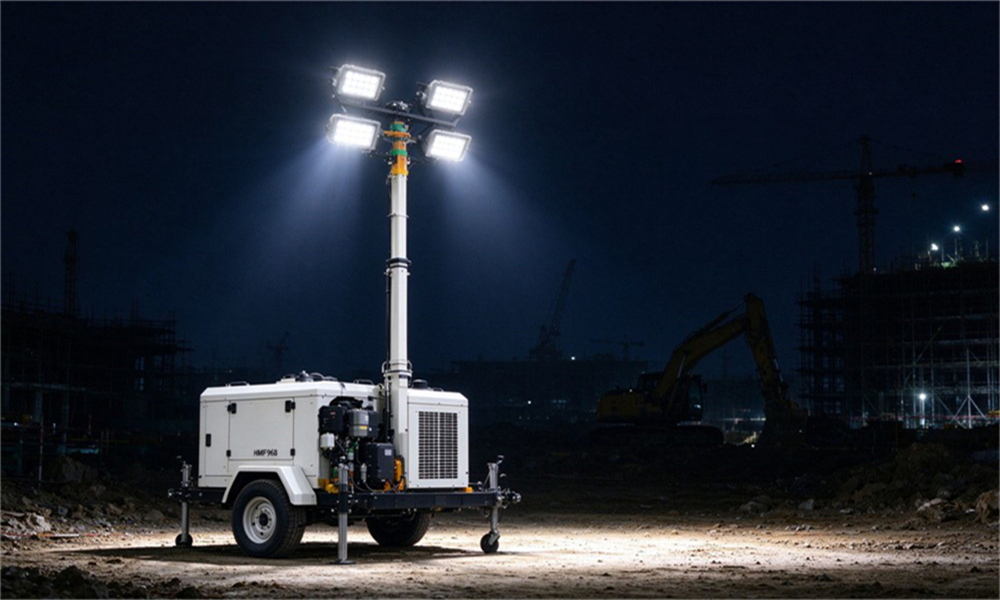
Compare: Diesel Towers vs Solar Towers on Site
Once the layout is planned, the biggest buying decision is fuel type.Diesel lighting rigs and solar lighting rigs both produce strong night work lighting, but they fit different sites.
Choose wrong and you either run out of quiet hours or waste money refueling units that never need it.
This comparison cuts through the marketing and shows which option suits which site.
Diesel lighting rig units are the workhorse.They run all night on a tank, handle cold weather and throw a very wide beam.
They are the right call for open highways, remote greenfield sites and pours that never stop.The tradeoffs are fuel logistics, noise, exhaust and running cost.
Near residential areas, hospitals or offices, a diesel tower starting at 6 p.m. can create complaints almost immediately.
Solar lighting rig options flip the equation.
They run silently, need no fuel deliveries and produce no exhaust, which makes them ideal for urban infill, night work near occupied buildings and low-emission job site lighting environments.
Their limits are lower peak output and dependence on good daylight to recharge, so they fit medium-sized zones rather than huge open cuts.
If you want the full technical picture, the solar mobile lighting rig long page explains panels, battery and mast specs.
A solar mobile lighting rig is the quiet choice for urban infill and low-emission sites.
Many contractors do not pick one or the other.They mix them.
A diesel tower anchors the noisy, open work face at the center of a remote site, while a solar tower runs quietly near the site office and the worker welfare area.
This hybrid balances output, quiet and operating cost.When you plan your equipment list, decide the fuel zone map first, then assign each tower its role before it leaves the yard.
|
Factor |
Diesel lighting rig |
Solar lighting rig |
Typical scenario |
|
Noise and exhaust |
Noisy, emits fumes |
Silent, zero exhaust |
Solar near occupied buildings |
|
Runtime and refueling |
Long, needs fuel visits |
Overnight on battery |
Diesel for remote all night jobs |
|
Peak brightness |
Very high, wide beam |
Medium, even pool |
Diesel for large open sites |
|
Weather dependence |
Works in any weather |
Needs daylight to recharge |
Diesel in long cloudy spells |
Once you know the lux levels, the layout zones and the fuel choice, the last step in how to choose construction site lighting is matching the equipment to your actual site.
The right mix depends on four practical factors: how big the site is, what work runs at night, whether grid power reaches the compound, and what you can spend.
This is the essence of how to choose construction site lighting for any project size.Walk through each branch below and pick the combination that fits your shift.
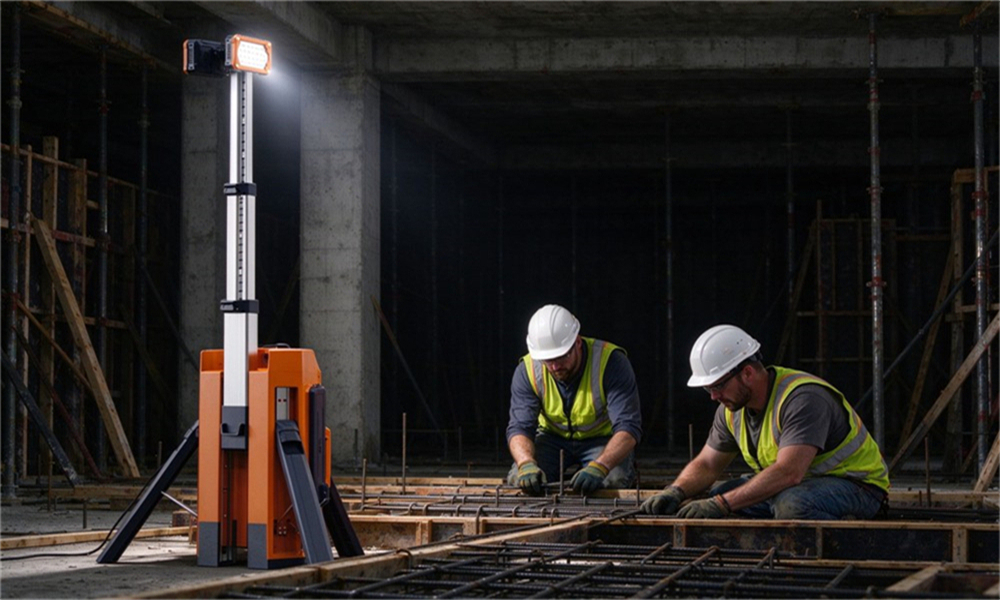
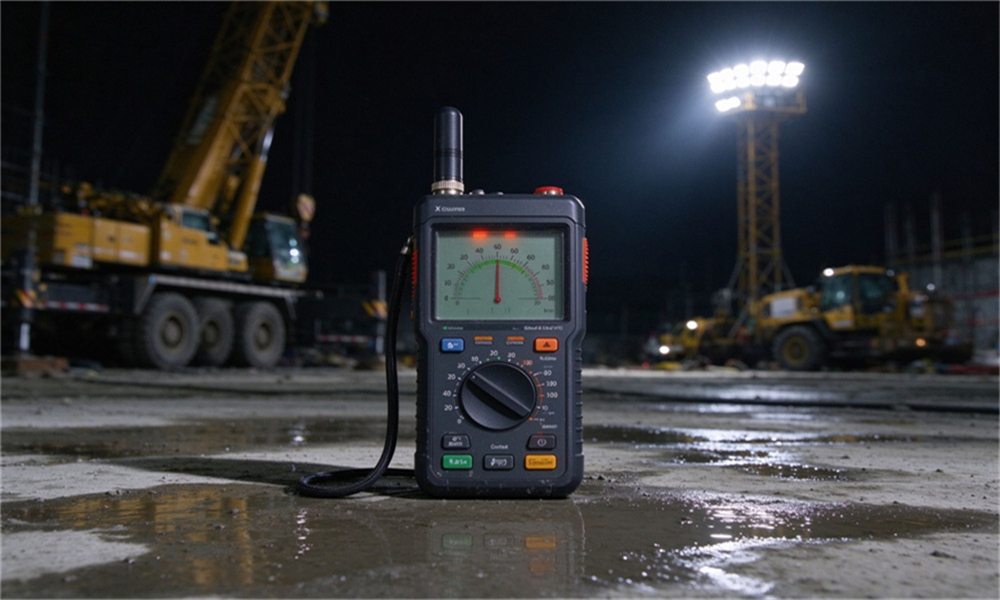
To size a construction site lighting setup on a real job site, walk through four questions: how large the work area is, whether grid power reaches the compound, how often the layout moves, and how tight the budget is.
Each answer narrows the kit until you have a workable list.
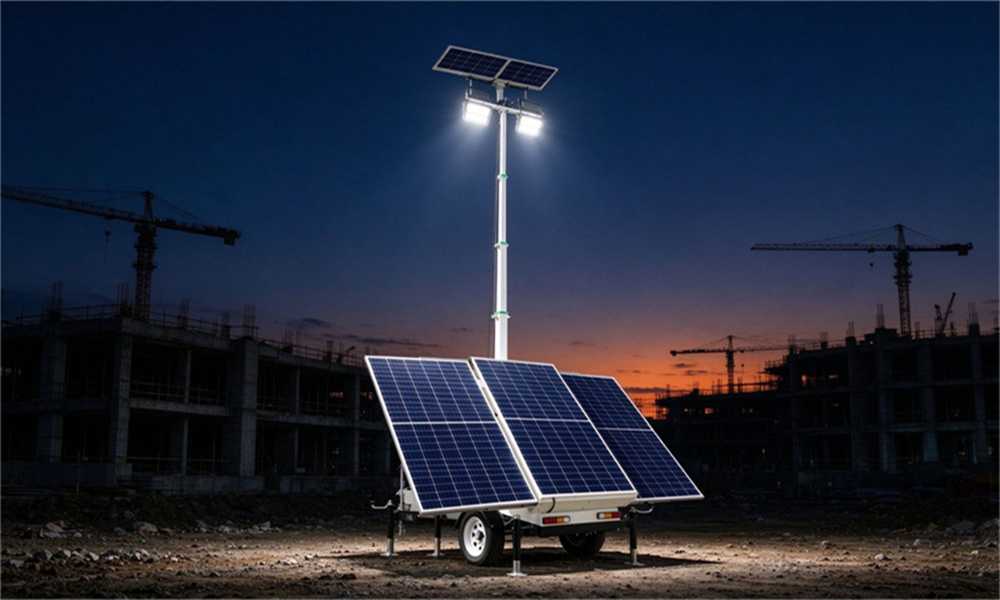
If your construction site covers more than 5,000 m² → plan on two to four mobile lighting rigs, diesel or solar, placed at the corners and middle so their light pools overlap and leave no dark strip across the working face.
If the work zone sits between 1,000 and 5,000 m² → combine one or two lighting rigs for the main area with two or three portable work lights for close-up tasks such as rebar tying, formwork and small equipment repair.
If the compound is small, under 1,000 m² such as a residential retrofit, a single trench or a short driveway paving job → two to four portable work lights are enough.
No tower needed; wheel them to wherever the crew is working tonight.
Branch 4 — Grid power reaches the site
If mains electricity is already on the compound → prefer plug-in equipment, electric light stands and mains-driven work lights.
Running cost drops sharply because you skip fuel deliveries, generator noise and the daily refueling trip, which also frees a worker for other tasks.
If the site is off grid, remote or a new greenfield before power cables arrive → prefer solar lighting rigs, or diesel towers if the night hours are long and sunlight is weak.
Both carry their own energy source to the work face.
If the working face shifts every few days as foundation, structure and finishing phases roll through → prefer portable lifting lights on wheels that two workers can tow and set up in ten minutes, instead of heavy trailer towers.
If the lighting budget is limited and the project is short → start with a basic work light combination: four to six plug-in or small-battery work lights along the main walkway and work face.
Add a tower only when the area or hours really demand it.
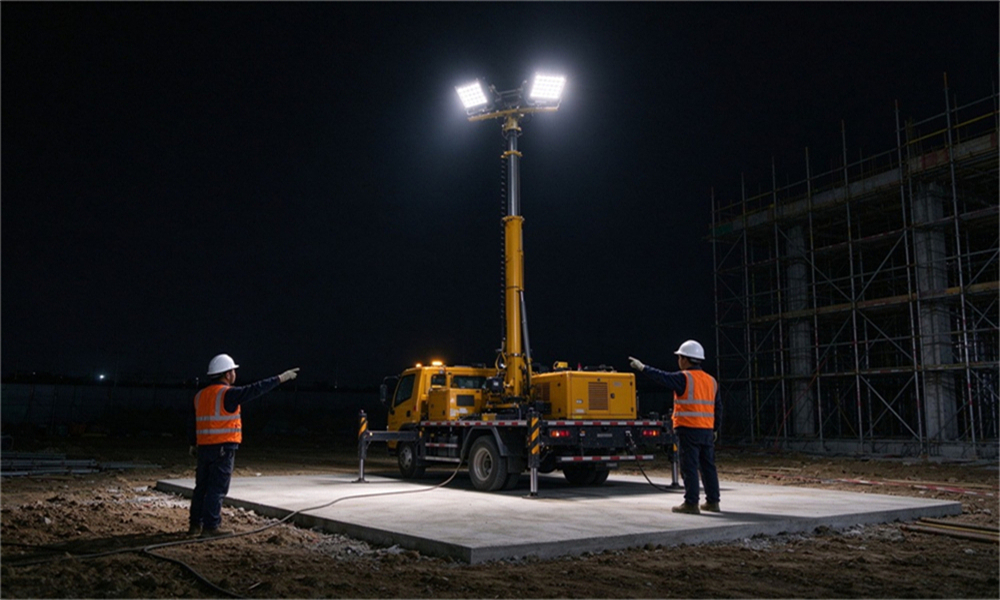
A well-planned layout on paper fails if the tower ends up in the wrong spot at 9 p.m. Positioning work light for construction and lighting rig units on a real job site is a repeatable sequence, and running it in order avoids the common mismatches that leave half the crew in shadow.
Follow these steps on the first night, then fine tune as the work moves.Good work light for construction placement is the difference between a safe night and a near miss.
First, walk the zone in daylight.Mark the work face, the walkways and any crane or vehicle paths on the ground with chalk or paint.
Decide where each construction site lighting tower will sit before you unhitch anything.Second, place towers outside the work perimeter, behind the crew, angled inward.
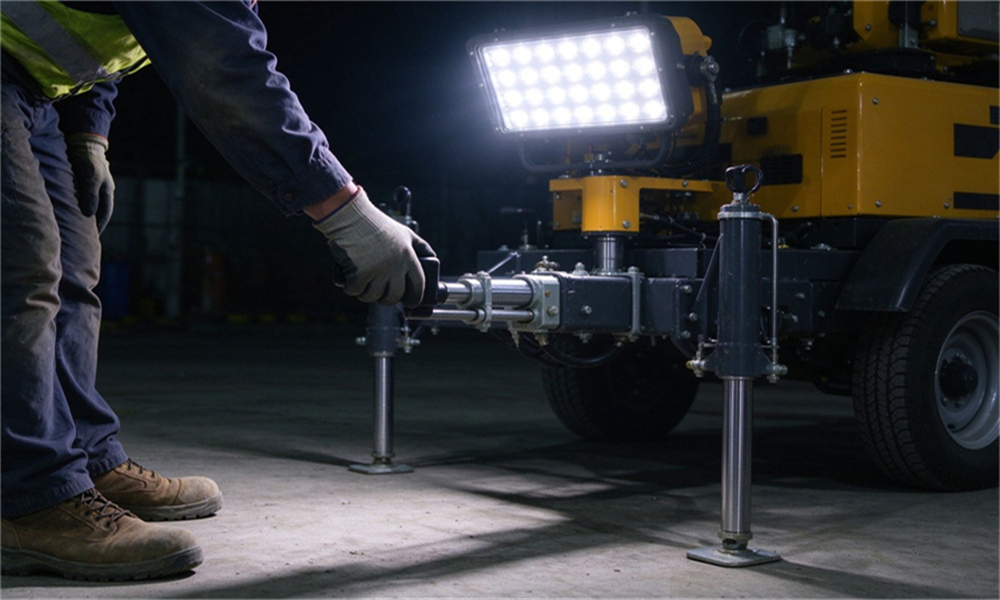
This keeps the light behind the workers so their shadows fall away from the task instead of across it.Third, extend the outriggers and level the unit.
A tower standing on soft ground will settle and drift, throwing your carefully aimed beam off target within an hour.
Fourth, raise the mast to planning height.For a wide slab, go high for coverage.For a tight task, keep it lower and add a focused unit.Fifth, aim the flood heads.
Stand on the work face and have someone adjust the beam until the light lands where you need it, not in the operator's eyes.Sixth, run the cables safely.
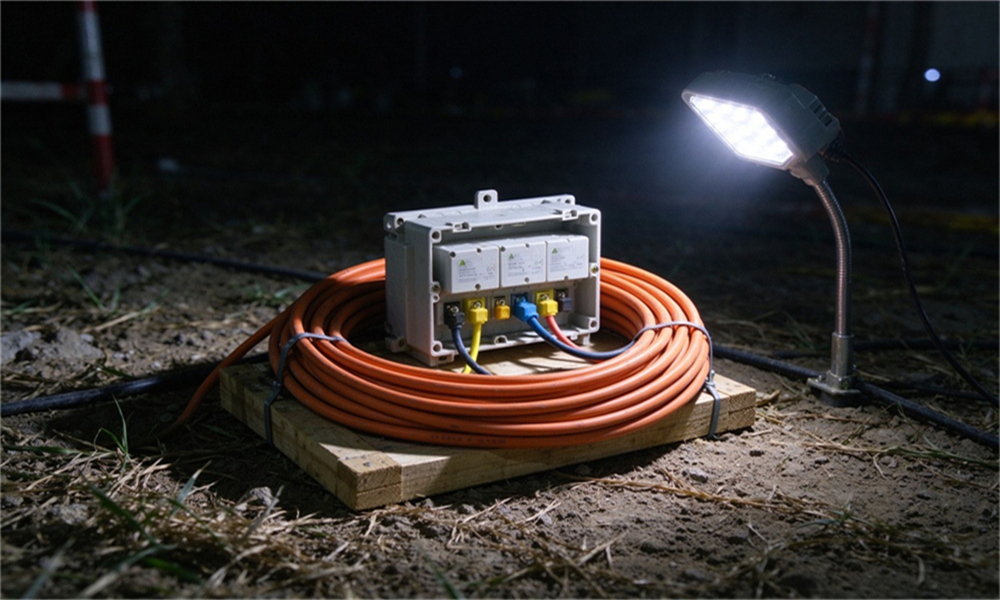
Loose leads across a walkway are a trip hazard waiting to happen, so lift them, cover them or route them along edges.
Seventh, test the whole site after dark.
Walk every zone the crew will use and check for dark gaps, hot glare spots and areas where two bright towers cancel each other out.
Eighth, log the positions on a simple plan.When the work face shifts next week, you move the towers according to a known, proven layout instead of guessing again.
The checklist below compresses this into one sheet you can carry on the shift.
|
Step |
Action on site |
Why it matters |
Target |
|
1. Mark in daylight |
Paint work face, routes, crane paths |
Avoid last minute guesses |
Clearly marked zone |
|
2. Place behind crew |
Tower outside perimeter, angled in |
Shadows fall away from task |
No shadow across work |
|
3. Level and outriggers |
Stabilize on firm ground |
Beam stays aimed all night |
Unit sits square |
|
4. Aim and cable |
Set beam, route leads safely |
Cut glare and trip risks |
Light on task, cables covered |
After a few nights this sequence becomes automatic.
The payoff is a site where the crew trusts the light, plans the next pour with the same map, and spends less time repositioning equipment mid-shift.
Good construction site lighting is not a purchase, it is a repeatable site process.
Before you extend the mast on the first night, run through this short commissioning checklist on site:
Temporary construction lighting is a safety system, not just comfort.
Poor night work lighting contributes to trips, falls, struck-by incidents and fatigue, which is why regulators set clear expectations for illuminated construction areas.
The United States Occupational Safety and Health Administration (OSHA) publishes construction lighting requirements under its construction standards, covering minimum illumination for walking-working surfaces, stairs, ramps and general construction areas.
These construction site lighting standards OSHA sets out are the baseline most global contractors align to.
You can review the official requirements on the OSHA construction lighting standard (29 CFR 1926.56) and align your lux targets to those references.
For worker fatigue and visual strain guidance, the CDC NIOSH construction safety portal covers lighting, glare and eye strain research.
For UK and EU reference, the UK HSE construction lighting guidance sets practical illumination levels for night work sites, see industrial fire rescue equipment for construction site safety.
Glare control is the most overlooked hazard.A bright light shining directly into a worker's eyes creates temporary blindness worse than darkness, especially around moving plant.
Aim heads down and inward, never across a walkway or at eye level.
Shield or angle fixtures where possible, and keep tower heights sensible so the source itself is not staring straight at the crew.
The goal is light on the work, not light in the eyes.
Electrical safety at night deserves real attention.Temporary cables across damp ground, junction boxes near water, and extension leads run over rebar all become hazards after dark.
This is part of every construction site lighting requirements checklist.Use protected, rated equipment, keep connections off the wet floor, and inspect leads before each shift.
A lamp circuit that is fine in daylight can become a problem once rain, dew or a wet pour joins the picture.
Treat the lighting system as part of your site electrical plan, not a separate afterthought.
Fatigue and visual strain matter too.Long low light reduces attention, and switching between bright towers and dark gaps forces the eyes to keep readjusting.
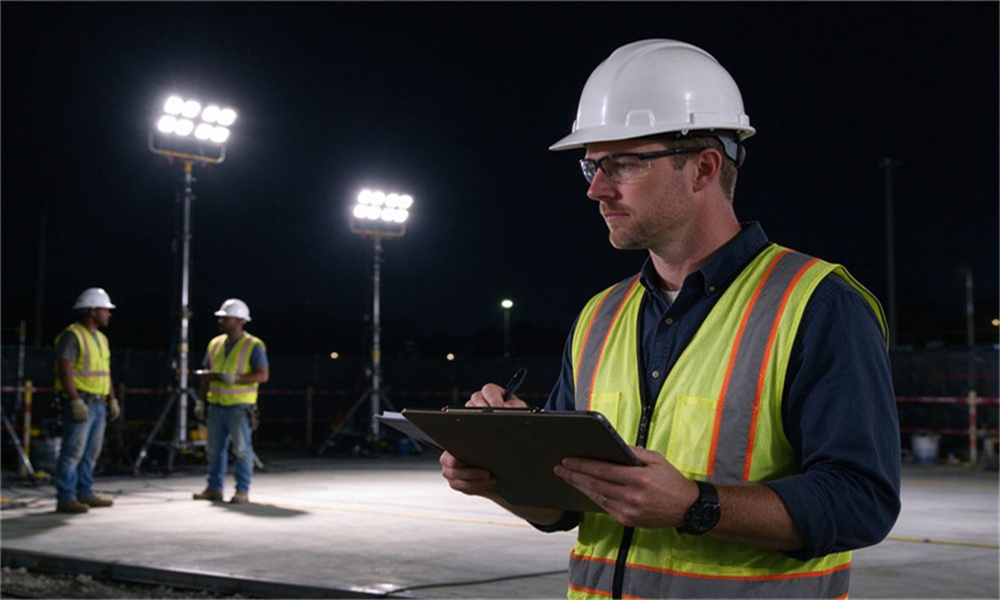
Even out brightness across routes, schedule eye-recovery breaks, and keep welfare areas well lit.A foreman walking the job site lighting with a light meter catches most problems before an incident.
Documenting checks also gives you a record if a regulator asks how night construction lighting was managed.
Do not forget backup lighting.When a tower runs out of fuel or a lamp fails mid-pour, exit routes and people near equipment must stay visible.
Keep portable rechargeable work light units and emergency lighting equipment on hand for welfare cabins, first aid points and the way out.
Treat this as a safety layer under your main night work lighting, not a duplicate you can skip, see flood rescue equipment for construction site water emergencies.
These are the questions foremen ask most when setting up work light for construction on a night shift, covering lux targets, tower placement and job site lighting layout.
Walkways and access roads usually need 20 to 50 lux, general work faces 50 to 150 lux, and fine detail work such as electrical termination 200 to 300 lux.
Match the work light for construction to the task rather than using one level for the whole site.
A typical small slab uses two towers and three portable work lights, while a large open site may need four or more towers holding the base level.
Many contractors mix both, using diesel on the open face and solar near offices and welfare areas.
Adjusting mast height is the fastest way to tune light distribution during the night shift.
Keep light on the work surface rather than shining into faces, and shield fixtures where glare is unavoidable.
A balanced setup combines one or two towers for the base level with portable lifting or rechargeable units for close detail work.
Check the 29 CFR 1926.56 standard — these are the core construction site lighting standards OSHA enforces — and align your lux targets, especially on routes and high-traffic zones.
On a wide slab, opposite corner placement balances light better than a single central tower in the middle of the work face.
Exterior towers cannot reach inside cores or garages, so use temporary string runs and portable lifting lights carried through door openings.
Drop light into each floor and room rather than trying to flood it from outside.
This is the standard approach to temporary lighting for construction site crews who move from slab to structure.
One over-bright tower far from the work face gives harsh glare and hard shadows. Several mid-output units zoned by work area give more even light with fewer dead corners. Plan by work zone, not by a single big number.
This construction work light is the default choice for night road and site crews.
Each delivered construction work light includes a lux setup guide for the foreman.
Each construction work light comes with a lux-by-distance data sheet.
One construction work light covers about 1,000-2,000 sq m, so a 5,000 sq m lot needs three construction work light towers spaced apart.
This spacing math is core to any construction work light layout plan for night site safety.
A single construction work light replaces two cheap area lamps on site.
If a construction work light trips its breaker, unplug extra rigs sharing the circuit and reset the breaker.
Overloading is common, so split circuits by zone when you plan the construction work light layout, a step in every night site lighting guide.
This construction work light runs all night on a mains connection.
Mount a construction work light at least 6-9 m up the scaffold so beams reach every working deck.
This height avoids glare on workers, and it keeps the construction work light from being knocked by moving materials.
The construction work light housing survives a drop from the scaffold.
A construction work light layout must meet OSHA 1926.56 minimum lux and keep glare away from equipment operators.
This audit is why every construction work light is positioned early in the night site lighting setup plan.
Crews move this construction work light as the pour zone shifts.
A battery construction work light runs 6-10 hours on a charge, while a mains or diesel tower runs all night.
For long concrete pours, choose a mains construction work light, per these night site lighting setup guidelines.
This construction work light meets EN 12464-1 glare limits.
A construction work light for night concreting needs 100-150 lux on the pour surface, per EN 12464-1, with rigs placed to avoid glare.
Zone layout stops dark corners where rebar trips happen, which is the first rule of placing a construction work light safely on site.
One construction work light per zone keeps lux even across the lot.
Space each construction work light tower about 30-50 m apart for overlapping light pools, and raise masts to 6-9 m to clear equipment.
This keeps lux even across the site and follows OSHA 1926.56 minimum illumination rules, so the construction work light layout passes safety checks.
Whether you run a small urban retrofit or a large greenfield pour, the construction site lighting principle stays the same: match the light to the task, the zone and the shift.
Skimp on lighting and you pay in rework and near misses; overlight and you waste fuel and create glare.
The middle path is a planned, zoned layout using the right mix of construction flood lighting rigs, portable flood light units and task lights.
This temporary construction lighting approach is verified on site with a light meter every shift.
If you are building or expanding a lighting fleet, it helps to see the full range in one place.
Our emergency lighting equipment collection covers lighting rigs, portable lifting units and rechargeable work lights so you can match each zone to the right site lighting product.
Every configuration is built for heavy night use, and pricing and lead times are quoted subject to contract based on your site plan.
Over time, this planning habit separates contractors who treat night work as an extension of the day shift from those who run it as a separate operation with its own equipment and safety rules.
The right work light for construction setup is never a single purchase.
It is a zoned, verified, shift-by-shift system built around lux targets, tower placement and emergency lighting equipment that keeps crews safe after dark.
Related Guides & Products
Diesel Generator Light Tower——Diesel tower specs for all-night construction shifts.
How to Choose Emergency Lighting——Broader procurement guide for site lighting buyers.
Global voltage: 110V / 220V / 240V configurations. Built to IEC standards; CE marking and UL/ETL-ready options on request. Exported to USA, Europe, Middle East and Southeast Asia. Manufactured in China.
Standards referenced on this page: IEC lighting standards · OSHA workplace safety · US Department of Energy · NFPA fire safety codes · CDC emergency preparedness. These are general references only; local codes and your contract govern compliance.
YIROUFANG TEXTILE · Emergency & Construction Lighting Equipment · Made in China
The construction work light folds flat for van transport between sites.
Дружні посилання :
Авторське право © Custom Disaster - Relief Bedding: Tents, Sleeping Bags, Blankets Всі права захищені
професійна команда для обслуговування !