Категорії
Last updated: November 13, 2026 · Earthquake Emergency Kit Guide
An kit is the difference between a frightened crowd and an organized evacuation. This survival-first guide covers drop-cover-hold-on drills, evacuation routes, 72-hour supplies, after-shock safety, and bulk procurement for schools, shelters, municipalities and NGOs.
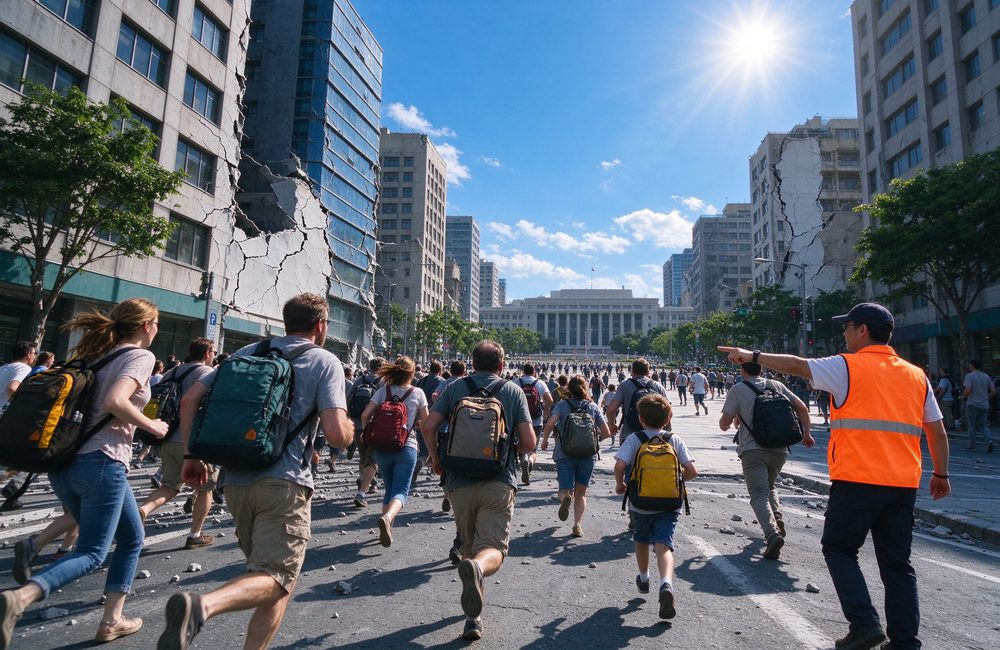
earthquake emergency kit city evacuation after quake rubble bright day residents move to open assembly area away from buildings for safety emergency response
Earthquakes strike without warning, and the first minutes decide survival. Survival-first planning means every room has a known safe spot, every corridor has a marked route, and every exit has a kit. Most injuries come not from the shaking itself but from falling objects, blocked exits and panic.
A well-prepared institution keeps an earthquake emergency kit at every assembly point, trains staff on evacuation routes, and rehearses the drop-cover-hold-on response until it becomes muscle memory. This page explains exactly which supplies to stock, how to organize them, and how to buy them in bulk for schools, shelters and government programs.
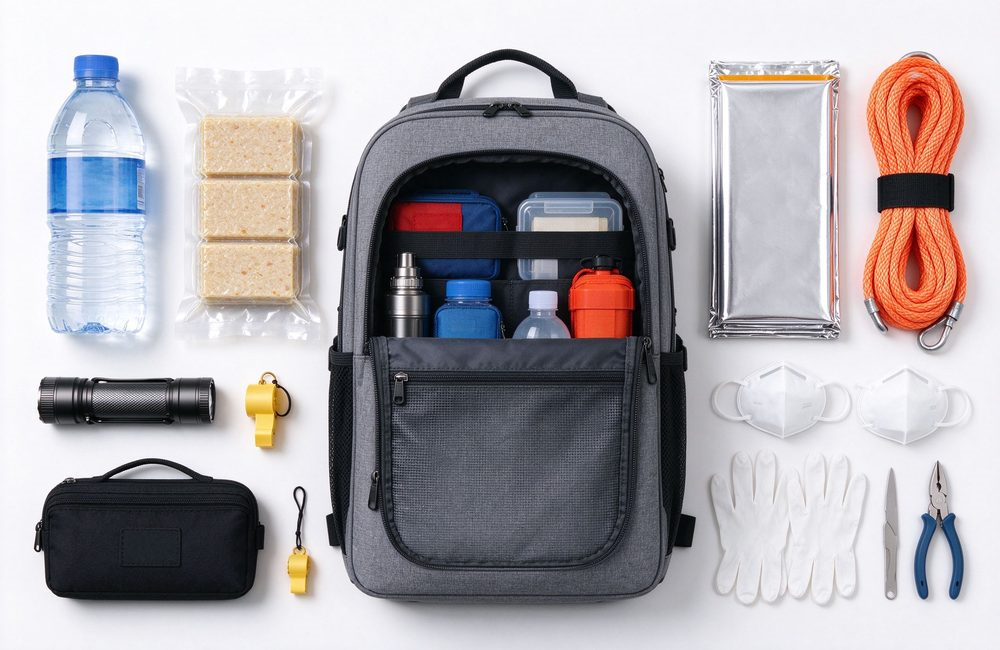
earthquake 72 hour emergency kit grey family pack flat presentation bulk supplies flashlight first aid water food photo for family and shelter preparedness programs emergency response
For procurement teams, the goal is not a single impressive bag but a repeatable system: Quantity discounts, shared training videos and one inspection checklist make a school district or NGO network cheaper to run year after year.
the same core modules across every classroom, dormitory and shelter, with clearly labeled refill points.
Standardizing the kit saves training time, simplifies inspection, and lets NGOs and municipalities reorder supplies in consistent quantities.

school earthquake drill students practice drop cover hold on under desks teachers supervise classroom safety drill for seismic emergency preparedness
Before the next drill, verify that every kit contains the essentials: Put the checklist on the lid of each container so any staff member can inspect a kit in under two minutes.
light, communication, first aid, water, food and a whistle.
A simple monthly checklist keeps the kit ready when the shaking starts.
Whether you protect a family or a school of five hundred, the same survival-first logic applies: When every person knows the route and the meeting point, the group acts as one unit instead of five hundred individuals.
know the evacuation routes, agree on meeting points, and rehearse until everyone can move without instructions.
The following sections build the complete kit strategy from risk to procurement.

family earthquake evacuation drill meeting point parents and children carry emergency kits rushing out of house for emergency assembly point home disaster preparedness training
Strong earthquakes give people anywhere from a few seconds to about a minute of warning shaking before the most damaging waves arrive. Seismic sensors in many regions now send phone alerts a few seconds before strong shaking reaches populated areas—enough time to drop, cover and hold on.
This is why alert-enabled phones, a hand-crank radio and a posted drill card belong together at every kit station. In that window, a person who knows the evacuation routes and the drop-cover-hold-on position survives; a person who hesitates is exposed to falling shelves, toppling cabinets and shattered glass.
An kit placed at every exit and assembly point removes the need to search for supplies during the crisis.
After a quake, roads may be blocked, power lines may fall, and mobile networks can fail for hours. Electricity may take days to restore in rural areas, which is why the kit carries battery and crank-powered light and radio rather than anything dependent on the grid.
Families who test their kit twice a year rarely discover a dead battery at the worst possible moment. The kit becomes the household's own water, light and first aid supply, independent of outside help. For institutions, the same kits double as the emergency response inventory for shelters and evacuation centers.
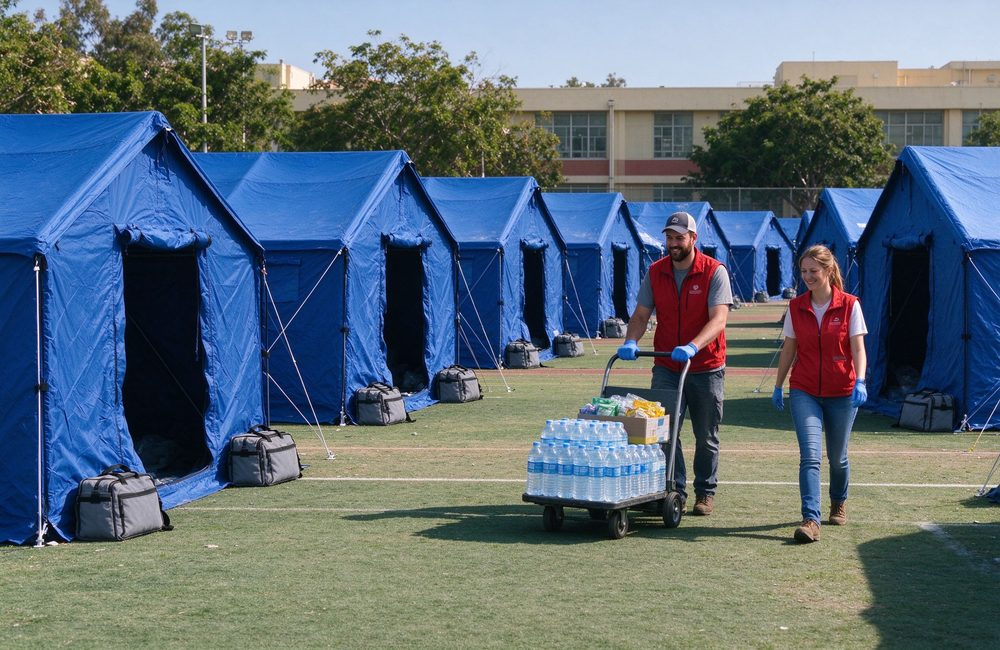
shelter tent area kit distribution volunteers transport water and relief supplies to displaced families at blue temporary disaster tent camp emergency response
Institutional buyers—schools, municipal governments, NGOs and shelter operators—face a simple truth: reaction during a quake is chaotic and costly, while preparation is calm and cheap. A standardized school earthquake preparedness program, built on the same kit catalog repeated across every site, turns a chaotic moment into a managed evacuation that staff can execute without instructions.
Budgets are easier to defend when the seismic risk assessment, the drill calendar and the kit inventory are all documented in one plan. A standardized kit with refill schedules and staff training converts a potentially fatal moment into a managed evacuation.
Published national earthquake preparedness guidance consistently lists the same core items, which makes bulk procurement straightforward.
community emergency kit distribution point residents queue receive supplies orderly at municipalities that pre-position kits at schools gyms and community halls residents learn safety routines during drills and know exactly where to go when a real quake hits.
A published list of kit locations, updated on the municipality website, turns a warehouse inventory into a visible community service.
Residents walk to a known point, collect a labeled kit, and move to the assembly area—no waiting for trucks, no confusion about what to take.
Unprepared facilities suffer higher injury rates, longer service disruption and bigger repair bills. Facilities that run drills and restock their kit stations quarterly recover services days faster, because staff already know their roles. Insurance and inspection bodies in many regions also look favorably on documented preparedness, which can reduce both premiums and liability exposure.
Falling fixtures, unsecured water heaters and blocked evacuation routes turn a moderate quake into a costly event. Investing in a kit, seismic securing and evacuation drills is the most economical risk reduction available to any organization.
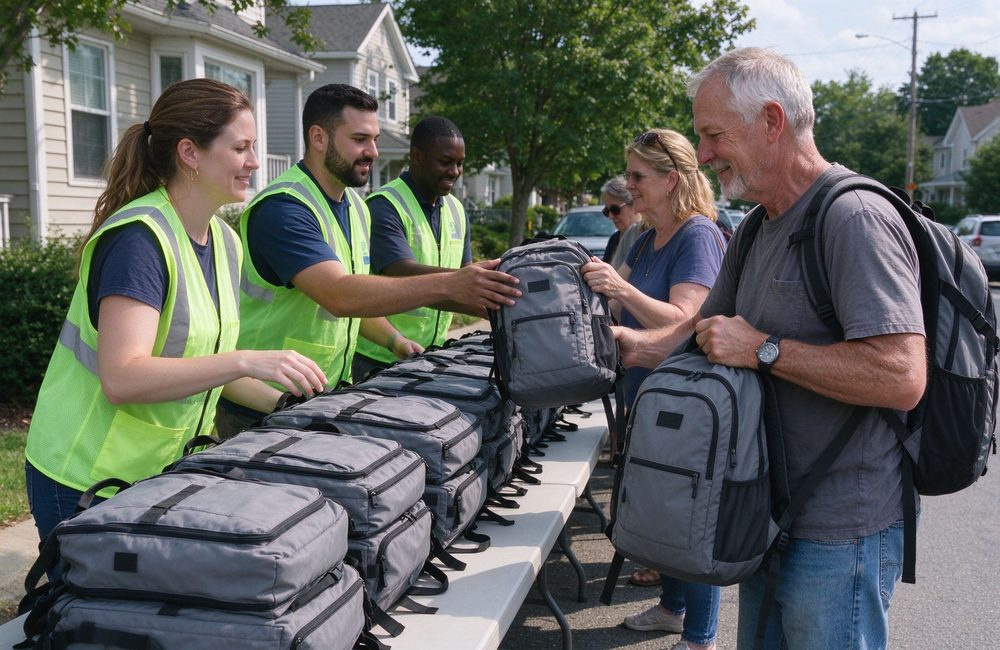
community emergency kit distribution point residents queue receive disaster backpack supplies orderly volunteer handing out survival bags neighborhood safety program
Seismic risk varies by region, soil type and building construction. Engineers assess risk through building codes, soil liquefaction maps and retrofit history; a school or shelter manager does not need to be an engineer, but should know whether the building is modern steel-frame, unreinforced masonry or timber.
That knowledge determines how quickly occupants should move to the evacuation route and whether the meeting point should be closer or farther from the structure. Older masonry buildings, unreinforced concrete and structures with heavy roof tiles behave differently under shaking than modern steel frames.
A school or shelter operator should know the building's seismic rating, identify the safest evacuation routes, and place kit stations near exits rather than under large windows or heavy shelving.
Falling furniture causes a large share of earthquake injuries. Anchoring bookshelves, television units and cabinets to walls is a one-weekend task per building, yet it removes the single most common source of head injuries.
Combined with clear evacuation route markings and a stocked kit at every exit, secured interiors give occupants a genuinely safe space to ride out the shaking.
Anchoring tall shelves, cabinets and water heaters to walls is cheap, fast and effective. Combined with a well-stocked kit, secured interiors give occupants a safe space to ride out the shaking.
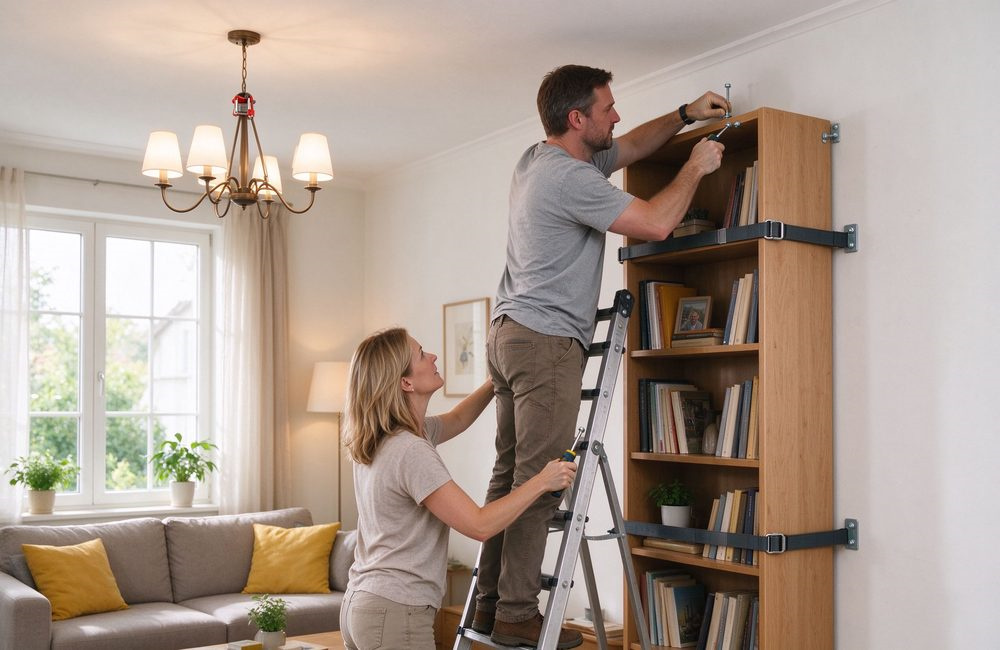
home securing bookshelf anti seismic strap earthquake preparedness anchor furniture wall prevent tipping couple installing safety straps for home seismic protection
The three deadliest indoor threats during a quake are falling objects, blocked exits and post-quake fires. Each threat maps to a kit module: secured shelves reduce falling objects, a marked secondary exit and a flashlight reduce entrapment, and a fire extinguisher plus a gas shutoff wrench reduce fire spread.
Reviewing the three threats together keeps the kit plan honest and complete. This is why the evacuation route matters more than the building itself: if the main door jams, a secondary exit and a flashlight from the kit become the difference between escape and entrapment.
Post-quake fires start from gas leaks, damaged wiring and knocked-over heaters. Emergency communication is part of the same protocol: a hand-crank radio that needs no batteries keeps a shelter informed about aftershock warnings, gas shutoff instructions and rescue progress when phone networks fail.
Every kit should include a whistle to signal for rescue, a hand-crank radio for official alerts, and a fire extinguisher in shared corridors. Planning for fires is part of the same survival-first protocol as planning for shaking.
Coastal communities face tsunami risk after offshore quakes; mountainous regions face landslide and rockfall hazards. Route planning for these areas should be reviewed with local authorities, because terrain dictates direction: uphill and inland for tsunami zones, away from slopes for landslide zones. The kit contents stay constant, but the after-shock safety plan must be location-specific.
Evacuation routes in these areas must point inland and uphill. The kit stays the same—water, light, first aid, communication—but the route and meeting point change with the terrain.
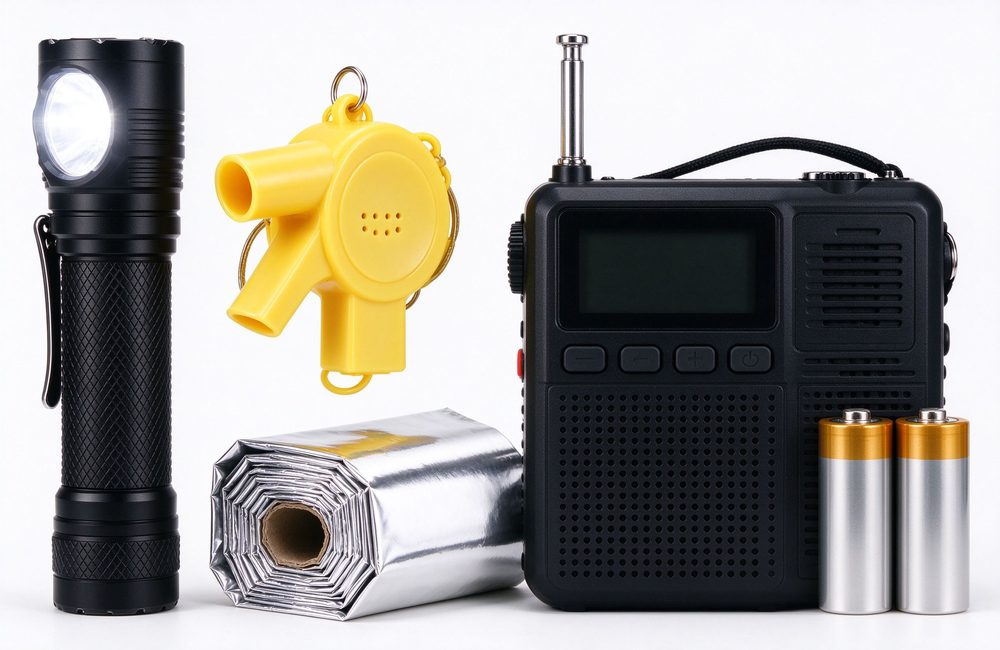
kit lighting communication module flashlight whistle hand crank radio survival gear bulk supply all powered without grid electricity emergency response
Experts agree that households and institutions should be self-sufficient for at least 72 hours after a major quake. The 72-hour window reflects the typical time before organized relief reaches a damaged area; in remote or mountainous regions it can be longer, so many municipal programs extend their shelter-tier stock to five days.
The same core modules scale upward without changing the catalog. The kit is therefore built around seven core modules: water, food, first aid, light, communication, shelter and tools. Each module is packed separately, labeled clearly, and restocked on a fixed schedule.
Schools and municipalities often scale the same modules for shelters: more water, more cots, more first aid stations. A modular bulk earthquake supplies program lets buyers order components in consistent quantities, keep one spare parts shelf, and ship replacements to any site without redesigning logistics.
A modular kit system lets a buyer order the same components in different quantities without redesigning the logistics.
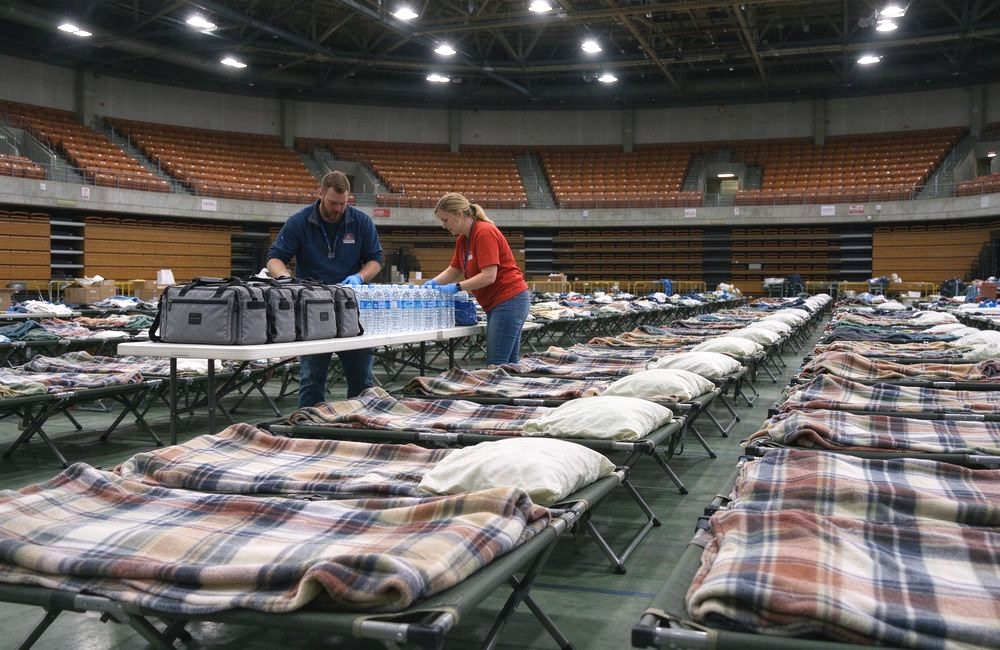
gymnasium earthquake shelter cots supplies organized rows emergency kit volunteers preparing relief supplies water bottles blankets for displaced people emergency response
Not every user needs the same kit. A classroom kit covers immediate evacuation; a family kit covers 72 hours at home; a shelter kit covers dozens of people for a week. The 72-hour kit is the most common institutional specification, so keeping this tier in stock simplifies distribution and inspection. The three-tier configuration below helps buyers match inventory to demand.
|
Tier |
Main Users |
Core Contents |
Typical Coverage |
Refill Cycle |
|
Evacuation Tier |
Classrooms, offices, corridors |
Whistle, flashlight, dust mask, mini first aid, emergency blanket |
1–2 hours |
Quarterly check |
|
72-Hour Tier |
Families, dormitories |
Water, food, first aid, radio, light, hygiene, documents |
72 hours per person |
Every 6 months |
|
Shelter Tier |
Gymnasiums, community halls, NGO relief |
Bulk water, ration packs, cots, first aid stations, sanitation |
5–7 days, many people |
Monthly inspection |
This three-tier table lets procurement teams standardize one kit catalog across classrooms, families and shelters while keeping inventory and restocking predictable. Match the tier to the room size and expected stay before placing any bulk order.
After the shaking stops, the rescue phase begins. Rescue teams report that clear evacuation route markings and pre-staged tools shorten search time significantly; the same discipline that protects students protects rescuers.
Rescue coordination also depends on communication: a designated channel on the hand-crank radio, a printed map with marked danger zones, and a simple code for status reports keep teams synchronized without a phone network.
Municipalities that practice a yearly full-scale rescue exercise with their kit inventory find real operations run far more smoothly, because every role and every supply location is already familiar. Teams need maps, lights, tools and first aid. A shelter-tier kit that includes these items shortens the gap between damage assessment and effective rescue operations.
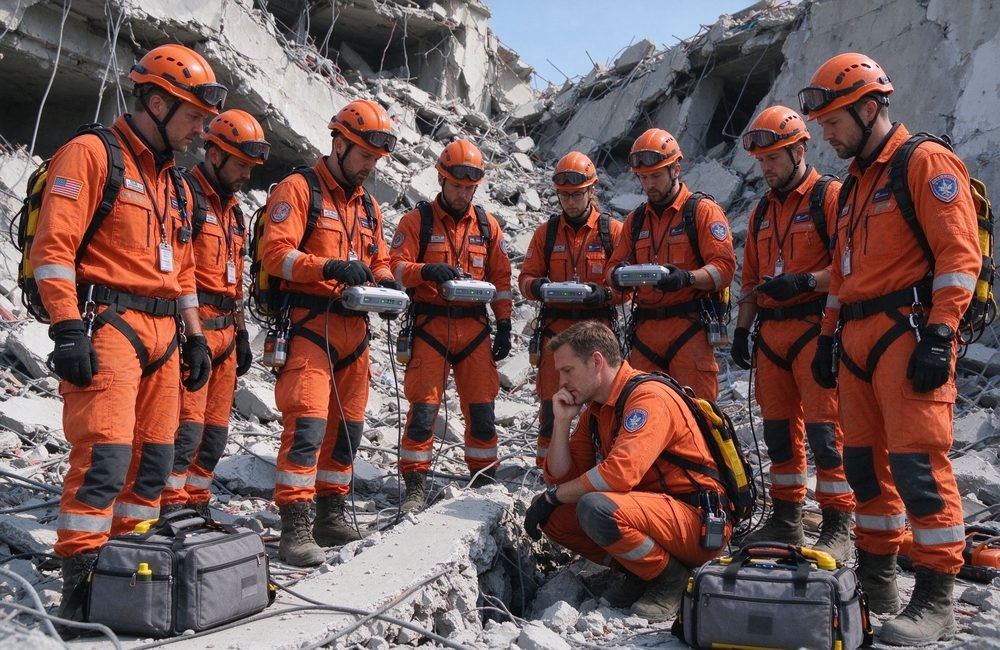
ruins search rescue team coordination earthquake survivors assistance rubble evacuation route safety rescue gear emergency kits at collapsed building site emergency response
The first aid module is the most frequently used part of the kit. It should cover bleeding control, splinting, burns and basic wound care, with refillable consumables and clear instructions. Schools and shelters often pair it with trained staff who can use it before professional help arrives.
Keep the first aid module where it will actually be used—near the assembly point, in the shelter medical corner, or in the staff office—and train two people per location to restock and use it.
First aid supplies are the most frequently consumed part of the kit, so a digital consumption log helps buyers forecast refill orders accurately.
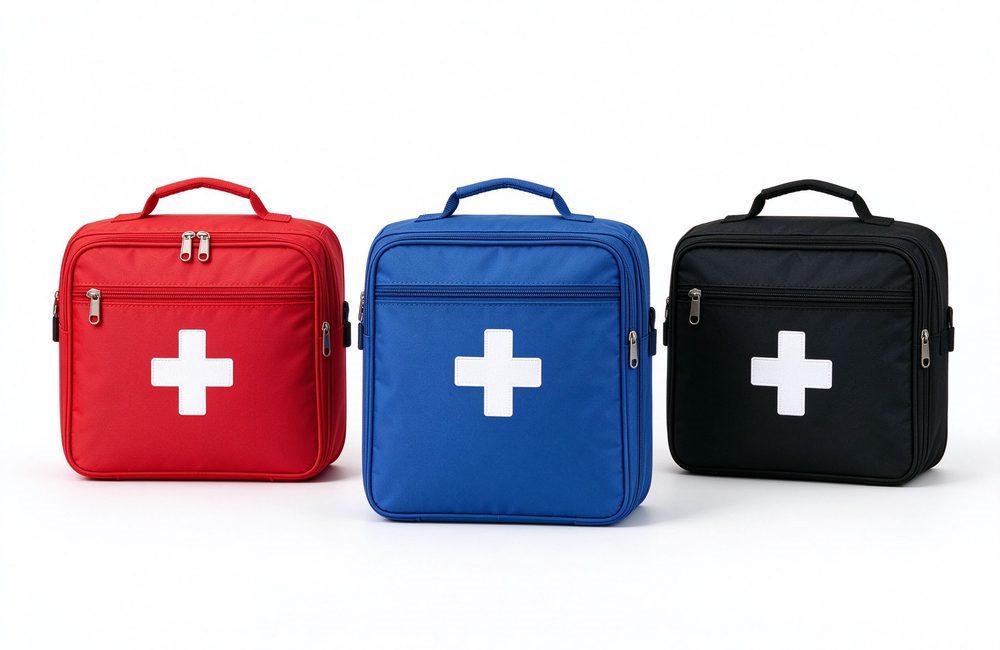
earthquake first aid kit module emergency medical supplies bandages antiseptic gloves trauma care three color red blue black first aid bags bulk wholesale disaster preparedness
A hidden or confusing kit is almost useless. Bright color coding, a printed content list and a monthly rotation calendar are the three habits that keep institutional kits complete and audit-ready. Store kits in bright, labeled containers at marked stations; post a content list on each container; and rotate water and food by date.
Institutional buyers can print the same label system for every site, making inspection a five-minute task instead of a whole morning.
The same rotation discipline applies to shelter-tier inventory: check expiry dates monthly, replace used items immediately, and keep a digital inventory of every kit station.
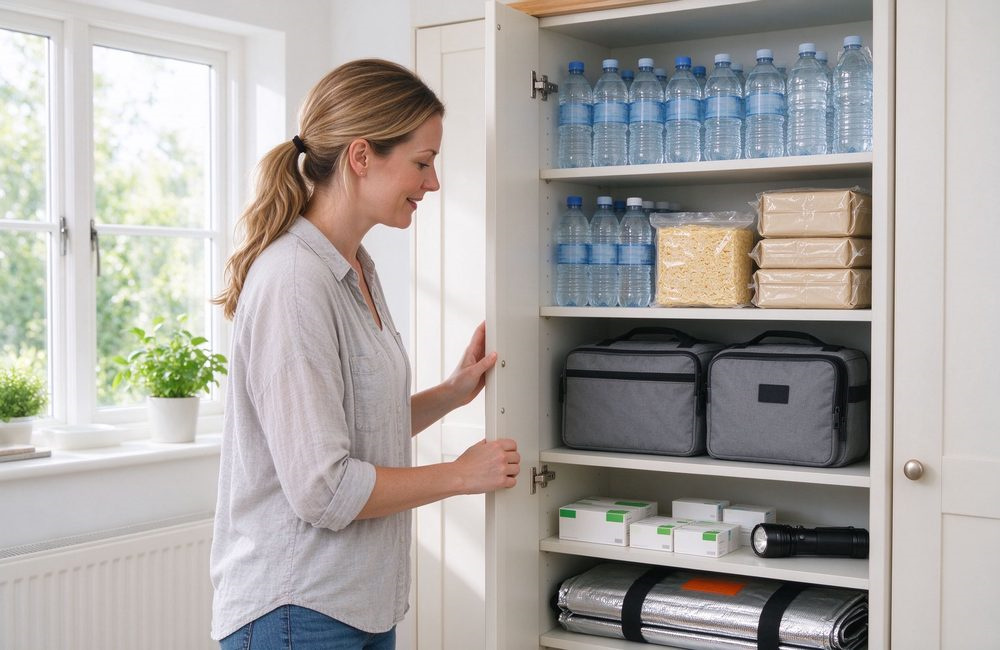
home 72 hour supply cabinet kit organized pantry shelf water food first aid blanket flashlight woman checking household emergency storage disaster preparedness
Drop to your hands and knees so the shaking cannot knock you down. Cover your head and neck and crawl under a sturdy table if one is close; otherwise stay low beside an interior wall away from windows, and hold the table leg until shaking stops. Practicing a backpack drill helps students remember the sequence under stress.
Hold on to the table leg with your other hand until shaking stops. This simple move, repeated in drills, is the core of kit training in schools worldwide.
earthquake alert drill, living room family practice drop cover hold on, receive safety app via phone. Earthquake alert drill, living room family practice drop cover hold on, receive safety app via phone.
Practice the move until it is automatic: drop cover hold on takes three seconds to say and three seconds to do, and it works for every age group.
Do not stand in doorways—modern buildings do not need the old doorway rule, and doorways expose you to swinging doors.
Stay put, protect yourself, and wait for the shaking to end before using the evacuation route.
A single drill is not enough. Schools that pair monthly drills with a seasonal kit audit report calmer evacuations and faster roll calls in real events. Monthly drop-cover-hold-on drills, by a calm walk along the evacuation route to the meeting point, turn written plans into automatic behavior.
Schools that practice see noticeably faster, calmer evacuations during real events.
Every drill should end with a head count. The coordinator records the count on a printed form kept with the kit, reports missing people immediately, and notes any injuries for the first aid team. A head count that takes two minutes prevents hours of panicked searching later.
The kit at the assembly point—whistles, blankets, first aid, water—supports the group while attendance is confirmed and any injuries are reported.
Young children, elderly people and people with mobility limitations need adapted drills: Assign helpers in advance, widen doorways where feasible, and keep spare medication lists in the kit so after-shock safety covers everyone, not only the fastest movers. designated helpers, accessible evacuation routes and extra time.
The kit should include items that support these groups, such as spare glasses, medication copies, and larger-print emergency cards.

phone earthquake alert drill living room family practice drop cover hold on response safety app emergency kit water bottle on wooden table home disaster preparedness
Evacuation routes should avoid large glass windows, heavy suspended ceilings and narrow bottlenecks. Mark two exits per room where possible, and post route maps at eye level beside every kit station. Stairwell handrails, non-slip floor tape and battery lighting along the route turn a theoretical plan into a usable path even when the main power is out.
In multi-story buildings, identify stairwells with fire-rated doors and post the route map beside every evacuation route sign so visitors can orient themselves in seconds. Mark two exits per room where possible, and post route maps at eye level beside every kit station.
In a real quake, the planned route is even when the familiar door is blocked—because everyone rehearsed the alternative.
Institutions with warehouses play a critical role: they hold the reserve kit inventory that restocks shelters within hours. Pre-arranged loading plans and labeled pallets make distribution predictable during aftershocks.
Every building should have a primary and a secondary meeting point, The secondary point is essential: aftershocks or fire can close the primary assembly area, and a pre-agreed backup prevents the chaos of improvised regrouping. both in open areas away from structures, power lines and trees.
The drill rule is simple: go to the assembly point, wait, and report to the coordinator. This discipline prevents the panic of families and students searching for each other inside damaged buildings.
The meeting point is also where the kit matters most: water, first aid, blankets and communication equipment wait there, not back in the shaking building.
Many quakes happen at night or in poor weather. A night drill with the kit flashlight exposes unlit stairs and missing signage that daylight drills never reveal, making the route genuinely all-weather. Rehearse evacuation in the dark with flashlights, and keep a spare kit at the meeting point itself.
Night drills expose weak points—unlit stairwells, slippery paths, missing signage—that daytime drills never reveal.
A well-rehearsed night evacuation reaches the assembly point faster and safer, and the pre-staged kit there makes the wait bearable.

school earthquake assembly point rollcall teachers count students evacuation drill emergency kit backpacks for children safety practice emergency response
Large quakes are by hundreds of smaller aftershocks, Treat every aftershock as a fresh event: repeat drop-cover-hold-on, stay outside until the building is inspected, and keep the after-shock safety protocol posted at each assembly point.
The strongest aftershocks often arrive within the first hours and can cause new damage to structures that survived the main shock, so shelters should remain in place until inspectors clear buildings.
Keep the kit staged at the assembly point, check for gas odors before re-entering any room, and use the radio to confirm official re-entry guidance rather than relying on rumors. some strong enough to damage already weakened structures. Do not re-enter a building until it has been checked for structural damage, gas leaks and fallen debris.
The kit—kept outside or in a safe staging area—supports people during this waiting period.
Earthquake emergency kit stocked with water, food, first aid, radio and blanket modules, ready for household, school and relief deployment.
For buyers, after-shock response means fast restocking: modular, palletized kits are ready to dispatch the moment a relief order is placed.
Enter a damaged building only with a flashlight, a mask and a partner. Check ceilings, walls and floors before entering any room, and document findings with photos so kit restocking and repairs are prioritized correctly. Check for cracks, sagging ceilings, leaking gas and exposed wires before using any room.
Turn off gas and water at the main valves if a leak is suspected, and keep the phone number of the utility company in the kit documentation.
Government warehouses that keep verified reserve stock become the backbone of post-quake relief. An auditable bulk earthquake supplies inventory—pallet number, contents, expiry, location—lets officials answer a relief request in minutes instead of a day.
A digital inventory of every pallet—what it contains, where it is, when it expires—turns a warehouse into a fast, auditable response center.
After a quake, fear and stress last longer than the shaking. Children especially benefit from routine: regular meal times, quiet corners and a message board with family reunification information. The kit printed notices and radio become tools for calm and order, and shelters that plan for emotional recovery report fewer conflicts and faster returns to normal activity.
Shelters that keep routines, quiet corners, and information boards recover faster. The kit's radio and printed notices become tools for calm and order, not just survival.
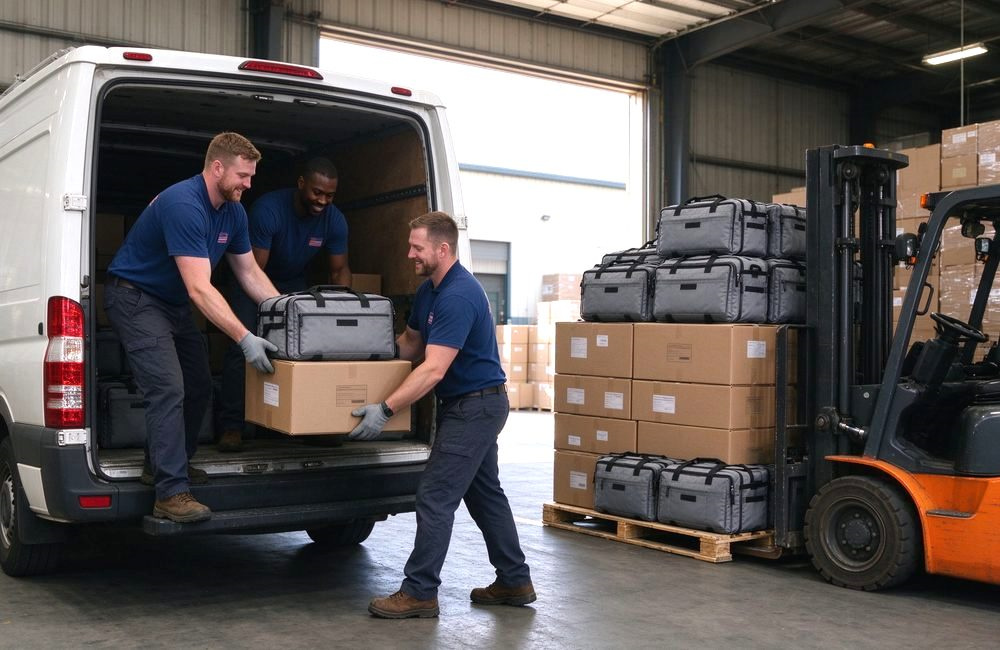
warehouse bulk kit loading truck logistics distribution pallets relief supplies workers load emergency kit boxes onto delivery van disaster supply shipment emergency response
A good assembly point becomes a working shelter within hours if it has water, sanitation, light, first aid and organization. The shelter tier of the kit catalog includes exactly these modules in bulk, so operators can open a shelter without improvising supplies.
The three-tier kit system scales naturally: the shelter tier includes bulk water, ration packs, cots and sanitation supplies.
Shelter operators should assign each incoming family a kit station number, register names, and distribute kit modules by need—priority for children, elderly and injured people.
A simple registration desk with printed forms, a map of the shelter and a list of available modules lets a small team manage hundreds of residents calmly.
Regular counts of unaccompanied children and elderly residents are part of the daily shelter log.
Neighbors are the first responders. Community mutual aid plans multiply the effect of every kit: one neighbor with medical skills, one with a generator and one who can cook cover needs no single kit can hold. Community mutual aid plans—who has medical skills, who has a generator, who can cook—multiply the effect of every kit.
Municipalities that support neighborhood-level planning see faster recovery and stronger trust.
Schools often anchor community aid: their gyms become shelters, their kitchens cook meals, and their kit inventory becomes the shared reserve.
Untrained volunteers can create more chaos than they solve. A ten-minute briefing—how to register families, distribute the kit, and report needs—turns willing hands into an effective shelter team that keeps order under stress. Brief training—how to register families, distribute kits, and report needs—turns willing hands into an effective shelter team.
A thirty-minute refresher at the start of each shelter season, using the same role cards, keeps standards high even with high volunteer turnover. Shelters that assign one person to communication, one to registration and one to kit distribution report calmer queues and fewer complaints, because residents always know who to approach for each need.
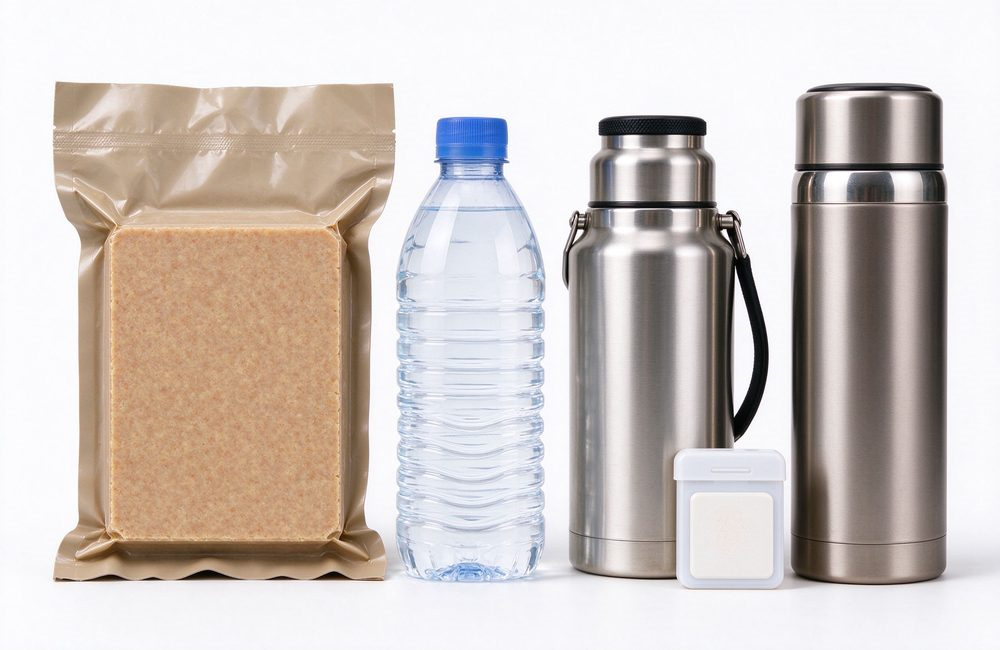
kit food water purification module tablets filtration supplies safe drinking emergency ration vacuum packed meal water bottle stainless steel thermos disaster preparedness
Cuts from glass, sprains from falls, and crush injuries from debris are the most common quake injuries. Every kit first aid module should carry pressure bandages, splints and burn dressings, because these three treat the majority of on-site cases.
The first aid module should include bleeding control supplies, splints, antiseptic and burn dressings, plus a simple printed protocol that a non-medical person can follow.
Signage saves lives: arrows to the assembly point, the first aid station and the kit distribution corner keep a shaken crowd moving in the right direction.
Signage should be bilingual where communities are multilingual, mounted above head height so crowds do not block it, and illuminated at night so the route remains visible after power failure.
A shelter medical corner needs space, light, privacy and a small inventory: Label each shelf and restock from the central kit warehouse inventory so the medical corner never runs dry mid-operation. bandages, splints, antiseptics, gloves and a first aid log. Schools and NGOs can equip it from the shelter-tier kit without special medical procurement.
|
Item |
Use |
Quantity per 100 People |
Refill Trigger |
|
Pressure bandages |
Bleeding control |
20 pieces |
Used once |
|
Adhesive bandages |
Minor cuts |
200 pieces |
Monthly check |
|
Splints & bandages |
Fracture support |
10 sets |
Used once |
|
Antiseptic solution |
Wound cleaning |
5 bottles |
Expiry date |
|
Latex gloves |
Infection control |
100 pairs |
Stock level |
This first aid stocking table gives shelter operators a ready-to-use reference for equipping a medical corner from the kit inventory. Train two staff per location to restock consumables so the module never runs dry mid-operation.
Treat minor injuries on site, but evacuate anyone with head injuries, breathing problems, severe bleeding or suspected spinal damage. Keep stretchers and a designated ambulance contact in the shelter plan, and note triage decisions in the first aid log stored with the kit.
In larger shelters, post the triage categories on a board so all volunteers apply the same priority rules, and update the log hourly during the first critical night after the quake. Include a simple triage tag system and an ambulance contact card in the kit shelter module so decisions are made fast and documented.
breathing problems, severe bleeding or suspected spinal damage. Keep stretchers and a designated ambulance contact in the shelter plan, and note triage decisions in the first aid log stored with the kit.
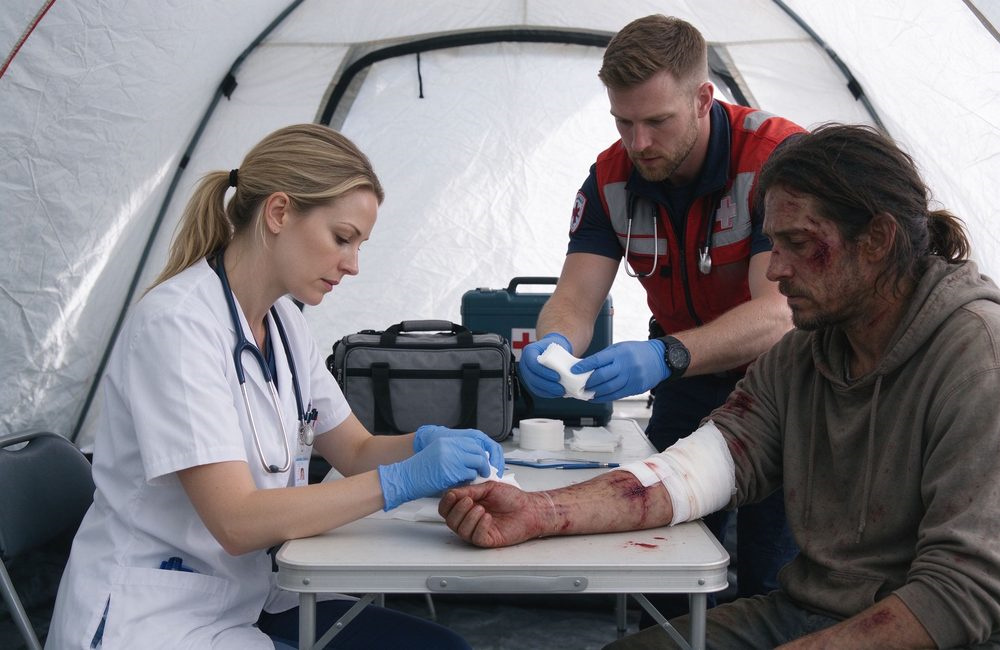
shelter medical aid point earthquake first aid station nurses treat residents emergency kit medics bandage injured survivor inside relief tent emergency response
Water is the single most important item in any kit. In shelters, bulk water storage plus water purification tablets extends limited reserves for days, and marking fill dates on every container prevents stale stock. Store at least 3.7 liters per person per day for drinking and basic hygiene.
In shelters, bulk water storage and purification supplies extend limited reserves for days.
Purification tablets, filters and collapsible containers turn uncertain tap water into a safe supply after the pipes are damaged. Rotate stored water every six months and mark the date on every container.
Energy bars, dried fruit, canned goods with pop-tops and vacuum-sealed ration packs cover most needs; add a manual can opener to the tool module because pop-tops are convenient but not universal. Check sodium content for elderly users, include familiar snacks for children to reduce stress, and mark serving sizes on each package so shelter staff can ration fairly when stocks are stretched. energy bars, dried fruit, canned goods with pop-tops, and vacuum-sealed ration packs. Rotate by expiry date and include a small supply of comfort food for children in shelters.
|
Supply |
72-Hour Per Person |
Shelter Per 100 People |
Storage Notes |
|
Drinking water |
11 liters |
1,100 liters |
Rotate every 6 months |
|
Energy food |
6 bars / 2 meals |
600 bars / 200 meals |
Check expiry |
|
Purification tablets |
30 tablets |
500 tablets |
Keep dry |
|
Hygiene kits |
1 per person |
100 kits |
Refill soap, wipes |
This water and food table converts the kit rule into concrete quantities for both household and shelter-scale planning. Rotate stored water every six months and mark the fill date on each container to avoid stale stock.
Sanitation failures cause disease outbreaks in shelters. Hand-washing stations with soap and water, separate bins for medical waste, and daily surface cleaning are the three habits that protect hundreds of residents.
Include a small supply of masks and gloves in the kit shelter module, and train two volunteers per shift on correct sanitation routines so hygiene stays consistent around the clock. A hygiene module with soap, wipes, bags and portable toilets protects the whole community and is one of the most cost-effective parts of the kit program.
Stock soap, hand sanitizer, wet wipes, garbage bags and portable toilets. A simple hygiene module in the kit keeps a shelter livable for days and protects the community from waterborne illness.
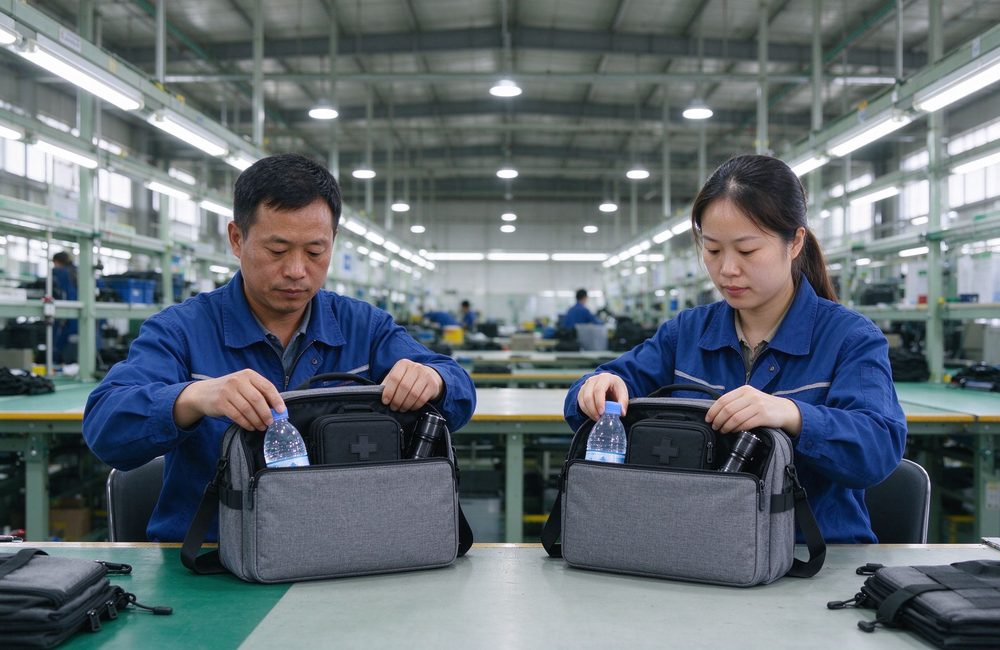
The most efficient buyers standardize one kit catalog—same modules, same labels, same sizes—across every site. Standardization lowers unit cost through volume, simplifies staff training to one video, and makes inspection a routine that any supervisor can run with one checklist. Standardization lowers unit cost, simplifies training, and makes inspection and restocking consistent.
Ask suppliers for an emergency survival kit for groups list with itemized contents, shelf life and certification documents.
Before a bulk order, request physical samples and verify: For school and government tenders, ask suppliers to confirm compliance with the latest official earthquake preparedness guidance; see national earthquake safety guidance for reference criteria.
Verify flashlight brightness and battery type, radio frequency coverage, water container durability, first aid expiry dates and whistle loudness on the samples themselves, and ask for a signed specification sheet plus test reports where required. A sample review takes one afternoon and prevents a costly bad batch, so treat it as a mandatory step rather than a courtesy.
Check Point
What to Verify
Pass Criteria
Reject If
Packaging
Labels, contents list, seal
Clear list, intact seal
Missing list or damage
Lighting
Flashlight, batteries
Works, spare batteries
No spare battery
First aid
Expiry, completeness
Fresh, complete
Expired or missing
Documentation
Certificate, shelf life
Valid documents
No certificate
This procurement checklist gives buyers a fast, objective gate for accepting or rejecting kit shipments before they reach the warehouse. Run every pallet through the same four checks so quality stays consistent across every ordered batch.
Institutional kit programs are easier to fund when the request is specific: unit counts, module lists, unit prices and a replacement schedule. Prepare a one-page budget sheet that shows the evacuation-tier, 72-hour-tier and shelter-tier quantities, the per-unit cost at the quoted volume, and the annual refill cost for first aid, water and food modules.
Grant reviewers and school boards respond well to a document that connects a clear kit plan to a concrete number.
For municipal tenders, keep the specification neutral but precise: exact module contents, packaging and label requirements, shelf-life guarantees and delivery milestones. A well-written specification attracts more qualified suppliers and makes the evaluation objective, which protects the budget and the quality of the kit program across years.
Confirm lead time, minimum order quantity and refill parts availability with the supplier in writing before ordering.
Many buyers also ask for a one-year refill price list, which turns the bulk earthquake supplies order into a stable multi-year budget line instead of a one-off purchase. Annual orders also give suppliers predictable production windows, which improves quality and delivery reliability.
Pair the annual order with a mid-year refill order for consumed first aid and hygiene items, and review quantities after each real event or large drill so the kit program keeps improving. See our extreme heat emergency kit and home fire emergency kit guides for the same procurement logic applied to other hazards.
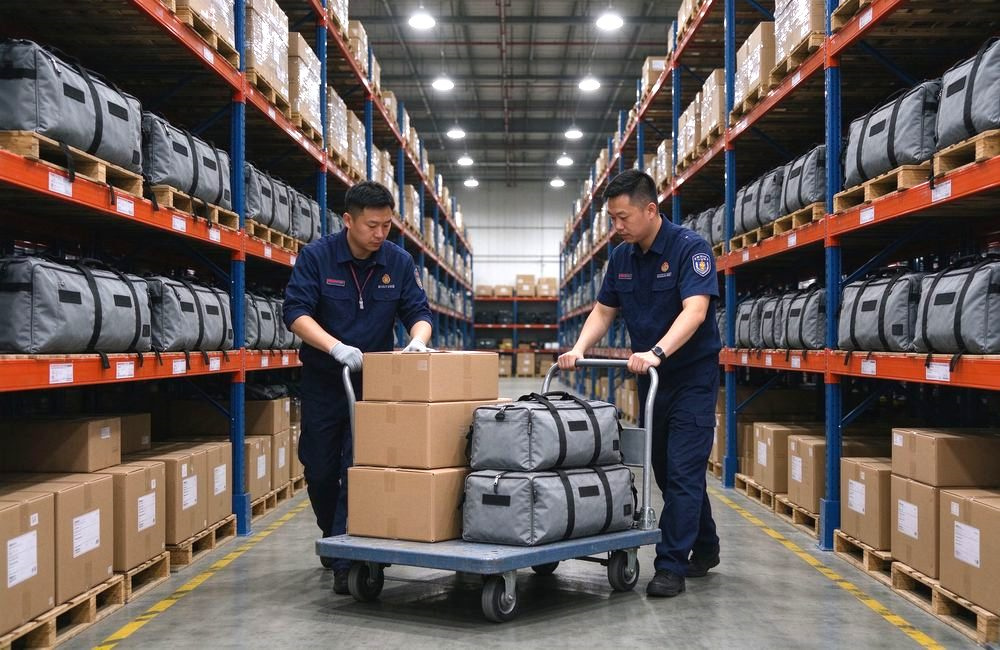
government warehouse stock check kit inventory officials verify supplies pallet move emergency kit boxes bulk disaster relief stock management emergency response
Earthquakes are sudden, regional and costly, which makes a kit and bulk earthquake supplies a steady budget line for schools and municipalities.
Certain buyers face the highest occupancy and the tightest evacuation windows. Each group below can order in volume with OEM branding.
Schools hold hundreds of children during the day. They buy earthquake drill supplies per classroom and stage a shelter kit at the main assembly point, so roll call and first aid start within minutes.
Cities coordinate shelters and rescue after a quake. They buy bulk earthquake supplies on pallets and keep a digital warehouse inventory that answers a relief request in minutes.
Shelter operators manage dense crowds for days. They order the shelter tier of the earthquake survival kit catalog, plus cots, water and sanitation modules, for every community hall.
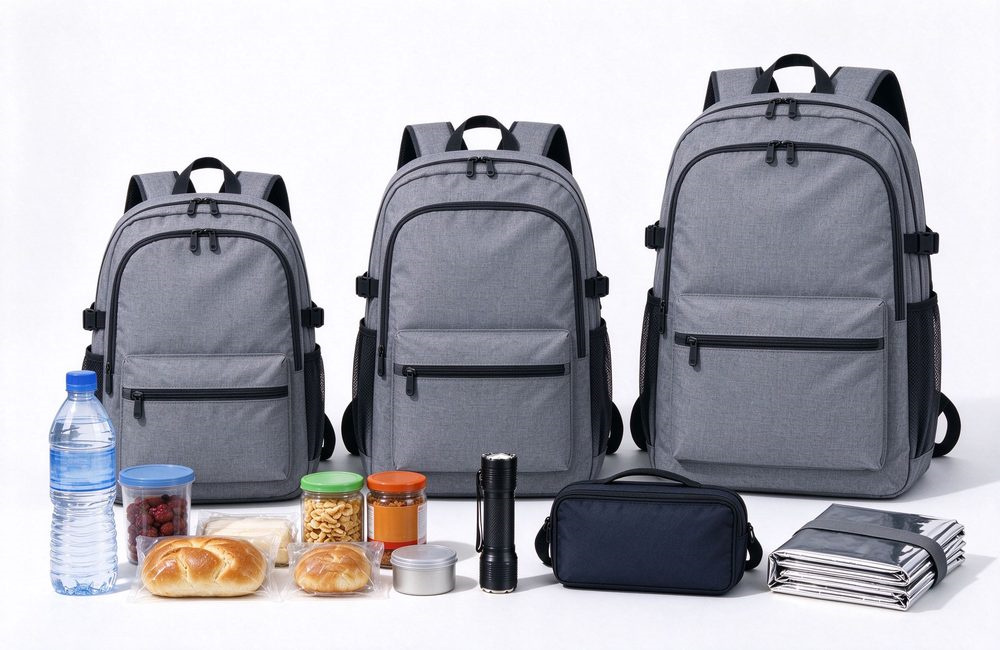
three tier kit configuration comparison evacuation 72 hour shelter bulk supplies three sizes grey emergency backpacks with food water flashlight blanket for disaster preparedness
A few recurring mistakes weaken otherwise good programs. Confirm the points below during your next kit review.
A single bag in the office is useless if exits are blocked. Place an evacuation-tier kit at every classroom and assembly point, not only in the storeroom.
Drop-cover-hold-on matters, but the evacuation and shelter supplies only help if everyone also knows the route and the secondary meeting point.
Phones and roads fail first. A family emergency kit without 11 liters of water per person is not a 72-hour kit; rotate the stock every six months.
A drill without roll call cannot find missing children. End every drill with a recorded head count on the form kept with the assembly-point kit.
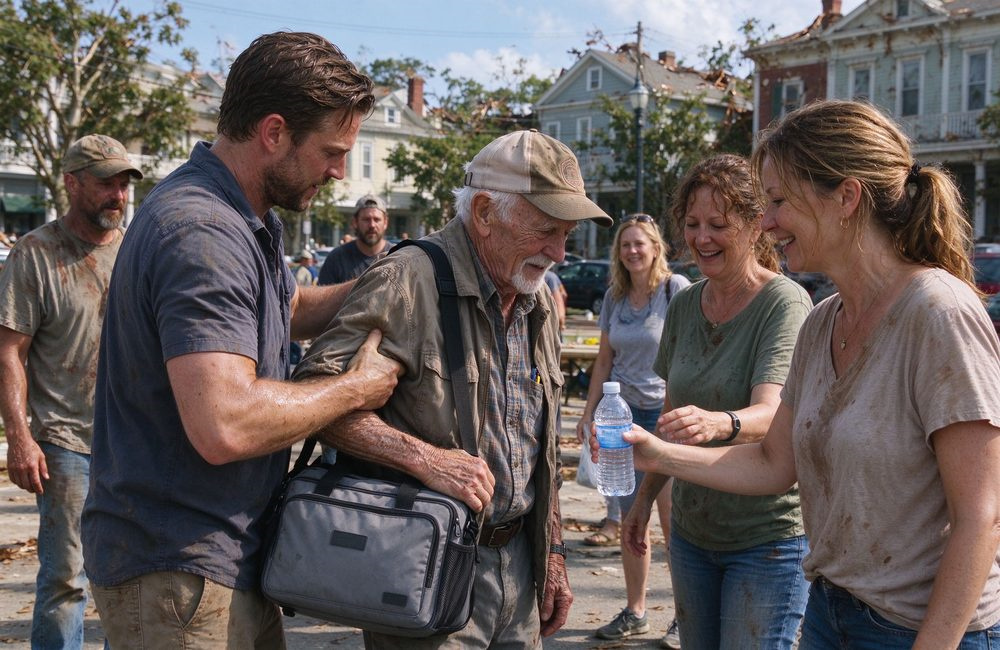
community mutual aid after quake neighbors share supplies help each other recovery earthquake emergency kit distribution local residents offer drinking water to elderly survivor emergency response
Simple care keeps a kit ready year-round. Follow this short maintenance checklist between drills.
For orders of 200 kits or more, we support custom OEM branding on kit bags, water containers and first aid packaging. Minimum quantities and lead times are confirmed per contract.
Every school earthquake preparedness program starts with one complete earthquake emergency kit at each assembly point, then scales outward.
Order survival-first disaster supplies as one catalog: the same earthquake emergency kit, labels and refill list across every classroom.
Municipal buyers source bulk survival gear and school earthquake supplies together, so shelters and classrooms share one earthquake preparedness kit standard.
After a major quake, earthquake relief supplies move by pallet, and a documented warehouse turns the first 72 hours into a managed response.
An emergency survival kit for groups covers the classroom, the shelter floor and the municipal warehouse, each stocked from the same catalog.
Schools buying school earthquake supplies should bundle each earthquake emergency kit with head-count forms and whistle signals before the next drill.
Keep a second earthquake emergency kit at the secondary meeting point, where aftershocks cannot reach the first assembly area.
Each classroom earthquake emergency kit lists its contents on the lid, so any staff member can inspect it in under two minutes.
Prepare an earthquake emergency kit for every dormitory, and a shelter-tier earthquake emergency kit for the gymnasium floor.
Volunteers distribute the earthquake emergency kit by need, prioritizing children, elderly people and anyone injured.
When ordering school earthquake supplies, ask whether the earthquake preparedness kit matches the approved district catalog.
Buy survival-first disaster supplies early, before the seismic season, so bulk survival gear arrives with time for a practice drill.
City warehouses hold earthquake relief supplies on numbered pallets, each pallet logged with contents, expiry and location.
Earthquake relief supplies flow to shelters within hours when the reserve is pre-positioned and digitally tracked.
Relief offices publish the earthquake relief supplies manifest so donors see exactly what each shelter receives.
Restock earthquake relief supplies after every drill, so the pallet counts match the digital log before the next event.
A reliable supplier ships earthquake relief supplies on short notice, which keeps municipal budgets stable year after year.
Every shelter request lists the earthquake relief supplies it needs, from water to first aid to cots.
An emergency survival kit for groups is staged at every community hall, and a second emergency survival kit for groups rides in the relief truck.
Order an emergency survival kit for groups for each classroom cluster, so no room shares a single bag across fifty students.
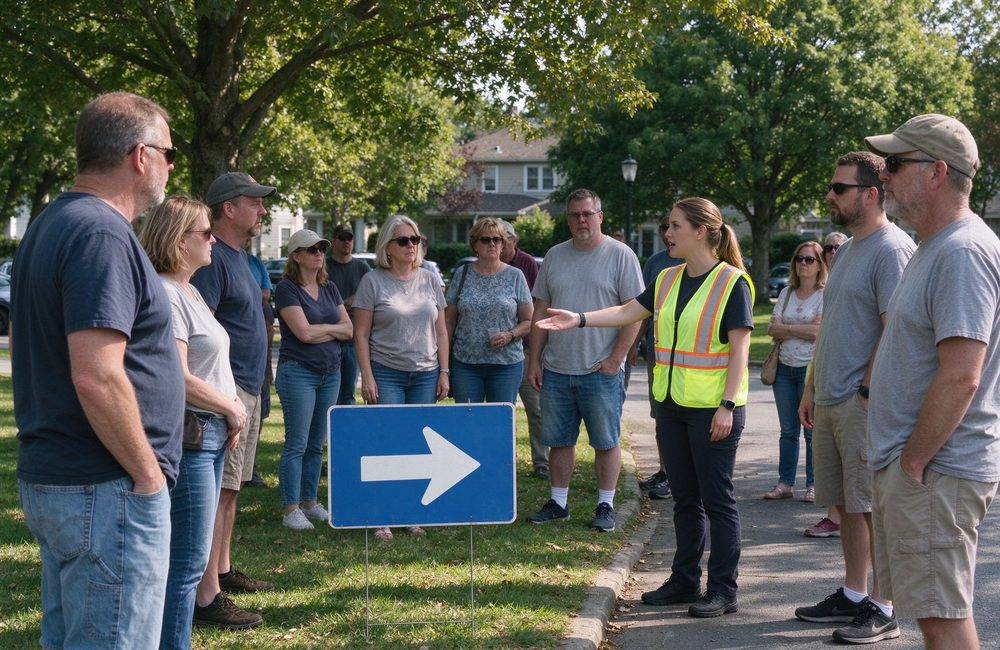
evacuation assembly point arrow sign kit route marker clear signage guides crowd to safe shelter tent volunteers check evacuees resting inside emergency response
Q: What should I do during an earthquake?
A: Pack water (3.7 liters per person per day), no-cook food, a flashlight with spare batteries, a hand-crank radio, a whistle, a first aid kit, hygiene items, warm blankets and copies of important documents. Keep the kit in a labeled, accessible container at the assembly point and rotate supplies by expiry date.
Q: Where is the safest place in my home?
A: Place one evacuation-tier kit in every classroom and one shelter-tier kit at the main assembly point. A school of 500 students typically needs 25 to 30 classroom kits plus 3 to 5 shelter kits, with a spare module inventory in the office for quick replacement after each drill or real event.
Q: How long should I be prepared for?
A: An evacuation kit covers the first one to two hours: whistle, light, dust mask, mini first aid and emergency blanket. A 72-hour kit adds water, food, radio, hygiene and documentation for full self-sufficiency. Buyers often standardize both tiers from one catalog.
Q: Should I stand in a doorway during an earthquake?
A: Check water and food every six months; verify first aid expiry dates monthly; test flashlights and radios quarterly. Replace any item that is used, expired or damaged immediately, and record the replacement in the kit inventory sheet so the kit is always complete.
Q: What items go in an earthquake kit?
A: During shaking, most injuries come from falling objects and debris, not from the ground itself. Dropping under a sturdy table protects the head and neck, while running outside exposes people to falling glass and toppling facades. Practicing this position with evacuation routes is the core of kit training.
Q: How do I secure my furniture?
A: Store kits at marked stations near exits, at assembly points and in shelter corners—places people will actually reach during an emergency. Avoid storage under large windows or heavy shelving. Label every container with a contents list and refresh date so inspection takes minutes.
Q: What should I do after an earthquake?
A: Yes. After a drill, check the contents, replace used or missing items, and confirm expiry dates before returning the kit to its station. Make kit inspection part of the drill checklist so every kit stays drill-ready and event-ready.
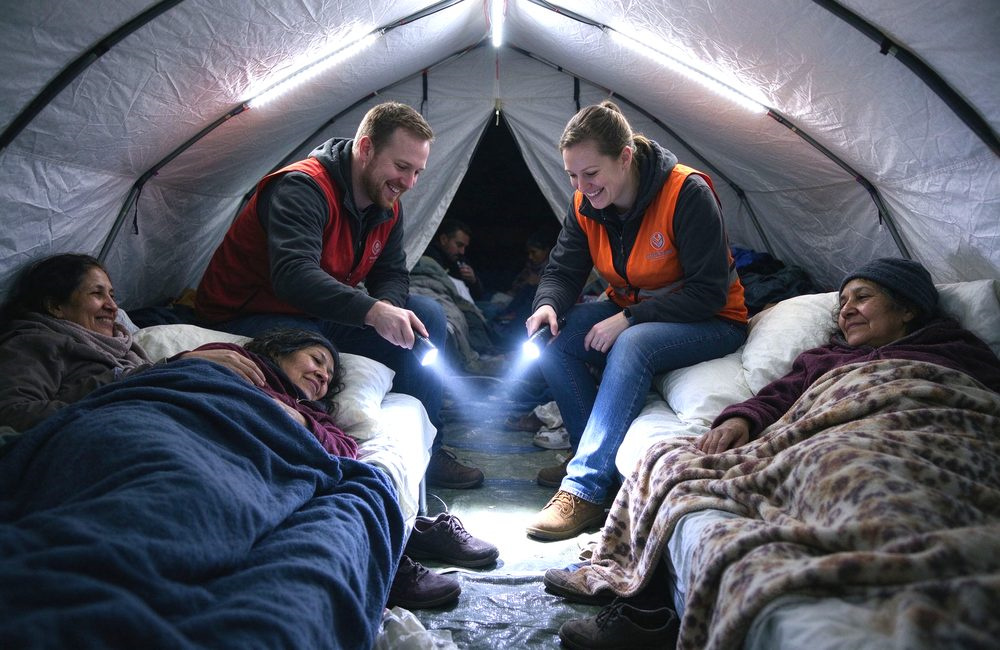
night shelter flashlight illumination kit lighting safety dark camp evacuees volunteers check residents inside relief tent after earthquake emergency response
Request itemized kit lists, physical samples, shelf-life documentation and lead-time commitments in writing. Standardize one kit catalog across all sites, verify each shipment against a checklist, and keep reserve stock in a warehouse with digital inventory so relief orders ship without delay.
Shelters need bulk water, ration packs, cots, sanitation supplies, first aid stations and crowd-management signage. Add comfort items for children, spare glasses and medication copies for elderly users, and printed role cards for volunteers to keep shelter operations calm and organized.
Stay calm, count everyone at the meeting point, check for injuries, and treat minor wounds with the first aid module. Do not re-enter the building until it is checked for structural damage and gas leaks. Use the radio in the kit for official instructions and aftershock warnings.
Many countries and regions require emergency preparedness plans in schools, public buildings and shelters. Requirements vary by jurisdiction, so verify local regulations and reference trusted public guidance when designing your kit program: the NWS earthquake safety guidance, the American Red Cross earthquake preparedness guidance and the Red Cross survival kit supplies checklist.
YRF Textile · info@yrftextile.com · Emergency preparedness supplies for schools, shelters and NGOs
Дружні посилання :
Авторське право © Custom Disaster - Relief Bedding: Tents, Sleeping Bags, Blankets Всі права захищені
професійна команда для обслуговування !