Категорії
Last updated: November 28, 2026
Emergency Radio Guide: Hand Crank, Solar and DAB
Radios With Weather Alert
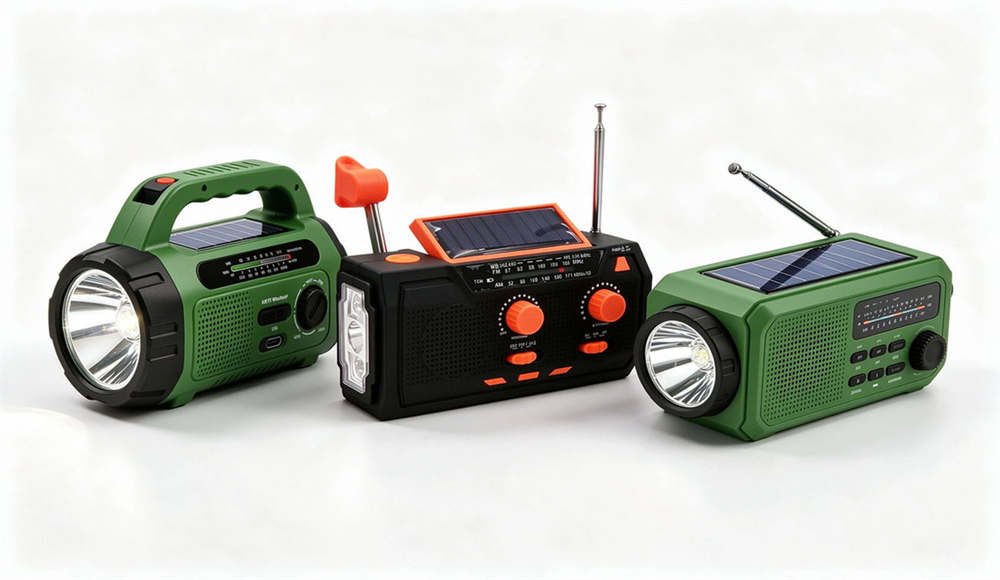
An emergency radio guide for buyers who need a receiver that still works when the grid does not. Broadcasters keep transmitting through a blackout, but phones die within a day, so this emergency radio guide compares crank, solar and DAB sets on battery runtime, weather alert coverage, IPX7 ratings and bulk pricing for teams and agencies.
Quick answer
A practical emergency radio guide ranks three decisions in order: power path, band coverage, and weather alert. A hand crank radio needs 4–8 minutes of winding for about 30 minutes of listening; a solar model tops up in 6–8 hours of direct sun. Match the band to your market — FM and DAB+ where analogue has switched off, AM where long-range reception still matters. For team stock, buy one unit per household plus 15% spares.
Key Takeaways: five numbers to plan around
An emergency radio guide starts with power: hand crank, solar, and a 2000 mAh battery cover a 72-hour outage.
Weather alert reception matters more than speaker size; a NOAA-capable set warns 15-30 minutes earlier.
DAB adds stations but drains batteries faster, so treat it as a second option.
Test each radio monthly and replace rechargeable cells every 2-3 years.
Bulk buyers should confirm bands, charging method, and carton count before ordering.
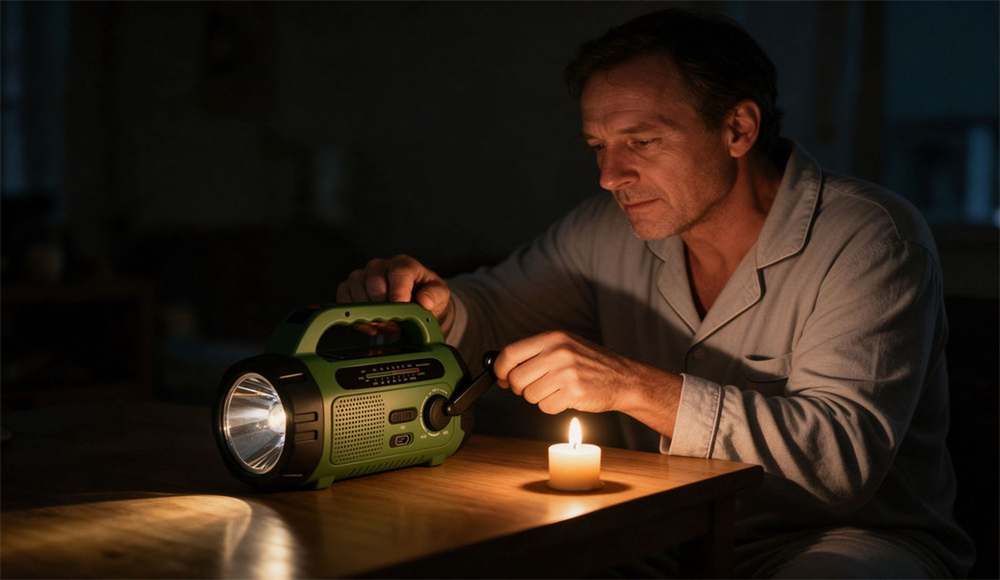
An emergency radio guide starts with a simple failure mode. Mobile networks are built for average load, not for the moment a whole region loses power at once, and the same outage that takes down the mast takes down the charger in the wall.
Broadcast radio keeps running from transmitter sites with their own generators, which is why civil protection agencies still issue receivers rather than apps.
The emergency radio guide exists to close that gap with equipment that does not need a subscription, a login, or a working data plan.
The second reason is reach. A VHF or FM transmission covers thirty to sixty kilometres from one mast, and a weather alert broadcast reaches every receiver in that radius at once. A message that has to be pulled from a server arrives only when the server is up.
During a regional outage, the difference between push and pull is the difference between knowing that a flood gate opened and finding out four hours later. Buyers who treat an emergency radio guide as an optional accessory usually change their mind after the first night without power.
Most cell sites carry four to eight hours of battery backup. Once that buffer runs out the tower goes silent even though the handset still shows signal bars, and a phone with no network spends its own charge hunting for one. A receiver that runs on AA cells or a hand crank sidesteps the entire chain, which is the practical argument an emergency radio guide keeps making.
Warning windows are short and asymmetric. A tornado alert gives roughly thirteen minutes, a flash flood warning thirty to sixty, a typhoon landfall advisory twelve to twenty-four hours. Households that act inside those windows are the ones holding a device that receives the message without asking a network first. That asymmetry is why an emergency radio guide treats reception as infrastructure rather than convenience.
Grid stress has grown rather than shrunk. Heat waves, wildfire shutdowns, and winter ice loading all work the same distribution network, and each event files another reason to keep a receiver in the kit instead of the drawer.
From a procurement angle the case is also economic: a hand crank radio costs a fraction of a generator, needs no fuel, and stores flat for years, which is why relief agencies and school districts restock them as standard line items when they write shelter budgets.
None of that makes the receiver a substitute for a phone. It makes the two complementary, and the rest of this emergency radio guide is about choosing the receiver that survives the week the phone does not.
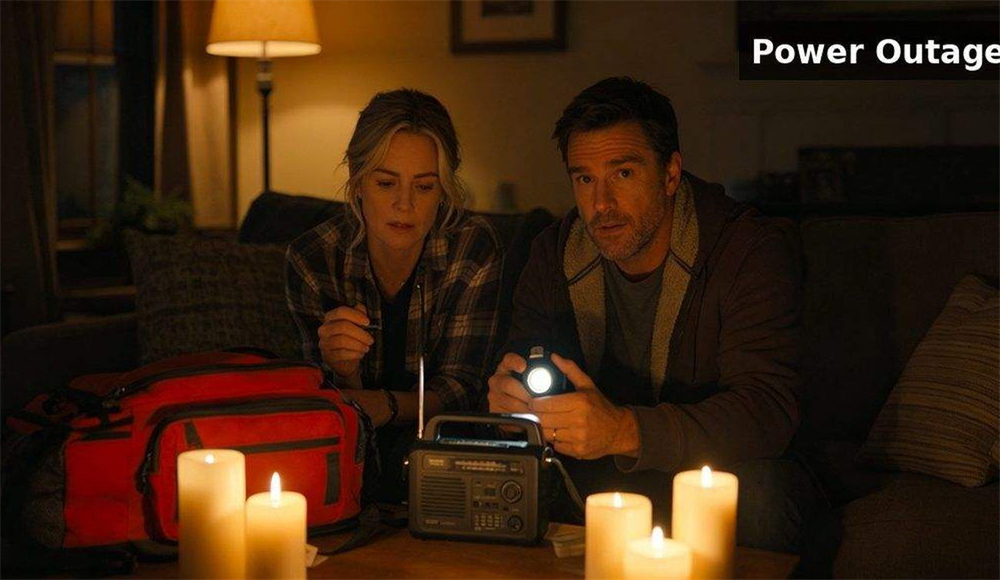
Receivers are also cheap to keep ready, which is the argument this guide makes for one per household. A hand crank model holds charge for years in a drawer, needs no firmware updates, and has no account to lapse.
Compare that with a phone that must be charged, updated, and kept connected to stay useful.
The emergency radio guide therefore recommends one receiver per household plus one per team vehicle, because the failure modes that take out a phone rarely take out a spring-wound dynamo.
A receiver is also a sensor as much as a speaker. Signal strength tells a team whether the local repeater is still alive, and a weather alert tone tells them whether the regional authority is still transmitting.
An emergency radio guide that covers only audio misses this diagnostic role. During a flood response, the moment the weather alert tone stops is itself information.
Standards make the category predictable. Broadcasting bands, weather alert protocols, and receiver sensitivity are all defined, so a buyer can compare models on paper before touching them.
That is rare in emergency equipment, where performance often depends on the day and the operator. The emergency radio guide leans on those definitions to keep comparison honest.
The cost of being wrong is asymmetric.
A receiver that fails during an outage is not a refund problem, it is a credibility problem for whoever issued it. Agencies that hand out gear on the strength of a spec sheet learn this the hard way, which is why the emergency radio guide spends as much space on verification as on features.
One quiet trap runs through the category, and this guide returns to it: a radio that needs a charged internal battery to work at all. Many compact models use a sealed lithium cell with no user-replaceable option, so once the cell is flat the device is scrap.
The emergency radio guide treats replaceable cells as a baseline requirement, not a premium feature, because a receiver that cannot be revived with two AA batteries is not emergency equipment.
The American Red Cross publishes household preparedness guidance that lists a battery or crank receiver as a core item, which is the origin of the one-per-household rule. The same logic drives a typhoon kit, where a receiver sits beside the water and the documents.
Five questions decide most of the outcome: whether the unit runs without mains power, whether the cell can be swapped by the user, whether it holds charge on a shelf for a year, whether the weather alert tone carries in wind, and whether one person can operate it alone.
An emergency radio guide that answers those five has covered the failure modes that actually occur.
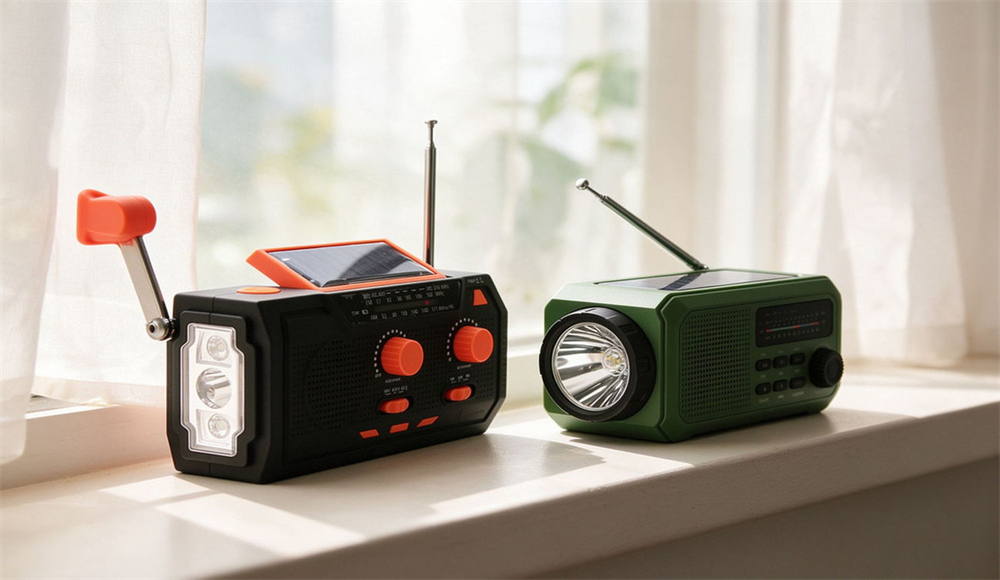
For this emergency radio guide, the band question has no single answer, because the useful band depends on where the receiver is sold.
An emergency radio guide cannot skip the band question, because the answer changes by country and by the kind of message being carried. FM remains the most widely transmitted band in the world: 87.5 to 108 MHz, analogue, and receivable by almost every receiver on the market.
Its weakness is capacity. One FM carrier carries one station, so a regional authority competes for space with music programming, and in a crowded band the emergency message is not always the loudest signal.
DAB+ is the digital successor in most of Europe, Australia, and parts of Asia, broadcast in Band III between roughly 174 and 240 MHz. One multiplex carries many stations, which is exactly what a public authority needs when it wants to keep a dedicated channel on air during an emergency.
The catch is coverage: DAB+ is built for populated areas, and a mountain valley or a coastal stretch outside the main transmitter footprint may have no usable signal at all.
AM, or medium wave, sits around 526 to 1606 kHz in most markets and carries the longest wavelength of the three. It travels further at night and penetrates terrain that stops higher frequencies, which is why some national authorities keep a medium wave channel as the last resort.
Its weaknesses are bandwidth and noise: audio is narrow, electrical interference is audible, and a modern city is a hostile environment for a medium wave receiver.
The United States Federal Communications Commission allocates the broadcast bands and runs the Emergency Alert System, and its published band plan is the reference most receivers are designed against. A weather alert service adds a fourth path in some markets.
The North American system transmits on a dedicated set of VHF frequencies near 162.5 MHz, and a receiver with the alert feature can wake itself and sound a tone when an official warning is issued.
That is not a broadcast band in the ordinary sense, it is a push channel, and it is the single most useful feature for households in storm regions.
The emergency radio guide's practical answer for procurement is to require at least two paths, not one. A receiver with FM and DAB+ covers both the analogue fallback and the digital multiplex in a European market. A receiver with FM and the weather alert channel covers the North American case.
A receiver with only DAB+ is the weakest choice in this emergency radio guide, because it depends entirely on a digital network that was designed for coverage, not for survivability.
Sensitivity matters more than the band list, and the emergency radio guide scores it first. Two receivers can both claim DAB+ and differ by ten decibels in usable sensitivity, which in the field is the difference between a clear channel and silence.
The emergency radio guide therefore asks for a stated sensitivity figure, or a demonstration on a weak signal, rather than a tick in a feature column.
Antenna design decides how much of that band a receiver can actually use. A telescopic whip that reaches forty centimetres is not decoration: it sets the capture area, and a short antenna on a weak signal turns a good tuner into a deaf one.
Look for a whip that extends, a jack for an external antenna, and a receiver that keeps working when the whip is fully extended rather than overloading.
Band for emergency radio guide
Range
Strength
Weakness
FM
87.5–108 MHz
Universal, every receiver
One station per carrier
DAB+
Band III 174–240 MHz
Many stations per multiplex
Urban coverage only
AM / MW
526–1606 kHz
Long reach at night
Narrow audio, noisy
Weather alert VHF
~162.5 MHz
Push alert, auto wake
Regional, not global
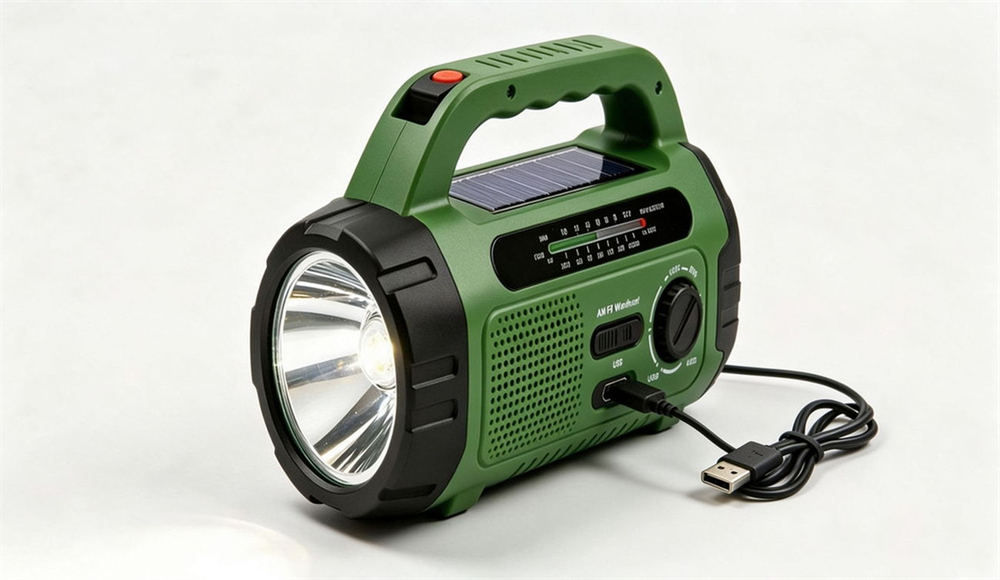
The emergency radio guide treats power as three independent paths, each with its own failure mode.
The power path is where an emergency radio guide earns its keep, because a receiver with three charging options is not automatically better than one with two. Each path has a different failure mode, and a team that understands them can plan around a multi-day outage instead of hoping.
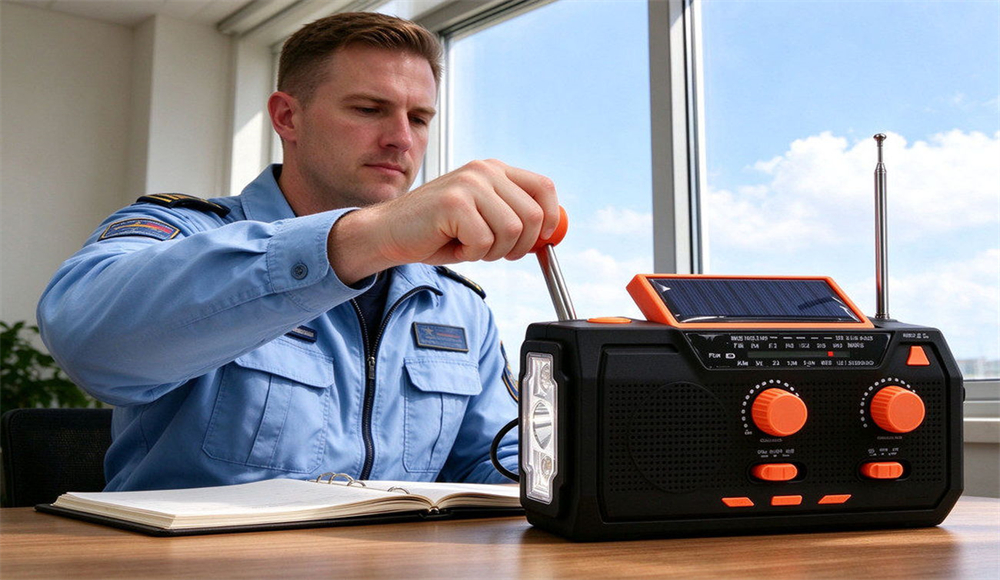
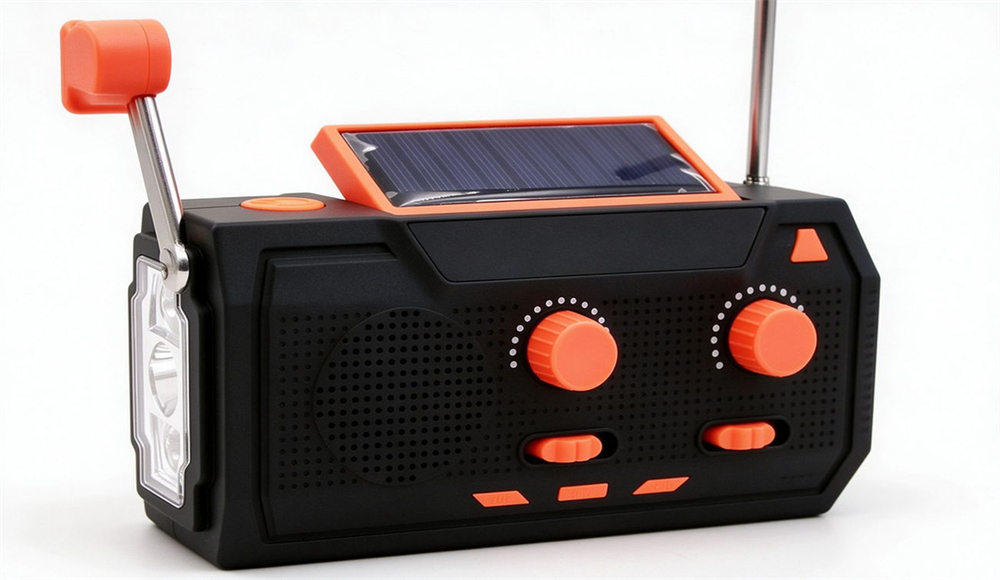
A hand crank is the only path that never runs out of fuel. The mechanism turns a small dynamo, and a minute of steady cranking typically produces enough charge for fifteen to twenty minutes of listening at moderate volume, or a few minutes of talk time on a connected phone.
The number is modest, and that is the point: the crank is not a power station, it is a guarantee that the receiver will still speak on day four.
Crank quality divides the market, and this guide ranks it above any figure printed on a datasheet. A plastic handle on a light shaft strips its teeth after a few hundred turns, and a metal crank on a geared shaft lasts.
Ask what the handle is made of, whether the shaft is supported at both ends, and whether the crank can be folded without cracking the housing. These are the parts that fail first, and none of them appear on a datasheet.
Solar adds a second trickle path for daylight hours. A panel of ten to fifteen square centimetres puts out roughly one to two hundred milliamps in direct sun, enough to keep a receiver topped up over a day in the field but not enough to charge a phone quickly.
The panel also ages: a flexible film panel loses output after a few years of UV exposure, so a solar receiver that lives in a vehicle window is a consumable, not a lifetime asset.
USB input is the practical third path. A standard five volt input lets a receiver charge from a power bank, a vehicle socket, or a small folding panel, and it means the receiver can share the same power budget as the rest of a kit.
The detail to check is the connector and the current draw: a micro USB port on a device that pulls one amp will charge slowly from a small bank, and a USB-C port with proper negotiation is the more future-proof choice.
Power planning should treat a receiver and the emergency lighting for the same outage as one budget, because both draw on the same cells.
Battery chemistry decides storage behaviour. A replaceable lithium-ion cell of the 18650 type holds charge well and is easy to source, while three AA cells are available in any village shop and survive a decade in storage if they are the lithium type rather than alkaline.
Alkaline cells leak, and a leaked cell destroys the contacts of a receiver that was otherwise fine. The emergency radio guide prefers a receiver that accepts both a replaceable lithium cell and AA cells in a sled, because that covers both the performance case and the last-resort case.
A receiver that quotes forty hours of play time is usually quoting a low volume setting with the display off and the alert feature disabled. Ask for battery runtime at a stated volume, with the alert feature active, because that is how the device will actually be used during an event.
Charging while listening is another detail worth testing before an order is placed. Some receivers cut audio when the crank is turned, because the dynamo noise and the voltage sag disturb the tuner, and a receiver that goes silent while being charged is a receiver that will not be charged during the event that matters.
Path for emergency radio guide
Output
Best use
Limit
Hand crank
15–20 min per minute
Multi-day outage
Manual effort
Solar panel
100–200 mA peak
Daylight top-up
Weather dependent
USB input
5 V, 0.5–1 A
Everyday charging
Needs a source
Replaceable cell
18650 or 3×AA
Shelf life, field swap
Cell must be stocked
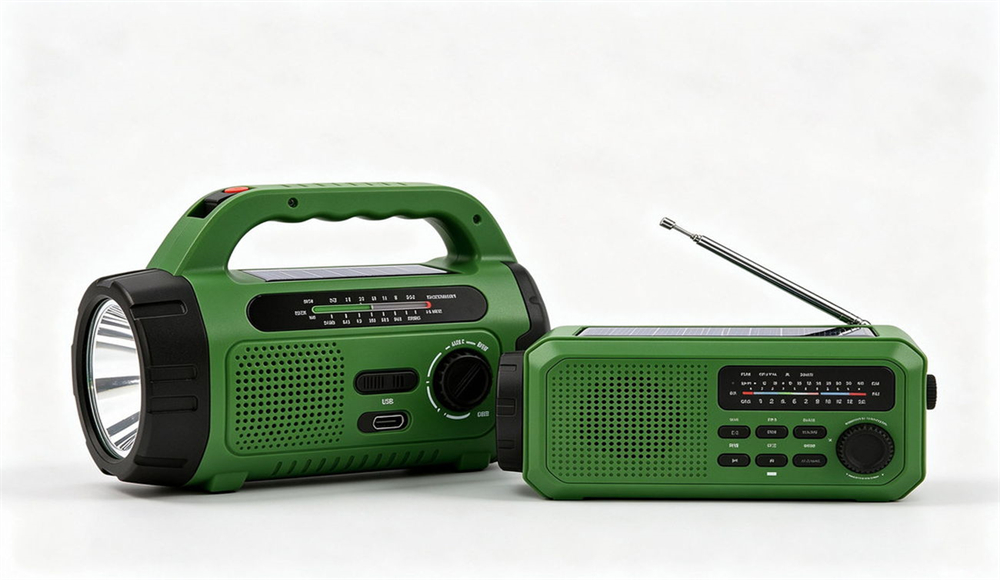
The emergency radio guide orders features by what changes the first hour of an outage, not by what fills a page.
A feature list in an emergency radio guide is useful only if it separates outcome from catalogue padding. The list below is ordered by how much each item affects the first hour of an outage.
Sensitivity and selectivity come first. Sensitivity is how weak a signal the receiver can resolve, selectivity is how well it rejects the station next door. In a crowded FM band during an emergency, a receiver with good selectivity can still hear the official channel while a poor one is buried.
Neither figure is printed on most boxes, so ask for a bench test or a field demonstration.
Audio output is second, and it is usually underrated. A receiver rated at one watt drives a small speaker to a level that is audible across a room, but not across a courtyard where a team is assembling.
Look for at least two watts, a speaker that faces the operator rather than the table, and a headphone jack so one person can monitor without waking a shelter.
Automatic alert reception means the receiver wakes, sounds a tone, and reads out the warning even when it is switched off or muted. A receiver without it still works, but someone has to be listening, and during a night event nobody is.
The display and controls are fourth because they decide whether the device is usable in the dark with gloves on. A backlit display with large characters, a tuning knob that can be found by touch, and a volume wheel with a detent at zero are all small things that matter at two in the morning.
Membrane buttons on a flat panel are the worst case: they cannot be located without light.
A receiver that lives in a vehicle or a pack will be dropped, and the parts that break are the antenna mount, the crank shaft, and the battery door. A rubberised bumper around those three areas is worth more than a higher IP rating on the rest of the body.
Weight and mounting are sixth, and the emergency radio guide treats awkward gear as gear that stays behind. A receiver intended for a wall or a shelf needs a stand or a strap loop, and a receiver intended for a pack needs to be under about four hundred grams with the antenna retracted.
Gear that is awkward to carry is gear that stays in the vehicle.
Finally, a receiver should be operable without a manual, a point the emergency radio guide tests directly.
Test it: hand it to someone who has not seen it and ask them to tune to a station. If that takes more than thirty seconds, the interface is wrong, and it will be wrong under stress too.
|
Feature for emergency radio guide |
Minimum |
Why |
|
Sensitivity |
Bench test or stated figure |
Weak signal survives |
|
Selectivity |
Rejects adjacent station |
Official channel stays clear |
|
Audio output |
≥2 W |
Audible across a courtyard |
|
Alert reception |
Auto wake and tone |
Works while unattended |
|
Backlit display |
Large characters |
Usable in the dark |
|
Antenna |
Extendable whip plus jack |
Capture area matters |
|
Cell access |
User replaceable |
Unit stays revivable |
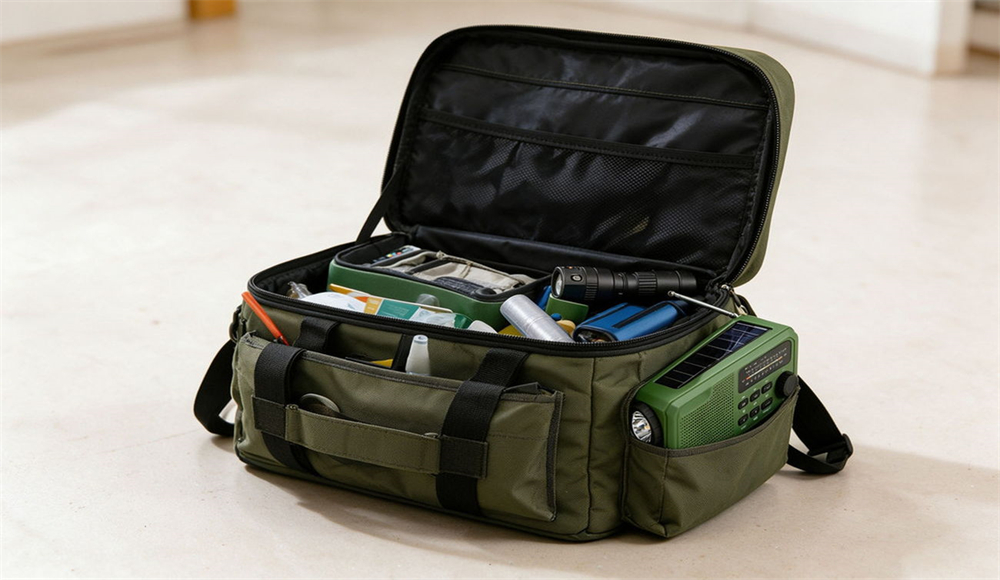
Every claim in this emergency radio guide rests on paperwork that a buyer can actually request.
Compliance is the section buyers skip and then pay for at the border. A radio sold into the EU carries a CE marking under the Radio Equipment Directive 2014/53/EU, which requires a test report covering radio parameters, EMC and charger safety.
ETSI publishes the harmonised receiver standards that a CE declaration under the Radio Equipment Directive is tested against, so the test report a buyer requests should name the standard.
The paperwork set is predictable: a declaration of conformity naming the directive, a test report from a recognised laboratory, a RoHS statement, and a WEEE registration for take-back.
Those four documents tell a buyer more than any sample. Suppliers who cannot produce them are not necessarily dishonest, but they are not ready for a European tender.
A receiver with a lithium cell ships under dangerous goods rules, and the packing must declare the watt-hour rating and the state of charge. Air freight of a single parcel is routine, but a pallet of receivers needs the paperwork in order before it leaves, and the emergency radio guide treats this as a procurement step rather than a logistics detail.
Ingress protection is specified as an IP code, and the second digit is the one that matters for a receiver used outdoors. IPX4 covers splashing from any direction, which is enough for rain on a vehicle dashboard, and IPX6 covers powerful jets, which is what a deck wash or a fire hose delivers.
IPX7 means immersion for thirty minutes at one metre, and it is the rating that separates a waterproof receiver from a showerproof one.
The IP claim needs a caveat: the rating applies to a clean unit with the seals intact. A battery door gasket that has been opened and closed two hundred times is no longer the gasket that was tested, and a receiver left with the door ajar in a wet pack will fail regardless of its label.
Buyers should check that the seals are replaceable and that the door has a visible latch rather than relying on friction.
Temperature and drop ratings are less standardised, but as this guide notes, they are still worth asking about. A receiver stored in a vehicle can see sixty degrees Celsius in summer and below zero in winter, and a display that goes blank at minus ten is a display that fails in a cold snap.
A one metre drop onto concrete is a fair test for a handheld unit, and the result should be a working receiver, not a cracked housing.
A receiver marketed with a weather alert feature must implement the specific protocol of the market it is sold into, and a receiver with the wrong protocol will sit silent during a real warning. That is a compliance question, not a feature question.
|
Document or rating for emergency radio guide |
What it proves |
Ask for |
|
CE DoC under 2014/53/EU |
Radio, EMC, safety conformity |
Signed declaration with directive reference |
|
Test report |
Parameters match the claim |
Report from a recognised lab |
|
RoHS statement |
Restricted substances |
Supplier declaration |
|
WEEE registration |
Take-back obligation |
Registration number |
|
UN 38.3 test summary |
Cell transport safety |
Summary for the shipped cell |
|
IP rating |
Water and dust resistance |
Test report, not a label |
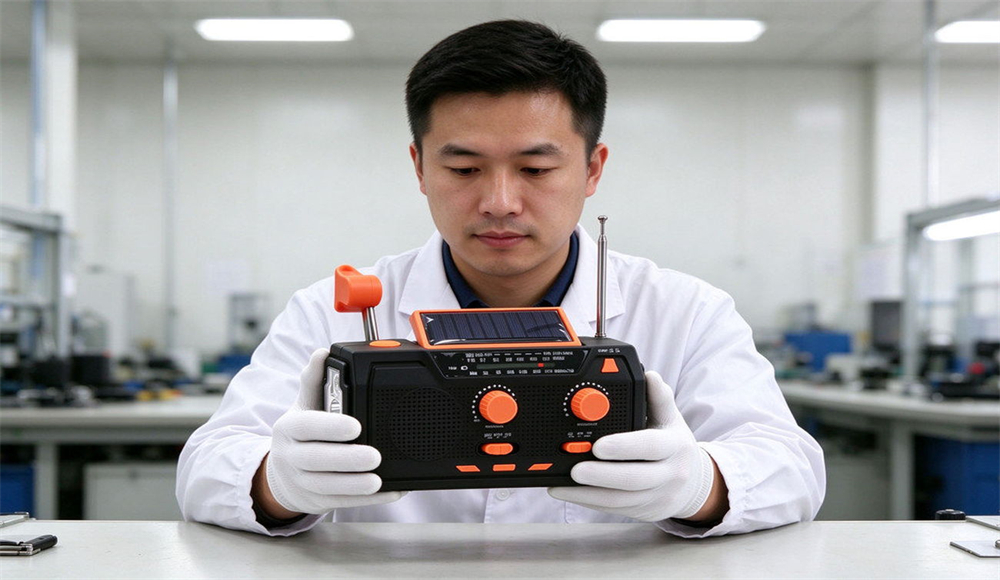
The emergency radio guide assumes most failures happen in storage, not in service.
An emergency radio guide that stops at purchase leaves the hard part undone, because most receivers fail in storage rather than in service. The checks below are the ones that catch a dead unit before an event rather than during one.
First, a monthly power check. Turn the crank for thirty seconds and confirm the receiver plays. A unit that will not start after a minute of cranking has a flat or dead cell, and the fix is a cell swap, not a new radio.
Doing this on the first day of each month takes less time than reading the instructions and catches the failure while there is still time to replace the cell.
Second, a band sweep. Tune across FM and the digital band once a month and note which stations are receivable. A receiver that has lost its antenna connection still powers on and still shows a display, but the sweep will show a sudden drop in station count.
Most alert services publish a weekly or monthly test transmission, and a receiver that fails to sound during a scheduled test will fail during a real warning. Log the test result next to the unit, because a feature nobody has verified is a feature nobody can rely on.
A receiver stored in a damp basement will corrode its cell contacts within a year, and one stored in a hot vehicle will age its cell faster than the calendar suggests. The right place is a dry cupboard at room temperature, with the cell at about half charge rather than full or empty, because a lithium cell held at full charge for years loses capacity faster than one held at half.
A receiver with a missing antenna, a missing crank handle, or a missing USB cable is a receiver that will be operated in a degraded mode. Keep the accessories in one bag with the unit, and check them on the same monthly walk-through as the power test.
Sixth, the operator drill. Hand a receiver to a team member who has never used it and ask them to find a station, enable the alert, and charge it from a power bank. The drill exposes interface problems that no datasheet reveals, and it takes five minutes per person.
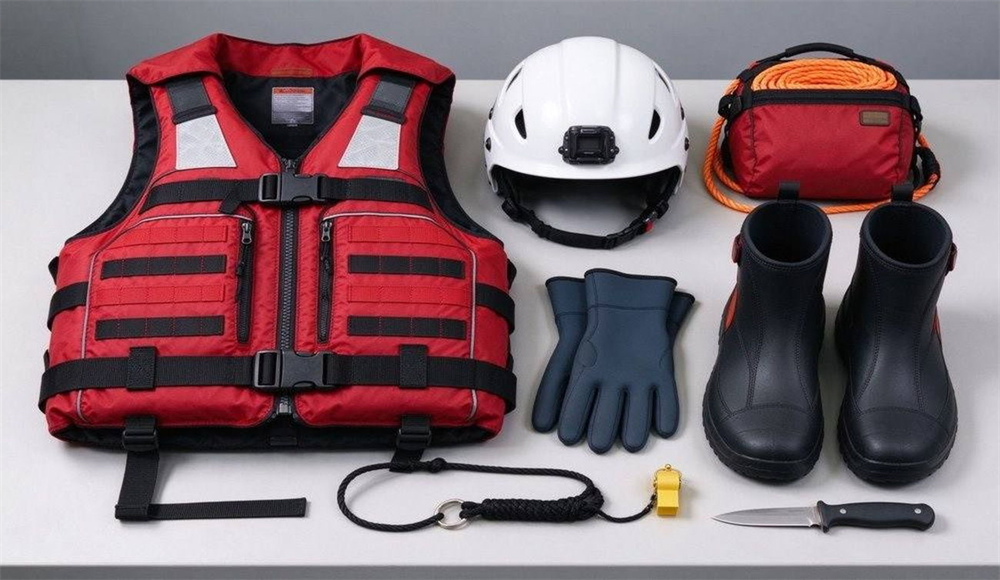
A monthly walk-through is the only maintenance most teams will do, and a water rescue checklist follows the same principle: check the item you will depend on.
Seventh, record the serial numbers. A team that issues twenty receivers should know which one went to which vehicle, because a failure pattern across a batch is a supplier conversation, and a failure pattern across one vehicle is a storage conversation.
The register is also what an auditor asks for when the equipment is part of a funded preparedness programme.
|
Check for emergency radio guide |
Frequency |
Fails if |
|
Crank start test |
Monthly |
Cell flat or dynamo dead |
|
Band sweep |
Monthly |
Antenna or tuner fault |
|
Alert test transmission |
Per schedule |
Protocol or speaker fault |
|
Storage condition |
Quarterly |
Damp or heat damage |
|
Accessory audit |
Monthly |
Missing whip or cable |
|
Operator drill |
On issue and yearly |
Interface unusable under stress |
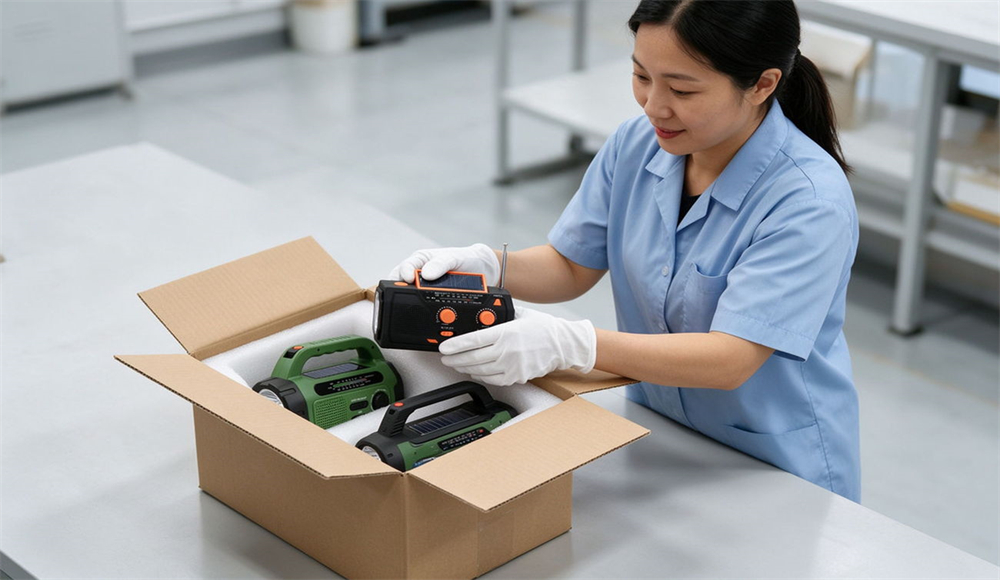
At the desk, the emergency radio guide becomes a comparison of capability tiers rather than a list of models.
The final section of an emergency radio guide is the one buyers actually need at the desk, because the category spans a toy at one end and a certified instrument at the other. The tiers below describe what each level buys in capability rather than in price.
The entry tier is a single-band receiver with a crank and a small solar panel.
It covers FM, plays for a few hours per charge, and has no alert feature. It is adequate for a household kit that already has a phone and a power bank, and it is the tier most often bought in bulk for distribution programmes because the unit cost is low and the failure mode is understood.
The working tier adds a second band, a replaceable cell, a proper whip antenna, and a backlit display. This is the tier that a team vehicle should carry, because it can be operated in the dark, revived with a spare cell, and tuned to whichever band is alive in the area.
The additional capability is mostly in the interface and the cell access, not in the radio itself.
The professional tier adds certified sensitivity figures, an alert feature matched to the market protocol, a metal crank assembly, and a sealed housing rated for outdoor use. This is the tier that civil protection units and NGOs issue when the receiver is part of a documented capability rather than a convenience.
The paperwork is part of the product, and a supplier who cannot provide it is not in this tier regardless of the hardware.
Beyond the tiers, the emergency radio guide lists three procurement habits pay for themselves.
Buy one spare receiver per ten issued, because the failure rate in storage is never zero. Buy cells in the same batch as the receivers, because a receiver with no spare cell is a receiver with a shorter life.
And buy from a supplier who will answer a technical question with a document rather than a promise, because that is the only signal that survives the first year.
Buyers who source professional rescue equipment in volume usually add a spare-cell line to the order, because the cell is the part that ages first. The request for quotation should state the band set, the power paths, the cell type, the IP rating, the alert protocol if applicable, the paperwork set, and the quantity split across tiers.
A quotation that answers all seven is comparable with another; one that answers four is not. The emergency radio guide closes here because the rest of the work happens in the specification, not in the article.
Ask for a sample first. Crank a receiver for three minutes, tune across the bands, open the battery door, and read the label on the cell. Those four actions reveal more than a page of specifications, and they cost one unit rather than one pallet.
Frequently Asked Questions
Is a hand crank radio still worth buying?
Yes, and the emergency radio guide keeps it as the baseline because the crank is the only power path that does not depend on fuel, sunlight, or a working socket, and a minute of cranking buys fifteen to twenty minutes of listening.
Do I need DAB+ on top of FM, or is FM enough for a team?
In a European market, both, and this emergency radio guide asks for the two together: FM is the analogue fallback that every transmitter keeps, and DAB+ carries the dedicated multiplex that a public authority uses for its own channel.
How long does a solar panel take to charge a receiver?
A panel of ten to fifteen square centimetres under direct sun adds roughly one to two hundred milliamps at peak, which tops up a receiver over a day in the field but will not charge a phone quickly.
Can a receiver charge a phone, and how much talk time does that buy?
Some can, at low current, and this guide treats it as a concession: expect a few minutes of talk time per hour of cranking, and treat phone charging as an emergency fallback rather than a plan.
What does IPX7 actually mean for a radio?
Immersion for thirty minutes at one metre, which is the figure this emergency radio guide uses to separate sealed units from splash-resistant ones. A door gasket that has been opened many times may no longer meet that condition, so check the seal as a wear part.
Is a weather alert feature necessary for a radio kept in a storm zone?
It is the most useful feature, and the emergency radio guide ranks it above every audio feature for storm regions, because it wakes the receiver and sounds a tone without anyone listening. In markets without the service, the feature does not exist.
How often should a stored receiver be tested?
Monthly, which is the interval the emergency radio guide sets: a crank start test plus a band sweep takes two minutes and catches a flat cell or a broken antenna before an event.
Which battery type should a team standardise on for long storage?
A replaceable 18650 cell for performance plus a three-AA sled as a last resort: the combination this emergency radio guide recommends, so a receiver can be revived from any village shop.
Do receivers sold in the EU need CE marking and a test report?
Yes, under the Radio Equipment Directive 2014/53/EU, and the emergency radio guide adds one condition: the marking should be backed by a test report and a signed declaration of conformity.
Can an emergency radio work without an antenna?
It will power on but, as this emergency radio guide warns, its sensitivity collapses. Always extend the whip, and prefer a model with a jack for an external antenna.
Is a cheap receiver a false economy once the crank and antenna fail?
Often, and the emergency radio guide calls it a false economy because the parts that fail are the crank shaft, the antenna mount, and the battery door, and those are exactly where low-cost units cut.
How many receivers does a team need for vehicles, bases and households?
One per vehicle, plus one spare per ten issued, plus one per household in a family preparedness kit: the ratio this emergency radio guide recommends.
How to use this guide in practice
Decide the power path first: crank for daily use, solar for remote posts, USB only as a backup.
Match the band to the market: FM and DAB+ where analogue has been switched off, AM where long range still matters.
Test the alert tone and the charging path for ten minutes before committing to a batch.
Size the order at one unit per household plus 15% spares.
Record serial numbers and test dates so a failed unit can be traced later.
Questions buyers ask before ordering
What is the real difference between a hand crank radio and a solar emergency radio for a family that loses power twice a year?
A hand crank radio gives power on demand with no sun and no charger, at roughly 30 minutes of listening per 4–8 minutes of winding. A solar model recharges in 6–8 hours of direct sun and then runs longer per session. For two outages a year, the crank unit is the safer single purchase.
How many minutes of winding does a hand crank emergency radio actually need to run through one full night?
Plan on winding 4–8 minutes for about 30 minutes of listening, so a nine-hour night needs roughly 18 short winding sessions spread across the evening. Units with a built-in battery hold charge between sessions, which cuts the number of stops by about half.
Which band is more reliable in a typhoon zone, DAB+ or AM, and does the choice change what a household should buy?
DAB+ carries more stations but depends on local transmitters that storms can knock out. AM reaches further at lower power and often survives when local infrastructure fails. In typhoon zones, buy a receiver that covers both, and check that the alert tone works on the band your national service uses.
Reviewed by the Institutional Textiles and Emergency Rescue Supplies Sourcing Partner · Updated November 2026
Buying in bulk for a department, a shelter or a reseller catalogue? Send us the quantities and intended use, and we will reply with unit pricing on the emergency radio guide lines, packing details and a sample list.
Or email lisa@yrftextile.com for price sheets and carton specifications.
Дружні посилання :
Авторське право © Custom Disaster - Relief Bedding: Tents, Sleeping Bags, Blankets Всі права захищені
професійна команда для обслуговування !