Категорії
Last updated: October 27, 2026 | Author: YRF Textile Emergency Preparedness Team
Flood seasons in Africa displace thousands of families within days, and relief blankets are one of the first items procurement teams order. This guide walks through the GSM, weight, size tolerance and packing choices that keep a flood blanket order consistent across batches, so NGOs and government buyers can stock shelters before the next flood arrives.
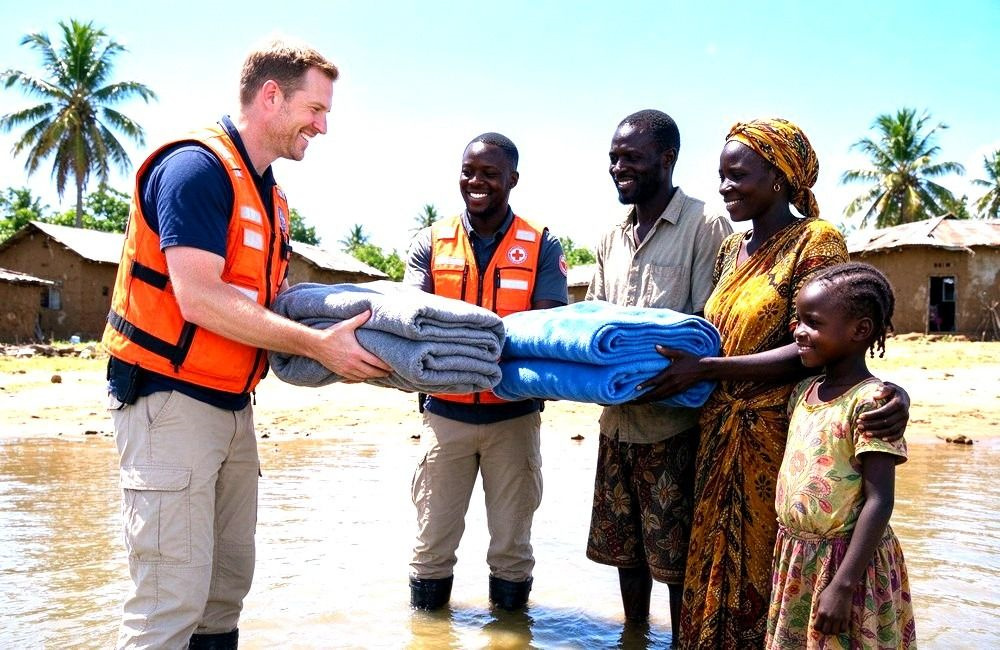
Fast distribution of flood relief blankets keeps families dry in the first critical hours.
Why Floods Are Africa’s Most Common Emergency
Core Relief Items: Blankets, Tents and Bedding
Blanket Specifications for Flood Zones
Shelter and Bedding for Displaced Households
Mosquito Nets After Flooding
Quick-Dry and Mould-Resistant Fabrics
Packing: Compressed Bales for Ocean Freight
Bulk Ordering for NGOs and Agencies
Sample Checks Before Production
RFQ Data Checklist for Flood Programs
Lead Times and Delivery to African Ports
Flood Relief Blankets FAQ
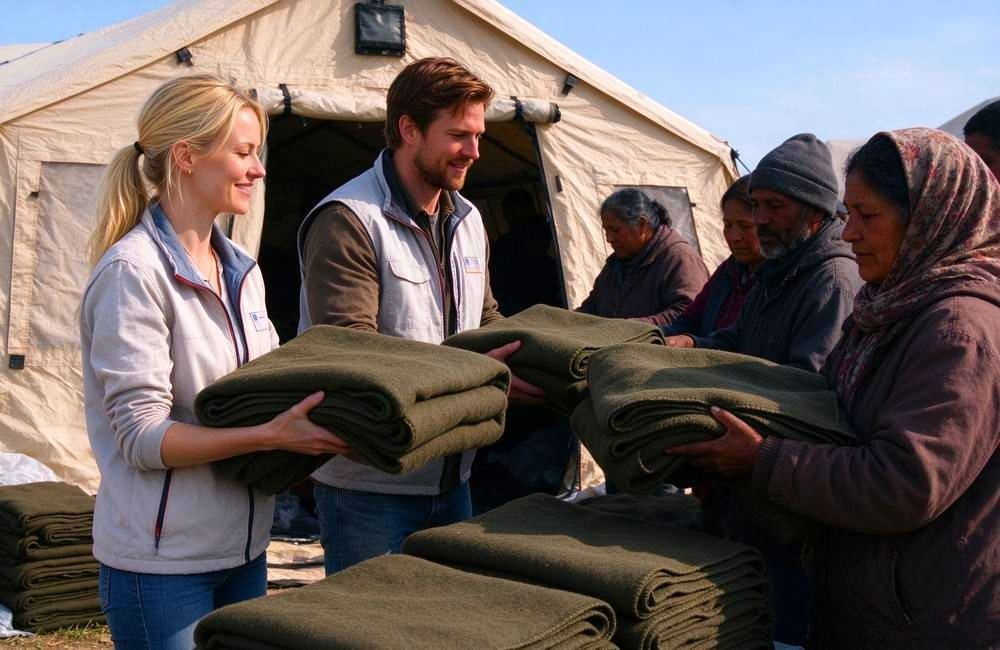
Field distribution of flood relief blankets at a temporary camp.
Across Africa, flooding is not a rare event; it is the most frequent climate disaster on the continent. Humanitarian agencies report that extreme weather forced nearly 7.8 million people from their homes in 2024 alone, and flood events consistently account for more than half of all climate-related emergencies in the region.
For procurement officers at NGOs, government agencies and relief organizations, the practical question is always the same: what emergency supplies give the most protection for the budget, and which suppliers can deliver them in the volume a flood response demands?
The answer starts with flood relief blankets. A good relief blanket is waterproof, quick-drying, warm when wet and light enough to ship in compressed bales. When you combine it with a simple shelter plan, bedding for temporary camps and mosquito nets for the weeks after floodwater recedes, you have the core of a field-ready emergency supply package.
This article walks through every step of buying these items in bulk, from material specifications to RFQ data, so that your next flood relief order arrives on time and works in the field.
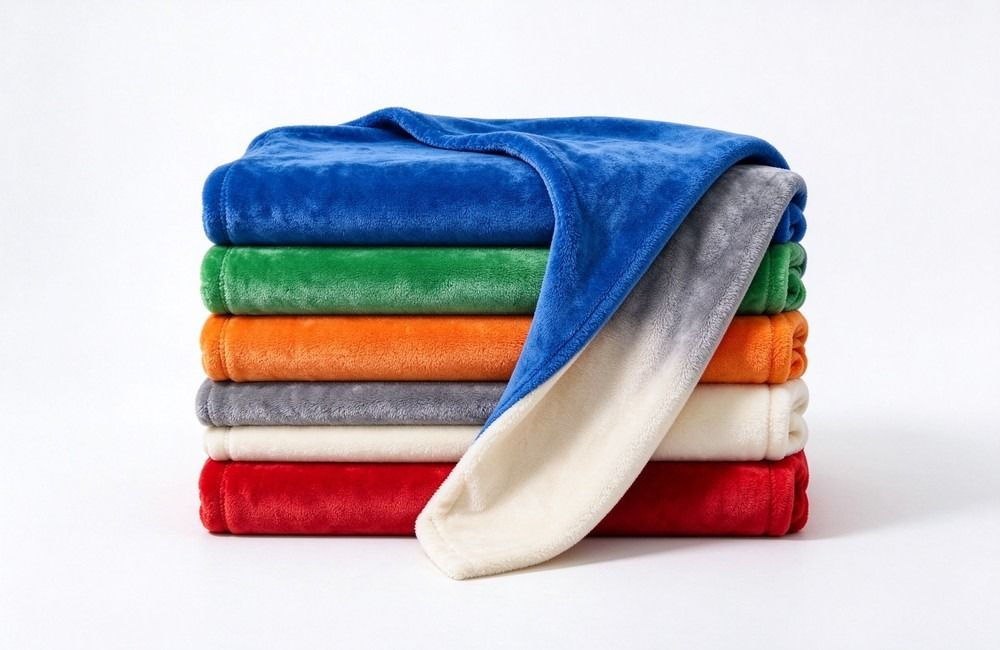
Waterproof flannel relief blankets combine softness with flood-ready protection.
Why do flood relief blankets matter more than almost any other item? Because water removes the ability to stay warm and dry, and that loss leads directly to illness. When families spend nights in damp clothes after a flood, rates of respiratory infection and skin disease climb quickly. A single dry blanket changes that equation.
It gives a child somewhere warm to sleep, gives an elderly person protection against the cold that follows rain, and gives health workers one less preventable case to treat. In relief logistics, blankets are also one of the most efficient items to transport: compressed bales mean a full container can carry tens of thousands of units, which is why bulk emergency supplies programs rely on them so heavily.
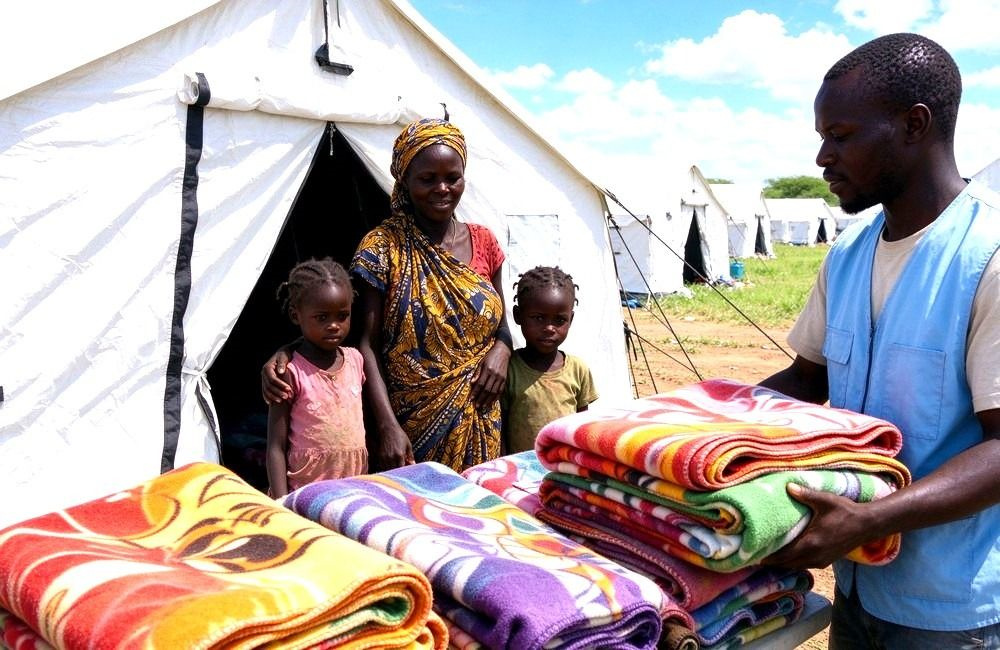
Temporary shelters work best when bedding arrives with the tent.
Flood response is a team effort between shelters and supplies. A tent gives a family a roof, but without bedding inside it, the shelter stays cold and damp. That is why experienced relief programs order shelter tents, bedding sets and flood relief blankets as one package, not as separate purchases.
The same logic applies to the weeks after the flood. Stagnant water becomes a breeding ground for mosquitoes, and post-flood malaria outbreaks are a well-documented risk across the continent. Adding bulk mosquito nets to the same shipment protects families during the recovery period, when the medical system is already stretched.
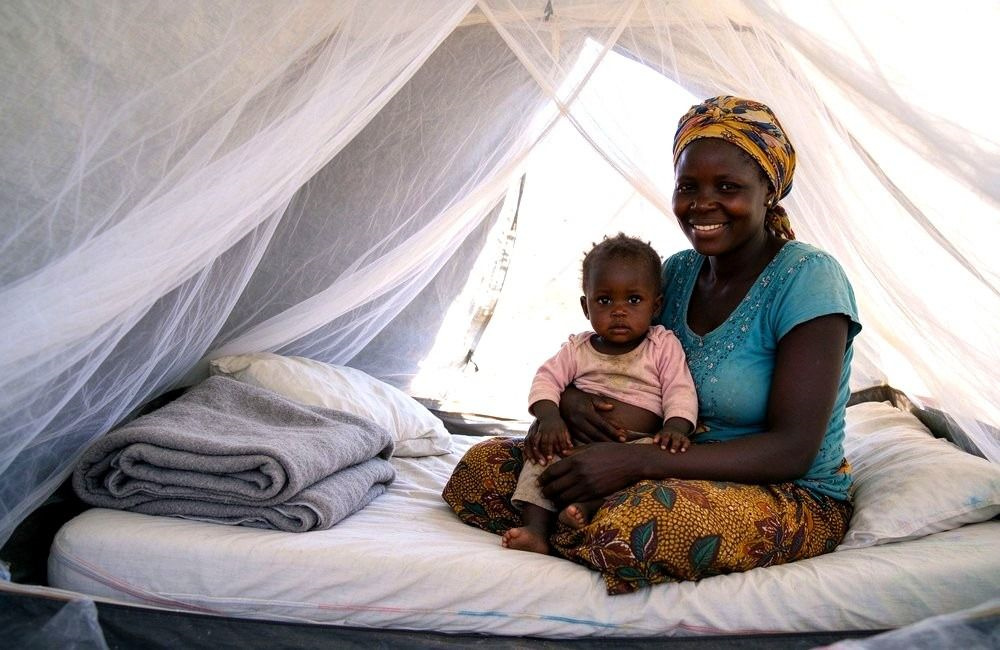
Mosquito nets protect families in the weeks after floodwater recedes.
For NGOs and agencies planning a flood response, the buying process comes down to five decisions: which products, which specifications, which packing, which supplier and which delivery route. Each decision has a correct answer for flood conditions, and each one affects the others.
A waterproof blanket specification affects the compressed bale size, which affects shipping cost, which affects how many units fit your budget. The sections below walk through all five decisions in order, with the data you need to write a clean RFQ and compare supplier quotes with confidence.
Related guidance: FEMA.
Port clearance is only half of the delivery plan for flood relief blankets. Confirm the inland leg at the same time: trucking from Mombasa, Dar es Salaam or Durban to the distribution hub, the road condition after the flood season, and who unpacks and re-bales the goods. Relief programs that name the inland destination in the RFQ receive more realistic freight quotes, and agencies can plan the last-mile distribution instead of waiting for the consignment to clear.
Re-baling after inspection is a small line in the RFQ that prevents a large problem: compressed bales that have been opened for sampling should be re-compressed with a working press, not restacked loose, because loose bales change the container count.
Include the inspection point in the same line.
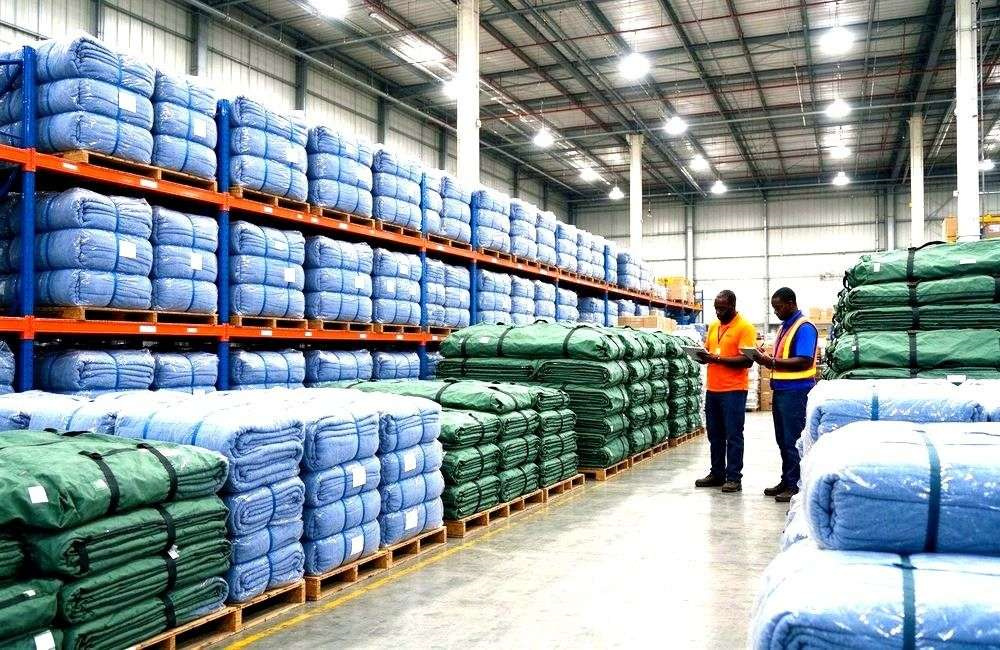
A well-stocked relief warehouse keeps flood supplies ready to ship.
Flooding is the disaster that humanitarian agencies in Africa plan for most often. According to the UN Office for the Coordination of Humanitarian Affairs, flood events account for more than half of all climate-related emergencies across the continent, and the pattern is getting more intense each season.
In West and Central Africa alone, seasonal floods affected more than two million people across a dozen countries in a single recent rainy season, with the Democratic Republic of Congo recording more than 800,000 people affected in the same period. These are not isolated events; they are the new normal of the African rainy season.
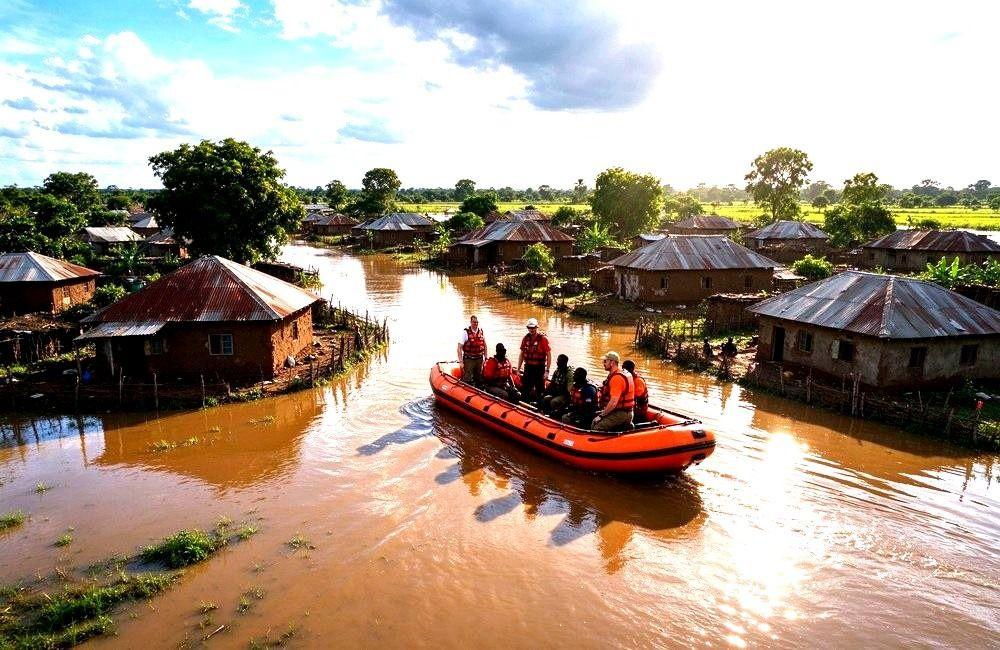
Aerial view of a flooded village: the scale of displacement drives bulk supply demand.
The numbers behind flood displacement are worth understanding before you build a supply plan. Extreme weather events displaced nearly 7.8 million people across Africa in 2024, according to OCHA’s humanitarian situation overview, and annual assistance plans for the continent repeatedly ask for more than ten billion US dollars, with a large share of that demand driven by flood response.
In the Sahel alone, seasonal flooding affected around 590,000 people in one recent year while crisis-level food insecurity reached 15.4 million people, as reported by UN News. When a flood displaces a community, the immediate needs are predictable: dry shelter, dry bedding, clean water and protection from disease. Relief organizations respond with the same core package every time, which is why bulk emergency supplies such as flood relief blankets, tents and mosquito nets are purchased in steady volume by agencies that work across multiple countries.
Climate forecasting now plays a larger role in procurement planning. When the WFP and FAO launched a joint appeal covering 88 million people exposed to extreme weather across 22 countries, 12 of them in Africa, relief buyers moved their bulk orders earlier and locked in production capacity before the peak season.
The lesson for procurement teams is direct: watch the seasonal forecasts, build your supplier list before the rains, and keep a standing specification for flood relief blankets so that an order can be placed within days of an emergency declaration.

Seasonal forecasts shape which blanket specification you stock.
Different regions of Africa experience floods in different ways, and your procurement plan should reflect that. In East Africa, seasonal rains on the Horn bring flash floods that isolate villages quickly. In West Africa, river flooding along the Niger and Senegal basins spreads slowly but affects huge populations.
In Southern Africa, cyclones and heavy rains produce sudden coastal and river flooding that can destroy homes in a single night. Each pattern changes the delivery timeline, the packing method and even the blanket specification you choose, but the core relief items remain the same.
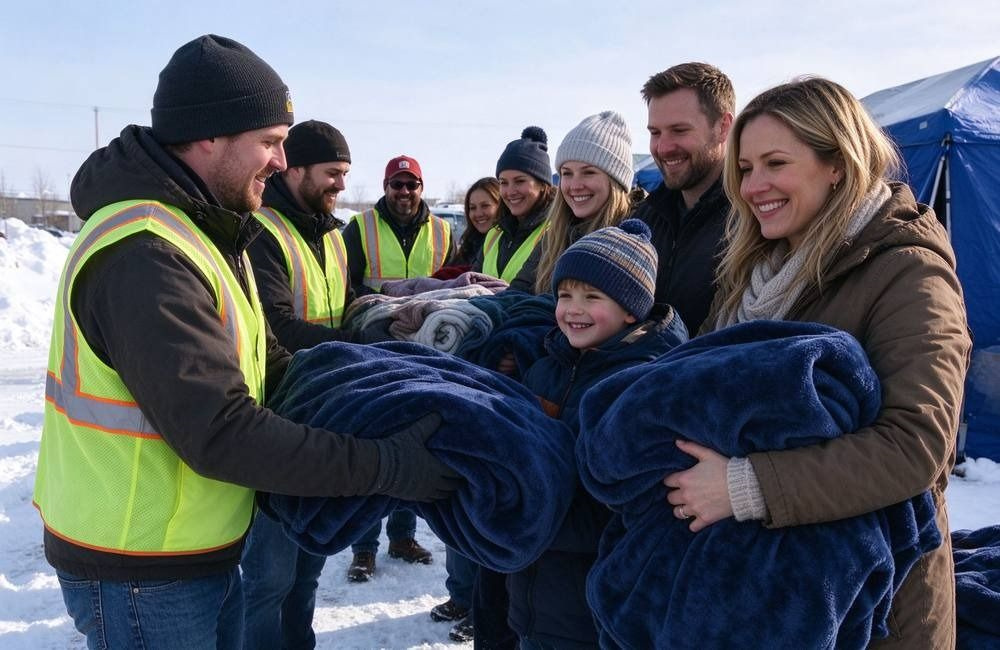
Regional flood patterns call for regional specification choices.
A flood relief package has a well-tested corflood relief blanketsets, shelter tents, bedding sets and mosquito nets. Each item solves a specific problem, and together they cover the first month of a displacement. The table below summarizes what each item does and what to look for when you buy it in bulk.
|
Relief Item |
Primary Purpose |
Key Specification to Check |
Why It Matters in Floods |
|
Flood relief blankets |
Warmth and dryness at night |
Water-resistant flannel, quick-dry weave |
Keeps families warm even in damp shelters |
|
Shelter tents |
Immediate roof over displaced families |
Waterproof floor, wind-resistant frame |
Dry space in the first weeks of displacement |
|
Bedding sets |
Sleeping comfort in camps |
Mattress pad, pillow, blanket, sheet |
Turns a tent into a usable home |
|
Mosquito nets |
Malaria prevention after flooding |
Long-lasting insecticide-treated net |
Cuts post-flood malaria cases in camps |
|
Waterproof tarpaulins |
Coverage for shelters and supplies |
Reinforced edges, UV-stable material |
Protects both people and stored goods |
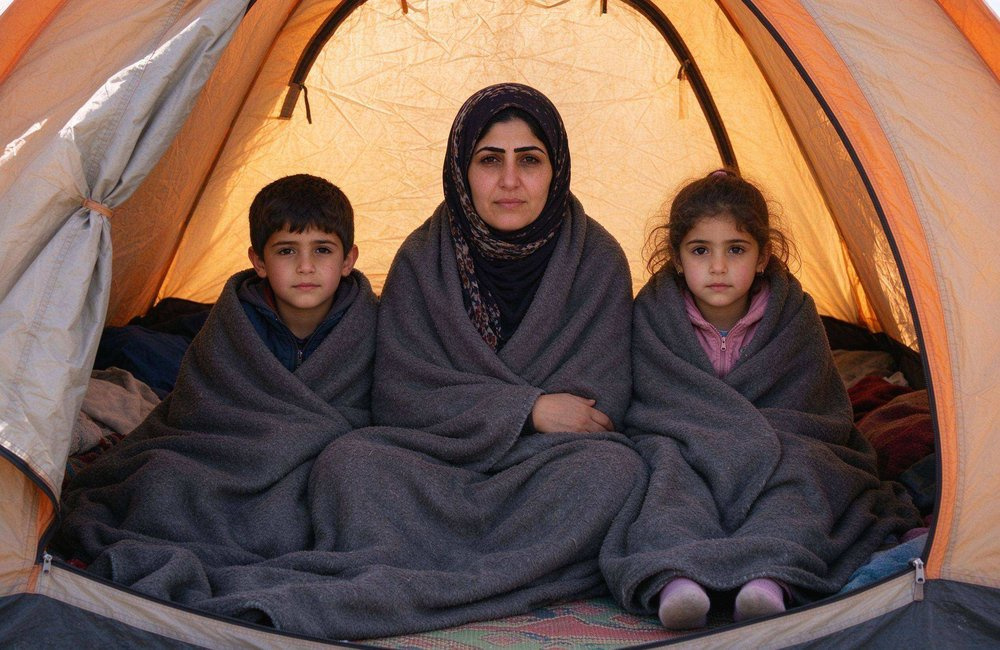
Blankets turn a temporary shelter into a liveable home.
Related guidance: WHO.
When organizations combine these items into one shipment, they reduce logistics cost and speed up distribution. A single container can carry compressed blanket bales, flat-packed tents and bundled mosquito nets, all arriving together so that field teams distribute a complete package instead of waiting for separate deliveries. This is the reason bulk emergency supplies buyers prefer suppliers who can quote on the whole package rather than on individual products.
The package approach also simplifies camp logistics. When every family receives the same bedding set, the same blanket size and the same net, field teams can count inventory in bales instead of individual units, and distribution lines move faster.
Procurement officers who have managed a large shelter operation know that uniformity is not a luxury; it is what keeps a camp running. A standardized flood relief package also makes reorders simple: the same specification can be re-quoted year after year, and past delivery performance gives you a reliable reference for planning.
There is also a growing preference for multi-purpose items in relief procurement. A waterproof tarpaulin, for example, can serve as a roof patch, a ground sheet or a cover for stored supplies, which makes it valuable in any emergency kit.
Blankets with reinforced edges last longer in heavy use, and bedding sets with standardized sizes make camp management simpler. When you prepare your RFQ, listing the multi-purpose value of each item helps suppliers quote the most useful configuration rather than the cheapest single use.
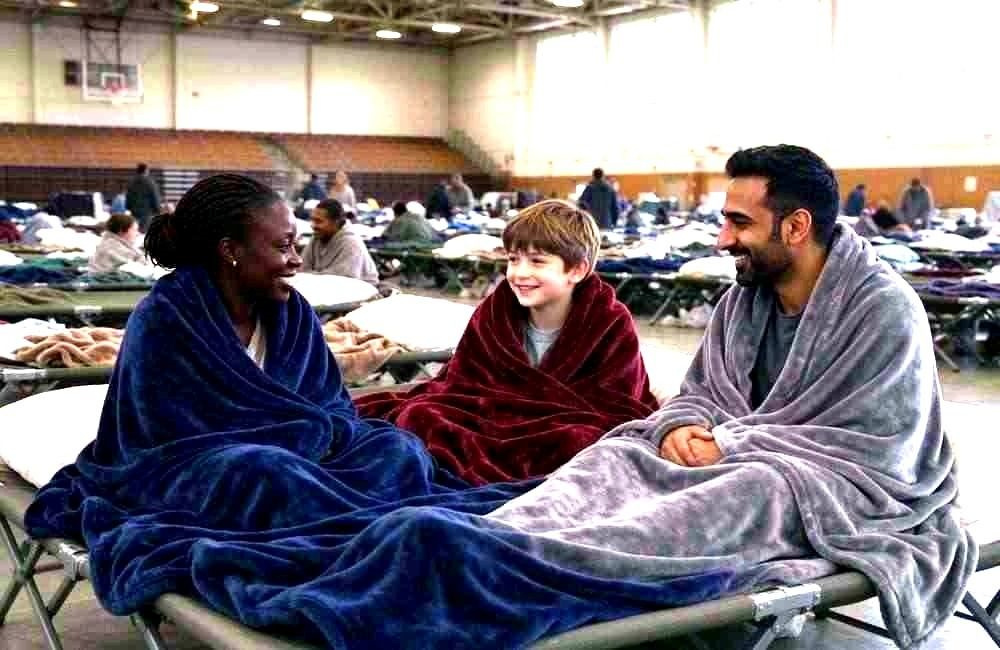
Community shelters need blankets and bedding at scale.
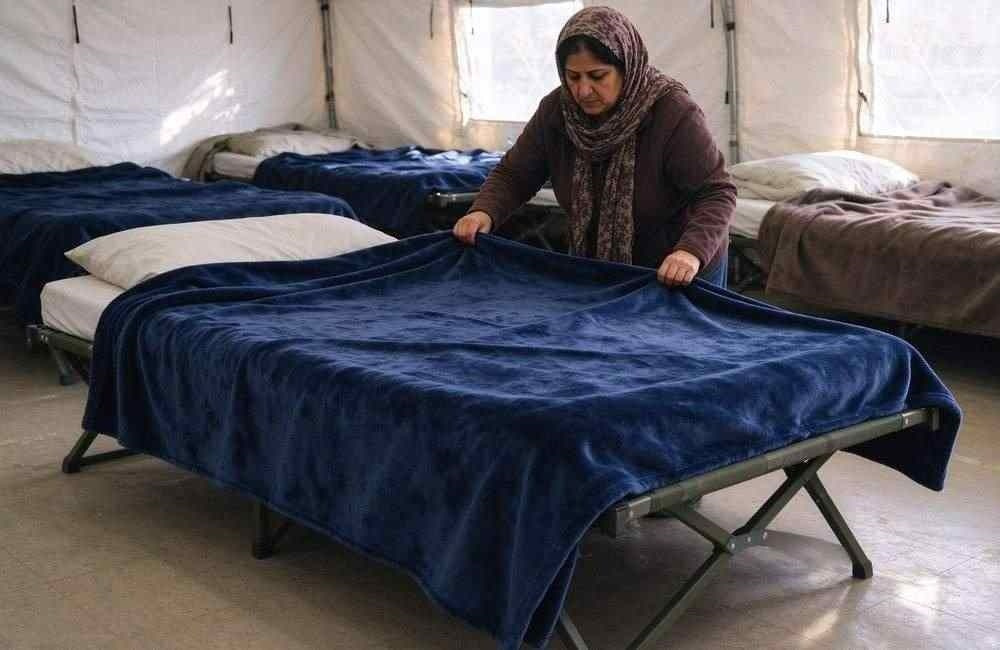
The 150 x 200 cm standard covers an adult cot completely.
flood relief blanketa flood relief blanket is what separates a useful product from a liability. Flood conditions demand four things: water resistance, warmth when damp, quick drying and durability under heavy use. A standard bedroom blanket fails on all four counts; a properly specified relief blanket meets them all. The table below compares the common specification options.
Specification
Standard Option
Flood-Ready Option
Effect on Cost
Fabric
Plain woven cotton
Water-resistant flannel or fleece blend
Moderate increase
Weight
180 GSM
300–400 GSM for cold nights
Higher GSM increases weight and cost
Size
130 x 180 cm
150 x 200 cm adult coverage
Small increase
Finish
Raw edge
Reinforced stitched hem
Small increase
Drying
Slow-absorbing cotton
Quick-dry synthetic blend
Varies by blend
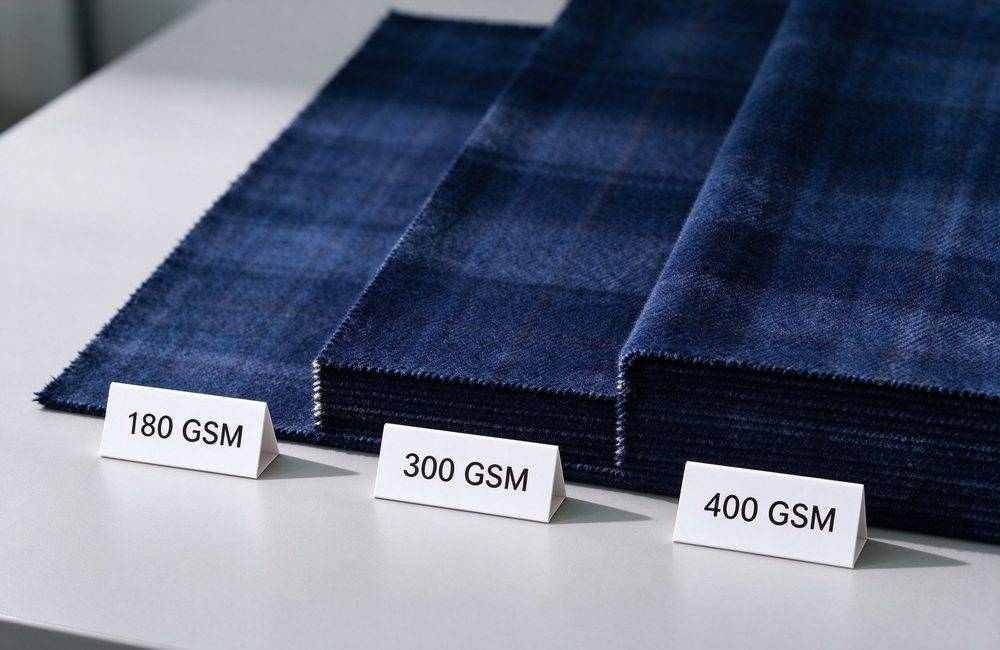
Comparing 180, 300 and 400 GSM flannel for flood zone blanket specification.
Weight is the specification that wholesale relief buyers debate most, and it drives the unit price more than any other single choice. Lighter blankets at 180 GSM are cheaper and pack smaller, which lowers shipping cost, but they provide less warmth on the cold nights that follow heavy rain. Heavier blankets at 300 to 400 GSM keep people warmer and last longer, but they take up more space in a container and increase the freight bill.
The right choice depends on the climate of the target region: highland and southern African flood zones benefit from heavier weights, while tropical coastal zones can manage with lighter options. A practical approach used by many programs is to keep two standard weights in the specification, one for general use and one for cold zones, so the same supplier can serve both needs from the same production line.
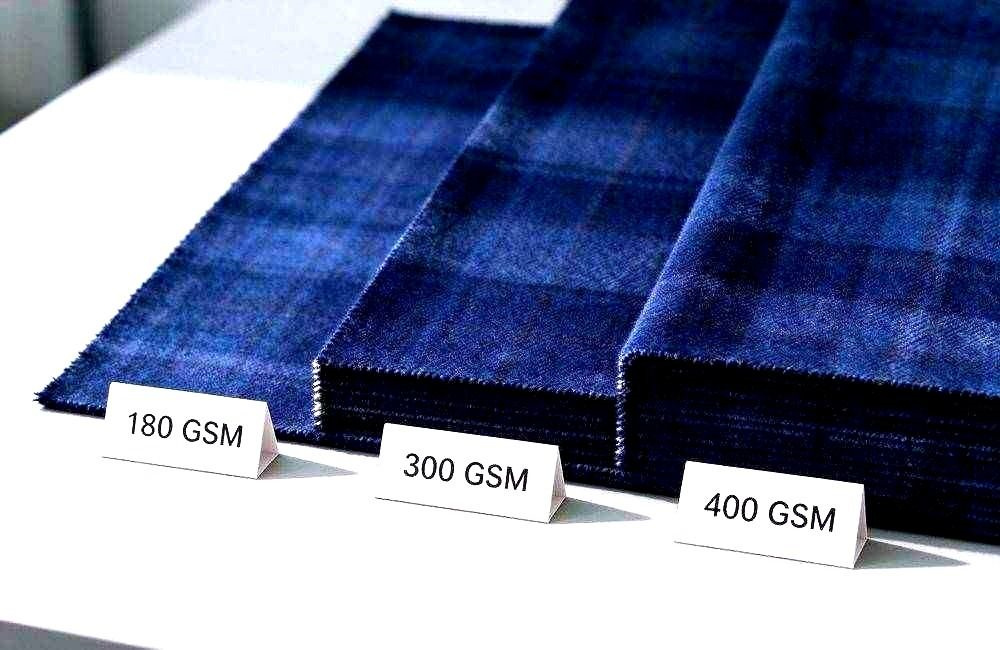
GSM choice balances warmth against container space.
Size is a simpler decision. A 150 x 200 cm blanket gives full adult coverage and is the standard that most relief programs specify. Some programs add a smaller children’s size at roughly 100 x 150 cm, which uses material efficiently and fits camp cots.
The edge finish is easy to overlook but important: a reinforced stitched hem stops the blanket from unravelling after repeated washing, and in flood camps blankets are washed often. If your supplier offers double-stitched edges, it is worth the small extra cost.
Fabric choice deserves the same care. Flannel gives the soft, warm feel that families appreciate, while fleece blends dry faster and resist mould better in humid camps. Wool blends offer natural warmth even when damp, which is why some cold-zone programs specify them, but wool costs more and is heavier to ship.
The right fabric is the one that matches your climate, your budget and your washing plan; comparing samples side by side before committing to a specification is always worth the time.
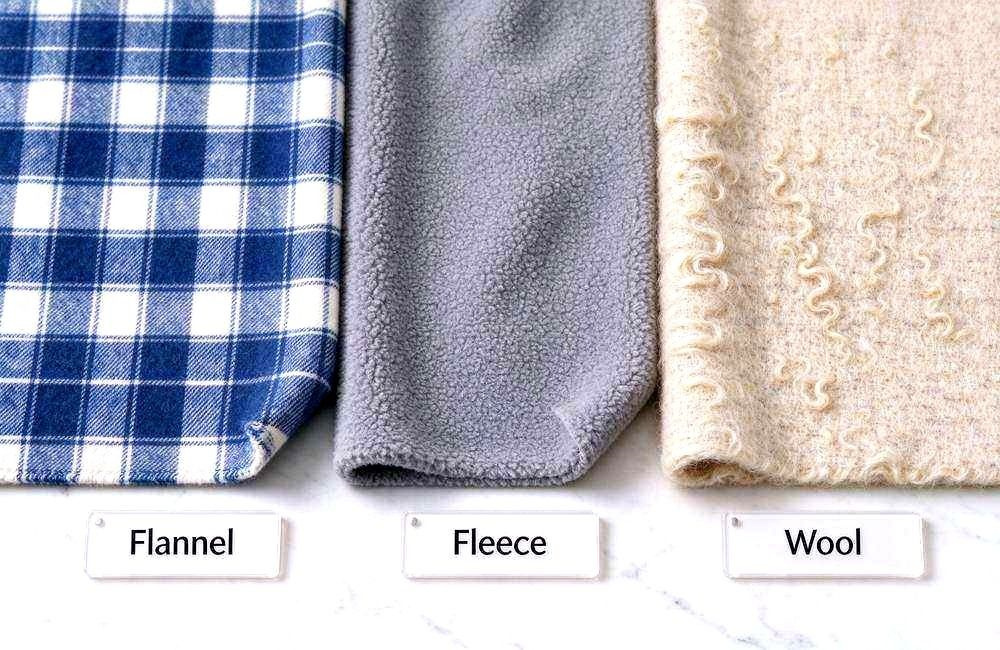
Flannel, fleece and wool: matching fabric to climate and budget.
flood shelter programgram is only as good as its bedding plan. Families displaced by floods often spend weeks in temporary shelters, and the difference between a cold concrete floor and a warm bedding setup is the difference between sickness and recovery. Relief programs that pair shelter tents with complete bedding sets see better health outcomes and smoother camp operations.
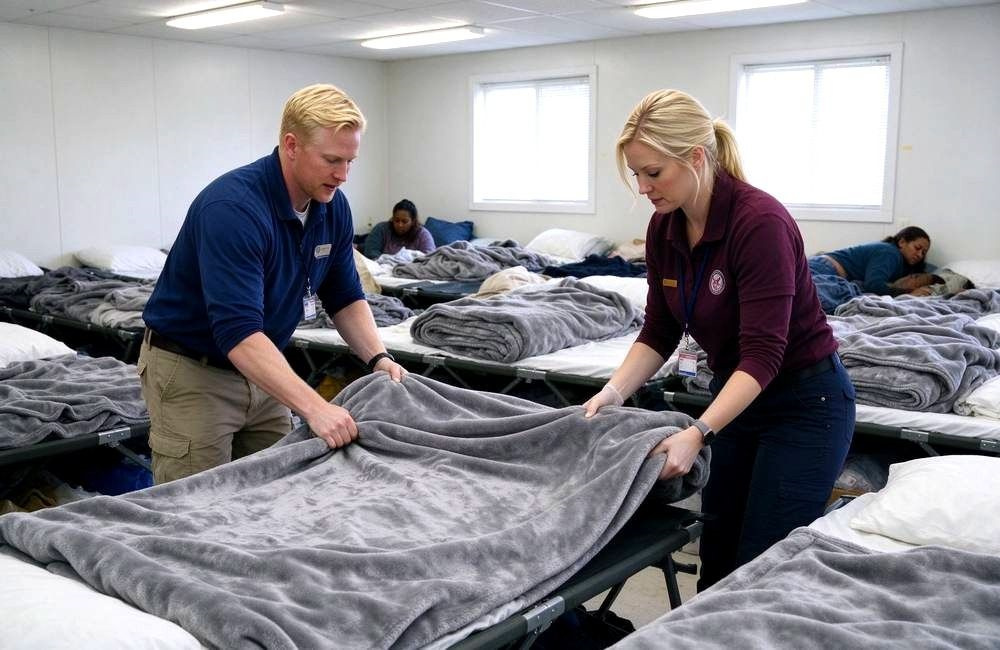
Organized bedding turns a shelter into a home.
The standard bedding package for displaced households includes a mattress pad or camp mat, a pillow, a sheet set and a flood relief blanket per person. The mattress pad matters more than most people expect: it lifts sleepers off damp ground and provides insulation that a blanket alone cannot replace.
Waterproof ground sheets under the mattress add another layer of protection in shelters with wet floors. When you specify bedding for camps, standardized sizes and colours make inventory control and distribution much simpler for field teams.
Shelter tents for flood response should be chosen for durability and quick setup rather than comfort features. Family tents with waterproof floors and wind-resistant frames hold up in the storm season, and flat-packed tents reduce shipping volume dramatically. Many relief programs now order tents and bedding from the same supplier so that the package arrives as one coordinated shipment, which cuts weeks off the logistics timeline.
Community-level distribution is where good planning becomes visible. When shelters open, families arrive with nothing, and a queue that moves slowly in the rain creates its own problems.
Pre-packed family bundles, with one blanket set, one bedding kit and one net per household, allow a volunteer to hand over everything a family needs in a single stop. Some programs add a small hygiene pack to the same bundle. The result is faster distribution, less confusion and fewer repeat visits to the supply tent.
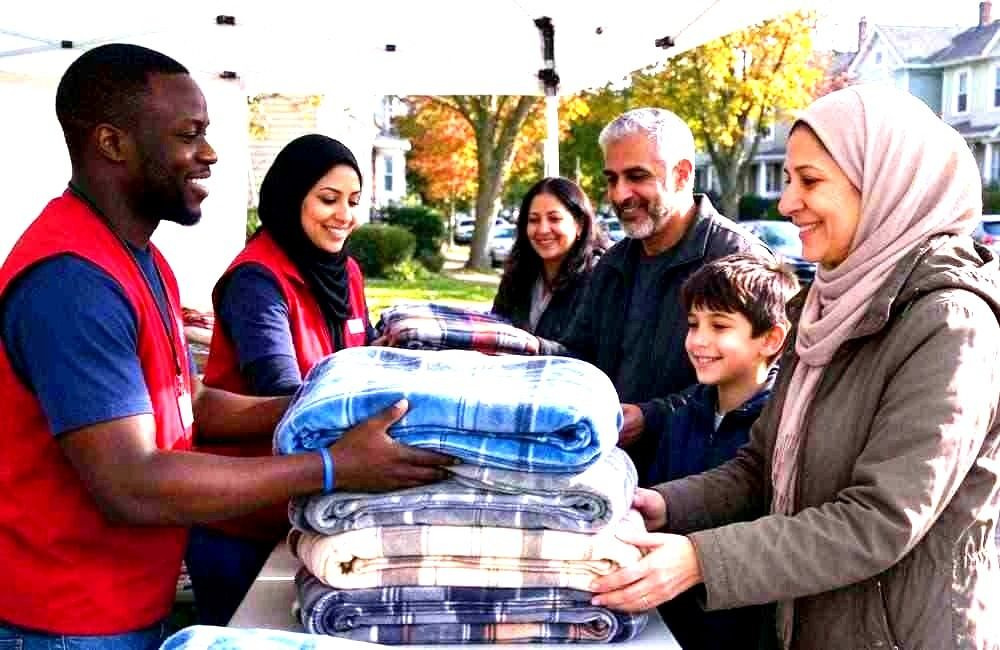
Pre-packed family bundles speed up community distribution.
flood does not flood does not end when the water recedes. Stagnant pools left behind become breeding grounds for mosquitoes, and malaria cases typically spike in the weeks and months after flooding. For this reason, mosquito nets are a core item in any flood relief package, not an optional extra. Health agencies repeatedly identify post-flood malaria prevention as a priority in affected regions, and distribution of insecticide-treated nets is one of the most effective interventions available.
When buying mosquito nets in bulk for flood response, three specifications matter: insecticide treatment, size and packaging. Long-lasting insecticide-treated nets provide protection for several years of washing and are the standard recommended by malaria control programs. Rectangular nets offer more usable space under shelter rooflines than conical nets, and individual packaging with simple installation instructions makes field distribution faster. For bulk buyers, nets are usually supplied in compressed bundles that fit easily alongside blankets in a shipping container.
Timing the net distribution is as important as the net itself. Nets should arrive with the first bedding, because families set up their sleeping space within days of reaching a shelter, and protection works best when it starts on night one.
Coordinate with health partners so that net distribution and any planned bed-net campaigns reinforce each other rather than duplicate effort. In camps where cases have already appeared, treated nets combined with simple drainage work around tents can slow transmission noticeably.
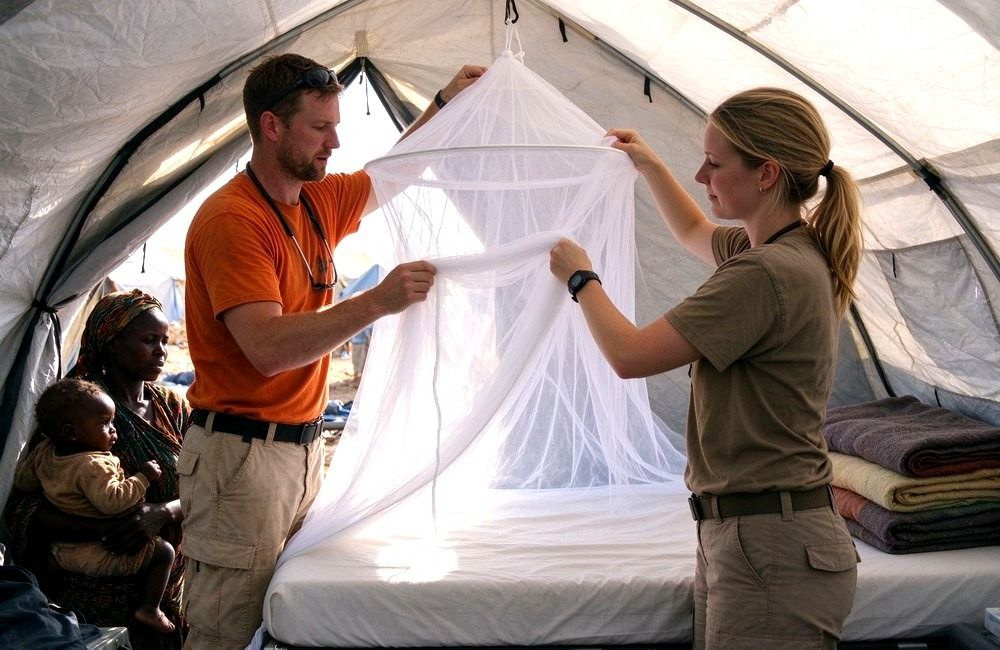
Net distribution in camps cuts post-flood malaria risk.
Flood conditions punishish ordinary fabrics. A blanket that absorbs water becomes heavy, cold and slow to dry, and fabric left damp for days develops mould that shortens its life and spreads odour. Flood relief blankets should therefore be made from fabrics that dry quickly and resist mould, which is why water-resistant flannel and synthetic blends have become the standard for relief programs.

Brushed flannel texture: soft surface with quick-dry performance.
Quick-dry performance is measured by how fast fabric returns to usable condition after soaking. Synthetic blends and water-resistant treatments dramatically reduce drying time compared with plain cotton, which matters in shelters where families wash blankets by hand and need them usable the same day. Mould resistance comes from both the fibre choice and the finishing treatment; brushed polyester blends are naturally more resistant to mould than untreated cotton, and anti-microbial finishes add another layer of protection.
Washing behaviour also affects long-term cost. A blanket that survives repeated industrial washing lasts through multiple deployments, while a blanket that pills or shrinks after a few washes has to be replaced sooner. When you evaluate suppliers, ask how their relief blankets behave after ten industrial wash cycles, and look for documentation of shrinkage and pilling tests. In flood camps, where blankets cycle through laundering constantly, this durability is what keeps the relief package working season after season.
For procurement officers, the practical test is simple: ask the supplier for the drying behaviour and mould resistance of the fabric, and request a sample you can wet and test. A relief blanket that dries in hours instead of days is worth a small premium, because it stays in service longer and reduces the total blankets a program must buy.
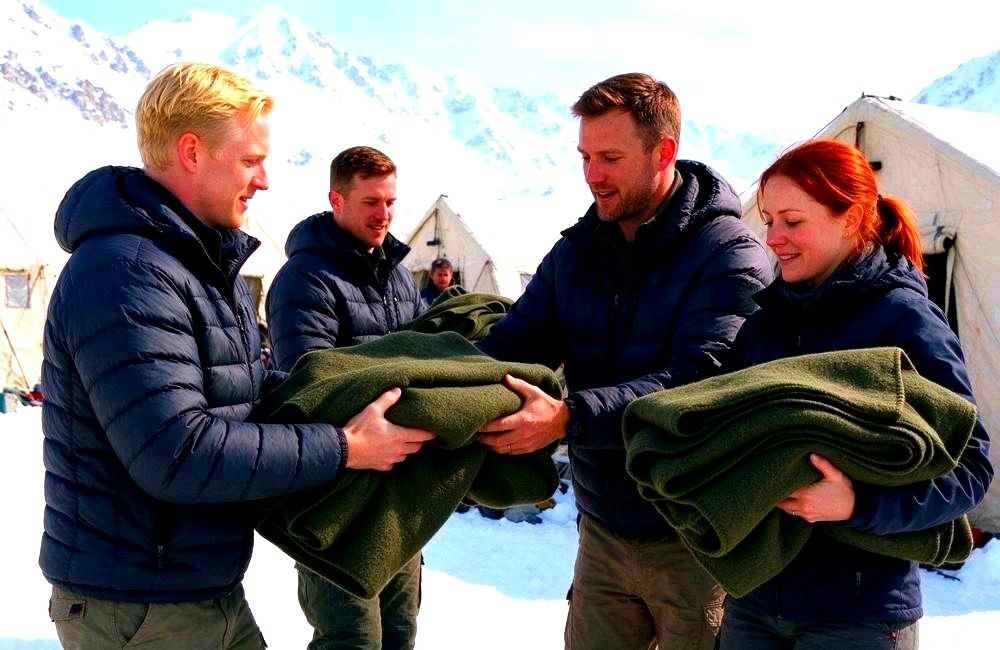
Field blankets perform in the same cold conditions families face after floods.
a blanket is packed determines how many units fit in a container, and that number drives the biggest single cost in relief procurement: freight. Compressed bales are the industry standard for bulk emergency supplies because they reduce volume by half or more compared with loose packing. A standard 40-foot container can carry tens of thousands of compressed blankets, which is why agencies specify compression for large flood relief orders.
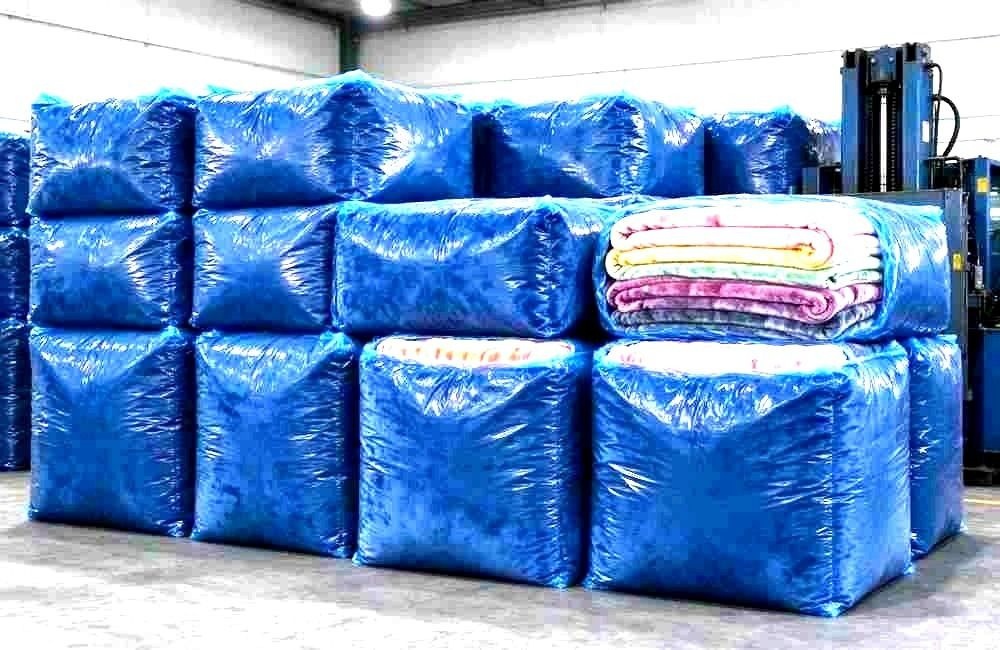
Compressed bales maximise container capacity for ocean freight.
Compression also protects the product during shipping. Bales wrapped in heavy film stay clean and dry inside the container, and the compressed form keeps blankets uniform in size, which makes warehouse counting and distribution easier.
When you write your RFQ, specify the bale weight and dimensions, the bales per carton and the units per container so that every supplier quotes on the same basis. A supplier who can document exact bale sizes saves you from freight surprises at the port. The reference table below shows a typical compressed bale configuration for 300 GSM flannel relief blankets.
|
Packing Data |
Typical Value |
Notes for RFQ |
|
Bale weight |
12–15 kg |
Confirm per GSM and size |
|
Bale dimensions |
40 x 40 x 60 cm approx. |
Ask for exact packed size |
|
Bales per carton |
2 bales |
Double-wall export carton |
|
Units per 40HQ container |
40,000–60,000 |
Depends on GSM and bale size |
|
Moisture protection |
PE film inner wrap |
Protects bales in humid transit |
Beyond the bale itself, carton strength matters on the long ocean route to African ports. Double-wall cartons with clear labels survive handling better, and moisture-proof lining protects the bales in humid shipping conditions. Suppliers experienced with relief exports usually offer sea-worthy packing as standard, but it is worth confirming in writing that the packing meets container shipping requirements before you place the order.
Loading discipline completes the packing story. Bales should be stacked evenly, cartons braced against movement, and the container floor kept dry and clean before loading. A moisture meter check on the container before sealing is standard practice for suppliers who ship relief goods regularly. When you inspect the loading process, either on site or by photo report, these details tell you whether the supplier understands the demands of long ocean transit.
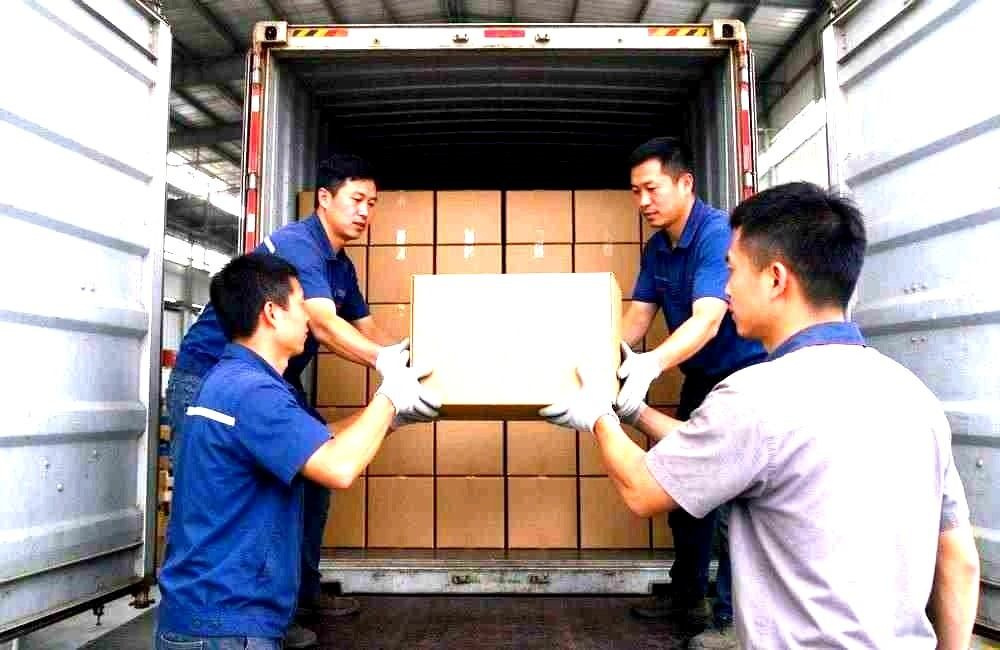
Careful container loading keeps compressed bales dry and intact.
Bulk orderinging for flood relief is different from retail buying in three ways: volume, documentation and delivery. Agencies order in container volumes, require complete export documentation, and need delivery timed to the rainy season. Understanding these differences helps you evaluate suppliers and negotiate terms that actually protect your program.

Bulk order reviews start with a complete checklist and samples.
Volume changes price and production planning, and wholesale rates for flood relief blankets follow a clear ladder as order size climbs from a few hundred pieces to full container loads. Suppliers who run continuous weaving lines can offer better unit prices for container orders, and they can reserve production slots ahead of the flood season.
Documentation matters because relief shipments often clear customs under program-specific import arrangements; a clean packing list, commercial invoice and certificate of origin speed up every port. Delivery timing is the final piece: order early enough that production, packing and ocean freight all finish before the rainy season begins in your target region.
Supplier evaluation should go beyond price. Look at production capacity, fabric sourcing, inspection records and the packing data a supplier can document. Ask for references from relief buyers if the supplier can share them without breaching confidentiality, and check whether the supplier has shipped to your target ports before.
The strongest signal of reliability is a supplier who answers detailed questions with written data instead of vague assurances. Building a shortlist of two or three such suppliers before the emergency season is one of the best investments a procurement team can make.
Most experienced relief suppliers work with organizations across Africa and can provide the documentation formats that procurement departments expect. When comparing quotes, ask each supplier for their standard bulk order process, their production lead time and their container packing data. The supplier who answers those three questions clearly is usually the one who delivers on time.

A reliable supplier produces consistent colour and quality at scale.
A sample check is the cheapest insurance in bulk procurement. Before a container flood relief blanketsets is produced, the sample confirms that the fabric, size, weight, colour and stitching all match the specification. In relief programs, where the product must perform in difficult conditions, a sample check is not a formality; it is the step that prevents a whole batch from failing in the field.
A proper sample check covers five points: fabric hand-feel and water resistance, exact size and weight, hem and stitching quality, colour accuracy against the approved reference, and packing form. For flood relief blankets, wet the sample and check how it behaves: does it dry quickly, does it hold its shape, does the colour run? These tests take minutes and answer the questions that matter most in the field.
The inspection workflow deserves structure. First, confirm the sample matches the RFQ specification line by line. Second, run the wet test and the wash test described above. Third, photograph the sample against the approved colour reference and keep the photos in your order file.
Finally, write the acceptance decision and the conditions attached to it, so that both the buyer and the supplier share the same record. When the final container inspection happens, that record is the reference that decides pass or fail.
When you request samples, ask for three pieces in the exact specification of your RFQ, and ask the supplier to confirm the production sample will match the approved sample. Establish your acceptance criteria in writing before production starts, so there is a clear reference for the final inspection. This discipline is standard practice among agencies that buy bulk emergency supplies repeatedly.
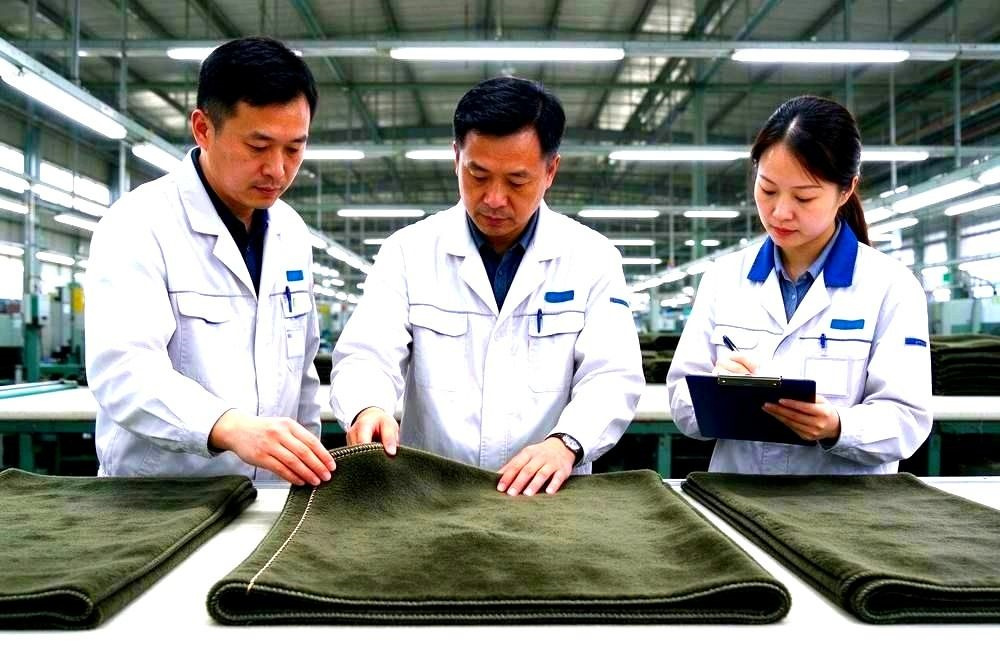
Edge seams and stitching are checked before production approval.
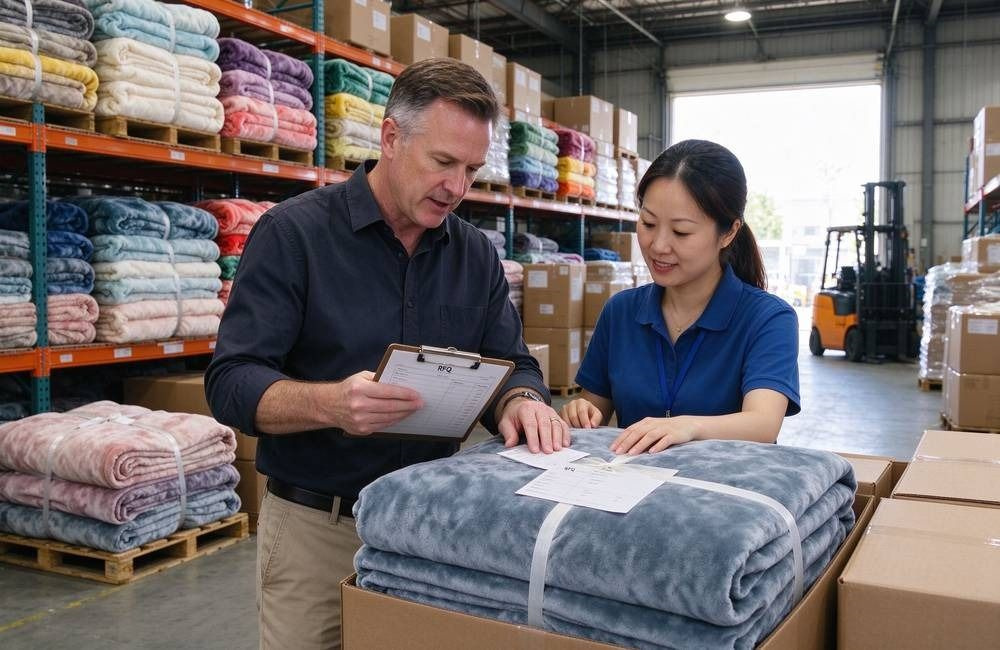
A complete RFQ answers every field a supplier needs.
A clean RFQ produflood relief orders. The data checklist below covers every field that a supplier needs to price a flood relief order correctly, and it is the same format used by experienced procurement teams across the sector. Filling it out completely eliminates most of the back-and-forth that delays quotes.
|
RFQ Field |
What to Specify |
Why It Matters |
|
Product |
Exact item name and reference |
Eliminates guesswork in quoting |
|
Specification |
Fabric, GSM, size, finish |
Determines price and performance |
|
Quantity |
Units, bales, containers |
Sets production and freight scale |
|
Packing |
Bale size, carton spec, units per container |
Controls the freight cost |
|
Quality standard |
Sample approval, inspection criteria |
Protects the whole batch |
|
Delivery |
Port, timeline, seasonal deadline |
Timing is critical for flood season |
|
Documentation |
Commercial invoice, packing list, origin cert |
Speed of customs clearance |
Two fields deserve special attention. The quality standard should name the inspection company or the acceptance criteria you will apply, so the supplier knows exactly what will be checked. The delivery timeline should include the seasonal deadline, not just a date; suppliers who understand your flood season can schedule production accordingly. With these fields complete, a competent supplier can return a firm quote quickly, and you can compare offers on identical terms.
A good RFQ also prevents scope creep. When suppliers know that the specification, quantity and acceptance criteria are fixed, they cannot quietly substitute materials or shift quantities during negotiation. State clearly that any change to the specification requires written approval from both sides. This single line protects the quality of the whole order and is standard language in professional procurement documents.
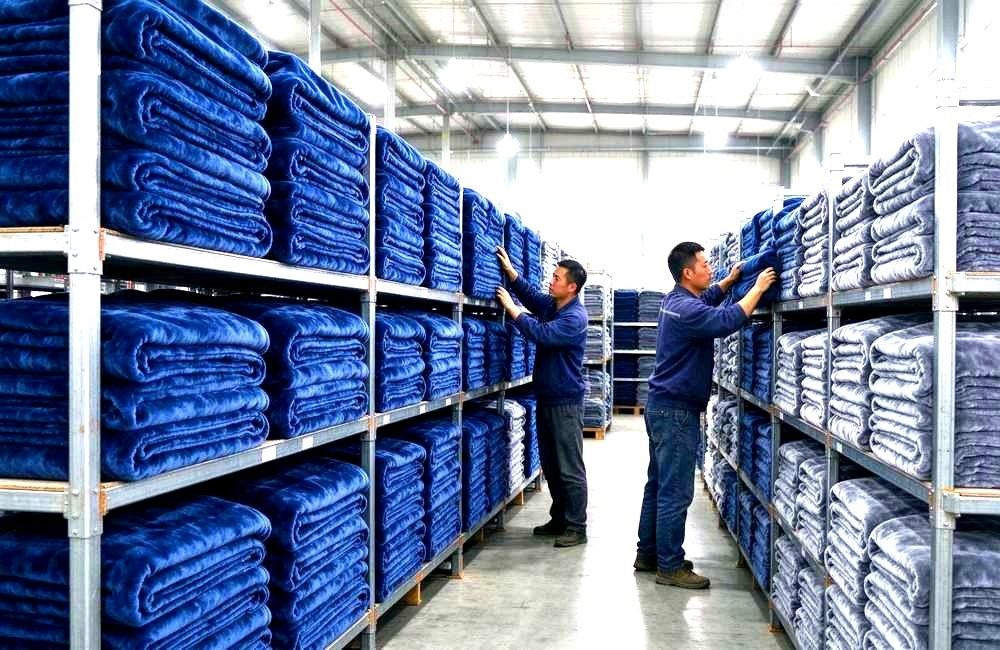
Keep every flood RFQ on one standard checklist.
Relief procurement livesves or dies by timing. Flood seasons in Africa follow predictable patterns, and a shipment that arrives two weeks late can miss the entire emergency window. Understanding production lead times and shipping routes lets you plan backwards from the season start and build in margin for delays.
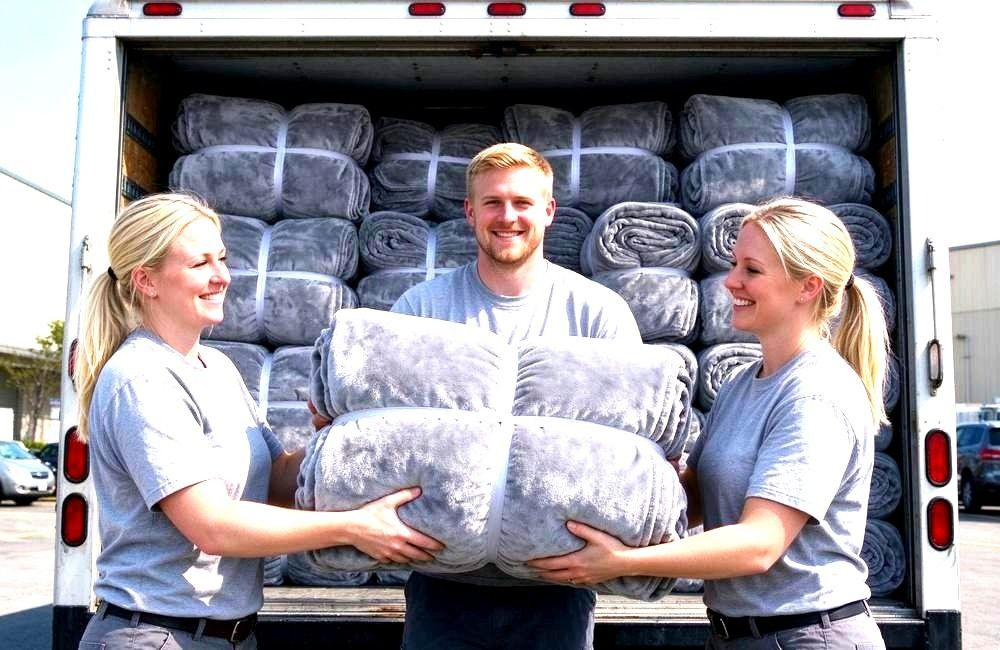
On-time delivery starts with a schedule planned backwards from the flood season.
Typical lead times for bulk blanket production range from four to eight weeks depending on fabric availability and order volume, with ocean freight from Asian ports to major African destinations adding another three to five weeks.
That means a full order cycle usually runs eight to twelve weeks. For flood programs, the practical rule is to place container orders at least three months before the target distribution date, which gives room for sample approval, production, packing, shipping and port clearance. The reference below shows a realistic planning window.
|
Planning Stage |
Typical Duration |
Planning Advice |
|
Sample approval |
1–2 weeks |
Confirm specification before production |
|
Production |
4–8 weeks |
Depends on fabric and order volume |
|
Packing and loading |
1 week |
Sea-worthy packing confirmed in writing |
|
Ocean freight |
3–5 weeks |
Route and port confirmed with logistics |
|
Port clearance and inland |
1–3 weeks |
Documentation prepared in advance |
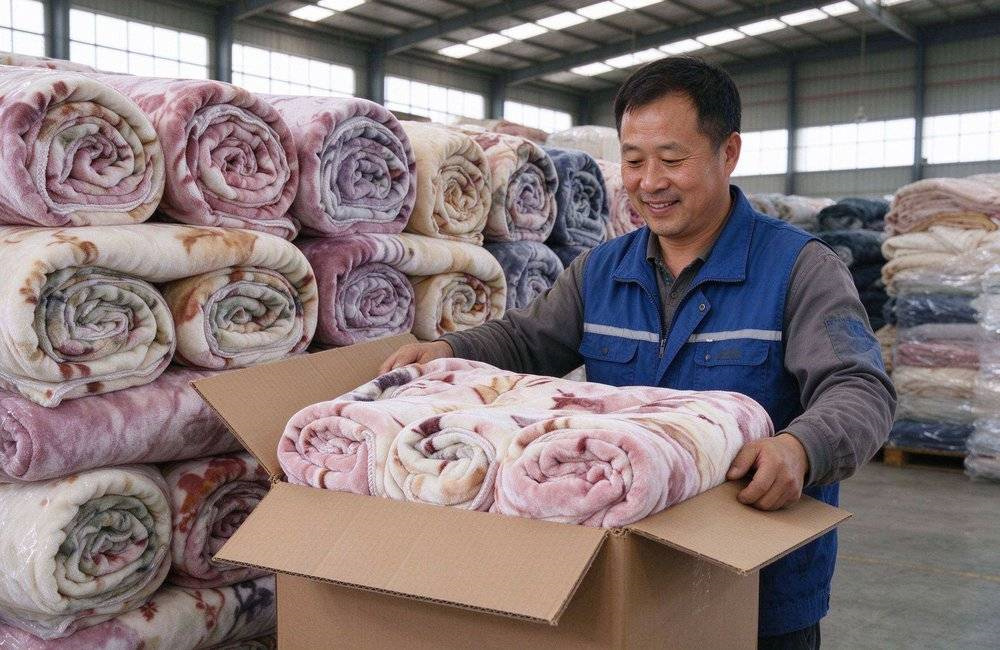
Opening the first carton verifies packing and quality on arrival.
Port choice affects both cost and reliability. Major transhipment hubs offer frequent sailings and competitive freight rates, while smaller ports may require feeder vessels and add weeks. When you plan delivery, confirm the discharge port and the final distribution route with your logistics team, and ask the supplier for a freight quote to the specific port rather than a regional estimate. The cheapest freight rate is only valuable if the delivery arrives in time.
Contingency planning completes the delivery picture. Weather delays, port congestion and documentation holds are common enough that every relief order should carry a small buffer in its schedule. Agree with the supplier in advance on how delays will be communicated and what fallback routes exist, such as an alternative discharge port or air freight for a critical small batch. Programs that plan the delay before it happens are the ones that keep their distribution dates.
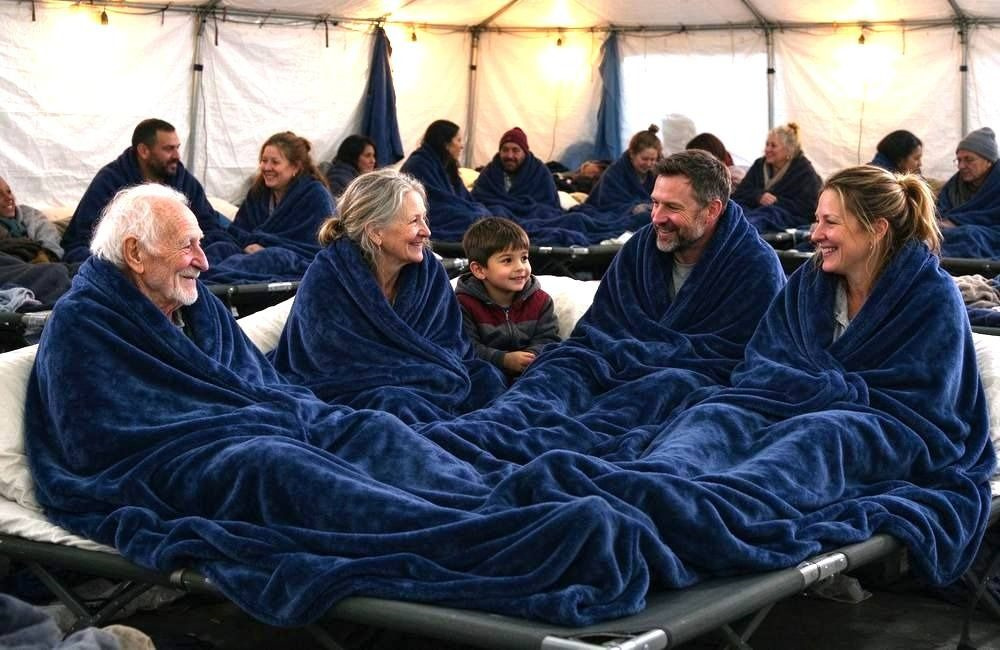
Deliveries that arrive on time let families settle quickly.
flood relief blanketnket must stay warm when damp, dry quickly, resist mould and survive repeated washing. Water-resistant flannel and quick-dry synthetic blends meet these requirements, while plain cotton blankets absorb water and become heavy and cold. Specify fabric, GSM and hem quality in your RFQ so the supplier quotes the flood-ready version.
Most relief programs specify 300 to 400 GSM for adult blankets because the higher weight provides real warmth on cold nights after rain. Lighter 180 GSM blankets are cheaper and pack smaller, but they suit tropical coastal zones rather than highland or southern African flood areas. Choose the GSM by the climate of your target region.
The standard adult size is 150 x 200 cm, which gives full body coverage. Many programs add a children’s size around 100 x 150 cm for efficient material use. Specify both sizes clearly in your RFQ and confirm the measurement tolerance with the supplier.
With compressed bales, a 40-foot container can carry tens of thousands of blankets, depending on GSM and bale dimensions. Compression reduces volume by half or more compared with loose packing. Ask each supplier for exact units per container in writing so you can compare freight costs accurately.
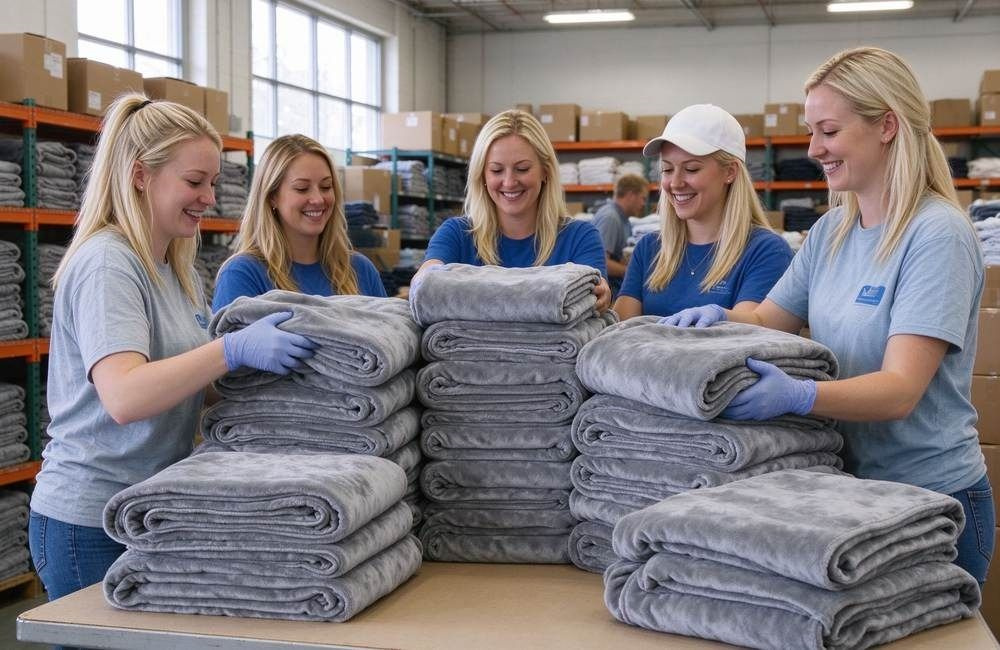
Folding and baling at the warehouse keeps distribution simple.
Compressed bales cut shipping volume dramatically, which lowers freight cost, and the tight packing protects blankets from dirt and moisture during ocean transit. Bales also make warehouse counting and field distribution faster. Specify bale weight, carton spec and units per container in your RFQ.
They need water resistance, not full waterproofing. A water-resistant flannel or treated fabric stays warm when damp and dries quickly, which is what flood conditions require. Full waterproof membranes make blankets stiff and less breathable, so the water-resistant treatment is the better specification for relief use.
Production typically takes four to eight weeks for container orders, and ocean freight adds three to five weeks to African ports. Plan the full cycle at eight to twelve weeks, and place orders at least three months before your target distribution date to build in margin for samples, production and port clearance.
Standard export documentation includes the commercial invoice, packing list, bill of lading and certificate of origin. Relief programs often operate under special import arrangements, so confirm the required document formats with your logistics and customs contacts before shipping.

Children’s bedding sizes complete the family relief package.
Mosquito nets are usually supplied in compressed bundles that fit alongside blanket bales in the same container. Individual packaging with simple installation instructions speeds up field distribution. Combining nets with blankets in one shipment cuts logistics cost and keeps the relief package complete.
Check fabric hand-feel and water resistance, exact size and weight, hem and stitching quality, colour accuracy and packing form. Wet the sample and test drying time and shape retention. Establish acceptance criteria in writing before production so the final inspection has a clear reference.
A tent without bedding stays cold and damp, so families cannot settle properly. Ordering shelter tents, bedding sets and flood relief blankets together means one coordinated shipment and faster field distribution. Experienced relief buyers prefer suppliers who can quote the full package.
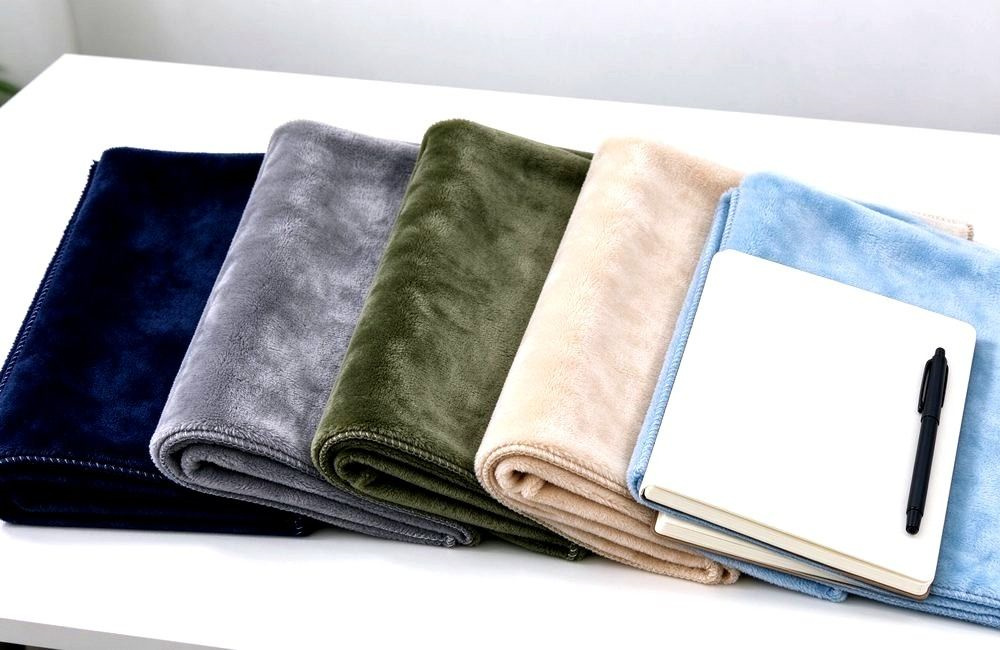
Colour cards give the whole team one shared reference.
Brushed polyester blends and water-resistant flannel dry much faster than plain cotton, and they resist mould better in humid conditions. Anti-microbial finishes add extra protection. Ask the supplier for drying behaviour data and test the sample yourself before approving production.
Put every quote on the same basis when you compare wholesale relief suppliers: same product specification, same quantity, same packing and same port. Ask for unit price, freight cost, lead time and documentation in writing. The supplier who answers clearly on all fields is usually the one who delivers on time.
Place container orders at least three months before the rainy season in your target region. Flood seasons follow predictable patterns across Africa, and production plus ocean freight typically needs eight to twelve weeks. Ordering early also reserves production capacity before the peak season.

Compare quotes on identical specifications before you commit.
Pre-packed family bundles are fastest: one blanket set, one bedding kit and one net per household, handed over in a single stop. Standardized sizes and colours make inventory counting faster, and trained volunteers with a simple queue system keep distribution moving even in the rain.
Yes, and it is good practice. A standing specification makes reorders simple, gives suppliers a reliable production reference and lets you compare quotes year on year. Review the specification each season against feedback from the field, and adjust only when a real problem is confirmed.
About bulk emergency supplies:
YRF Textile works with relief organizations worldwide on bulk emergency supplies including flood relief blankets, shelter bedding and mosquito nets. All product specifications, packing and delivery terms are confirmed in writing before production, and every order is checked against an approved sample before the container ships.
 |

|
Попередній :
Field Cold Weather Blankets for Winter Operations: Volume, Lead Time, GSM, Transport Weight, Scheduled Lots and Bulk Buying Decisions for Emergency and Relief Procurement TeamsДалі :
Drought Relief Blankets for East Africa: Warmth and Shelter Beyond Food Aid, GSM, Weight, Sizing and Bulk Procurement Decisions for Relief Programmes Serving Pastoral CommunitiesДружні посилання :
Авторське право © Custom Disaster - Relief Bedding: Tents, Sleeping Bags, Blankets Всі права захищені
професійна команда для обслуговування !