Категорії
Last updated: November 23, 2026 · Food poisoning emergency kit
A food poisoning emergency kit keeps a shelter or a field kitchen from becoming a source of illness. Thermometers, sanitizers, food handling gloves, safe drinking water and care supplies turn meal service into a managed routine, for shelters, kitchens and relief operations.
A well-rounded loadout combines food safety and hygiene supplies into one sealed bin per shelter, school kitchen or cook team.
This guide covers what to stock, how to monitor temperatures, and how to isolate and care for cases, so the kit is ready before the first meal is served.
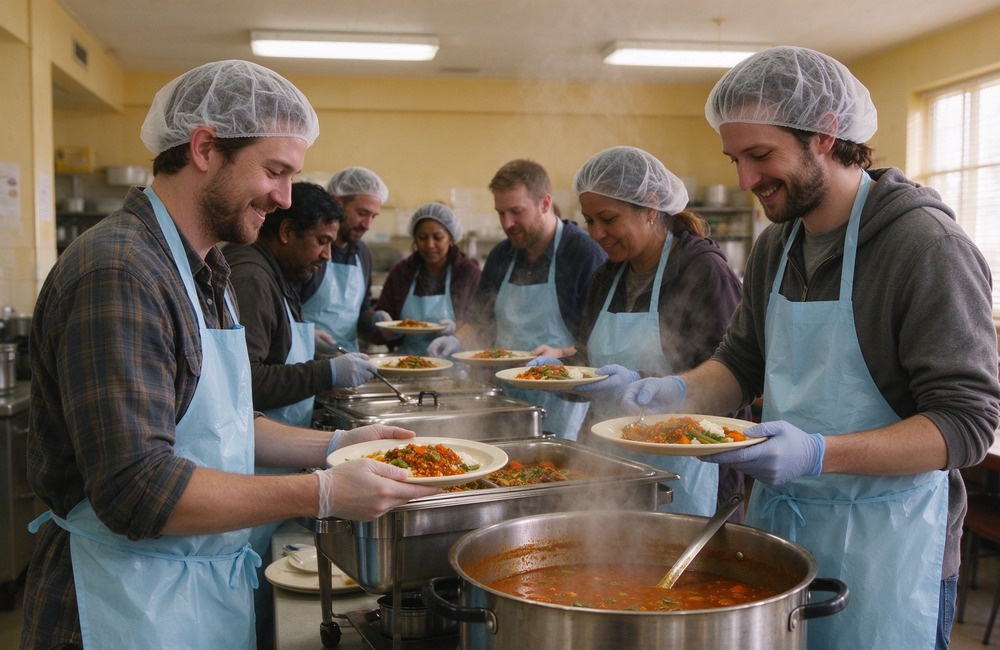
Shelter dining hall food service scene, staff serving meals with food safety supplies and hygiene gear staged at the meal line
 |

|
Table of Contents
A shelter meal line serves hundreds, and one mistake in that line can send dozens to the cot. A food poisoning emergency kit closes the gap: thermometers, sanitizers, gloves, safe drinking water and care supplies make every meal a checked meal.
This page covers the full kit for shelters, kitchens and relief operations.
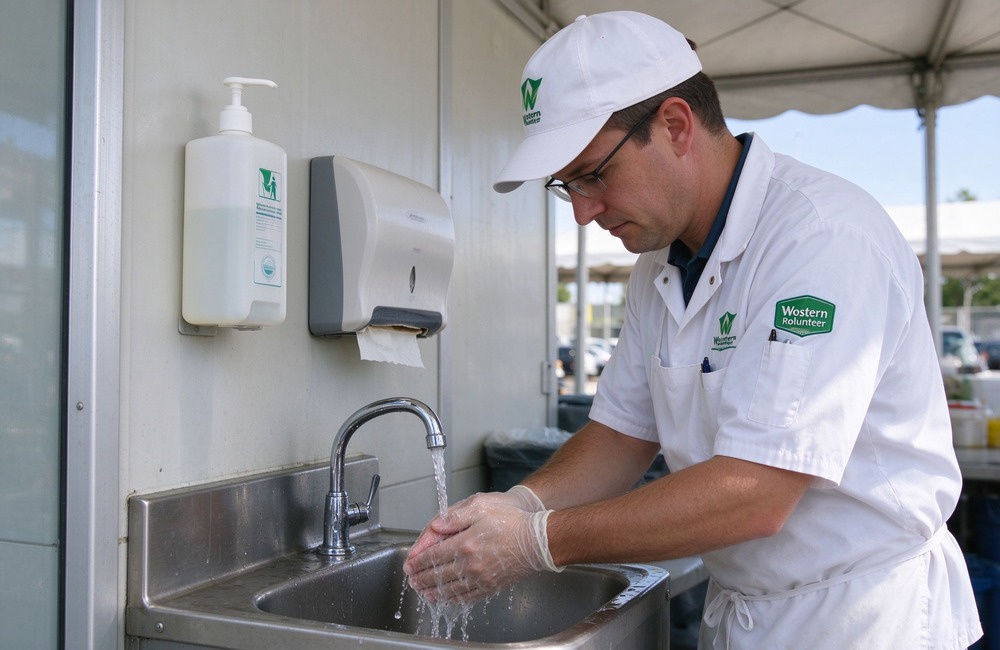
Volunteer hand washing station at a shelter, staff washing hands before food service with soap and clean water for hygiene
The food poisoning emergency kit includes the sections follow the real sequence of food safety: understanding the illness risk, stocking the right supplies, monitoring temperatures, cleaning and sanitizing, keeping personal hygiene, securing water, and isolating cases when they appear.
The food poisoning emergency kit includes this guide is written for organizations and families together. You will see per-meal ratios and bulk quantities, because a shelter feeding 300 people makes different decisions than one family.
Where numbers appear, they match standard food safety planning and can be adjusted to your site.
The food poisoning emergency kit includes by the end, you will know which items matter most, how to run the temperature log, how to clean between meals, and which official sources to check during the operation.
The final sections give a quick-reference list and a procurement checklist for your supplier.
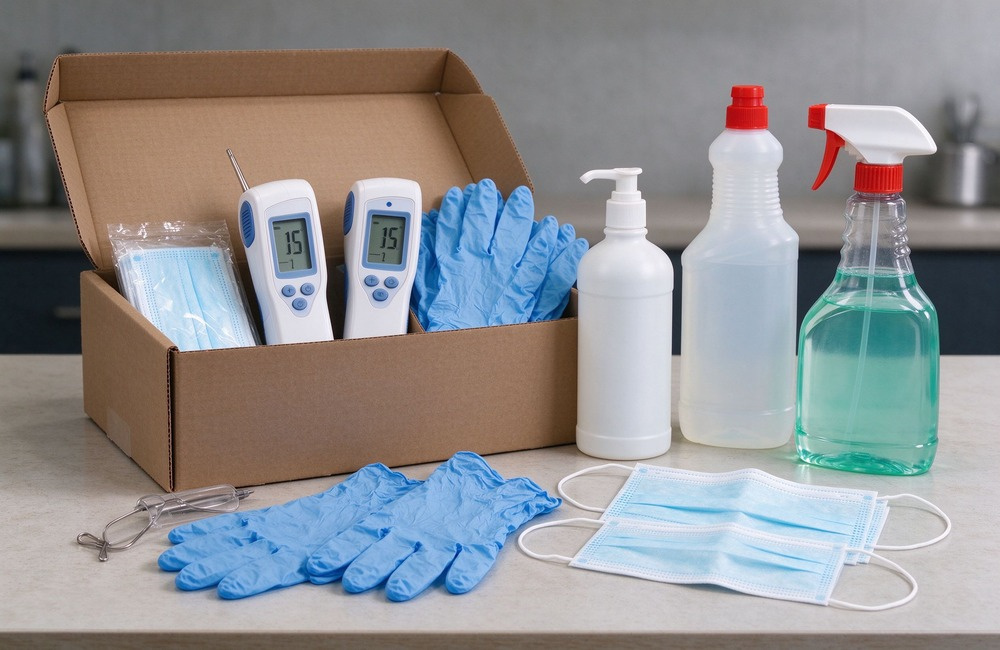
Food safety supply kit box in white background, thermometers, sanitizers and gloves arranged for emergency food service work shifts ahead
The food poisoning emergency kit includes preparedness is measured in checked temperatures and clean hands. A shelter with a working thermometer records the safe zone before every meal; a kitchen with sanitizers wipes the line between shifts.
For organizations, the same rule applies at larger scale: a food poisoning emergency kit with food safety supplies turns meal service into a managed routine, and management is what protects the diners.
Foodborne illness builds quietly: nausea and cramps hours after a meal, fever and diarrhea the next day, and vulnerable groups - children, elders and the sick - worse than healthy adults.
Most outbreaks start with one missed step: a temperature not checked, a surface not cleaned, a hand not washed. Preparedness starts before the first meal is served. Every relief kitchen should stage an emergency food handling kit before the first meal goes out.
Unprepared organizations face three failures at once: a single cold soup can sicken a full meal line, hand washing stations run empty because supplies are still in boxes, and isolation space is improvised only after cases appear.
Each failure compounds because illness spreads meal by meal.
A pre-built kit with thermometers, sanitizers and hygiene gear avoids all three, and it is cheaper to stock before the operation than to respond after an outbreak.
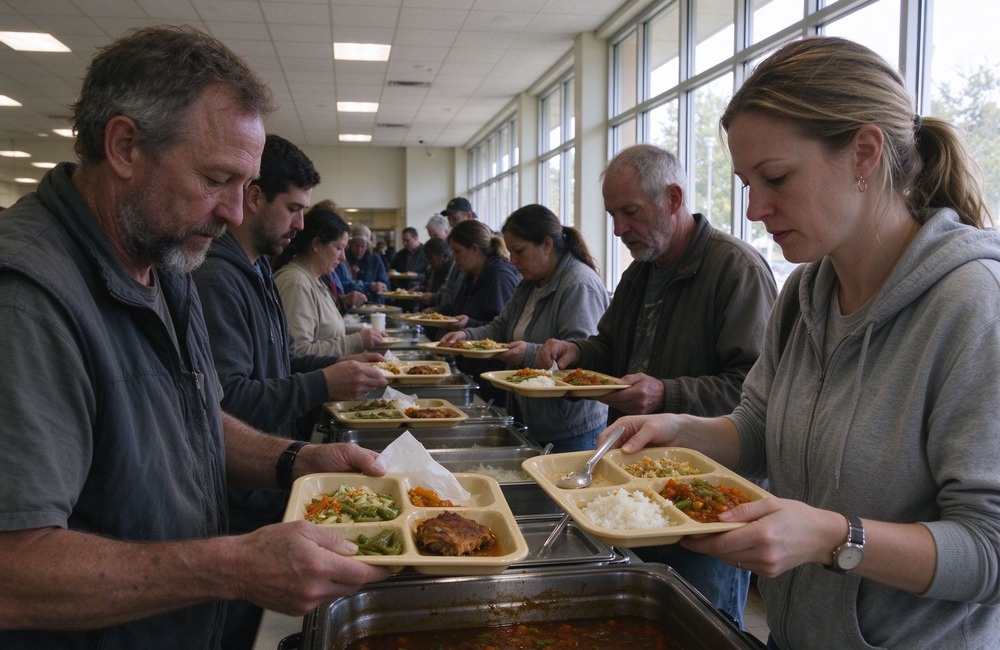
Food risk follows a simple map: food that sits in the danger zone breeds bacteria, surfaces that stay dirty carry them to the next plate, and hands that skip the wash pass them on.
The kit works when it covers all three, and the sections below turn the map into a checklist.
The danger zone runs from 4 to 60 degrees Celsius: below 4 degrees bacteria stay dormant, above 60 degrees they are killed, and in between they double within minutes.
Hot food must be held above the safe line, cold food below it, and every pot checked with a thermometer before service.
Poisoning spreads through three routes: contaminated food, dirty surfaces and unwashed hands. One sick cook, one reused cloth or one unwashed cutting board can seed the next meal.
The kit answers each route with a tool: thermometers for food, sanitizers for surfaces, and gloves with washing stations for hands.
Meat, eggs, rice, dairy and prepared salads carry the highest risk, and children, elders, pregnant women and the sick are the most vulnerable.
Shelters add the shared meal line risk, where one dish reaches everyone. The kit covers high-risk foods first: a thermometer at every pot, a sanitizer at every station, and extra care for the vulnerable group.
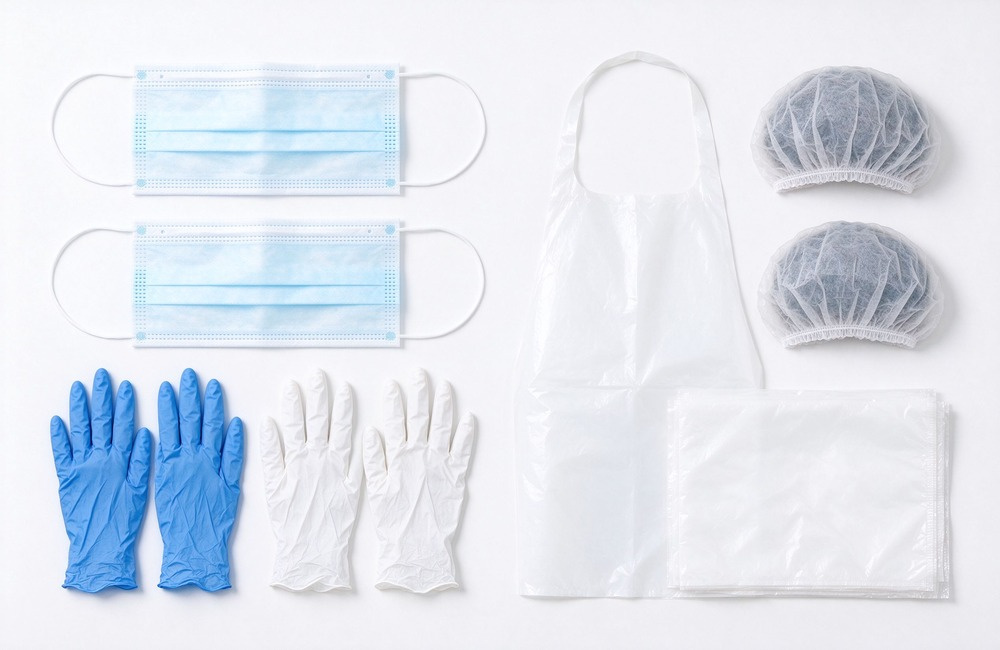
Supplies are the first layer of the kit, and the list is short: thermometers, sanitizers, gloves, masks, disposable cloths and label tape.
The right supplies and the right stock level turn meal service into a checked routine. A useful reference is the Red Cross survival kit supplies checklist, which lists the core water and food items every household and kitchen should cover.
Per kitchen: two probe thermometers, sanitizer bottles for every station, food handling gloves in three sizes, masks for serving staff, disposable cloths and label tape for storage dates.
Stage the set in a labeled supply box so the check before every meal is a walk, not a search.
Stock by the meal count, not by the week: one glove pair per server per meal period, one sanitizer refill per station per shift and thermometers with spare batteries on the shelf.
Shelters keep a two-week reserve behind the daily stock, and the coordinator reviews the levels at every meal change.
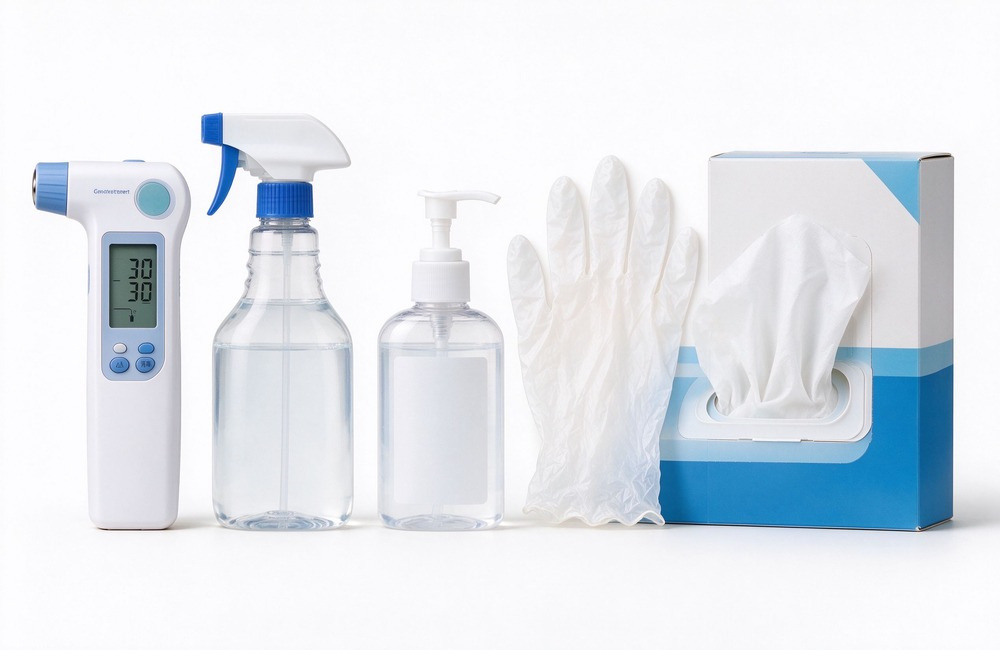
Temperature is the cheapest food protection: a checked pot either holds the safe zone or gets fixed before it reaches diners. The thermometer module covers hot hold, cold hold and the log that proves the routine.
Check hot food above 60 degrees Celsius and cold food below 4 degrees at the start of every service, then every two hours.
If a pot drops into the danger zone, reheat it to the safe line within an hour or pull it from the line. The check is a two-minute routine that protects every meal.
The log turns checks into proof: one sheet per kitchen, one row per pot, the time and the reading written by the same staff who served the meal.
Keep the completed sheets for the operation file, and review them at the shift change. A written log is the record that protects the kitchen during any review.
Cleaning is the second layer of protection: surfaces carry bacteria from one plate to the next, and a sanitized station breaks the chain. The cleaning module covers table disinfection, kitchen surfaces and the supply that makes it a habit.
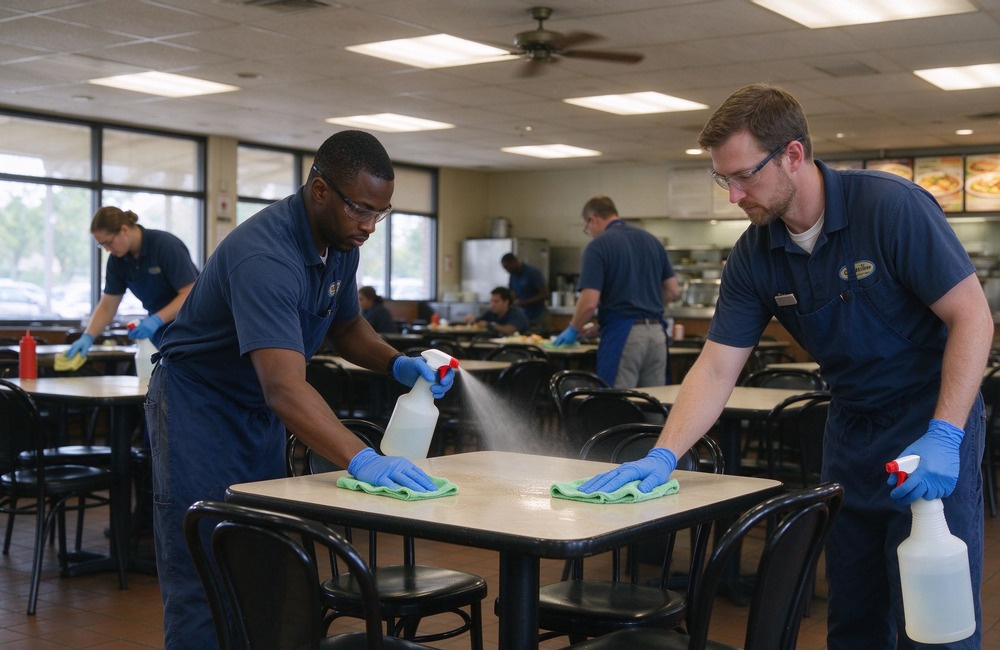
Wipe dining tables, counters and door handles between every meal, and sanitize the kitchen work surfaces at the shift change. Use the labeled sanitizer at the labeled dilution, let the surface air-dry, and check the spray schedule with the same routine as the temperature log.
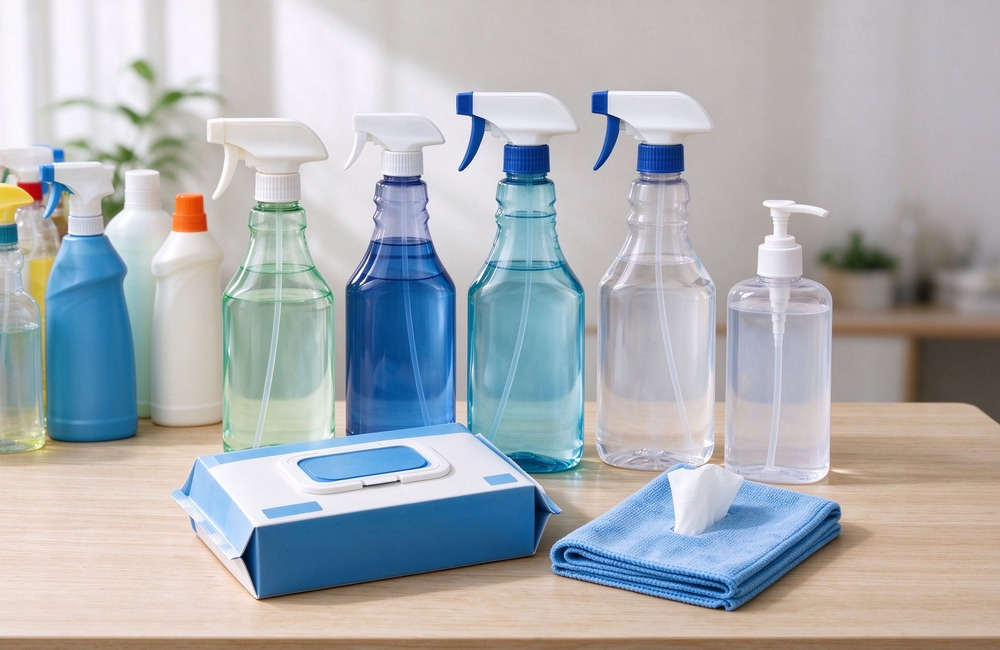
Keep sanitizer bottles at every station and wipes at every table row, with refills on the shelf by the case. Label every bottle with its use - kitchen, dining, bathroom - so the right dilution reaches the right surface.
The stock list is part of the kit, because the spray only works when it is used every time.
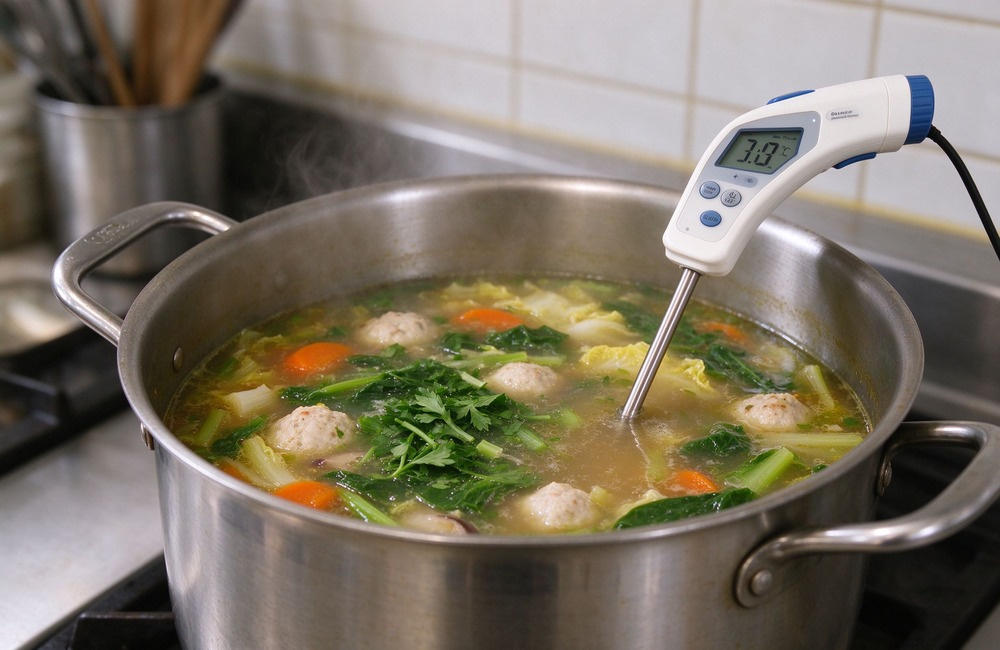
Hygiene is the third layer and the one that follows the people. Food handling gloves, masks and hand washing stations protect the diners from the servers, and the routine is the same at every meal.
Gloves and masks are worn by everyone who touches food or serves the line, changed between tasks, and never reused across raw and ready food.
The serving discipline is simple: one pair per task, hands washed before the new pair, and no jewelry or open wounds on the line.
One hand washing station per kitchen and per meal line, with soap, clean water and paper towels restocked at every meal. Post the wash steps at the station - wet, soap, scrub for twenty seconds, rinse, dry - and check the supply at the same time as the temperature log.
Water is the silent fourth layer: meal service needs water for cooking, washing and drinking, and contaminated water turns the whole kitchen unsafe. The water module covers storage, labeling and the emergency reserve.
Store drinking water in labeled bladders or tanks, separate from cleaning water, and rotate the reserve by date. For cooking and hand washing, confirm the supply source and treat it when the source is uncertain.
The label on every tank is the check that keeps the wrong water out of the pot.
Keep a two-day reserve of drinking water per person beyond the daily supply, and check the reserve level at every restock. If the main supply fails, the reserve keeps the kitchen cooking and the hand stations running while the source is fixed.
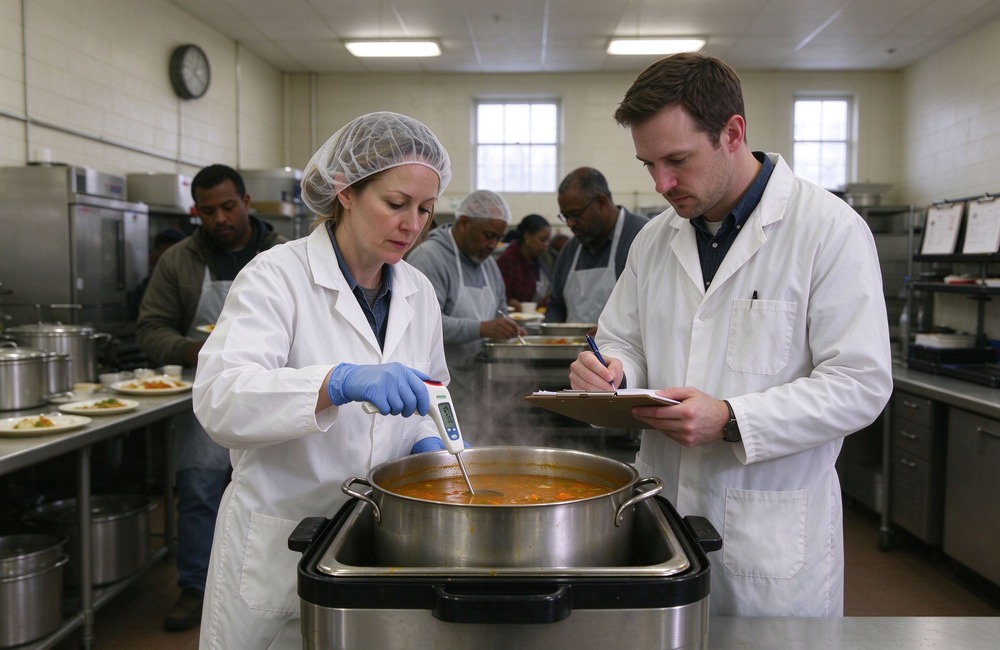
When cases appear, isolation is the last layer and the one that stops the spread. A separate room, a single cot and a care kit keep one sick person from seeding the next meal, and the plan is set before cases arrive.
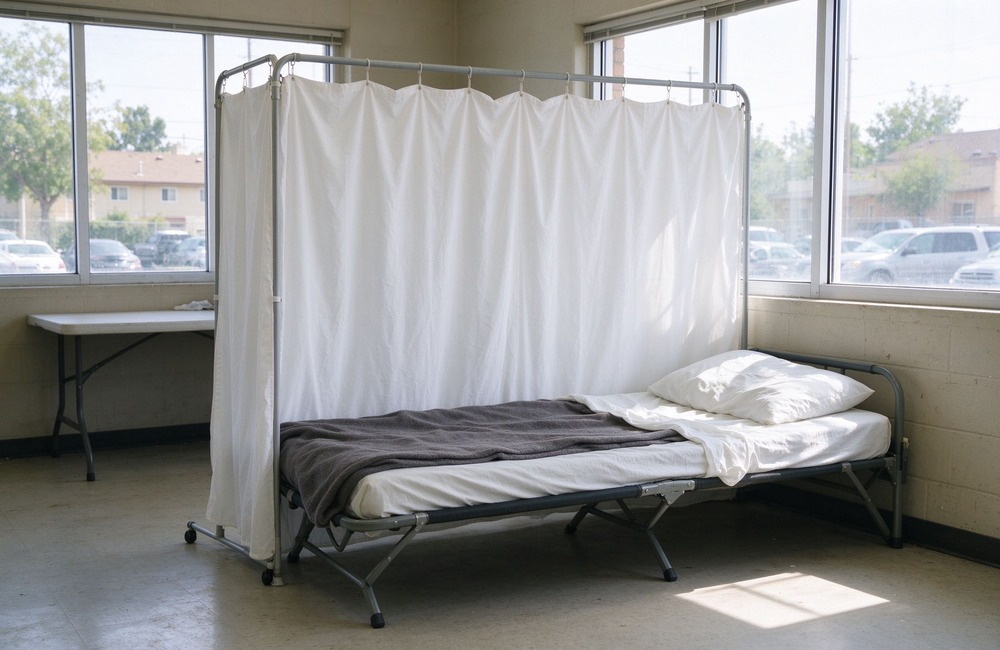
Reserve one room with a single cot, separate ventilation and a marked entry, and post the rule that sick residents eat apart from the main line.
The room is prepared with the rest of the kit - blankets, care supplies and a labeled door - so the setup is a move, not a search, when a case appears.
The care kit holds oral rehydration salts, a thermometer, clean blankets, masks and gloves for the caregiver. Check the patient's temperature twice a day, offer fluids in small amounts, and escalate to the local health contact when fever or dehydration signs persist.
Record every case with the date, the meal, the symptoms and the care given, and review the list at the daily briefing.
Two or more cases after the same meal trigger a review of the temperature log and the cleaning schedule, because the pattern is the fastest way to find the missed step.
The complete kit brings the layers together in one inventory: supplies, thermometers, sanitizers, hygiene gear, water and care. The full list below is the same one used by families, shelters and warehouses, scaled by numbers.
Per home: one thermometer, sanitizer for the kitchen, food handling gloves, a small water reserve and a care kit with oral rehydration salts. Stage the set in a labeled cabinet so it is inventoried in minutes and restocked with the grocery order.
Shelters multiply the baseline: thermometers per kitchen, sanitizers per station, gloves per server per meal, hand washing stations per line, and one isolation room per 50 beds.
The coordinator owns the log, the stock list and the case record, and the plan names one person per shift for the checks.
Warehouses hold the bulk reserve: food safety supplies by the case, sanitizer refills, glove boxes and water bladders, reviewed at every season change.
The reserve keeps a shelter running while the supply line catches up, and the inventory sheet is the record that proves the levels.
The table below compares the main supply modules:
Module
Core Items
Check Cycle
Reserve
Temperature
Probe thermometers, spare batteries
Every service, every 2 hours
2 per kitchen
Cleaning
Sanitizer, wipes, cloths
Between meals, shift change
2-week refill
Hygiene
Gloves, masks, hand stations
Per task, per meal
Glove box reserve
| Category | Per-Kitchen Item | Notes |
|---|---|---|
| Protection | Gloves, masks, hairnets | Per serving line |
| Temperature | Calibrated thermometer, log | Weekly calibration |
| Sanitation | Sanitizer, wipes, buckets | Between shifts |
| Hand Wash | Soap, towels, hand sanitizer | Every station |
| Care | Oral rehydration salts, first aid | Sick residents |
Per-kitchen minimum for 72 hours in a food poisoning emergency kit; add water storage for handwashing, isolation room supplies and a thermometer calibration log for every batch served. and extra sanitizer wipes for serving line cleanup.
The per-station table below covers bulk gloves, sanitizer and records that shelters and school kitchens stock at each serving line, rather than in each household pack.
|
Category |
Per-Site Item |
Notes |
|
Gloves and Masks |
Bulk boxes per week of service |
Rotate by batch |
|
Sanitizer |
Bulk concentrate, spray bottles |
Labeled |
|
Water |
Barrels, handwashing stations |
Test after transport |
|
Records |
Temperature logs, case sheets |
Review weekly |
Inventory site bins at the start of relief season and after any real outage; restock within ten working days and rotate gloves and masks by expiration date to keep supplies fresh.
Procurement decides whether the kit arrives before the operation or after the first meal. A reliable factory partner produces hygiene and food safety supplies to specification, with samples, test reports and documentation that keep your compliance file complete.
Ask the supplier for the capability and document list before pricing: food-contact glove material specs, sanitizer ingredient and hygiene certifications, thermometer calibration certificates and batch test records. Request certifications relevant to the products - food contact claims and hygiene standards - and keep the certificates with the order file.
A factory that documents its process is a factory that manages its quality.
Confirm packaging is sealed and labeled, and that production and shipping finish before the operation starts - 6 to 10 weeks is a safe ordering window.
Request samples before the bulk order, collect test reports and packing lists at order time, and keep the samples with the bulk kits as field references.
Sanitizer bottles and wipes for cleanup in white background, hygiene supplies stocked for kitchen and dining areas at the shelter
Check these trusted pages before running a relief meal line and again when a power outage threatens cold storage. NWS general emergency preparedness guidance covers home and shelter evacuation steps during storms.
The American Red Cross food safety page lists the danger-zone temperatures, cold storage rules and cooking temperatures relief kitchens follow worldwide.
Foodborne illness spreads fastest when a relief kitchen loses power, water or temperature control. A single contaminated batch can send dozens of shelter residents to a clinic in one night.
Every shared kitchen needs a consistent bulk food safety gear plan staged before meal service. The four buyer groups below buy in volume and share the same core configuration.
Shelters serving hundreds of residents a day need gloves, masks, thermometers and sanitizer at every serving line. Bulk food safety gear is staged in sealed, numbered bins per kitchen.
School cafeterias feeding thousands of students follow danger-zone rules. They stock sanitation preparedness supplies at each dish station and handwashing sink.
Field kitchens operating after storms or floods run on generators and limited water. They carry emergency food handling kit bins for each cook team, with separate hot and cold zones.
Residents in long-term care are the most vulnerable to foodborne illness. Facilities stock emergency hygiene supplies at every meal station and maintain temperature logs for every batch. The same emergency hygiene supplies standard applies to every assisted living site.
Between 40 and 140 degrees Fahrenheit, bacteria double every 20 minutes. Hot food stays hot, cold food stays cold, and room-temperature buffets are retired during outages.
Touching raw meat, taking out trash, handling money and then serving food spreads bacteria. Wash hands, change gloves and use separate utensils for raw and ready-to-eat items.
Chicken, ground meat and leftovers need verified internal temperatures. Use a calibrated thermometer and log the reading, not a guess based on color or time.
When safe tap water stops flowing, handwashing and dishwashing stop too. Switch to bottled water, hand sanitizer and single-service utensils until water is restored and tested.
Isolation room with a single cot at a shelter, a patient recovering apart from the main dining crowd for safety
Buying sanitation preparedness supplies means matching the kit tier to the meal volume and water access of the kitchen, not over-ordering one-size-fits-all bins that waste budget and shelf space.
Shelter kitchens, school cafeterias and field operations differ in meal volume and water access. The comparison table below matches three kit tiers to typical buyers, so procurement officers can quote one consistent configuration per kitchen or cook team.
|
Kit Level |
Best For |
Core Contents |
Sourcing Note |
|
Home Food Pack |
Single family home, 3 to 5 people |
Food thermometer, sanitizer wipes, gloves, masks, hand sanitizer, oral rehydration salts |
Kitchen drawer bin |
|
Kitchen or Shelter Kit |
Shelter, school or cafe, 50 to 200 meals a day |
Home pack plus dish sanitizer, temperature log, first aid, isolation room supplies, water storage |
Numbered bins per station |
|
Bulk Relief Deployment |
Field kitchen, relief convoy, regional warehouse |
Kitchen kit plus bulk gloves and masks, water barrels, handwashing stations, bulk food service safety kit |
Palletized emergency hygiene supplies, OEM labeling available |
Most buyers start with the Kitchen or Shelter Kit for one pilot station, then scale to the Bulk Relief Deployment level once the food safety drill proves the configuration works.
Thermometers, sanitizer and single-service gear live in heat, water and constant use. A short care routine keeps every food poisoning emergency kit ready for the next meal service, and it extends the life of thermometers, pumps and storage containers across multiple relief rotations.
For orders above 200 kits, we provide OEM private-label packaging, custom color tags and site-numbered bins for any bulk food service safety kit deployment. Volume pricing on bulk food service safety kit orders is quoted once your meal count and relief season length are on file.
Minimum order quantities and lead times are quoted per contract once your component list and meal-volume schedule are confirmed.
Thermometers, sanitizers, food handling gloves, masks, disposable cloths, hand washing supplies, safe drinking water and a care kit with oral rehydration salts.
At the start of every service and every two hours after that. Hot food must stay above 60 degrees Celsius and cold food below 4 degrees Celsius during the meal period.
The range from 4 to 60 degrees Celsius, where bacteria double within minutes. Food held inside this range must be reheated or pulled from the line within an hour.
Wipe tables, counters and door handles between every meal with the labeled sanitizer at the labeled dilution, let the surface air-dry and check the schedule with the temperature log.
Yes. Bulk orders cover thermometers per kitchen, sanitizer refills per station, gloves per server per meal and a two-week reserve, with custom packaging available for larger orders.
Dehydration is the main danger of food poisoning. Salts restore fluids and electrolytes in small doses, and the care kit keeps them ready before a case appears.
Reserve a room with a single cot, separate ventilation and a marked entry. Keep blankets, care supplies and a labeled door ready so the setup is a move, not a search, when a case appears.
Request the certificates relevant to the products: food contact claims for gloves and wipes, and hygiene standards for sanitizers, with test reports kept with the order file.
Record every case with the date, meal, symptoms and care given, and review the list at the daily briefing. Two or more cases after the same meal trigger a review of the log and the cleaning schedule.
Store drinking water in labeled bladders or tanks separate from cleaning water, rotate the reserve by date, and keep a two-day reserve beyond the daily supply.
One station per kitchen and per meal line, with soap, clean water and paper towels restocked at every meal and the wash steps posted at the station.
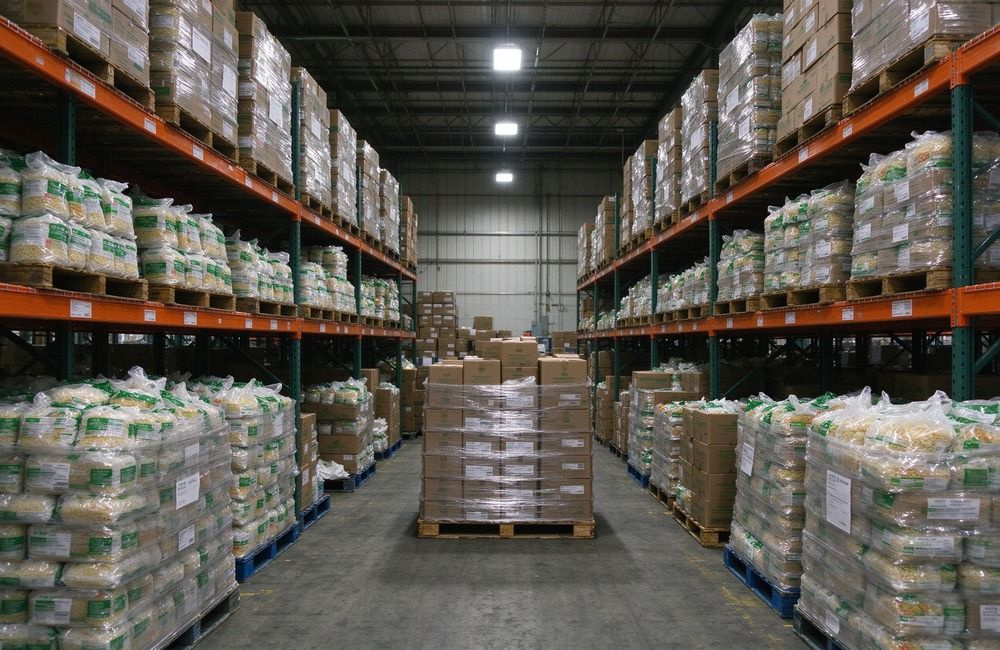
A kit that has never been checked fails at the worst time. Run one drill before the operation: check every thermometer, time the surface clean, count the gloves and confirm the isolation room.
Fix the gaps in the order, then repeat the drill at every season change.
Update food safety subscriptions when the operation changes, keep a printed contact sheet in every kitchen, and confirm the stock levels still match current meal counts. Small quarterly updates keep the whole system usable for years.
A food poisoning emergency kit is not a product list; it is a decision made in advance. Check the temperatures, sanitize the surfaces, wash the hands, secure the water and review the plan every quarter.
When the first meal is served, the kit does the thinking.
Дружні посилання :
Авторське право © Custom Disaster - Relief Bedding: Tents, Sleeping Bags, Blankets Всі права захищені
професійна команда для обслуговування !