Категорії
Last updated: September 2026 | Reviewed by bedding sizing specialist | ~7 min read
Choosing the right bedding set size is not a one-number decision. A three-piece bedding bundle contains a sheet, a duvet cover, and a pillowcase. In relief procurement it is also called a bed linen set or sleeping kit. Each piece matches a different object.

The sheet fits the bed surface. The duvet cover fits the duvet insert. The pillowcase fits the pillow insert. This bedding set size guide explains why all three must be measured separately.
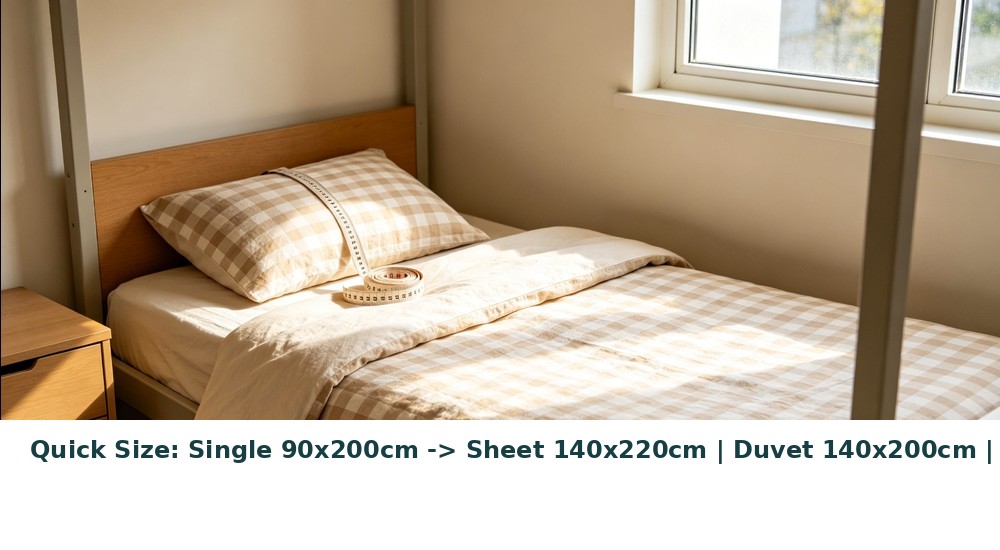
Quick size reference: For a standard 90×200 cm single bed with 15 cm mattress → flat sheet 140×220 cm, duvet cover 140×200 cm, pillowcase 50×70 cm. Always verify this bedding set size against your actual equipment.

Before diving into the measurement process, use this quick reference to identify which standard size range applies to your bed frames. The table below gives you an at-a-glance starting point, but always verify with actual measurements as described in the sections that follow.
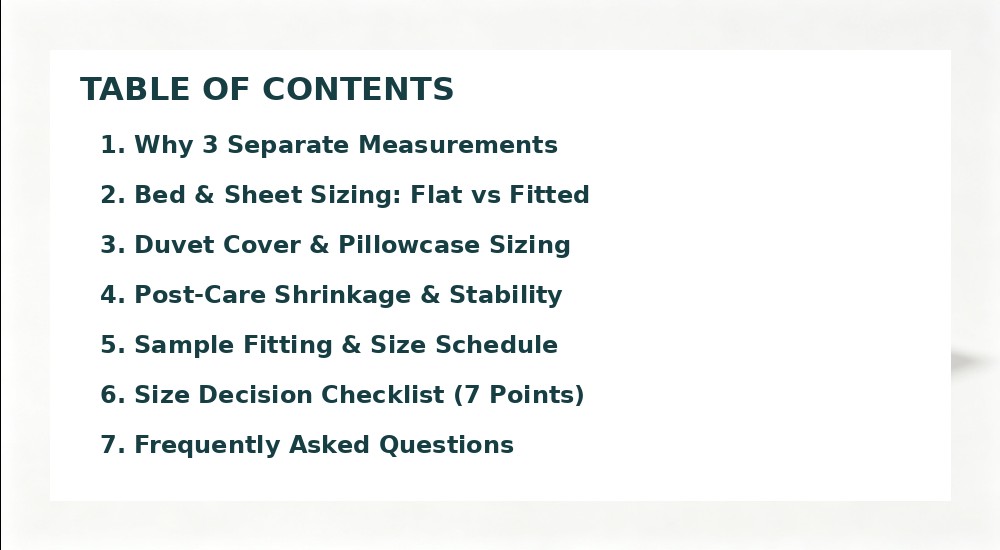
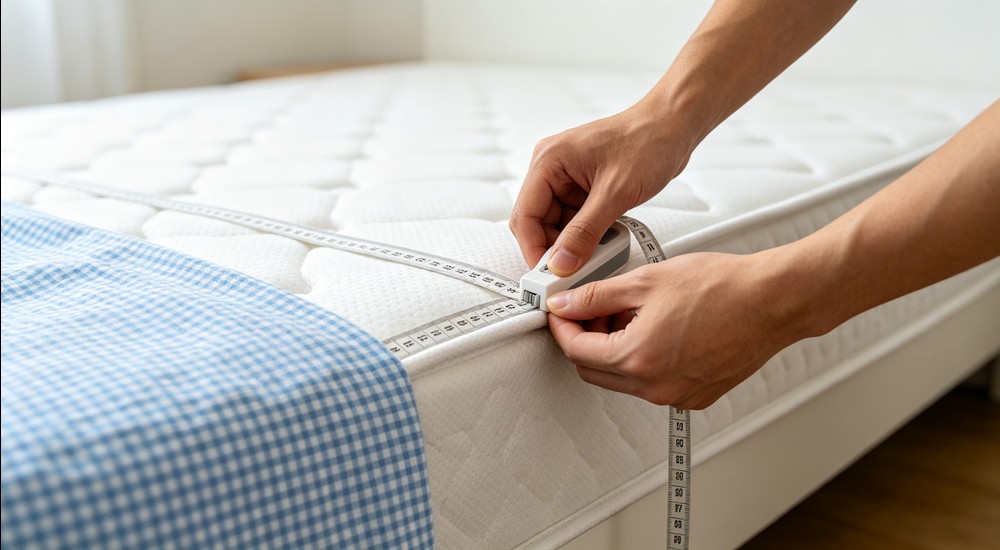
Accurate bedding set size starts with the right tools. Use a soft tape measure for fabric and inserts. Use a rigid metre stick for bed frames. Record all three dimensions immediately in a notebook or tablet. Do not rely on memory or manufacturer labels — measure every object yourself.
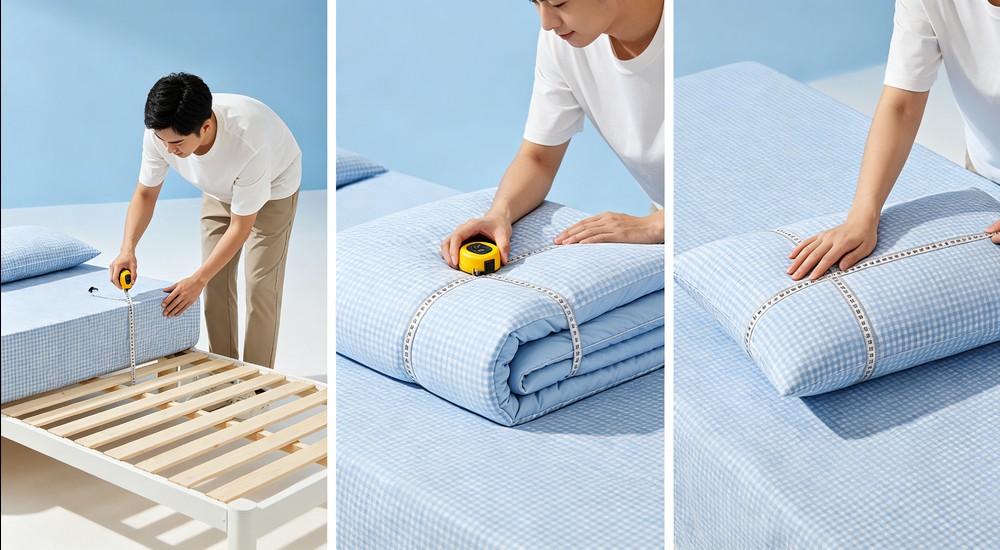
Taking these three measurements requires the right tools for each surface. Soft tapes conform to curved fabric and filled inserts, while rigid rulers give straight-edge accuracy for bed frames. Using the wrong tool for any object will introduce errors that compound across the full set.

Every bedding set size depends on three independent objects. These are the bed or mattress, the duvet insert, and the pillow insert.
Bed width alone cannot determine the duvet cover size. "Single bed" does not identify local pillow dimensions. Measure all three before ordering a bedding set size.
Quick decision path:
→ Measure bed surface → choose sheet size
→ Measure duvet insert → choose duvet cover size
→ Measure pillow insert → choose pillowcase size
→ Send all three dimensions to supplier as a complete bedding set size specification
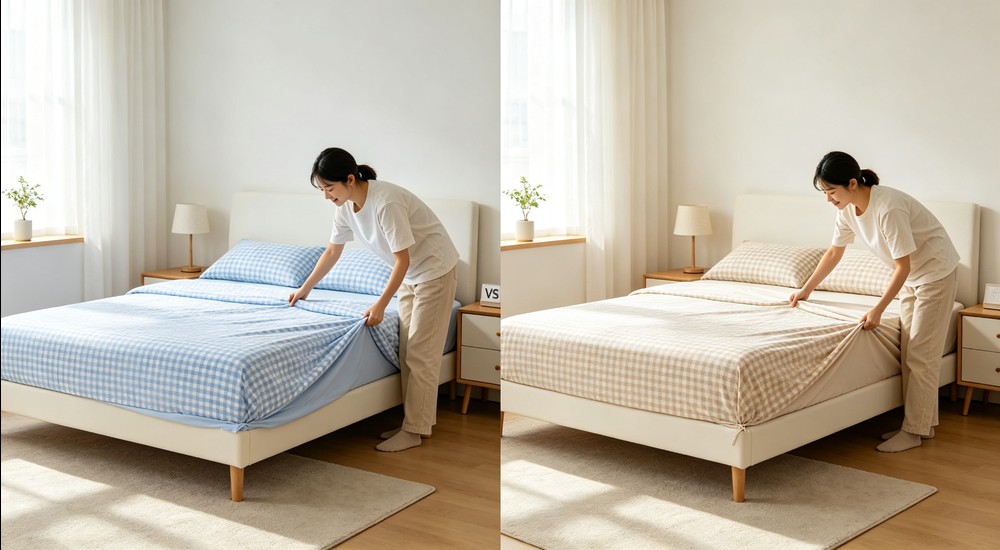
The sheet is the only piece that touches the bed. A flat sheet needs extra fabric to tuck under the mattress. A fitted sheet needs accurate depth to grip the corners.
Both require bed width, length, and mattress thickness. These three numbers determine the bedding set size for the sheet component.

|
Bed type |
Typical size (W×L) |
Mattress depth |
Sheet style |
|
Camp cot |
70-80 × 180-190 cm |
5-10 cm |
Flat sheet |
|
Single bed |
90-100 × 190-200 cm |
15-25 cm |
Flat or fitted |
|
Bunk bed |
80-90 × 180-190 cm |
10-15 cm |
Flat sheet |
|
Floor mat |
60-70 × 180 cm |
2-5 cm |
Flat sheet only |
The bedding set size for the sheet component depends on these bed dimensions. A flat sheet should be 30-50 cm wider and 40-60 cm longer than the mattress surface.

This bedding set size allows fabric to be tucked in on all sides. A fitted sheet must include mattress depth in the pocket specification.

|
Item |
Inches |
Centimetres |
Notes |
|
Twin sheet |
66×96 in |
168×244 cm |
US standard |
|
Single duvet |
55×79 in |
140×200 cm |
EU standard |
|
Standard pillow |
20×26 in |
51×66 cm |
US/UK |
|
EU pillow |
20×28 in |
50×70 cm |
EU standard |
Always convert the bedding set size using the destination market standard. 1 inch = 2.54 cm.
The duvet cover matches the duvet insert, not the bed width. A 100 cm wide bed may use a 140×200 cm or 160×210 cm duvet, depending on climate.
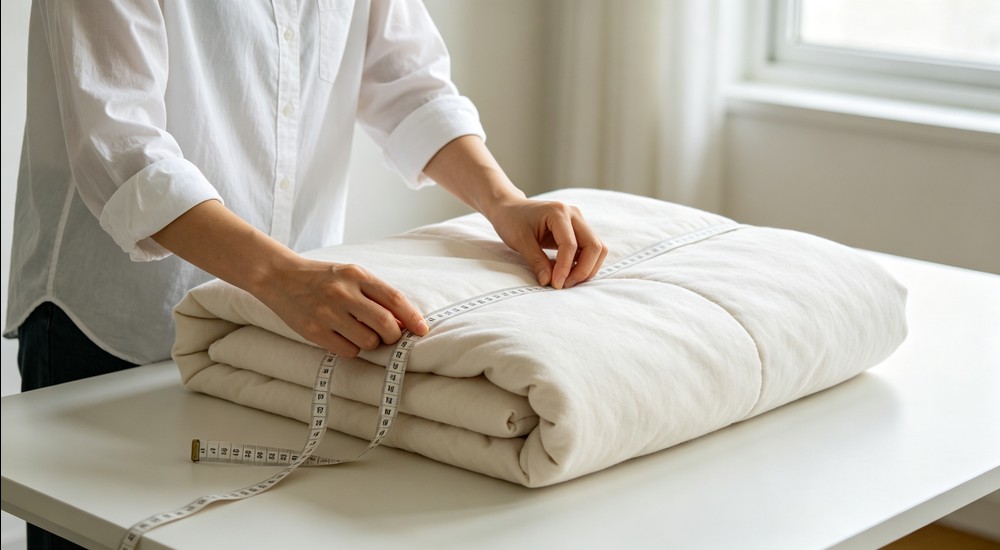
Always measure the insert, not the bed frame. This is the most common bedding set size error in bulk orders. The correct bedding set size for the duvet cover depends entirely on the insert dimensions.
Pillowcases depend on pillow loft and opening style. An envelope pillowcase needs 5-10 cm extra flap length. A zipper pillowcase matches the insert dimensions more closely.
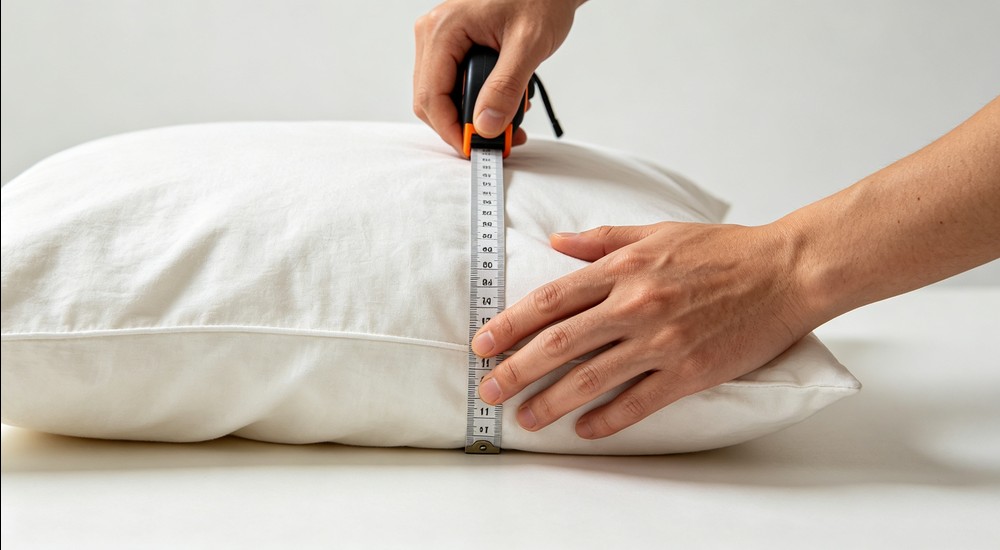
Once the duvet and pillow dimensions are recorded, the next step is verifying how the cover openings match those inserts. Closure type directly affects how much extra fabric is needed and how the finished size holds up after repeated use.

Not all bedding set size components should have the same tolerance. Sheets can tolerate ±3 cm because they are tucked in. Duvet covers need ±2 cm because a loose cover shifts inside. Pillowcases need ±1.5 cm for a clean fit.

Size tolerance: Finished dimensions typically have ±3 cm tolerance. Ask the supplier to state tolerance for each component, and confirm whether measurements are finished size or cutting size.

|
Region |
Single bed size (W×L) |
Common pillow |
Note |
|
Europe |
90 × 200 cm |
50×70 cm |
Standard EU |
|
United States |
99 × 191 cm |
51×66 cm |
Twin size |
|
Japan |
97 × 195 cm |
43×63 cm |
Single size |
|
China |
90 × 200 cm |
48×74 cm |
Standard CN |
Never use your local single bed size for an export order. Always confirm the destination market standard.
|
Use case |
Sheet |
Duvet cover |
Pillowcase |
|
Camp cot (70×180 cm) |
120×210 cm flat |
140×200 cm |
50×70 cm |
|
Standard single (90×200 cm) |
140×220 cm flat |
140×200 cm |
50×70 cm |
|
Bunk bed (80×190 cm) |
130×210 cm flat |
135×195 cm |
50×70 cm |
|
Floor mat (60×180 cm) |
110×200 cm flat |
130×190 cm |
45×65 cm |
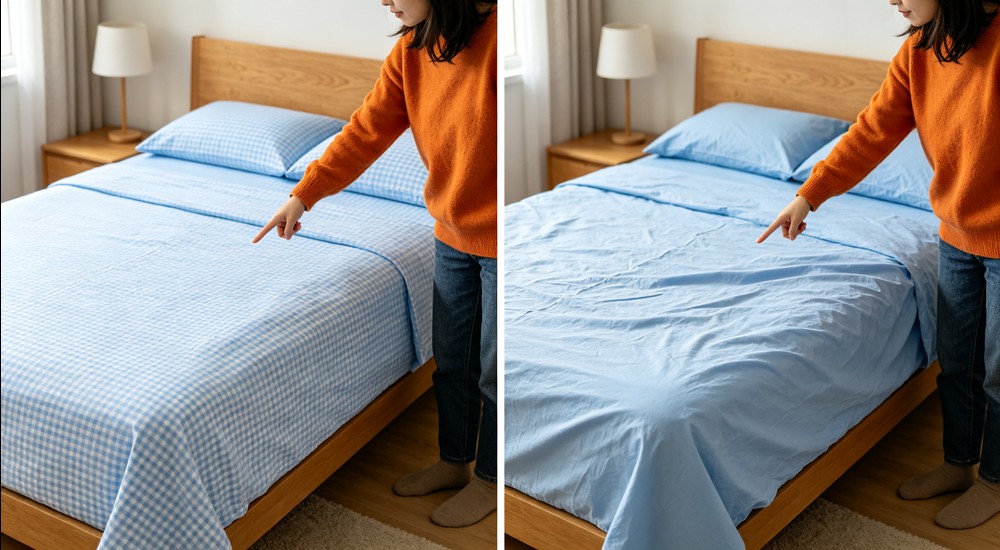
A bedding set size that fits on arrival may shrink after washing. The bedding set size you specify must account for post-wash dimensions.
Cotton can shrink 3-5% in the first washes. Poly-cotton blends shrink 1-3%. Polyester is most stable.
|
Fabric |
Typical shrinkage |
Wash temp |
Drying time |
|
100% Cotton |
3-5% |
40-60°C |
24-48h air dry |
|
Cotton-Polyester |
1-3% |
40-60°C |
12-24h |
|
100% Polyester |
0-1% |
30-40°C |
6-8h |
Always ask for a shrinkage test result with the sample. If no result is available, order 3-5 cm extra on each dimension as a safety margin. This prevents the bedding set size from becoming unusable after the first institutional wash cycle.
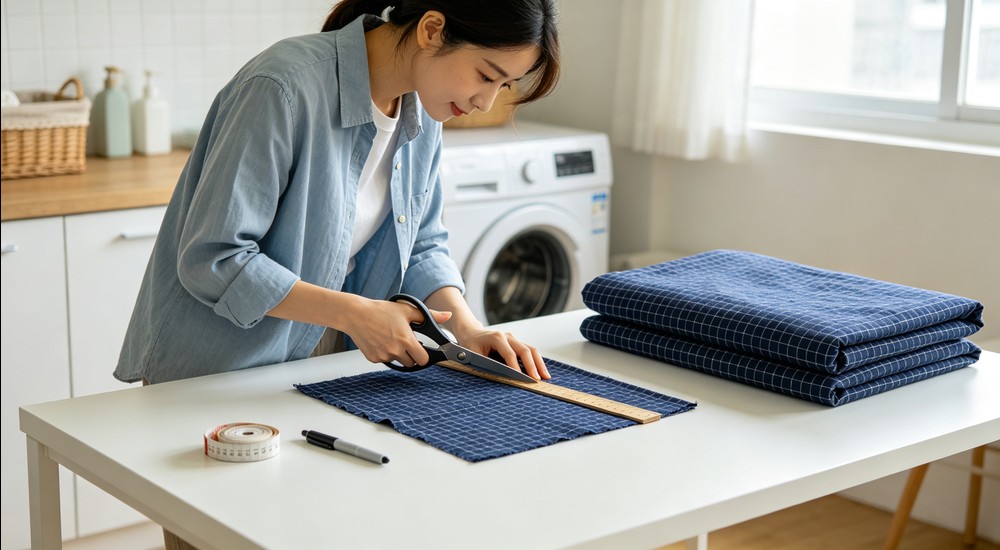
Before approving bulk production, cut a 50×50 cm sample from the same fabric roll used for your bedding set size. Mark the dimensions with a fabric pen. Wash it three times at the specified temperature. Measure again after each cycle.
If the sample shrinks more than the agreed rate, reject the fabric or adjust the cutting size to compensate. Document all measurements with photos and dates.

For institutional and relief use, target 120-150 GSM for sheets and 130-160 GSM for duvet covers. Pillowcases can use 110-140 GSM. Higher GSM improves durability but increases drying time and shipping weight.
Need to verify dimensions before ordering?
When a site contains multiple bed types, group the bedding set size by bed format rather than ordering one generic size. Camp cots, single beds, and floor mats each need different sheet dimensions. Use separate cartons labelled by bed type to prevent distribution errors at the destination.
Enquiry tip: When requesting a quote for mixed sizes, list each bedding set size separately with quantity. Do not ask for "one size fits all" — suppliers cannot produce a single sheet size that correctly fits a 70 cm camp cot and a 100 cm single bed.
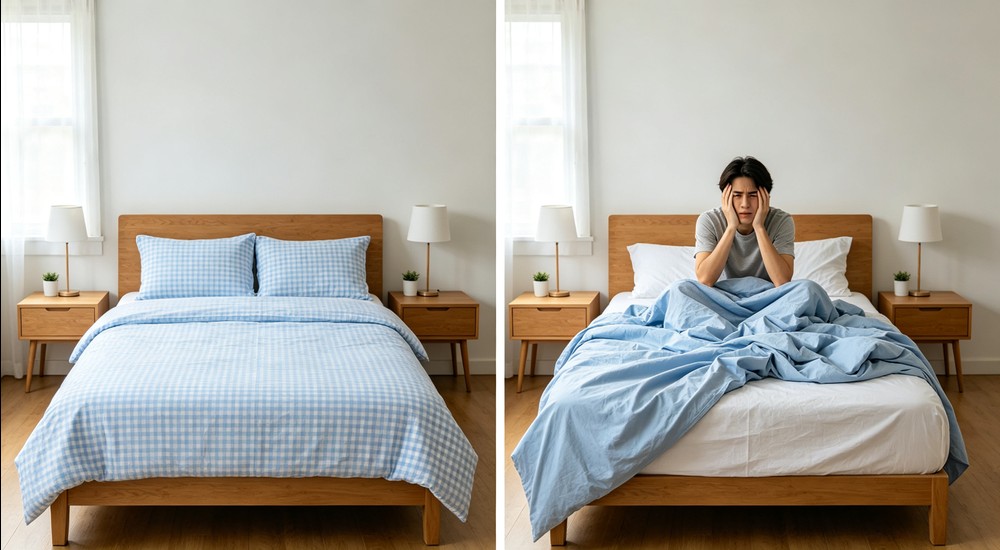
What happens when bedding set size is wrong?
• Sheets too small: cannot tuck, slip off during sleep, complaints from end users
• Duvet cover too large: insert shifts, bunches, uncomfortable sleep• Cost impact: return shipping, re-production, 4-8 week delay, possible contract penalty

Before placing a bulk order, fit a sample on the actual bed, duvet, and pillow. Check sheet tuck, duvet cover insertion, and pillowcase closure.
A sample fitting is the only reliable way to confirm the specified bedding set size works on your equipment.
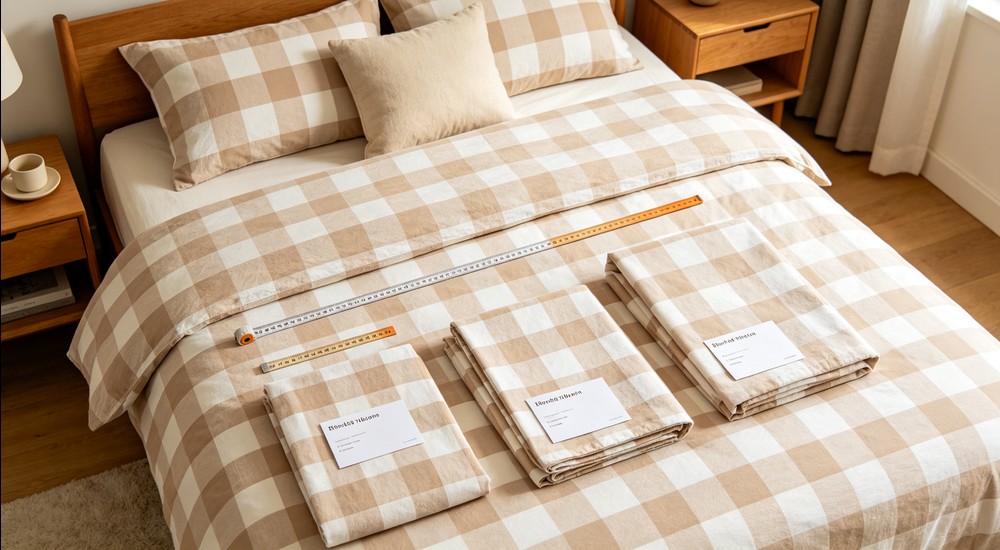
Component size schedule template:
• Sheet: type (flat/fitted) + finished width × length + pocket depth
• Duvet cover: finished width × length + closure type
• Pillowcase: finished width × length + opening style
• Fabric: GSM + composition + shrinkage result
• Tolerance: ±cm per component

Email template for size confirmation:
"Please confirm the following for each component:
1. Are these finished dimensions or cutting dimensions?
2. What is the tolerance per component?
3. What shrinkage rate should we expect after 3 washes at 60°C?
4. Can you provide a sample with measured dimensions before bulk?
5. How will each size group be labelled on the carton?"
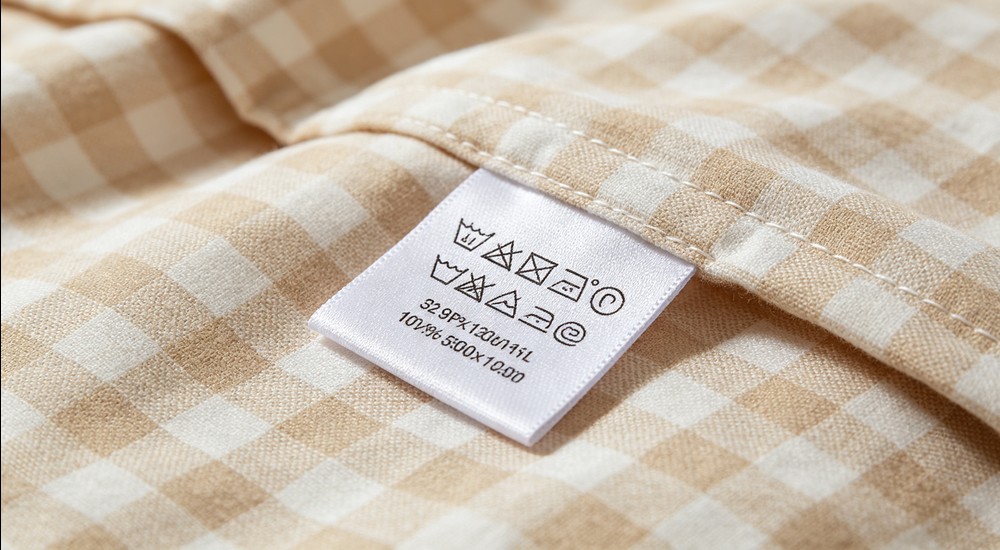
Request OEKO-TEX Standard 100 and ISO 9001 certificates tied to your exact fabric GSM and composition.
For textile dimensional stability, ask for a shrinkage test report and dimensional tolerance statement per component. A certificate for a different bedding set size or GSM does not cover your order.

Do not write "single size" for a bedding set size in a contract. Write each bedding set size component separately with finished dimensions, tolerance, and measurement method. This prevents bedding set size disputes when goods arrive.
Contract size clause template:
• Sheet: flat sheet, finished size 140×220 cm ±3 cm, measured after washing
• Duvet cover: finished size 140×200 cm ±3 cm, zipper closure
• Pillowcase: finished size 50×70 cm ±2 cm, envelope closure, flap 10 cm
• Fabric: 130 GSM poly-cotton, shrinkage ≤3% after 3 washes at 60°C
• All dimensions refer to finished size, not cutting size

When ordering multiple bedding set sizes, require each size group in a separate carton. The carton label should list the exact dimensions for sheet, duvet cover, and pillowcase — not just "single size". This prevents distribution errors at the destination.
For mixed bed-type orders, ask the supplier to confirm carton dimensions and weight per size group. If you also need help choosing fabric components, see our component matching guide for a detailed breakdown. This helps with logistics planning and ensures the correct bedding set size reaches the correct bed zone.

Once the sizing specification is locked and packaging is verified, the real test begins at scale. Buyers sourcing for institutions should evaluate how the bedding set size performs across dozens or hundreds of identical beds, where even a two-centimetre deviation becomes visible across an entire dormitory or shelter floor.

Beyond individual fitting checks, buyers should visualise the end-use environment. Large-scale accommodation settings such as emergency shelters, school dormitories, and temporary housing facilities place consistent sizing demands on every unit. The bedding set size must perform identically across hundreds of beds, not just one sample.
Checkpoint 1 — Bed surface dimensions. Record width, length, and mattress thickness separately. Do not write "single bed" as a specification.
Checkpoint 2 — Duvet insert dimensions. Measure the actual insert, not the bed. A 100 cm bed may use a 140 cm or 160 cm duvet.
Checkpoint 3 — Pillow dimensions. Include width, length, and loft (thickness). Envelope closures need extra flap length.
Checkpoint 4 — Sheet style decision. Flat sheet for mixed or thin mattresses; fitted sheet only for uniform mattress depth.
Checkpoint 5 — Shrinkage allowance. Cotton 3-5%, poly-cotton 1-3%, polyester 0-1%. Add margin if no test result available.
Checkpoint 6 — Finished vs cutting size. Confirm which measurement the supplier quotes. Cutting size produces a finished product 3-5 cm smaller.
Checkpoint 7 — Tolerance per component. Ask for ±cm tolerance statement for sheet, duvet cover, and pillowcase separately.
No. The sheet depends on bed dimensions, but the duvet cover depends on the duvet insert and the pillowcase depends on the pillow insert. All three must be measured separately to produce an accurate bedding set size specification.
The bedding set size for the sheet component depends on these bed dimensions. A flat sheet should be 30-50 cm wider and 40-60 cm longer than the mattress surface, allowing fabric to tuck under on all sides. Thicker mattresses need more extra fabric.
Fitted sheets need accurate mattress depth. If the pocket is too shallow, the sheet slips off the corners even when length and width are correct. Always include depth in the specification.
No. The duvet insert determines the duvet cover size. A single bed may use a 140×200 cm or 160×210 cm duvet, depending on climate.
Always measure the insert directly. Use those dimensions for the bedding set size specification.
Not always. Pillow loft (thickness) and opening style affect fit. An envelope pillowcase needs extra flap length; a zipper closure matches more closely. Measure pillow thickness as well.
Order 3-5 cm extra on each dimension as a safety margin. Or require the supplier to provide a textile shrinkage test result with the sample before bulk production.
Finished size is the dimension after sewing and hemming; cutting size is the fabric dimension before sewing. A supplier quoting cutting size will produce a finished product 3-5 cm smaller. Always confirm which bedding set size measurement the supplier uses.
Recheck dimensions whenever the bed type, duvet insert, or pillow insert changes. Also recheck after fabric composition changes, as different fabrics shrink differently. A bedding set size approved for cotton may not work for poly-cotton.
Ask them to convert to finished size before you approve. Cutting size is always 3-5 cm larger per dimension because fabric is lost during sewing and hemming. If they refuse to convert, deduct 4 cm from each dimension yourself and verify with a sample.

When every component is measured, tested, and verified, the bedding set size becomes a reliable specification rather than a guess. The result is fewer returns, faster fitting, and consistent quality across every bed in your facility.

Have your bed, duvet and pillow dimensions ready?
 |

|
Дружні посилання :
Авторське право © Custom Disaster - Relief Bedding: Tents, Sleeping Bags, Blankets Всі права захищені
професійна команда для обслуговування !