Категорії
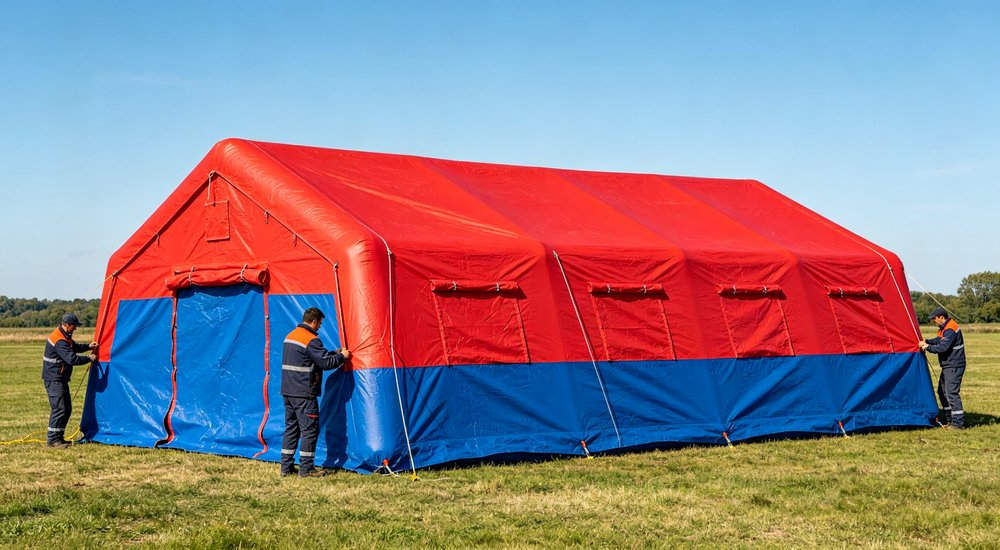
With 20 years of experience in emergency shelter manufacturing, Buyers often compare tent dimensions and price first. A better starting point is the mission. Define when the shelter must open, how long it stays, who erects it, how often it moves, what happens inside. This price comparison includes CE certified factory direct pricing for both types.
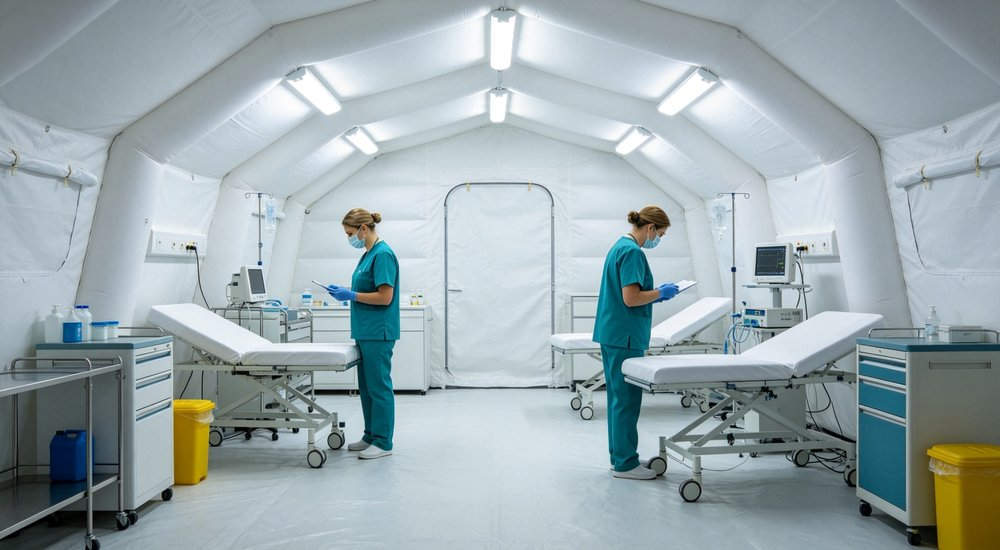
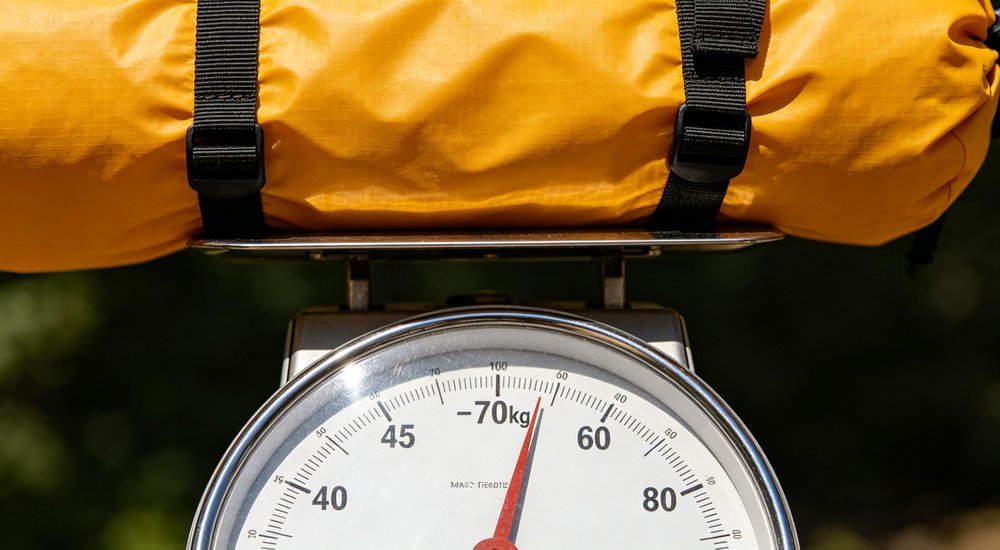
A 20m² inflatable tent weighs 60-90kg and erects in 15-30 minutes with 2-3 people. A comparable frame tent weighs 120-180kg and needs 45-90 minutes with 3-4 people.
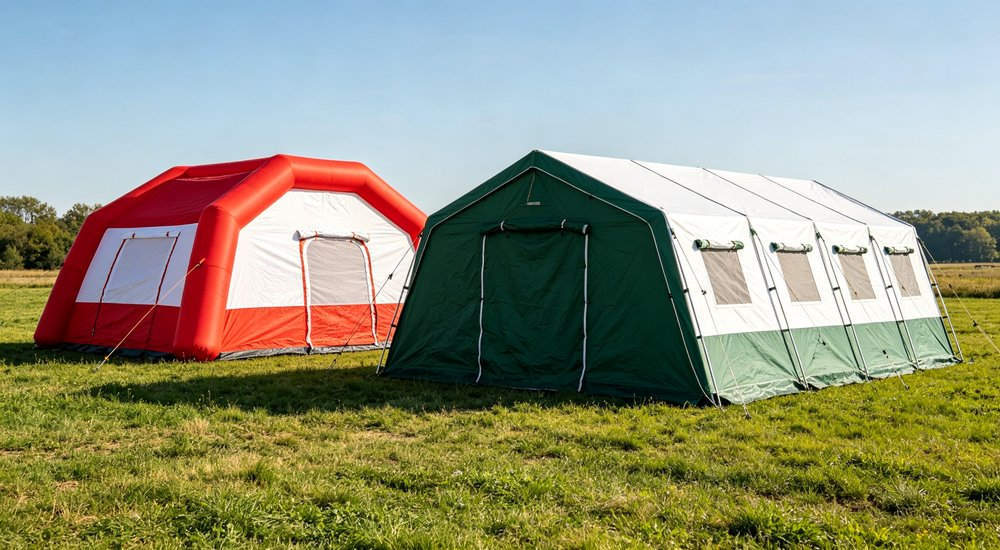
Short answer: Inflatable tents fit rapid opening, specialist functions, frequent relocation. Frame tents fit stable accommodation, storage, longer camp use. Large projects often use both: inflatable opens urgent functional areas, frame builds the stable camp layer. Prices: frame $600-$2,500, inflatable $800-$5,000+.
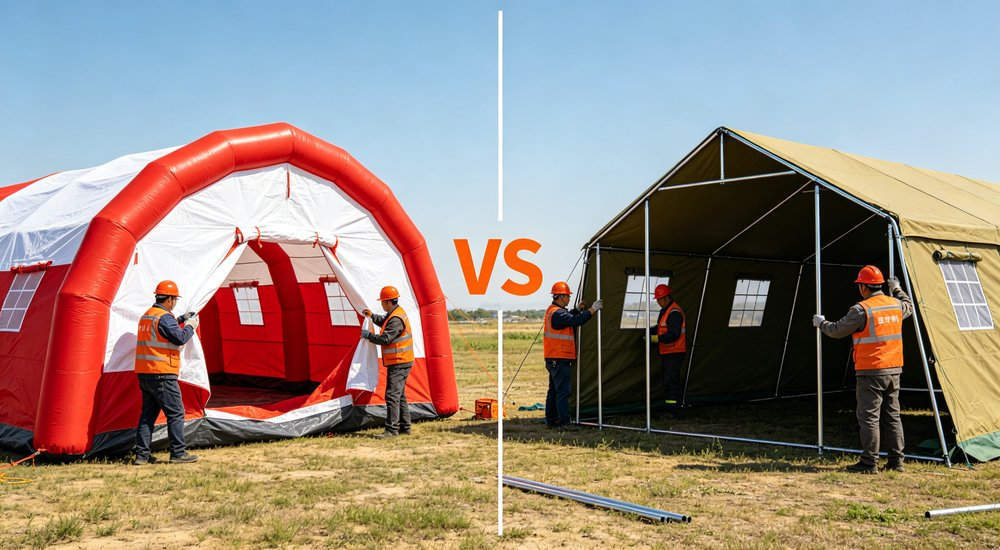
Inflatable tent: 10-30 minutes with 2-4 people (using electric pump). Frame tent: 30-90 minutes with 4-6 people. For frequent deployments, inflatable saves significant labor. For long-term static installations (3+ months), frame tents may be more economical despite longer setup.
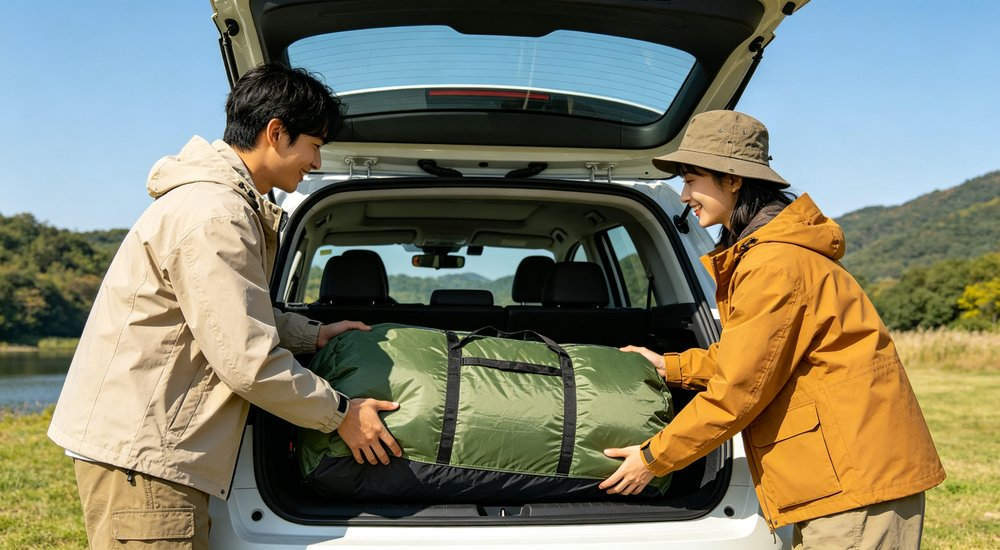
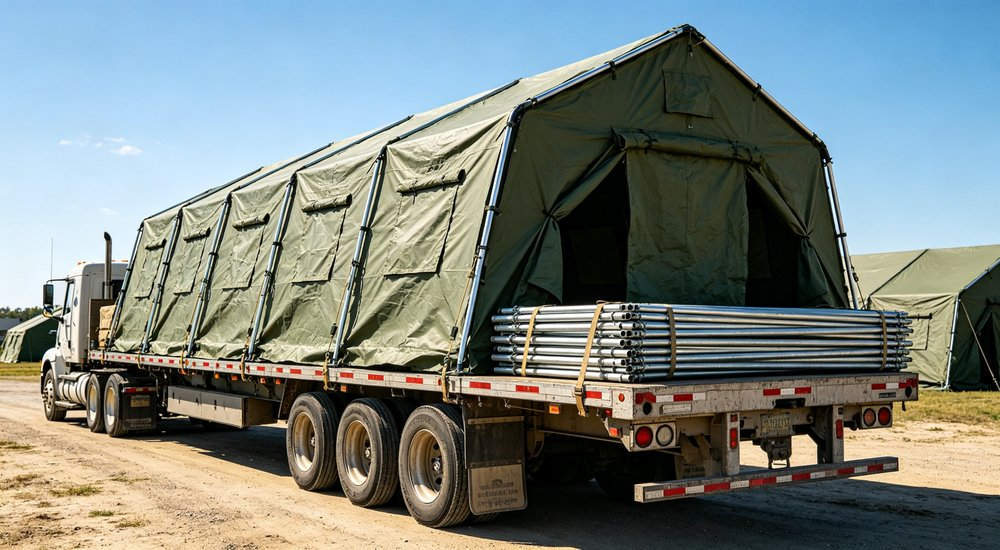
Inflatable 30m²: packs to 1.5-2.5 m³, weighs 80-150 kg. Frame 30m²: packs to 3-5 m³, weighs 150-250 kg (poles are heavy and bulky). Inflatable tents are easier to transport by van or helicopter. Frame tents require more storage space and larger vehicles.
Frame tents generally handle sustained wind better (80-100 km/h) due to rigid structure. Inflatable tents handle 60-80 km/h with proper anchoring. For snow load, frame tents support 15-25 kg/m² vs 10-15 kg/m² for inflatable. In extreme weather, both require additional anchoring and regular snow removal.
Frame tent lifespan: 8-12 years (poles last longer than fabric). Inflatable tent lifespan: 5-8 years (air beams degrade over time). Frame repair: replace individual poles or fabric panels (moderate difficulty). Inflatable repair: patch air beams with PVC kit (easy in field, but leaks can be hard to locate).
Quick comparison: setup time comparison favors inflatable (10-30 min vs 30-90 min). Wind performance favors frame (80-100 vs 60-80 km/h). Transport cost is lower for inflatable due to smaller packed volume. Crew needed: 2-4 for inflatable vs 4-6 for frame. Long term use (6+ months) favors frame tents.
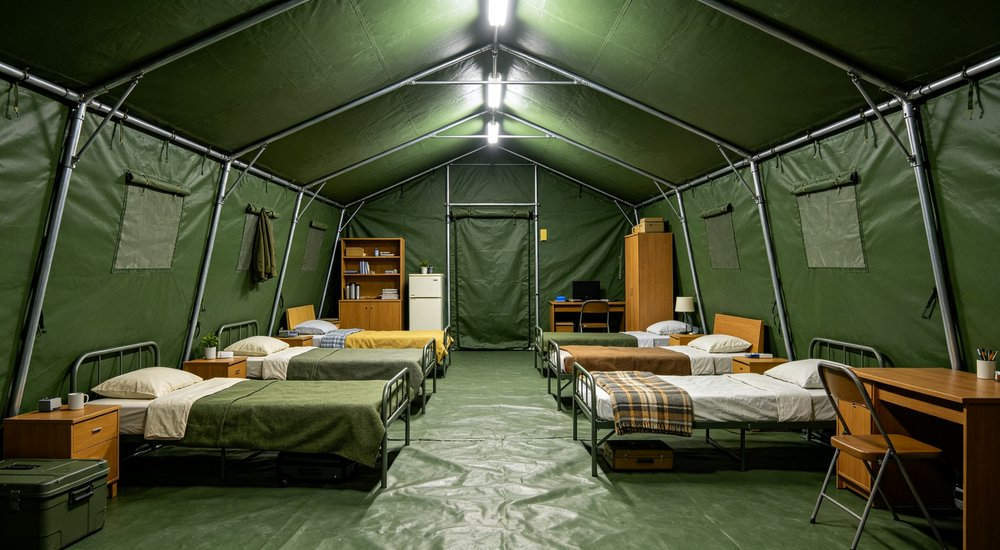
Also known as emergency shelter buying guide, this configuration is popular among international aid organizations and government procurement agencies.
Additional search terms buyers use: frame tent setup time, frame tent cost comparison, disaster relief tent comparison. These terms help match your specific operational requirements with the right product configuration.
Buyers often search for these related terms: inflatable vs pole tent, emergency tent comparison. Understanding these variations helps you match the right product to your operational requirements.
|
Factor |
Inflatable Tent |
Frame Tent |
|
Setup time (20m²) |
15-30 min, 2-3 people |
45-90 min, 3-4 people |
|
Weight (20m²) |
60-90kg |
120-180kg |
|
Packed volume |
0.8-1.5m³ |
1.5-2.5m³ |
|
Price range |
$800-$5,000+ |
$600-$2,500 |
|
Lifespan |
5-8 years |
8-12 years |
|
Wind resistance |
Beaufort 7 (guy lines 8) |
Beaufort 8-10 |
|
Interior poles |
None (clear space) |
Yes (obstruct layout) |
|
Power needed |
Pump (electric/manual) |
None |
|
Best for |
Rapid response, medical, decon |
Long-term camp, storage, accommodation |
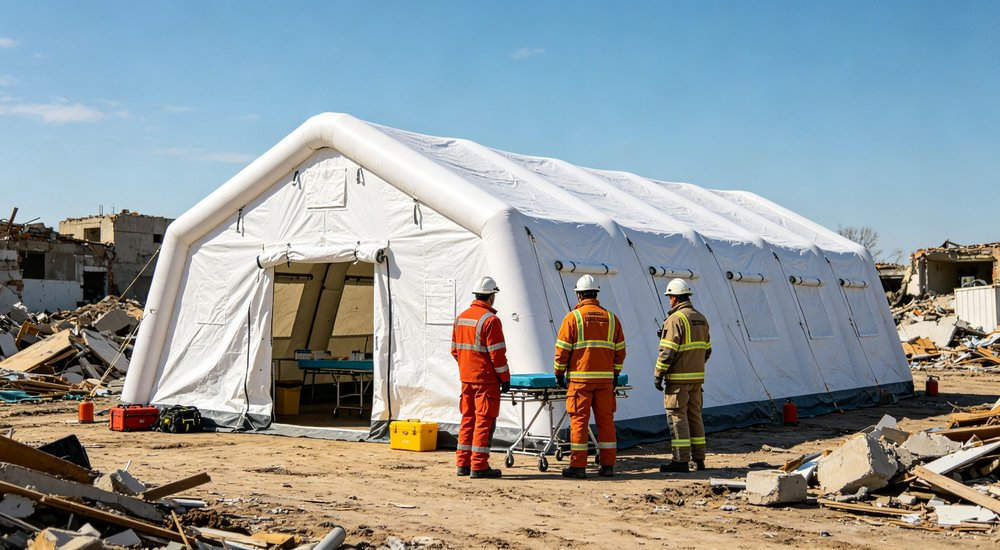
Medical triage, isolation support, public decontamination, field command, forward-team shelter prioritize rapid opening and task-specific interfaces. Inflatable systems configure around air beams, pumps, valves, partitions, cable ports, drainage, connecting corridors. See why air-beam design matters.
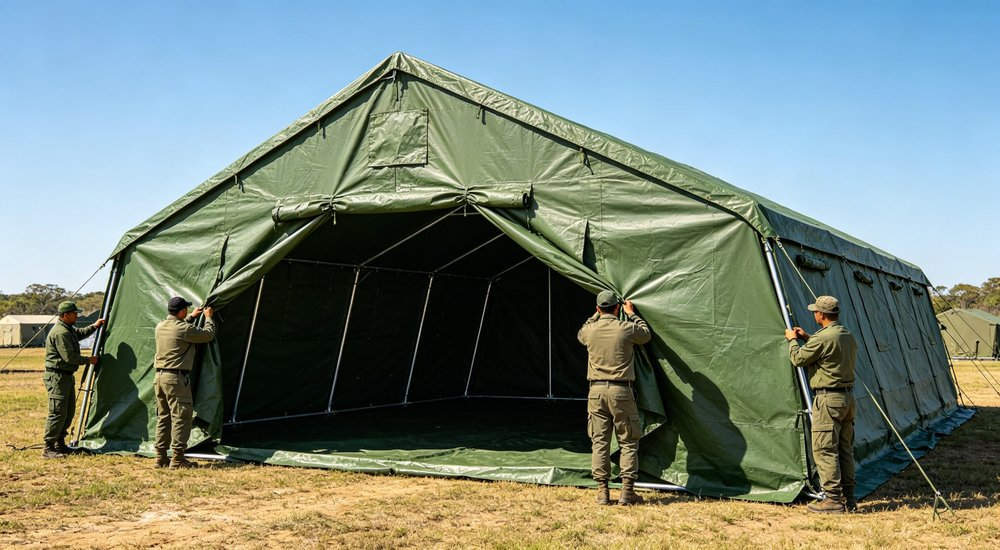
Family accommodation, prolonged duty, relief storage, stable medical/command space weight interior organization and longer service. Rigid frame often better for these stable-space duties.
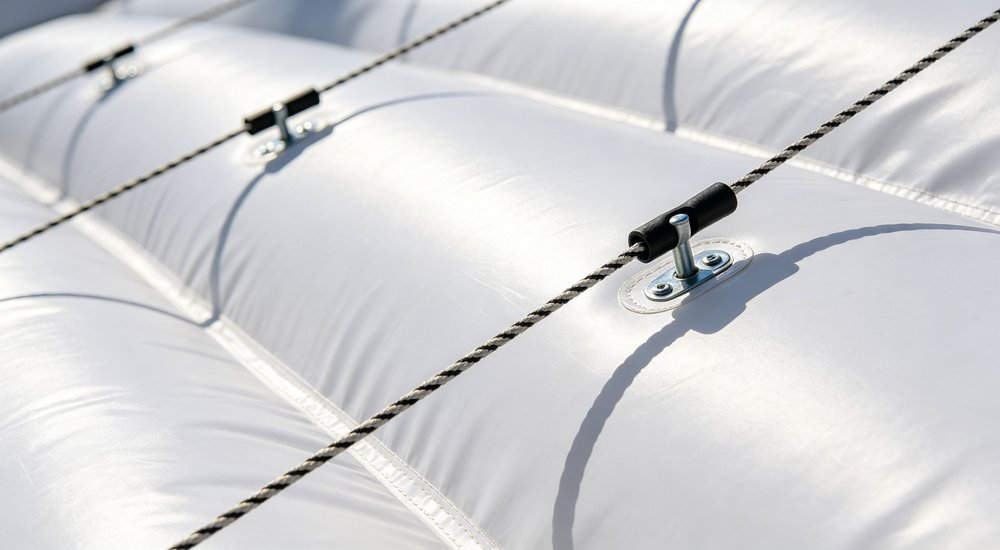
"We need relief tents" is not enough. State whether the job is accommodation, medical support, decontamination, command, storage, or mobile shelter.
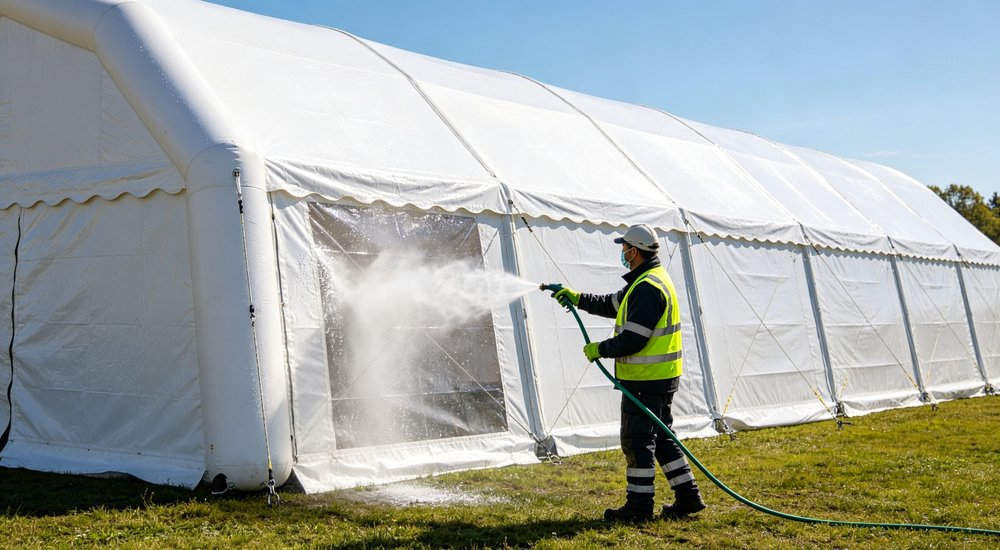
First response: teams need medical, command, temporary shelter fast. Handling, opening, relocation time directly affect when the site works.
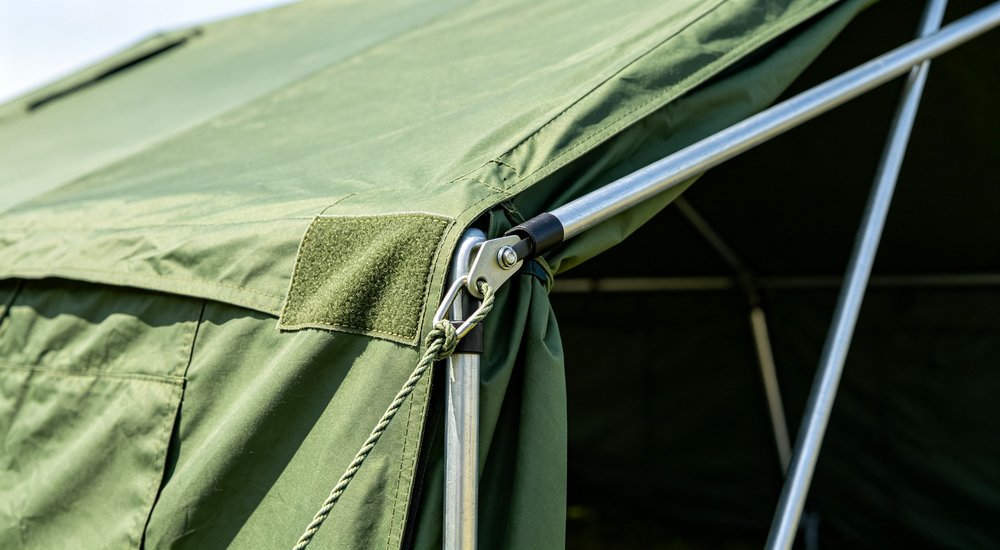
Concentrated settlement: shelters stay days or longer. Accommodation, storage, main work areas need stable internal arrangement — often favors frame tents.
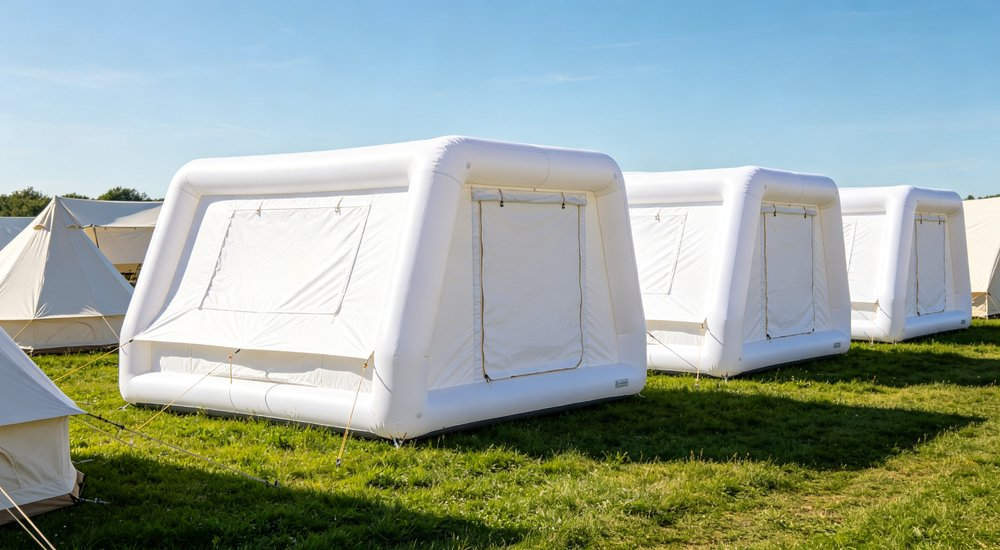
Practical combination: inflatable first for medical, decon, mobile command. Frame then carries accommodation, storage, longer-term work areas.
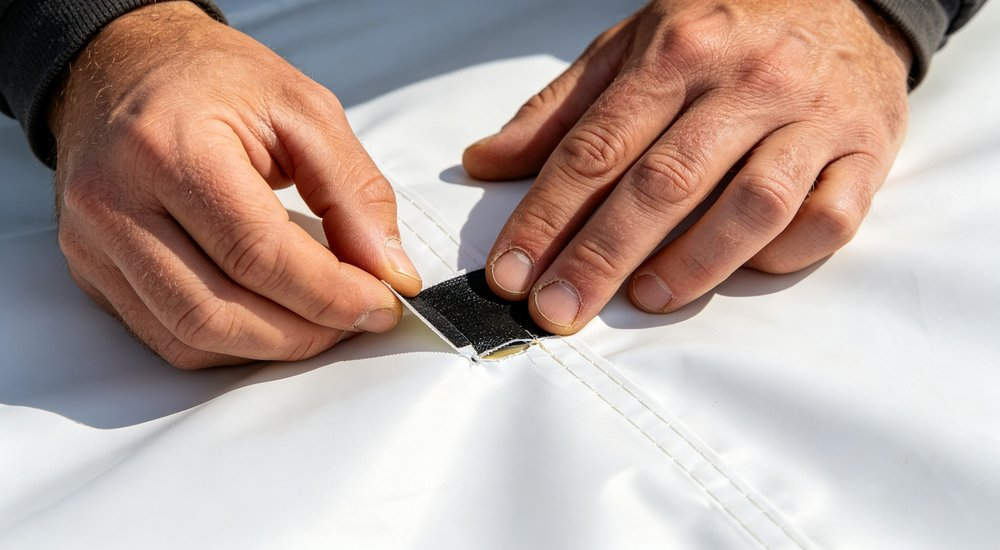
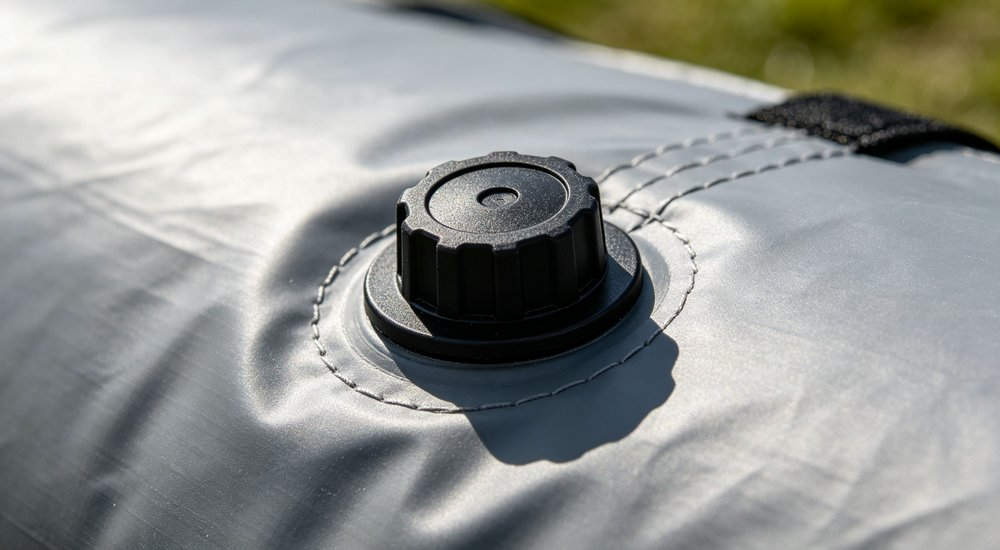
Inflatable: air columns/beams for support. Compare air-column material (1000D airtight PVC, 0.7-0.9mm), chamber design, valves, pressure relief (0.3-0.8 bar), pumps, power, pressure retention (72 hours), field repair.
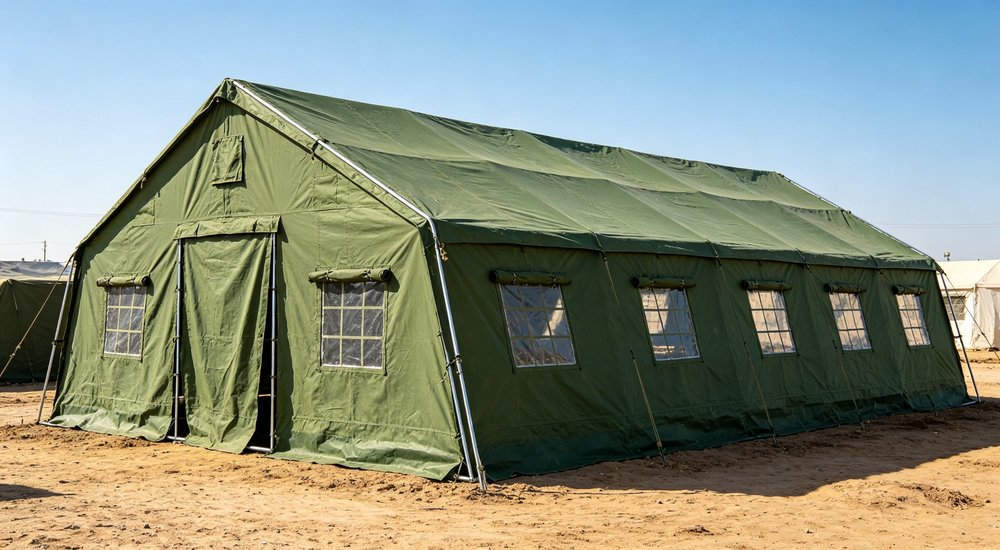
Frame: steel/aluminum poles + fabric. Compare pole diameter (25-40mm), wall thickness, joints, fabric weight (280-420g/m²), connection hardware, replacement parts.
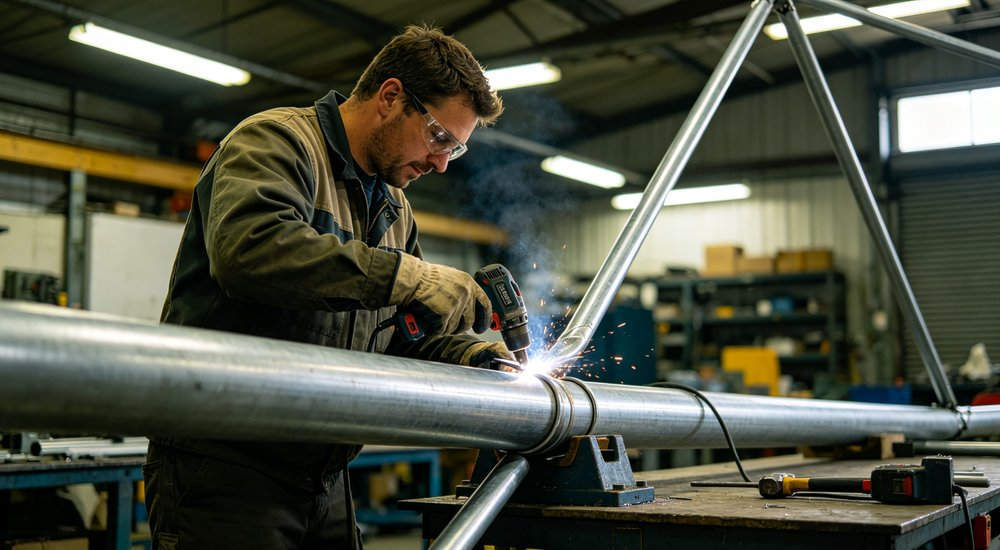
Inflatable has no internal poles — clear floor space. Frame has poles that obstruct layout but provide rigid structure without power.
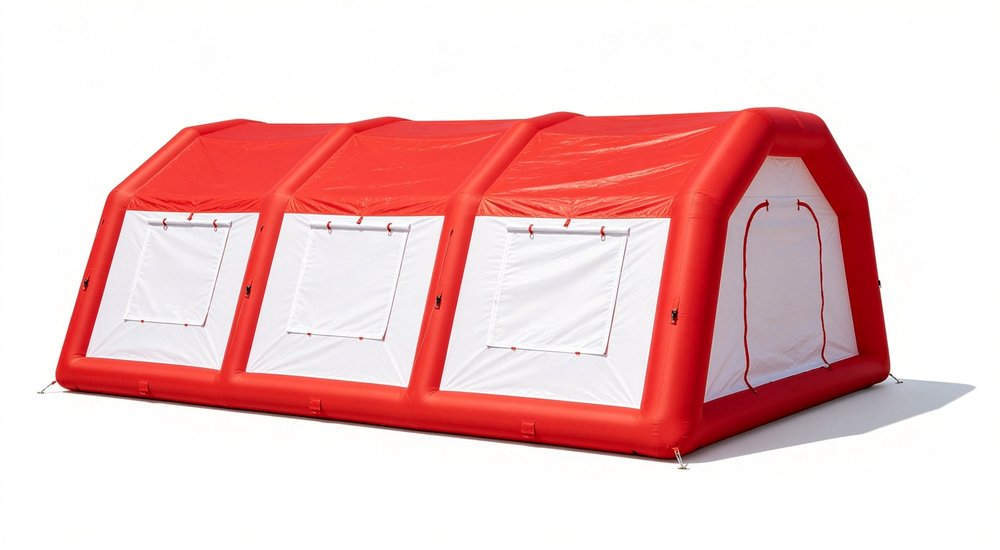
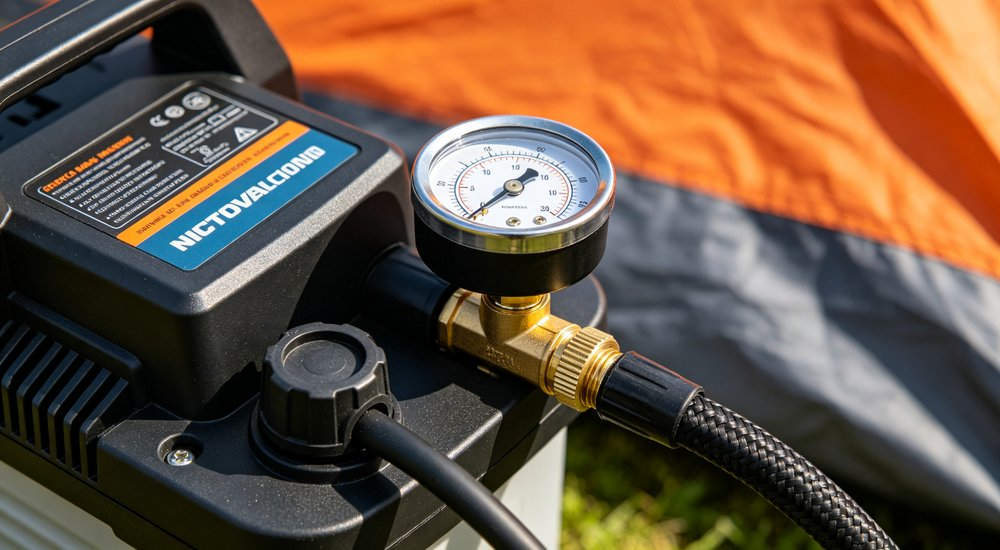
Inflatable: 2-3 trained people, pump (electric 600W-1900W or manual), flat ground. Can deploy on grass, sand, concrete with proper anchoring.
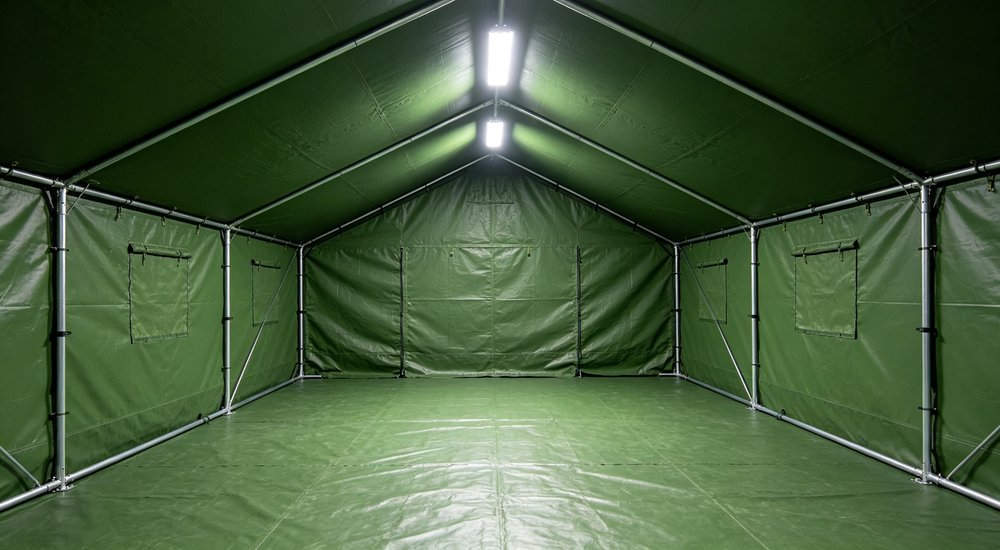
Frame: 3-4 people, no power, but more physical effort. Poles must be assembled, connected, raised. Hard ground may need different anchors.
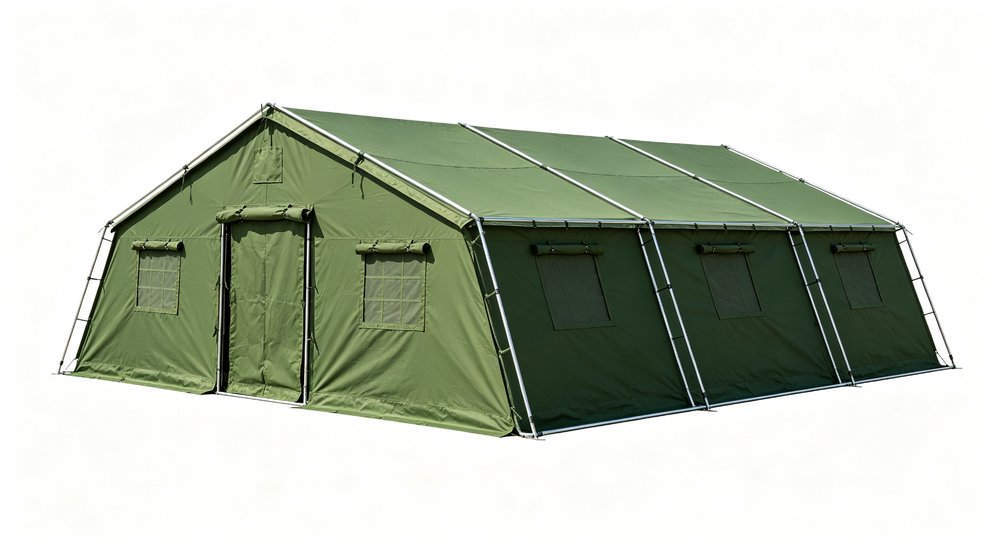
Consider training level. Inflatable requires understanding of pressure and valves. Frame requires understanding of pole assembly sequence.
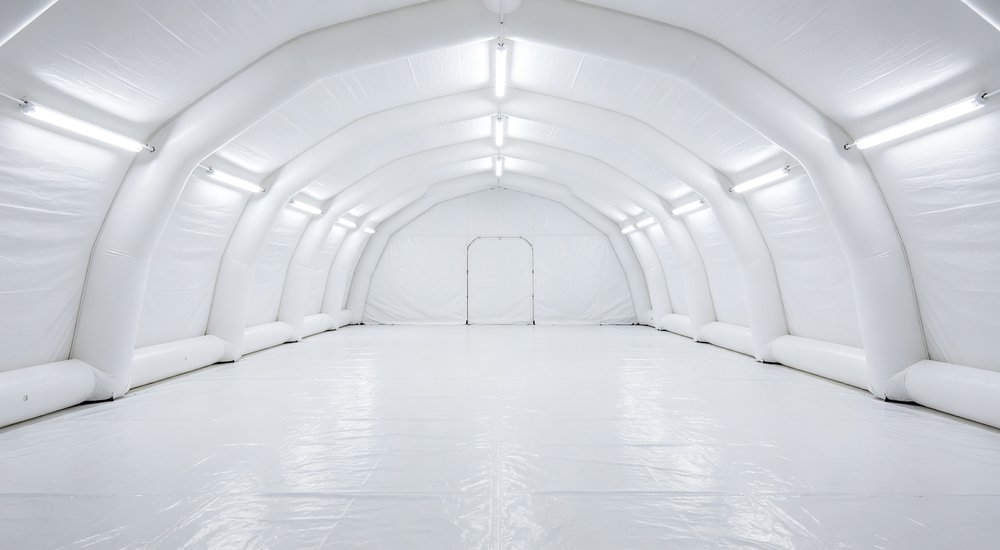
Inflatable: no internal poles = flexible layout, easy partitions, connecting corridors. Compare with modular systems. Air beams are on walls/roof — clear working space.
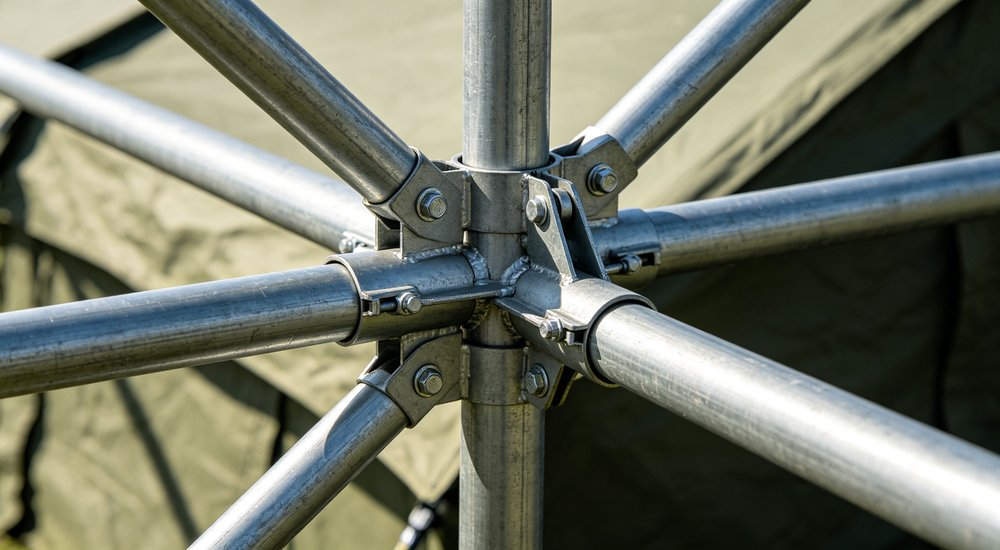
Frame: internal poles constrain furniture placement, door positions, partition installation. But rigid frame supports hanging equipment, lighting, medical devices more easily.
Draw the interior with actual equipment. Check clearances, door swings, cable routes, egress paths for both types.
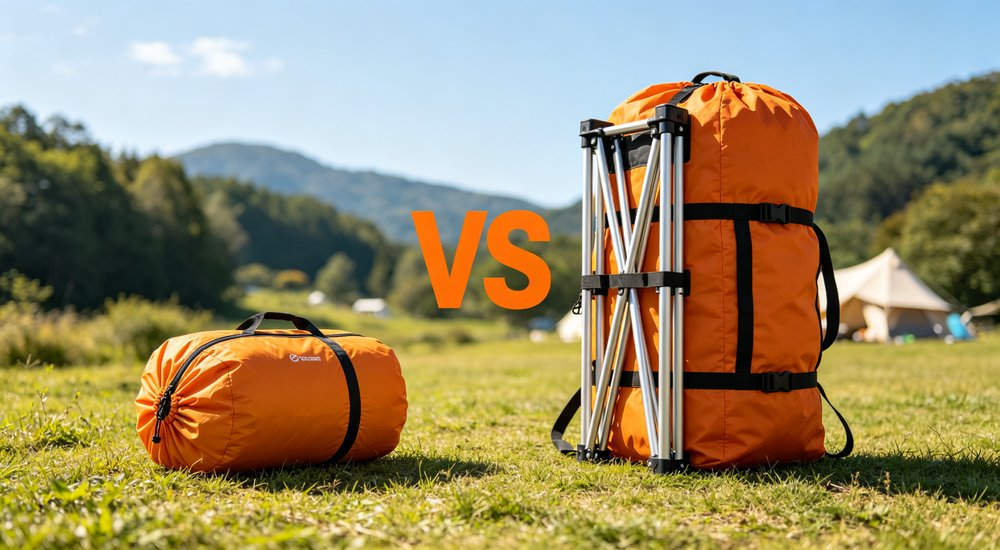
Inflatable: packs to 0.8-1.5m³, 60-90kg for 20m². Fits in small vehicles. Quick to move between sites.
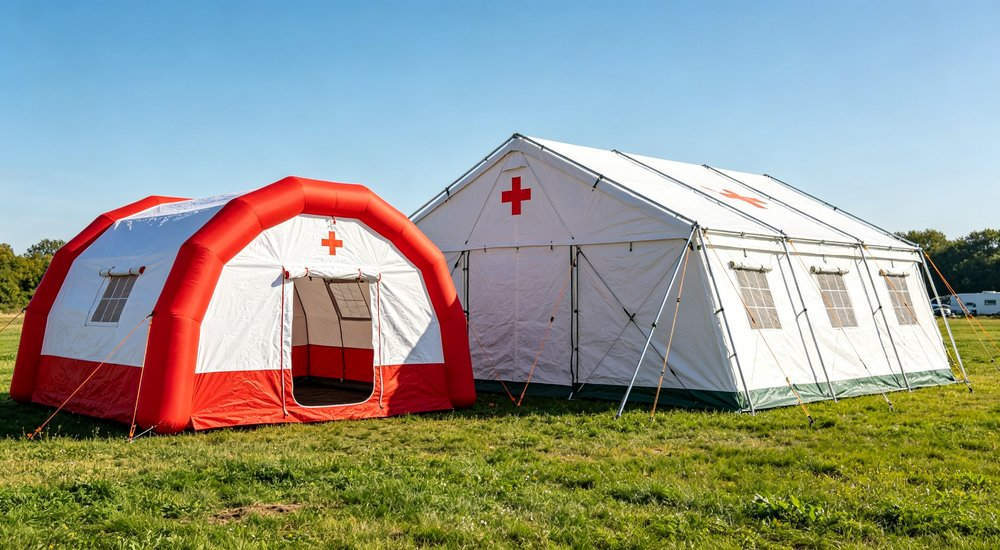
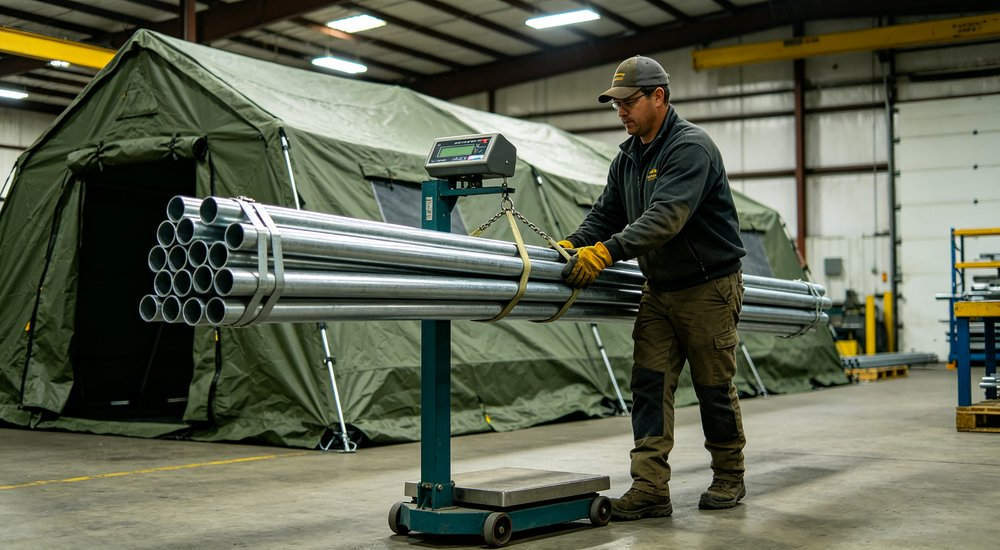
Frame: poles + fabric = 1.5-2.5m³, 120-180kg. Needs larger transport. More time to disassemble and repack.
If the shelter moves frequently (mobile clinic, rotating decon site), inflatable saves significant labor. If it stays for months, frame's lower cost wins.
Inflatable: check pressure daily, inspect valves, patch air beams with repair kit (PVC glue + patches). Pump maintenance. Fabric cleaning. Replacement: individual air beam sections.
Frame: inspect poles for bends/corrosion, check joints, replace worn elastic cord. Fabric patches. Replacement: individual pole sections or connectors.
Inflatable failure mode: air leak = gradual deflation. Frame failure mode: pole break = sudden collapse risk. Both need spare parts on site.
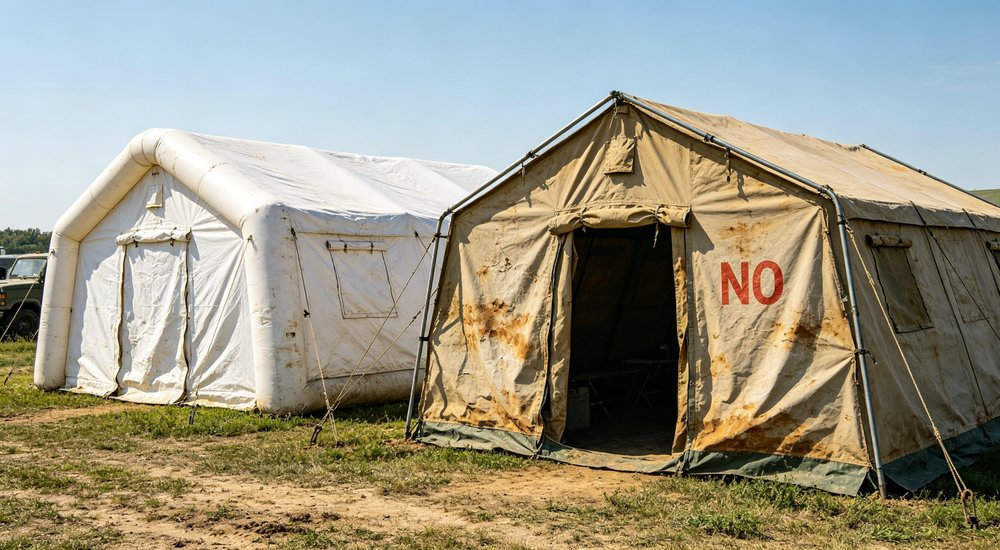
Both need proper anchoring. Inflatable: ground stakes, guy lines, weight bags for hard surfaces. Frame: heavier stakes, more anchor points, can use heavier weights.
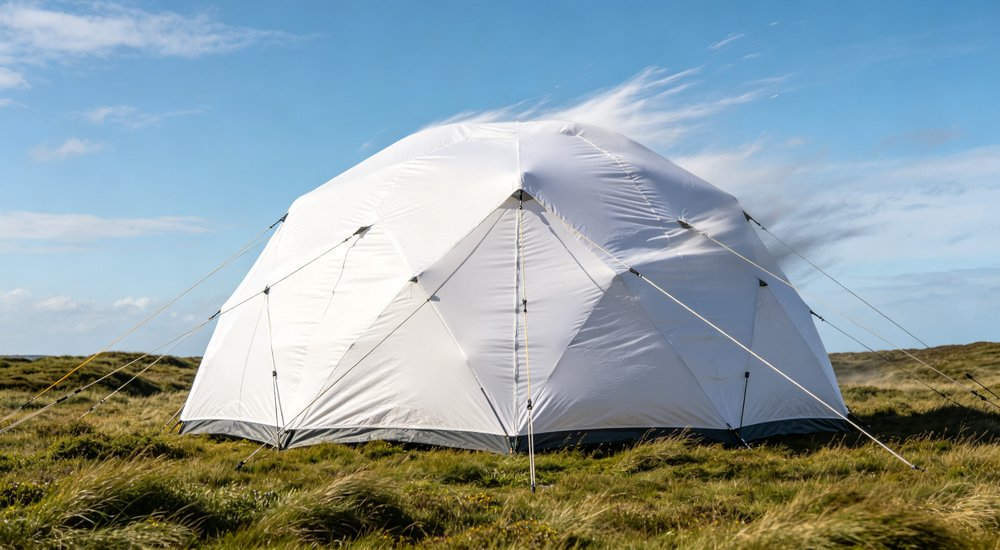
Wind: frame generally handles higher sustained wind (Beaufort 8-10 vs 7 for inflatable). But inflatable with proper guy lines can reach Beaufort 8.
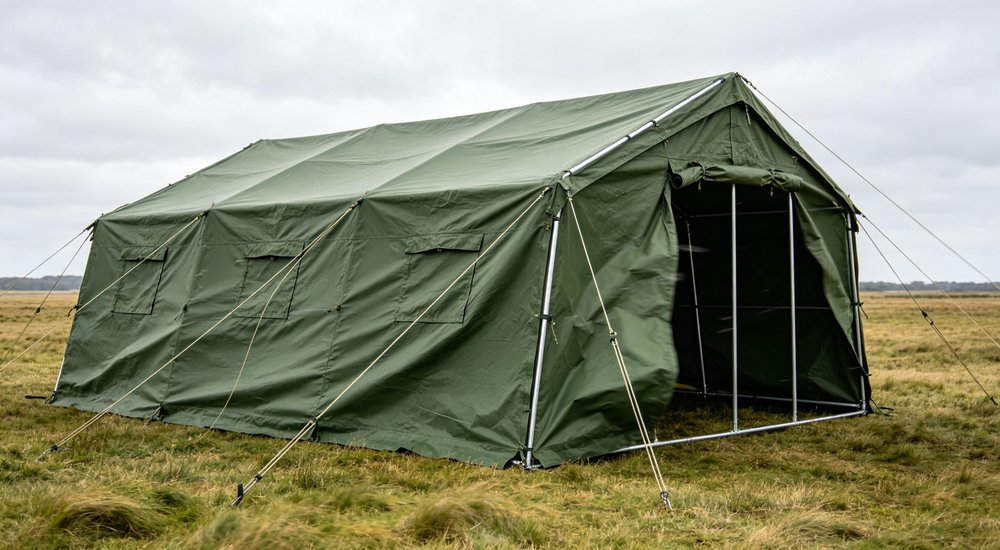
Ground: inflatable works on more surfaces because no pole footings. Frame needs firm ground for pole bases. Sloped ground affects both.
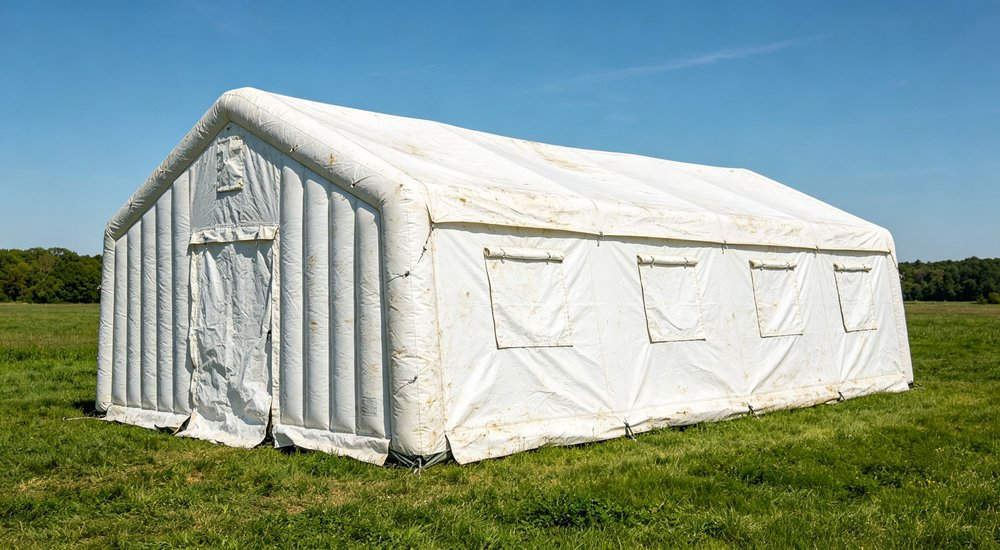
Inflatable kit: tent body, air beams, pump (electric + manual backup), repair kit, stakes, guy lines, carry bag, instructions, floor (optional), liner (optional). Confirm full accessory scope.
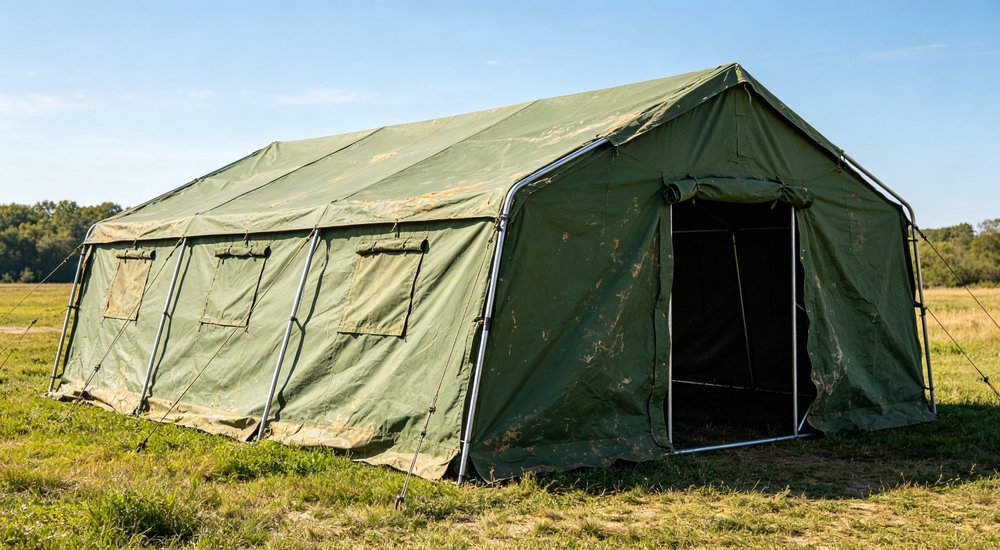
Frame kit: tent body, poles, connectors, stakes, guy lines, carry bags, instructions, floor (optional).
MOQ & lead time: Standard: MOQ 1-10 units, 15-30 days. Custom: MOQ 50+, 30-45 days. Certifications: CE, ISO 9001, CPAI-84, NFPA 701.
Choose inflatable when: rapid deployment critical (medical, decon, command), small team, frequent relocation, need clear interior space, specialist interfaces (HVAC, plumbing, electrical).
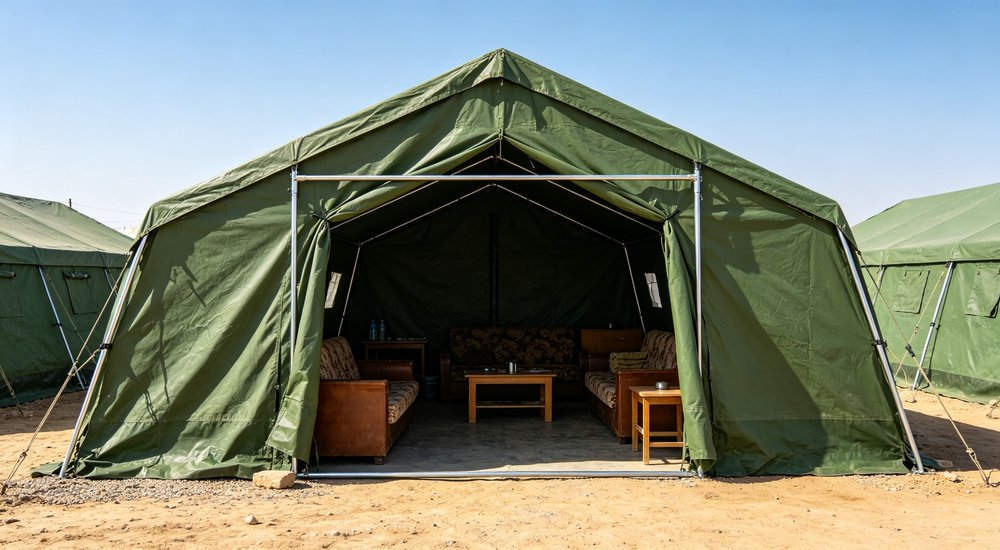
Choose frame when: long-term deployment (months+), large accommodation camp, storage, limited budget, no power available, high wind exposure, minimal training.
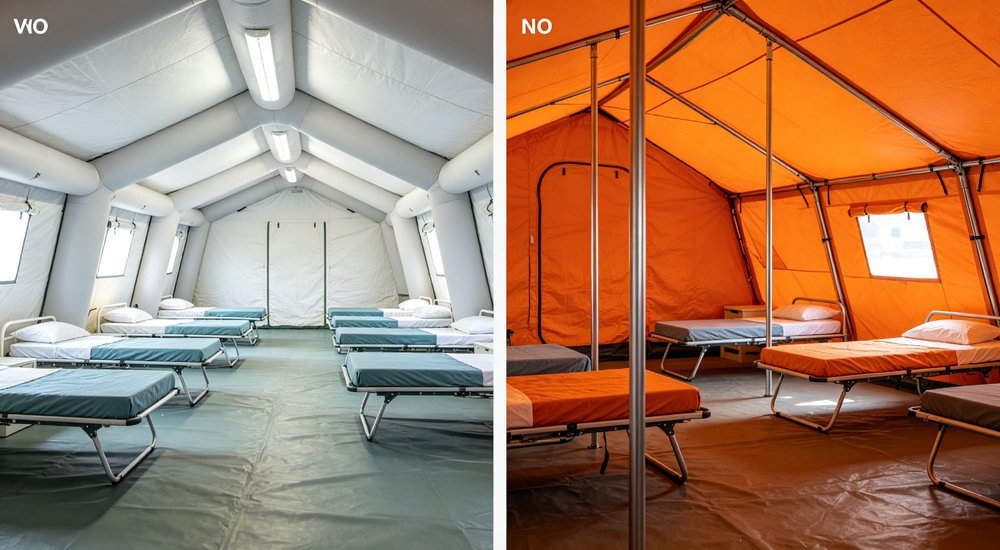
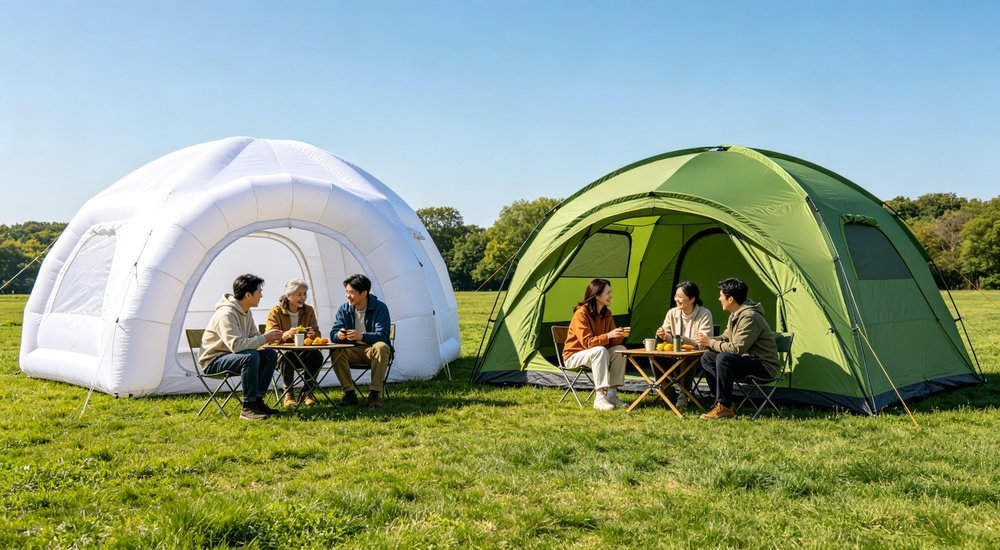
Choose both when: large disaster response — inflatable for immediate functional areas, frame for sustained camp infrastructure.
Send: mission type, deployment duration, team size, site conditions, wind/weather, interior equipment, transport constraints, quantity, custom requirements, certifications needed.
Request: complete kit list, setup instructions, packed dimensions/weight, spare parts list, maintenance guide, certification documents, sample or video of deployment.
Practical test: If your team is 2 people and needs to deploy in under 30 minutes — frame tent is the wrong choice, no matter how cheap. If the shelter stays 6 months and budget is tight — inflatable's premium is hard to justify.
Start with the emergency tent guide.
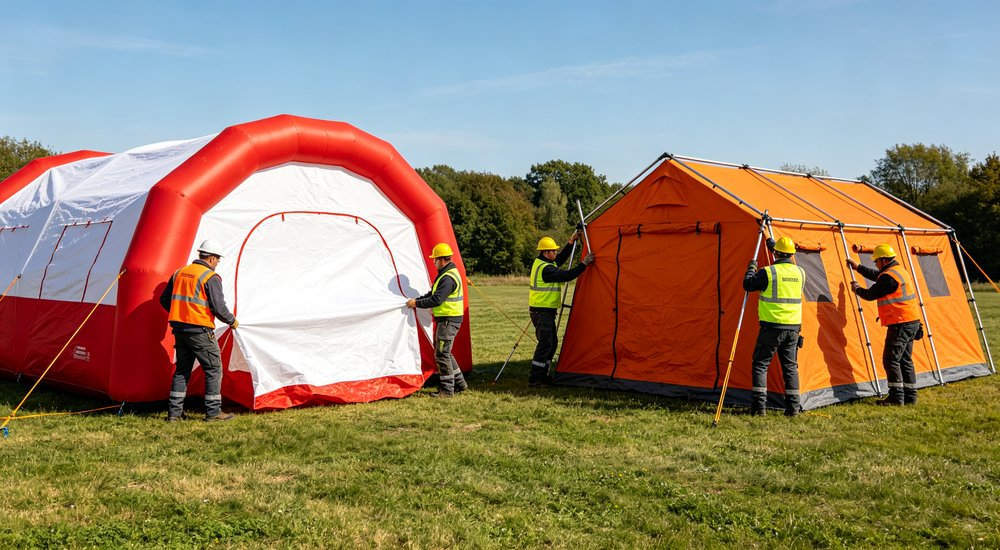
See decontamination applications. including disaster relief procurement, humanitarian aid purchasing, emergency shelter comparison, military tent selection, and aid agency procurement decisions.
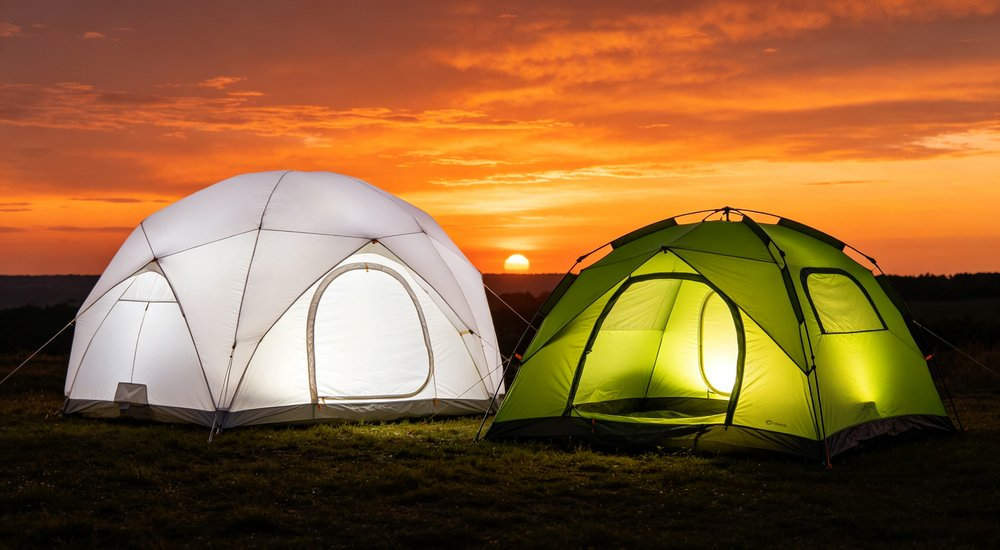
which is better inflatable or frame tent: Which is better inflatable or frame tent depends on deployment frequency and transport. inflatable tent pros and cons: Inflatable tent pros and cons center on speed versus repairability. frame tent pros and cons: Frame tent pros and cons favor long-term static installations. inflatable tent durability: Inflatable tent durability depends on beam material and pressure management. inflatable tent cost: Inflatable tent cost is higher upfront but lower per deployment.
Frame tents are generally cheaper for basic accommodation ($600-$2,500). Inflatable tents cost more upfront ($800-$5,000+) but deploy 3-5x faster with fewer staff. Consider total cost: labor savings may offset the higher purchase price for frequent deployments.
5-8 years with proper maintenance (regular pressure checks, valve inspection, fabric cleaning, prompt repairs). Frame tents last 8-12 years but are heavier and slower to deploy. Lifespan depends on usage frequency, weather exposure, and maintenance quality.
Yes, with proper anchoring. Standard inflatable tents withstand Beaufort 7 (32-38 mph), and with guy lines can reach Beaufort 8 (39-46 mph). Frame tents generally handle Beaufort 8-10. Always follow manufacturer anchoring instructions and take down in extreme weather.
No. Once inflated to operating pressure (0.3-0.8 bar), quality inflatable tents hold pressure for 72+ hours without continuous pumping. A pump is only needed for initial inflation and top-ups. Manual pumps serve as backup when power is unavailable.

Inflatable tents are preferred for medical use because: no internal poles = clear space for beds/equipment, fast deployment, easy cleaning of smooth air beams, configurable partitions and HVAC interfaces. Frame tents can work for long-term medical facilities but are less flexible.
Yes. Many inflatable tent systems support connecting corridors and modular expansion. This is a major advantage for field hospitals and multi-zone facilities. Frame tents are harder to connect because pole structures interfere. See modular shelter systems.
Inflatable: 2-3 trained people for most sizes. Frame: 3-4 people, more physical effort. Larger tents of either type need more people. Always confirm with the specific model's deployment instructions.
Yes. Most come with a repair kit (PVC glue, patches, valve tools). Small punctures can be fixed in 10-15 minutes. Larger damage may need section replacement. Frame tents also have field-repairable components (pole sections, connectors).
Standard models: MOQ 1-10 units, 15-30 days. Custom colors/logos/systems: MOQ 50+, 30-45 days. Confirm with the supplier before ordering.
For large or ongoing disaster response operations, yes. Inflatable tents handle immediate functional needs (medical, decon, command). Frame tents provide sustained accommodation and storage. This hybrid approach is standard practice for major relief organizations.
 |

|
Дружні посилання :
Авторське право © Custom Disaster - Relief Bedding: Tents, Sleeping Bags, Blankets Всі права захищені
професійна команда для обслуговування !