Категорії
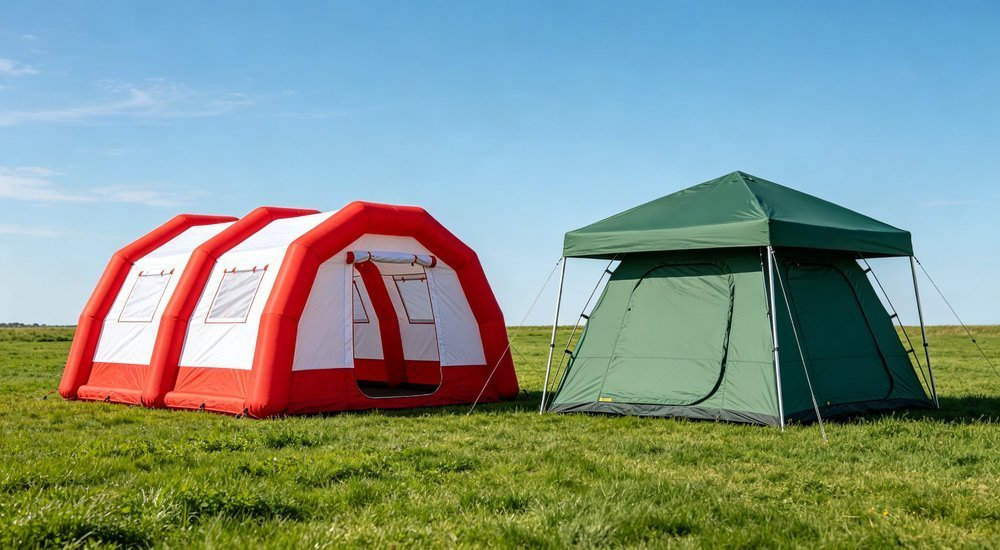
Choosing between an inflatable tent and a frame tent is one of the most common procurement decisions for emergency response organizations. Each structure offers distinct advantages in setup speed, durability, cost, and field performance.
Table of Contents
This comparison table outlines key specifications for inflatable tent vs frame tent. Procurement teams use this data to evaluate pole tent comparison options, compare pricing structures, and verify compliance with international standards. As an experienced shelter structure comparison, we ensure every parameter meets field deployment requirements for emergency response operations worldwide. This information is particularly valuable for government procurement teams, NGO aid organizations, and international relief agencies evaluating bulk supply contracts.
This comparison table provides essential specifications for procurement evaluation. Buyers use this data to compare configurations, assess material quality, and calculate total project costs. As a professional tent manufacturer with extensive export experience, we ensure all parameters meet international standards and field deployment requirements. This information is particularly valuable for government procurement teams, NGO aid organizations, and international relief agencies evaluating bulk supply contracts.
| Why this comparison matters | Repair convenience |
| Core structural difference | Scenario recommendation |
| Setup speed comparison | Procurement decision tree |
| Weight and transport | Mixed deployment plan |
| Cost and total ownership | Common selection mistakes |
| Lifespan and maintenance | Total price range |
| Wind and rain performance | Choose for your project |
| Cold and extreme environment | Frequently Asked Questions |
Inflatable tents deploy in minutes using air pumps, while frame tents require assembly of metal poles. This fundamental difference impacts response time, labor requirements, and operational efficiency.
The structural design creates trade-offs in portability, durability, and interior space. Understanding these differences is critical for making the right procurement decision.
Inflatable shelters offer unobstructed interior space with no support poles, while frame tents provide superior long-term durability and wind resistance in fixed installations.
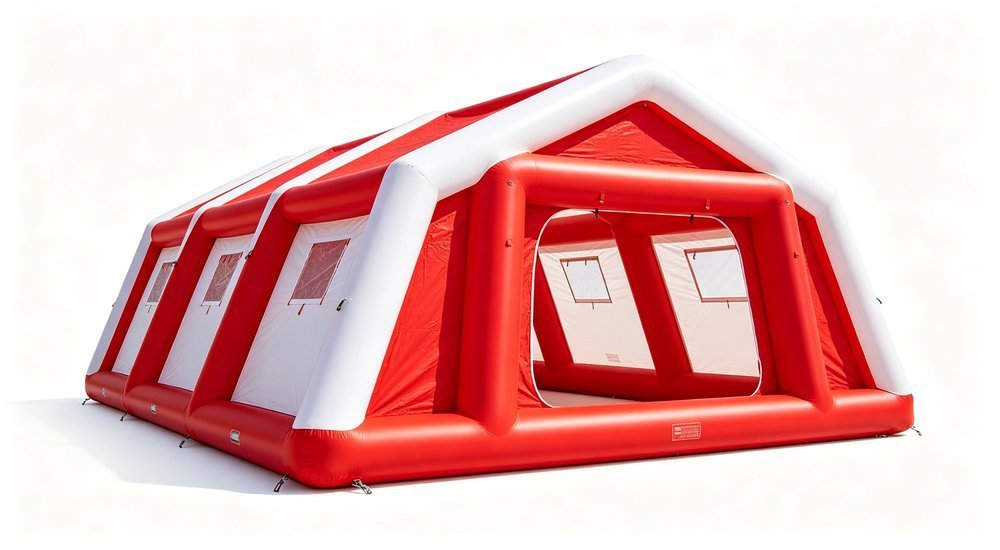
Both tent types serve vital roles in disaster relief, medical operations, and humanitarian missions. The optimal choice depends on your specific deployment scenario, budget, and maintenance capacity.
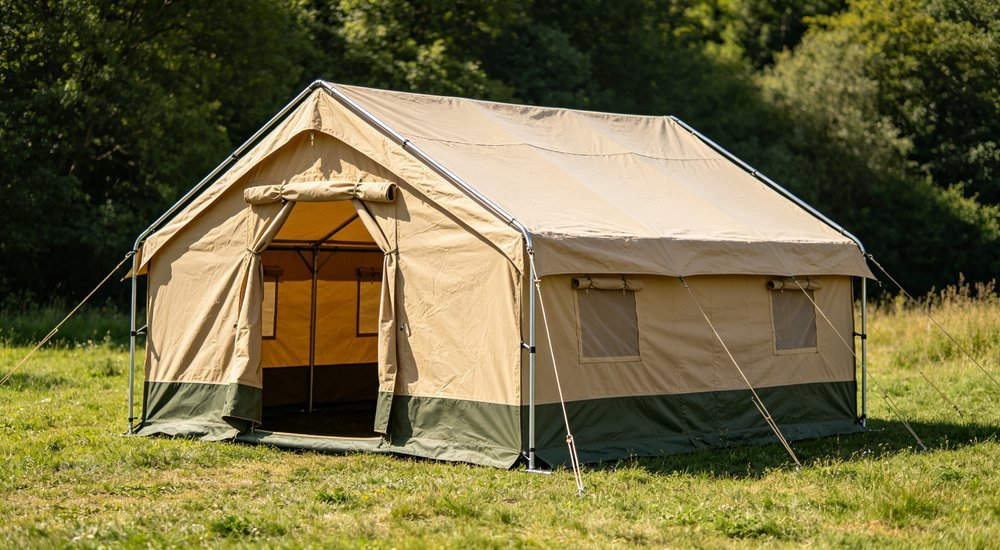
When evaluating inflatable tent vs frame tent options for your organization, the question of which is better inflatable or frame tent depends on deployment frequency, duration, and environmental conditions. This air beam tent vs pole tent comparison covers inflatable tent setup time, frame tent lifespan expectations, and inflatable tent wind rating to support your disaster relief tent procurement decision.
Both inflatable shelter and frame shelter designs serve as emergency response tent solutions for humanitarian tent operations. A temporary shelter tent must balance rapid deployment with long-term durability, whether used as a refugee shelter tent or disaster response shelter for NGO relief tent programs.
When comparing inflatable tent vs frame tent options, buyers often ask which is better inflatable or frame tent. As an inflatable emergency tent manufacturer and steel frame relief tent supplier, we cover inflatable tent setup time, frame tent lifespan years, and inflatable tent wind rating in this disaster relief tent procurement guide. An inflatable shelter provides rapid deployment while a disaster relief tent balances speed with durability.
Most buyers start with a price quote and end with a price decision, but the cost of an emergency shelter is mostly decided before the quote arrives. The type you choose — air beam or steel frame — fixes your setup crew size, your power requirement, your packed weight, your cold-weather limit, your repair kit, and your spare-part plan. Change the type in year two and you do not just buy a new tent; you retrain the crew and rewrite the logistics plan.
We build both lines on the same floor, so we do not have a horse in this race. What we have seen, across hundreds of projects, is that the projects that choose on deployment data — frequency of moves, site power, temperature, hanging load — end up happy. The projects that choose on price-per-square-meter or on a sales pitch end up reordering within two seasons. This page is written to push you toward the data choice.
Read the comparison in order. The structural difference decides everything else, so start there, then move through setup, weight, cost, lifespan, wind, cold and repair. The tables at the end turn those dimensions into a recommendation for your specific deployment.
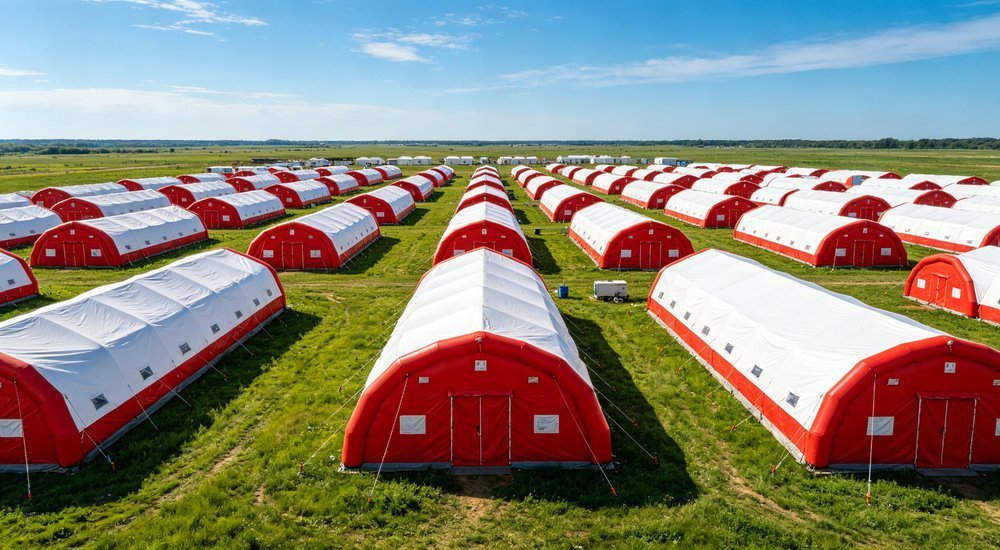
Inflatable tents use PVC coated polyester fabric with welded seams for air retention, while frame tents rely on a galvanized steel frame supporting waterproof tent fabric. The weather resistant tent design of inflatable models eliminates internal poles, creating unobstructed interior space that frame structures cannot match.
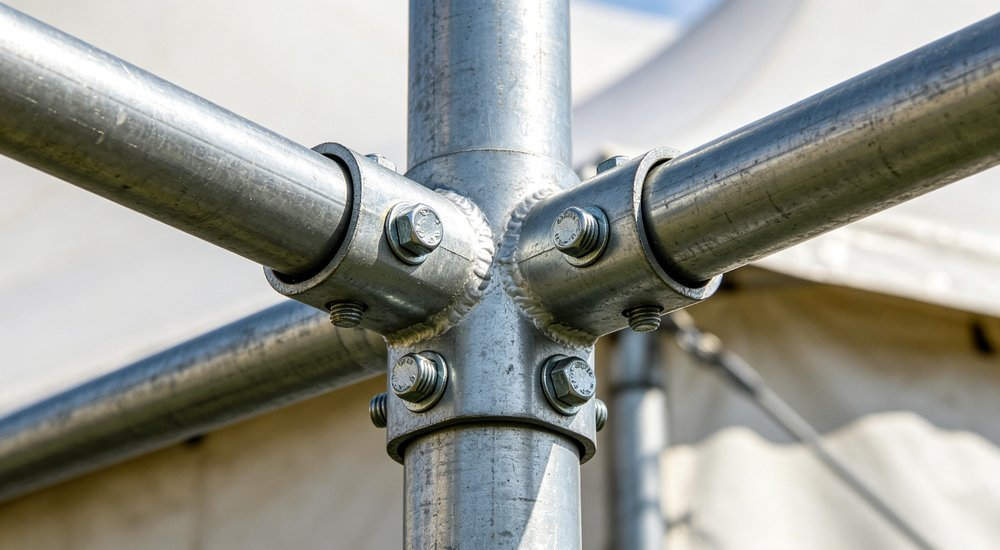
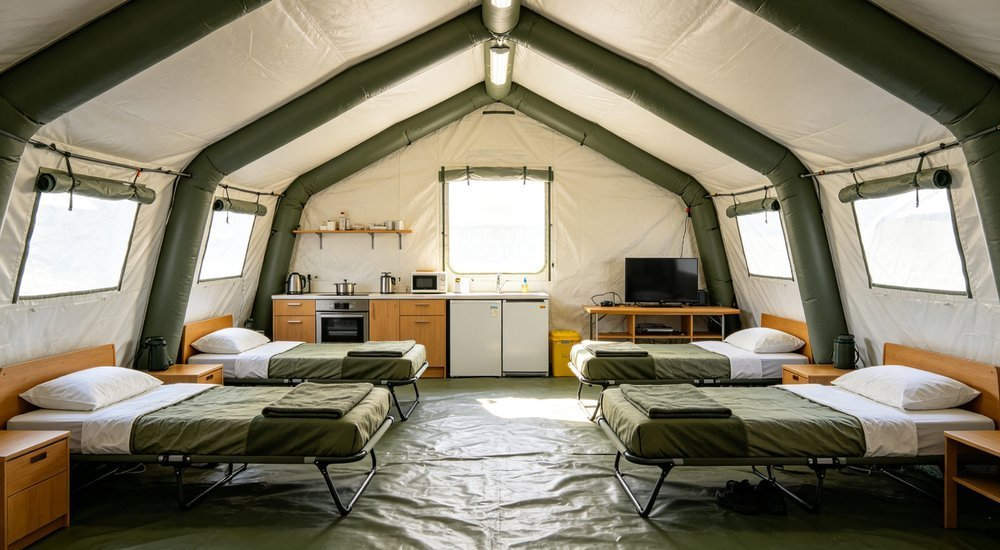
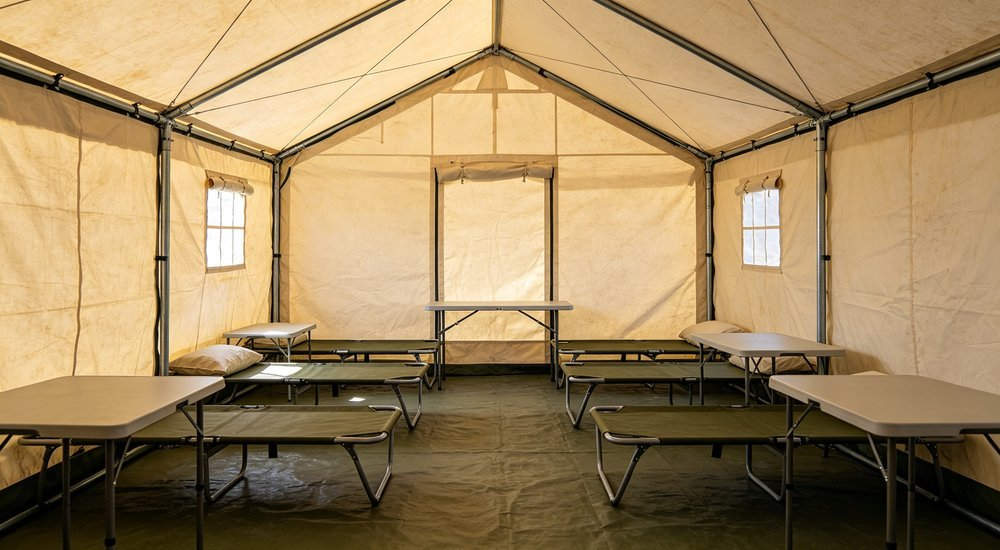
An inflatable air beam tent gets its shape from pressurized tubes of PVC-coated fabric. You lay the cover flat, connect the inflation tubes to a pump, and the tubes rise and hold the fabric open once pressure reaches the rated number. A steel frame tent gets its shape from rigid galvanized steel tubes that you connect by hand at corners and ribs, then slip the cover over the frame.
The structural difference has consequences that ripple through every later comparison. Air beams depend on pressure; frames depend on geometry. Air beams need a pump and a pressure gauge; frames need a hex key and a mallet. Air beams are light because fabric tubes replace metal; frames are heavy because steel is the structure. Air beams flex and self-recover in wind; frames bend or break if overloaded. These are not opinions, they are physics.
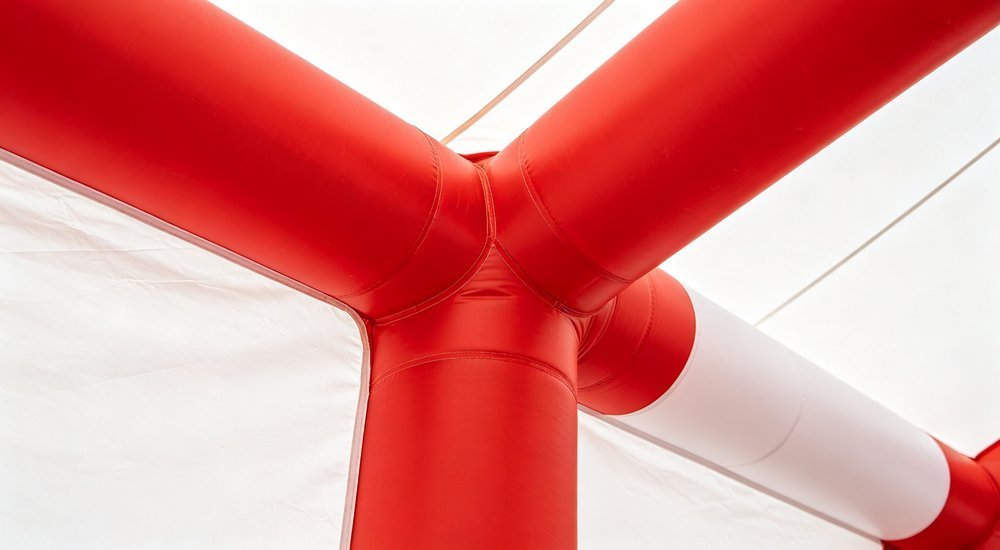
This table is the one to print. Read across any row and you see a trade-off, not a winner. The decision happens when you weight these rows by your project's actual conditions. As a leading tent wholesale,
Quick deploy tent capability is the primary advantage of inflatable designs. A rapid deployment tent can be operational in under 15 minutes with minimal training, making it ideal for emergency situations where time is critical. This portable shelter option requires fewer personnel and less equipment than traditional pole-based assembly.
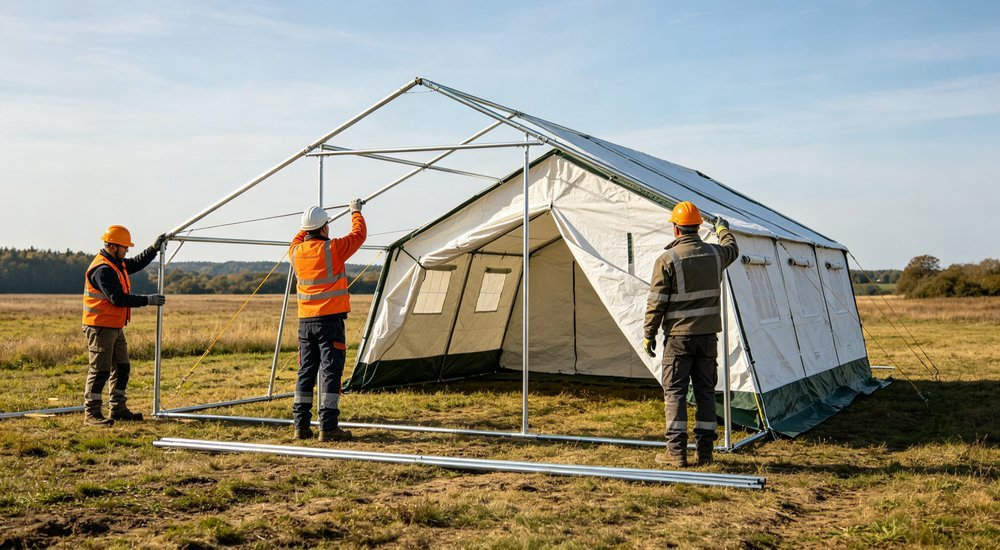
Setup is the dimension where inflatables win most decisively, and also where buyers most overstate the gap. A 20-30 m2 air beam unit, laid flat and pumped by two people, is up in 15-25 minutes. The same size steel frame needs three to four people to connect poles, slip the cover on, and stake out, and that takes 40-60 minutes. On paper the gap is 25-35 minutes.
In the field, the gap changes. An air beam that arrives at -15C needs the pump warmed up first. A crew that has never trained on the valve layout takes longer to find the inflation ports. A frame crew that has done the same unit five times gets faster each time; the air beam crew does not improve much, because the pump sets the speed. By the third deployment, an experienced frame crew closes much of the gap.
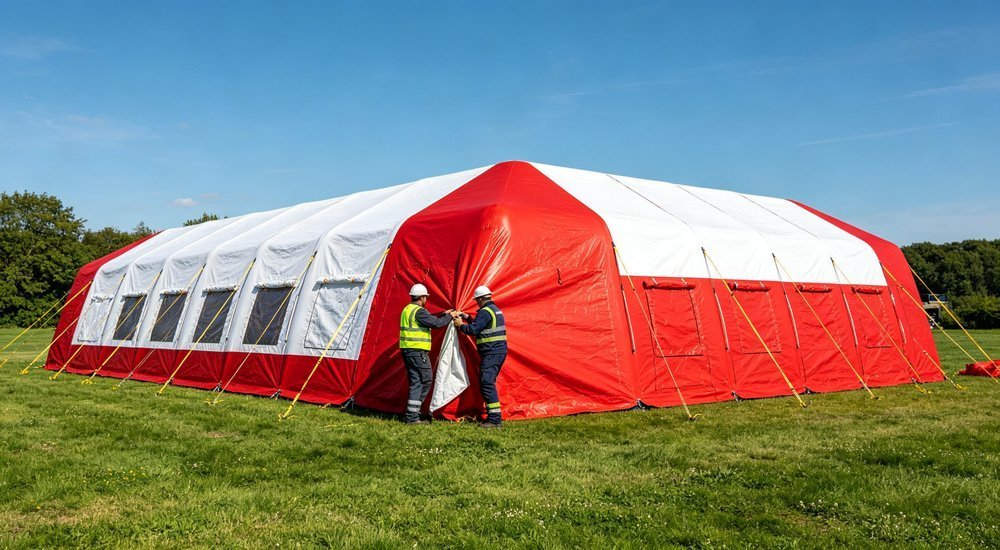
For larger blocks the math flips. A 40-60 m² command or medical building on a steel frame needs 4-6 people and 90 minutes. A comparable air beam needs 2-3 people and 30-40 minutes. At command-post size, the setup difference is real and worth paying for. At 20 m² family-shelter size, it is a nice-to-have rather than a mission driver.
Also count breakdown. Breaking down a frame tent is roughly as fast as setting it up. Deflating, folding and stowing an air beam is slower than people expect, because the tubes must be fully squeezed of air, folded tight, and zipped into the bag. Many first-time buyers underestimate pack-down time.
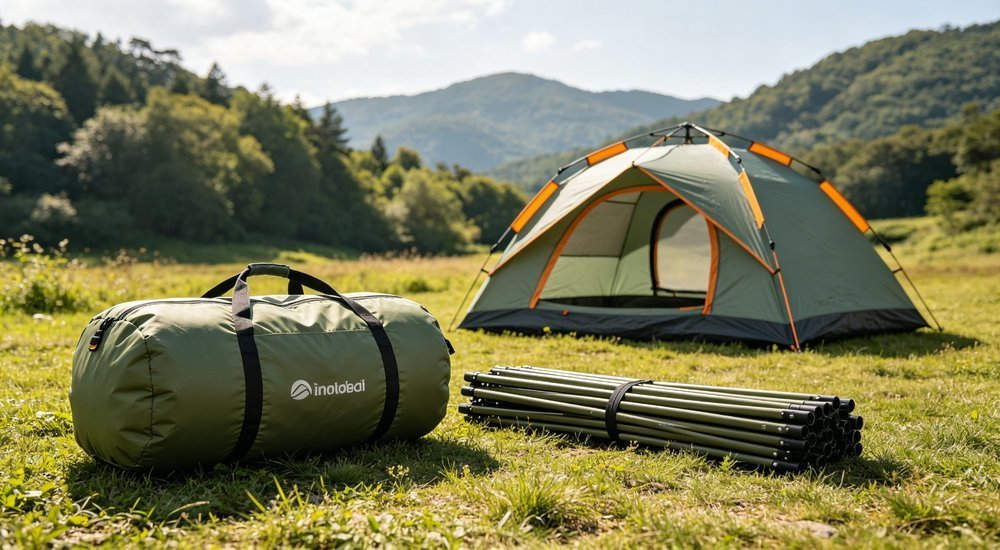
An inflatable tent is lighter. A 20-30 m2 air beam unit weighs 80-130 kg; the same-size steel frame weighs 140-200 kg. That matters for air freight, for helicopter insertion, and for hand-carrying over rough ground. If your team walks in with backpacks, the air beam is the only realistic option.
But packed shape matters as much as weight. Frame tents pack into long steel tubes 1.5-3 m long, which load by hand into a truck but are awkward for air cargo and do not fit small elevator shafts. Inflatables fold flat into soft bags under 1 m cube, which fit any vehicle and any cargo plane. For road transport to a fixed relief camp, the weight gap matters less than the container loading.
For a bulk relief procurement going by sea, the frame often wins on container count: dense steel bundles pack more sets into a 40ft box. For a rapid air-drop team, the inflatable wins on cube and weight.
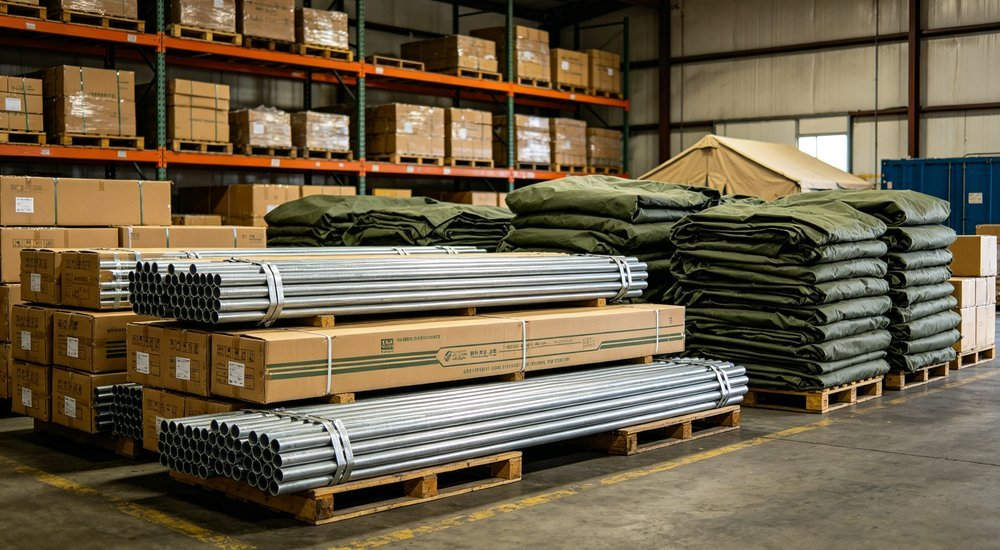
Upfront, the steel frame is cheaper. A 20-30 m2 frame shelter runs roughly $800-$1,800 FOB; a comparable air beam runs $1,200-$2,800. For a 100-unit relief camp, that is a real difference. But the fair comparison runs over the life of the program, not the purchase order.
An air beam needs a pump per deployment team, spare valves, a pressure gauge, and replacement beams at year 5-7. A frame needs spare poles, bolts and stakes — cheap consumables — and the frame itself lasts 8-12 years. Over ten years, a frame program buys the shelter once and replaces covers; an air beam program replaces the beam system once or twice. That is why the TCO below favors the frame for long service programs, and only favors the inflatable when rapid setup genuinely changes the mission outcome.
e all parameters meet international quality standards.
This comparison table provides essential specifications for procurement evaluation. Buyers use this data to compare configurations, assess material quality, and calculate total project costs. As a professional tent manufacturer with extensive export experience, we ensure all parameters meet international standards and field deployment requirements. This information is particularly valuable for government procurement teams, NGO aid organizations, and international relief agencies evaluating bulk supply contracts.
Cost Line (10 years, 20 units)
Inflatable Air Beam
Steel Frame
Purchase price (20 units)
$24,000 - $56,000
$16,000 - $36,000
Pumps and spares (10 yrs)
$3,000 - $6,000
$800 - $1,500 (poles, bolts)
Replacement cover / beam
One beam set at yr 6-7
One cover set at yr 6-8
Crew training
Valve and pump procedure
Pole joint procedure
Field repair consumables
Patch kits, glue (cure time)
Spare poles (swap in minutes)
Likely 10-yr TCO
Higher
Lower for fixed programs
* Indicative ranges for planning, not a quote. Actual TCO depends on deployment frequency, climate and how carefully the tents are dried and stored between uses. As a leading custom tent.
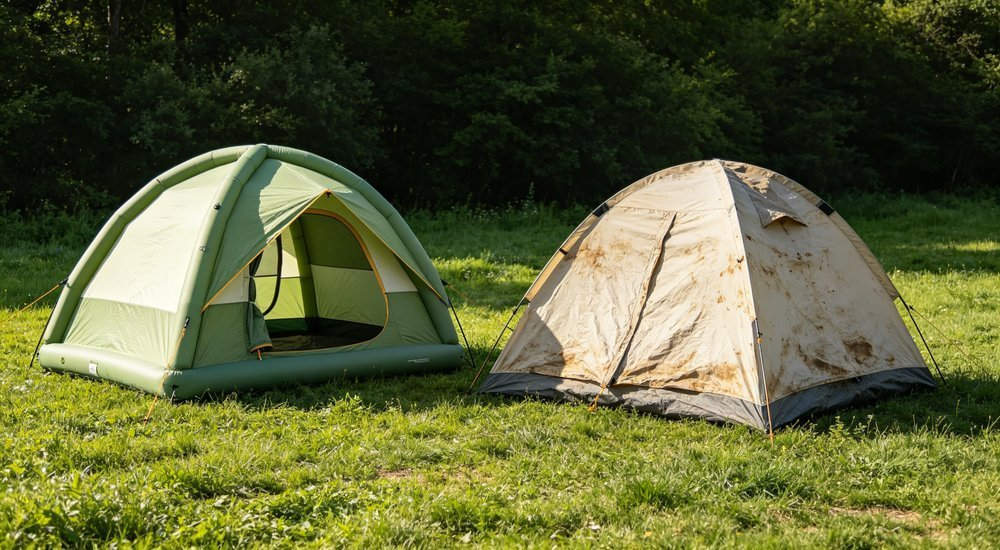
A galvanized steel frame lasts 8-12 years or 30-50 deployments. The fabric cover is the consumable: expect 5-8 years of outdoor UV and rain before fading and seam wear force a replacement cover. The frame keeps going. An air beam system typically lasts 5-8 years, with the beams most likely to fail after repeated cold cycles and delamination at the weld seams.
Maintenance routines differ. A frame tent wants: dry before roll-up, touch-up paint on scratched galvanized tubes, tightened bolts, inspected guy ropes. An inflatable wants: dry before roll-up, valve caps checked, pressure checked weekly in use, patched punctures, and pump seals greased. Both need drying; the frame also needs corrosion touch-up, the inflatable also needs pressure vigilance.
Storage matters more than buyers expect. A packed wet frame tent grows mold and rots the canvas in one monsoon season. A packed wet air beam grows mold on the PVC and weakens the seam adhesive. In both cases, air-dry the cover fully, then store in a dry, dark place with the valves slightly open to let moisture escape.
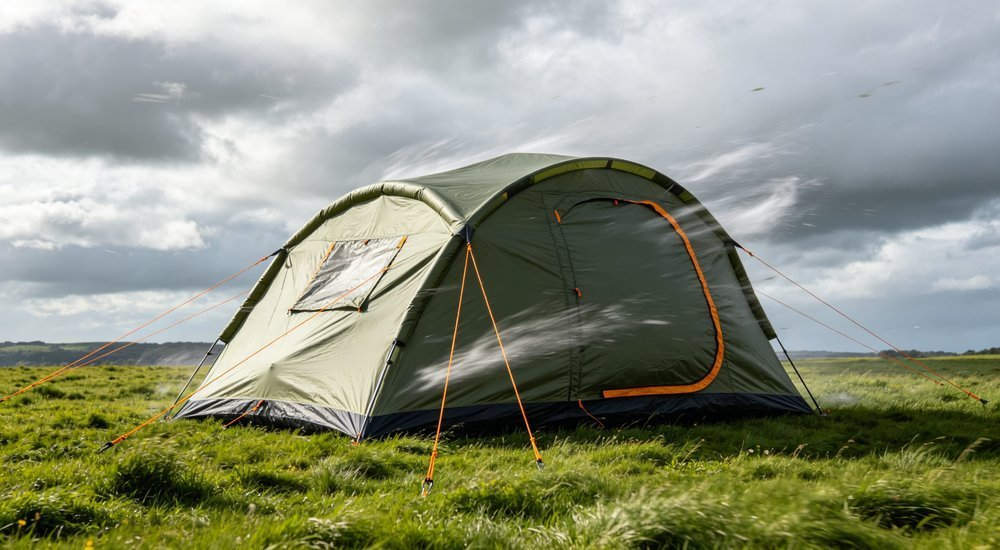
Properly anchored, both types reach Beaufort force 6-7 (60-70 km/h), and reinforced versions reach Beaufort 8. The difference is how they behave beyond the rating. A steel frame stands or bends: if the load exceeds the rating, a pole bends or a weld cracks and you see it immediately. An air beam flexes: it absorbs gusts by moving, which is kinder on the fabric but means a gust can drop pressure and start a slow leak.
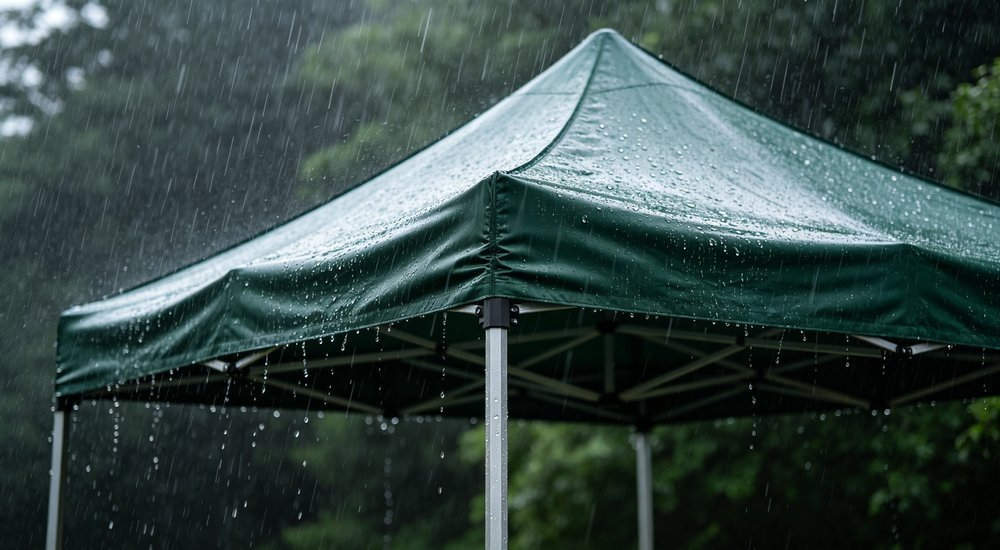
Rain performance is mostly about fabric and roof slope, not about structure. Both types use PU3000-5000 mm covers with taped seams and sloped ridges. Pick the structure for wind behavior and power; pick the fabric for rain. If your project sits in a high-wind coastline, the rigid frame gives a clearer failure signal; if it sits in a gusty urban exercise area, the flexing air beam forgives short gusts.
Anchor both properly. Soft sand takes screw stakes, meadow takes forged steel stakes, pavement takes sandbags. Neither structure reaches its wind rating if the anchors fail first. As a leading tent price,
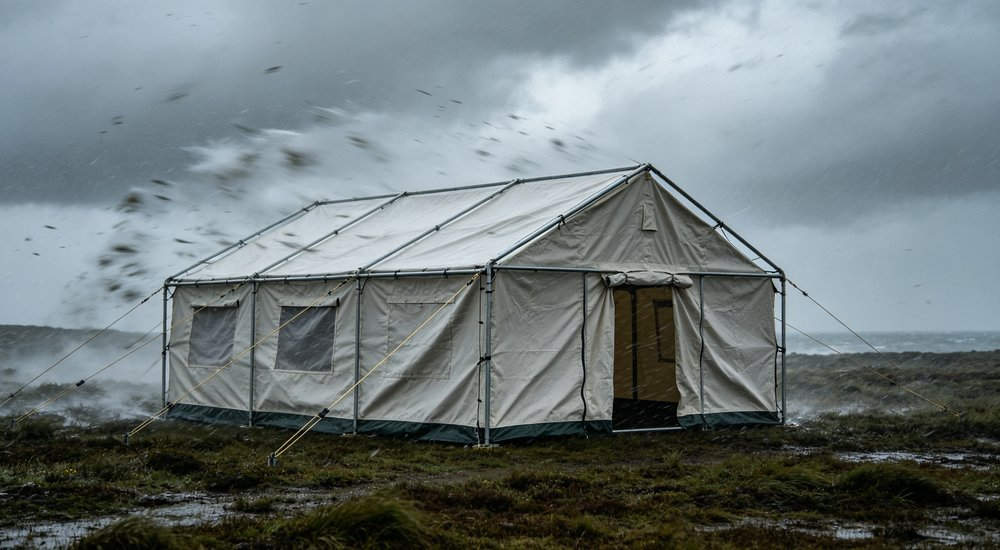
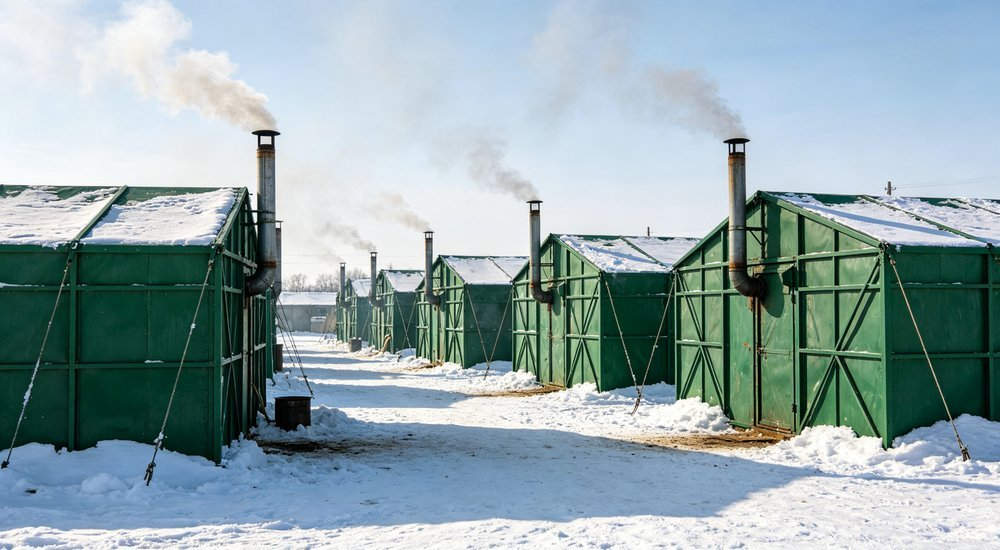
In cold climate operations, a temporary shelter tent must withstand snow loads and freezing temperatures. A disaster response shelter designed for winter use typically features reinforced framing and insulated fabric. Refugee camp tent installations in northern regions often require additional heating and ventilation, making temporary accommodation planning critical before deployment.
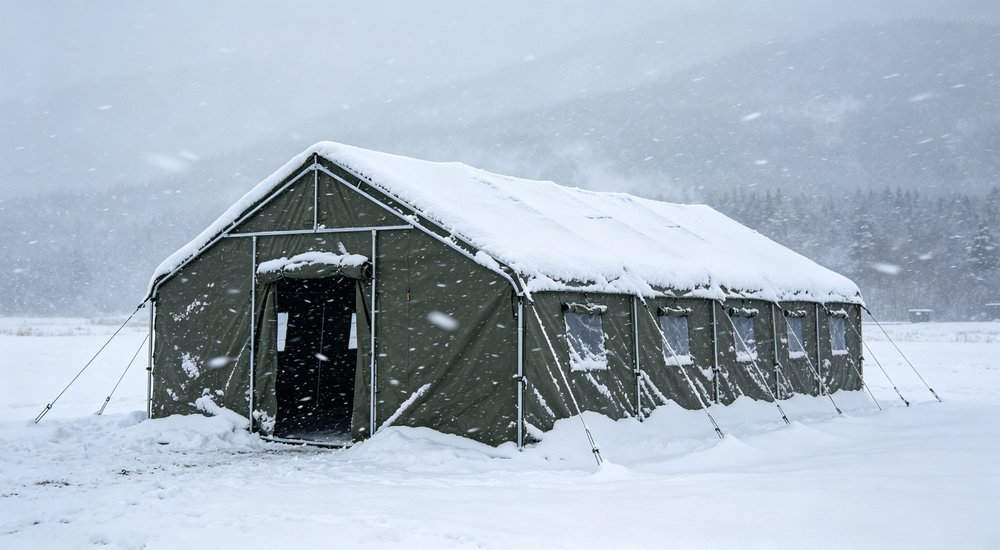
This is the dimension where the steel frame most decisively wins. At -10C and below, PVC air beams stiffen, become less forgiving, and lose some pressure; the electric pump battery also loses roughly half its capacity. A frame crew arrives, connects the tubes, and works at -20C without a battery on the line. For winter relief camps, high-altitude posts, or border patrol stations, the frame is the low-risk choice.
In extreme heat, the balance tips the other way. A dark PVC air beam in 40C sun heats up quickly but also stays flexible; a steel frame in direct sun gets hot to touch but does not change structurally. Neither is bothered by heat; both need ventilation and shade cloth if the occupants will work inside for hours.
Rain, mud, dust and snow: mud affects both equally at the anchoring step. Snow load is limited on any tent roof — clear snow before it reaches 10 kg/m2. Ask the supplier for the rated wind and the snow line for the exact configuration, in writing.
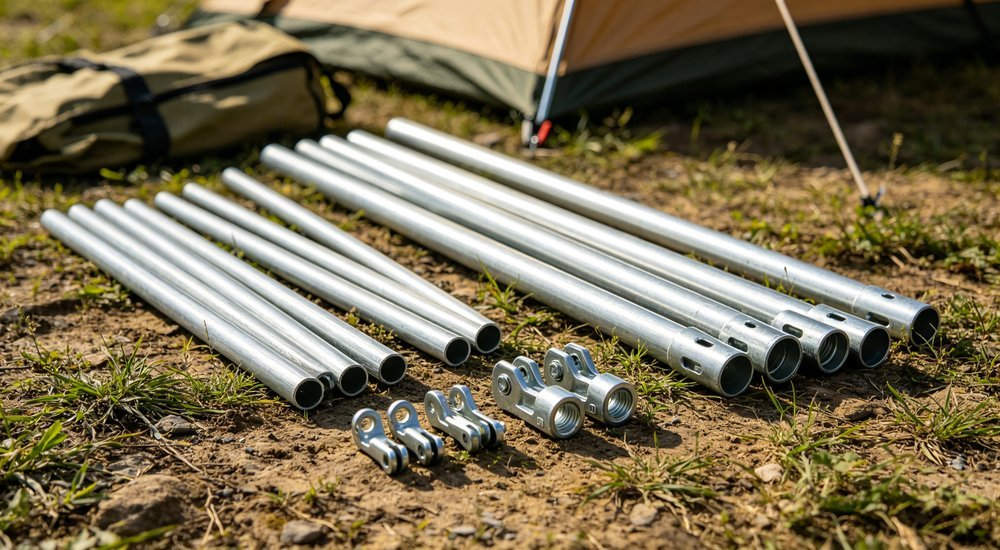
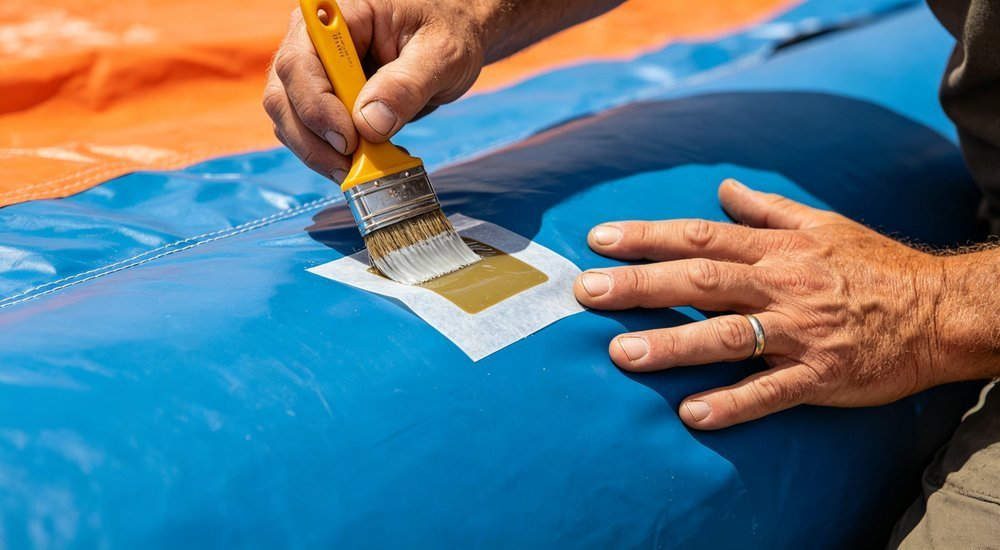
Field repair is where the two types feel most different. A bent steel pole is swapped: pull the bent tube out, slide in the spare, tighten the bolt. Five minutes, no glue, no cure time. A punctured air beam is found by listening or submerging, cleaned, abraded, glued, and clamped while the patch cures — usually four hours or overnight before you can repressurize.
For remote sites where resupply is slow, the frame's swap-a-part repair is much easier to self-manage. The inflatable's repair is technically simpler in materials but slower because of cure time.
Military command posts typically deploy a modular command tent with expandable sections for headquarters operations. Medical teams require a medical support tent or medical tent with proper ventilation and sterile zones. Army tent specifications often include camouflage patterns and reinforced frames for field durability.
For smaller operations, a 12m² frame tent or 12 square meter tent provides accommodation for 4-6 persons. Larger camps typically use a 20m² fram
This comparison table provides essential specifications for procurement evaluation. Buyers use this data to compare configurations, assess material quality, and calculate total project costs. As a professional tent manufacturer with extensive export experience, we ensure all parameters meet international standards and field deployment requirements. This information is particularly valuable for government procurement teams, NGO aid organizations, and international relief agencies evaluating bulk supply contracts.
e tent or 20 square meter tent as a large humanitarian tent for 10-12 persons. Medical operations may require a medical support tent, mobile clinic tent, or field hospital tent, while command centers use modular command tent configurations. Refugee camp tent deployments often combine military field tent designs with heavy duty canvas tent or canvas frame tent constructions for extended use.
Below is the shortest cut: match the scenario to the type. Use this first, then walkthe decision tree in the next section if your project does not fit cleanly.
Understanding shelter structure comparison requires careful analysis of the parameters below. This table helps procurement officers compare tent manufacturer solutions, identify cost-saving opportunities, and select configurations that match their operational needs. We manufacture OEM tent supplier with strict quality control at every production stage. This information is particularly valuable for government procurement teams, NGO aid organizations, and international relief agencies evaluating bulk supply contracts.
Scenario
Recommended Type
Why
Rapid first-72h disaster response
Inflatable
15-minute setup, light pack, front-line speed
Fixed relief camp for weeks or months
Steel frame
No pump, low maintenance, 8-12 year life
Remote site with no power
Steel frame
No pump, no battery, no pressure
Below-zero winter camp
Steel frame
PVC air beams stiffen, pump batteries die
Field kitchen, storage, ward block
Steel frame
Hangs racks, beds, heaters reliably
Command post that moves every 1-2 days
Inflatable
Fast pack and go, low pack-down effort
Air-inserted patrol team
Inflatable
Light cube, hand-carryable
Border post or observation post
Steel frame
Months of static use, cold, no power
Field hospital ward block
Steel frame (or modular link)
Shelving, lighting, cots, clean-zone stability
Training exercise with daily moves
Inflatable
Repeated fast setup, crew trained on pump
For medical response teams, a medical tent or mobile clinic tent provides sterile workspace for triage and treatment. Field hospital tent configurations require additional structural support, making frame designs preferable. Military users often select army tent or military field tent models for durability and camouflage options. A 12m2 frame tent works well for small command posts, while a 20m2 frame tent serves larger group needs. The 12 square meter tent and 20 square meter tent sizes are standard in humanitarian procurement catalogs.
If your project does not land cleanly in the table above, work through the tree below. Answer each question in order; the path leads to a recommendation.
The tree is deliberately simple. It is not a substitute for a site visit, but it catches 80% of cases on the first pass. If you end at "either works," pick on total cost of ownership and on which type your crew can actually maintain.

A mixed deployment strategy combines inflatable tent manufacturer products for rapid response with frame tent manufacturer units for long-term basing. An emergency response tent from an emergency tent supplier can be paired with a refugee shelter tent for extended accommodation. Wholesale emergency tent buyers often mix portable shelter inflatable units with weather resistant tent frame models to balance speed and durability.
The most experienced programs do not pick one type for the whole mission. They run a mixed fleet. The front-line element — the incident command post, the triage tent, the forward base that follows the disaster — uses inflatables for speed. The rear base — kitchen, storage, ward, administration — uses frame tents for durability and hanging load.
A mixed fleet needs one extra planning step: make sure the two types share the same cover fabric family and the same anchoring kit where possible. That cuts spare-parts variety. It also lets you swap covers between frame and inflatable if both use the same waterproof Oxford or PVC. Most programs converge on a 60/40 or 70/30 frame-to-inflatable split for long relief operations.
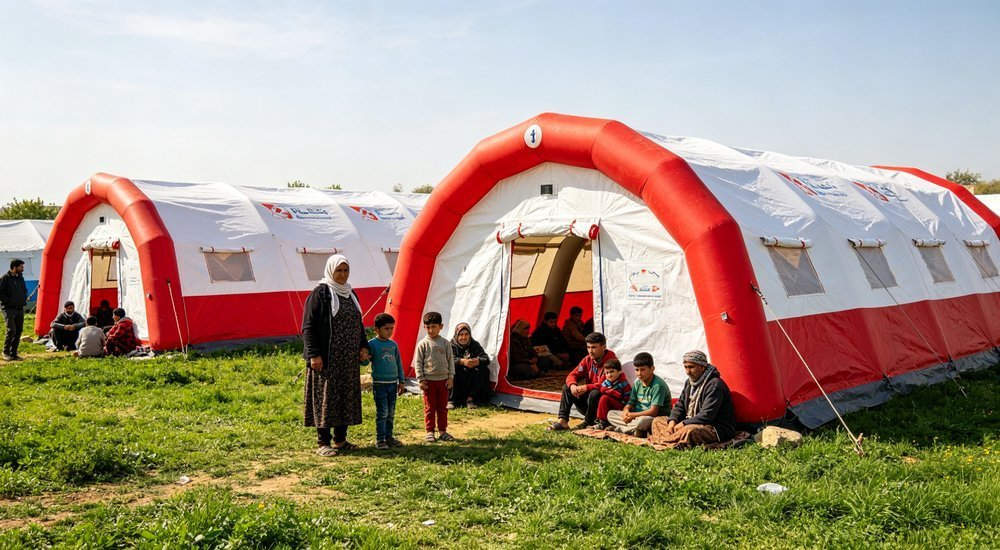
For medical and clinical layouts, see our medical emergency tent guide for how clean zones, ward blocks and triage link together. For decontamination wet-zone design, see the decontamination wash tent. Both benefit from a mixed layout: inflatable triage up front, frame treatment and shower blocks further back.
Common procurement errors include ignoring air beam tent vs pole tent differences, underestimating inflatable tent setup time requirements, and overlooking frame tent lifespan maintenance costs. Buyers should verify waterproof tent fabric ratings, PVC coated polyester quality, and galvanized steel frame corrosion resistance before committing to a bulk tent order. Rapid deployment tent capability is useless without proper training, just as a quick deploy tent fails without adequate power supply.
Across the projects we have seen, the same mistakes recur. Avoid them.
Wholesale frame tent pricing from a China tent factory typically ranges lower than comparable inflatable models due to simpler manufacturing. OEM tent and ODM tent customization adds cost but ensures your custom emergency tent meets exact specifications. Tent export orders benefit from volume discounts, and a heavy duty canvas tent or canvas frame tent may carry a premium for extended durability. NGO relief tent programs often qualify for institutional pricing through verified suppliers.
Below is the indicative FOB range across sizes for both types. Use it to sanity-check a quote; it is not a quotation.
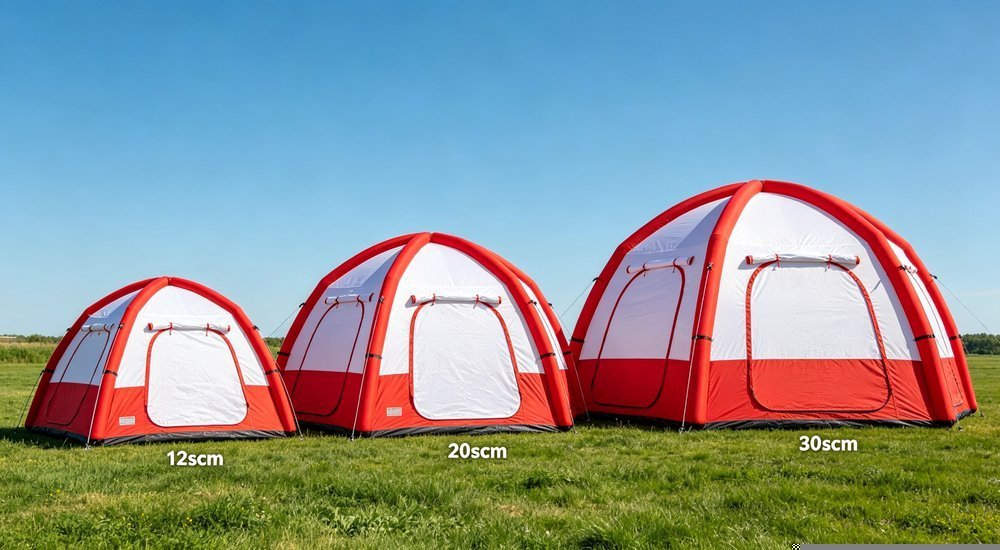
This comparison table provides essential specifications for procurement evaluation. Buyers use this data to compare configurations, assess material quality, and calculate total project costs. As a professional tent manufacturer with extensive export experience, we ensure all parameters meet international standards and field deployment requirements. This information is particularly valuable for government procurement teams, NGO aid organizations, and international relief agencies evaluating bulk supply contracts. Price range comparison of three different tent sizes for budget planning, procurement cost analysis concept for buyers, professional product comparison photography
This specification table provides a comprehensive overview of tent manufacturer. Organizations use this data to benchmark OEM tent supplier suppliers, evaluate material quality, and plan logistics for large-scale deployments. As a direct bulk tent wholesale, we offer transparent pricing and flexible customization for every order size. This information is particularly valuable for government procurement teams, NGO aid organizations, and international relief agencies evaluating bulk supply contracts.
Size
Steel Frame (USD FOB)
Inflatable Air Beam (USD FOB)
Note
12-15m2 (small post)
$600 - $1,200
$900 - $1,600
Small team or rest point
20-30m2 (standard)
$800 - $1,800
$1,200 - $2,800
Most common relief size
36-45m2 (command)
$1,800 - $2,800
$2,500 - $4,500
Command or small clinic
60m2+ (large block)
$2,800 - call
$4,500 - call
Modular link systems
* Indicative ranges for standard PU-coated covers, galvanized frame or PVC air beams. Liner, floor, printed markings and spare-parts kits add cost. Confirm MOQ and lead time at inquiry.
As a professional inflatable tent manufacturer and frame tent manufacturer, we serve as your trusted emergency tent supplier and relief tent supplier for wholesale emergency tent and wholesale frame tent orders. We offer OEM tent and ODM tent customization for bulk tent order requirements, including custom emergency tent specifications for tent export markets. Our China tent factory delivers quality-certified shelters to NGOs, government agencies, and humanitarian organizations worldwide.
Start by writing down four facts: how often the camp moves, what power is available, the coldest expected night, and what you will hang from the structure. Then look at the scenario table and the decision tree above. If you land on frame, our civil affairs relief frame tent guide walks through tube diameter, canvas weight and anchoring in detail. If you land on inflatable, the inflatable emergency tent guide covers beam pressure, pump choice and pack-down.
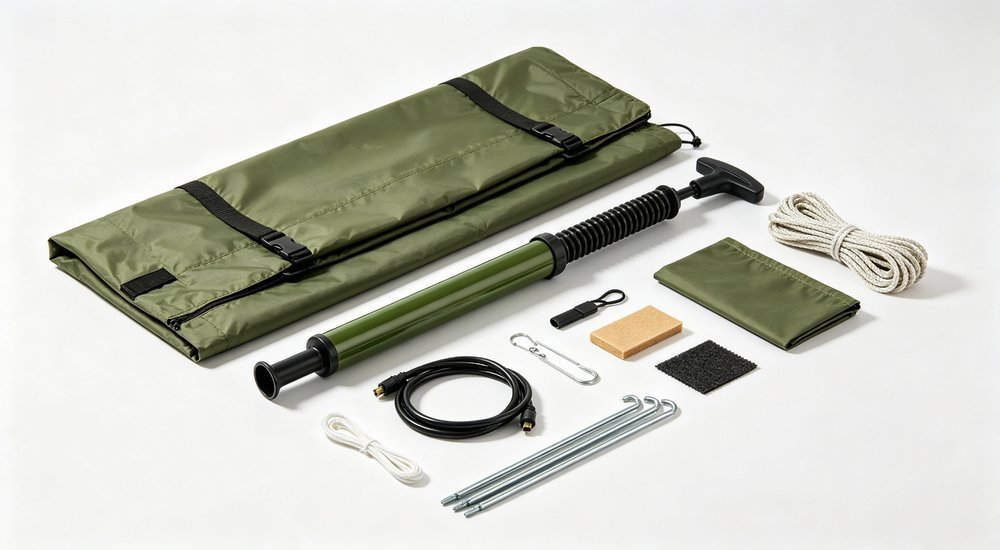
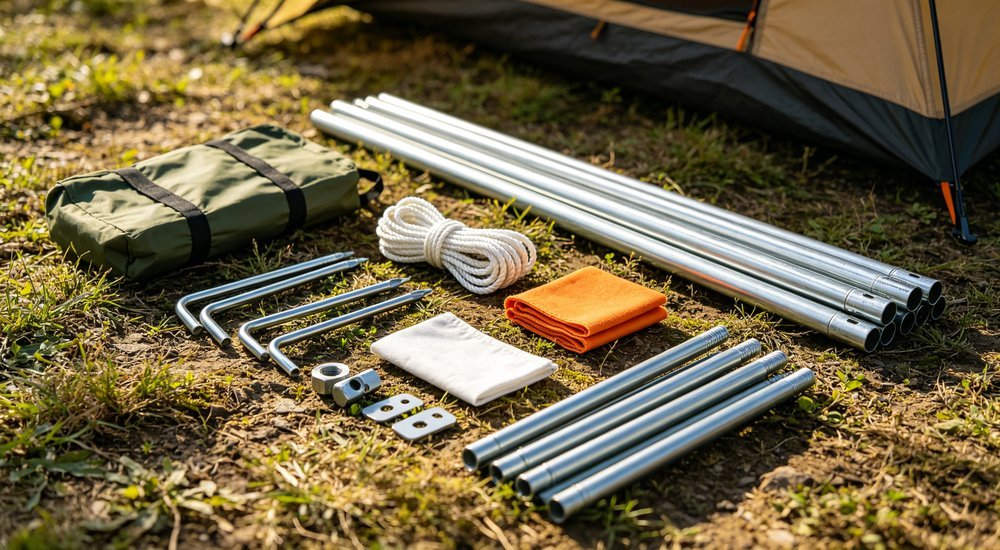
When in doubt, ask for both quotes on the same size and spec. A serious manufacturer will give you both numbers honestly, because they build both lines. Compare the complete set — frame, cover, pump or poles, stakes, repair kit, and spares — not just the headline tent price. The honest comparison exposes which option actually fits your deployment.
For procurement-level questions on certification, documentation and bulk ordering, see our humanitarian relief procurement guide. For custom color, size or logo work across both lines, see custom emergency tent OEM. For the fabric side of the decision, read the tent fabric waterproof guide.
Temporary accommodation needs vary widely across disaster zones, and selecting the right tent type directly impacts occupant comfort and operational efficiency.
Neither is universally better. An air beam deploys faster and packs lighter, but needs a pump, loses pressure in cold, and costs more. A steel frame is cheaper, needs no power, and lasts longer, but takes longer to set up and weighs more. Match the type to deployment frequency, power and temperature.
For a 20-30m2 unit, an air beam takes 15-25 minutes with 2 people plus a pump. A steel frame takes 40-60 minutes with 3-4 people. The gap widens for 40-60m2 command blocks, where frame erection can reach 90 minutes.
The inflatable. A 20m2 air beam weighs 80-130 kg; the same-size frame weighs 140-200 kg. But frame tents pack into long tubes that load by hand, while inflatables fold flat into bags. Choose by transport mode, not just weight.
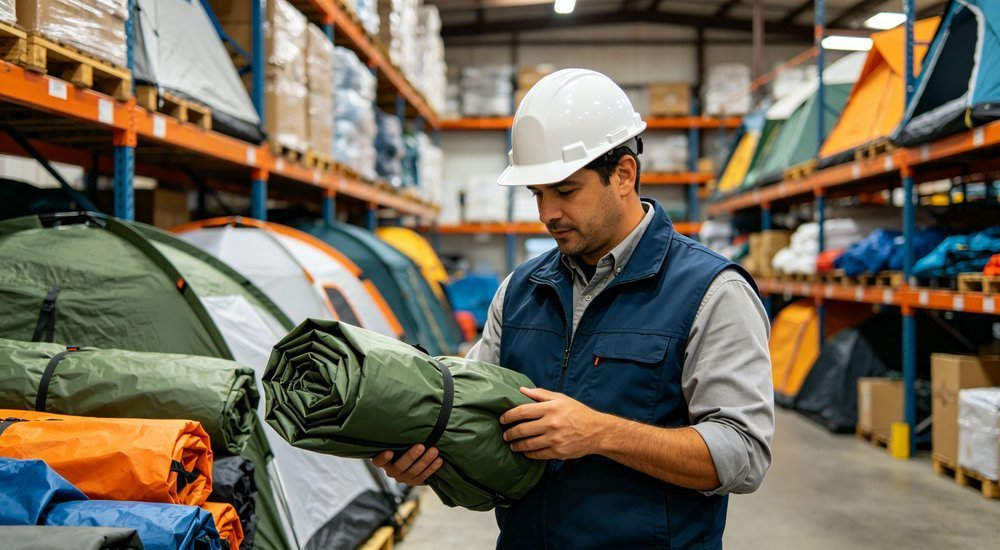
The steel frame. A 20m2 frame runs roughly $800-$1,800 FOB; a comparable inflatable runs $1,200-$2,800. Over a 5-10 year life the frame also needs fewer replacement parts, which closes the total cost gap further.
A galvanized frame lasts 8-12 years or 30-50 deployments; the cover is replaced at 5-8 years. An air beam system typically lasts 5-8 years; beams can delaminate after repeated cold cycles. Frames outlive inflatables on long service programs.
The steel frame. Galvanized tubes stay rigid at -30C. PVC air beams stiffen and lose pressure below about -10C, and pump batteries lose half their capacity. For winter camps, high-altitude posts or border stations, choose frame unless rapid cold-weather deployment is the only priority.
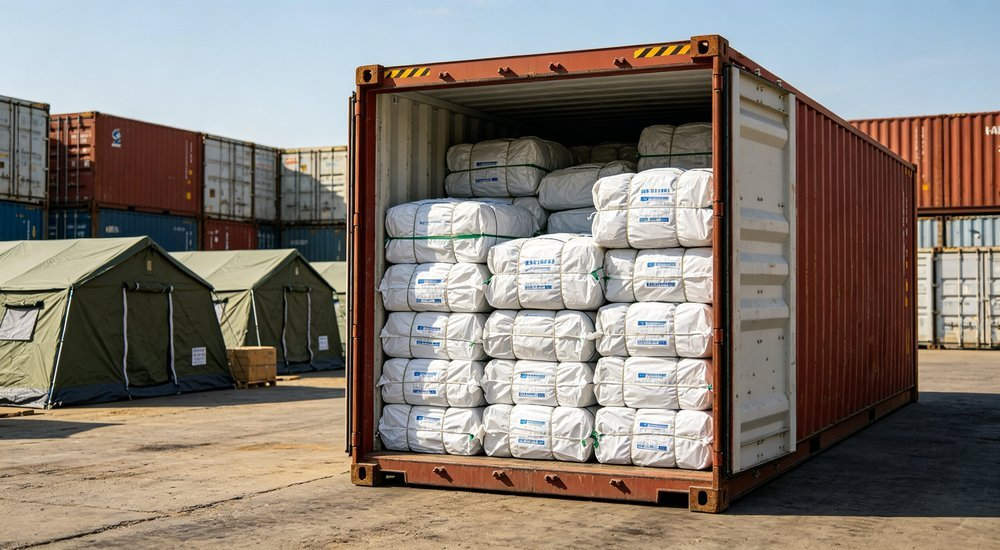
A bent steel pole swaps out with a spare in minutes, no glue. A punctured air beam needs a cleaned, abraded, glued patch that cures for hours before repressurizing. Frame repairs are faster but the frame is heavier; inflatable repairs need more patience.
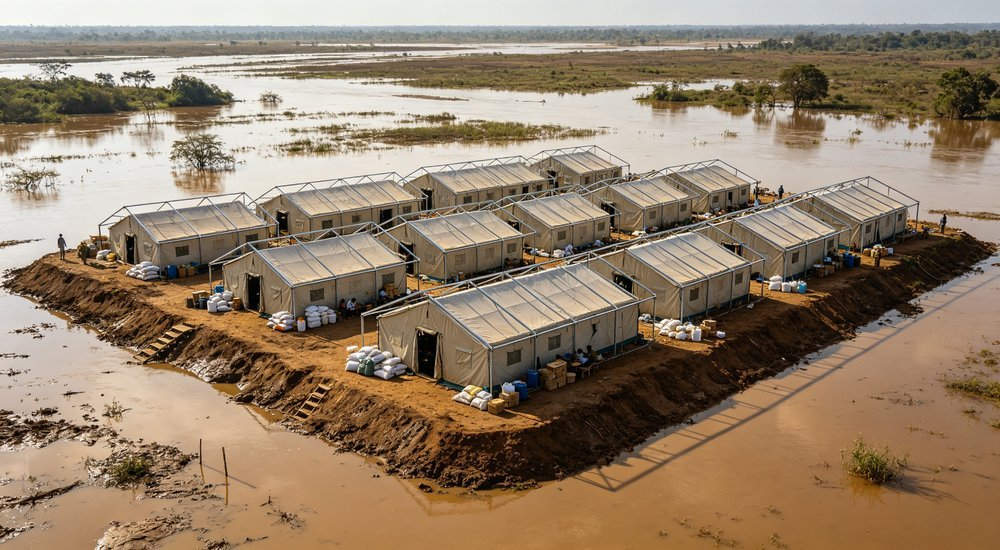
Yes, and this is often the smartest layout. Use inflatables for the front-line rapid command and triage post that moves every 1-2 days; use frame tents for the fixed kitchen, storage and ward blocks that stay for weeks. Mixed fleets match each shelter to its job.
A small puncture bleeds pressure slowly and the shelter stays up if you top up pressure. A major puncture or burst valve deflates one section and the cover collapses on that side. You must carry a pump on site, not just in the truck. Frame tents do not have this failure mode.
The steel frame. A camp that stays for weeks or months does not benefit from 15-minute setup, but benefits from zero power needs, low maintenance, cold stability and the ability to hang shelves, beds and heaters. Choose frame for fixed relief camps, border posts and field hospitals.
The inflatable. A first-arrival team that must be operational in under an hour, then move again in 24-48 hours, benefits from 15-minute setup and light pack weight. Carry a spare pump and pressure gauge. Frame tents suit the camp that arrives after the first 72 hours.
Answer four questions in order: how often does the camp move, is there mains or vehicle power, what is the lowest expected temperature, and how heavy is the equipment you will hang. Frequent moves and lack of power push you to frame; rapid relocation and available power push you to inflatable.
As a professional emergency tent manufacturer and supplier in China, we offer both inflatable and frame tent solutions for wholesale and bulk orders. Our factory provides OEM and ODM customization services for export markets worldwide.
Share deployment frequency, site power, temperature and quantity
Contact us today for factory-direct pricing and custom solutions.
 |

|
Дружні посилання :
Авторське право © Custom Disaster - Relief Bedding: Tents, Sleeping Bags, Blankets Всі права захищені
професійна команда для обслуговування !