Категорії
Last Updated: October 16, 2026
Governments across Africa run structured emergency procurement programmes for relief goods, and government emergency procurement is the single largest public channel for blankets, tents and bedding on the continent. National disaster offices, civil defence units and military logistics commands all buy standard relief items through public tenders and stockpile programmes. This guide covers what suppliers must prepare.

Military distribution of relief blankets to families.
Related guidance: WHO.
State buyers publish requirements on official gazettes, procurement portals and ministry websites, and the evaluation follows public procurement law rather than informal negotiation. These buyers also award relief items through framework agreements, which means a supplier who understands the process can serve multiple state buyers from one production line. For suppliers of emergency blankets and shelter kits, the practical question is not whether the demand exists, but how to meet tender documents, national standards and compliance paperwork well enough to pass evaluation, because government emergency procurement repeats on predictable seasonal cycles and annual budgets.
Civil defence offices are usually the first buyer to approach, because they hold the national stockpile budget and coordinate regional warehouses with provincial authorities. military relief supplies follow a separate channel through defence logistics agencies, yet both channels use the same tender fundamentals: clear technical specifications, transparent pricing and documented compliance, which is why one well-organised product file, kept current across every season, can serve both state buyers without rework.
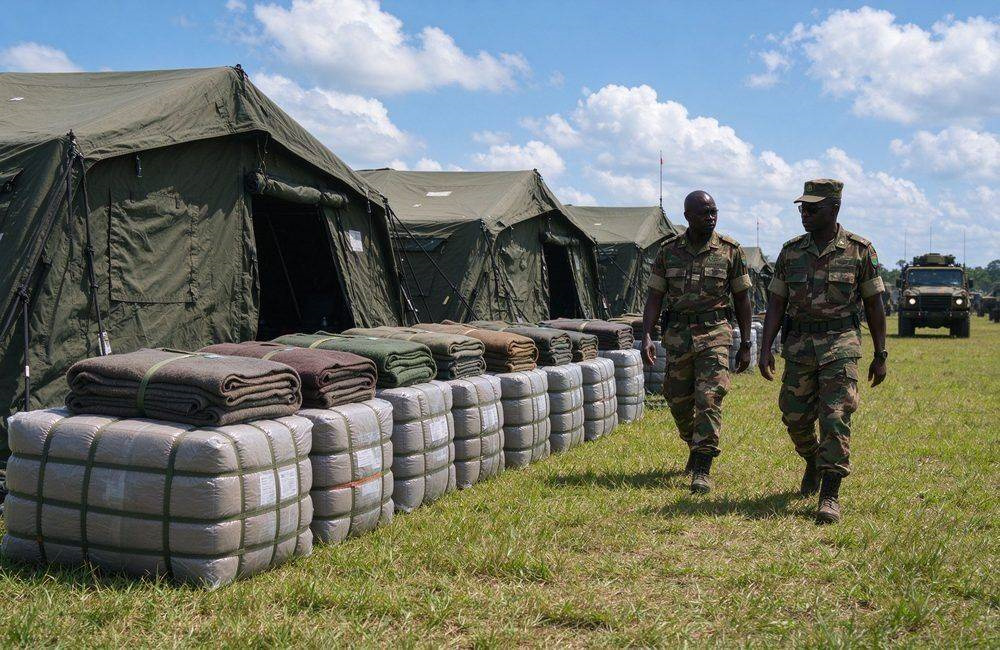
Military tent camp with stacked blanket bales.
This guide walks through how government and military buyers in Africa structure disaster response procurement, what state tenders require from foreign suppliers, how national standards and stockpiles work, and how to price, document and deliver relief blankets through public procurement. It is written for manufacturers and trading companies that already serve NGO and UN channels and want to add government tenders as a stable repeat revenue line for their production planning.
By the end of this guide, you should know which offices to register with, which tender documents to prepare in advance, how to structure pricing for public evaluation, and how to avoid the compliance mistakes that disqualify otherwise strong bids. The checklist at the end ties every requirement into one practical RFQ response folder you can reuse for each new tender, saving weeks of repeated preparation and keeping your bid team consistent.
United Nations humanitarian coordination pages publish consolidated appeals and response snapshots that list which agencies and governments are buying which relief goods. Tracking these pages through UN coordination channels helps suppliers spot new tender opportunities early.
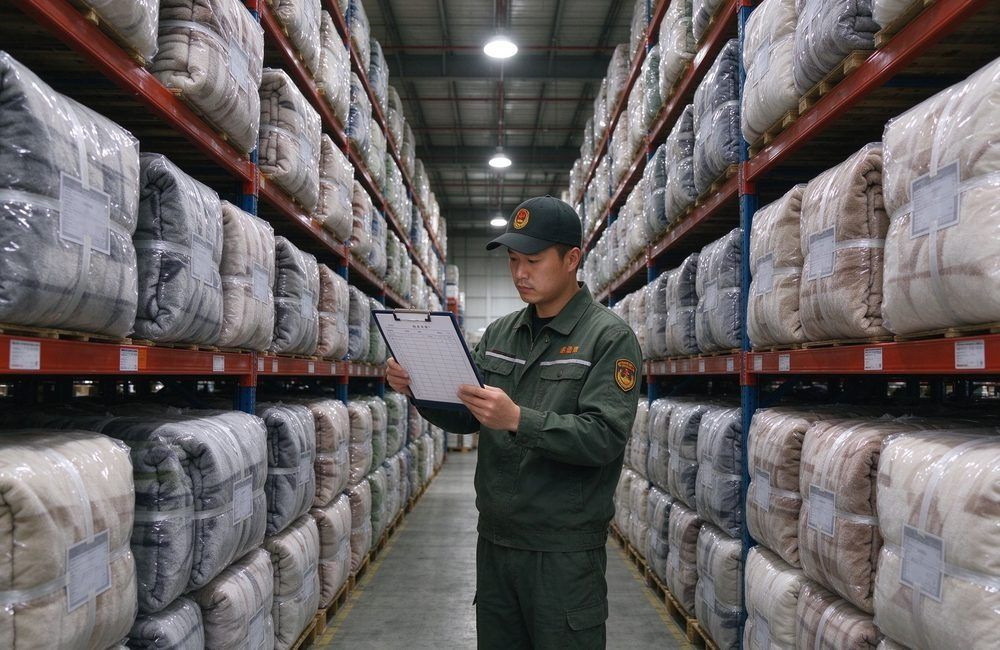
National stockpile warehouse stacked with bales.
Table of Contents
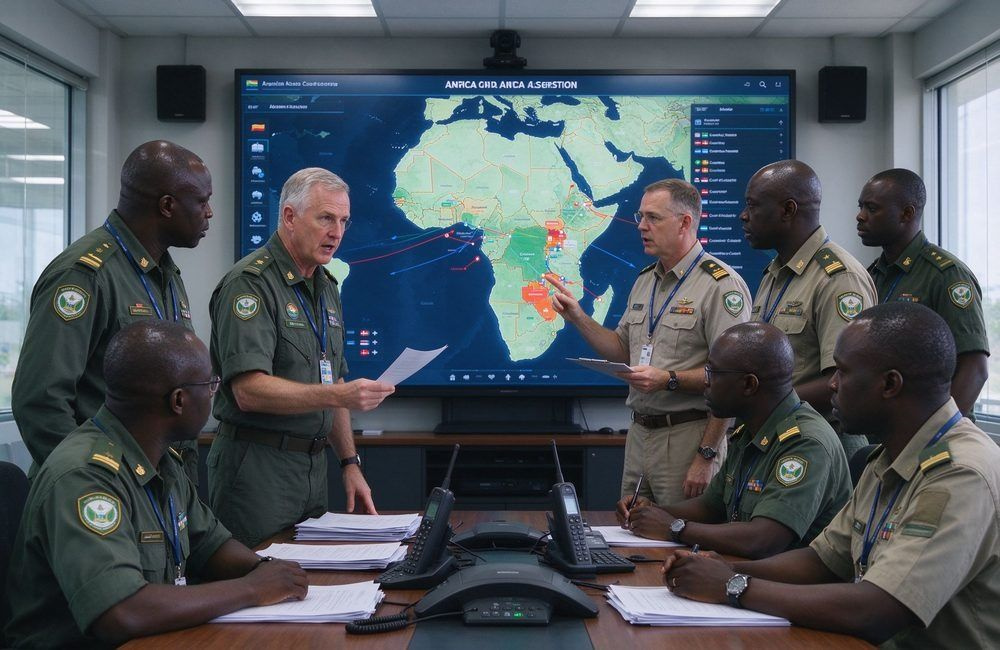
Emergency operations center coordinating deliveries.
Public tender evaluation rewards a specification that survives the scoring sheet. Put the GSM, the finished weight, the size and the packing into one line of the bid document, so the evaluation committee compares like with like. Add the production calendar and the delivery date in the same section, and keep a file of the compliance documents that the tender asks for, because the same file answers the next tender with minor updates.
Keep one bid file per programme and update it after each tender, so the next response starts from the last approved specification instead of a fresh draft. The file holds the specification line, the compliance documents and the pricing structure that passed evaluation.
Keep the evaluation criteria with the bid file, because the next tender usually asks for the same evidence in a new format.
And keep the contact list of the evaluation office current, because the next bid is usually a follow-up to the last one.
It also keeps the door open for the next award.
That continuity is the quiet advantage in public procurement.

Procurement team reviewing blanket bids.
government emergency procurement for disaster relief follows a clear cycle across most African countries: a disaster declaration or seasonal risk assessment triggers a budget release, the responsible office publishes a tender, qualified suppliers bid, and evaluation leads to award and delivery. Understanding this cycle lets you anticipate demand instead of reacting to notices.
The buying authority varies by country and by event. National disaster management agencies handle large response programmes, civil defence offices manage stockpiles and regional warehouses, and ministries of health buy bedding for treatment centres, which means the same blanket specification can appear in three different tender streams.
disaster response procurement is often split into fast-track and standard tracks. Fast-track purchases use emergency thresholds and shorter deadlines, while standard public tenders follow full publication and evaluation timelines, so suppliers should treat each tender type differently when planning production and delivery windows.
In most systems, the tender notice lists the quantity, the technical specification, the delivery point and the deadline, and the evaluation matrix weights price, compliance and delivery risk in fixed proportions. Reading the full notice, not just the quantity line, is the first discipline of public tender response.
Regional and municipal governments also run smaller tenders for local stockpiles, which are less competitive than national tenders and easier to win for suppliers already delivering to the capital. Building a regional delivery track alongside national bids increases your total pipeline without extra product development.
Many governments publish annual procurement plans before the budget year, listing expected volumes for blankets, tents and bedding. Monitoring these plans, plus the emergency notices, gives you a full-year view of disaster response procurement demand instead of a reactive tender-by-tender approach.
Some African states require foreign suppliers to bid through a local agent or register with the national procurement authority first, so early registration is a practical prerequisite. Confirming this requirement in the tender documents before preparing the bid saves wasted effort.
Budget cycles also shape tender timing: most African governments release disaster preparedness budgets early in the fiscal year, so stockpile tenders cluster in the first half and emergency tenders follow later in the year. Suppliers who track the fiscal calendar can schedule production capacity ahead of the tender wave.
Government buyers also cross-check references: they ask for previous delivery certificates, audit reports and bank statements as part of qualification. Keeping a standard qualification file updated once a quarter means you can respond to any tender window without delay.
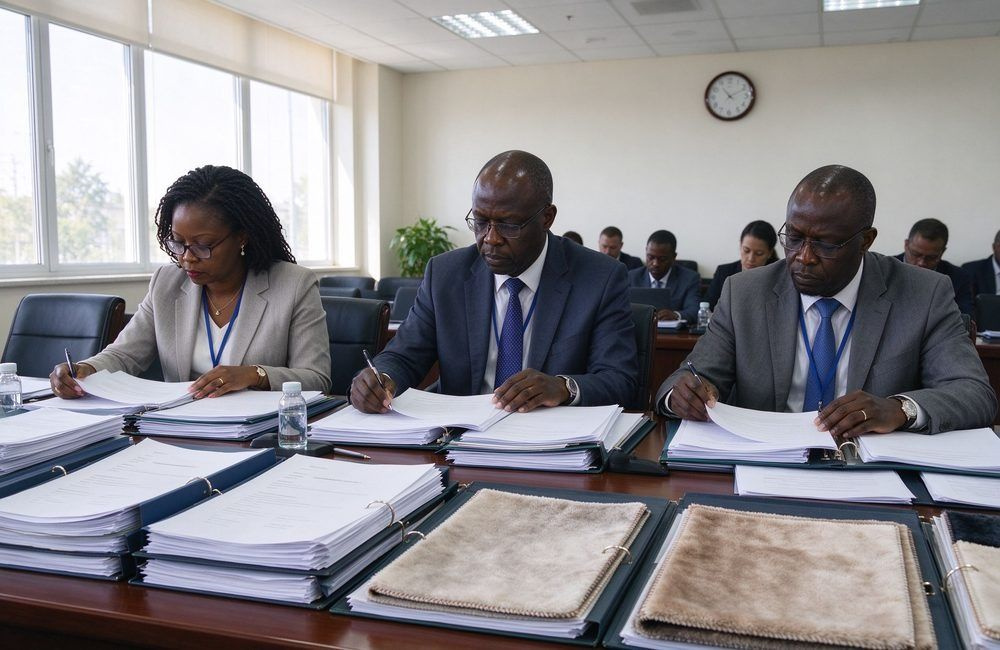
Tender evaluation panel reviewing bids.
Civil defence and emergency offices are the primary state buyers for stockpile blankets across Africa. They operate national and regional warehouses, run pre-positioning contracts and coordinate distribution with provincial authorities after floods, droughts and cyclones.
The typical civil defence procurement flow starts with a warehouse capacity review, which identifies gaps in the national stockpile and triggers a restocking tender. Blankets are usually bought in standardised specifications so that different delivery batches can be mixed in one warehouse.
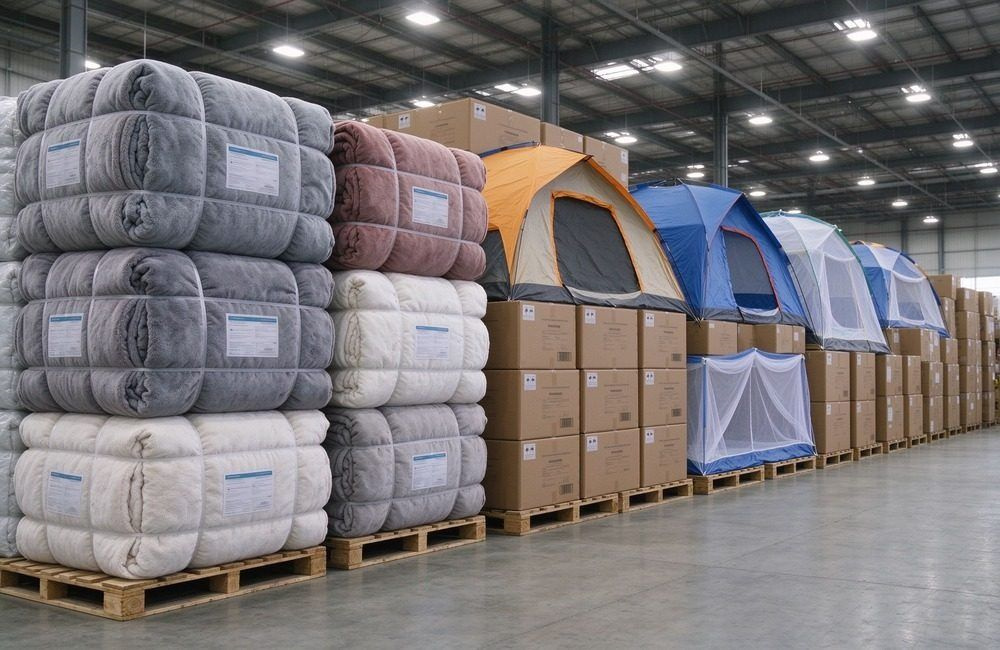
Government warehouse with blanket bales.
Civil defence offices in Africa often publish their procurement plans and evaluation results publicly, which creates a transparent record that suppliers can study. Comparing past winning prices and specifications helps you calibrate your own tender pricing and product configuration.
Regional civil defence warehouses buy smaller volumes than national offices but place more frequent orders, and they usually prefer suppliers who can deliver by truck to multiple regional points rather than one large sea-freight consignment, which matters for your logistics planning.
Many civil defence offices also run preparedness contracts: an annual blanket order with an option clause for emergency top-up quantities, which gives the office warehouse flexibility and gives the supplier predictable minimum volume.
For civil defense supplies Africa, the winning supplier profile is consistent: registered with the national procurement authority, able to show ISO or national test certificates, and able to deliver within the emergency window stated in the tender.
Emergency assessment protocols decide what civil defence offices order: a rapid assessment estimates displaced families, health risks and shelter needs, then converts them into quantities of blankets, bedding and tents. Suppliers who understand these assessment formulas can help buyers plan realistic volumes and delivery schedules.
Civil defence procurement data is published in many African countries, which lets suppliers benchmark volumes, prices and winning specifications over time. Tracking this data is the cheapest way to build a bidding strategy for civil defense supplies Africa without trial and error.
Civil defence buyers commonly request a pre-production sample and a factory inspection before awarding large stockpile contracts, so the sample and audit file used for NGO orders works for state buyers with minor additions such as country-specific test reports.

Civil defence stock counting.
Military forces across Africa play a direct role in disaster response: they operate transport aircraft, engineer units and field hospitals, and they distribute relief goods in areas civilian teams cannot reach quickly. military relief supplies are therefore procured through dedicated defence logistics channels with their own specifications and paperwork.
Defence logistics agencies buy blankets, tents, cots and bedding in bulk for both barracks stock and civil-military relief operations. The specifications often follow defence standards that overlap with, but are not identical to, civilian relief standards, so suppliers should maintain a defence-specific product file.
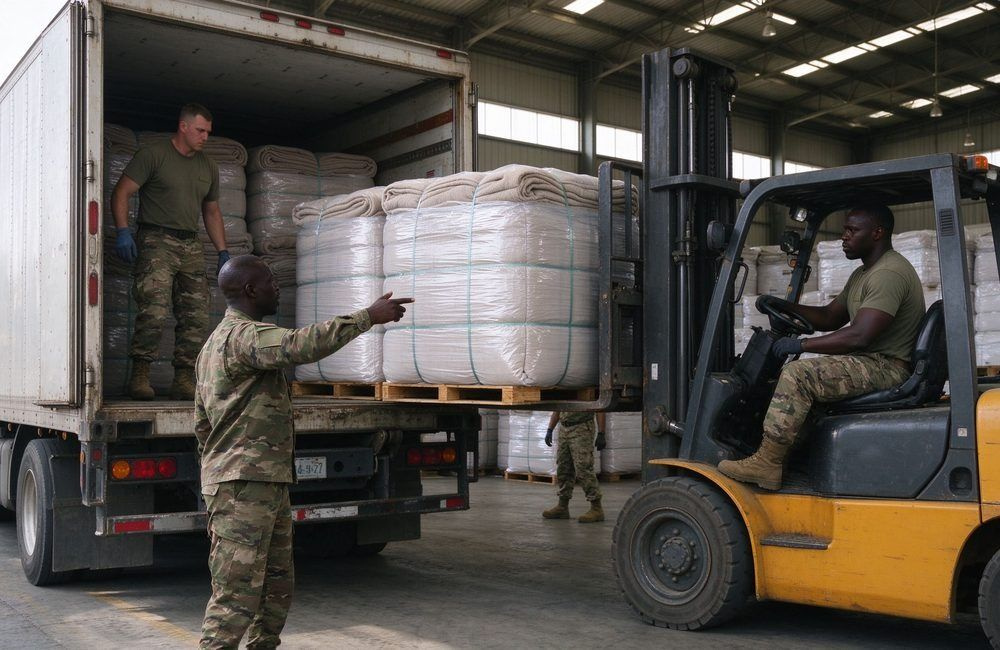
Military warehouse unloading blankets.
Military procurement is usually exempt from parts of the public procurement law that apply to civilian agencies, which means shorter publication periods and different evaluation rules. Suppliers should confirm whether the tender is run under military procurement regulations or under the general public procurement act.
military shelter supplies for relief operations emphasise durability and rapid deployment: blankets must survive repeated field washing, tents must tolerate harsh handling, and packing must support airdrop or fast truck loading. These requirements translate directly into heavier fabrics, reinforced seams and compressed bales.
For military shelter supplies, the most common order structure is a framework agreement with annual call-offs, where the defence logistics agency fixes prices and quantities for a year and releases orders against a delivery schedule, which suits manufacturers who can hold scheduled production capacity.
Some defence agencies require suppliers to pass a security clearance or facility visit before award, and the paperwork includes company registration, ownership declarations and references from previous institutional deliveries, so the qualification file should be ready before the tender opens.
Military logistics standards also cover transport and storage: compressed bales that fit standard military truck pallets, marking systems readable in the field, and packaging that survives open-air staging. Aligning your packing plan with these operational details strengthens a defence bid significantly.
Civil-military coordination programmes, run jointly by national disaster offices and defence commands, buy standard civilian relief specifications but deliver through military channels, which is an accessible entry point for suppliers who already meet civil defence requirements.
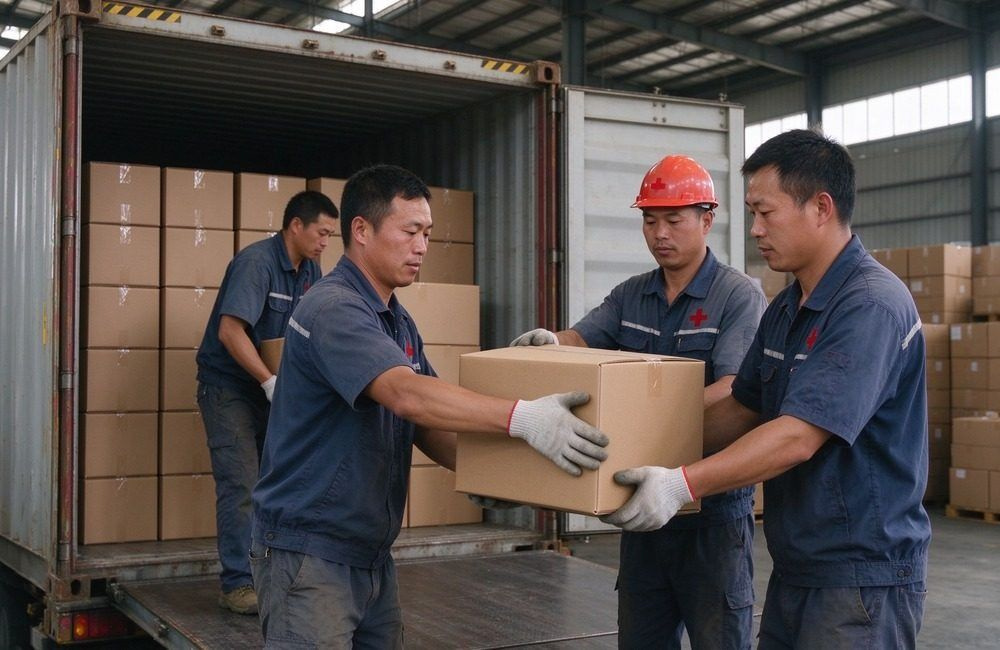
Container loading for government orders.
State tenders for relief goods are governed by public procurement law, and the requirements are uniform across most African systems: eligibility documents, technical specifications, financial capacity, local content and delivery guarantees. government tender emergency blankets usually require all five elements in one submission.
Eligibility documents typically include company registration, tax clearance, trade licence and a declaration of no conflict of interest. These are administrative but disqualifying: a missing tax clearance is the most common reason bids are rejected before evaluation.
Technical specifications are written into the tender and leave little room for interpretation: fibre content, GSM range, dimensions, colour fastness, packing and marking are fixed, and bids offering different specifications are usually rejected rather than negotiated.

Tender document verification.
Financial capacity is proven through bank statements, audited accounts and sometimes a performance bond or bid security, which is a deposit held until contract award. Suppliers should budget for bid security amounts because they tie up working capital during evaluation.
Local content requirements vary: some tenders mandate a percentage of local production, local partnership or in-country assembly, while others allow fully imported goods, and the requirement is usually stated in the tender document itself rather than in general law.
Delivery guarantees include a delivery schedule, liquidated damages for late delivery and a warranty period, and state buyers take these clauses seriously because relief programmes depend on seasonal timing, so the bid must include a realistic production and shipping plan.
State buyers also expect a complete commercial file: proforma invoice, technical datasheet, test certificates and a packing plan in the official language of the tender, usually English or French depending on the country, which affects how your documents should be prepared.
Tender language is another practical requirement: most African state tenders are published in English or French, and the official language determines the language of labels, certificates and correspondence. Preparing a bilingual document set covers both markets and removes a common rejection reason.
Local preference rules appear in some African tenders: a percentage of value sourced locally, joint ventures with local firms, or technology transfer commitments. Checking these rules before bidding keeps your offer realistic and avoids disqualification after evaluation.
The evaluation matrix for government tender emergency blankets typically gives 40-60 percent weight to price, 20-30 percent to technical compliance and the remainder to delivery capability and past performance, so a technically perfect but overpriced bid loses as surely as a cheap non-compliant one.

Inspectors measuring blanket size and weight.
relief blanketsrds for relief blankets in Africa are usually referenced in tender documents and cover fibre composition, weight, dimensions, durability and labelling. National standards relief goods are expected to pass the country-specific test before bulk production starts.
Most national specifications align closely with UNHCR-style relief blanket standards: 100 percent polyester or cotton-rich fabric, 150 x 200 cm finished size, and a GSM range between 190 and 210 for institutional use, which keeps the product interchangeable across donors and state buyers.
Some countries add local variations, such as heavier GSM for highland cold zones, flame-retardant requirements for military or health facilities, or specific colours for visibility during search operations, so the spec should be read against the country climate and use case.

190g vs 210g blanket weight comparison.
Labelling requirements also differ: national buyers may require a label in the official language, a country-of-origin mark, a production date and a standard number, and labels that do not match the tender are grounds for rejection at delivery inspection.
Testing is typically done at a national laboratory or an ISO/IEC 17025 accredited lab, and the report must be issued by a laboratory recognised by the buying authority. Keeping certificates in the national language plus English reduces evaluation friction.
Shrinkage, colour fastness and pilling tests are the three most common quality checks, and the acceptance limits are written into the tender, so blanket suppliers should run the same three tests internally before sending samples to save cost and time.
Flame-retardant and special-use blankets are a growing category in national specifications, required for military facilities, health centres and kitchens where fire risk exists. These blankets use treated polyester or inherently flame-resistant fibre, and the test certificate must show the specific national standard number.
For suppliers serving multiple African countries, one master specification with country-specific labelling is the most efficient model: the fabric and construction stay identical, while labels, test reports and packing marks change per destination.

Fabric sample review in the testing lab.
Item
Requirement
Eligibility
Registration, tax clearance, trade licence, agency registration
Financial
Price sheet, bid security, bank references, audited accounts
Technical
Datasheet, test certificates, sample reference, production schedule
Delivery
Timeline, packing plan, transport route
Compliance
Anti-corruption declarations, local content statement, warranty
National stockpiles are the backbone of government disaster response in Africa: pre-positioned blankets, tents and bedding allow a state to respond within days instead of waiting for procurement after an event. national stockpile blankets are usually bought on a restocking cycle with a defined minimum reserve.
Stockpile planning starts with a risk assessment that estimates the maximum affected population and the coverage ratio, then converts the target into quantities of blankets, tents, cots and hygiene kits, and the procurement plan follows that calculation rather than ad-hoc buying.
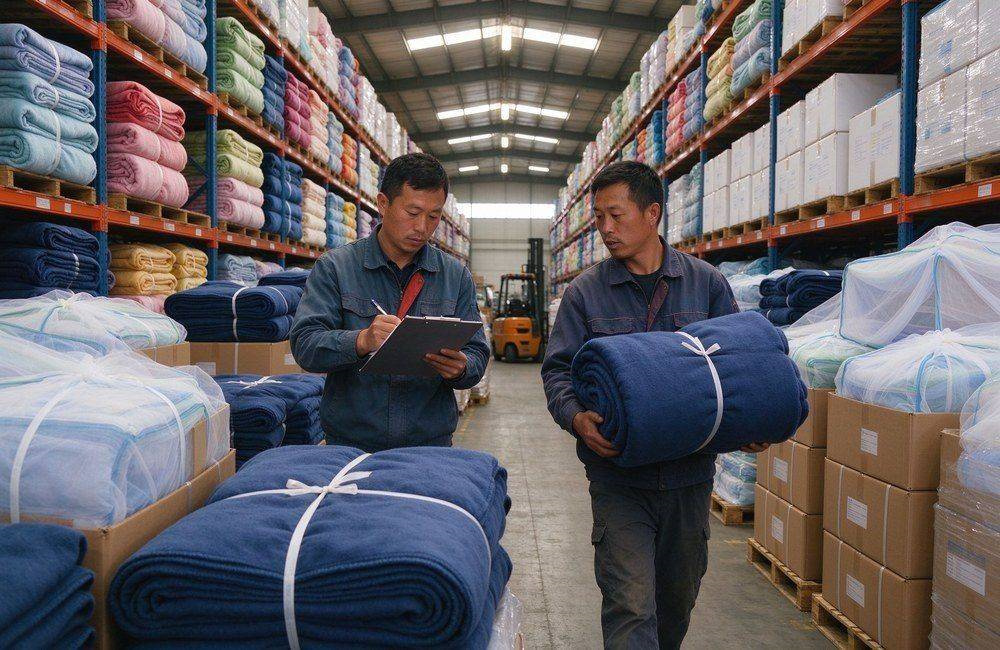
Prepositioned stock in national warehouse.
Most national stockpiles operate a rotation system: older stock is released for training or secondary distribution, and new stock replaces it on a rolling basis, which creates a predictable annual purchase volume for suppliers.
Pre-positioning programmes also use regional warehouses to shorten last-mile delivery, and some governments co-locate stock with partner agencies or the Red Cross society, which adds coordination layers but also opens additional procurement channels. African Union policy frameworks increasingly encourage regional stockpiles that can be shared across borders.
Suppliers can support stockpile planning with packing that improves warehouse efficiency: vacuum-compressed bales that stack cleanly, clear carton marking with production and lot numbers, and moisture-protective wrapping that suits hot, humid warehouse conditions.
Government buyers increasingly use framework contracts for stockpile replenishment: a multi-year agreement with agreed unit prices and annual call-off quantities, which gives the supplier volume visibility and the state budget certainty.
Stockpile audits, usually annual, verify quantity, condition and expiry of stored relief goods, and they drive the restocking order. Suppliers who can quote replacement stock quickly after an audit build a dependable relationship with warehouse managers.
Seasonal risk calendars matter: countries in cyclone corridors order before the storm season, drought-prone regions restock before the dry season, and flood zones pre-position before the rains, so aligning your production schedule with these calendars positions you ahead of tender windows.
National weather data and global disaster statistics, such as those published by NOAA, shape the timing of these calendars, while annual budget cycles determine how many blanket tenders each country issues in a normal year.
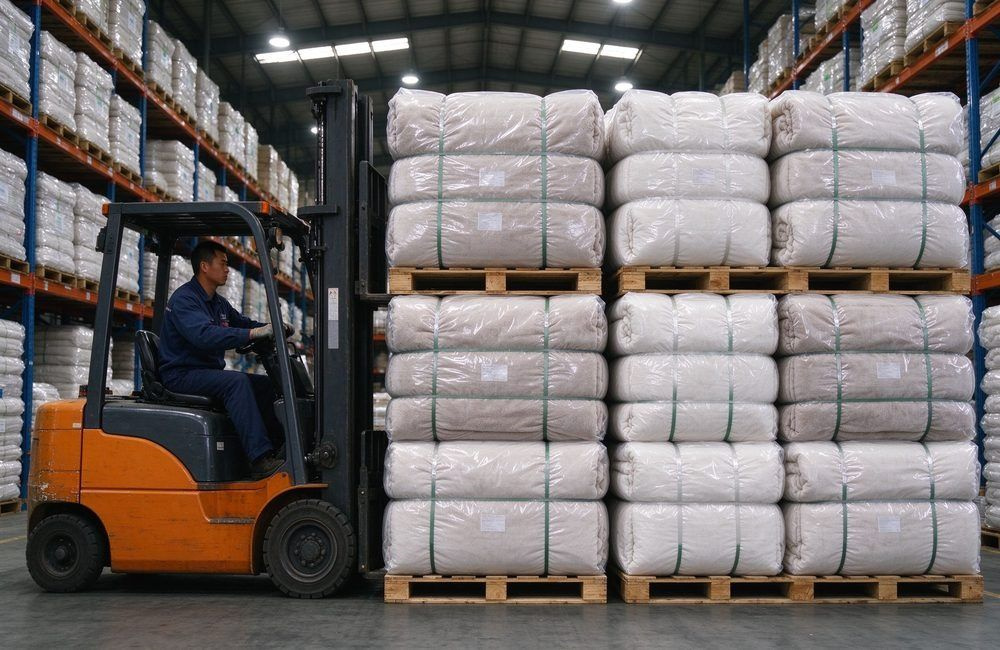
Pallet stacking compressed bales.
Framework agreements fcall-offs. Government framework agreement that fix prices, specifications and delivery terms for one to three years, with quantities released through annual call-offs. Government framework agreement relief supplies are the most stable revenue channel in public procurement.
The framework is awarded through the same public tender process as one-off purchases, but the bid evaluation weights price stability and delivery reliability more heavily because the state commits to a relationship, not a single shipment.
Framework pricing is usually fixed for the first year and index-linked to raw material costs after that, with a price adjustment formula written into the contract, which protects both sides when polyester prices move during the agreement term.
Call-off orders under a framework follow a simple release process: the buyer sends a purchase order against the agreed price and specification, and the supplier delivers within the contracted lead time, which removes the tender workload for both sides.
Most frameworks include minimum and maximum call-off quantities, a review clause for performance, and an exit clause for non-delivery, so suppliers should negotiate the minimum quantity and lead time carefully because they define the commercial baseline.
Evaluation for frameworks also reviews past performance under previous agreements: on-time delivery, quality consistency and responsiveness. Building a delivery track record through smaller civil defence contracts is the practical route to a larger framework award.
Framework duration matters for planning: most agreements run one to three years with annual release cycles, and the first year often sets the pattern for subsequent volumes. Understanding the release rhythm helps you reserve raw material and production slots months in advance.
For suppliers, the main value of a framework is pipeline stability: once awarded, the production schedule for the year is largely known, which allows better material purchasing and factory planning than repeated one-off tenders.

Signing a government framework agreement.
public tender compliance relief goods requires a disciplined document set, because state evaluators check completeness before they check price. The standard set covers registration, financial, technical and shipping documents, and each category has specific formatting expectations.
Registration documents include the company certificate, tax clearance, trade licence and procurement-authority registration, and they must be current because evaluators verify validity dates against the tender publication date.
Financial documents include audited accounts or bank statements for the last one to two years, a bid security or performance bond where required, and a price breakdown that shows unit cost, tax and delivery cost as separate lines.

Tender document compliance check.
Technical documents include the product datasheet, test certificates, a sample or sample reference, and a production and delivery schedule, and they must match the tender specification exactly because evaluators compare line by line.
Anti-corruption compliance is mandatory in most public procurement systems: suppliers sign declarations of no conflict of interest, no bribery and no collusion, and false declarations can lead to debarment, so the compliance file should be treated as a legal commitment, not paperwork.
Shipping documents follow the incoterm stated in the tender, and the packing list, bill of lading and certificate of origin must match the tender delivery point, with the certificate of origin format depending on the destination country's trade rules.
Documentation errors are the most common reason strong bids fail: a missing signature, an expired certificate or a misnamed company can disqualify a bid before technical evaluation, so a document checklist and a second reader are worth the cost on every submission.
Electronic submission systems are increasingly used for state tenders, and they enforce document naming, size limits and deadline rules automatically. Preparing files in the portal's preferred format before the tender opens avoids last-minute upload failures. Many African procurement agencies run the same e-procurement platform.
State buyers also accept digitally signed documents in most systems, but the signature must belong to the same authorised officer who signs the price sheet and declarations. Keeping one signature authority for all submission documents avoids inconsistency checks during evaluation.
The file structure matters for evaluation speed: numbered tabs, a cover sheet summarising every requirement and its location, and one PDF per category makes it easy for evaluators to verify compliance, which improves the bid's scoring impression.

Electronic tender submission on the portal.
|
Item |
Requirement |
|
Fibre |
100% polyester or cotton-rich blend |
|
Size |
150 x 200 cm finished |
|
GSM |
190-210 for institutional stockpiles |
|
Colour |
Grey, white or national-specified colours |
|
Testing |
Shrinkage, colour fastness, pilling at recognised lab |
|
Packing |
Vacuum-compressed bales, marked per carton |
The price breakdown usually requires separate lines for unit ex-works cost, packing, freight, insurance and taxes, and the total must match the arithmetic, because evaluators re-check the math and reject bids with calculation errors.
Tax treatment varies: some tenders require VAT-inclusive prices, others VAT-exclusive with the tax paid by the buyer, and the tender document states which, so suppliers should confirm tax treatment before finalising the price sheet.
Incoterm choice changes the price: CIF includes freight and insurance to the destination port, DAP includes inland delivery to the warehouse, and EXW transfers all logistics to the buyer, so the quoted price should reflect the exact scope of responsibility requested.
Most state buyers evaluate on best value rather than lowest price, with the technical and delivery scores weighted into the total, which means a slightly higher price can win if compliance and delivery reliability are stronger, so do not under-price to the point of delivery risk.
Price validity periods are stated in the tender and typically run 60 to 120 days, and raw material volatility is handled through the price adjustment clause in frameworks rather than a higher initial price, so the initial quote should be realistic and valid for the full period.
Comparison shopping by buyers follows the tender matrix, so the winning price is the one that scores best on the published formula, not the lowest number. Presenting a complete, compliant price that matches the requested scope almost always beats an incomplete low bid.
Currency and exchange risk are managed through the tender's currency clause: bids are usually priced in the national currency or a reference currency, and the contract fixes the rate, so the price sheet should state the currency and the validity clearly.

Item
Requirement
Unit ex-works cost
Fabric, labour, overhead per blanket
Packing
Compression, carton, marking
Freight
Ocean or truck to delivery point
Insurance
Coverage per incoterm
Taxes
VAT-inclusive or VAT-exclusive per tender
Validity
60-120 days as stated in tender
Thgovernment programs mirrorsovernment programs mirrors the tender structure and should be assembled in the order of the evaluation matrix. A complete government relief RFQ file has five parts: eligibility, financial, technical, delivery and compliance.
Eligibility part: registration certificate, tax clearance, trade licence and agency registration, all current and notarised where required, placed behind a cover sheet that maps each document to the tender requirement.
Financial part: the signed price sheet with arithmetic verified, the bid security or performance bond, bank references and audited accounts, with the currency and validity period stated on the cover.
Technical part: the datasheet matching the tender specification line by line, national or ISO test certificates, the pre-production sample reference and the production schedule, plus any country-specific labels or packaging evidence.
Delivery part: the production and shipping timeline from order to arrival at the stated delivery point, the packing and marking plan, and the transport route, because evaluators score delivery realism as part of the matrix.
Compliance part: the signed declarations on conflict of interest, bribery and collusion, the local content statement if required, and the warranty undertaking, all dated and signed by an authorised officer.
Prequalification, where required, is a separate process that pre-approves suppliers before tenders are issued, and it is worth applying even when not immediately needed because it shortens the response window for every later tender.
Before submission, run a three-step check: every document is present and current, every number in the price sheet adds up, and every specification line matches the tender, then submit through the official channel before the deadline because late bids are rejected without exception.

government emergency procurement follows public procurement law: a budget release follows a disaster declaration or seasonal risk assessment, the responsible office publishes a tender, suppliers bid, and evaluation leads to award and delivery. It runs in fast-track and standard tracks, and the evaluation matrix weights price, technical compliance and delivery capability in fixed proportions.
Civil defence offices buy stockpile blankets, tents, cots and bedding for national and regional warehouses, and they run restocking tenders on an annual cycle plus emergency top-up contracts. For civil defense supplies Africa, the winning profile is registered with the procurement authority, able to show national test certificates and able to deliver within the emergency window.
military relief supplies are procured through defence logistics agencies under military procurement regulations, often through framework agreements with annual call-offs. Specifications emphasise durability and rapid deployment, and some agencies require security clearance and facility visits before award.
A state tender requires eligibility documents, a technical specification match, financial capacity proof, local content compliance where stated and delivery guarantees, plus bid security where required. government tender emergency blankets usually require all five elements in one submission, and missing tax clearance is the most common disqualifier.
Most national tenders reference country-specific standards for fibre, GSM, dimensions, labelling and testing, which usually align with UNHCR-style relief specifications but add local variations such as heavier GSM for highland zones or specific label languages. National standards relief goods must pass the country-recognised test before bulk production.

National stockpiles are built from risk assessments that estimate affected population and coverage, converted into blanket, tent and bedding quantities, then procured on a restocking cycle with rotation releases. national stockpile blankets are usually bought through annual or framework contracts aligned with the seasonal risk calendar.
State agencies award multi-year frameworks that fix prices, specifications and delivery terms, with quantities released through annual call-offs. Framework pricing is usually fixed for the first year and index-linked after that, and the main supplier value is pipeline stability.
public tender compliance relief goods needs registration documents, financial documents, technical documents and shipping documents in one structured file, plus signed anti-corruption declarations. Missing signatures, expired certificates or misnamed companies are the most common disqualifiers.
Pricing is formula-driven: the evaluator applies the published matrix to a complete price breakdown with separate lines for ex-works cost, packing, freight, insurance and tax. Most state buyers evaluate best value rather than lowest price, and prices must remain valid for the stated 60 to 120 day period.
Yes, most systems allow foreign bids, but requirements vary: some countries require a local agent, local content or in-country assembly, others allow fully imported goods, and registration with the national procurement authority is usually required before bidding.
The most common failures are missing or expired documents, arithmetic errors in the price sheet, specifications that do not match the tender line by line, and unsigned anti-corruption declarations. A document checklist and a second reader on every submission prevent most disqualifications.
Monitor official gazettes, national procurement portals and ministry websites, plus annual procurement plans published before the budget year. Regional and municipal offices publish smaller tenders, and civil-military coordination programmes open additional channels for standard civilian specifications.
State buyers usually request a pre-production sample and sometimes a factory inspection before award, tested against the national standard at a recognised laboratory. Running the same three tests internally before sending samples saves cost and time.
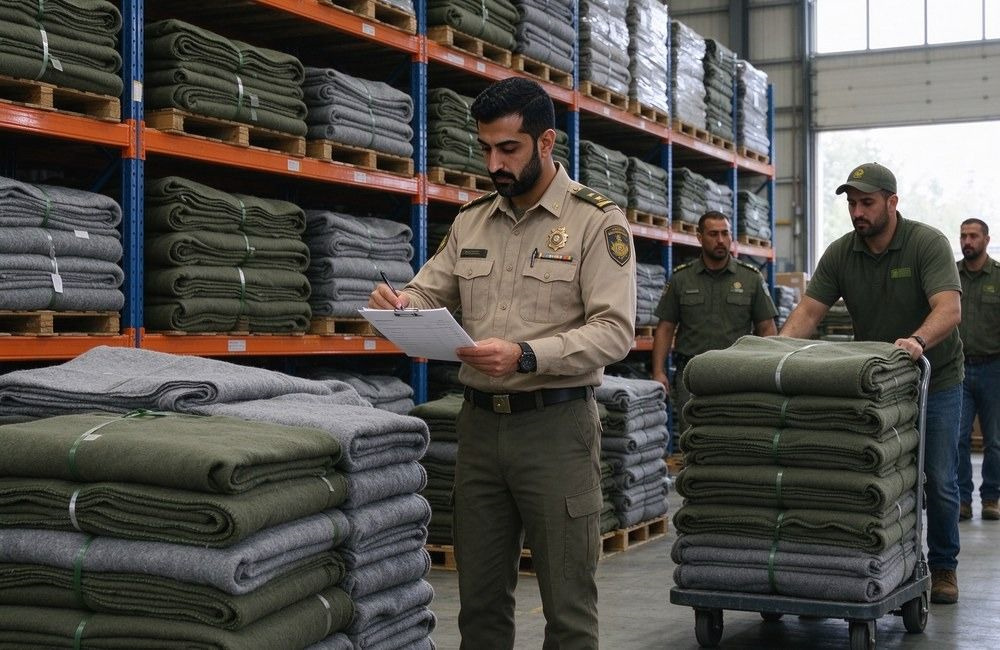
Government buyers follow a repeating cycle of RFQ, samples, compliance checks, packing approval and delivery. The olive blanket roll in the government warehouse is specified against a standard, and the check at the shelf confirms the delivered configuration before it is accepted into national stock.
government emergency procurement guide for Africa: civil defense supplies, military relief supplies and public tender compliance for relief goods
 |

|
Попередній :
NGO and Red Cross Relief Procurement for Africa: What Suppliers Need to Know About Blankets, Tents and Bedding Tenders, Pricing, Samples and Compliance Buying for Non-Profit BuyersДалі :
Bulk Relief Procurement Checklist for Africa: RFQ, Samples, Packing and Delivery Terms for Blankets, Tents and Bedding Suppliers Responding to Humanitarian Tenders and RFQ TermsДружні посилання :
Авторське право © Custom Disaster - Relief Bedding: Tents, Sleeping Bags, Blankets Всі права захищені
професійна команда для обслуговування !