Категорії

After twenty years in the relief blanket trade — first in QC and production, now supplying government tenders, NGO appeals, and emergency stockpiles — I've been asked every question in the book. The ones that cost buyers money aren't the technical ones about gsm or tog ratings. They're the ones that sound simple but trip up even experienced people: "How do I know this test report actually covers my order?" "Who keeps the approved sample — and what if the bulk doesn't match it?" "What if inspection fails three days before the ship sails?" This FAQ collects the questions I hear most often, with straight answers you can put straight into your RFQ or purchase file.
The answers below explain what to ask and where to record it. They are not claims about every blanket or a replacement for the current quotation, sample and order terms.
Use this FAQ to turn a buyer question into a usable project field. When a question is settled, place the answer in the current RFQ, quotation review, sample record, packing plan or receiving record instead of relying on a general web page.
A buyer once emailed me six questions in one message: "What's your best price, can you do custom labels, how fast can you ship, do you have test reports, what's your MOQ, and can you do FOB Hamburg?" I had to reply asking which spec, which quantity, which temperature rating, which test standard, and which label design — because every answer depended on those. Six questions turned into five follow-ups and another round trip. If they'd sent one question per field with the spec attached, we'd have had a quote in two days instead of two weeks. One field, one question, one answer — that's how you move fast.
▶ How do you scientifically verify the material authenticity and performance of emergency blankets before placing a bulk order? Our article *How to Verify Emergency Blanket Materials Before a Bulk Order* walks through a full set of practical methods, from lab testing to on-site inspection, so you can lock in material quality from the start.
Use FAQ for Wholesale Blankets Procurement
Read the questions by bulk blanket sourcing stage. Before an RFQ, identify the product, quantity, destination and information gaps. During quotation and sample review, confirm the selected configuration and the records that support it. Before shipment and at receiving, use the relevant questions to check packing, documents and exception handling.

The same question can require a different answer at different stages. A question about weight may mean a comparison field during blanket supplier screening, a measurement method during sample review, or an agreed receiving reference after shipment. Attach the answer to the current project stage and version.
This keeps the FAQ useful without treating it as a project approval. The current quotation, approved sample and written order records determine what applies to a selected purchase.
Plain English: this isn't a spec sheet and it isn't a contract. It's a checklist — what to ask, when to ask it, and where to write the answer down. If you ask "what's the gsm?" during the RFQ stage, you get a quote number. If you ask it while weighing the approved sample, you get a scale reading. Same question, different stage, different record.
Begin with a clear product record. Keep material construction, finished size, GSM, finished-weight basis where relevant, edge finish, colour, label wording and packing as separate fields. Mark each field as fixed, optional or still open so later teams do not mistake a general description for a confirmed order specification.
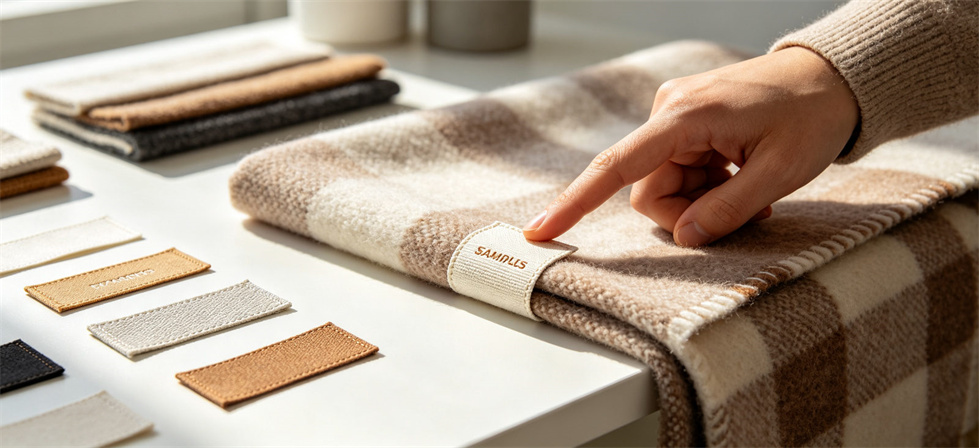
When an answer closes a field, add the agreed wording to the current version. Do not leave an important answer only in an email thread or a verbal conversation.
The checklist table below helps institutional blankets bulk blanket sourcing teams track buyer verification fields for bulk blankets. Use it alongside your institutional blankets bulk blankets blanket supplier responses to ensure every requirement is documented before wholesale blankets production begins.
|
Buyer control |
Question to close |
Useful record |
|
Project brief |
What is the actual use and destination? |
Current requirement sheet |
|
Configuration |
Which physical fields are fixed? |
Written specification |
|
Confirmation |
What is covered by a sample or document? |
Scope note |
|
Payment terms |
T/T 3-stage installment for bulk, or 50/50 for custom orders |
Written payment confirmation |
|
Test reports |
Reports current (within 12–24 months) and covering the exact spec |
Dated lab report with config |
|
Inspection |
AQL level, PSI and DUPRO arrangements, rejection criteria agreed |
Order confirmation clause |
|
Shipping docs |
Commercial invoice, packing list, B/L, certificate of origin confirmed |
Document checklist |
|
Receipt |
How will differences be handled? |
Receiving record |
MOQ, price, lead time, payment and delivery terms belong in the current quotation or order terms. An FAQ can explain what to ask, but it cannot establish a commercial condition for every blanket, quantity or destination.
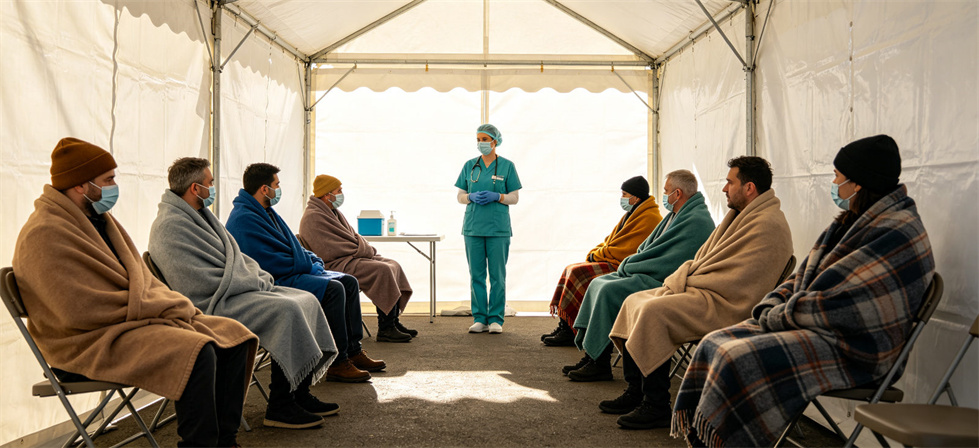
Before comparing blanket supplier replies, align the selected configuration, quantity basis, destination, packing scope, document needs and included services. This makes a commercial comparison meaningful and exposes any field that still needs written confirmation.
A physical sample can help a buyer review visible construction, fold, size method, weight basis, edge finish, colour reference, label placement and unit presentation. Record observations against the selected configuration so the sample is not separated from the order it supports.

A sample does not by itself prove a future production batch, a document scope or a shipment plan. Keep those decisions in the applicable written record and ask for clarification when they are not yet matched to the selected order.
Ask first which decision a document is meant to support. A test report, material statement, label proof or packing record should be reviewed against its issuing party, covered item or order reference, date and stated applicability.
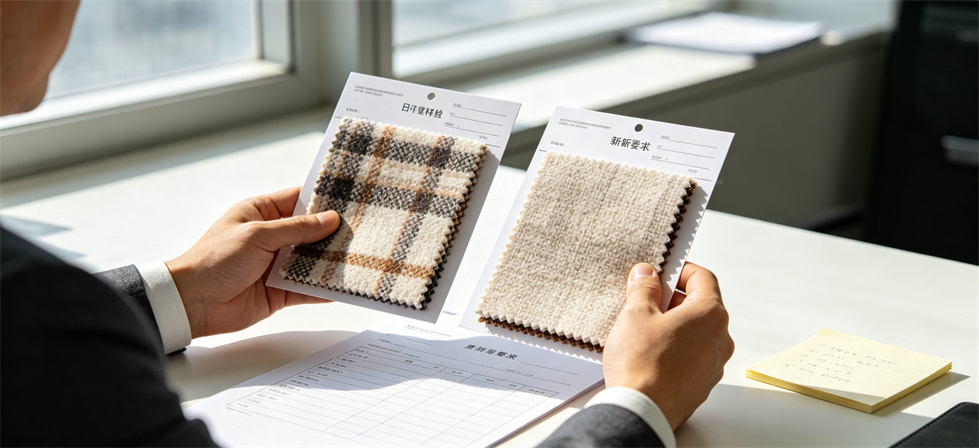
A document may be useful without applying to every option or later order. Record what it covers and keep any unmatched project requirement open until it is confirmed in writing.
Plain English: a test report is a snapshot — one batch, one day, one lab. A 2023 report for a 600 gsm blanket doesn't prove that the 800 gsm blankets being made for you today will get the same result. It's evidence, not a guarantee, and the older it gets the weaker it gets. If a supplier can't or won't produce a current report for your exact spec, that tells you something too.
Agree the unit presentation, outer marks, selected configuration reference and destination allocation before shipment where those fields matter to receiving. The receiving team needs a practical way to identify what has arrived and how it should be counted or distributed.

Use the approved order and current packing record, not a generic product image or an old carton description. If packing changes, update the affected record before it is used for shipment or receipt.
Before the goods ship, confirm which shipping documents you'll receive and who is responsible for each. The standard set for a relief blanket shipment is: commercial invoice (for customs value), packing list (for carton count and weights), bill of lading or sea waybill (for ocean freight) or airway bill (for air freight), certificate of origin (for tariff treatment), and any test reports or destination-specific customs documents your forwarder flags. For air freight, remember the 24 kg per carton gross weight limit — a 2.5 kg blanket means 9 per carton, a 3.5 kg blanket means 6 per carton.
Plain English: if the order says vacuum-compressed bales of 20 on ISPM 15 pallets, the packing list must say that too. If someone copied last order's packing list (which was folded cartons of 10), the warehouse opens the container expecting cartons and finds bales. That's a receiving delay, a customs question, and possibly a wrong-container-type problem — all because one document wasn't updated. And if you need a certificate of origin for a free-trade agreement and nobody requested it, the goods arrive at port without it and you pay full duty.
Record an exception in factual terms: the product or package identifier, affected quantity, visible condition, approved reference and the person who received the report. This creates a common starting point for buyer and supplier review.

For a repeat order, compare the retained configuration, sample reference, packing record, document scope and any earlier exception with the new project. "Same as last order" is not a complete instruction when a field has changed.

What goes wrong
A repeat customer says "same blankets as last order, same price, same everything." Production starts from the old spec. But the new destination needs a different label language, the old test reports are now 26 months old, or the freight forwarder changed and the new Incoterms require different documents.
Consequence
Non-compliant labels, test reports the receiving authority rejects as outdated, or missing documents that hold up customs clearance. The buyer assumed nothing changed; it was assumed the old spec was still correct.
How to prevent it
Every repeat order gets a spec reconfirmation, even if the SKU is identical. Check destination, regulation, label language, test report dates, packing, and document set against the new project. If nothing changed, great — you've confirmed it. If something changed, you catch it before production, not at the port.
Copy only the relevant questions into the RFQ, sample review or receiving plan. Using the questions before shipment is more useful than reading them only after an issue appears. I've seen buyers read this page after a problem landed and say "I wish I'd asked this six weeks ago." That's exactly when it's too late — ask before you commit.

Group unanswered questions by the person or record that can close them: product fields in the product record, commercial questions in the quotation, document questions in the stated scope, and packing questions in the receiving plan.
▶ Wool Blanket‑Disaster Emergency, Softness, Cozy, Affordable Prices. Click this title link to review cost‑effective price ranges, size selections and flexible shipping plans for large humanitarian relief orders.
Each answer here describes a way to verify or record a point; it is not a promise that every supplier, option or production batch will meet a condition. The current project records decide what is applicable.

When a project needs a special material, test, treatment or handling result, define that requirement for the selected order and identify the record needed to support it. Do not turn a general FAQ answer into proof for an unconfirmed configuration.
What goes wrong
A buyer reads "our blankets meet ISO 11092" on a web page and writes "ISO 11092 compliant" into their tender, without specifying which gsm, which temperature rating, or which thermal resistance value.
Consequence
ISO 11092 measures thermal resistance (Rct, in m²·K/W) — it gives you a number, not a pass/fail at a given temperature. A 300 gsm blanket and an 800 gsm blanket both "meet ISO 11092" because the standard is the test method, not a performance floor. A supplier can legally quote a 300 gsm blanket that technically passes the test method but is nowhere near warm enough for a -15°C tender.
How to prevent it
Always tie a standard to a configuration and a result. "ISO 11092, 800 gsm polyester wadding, minimum Rct 0.55 m²·K/W, rated to -15°C" is a spec. "ISO 11092 compliant" is a marketing line. If you don't know what Rct number corresponds to your temperature requirement, ask us to state it and put it in the spec.
Keep each open question specific. "What is the approved packing reference for this configuration?" can produce a usable answer. A single question combining material, colour, labels, packing, documents and delivery usually creates a vague reply.

If a concern cannot yet be stated as a field, write it as a short question and assign it to the relevant sample, product record, quotation, document review or receiving check. This is clearer than leaving a general note such as "quality to be confirmed."
Procurement checkpoint: If you can't point to the exact field a question is about, the question isn't ready to ask. "Is the quality good?" gets you "yes, our quality is very good." "What is the insulation wadding weight in g/m², with a tolerance of ±10%?" gets you a number. One is a sales pitch; the other is a spec. And if a supplier pushes back on a specific question — "why do you need to know that?" or "don't worry, our quality is fine" — that itself is useful information.
Pre-shipment inspection (PSI) catches problems when the goods are finished and packed. By then, if something is wrong, your options are rework, re-production, or a painful delay. A mid-production inspection — usually called DUPRO (during production inspection) — catches the same problems when roughly 20–50% of the goods are made, when there's still time to correct the line without blowing the ship date. At YRF we schedule DUPRO on every bulk order as a matter of course — it's cheaper to fix a problem on the line than at the container door.

For relief blanket orders, a DUPRO typically checks: is the shell fabric the correct gsm and colour? Is the insulation wadding the correct weight (weighed on a scale, not estimated by eye)? Are the seams and edge binding matching the approved sample? Are labels being sewn in the right place with the right text? If any of these is wrong at DUPRO, corrections can still be made on the remaining 50–80% of the run. If you only do PSI, you're negotiating with finished goods.
Plain English: PSI is a final exam. DUPRO is a quiz halfway through the course. You can still change the answer after the quiz; after the final exam, the grade is the grade. For large or critical orders, budget for both — the cost of one extra inspection day is trivial next to the cost of rejecting a full 40HQ container.
Review the answers linked to any changed field. A change in configuration can reopen the sample, label or document review; a new destination can reopen packing and handoff; a revised quantity can reopen allocation and quotation review.
Use recurring questions to improve the next buyer brief. If teams repeatedly ask for the same packing, sample or document point, add that field earlier in the process and name who is responsible for closing it.
Plain English: when something changes, don't just update that one field — check everything connected to it. If you change the insulation weight from 600 to 800 gsm, that changes the finished weight (which changes carton count and loading), the warmth rating (which changes the temperature claim), the vacuum compression ratio (which changes bale size), and possibly the test report (which may need re-testing). One change, four downstream checks.

What goes wrong
Te bulk arrives and the insulation weighs 720 gsm instead of the spec's 800. The supplier says "that's within industry tolerance" and refuses to replace it. But no tolerance was written into the order confirmation — they're citing a general number after the fact.
Consequence
You're negotiating a 10% shortfall in warmth with no written basis to reject. The goods may be usable but underperform; or they may fail your own receiving check and you're stuck with a 40HQ of blankets you can't deploy.
How to prevent it
Write tolerances into the spec and order confirmation before production starts. For bulk blankets: finished size ±2 cm, single-piece weight ±5%, wadding gsm ±10%. If a supplier wants wider tolerances, negotiate them upfront — not after the goods are made. The sealed sample with its weighed and photographed weight is your backstop.
Need a structured RFQ template for your relief blanket tender?
If you're preparing a bulk order, we'll share a ready-to-use RFQ template covering every field in this FAQ:
Reach us through the inquiry form with your target spec and destination. We'll send the template — no obligation, your information stays confidential. Final terms always subject to signed contract.
Related reading: Bulk Relief Blanket Procurement: From RFQ to Shipment · The Complete Guide to Wholesale Blankets · Extreme Cold Blanket Buying Guide · Comparing Relief Blanket Suppliers
State what you know: intended use, required quantity, delivery destination, known product requirements (shell gsm, insulation weight, temperature rating, size), packing or label needs, document requirements, and lead time expectations. You don't need every answer to start — share what you have and mark the rest as open or TBD. The more specific you are on the fields you do know, the more comparable the quotes will be. A vague RFQ gets vague quotes; a specific RFQ gets quotes you can actually compare line by line.

MOQ depends on the spec and whether it's a stock item or custom production, so it needs to be confirmed in the current quotation rather than stated as a fixed number here. For reference, standard relief blanket production typically runs in full 40HQ container quantities — roughly 6,000–8,000 pieces for standard 1.2–1.5 kg blankets, fewer for heavier extreme-cold specs. If you need less than a full container, say so upfront; we can sometimes combine with a running production, but the price per piece will be higher.

Confirm lead time in the quotation or order confirmation after the selected configuration, quantity, packing scope and destination requirements are clear. Do not treat a general article answer as a delivery commitment. Standard bulk blankets: 25–35 days after the T/T deposit is received. Custom specs, labelled production, or large quantities (multiple 40HQ containers): 40–50 days. Always get a specific calendar commitment in writing — "as soon as possible" is not a lead time.

State the product or order reference, the decision the report must support, the requested standard, and the selected configuration. Then check who issued the report, what it covers, and whether it applies to the current order. For institutional blankets , the reports buyers typically need are: thermal resistance (ISO 11092 / ASTM F1868 / EN 31092), flammability (ASTM D4151 / EN ISO 12952-1/-2), and harmful substances (OEKO-TEX Standard 100 / REACH SVHC). If your tender or destination regulation names a specific standard, quote that standard number exactly — don't say "the usual fire test."

Yes. Ask whether the selected option can use the requested label, then provide the wording, artwork or placement needed for review. Keep the approved label proof with the selected configuration and packing record. For international destinations, check whether the label must be in a specific language: Arabic for the Middle East and parts of East Africa, French for West and Central Africa, French plus Arabic for parts of East Africa, Spanish for Latin America, and English for many NGO and UN tenders. Also confirm whether care instructions, country of origin, and fibre composition must appear per local regulation.

A physical sample supports review of visible construction, fold, edge finish, size and weight, colour reference, label placement and unit presentation. It does not by itself prove future batch consistency or document scope — that's what written specs, tolerances, and inspections are for. Always seal and tag the approved sample with the spec number, gsm, date, and both parties' signatures or stamps. Weigh it and photograph it before approval so there's an objective record, not a memory.
Describe the intended colour and use an agreed physical reference (Pantone TPX/TCX, a fabric swatch, or a sealed sample) where colour matters to acceptance. Record the selected reference with the current configuration; do not rely on a phone photo or screen image as the final approval basis — screens render colour differently. For bulk blankets, standard colours are navy blue, grey, and olive drab; hi-vis orange panels are available for search-and-rescue variants but are not the default. Avoid white or light colours that show dirt quickly in field use.
Confirm unit presentation (folded vs. vacuum-compressed), inner packing (polybag per piece or bulk), outer carton or bale specification, outer marks and shipping marks, any destination split, counting method, and the record receiving staff will use. For vacuum packing, confirm PA/PE co-extruded film thickness (60 μm for standard blankets, 70–80 μm for extreme-cold), compression ratio, and spring-back recovery (≥90% within 24 hours at 20°C/60% RH). For pallets, confirm ISPM 15 heat treatment and IPPC marking for solid wood; plywood, OSB, or plastic pallets are exempt from ISPM 15.
For a standard FOB or CIF relief blanket shipment you should receive:
(1) commercial invoice — for customs valuation, in USD with your full company name and the correct Incoterms;
(2) packing list — carton-by-carton or bale-by-bale with quantities, net and gross weights, and measurements;
(3) bill of lading (ocean) or airway bill (air) — the document of title;
(4) certificate of origin — for tariff treatment, often Form A, Form E, or CO depending on destination;
(5) any test reports your destination requires;
(6) for air freight, confirm the 24 kg per carton gross weight limit with your forwarder before packing is finalised. Ask for a document checklist at order confirmation, not at the port.
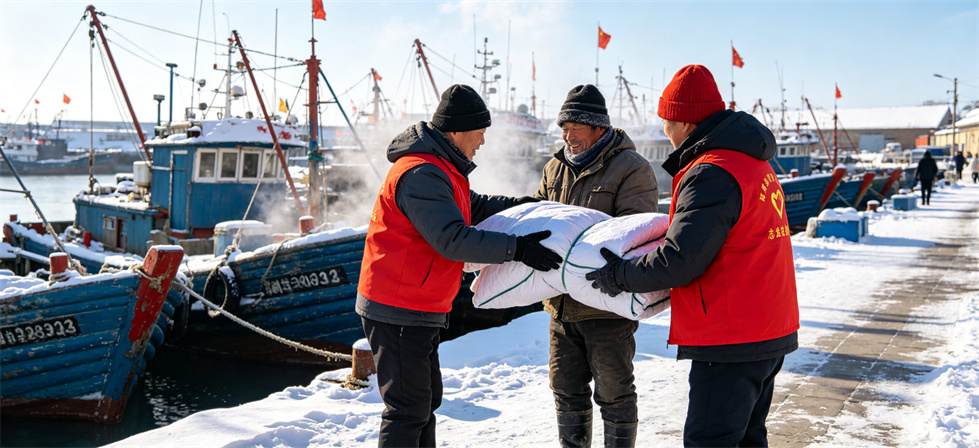
Prepare a receiving record before shipment that identifies the approved reference (spec number, sealed sample photo), package and shipping marks, quantity check method, visible-condition check, weighing procedure, and exception escalation route. Record any difference against that reference instead of sending a general complaint email. The receiving team should have: a copy of the approved spec, a photo of the sealed sample on a scale with a ruler, the packing list, and a one-page checklist (count, weigh, compare, document). If they can't compare against a reference, they can only count cartons — they can't verify the goods inside.

Keep the final configuration, approved sealed sample (or its photo and weight record), packing record, shipping document set, applicable test reports and their dates, inspection reports, payment record, change log, and any exception correspondence. Compare them with the new requirement before treating a repeat order as equivalent. A complete order file is your best protection when the next "same as last time" comes around — and it's what lets you say "actually, three things changed" instead of discovering them at the port.
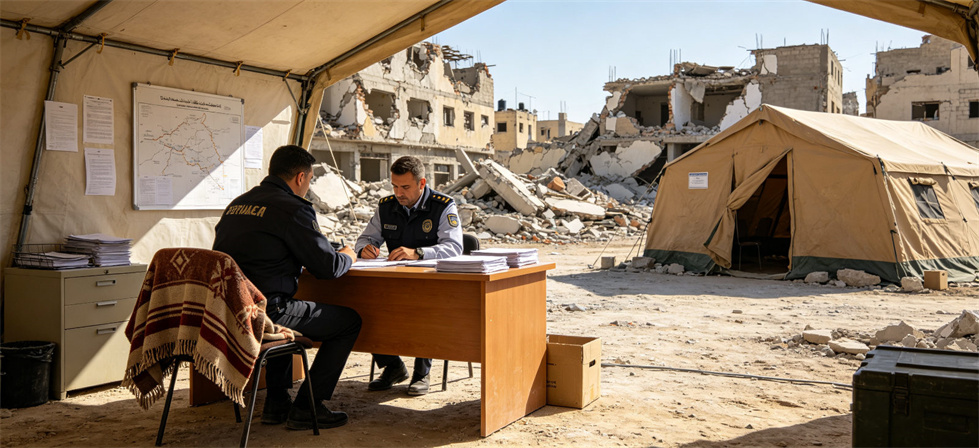
At YRF we work on T/T (telegraphic transfer) only; we do not accept L/C. Bulk and stockpile orders follow a 3-stage installment: deposit to begin production, a second payment at a production milestone (typically mid-production or after DUPRO inspection passes), and the balance before the goods leave the factory. Custom or made-to-order blankets follow 50% deposit on order confirmation and 50% balance before shipment. Always confirm payment terms in writing in the quotation or order confirmation — not in a chat message.
Three to five pre-qualified suppliers is the right range for a bulk tender. Fewer than three and you can't see the market spread; more than five and you're drowning in paperwork you can't compare. Pre-qualify before sending: confirm they can produce the spec you need, hold current test reports (within 12–24 months) for that spec, can meet your lead time, and work on T/T terms. Then send the identical RFQ to all of them so the quotes are directly comparable — same spec, same quantity, same destination, same Incoterms, same document requirements.

Four checks:
(1) Issuing lab — is it ISO 17025 accredited (SGS, Bureau Veritas, Intertek, TÜV)? A report from an unknown lab with no accreditation number is worth very little.
(2) Tested configuration — does the shell gsm, insulation weight, and construction match your exact spec, or is it from a different product the supplier also makes?
(3) Standard — does it reference the correct standard for your requirement (thermal, flammability, harmful substances)?
(4) Date — textile reports older than 24 months may not reflect the current production batch. If any of these is off, request a fresh report before accepting it as evidence for your order.

Both sides. We keep a sealed reference for production; you keep one for receiving comparison at destination. For large or critical orders, arrange for the inspection agency (SGS, BV, Intertek) to hold a third sealed sample. This three-way hold prevents he-said-she-said disputes: if your sample and ours disagree, the agency's sealed sample is the tiebreaker. Without your own sealed sample, you have no independent reference — you're relying on the production side to confirm its own work.
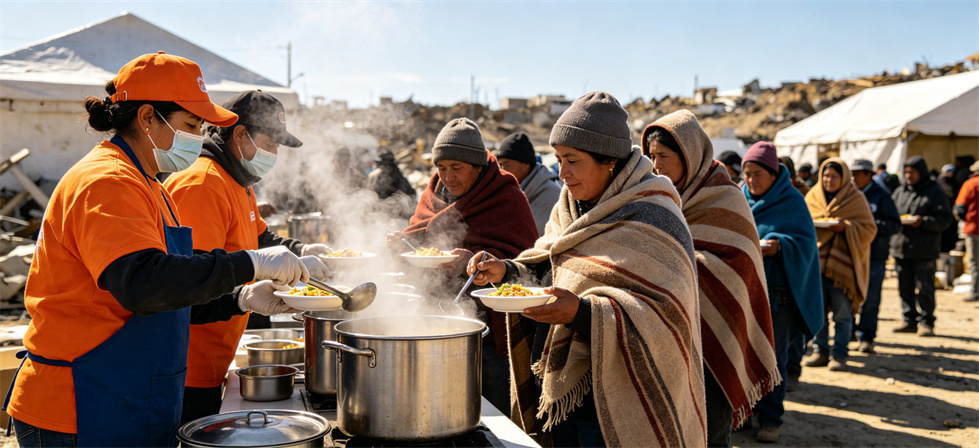
It depends on severity, and this must be agreed in writing before production starts. The standard framework:
(1) Minor defects within AQL tolerance — general inspection level II, major 2.5 / minor 4.0 — are documented and accepted. Plain English: AQL 2.5/4.0 means that among 200 blankets, up to about 7–10 minor defects (a loose thread, a slight mark) and up to 2–3 major defects (a wrong label, a seam gap) are considered acceptable.
(2) Major defects above AQL — the supplier reworks or replaces affected units before shipment at their cost, and re-inspection is arranged.
(3) Critical failures (wrong spec, wrong temperature rating, wrong packing, safety issues) — the lot is rejected, the supplier re-produces at their cost, and any air freight or expedited shipping needed to protect the delivery date is on their account, not yours.
A spec is what you require (e.g., "800 gsm polyester wadding, 150×200 cm, rated to -15°C"). A standard is the test method used to verify it (e.g., "ISO 11092 for thermal resistance"). A test report is the document showing that a specific sample was tested against that standard and the result (e.g., Rct = 0.55 m²·K/W). You need all three: the spec defines what you want, the standard defines how to measure it, and the report proves it was measured. Having a standard without a spec is like owning a ruler but not knowing what length you need.
Tolerances must be written into the spec and order confirmation before production starts — not cited after the goods are made. For wholesale blankets, standard tolerances are: finished size ±2 cm, single-piece weight ±5%, wadding gsm ±10%. If a supplier wants wider tolerances, negotiate and record them upfront. If a difference falls outside the agreed tolerance, the sealed sample (weighed, photographed, and signed) is your backstop: compare the bulk to the sample, not to a verbal assurance. If the supplier refuses to honour agreed tolerances, that's a contractual issue — escalate according to your order terms.
For large or critical orders, do both. DUPRO (during production inspection, at 20–50% completion) catches problems while the line is still running — wrong fabric gsm, wrong wadding weight, wrong labels — when corrections can still be made on the remaining run. PSI (pre-shipment inspection, when goods are 100% finished and packed) is your final gate before the container leaves. PSI alone means you're negotiating with finished goods; DUPRO gives you leverage while there's still time to fix. For small repeat orders from a known supplier, PSI may be enough. For first orders or critical tenders, budget for both.
It depends on the spec and packing method. For standard 150×200 cm, 1.2–1.5 kg institutional blankets vacuum-compressed: roughly 6,000–8,000 pieces per 40HQ. For extreme-cold -15°C blankets (2.0–2.6 kg): 5,000–7,000 compressed or 3,000–4,000 uncompressed. For -25°C blankets (2.8–3.8 kg): 3,000–5,000 compressed or 2,000–3,000 uncompressed. These are estimates — the exact count depends on finished size, compression ratio, bale dimensions, and pallet configuration. Always confirm loading with your supplier based on your exact spec.
The key certifications depend on your destination and tender requirements, but the most commonly requested are:
(1) Harmful substances — OEKO-TEX Standard 100 (Class I for baby, Class II for skin contact) or REACH SVHC compliance for the EU market.
(2) Flammability — ASTM D4151 (US), EN ISO 12952-1/-2 (Europe), BS 5866, or 16 CFR Part 1633 (US). Note: blanket flammability standards are different from tent standards like CPAI-84 — don't confuse them.
(3) Thermal performance — ISO 11092 / ASTM F1868 / EN 31092 with a stated Rct value.
(4) Destination-specific — EAC certification per TR CU 017/2011 for EAEU countries (Russia, Kazakhstan, Belarus), CPSC compliance for the USA, bilingual labelling and fibre content declarations for Canada. All test reports should come from ISO 17025 accredited labs (SGS, BV, Intertek, TÜV).
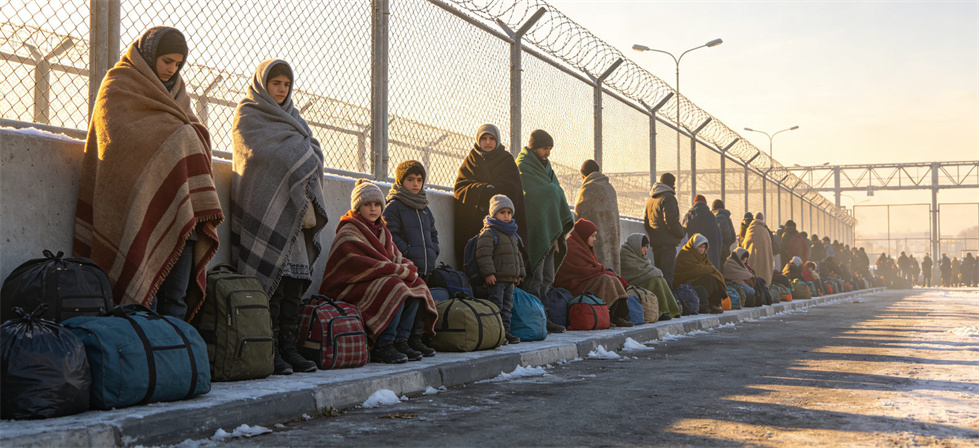
institutional blankets are purpose-built for emergency and humanitarian use. They use a durable polyester taffeta or Oxford shell (100–120 gsm) with a PU or PA/PE coating for wind and water resistance, a thick polyester insulation wadding layer (300–1200 gsm depending on temperature rating), and ultrasonic or box-quilted construction that holds the wadding in place without shifting. They're vacuum-compressible for shipping, treated with flame retardant, and use dark colours (navy, grey, olive) that don't show dirt. Regular consumer blankets — wool, cotton, fleece, or down — prioritise softness, warmth-to-weight for hiking, or home aesthetics. They aren't treated for flame resistance, aren't designed for vacuum compression and recovery, and won't survive repeated field use and bulk distribution. If a tender specifies "relief blanket" or "emergency blanket," a consumer blanket won't meet the spec even if the gsm sounds similar.
For standard stock specs, samples are free — you cover the courier cost (freight collect). For custom specs (custom gsm, custom colour, custom label, special dimensions), a sample fee may apply depending on complexity. This fee is often deductible from your first bulk order if the sample is approved and the order proceeds. Sample lead time is typically 5–7 days for stock items, 10–15 days for custom. We recommend approving a sealed sample before bulk production begins — it's the single most effective way to avoid disputes.
Yes — vacuum compression is standard for relief blanket shipping. We use PA/PE co-extruded film (60 μm for standard blankets, 70–80 μm for extreme-cold). After decompression, the wadding recovers to ≥90% of its original loft within 24 hours at 20°C/60% RH. For storage, keep blankets at 15–25°C, below 60% relative humidity, on pallets at least 15 cm off the floor, and stacked no more than 4–5 bales high. Long-term compression (over 6 months) can slow recovery — if blankets have been stockpiled for an extended period, open and fluff them 24–48 hours before distribution. Do not dry-clean bulk blankets (the solvent damages wadding loft); spot-clean with a damp cloth and mild detergent if needed.

The best question a buyer can ask isn't the smartest or most technical one. It's the one that gets a specific number written into a specific field in a specific document — before production starts, not after the container arrives. Vague questions get vague answers; vague answers get wrong shipments; wrong shipments cost tenders, delay relief, and end up on someone's desk as a problem that should have been killed in the RFQ stage. Ask one thing at a time, write down what you hear, tie every answer to the record that governs the order, and agree the tolerances before you agree the price. That's how you avoid the problems this FAQ exists to prevent.
Frequently Asked Questions
How to calculate blanket quantities for relief projects?
To calculate wholesale blankets quantities, estimate affected households or individuals, multiply by units per person, and add a 10-15% reserve margin. Consider seasonal needs and storage capacity when finalizing bulk blankets order sizes for institutional blankets distribution.
This method for how to calculate blanket quantities for relief projects should be documented in your procurement plan and shared with the blanket supplier before order confirmation.
How to verify blanket packing and labeling before shipment?
Request pre-production packing photos, confirming carton markings match the purchase order for wholesale blankets, checking label placement on samples, and arranging third-party inspection if required for institutional blankets. Your blanket supplier should provide packing confirmation before production begins.
Understanding how to verify blanket packing and labeling before shipment reduces receiving disputes and ensures institutional blankets arrive ready for distribution.
How government stockpiles should plan blanket specifications?
Define core specifications for institutional blankets, establish approved blanket supplier lists through tender, maintain batch traceability records, and schedule annual stock rotation for wholesale blankets. A written specification checklist ensures consistency across annual blanket procurement cycles for bulk blankets.
How to store and rotate emergency blanket stockpiles?
Store bulk blankets in dry, ventilated conditions with pallet separation, record receipt dates by batch, and follow first-in-first-out rotation for institutional blankets. Inspect stock annually for moisture damage and replenish wholesale blankets based on usage rates rather than fixed calendar dates.
How buyers can verify recycled content before ordering blankets?
Request material composition statements, test reports showing fibre percentages, and batch traceability records from the blanket manufacturer. A blanket supplier that can provide clear composition details for institutional blankets reduces the risk of mislabeled recycled content in bulk blankets orders.
How to control blanket specification changes on repeat orders?
Maintain a signed appendix with revision identifiers, requiring written confirmation for any GSM, size, label or packing alteration for bulk blankets, and requesting updated samples when changes affect product identity for wholesale blankets. This prevents silent substitutions in repeat relief blanket procurement orders for institutional blankets.

▶ Addressing common pain points in institutional procurement such as substandard specs and delayed lead times, we provide large-volume wholesale supply of emergency relief blankets for government stockpiles, prisons and military camps, ensuring delivery quality through strict project technical standards and stable production capacity. For core points on institutional bulk purchasing, check our article *Emergency Disaster Relief Blankets | For Government Stockpiles, Correctional Facility Blankets & Military Camps – Bulk Wholesale Supply*.
✅ Factory video link (YouTube): https://x.c1ns.cn/zVNIU
✅ Facebook homepage: https://a.c1ns.cn/SjJla
|
Access our full product document |
Quick real‑time chat for urgent project questions |
 |
 |
|
Get full‑range product specs & package solutions in PDF |
Connect with us for instant project support |
Дружні посилання :
Авторське право © Custom Disaster - Relief Bedding: Tents, Sleeping Bags, Blankets Всі права захищені
професійна команда для обслуговування !