Категорії
Last updated: November 20, 2026 · Tsunami emergency kit
A tsunami emergency kit turns a warning siren into an organized evacuation. Coastal hotels, docks and relief groups need life jackets radios and evacuation gear staged before the wave arrives: life jackets, whistles, hand crank radios, waterproof lighting and shelter supplies.
This guide lists what to stock, how many per person, and how to keep it ready all season, so the first minutes of a warning are spent moving, not searching for gear.
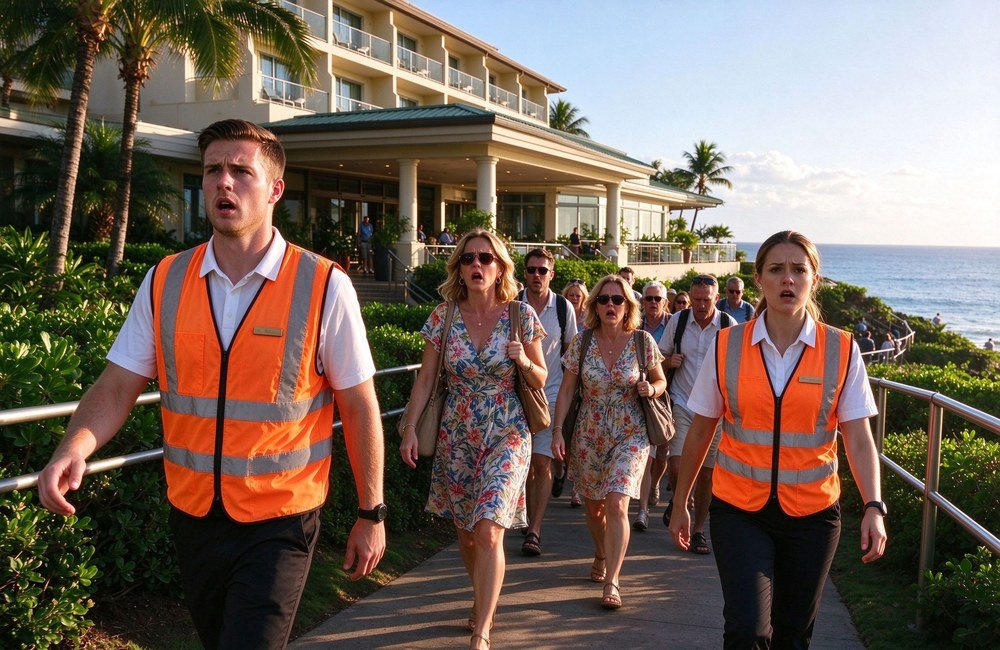
Coastal hotel guests evacuating to high ground after a tsunami warning, staff guiding families up the inland route with life jackets and evacuation kits
Table of Contents
A tsunami warning gives people minutes, not hours. The difference between a smooth evacuation and a scramble is decided by what was staged in advance: life jackets at the dock, whistles in every kit, a radio that works without electricity, and a shelter with blankets ready on high ground.
This page covers the full tsunami emergency kit for coastal properties, docks, fishing villages and relief groups.
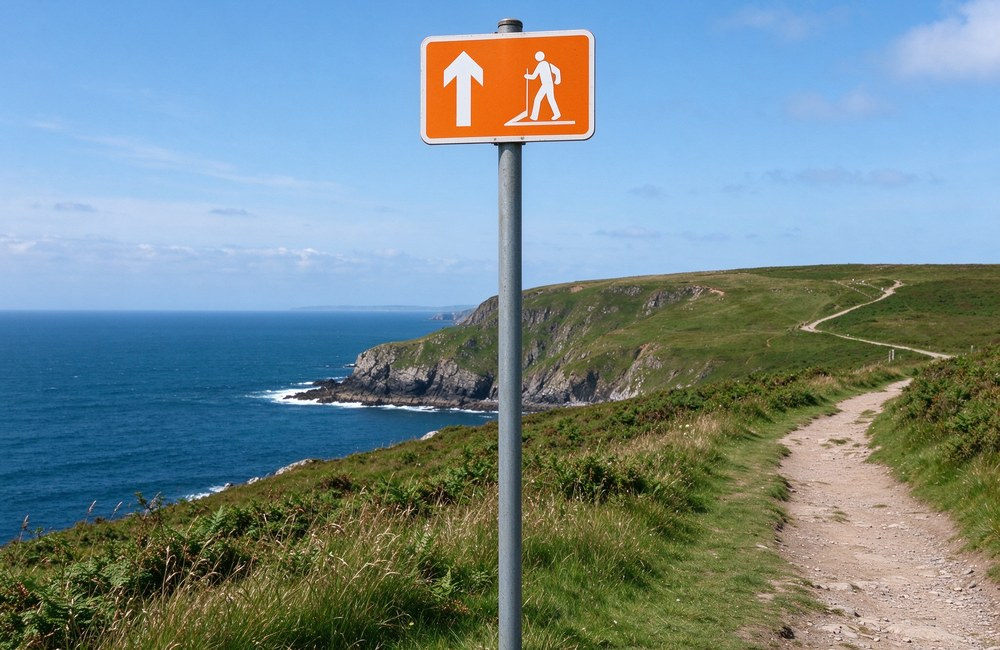
Tsunami evacuation sign marking the high ground route, coastal residents following the blue arrow toward the safe zone after the warning siren
The sections below follow the real sequence of a tsunami event: warning, evacuation, shelter, and recovery. Each section lists the tsunami preparedness supplies to stock, how much per person, and the details that separate a usable kit from a box that stays closed until too late.
Procurement officers will find the same quantities that field coordinators use.
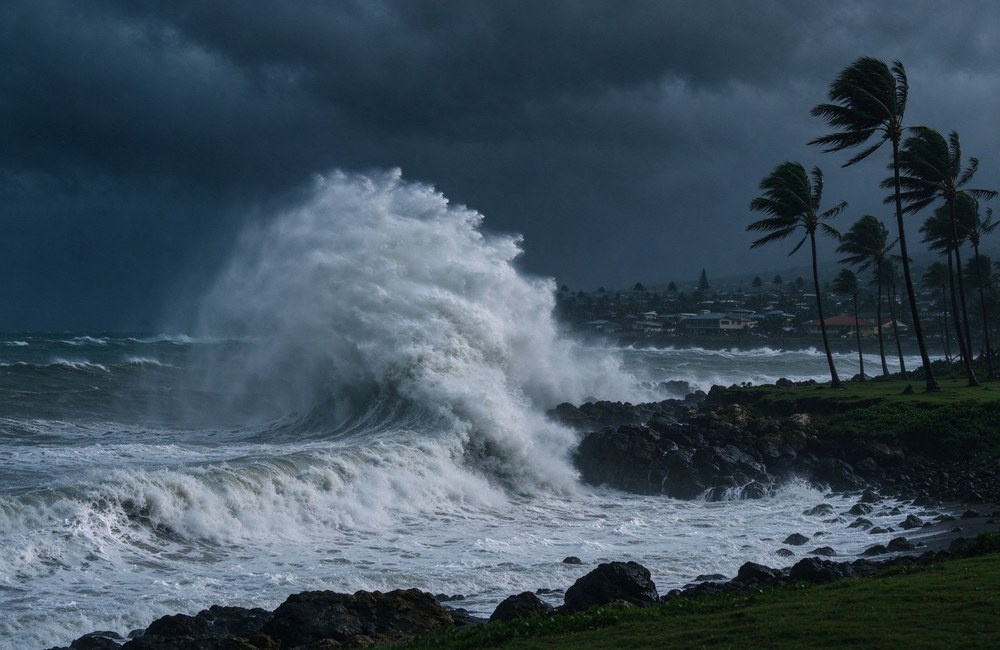
Stormy coast with tsunami warning flags and evacuation kit staging on the shoreline, dark waves and safety cones marking the danger zone
This guide is written for organizations, not single households. You will see bulk quantities, per-person ratios and restock cycles, because a hotel protecting 300 guests faces different decisions than one family.
Where numbers appear, they match standard coastal preparedness planning and can be adjusted to your property size and budget.
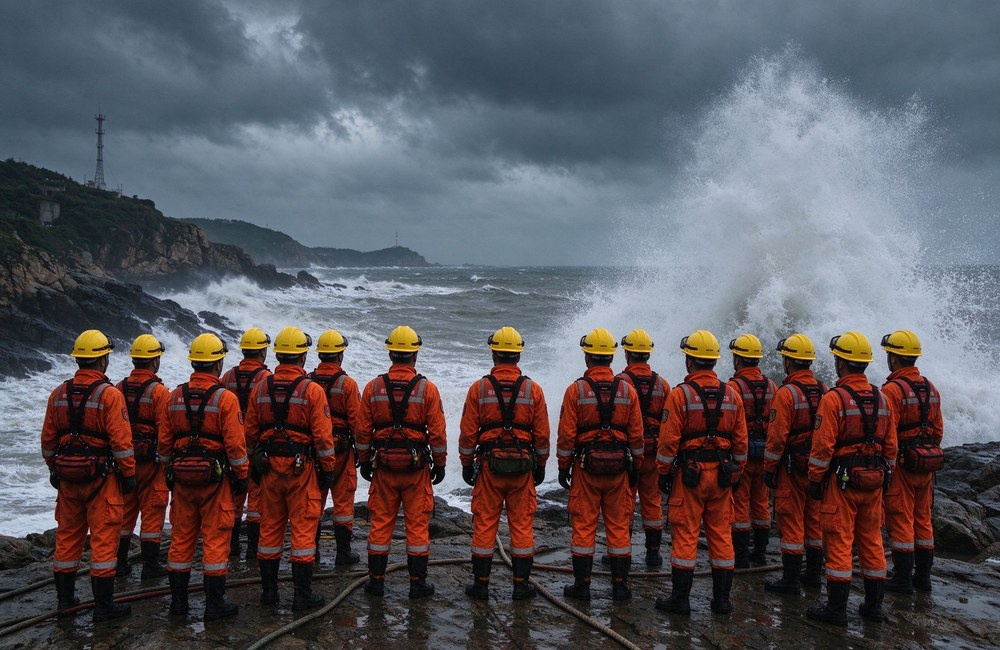
Coastal rescue crew patrolling the evacuation route in the rain, life jackets and flashlights ready as residents move to high ground
By the end, you will know which items matter most, how many to order per person, how to stage gear so it is usable in seconds, and which official sources to check during a warning.
The final sections give a quick-reference list and a procurement checklist you can hand to your supplier.
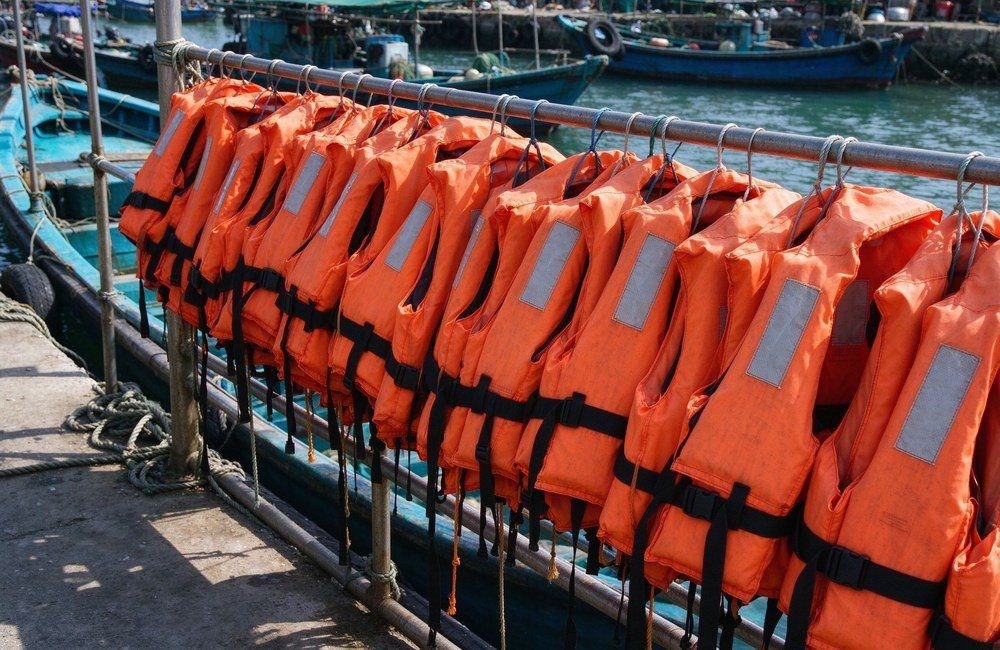
Life jackets stacked at a dock evacuation station, orange vests with whistles and reflective tape ready for ferry passengers and dock workers during a coastal tsunami warning
Preparedness is measured in evacuation minutes. A coastal property that can move guests to high ground within the first minutes of a warning saves lives; one that searches for life jackets in the lobby does not.
For organizations, the same rule applies at larger scale: a tsunami emergency kit per person turns a siren into a routine, and routine is what survives panic.
The assembly point needs more than a location: it needs a name on the sign, a shelter manager assigned, and a first-aid point marked. Coastal properties that pre-assign these roles move faster because nobody asks who is in charge during the siren.
Print the roles on the staging checklist and change them only at the season review, so the team that practices is the team that deploys.
Tsunamis arrive minutes after the triggering event. Distant-source waves allow hours of warning; local earthquakes give only minutes, often before official alerts are issued.
The kit must therefore be staged at the evacuation point, not locked in a store room, because the first minutes of a local-source event are spent moving to high ground, not collecting gear.
Every coastal property should walk its own evacuation route once a season and time it.
Drill data makes the point concrete: properties that stage one kit per guest room or per dock worker cut their evacuation time by more than half on the first drill.
Teams that practice the route once a season find missing life jackets and dead radio batteries before the warning, not during it.
Budget for one drill per year and treat it as part of the kit itself.
Unprepared coastal operations face three failures at once: guests or workers reach the evacuation point without life jackets, radios run out of power within an hour, and the shelter has no blankets or first aid.
Each failure adds risk at the exact moment when minutes count.
A pre-built tsunami emergency kit with sealed components, printed checklists and assigned staging avoids all three, and it is cheaper to buy in bulk before the season than during an event, when suppliers are sold out and freight is delayed.
Shoreline safety inspection with warning sirens and evacuation signs, coastal warden checking the hazard zone and kit staging before the tsunami season begins
Tsunami risk is not uniform, and neither is a tsunami emergency kit. A resort on an open beach faces a different threat than a dock in a protected harbor, but both need the same core layers: floatation, alerts, lighting, warmth, first aid and staging.
Understanding your local risk profile tells you which layers to weight when ordering.
Tsunamis follow predictable triggers: undersea earthquakes, landslides, volcanic activity and, less often, asteroid impacts. Most coastal warnings come from regional alert systems that monitor seismic stations and ocean buoys.
Track your local warning channel - siren, radio or phone alert - and treat any earthquake strong enough to shake buildings near the coast as a natural tsunami warning: move to high ground immediately, do not wait for an official alert.
Evacuation distance is a planning input, not an afterthought: measure the walk from the farthest room to high ground, add five minutes for children and elderly guests, and stage the kit so nothing adds to that time.
Coastal properties on flat terrain often need a secondary assembly point a second street inland, because the first wave can flood the closest high area.
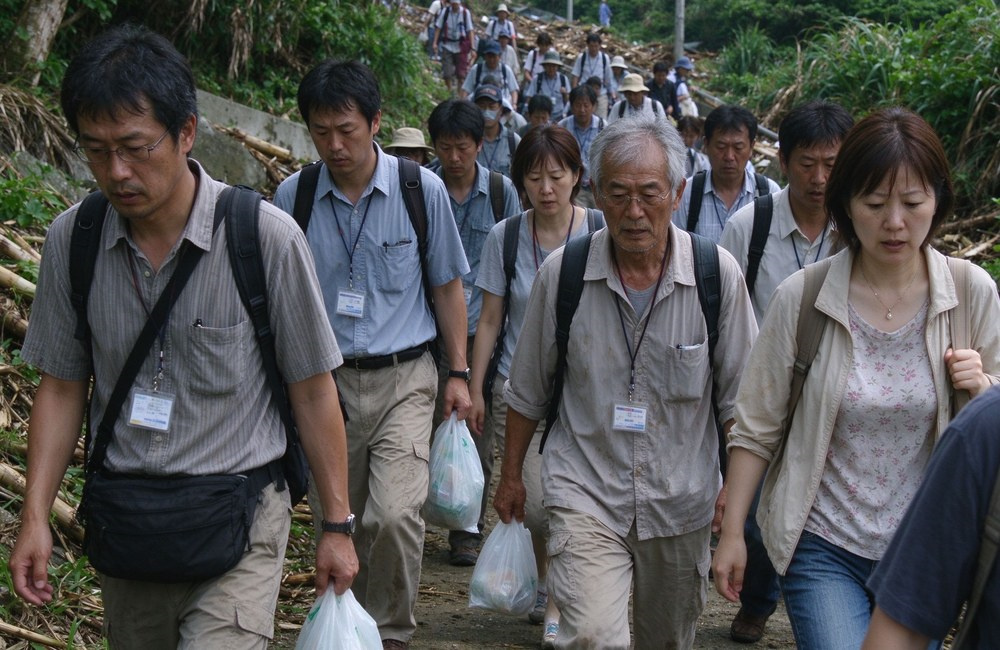
Every coastal property needs a mapped evacuation zone and a named route to high ground. The route must be walkable, signed and lit, because vehicles jam during evacuations and power may fail.
Post the route at every exit, practice it with staff twice a year, and stage the emergency kit at the high-ground assembly point so nothing needs carrying up the hill.
Evacuation itself is hazardous: rain, debris in the water, cold immersion, crowded routes and separated families. Floatation gear protects in water, whistles reunite separated groups, and waterproof lighting keeps night moves safe.
Kit planning must include these items per person, not per group, because the first minutes decide who stays dry and together.
Tsunami rescue gear staged at a harbor dock: life rings, throw ropes, whistles and waterproof bags arranged on the supply rack for fast grab during evacuation
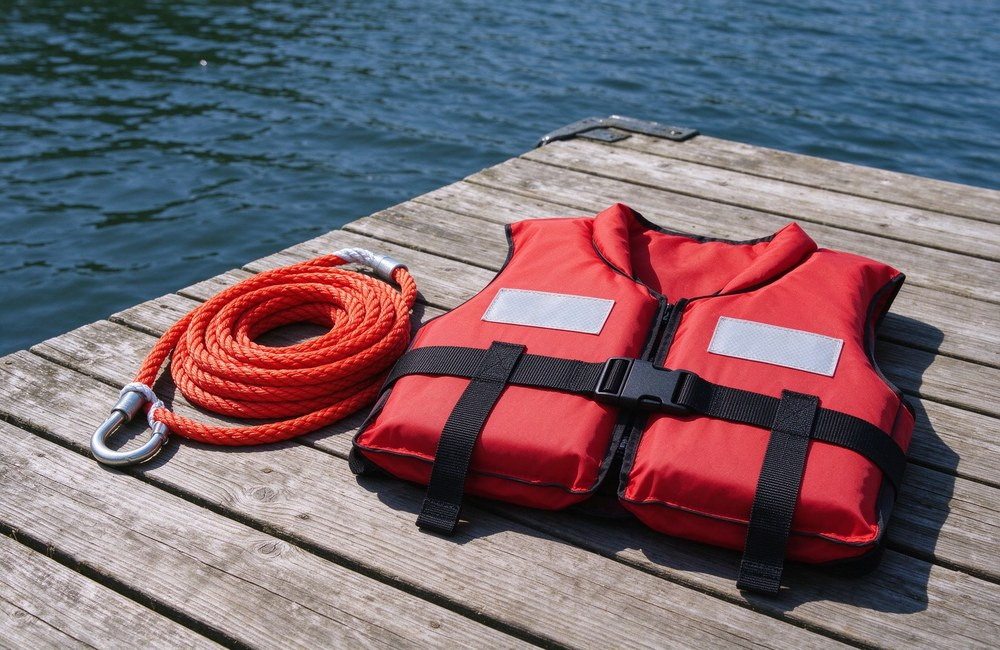
Floatation is the first layer of a tsunami emergency kit. Life jackets are the non-negotiable item at any coastal evacuation point, and docks and boats add throw ropes and life rings for the moment someone ends up in the water.
Stock sizes for adults and children, and keep them staged where people pass on the way to high ground. A useful reference is the Red Cross survival kit supplies checklist, which lists the core items most coastal evacuation kits should cover.
Dock workers and boat crews add a second set: a working vest worn during shifts, plus a standby jacket in the crew locker. The worn vest takes the salt and sun, the standby stays sealed for evacuation.
Label the locker with sizes and check the standby set at every season change, because the vest that fails at the dock is the one nobody tested.
A water rescue life jacket with a whistle, reflective tape and a crotch strap keeps a person afloat in rough water and visible to rescuers.
Automatic inflatable life jackets work for trained staff; children need fixed-foam vests that do not rely on manual inflation.
Stock one per person plus 10 percent spares, and check buckles and CO2 cylinders at every season change.
Sizing is the detail that saves lives: an adult vest on a child slips off in the water, and a child vest on an adult does not float the body correctly.
Label racks by size, train staff to fit vests in under a minute, and keep a visitor supply at the staging point because guests arrive without their own gear.
A vest that does not fit is no better than no vest at all.
Docks and boat landings add the second layer: throw ropes with bags, life rings and reach poles. These tools let one person assist someone in the water without entering it, which is safer for both.
Stage one ring and one rope per 20 meters of dock frontage, check the rope for rot each season, and train the crew on the throw before the season, because a wet rope thrown badly becomes a tangle.
Tsunami warning siren mounted on a coastal pole, alarm device tested and ready to sound the evacuation signal across the harbor and beach front
Communication is the layer that coordinates an evacuation. Sirens give the warning, whistles keep separated groups together, and radios deliver weather updates when phones and networks fail.
A tsunami emergency kit without this layer leaves people in silence exactly when they need instructions.
A tsunami warning siren on a coastal pole is the loudest and most reliable signal, reaching people who are not watching phones.
Test the siren monthly, pair it with flashing beacons where sound is hard to hear, and agree on the meaning of the signal with staff, residents and guests before the season.
A signal that has never been explained is just noise during a crisis.
Reunification planning works because of the whistle: families agree on a call pattern, children practice it, and the pattern is posted at every exit.
Three short blasts for help, two for location, one for all clear, with a rehearsal in the drill so the sound is recognized before it matters.
A pattern that is never practiced is just noise in a crisis.
Every person carries an emergency whistle for rescue: it carries farther than a voice, works wet and never runs out of battery.
A whistle plus a light is the standard personal set, and it reunites separated families faster than shouting in a crowd.
Attach the whistle to the life jacket or the vest so it is always with the person, and practice the call pattern in the drill.
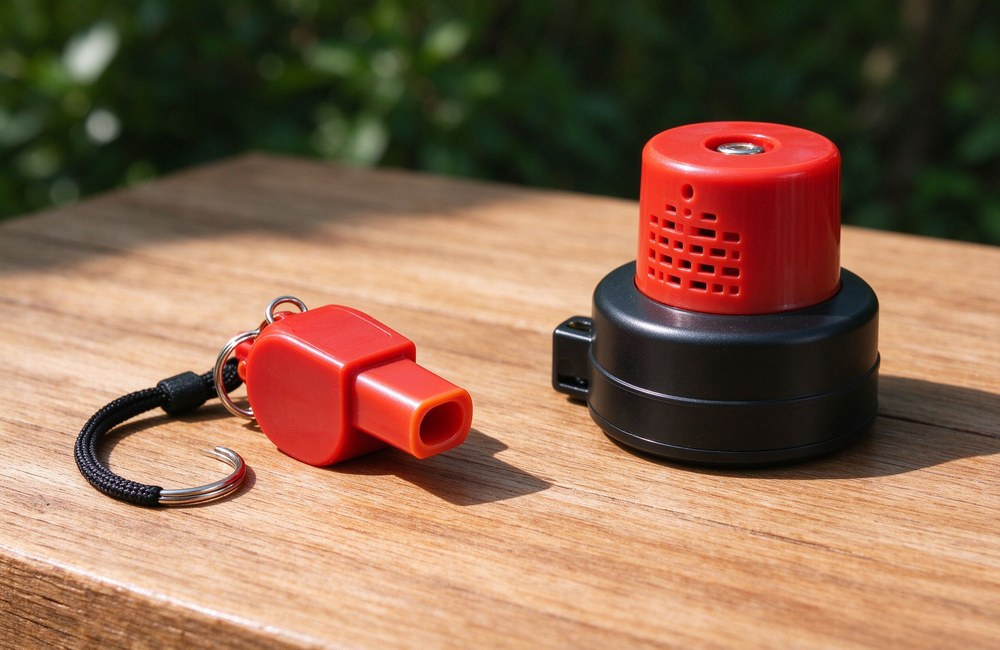
Emergency whistles arranged as signal devices for tsunami evacuation, bright colored whistles with lanyards packed one per person into every evacuation kit
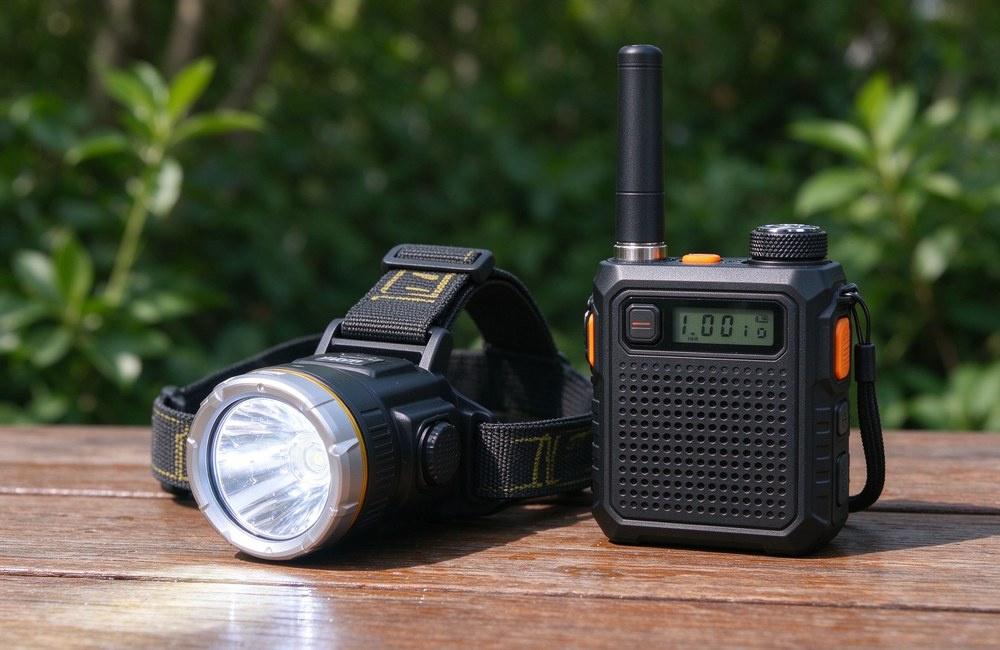
A hand crank emergency radio is the reliable channel for weather alerts and evacuation instructions when electricity, phones and internet fail. Choose one with a flashlight, USB charging and weather band reception, and keep one per staging point plus one per staff shift.
Radio discipline matters: one person monitors, and the coordinator repeats instructions to the group.
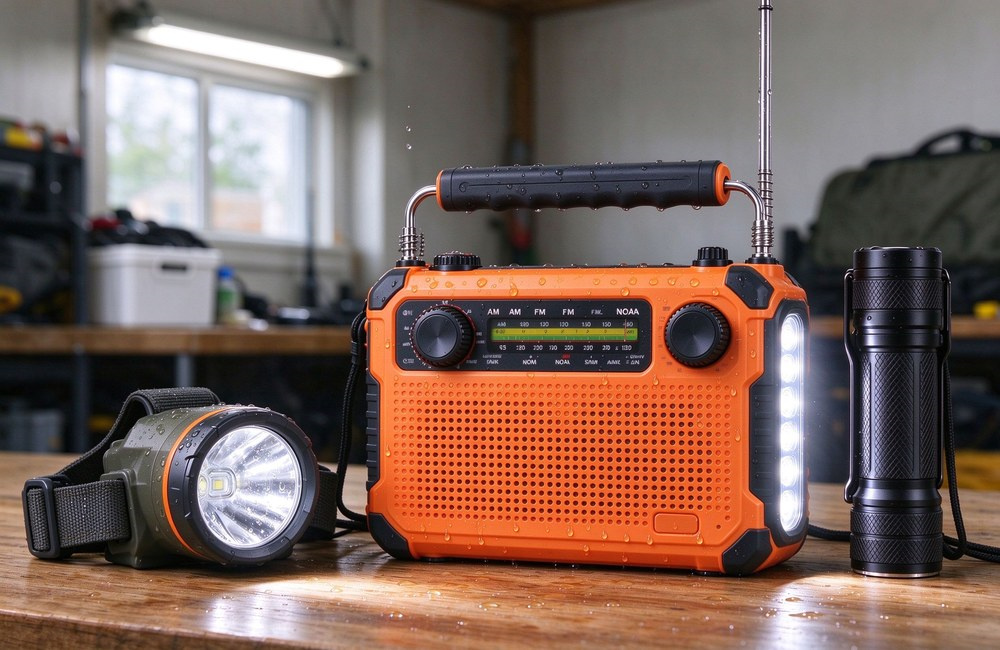
Hand crank emergency radio on a table, winding the handle to receive weather alerts and charge devices without external power during a power outage
Tsunamis do not respect daylight, and most local-source events give warnings at night. Waterproof lighting is therefore a core layer: headlamps free hands during the climb, flashlights mark the route, and the emergency radio and flashlight combination keeps both light and information working.
Power planning decides whether the layer survives the first hour.
A waterproof headlamp with at least 300 lumens lights a ten-meter path and leaves both hands free for children or bags. Flashlights with a strobe mode serve as signal devices, and a red mode preserves night vision.
Stock one headlamp per person and two flashlights per staging point, with spare batteries in a waterproof pouch because coastal salt air corrodes contacts fast.
Battery planning is the hidden specification: check and replace batteries at every season change, keep lithium cells for cold coastal nights, and test each light during the drill so a dead unit is caught before the warning, not during the climb.
Label the battery pouch with the check date, the same label used on every kit.
Hand crank radios and power banks cover charging when the grid fails. Crank models need no fuel, and power banks keep phones alive for the first hours of a long evacuation.
Stage power banks at the assembly point with a printed list of which devices to charge first, and keep the crank radios out of storage and on the shelf where someone actually practices the wind-up.
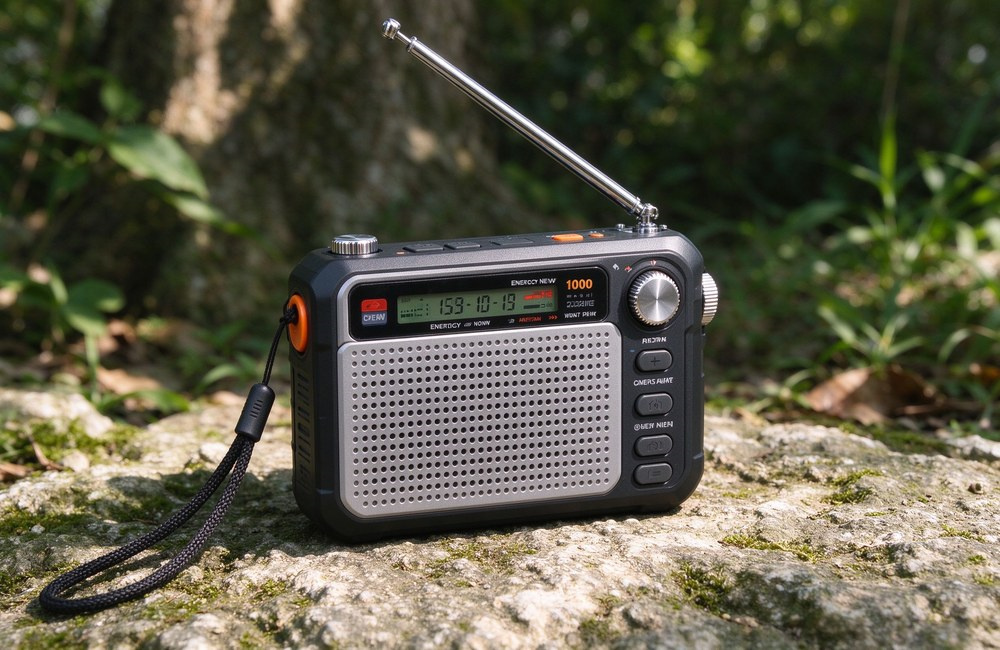
Waterproof headlamp with bright beam in rain, evacuation lighting for coastal night moves and dock work when the grid fails after a warning
After the wave, evacuees are wet, cold and exhausted. Warmth is the third layer of the kit: aluminum rescue blankets stop hypothermia from cold water immersion, rain ponchos keep people dry on the route, and shelter supplies make the high-ground assembly point livable for the first night.
This layer turns an evacuation into a stay.
Cold water immersion drops body temperature fast, and a wet crowd at a shelter loses heat through wind and evaporation. The aluminum blanket buys the first hour: wrap the torso first, then the head, and layer a second blanket over the first for long waits.
Keep a supply in a grab bin at the shelter door, because the first families arrive soaked and shivering.
An aluminum rescue blanket reflects body heat and blocks wind, making it the fastest warmth after cold water immersion. One blanket per person covers a wet crowd with minimal storage space, and the foil material stays effective when soaked.
Stock two per person for double-layer coverage on cold nights, and include them in the go-bag rather than the store room.
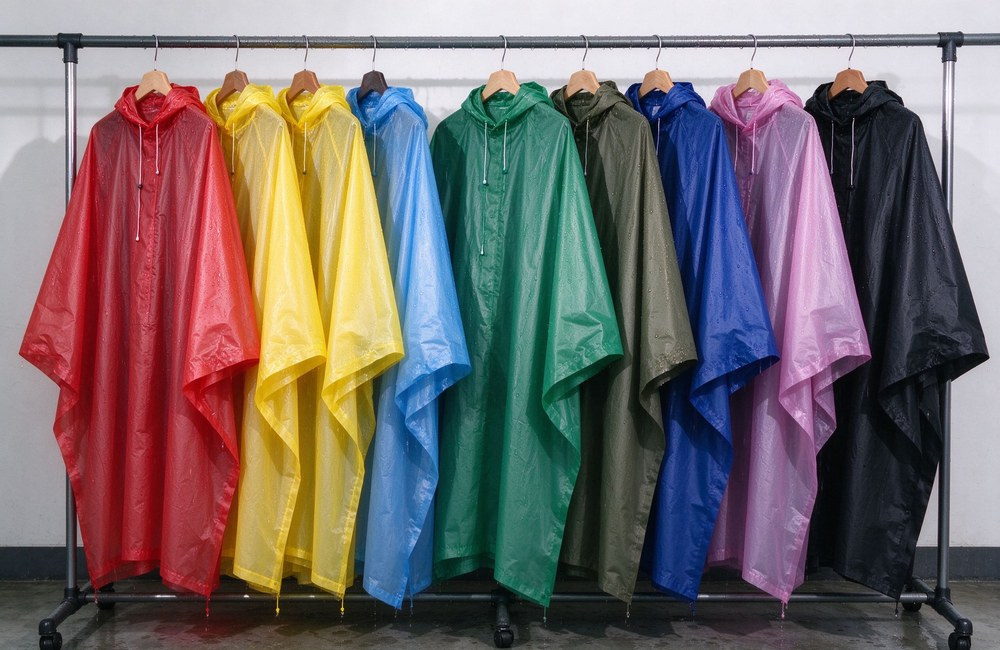
Tsunami evacuations often happen in heavy rain. A waterproof rain poncho with a hood keeps evacuees dry during the climb and doubles as ground cover at the shelter.
Ponchos pack small, so stock one per person at every exit and staging point, and choose bright colors that improve visibility in the crowd.
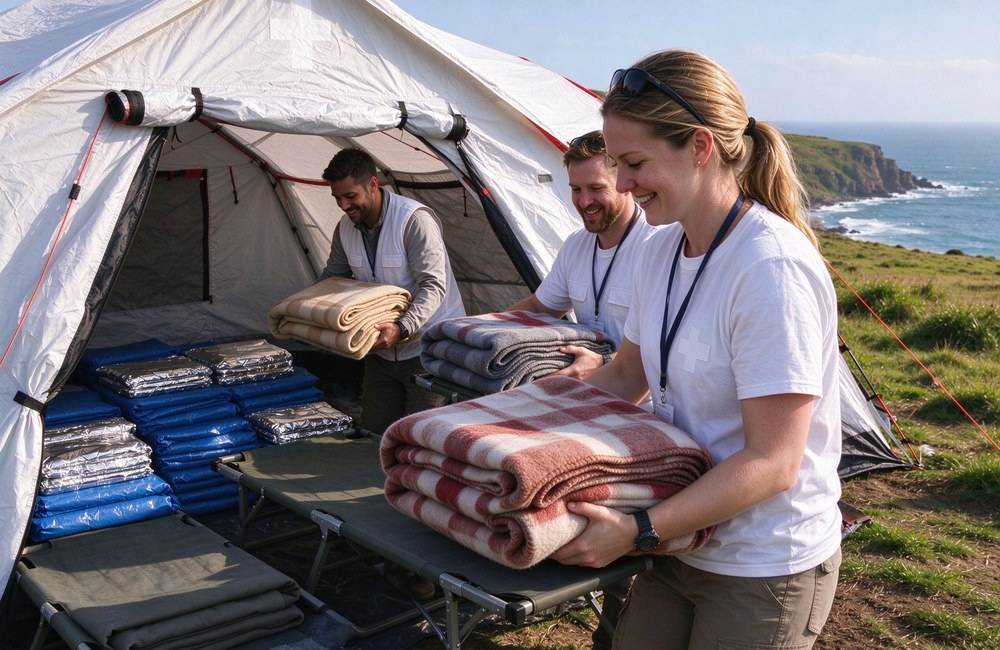
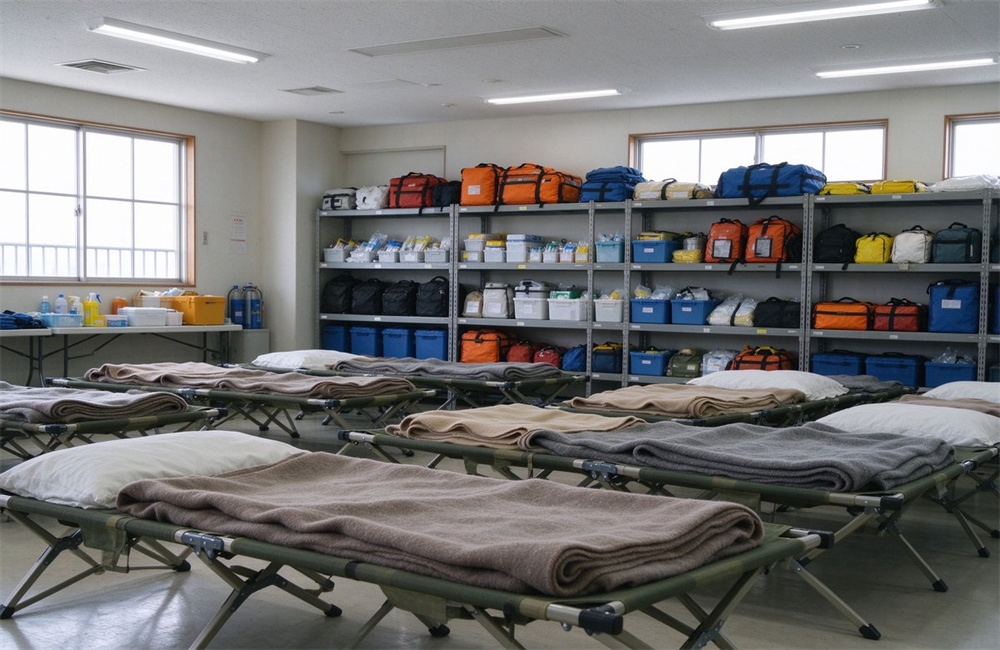
The assembly point becomes a shelter for the first night. Relief cots, blankets and pillows turn a bare hall into a place where wet families can rest, and tents provide covered space on open high ground.
evacuation shelter supplies should include bedding for the expected number plus spares, and the shelter manager should inventory them at each drill.
Bedding storage matters at a shelter: stack blankets by size on labeled shelves, keep pillows in dry bins, and leave cots assembled so a wet family can sit the moment they arrive.
The shelter manager counts bedding at each drill and requests spares before the season, because the first night is always busier than planned.
Aluminum rescue blanket unfolded on a surface, cold immersion protection after the wave for wet evacuees waiting at the high ground shelter
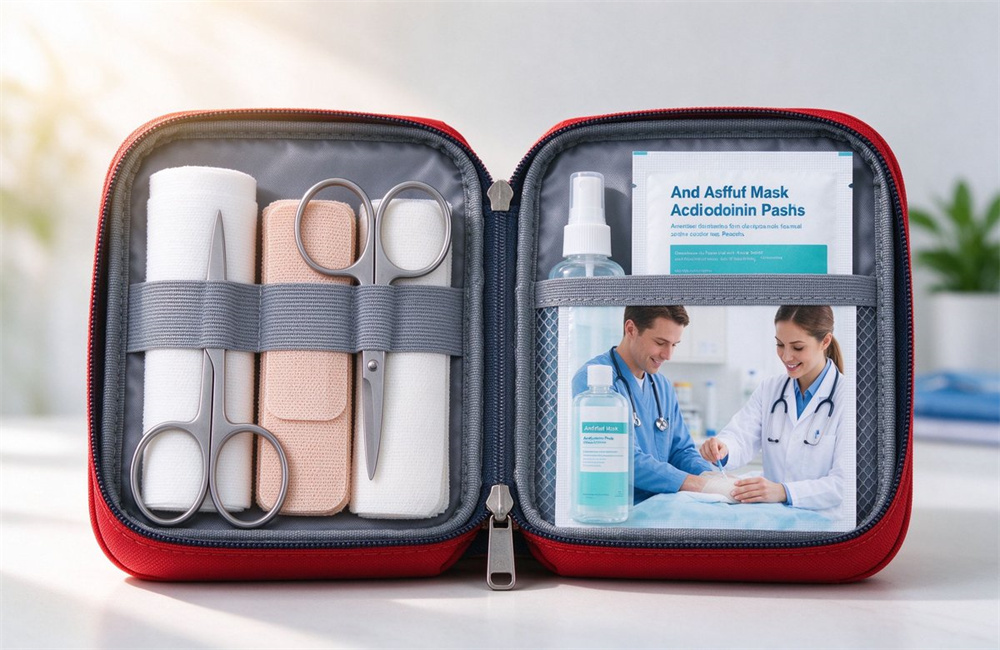
Injuries happen during evacuation: cuts from debris, sprains on the climb, hypothermia from the water. A bulk first aid kit and a rescue toolbox complete the kit, because the assembly point becomes the medical point for the first hours.
First aid at a shelter covers more than wounds: eye rinse for salt spray, blister care for long walks, and warmth management for the wet and cold.
Restock what the debrief lists as used, keep the inventory sheet on the kit lid, and rotate supplies at every season change so nothing expires between drills.
The tsunami first aid kit is trauma-oriented, not household-oriented: tourniquets, pressure dressings, splints, burn gel and eye rinse. One kit per staging point and one per shelter, with the inventory checked at every season change and after every drill.
Pair the kit with trained staff, because a kit without trained users loses most of its value.
Docks and relief teams add a tsunami emergency toolbox: ropes, cutting tools, flashlights, signal devices and a life ring. The toolbox serves both rescue and recovery, and it should be sealed, labeled and staged with the rest of the kit.
Check cutting edges and rope condition after each season, and restock what the debrief says was used.
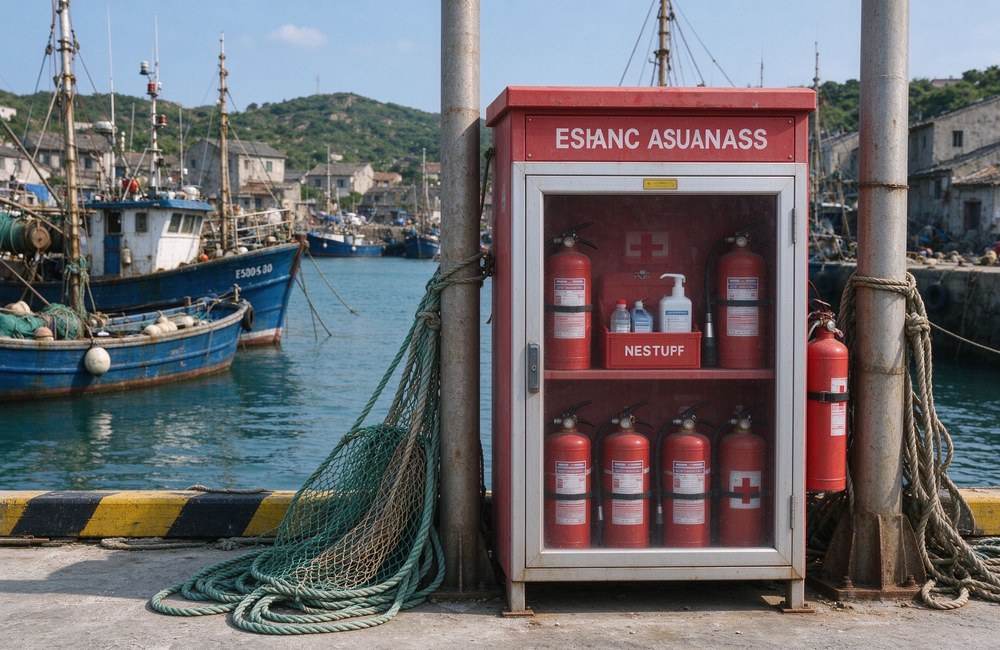
Staging decides whether the kit is usable in seconds or sits locked until too late. coastal evacuation supplies belong at the points where people pass: the dock, the exit, the assembly area.
The staging plan below works for hotels, ports, villages and relief groups.
A port emergency storage cabinet at the dock frontage holds life jackets, throw ropes, whistles and waterproof bags, sealed and labeled. The cabinet opens outward for fast grab, is checked monthly, and carries a printed inventory list so any worker can verify stock without asking.
One cabinet per 20 meters of frontage covers the standard dock.
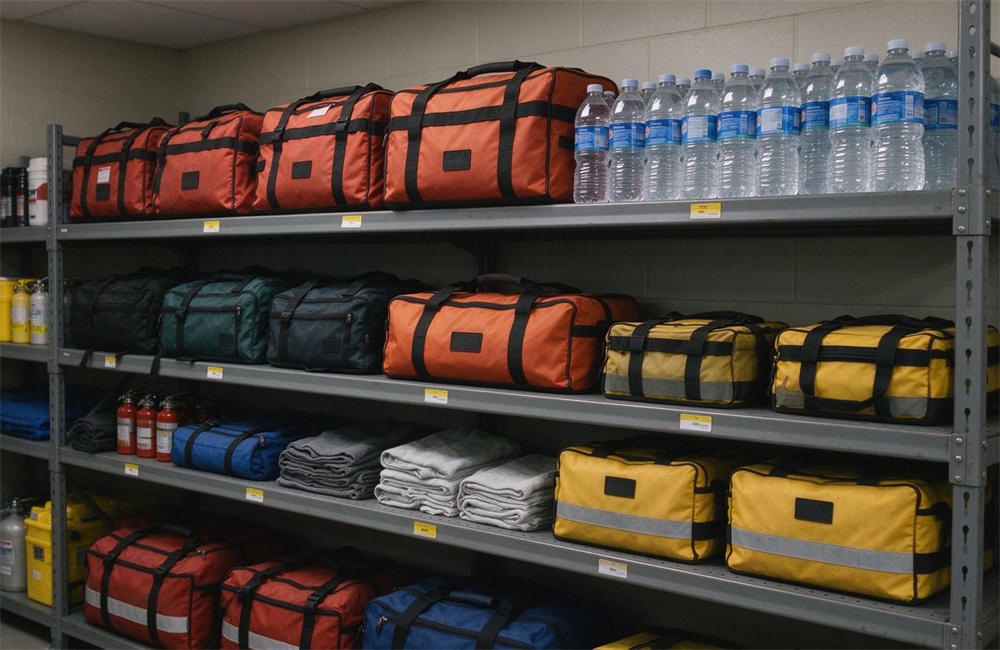
Labeling is the staging discipline: every pallet carries contents, quantity and the next inspection date, so a volunteer can verify stock in five minutes.
Distribution runs on a simple queue: water and blankets first, kits second, medical third, and the shelter manager clears the queue by logging what each family received.
A labeled pallet yard turns chaos into a checkout counter.
Relief groups stage bulk supplies on pallets at a coastal staging area: water, blankets, kits and shelter gear, covered and labeled. The staging area sits at the high-ground assembly point, so distribution happens where people arrive, not back at the shore.
Pallets are rotated first-in-first-out, and the area is inspected at every season change.
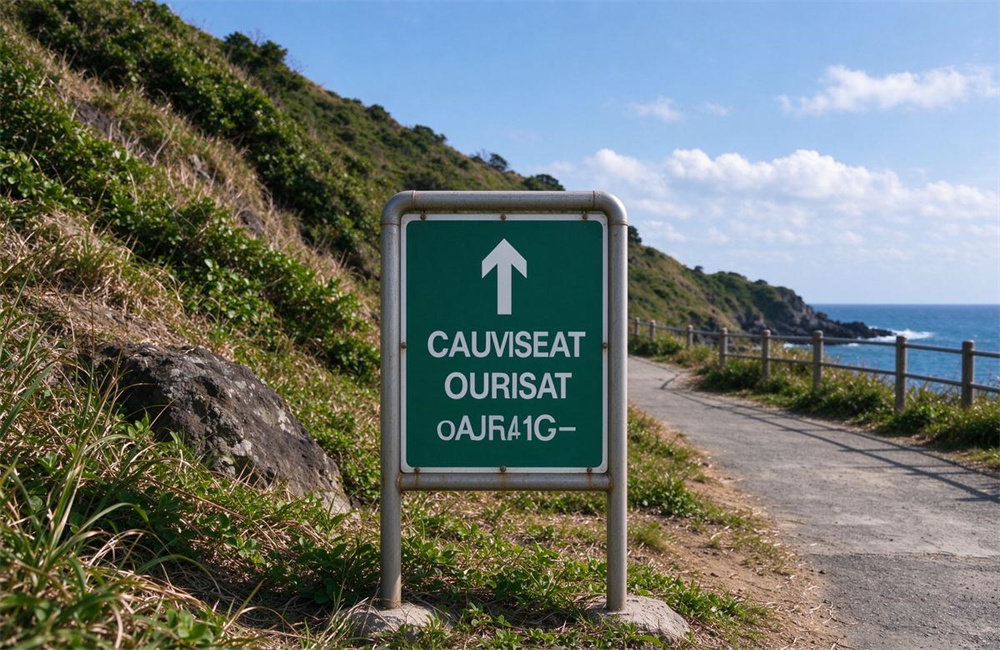
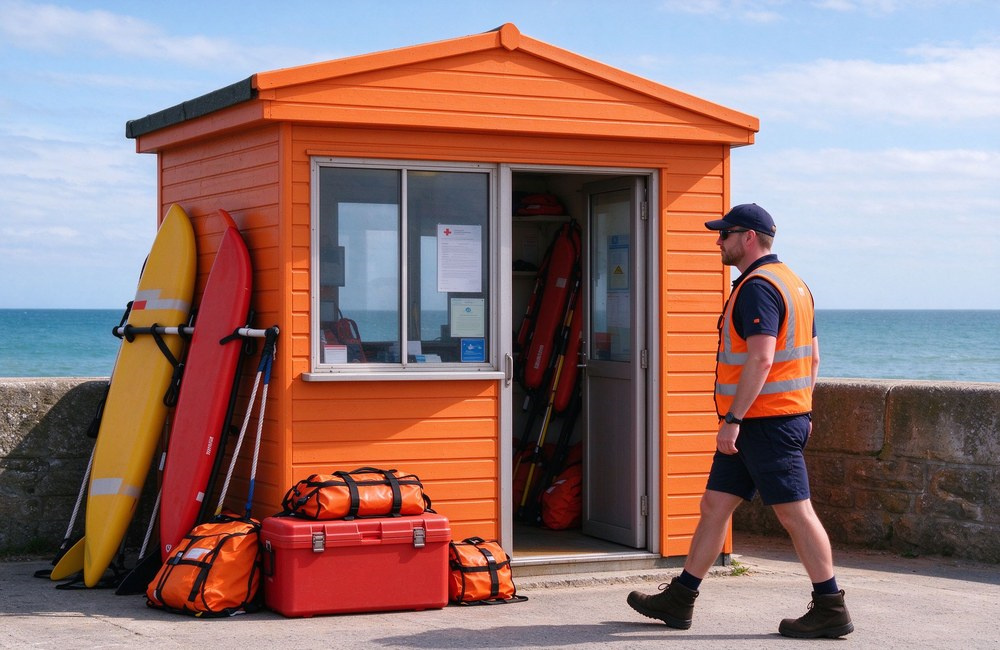
Beachfront properties add a coastal safety hut stocked with a tsunami gear station: life jackets, first aid, a radio and a whistle set, visible to visitors.
The hut doubles as the check-in point for beach staff and the first stop for guests who need gear.
Keep the hut unlocked during season hours and audited at closing time, because a locked hut is no better than no hut.
Most procurement issues trace back to buying on price alone. Ask for the specification sheet before quoting: life jacket buoyancy and certification, whistle sound output, radio frequency coverage and battery claims, and test reports on request.
A cheap life jacket that fails to float a person is worse than no jacket, and it adds liability to the organization that issued it.
Confirm packaging is sealed, labeled and deployable in seconds, and that production and shipping finish before the season - 8 to 12 weeks is a safe ordering window.
Collect documentation at order time: test reports, certificates and a packing list per carton. Request samples before the bulk order and keep documentation for your compliance files.
Budgets scale with the number of people protected. A small dock or beach property of up to 50 people starts with life jackets, whistles, a radio and first aid.
A hotel protecting hundreds of guests plans per-room kits, staging cabinets and shelter bedding.
A regional relief group covering thousands of evacuees plans pallet staging, bulk first aid and radio distribution with quarterly rotation.
The table below shows how planning scales by organization size:
| Organization | People Covered | Core Investment | Restock Cycle |
|---|---|---|---|
| Small dock or beach property | Up to 50 people | Life jackets, whistles, radio, first aid | Twice a year |
| Coastal hotel | 100-500 guests | Per-room kits, staging cabinets, shelter bedding | Before high-risk season |
| Regional relief group | 1,000-5,000 evacuees | Pallet staging, bulk first aid, radio distribution | Quarterly rotation |
Store kits where people pass: staging cabinets at the dock, labeled bins at every exit, and sealed pallets at the assembly point.
Avoid damp storage, which rusts buckles and corrodes batteries. Check staging monthly and log the inspection date on each cabinet, because coastal salt air attacks gear faster than inland storage.
Quarterly checks catch the quiet failures: CO2 cylinders that lose pressure, batteries that self-discharge, whistles that crack in the sun. Put one person in charge of the calendar and make the check part of the standing meeting, so the kit inventory is reviewed at the same time as staff schedules and dock maintenance.
Restock before the high-risk season, not after. Twice-a-year rotation works for most coastal operations: once before the season and once after. Regional relief units rotate quarterly to keep thousands of kits fresh.
Tie restocking to the same calendar as the evacuation drill so it never gets skipped.
The per-person baseline: one life jacket with whistle, one emergency whistle with lanyard, one waterproof headlamp with spare batteries, one rain poncho, two aluminum rescue blankets, one liter of water and one snack, plus a personal first aid pouch.
The emergency evacuation backpacks hold this set ready at each exit.
Documents travel with the kit: a printed guest count by floor, staff roster, medical notes for known conditions, and a contact sheet for local authorities.
Photocopy them into each staging cabinet and keep originals in a waterproof pouch, because phones die and networks fail on the first night of a warning.
Staging-point bulk: one hand crank emergency radio, one bulk first aid kit, two flashlights, a power bank, throw ropes and life rings for docks, and shelter bedding for the expected number.
Keep this list on the cabinet door so any worker can inventory in ten minutes.
|
Category |
Per-Person Item |
Notes |
|
Flotation |
Coast Guard-approved life jacket |
Child sizes for schools |
|
Signaling |
Whistle, waterproof headlamp |
Spare batteries per bin |
|
Communication |
Hand-crank NOAA weather radio |
No shore power needed |
|
Survival |
3L water, 72h food, first aid pouch |
Rotate each quarter |
|
Warmth |
Aluminum rescue blanket, rain poncho |
After-wave wind chill |
Per-person minimum for 72 hours in a tsunami evacuation kit; add reflective tape on backpacks, a waterproof pouch for documents and a whistle for signaling rescuers during a night evacuation.
|
Category |
Per-Staging-Point Item |
Notes |
|
Dock Safety |
Throw rope, life ring, floating light |
Staged at every slip |
|
Command |
Megaphone, charging bank, radios |
Front-desk bin |
|
Medical |
Trauma first aid kit, stretcher |
Refresh after each drill |
|
Shelter |
Tent, water bladder, generator |
Required for multi-day response |
Inventory staging bins at the start of every wet season and after any real warning; restock within ten working days. The same bulk evacuation equipment checklist applies to every harbor, school and resort on the coast.
Check these trusted pages before the wet season and again during an active warning. NWS tsunami safety guidance covers evacuation zones, warning signs and family action steps.
The American Red Cross tsunami preparedness page lists household kit basics and recovery priorities used by relief organizations worldwide.
For inland flood parallels, our flood emergency kit guide covers the same water-safety equipment principles used for coastal inundation events.
Tsunamis follow offshore earthquakes, coastal landslides and underwater volcanic eruptions. They arrive as a series of waves that can inundate low shorelines for hours, not minutes, and they strike without the visual warning a storm surge provides.
Every shoreline property needs a consistent coastal disaster evacuation kit staged before the wet season. The four buyer groups below buy in volume and share the same core configuration.
Hotels on low shorelines must move hundreds of guests to high ground on short notice. They stock life jackets on every floor, whistles at every staff station and waterproof radios at the front desk, with bulk spares in the back-of-house.
Dock crews secure boats and move inland before the first wave, carrying the same life jackets radios and evacuation gear loadout used on every pier. They keep throw ropes, life rings and floating lights staged at each slip, plus a hand-crank radio that works when shore power fails.
Schools and beach campgrounds run annual evacuation drills to high-ground assembly points. A coastal flood emergency kit includes student-sized life jackets, headlamps and first aid pouches for every shelter group, with the same coastal flood emergency kit configuration rolled out to each grade.
Relief groups deploy within hours of a Pacific or Indian Ocean warning. They order bulk tsunami response supplies in sealed, numbered bins so each responder picks up one pack and moves to the field without inventory delays.
Field logistics officers audit the bulk evacuation equipment on every pallet before convoy departure, and cross-check the bulk evacuation equipment list against the property evacuation plan.
Do not go to the beach to watch a tsunami. A strong earthquake, a sudden ocean withdrawal or a loud roaring sound are signs to move inland immediately on foot, not by car.
Life jackets must be visible, accessible and within arm's reach of every guest and staff station. Locked or storage-room kits are useless in the first fifteen minutes of an evacuation.
Cell towers and coastal power grids fail in inundation events. Stock hand-crank radios, waterproof headlamps and spare batteries at every staging point, and test them each quarter.
Tsunamis arrive as a series of waves over hours. The first wave is rarely the largest. Wait for official confirmation that the sea is calm before re-entering the evacuation zone.
Buying bulk tsunami response supplies means matching the kit tier to the property size and evacuation distance, not over-ordering one-size-fits-all bins that waste budget and shelf space.
Properties vary in shoreline exposure, guest count and evacuation distance. The comparison table below matches three kit tiers to typical buyers, so procurement officers can quote one consistent configuration per floor, dock or school.
|
Kit Level |
Best For |
Core Contents |
Sourcing Note |
|
Evacuation Point Pack |
Single floor, dock or classroom |
Life jackets, whistles, headlamp, hand-crank radio, first aid pouch, water |
Sealed bin at each staging point |
|
Building Evacuation Kit |
Hotel, school or marina building, 50 to 200 people |
Point pack plus throw ropes, life rings, rescue blankets, megaphone, charging bank |
Numbered bins per floor, drill restock |
|
Bulk Coastal Response Deployment |
Relief NGO, regional harbor, multi-property resort group |
Building kit plus shelter tarps, water bladders, floating lights, generator with CO alarm |
Palletized bulk evacuation equipment, OEM labeling available |
Most buyers start with the Building Evacuation Kit for one pilot property, then scale to the Bulk Coastal Response Deployment level once the annual drill proves the configuration works.
Salt air, UV exposure and rain make coastal gear degrade faster than inland equipment. A short care routine keeps every tsunami emergency kit ready for the first warning, and it extends the life of life jackets, radios and webbing across multiple storm seasons.
For orders above 200 kits, we provide OEM private-label packaging, custom color tags and property-numbered bins for any bulk evacuation equipment deployment. Minimum order quantities and lead times are quoted per contract once your component list and evacuation schedule are confirmed. Volume orders of bulk evacuation equipment ship by palletized sea freight for coastal harbor and resort deployments.

Coastal emergency supplies staged at a staging area, pallets of water, blankets and tsunami kits covered and ready for distribution at high ground
Stock one life jacket per person plus 10 percent spares. A hotel protecting 300 guests starts with 330 jackets, and spares cover visitors and new arrivals during a busy season.
Minimum quantities depend on the components and supplier. Bulk kits are usually quoted by kit configuration and headcount; send your component list and expected numbers to get a volume price, with custom packaging available for larger orders.
Yes. Bulk orders ship by sea or air depending on volume and destination. Confirm delivery lead time before the season so kits arrive with weeks to spare for staging and inspection.
Quality foam and inflatable life jackets last years within their rated life. Inspect buckles, stitching and CO2 cylinders each season, and replace any jacket that has been in real water use.
Yes for staging points. A hand crank radio with weather band reception delivers alerts when phones and networks fail, and one per staging point plus one per staff shift is the standard planning.
Yes, within their rated cycles. Dry, inspect and restock after each drill or event, retire items with visible damage, and replace consumables like batteries, whistle lanyards and first aid supplies.
Yes. Stock trauma-level first aid supplies and pair them with training: splinting, hemorrhage control and hypothermia care. A kit without trained users loses most of its value during evacuation.
Ask for specification sheets, test reports and certification for life jackets, radios and lighting. Request samples before the bulk order and keep documentation for your compliance files. Compare sample kits, ask for staged delivery before the wet season, and confirm that your chosen supplier can scale the tsunami preparedness supplies list to your property count.
Stage gear where people pass: cabinets at the dock, labeled bins at every exit and sealed pallets at the assembly point. Test the staging during the drill so grab time is measured, not assumed.
Yes. Bulk orders can be customized with printed packaging, label placement and kit configuration. Share your artwork early so production and printing finish before the season.
Order at least 8 to 12 weeks before the high-risk season. This covers production, shipping, inspection and staging, and leaves time to fix any specification issues.
Yes. Suppliers can provide checklists, staging guides and drill scripts that teach teams how to deploy each component in under a minute.
A kit that has never been practiced fails in the moment. Run one evacuation drill before the season: time the move to high ground, check the route, and note which items ran out.
Fix those gaps in the order, then repeat after the season ends.
Update evacuation maps when routes change, keep a printed contact sheet in every kit, and subscribe to local tsunami alerts so teams know when to pre-position. Small annual updates keep the whole system usable for years.
A tsunami emergency kit is not a product list; it is a decision made in advance. Order the components, stage them at the evacuation point, train the team, and review the plan once a year.
When the siren sounds, the kit does the thinking.
Дружні посилання :
Авторське право © Custom Disaster - Relief Bedding: Tents, Sleeping Bags, Blankets Всі права захищені
професійна команда для обслуговування !