Категорії
Last updated: November 3, 2026 · Winter storm emergency kit
Winter storms knock out power for days, trap families at home, and push relief systems to their limit. A well-stocked winter storm emergency kit keeps warming centers running and gets relief supplies to people fast, so response happens in hours instead of days.
This guide covers essential winter emergency supplies, quantity planning and post-storm restocking for relief groups.
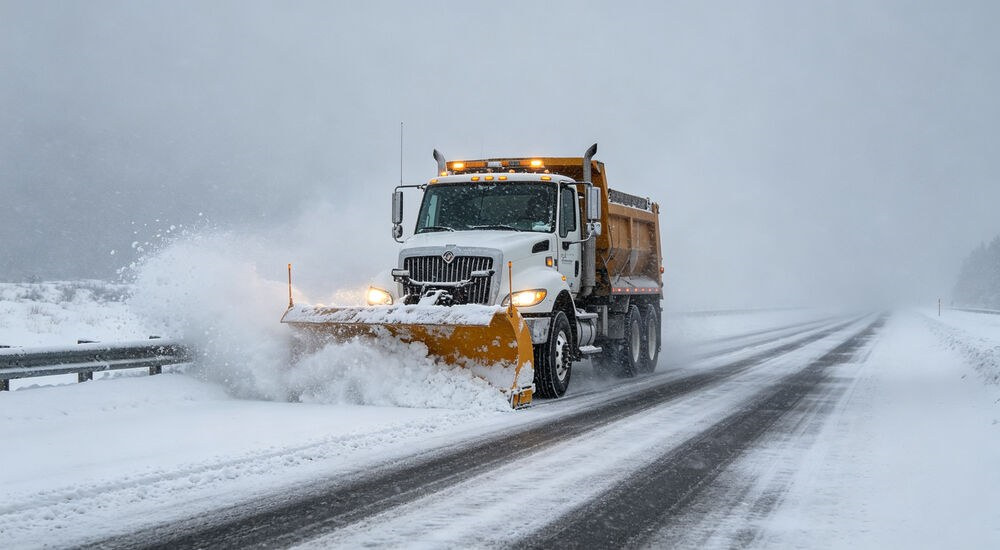
A major blizzard can paralyze entire regions for days — roads close, power goes out, and families get stuck at home.
Table of Contents
Whether you are equipping a community warming center or sourcing for a team of 500, this guide breaks down every category of a winter storm emergency kit — no fluff, just what works when the temperature drops.
Warmth comes first, then heat, food, water, and the work gear your volunteers need to move supplies safely.
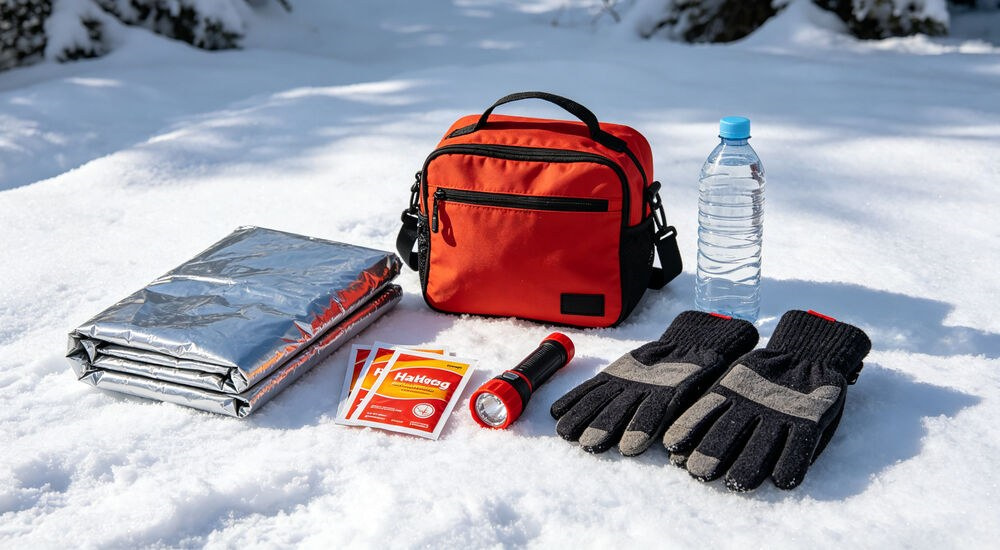
A winter storm emergency kit needs more than a regular emergency kit — warmth is the number one priority in cold weather.
A basic winter storm emergency kit at home helps a family ride out a few days without heat or power. For relief organizations, the same kit scales into bulk winter supplies that keep hundreds of people warm, fed and safe when temperatures drop well below freezing.
Pre-positioned gear is the difference between a fast response and one that arrives days late.
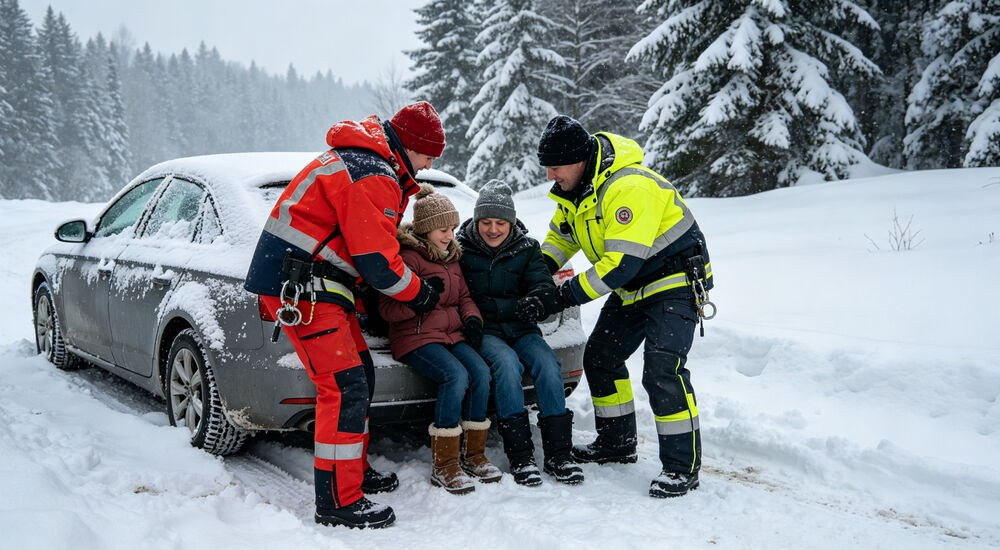
Fast response in winter conditions requires gear that works in sub-zero temperatures.
When roads close and the power grid fails, people can go without heat for 48 hours or longer. Relief teams that pre-positioned cold weather emergency supplies can get blankets, heaters and warm food to families fast, while teams that wait until the storm hits to order are always days late.
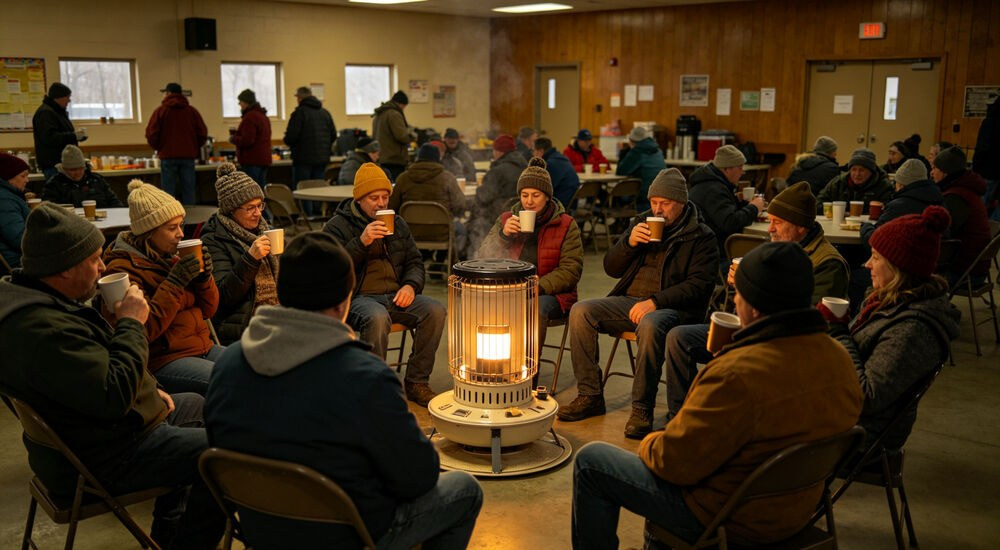
Warming centers are critical infrastructure during winter storms — they are where families go when their heat goes out.
For families stuck at home without power, the biggest risks are hypothermia, frozen pipes and carbon monoxide poisoning. For relief organizations, the mission is to provide warm shelter, hot food and safe heating fast, using gear sourced as bulk winter supplies.
Every category below maps to a specific risk in the field.
Winter storms are different from other disasters because they are predictable, yet deceptive. People see snow falling and do not realize how quickly cold, wind and wet become life-threatening.
Every year, winter weather causes billions of dollars in damage, and cold-related deaths outnumber heat-related deaths by about three to one.
That is why a dedicated winter storm emergency kit belongs in every relief warehouse, not just a general emergency kit.
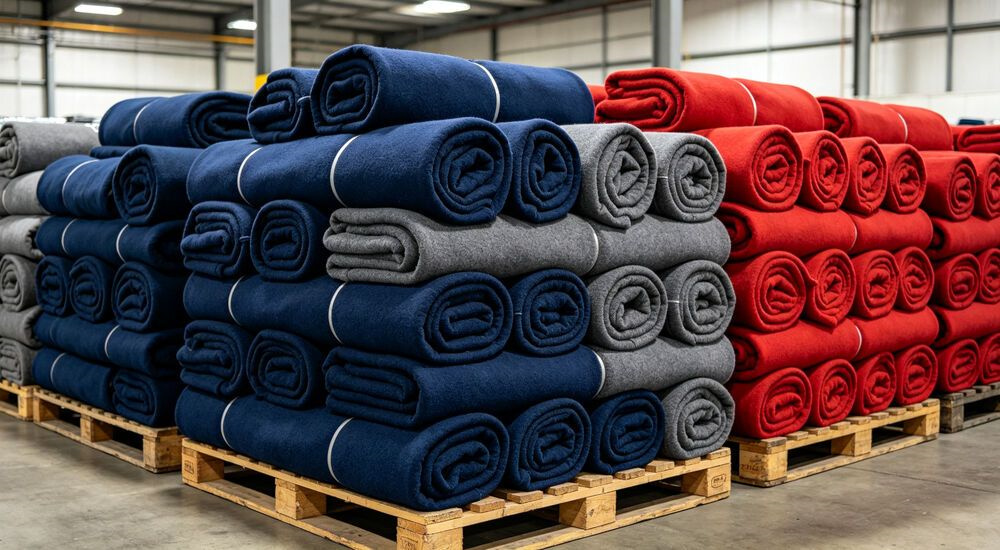
Bulk fleece blankets are the fastest way to get warmth to people in need at scale.
The hidden dangers of winter are not obvious at first. Hypothermia sets in when the body drops below 95 degrees Fahrenheit, and it can happen even above freezing if someone is wet.
Frostbite attacks fingers, toes, ears and nose first, and carbon monoxide poisoning from generators and heaters used indoors kills dozens of people every winter.
Relief agencies that already operate a winter storm emergency kit report that the same gear covers multiple failure points at once. A thermal blanket works for a family without heat, for a volunteer waiting outside in wind chill, and for a patient in the early stages of hypothermia.
That overlap is why bulk winter supplies are so efficient: one blanket, three different missions. The kit spec should also include instant-read thermometers and warm packs for gradual rewarming, because rewarming a cold casualty too fast causes its own complications.
Every agency should walk through a tabletop exercise in October, using the winter storm emergency kit as the inventory baseline, so volunteers know exactly where each item sits and who restocks it after a deployment.
Frozen pipes are another major risk. When temperatures stay below 20 degrees Fahrenheit for a few days, pipes in unheated attics, basements and exterior walls can freeze and burst, causing water damage and leaving families without running water on top of no heat.
Relief teams end up managing cold, water damage and mold at the same time, which is why the kit spec needs input from both shelter and facilities staff.
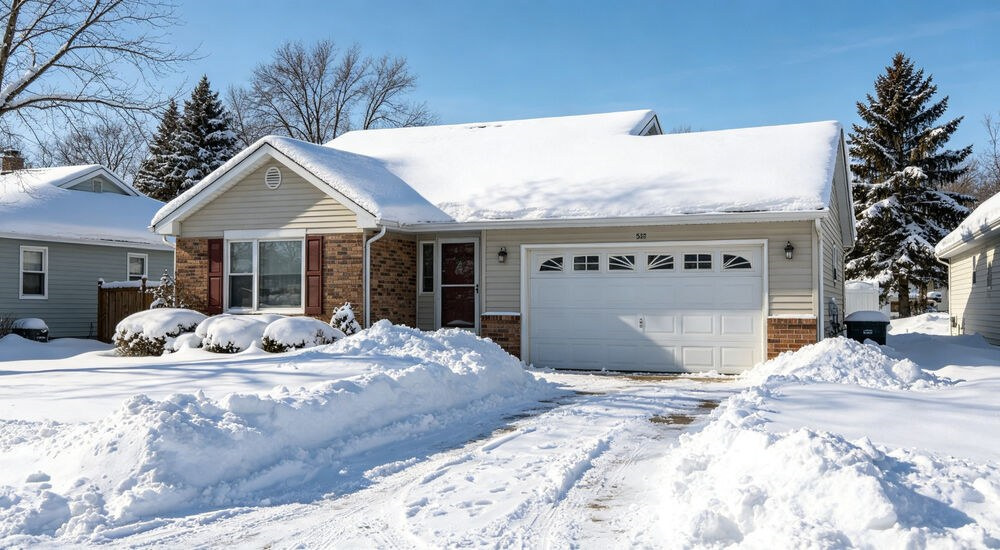
Heavy snow can trap families at home for days. Without heat and power, even inside a house you can get cold.
Elderly residents have less body fat and slower circulation, and many cannot afford to heat their homes properly. Homeless individuals have no warm place to go at all, and children lose body heat faster than adults.
When you size bulk winter supplies, add extra blankets, hats and gloves for these groups, and keep a reserve beyond the headcount you expect.
Agencies that serve mixed communities should build the winter storm emergency kit around the most vulnerable 20 percent, not the average resident. Elderly people need extra layers because circulation slows with age, and they often stay home longer before asking for help.
Families with infants need warm packs, formula and a way to heat bottles without an open flame. Residents in basement apartments lose heat first and may not hear alerts.
When you source relief supplies, add a small pediatric section and a mobility-aid section with extra blankets that can be cut and draped without losing warmth.
Track who received what in each event so the next order reflects real demand rather than assumptions.
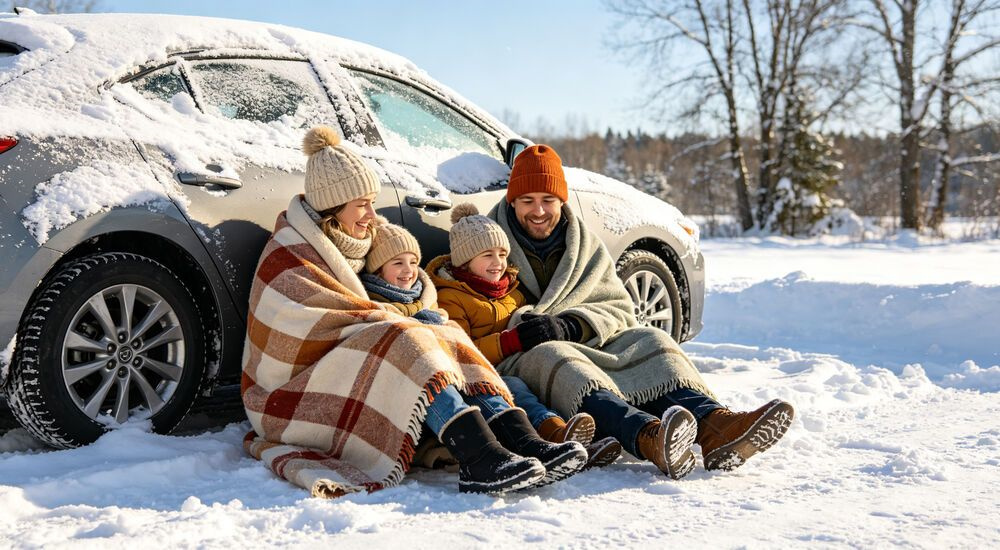
Blizzards bring whiteout conditions — you can barely see ten feet in fron Winter storm emergency kit planning should start in Augustt of you.
Not all winter storms are the same. Each type brings different risks and demands different supplies. Understanding the storms your region faces most helps you build the right kit instead of guessing.
Below is a quick comparison of the most common winter storm types so you can match supplies to actual risks.
|
Storm Type |
Typical Duration |
Main Hazard |
Key Supplies You Need |
|
Blizzard |
1-3 days |
Whiteout conditions, travel impossible |
Sleeping bags, thermal blankets, heat packs, hot food |
|
Ice Storm |
12-24 hours |
Power outages, downed trees, roof damage |
Flashlights, portable heaters, warm clothing, water |
|
Polar Vortex |
3-7 days |
Extreme cold, wind chill far below zero |
Four-season sleeping bags, expedition-grade gear |
|
Lake-Effect Snow |
1-2 days |
Heavy localized snowfall |
Snow shovels, de-icer, shelter supplies |
|
|
|
|---|
Category
Family Kit (4 people)
Relief Kit (100 people)
Sleep & Warmth
2 sleeping bags, 4 thermal blankets
120 sleeping bags, 200 thermal blankets
Heating & Light
Flashlight, hand warmers, portable heater
100 flashlights, 500 hand warmers, 20 portable heaters
Food & Water
3 days of bottled water, non-perishable food
3 days bulk water, hot food rations, hot drinks
PPE
Warm gloves, hats, boots
200 pairs gloves, 200 hats, 100 pairs boots
These quantities are a starting anchor for one family kit and one relief kit, not a one-size-fits-all number. Adjust the winter storm emergency kit based on your headcount, storm type and how long your warming center expects to stay open.
When whiteouts trap a family beside the road and ice storms pull down power lines home, the same gaps show up fast: warmth, light, and water. A vehicle kit and a home kit share most items. Staging both with extra blankets and hand warmers lets responders cover stranded drivers and darkened neighborhoods at once.
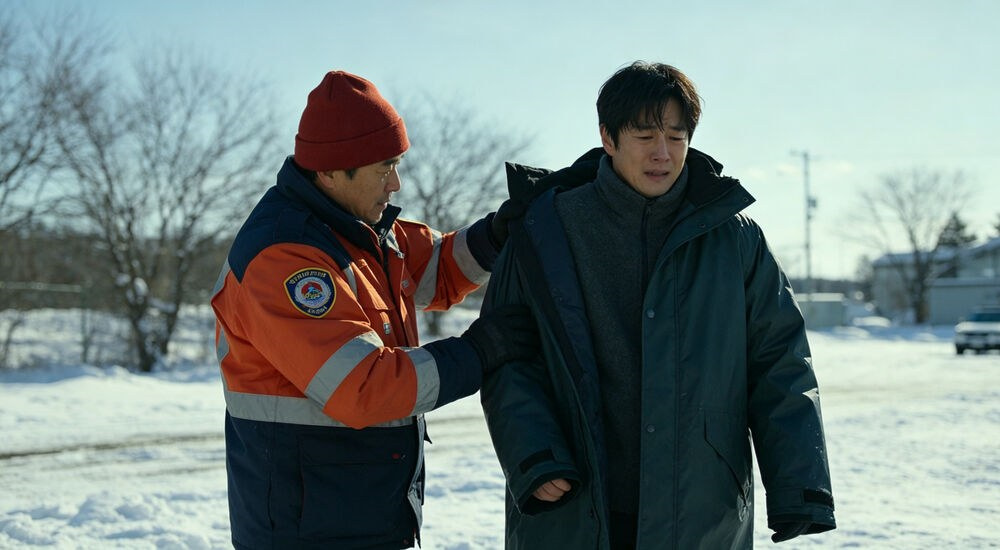
Even a thin layer of ice can take down power lines and leave thousands without heat for days.
Blizzards combine sustained winds with whiteout conditions, while ice storms down power lines. Shelter gear keeps a warming center running for 72 hours; road gear keeps response vehicles moving.
At minus 40 wind chill, standard zippers freeze and batteries drain fast. Choose sleeping bags rated by the EN or ISO comfort scale, and test them with a volunteer overnight drill before the season.
Thermal blankets are the workhorse of winter relief because they are lightweight, cheap and retain about 90 percent of body heat. When buying thermal blankets wholesale, look for tear-resistant material that survives reuse season after season.
Cheap, flimsy blankets fall apart after one use and cost more to replace over time.
Thermal blankets come in two main grades for relief work. Single-use mylar blankets reflect heat and pack tiny, which makes them ideal for mass distribution in the first 24 hours. Reusable fleece blankets are warmer, washable and better for warming centers that run for days.
A practical winter storm emergency kit carries both: mylar for the initial hand-out, fleece for the shelter floor. When comparing options, check the size, the edge binding and the tear strength rather than price alone.
A blanket that survives three seasons costs less per use than the cheapest option that fails in one night.
Store blankets flat and dry, and rotate the stock so older units go out first.
Build the winter storm emergency kit in layers: rapid-response blankets first, sleeping bags for multi-day shelter, then heating, food and work gear. A common imbalance is buying too many disposable blankets and not enough durable sleeping bags.
For most operations, a ratio of three thermal blankets to one sleeping bag works as a starting point.
Scaling a cold weather emergency kit checklist from 50 to 500 people changes more than the numbers. At 50 people, one coordinator can manage distribution from a single table.
At 500, you need check-in, gear issue, return and restock stations, which means the kit itself needs labeling systems, tally sheets and reorder cards built in.
Every family kit should carry a printed card in the local language showing what is inside and how to use each item safely, including the carbon monoxide warning.
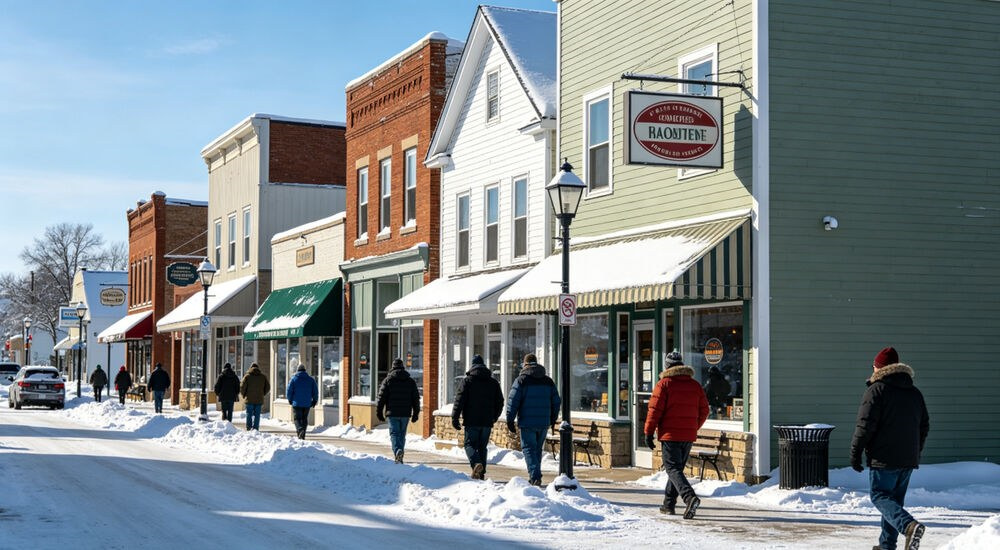
Extreme cold events can last for days, pushing normal heating systems to their limit.
A winter survival kit differs from a regular emergency kit because cold weather adds unique requirements. The quantities below follow standard guidance for serving 100 people.
Warmth is the number one priority in any winter storm emergency kit. If people are warm, they are safe; if they are cold, they are at risk. Thermal blankets handle the first 72 hours, but warming centers that run for a week need real sleeping bags and layered insulation that hold up over multiple nights.
When you order winter supplies, start with thermal blankets because they are cheap, compact and impossible to overstock. Then add four-season sleeping bags rated for the coldest nights in your region.
Always order about 20 percent extra for volunteers and staff who work outside and may need gear on site.
Sleeping bag temperature ratings deserve careful reading when you buy bulk winter supplies. A bag rated for comfort at 30 degrees and one rated for survival at 30 degrees are very different products.
For warming center use, choose bags where the comfort rating matches your coldest realistic night.
Four-season bags with hoods and draft tubes hold warmth better than flat rectangular bags. The kit should also include bivvy sacks or waterproof covers for people who arrive wet, because a dry person inside a good bag stays warm, while a wet person loses heat even in a rated bag.
Store bags compressed loosely rather than vacuum-packed, so insulation loft recovers within minutes of opening.
Hand and foot warmers last eight to ten hours and make a huge difference for people stuck in cold homes. They are small, easy to distribute and fit naturally into every family kit.
Include them in each kit so volunteers can hand them out alongside blankets without extra logistics.
Hand and foot warmers are one of the highest-value warming center gear items because they are cheap, safe and immediate. A single pair can make a stranded driver comfortable for eight to ten hours.
When you order them in volume, ask for the sealed shelf life and store them away from heat sources so the chemical packs stay fresh.
Distribute warmers with the first blanket wave, not the second, because people who are already shivering respond fastest to local warmth.
For warming centers, keep a box at the entrance and one in the rest area. Label each packet with a simple instruction, because not everyone has used an air-activated warmer before.
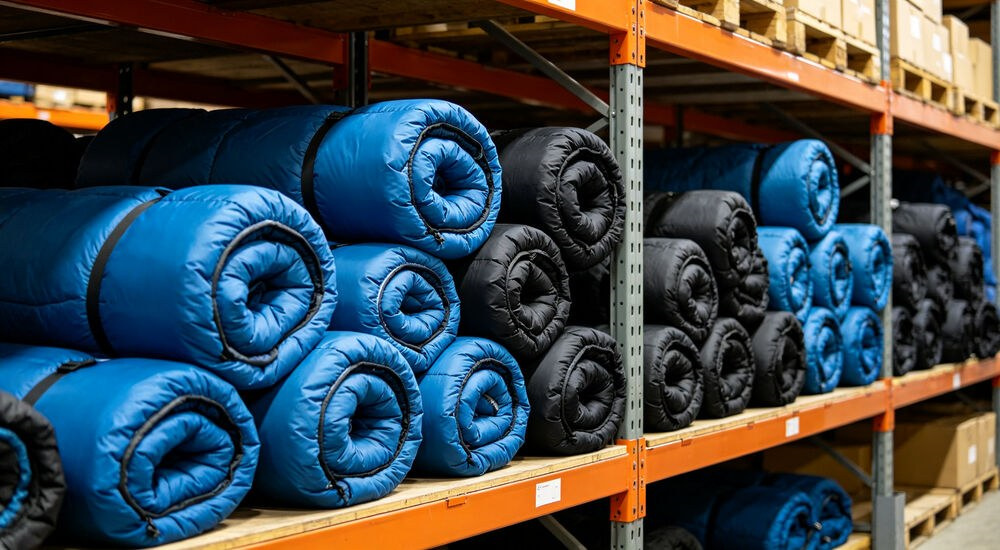
Four-season sleeping bags rated to minus 10 degrees are the standard for cold weather relief.
When the power goes out in winter, heat goes with it. Portable heaters, power banks and flashlights are essential warming center gear. Safety is non-negotiable: never use gas generators indoors, because that is how carbon monoxide poisoning happens.
Every heating device must be rated for enclosed spaces.
When ordering portable heaters in bulk, look for tip-over shutoff and low-oxygen shutoff — both features save lives. A 20-person warming center typically needs two to three heaters, while a 100-person center needs ten to twelve.
Store extra fuel safely outside, never inside, and keep CO detectors in every indoor warming space.
Heater safety is the highest-risk part of any winter storm emergency kit, because carbon monoxide is invisible and odorless. Only equipment rated for indoor use belongs inside a warming center, and every room needs a CO detector with fresh batteries.
Look for tip-over shutoff and low-oxygen shutoff as standard features when buying portable heaters in bulk.
Position heaters away from bedding, curtains and foot traffic, and assign one volunteer per shift to check fuel levels and ventilation. Generators stay outside, at least ten feet from doors and windows, and grills never come indoors.
Agencies that write these rules into the kit operating card prevent the single most common winter-storm fatality pattern.
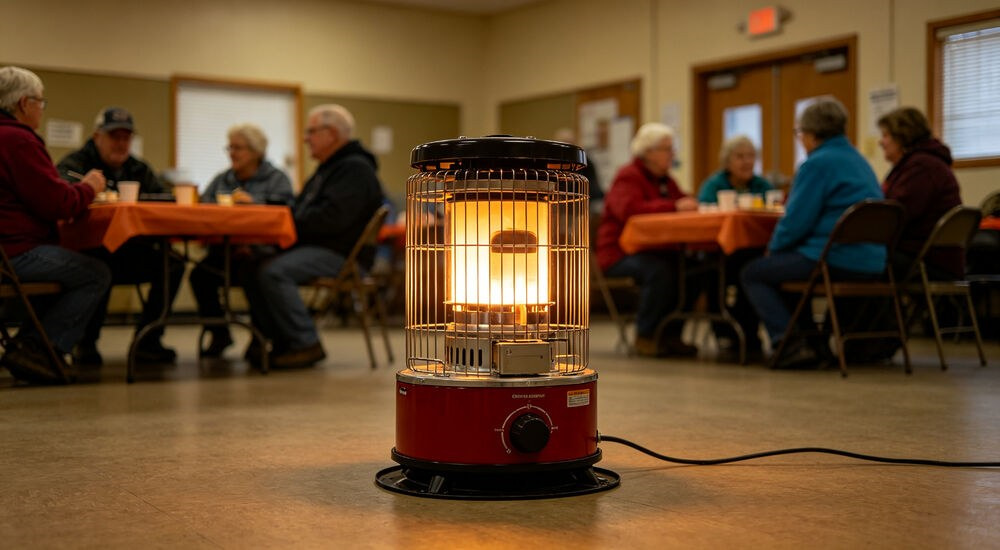
Safe indoor portable heaters are critical for warming centers during multi-day outages.
When the grid goes down, phones die and people cannot call for help. A 10,000 mAh power bank charges a phone about twice. Flashlights are safer than candles, which are a major fire hazard during outages.
LED headlamps keep volunteer hands free, and spare batteries should be stocked at double the device count in every cold weather emergency supplies plan.
Lighting and power are the quiet workhorses of the operation. LED flashlights with multiple brightness levels last far longer than older bulbs, and headlamps keep volunteers hands-free during supply moves.
Power banks rated for cold weather hold charge better than standard models, and lithium cells perform better than alkaline below freezing.
The practical rule for winter supplies is two spare batteries per device and one charged power bank per staff member per shift. Create a charging station with labeled slots at the warming center entrance so devices rotate through shifts instead of disappearing.
Test one of everything at the start of each season, because batteries that sat through summer can lose capacity quietly.
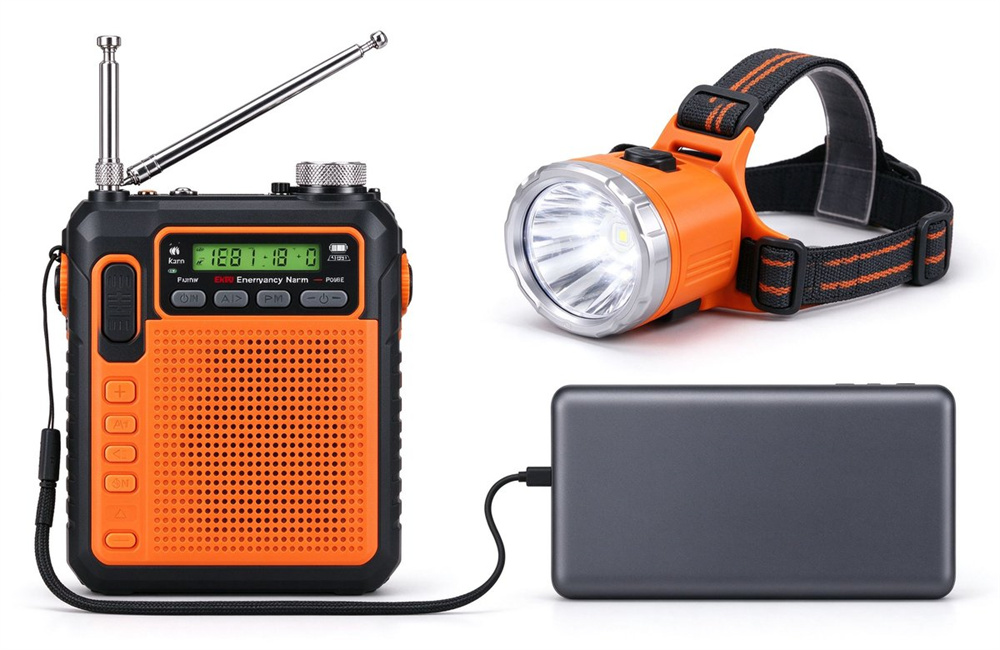
Winter emergency power bank, headlamp and radio for battery logistics in cold weather supplies
In winter, people need hot food and warm drinks — cold sandwiches are not enough. Canned soup, hot cocoa packets and high-calorie energy bars fit easily into a kit. Bottled water can freeze, so store it indoors or use freeze-resistant water pouches.
People burn far more calories in cold weather because their bodies work hard to stay warm. Aim for at least 2,500 calories per person per day.
Hot meals lift spirits and warm people from the inside out, and hot cocoa, tea and coffee are easy to make in bulk for warming centers.
Winter feeding needs more energy than summer relief because the body burns calories just to stay warm. A practical food section targets 2,500 calories per person per day, weighted toward hot meals.
Canned soup with a pull-tab lid, high-calorie bars, instant oatmeal and hot cocoa packets cover most needs without cooking equipment beyond a kettle.
For larger groups, agencies often pair relief supplies with hydration stations that offer warm water, tea and coffee continuously, because a hot drink every few hours changes morale as much as warmth.
Label every ration with the expiry date in big type, and rotate the food section on a calendar instead of waiting for visible damage.
Bottled water freezes solid if left outside, so store all water indoors above freezing. Remind residents to let faucets drip a little in extreme cold to prevent pipes from freezing, and include that reminder card in every kit.
Purification tablets add a five-year water solution for large groups.
Water is easy to forget in winter because the landscape looks wet, but pipes freeze and bottled water left in a vehicle turns to ice. Store water indoors above freezing, use freeze-resistant pouches for distribution, and carry purification tablets as a backup that works even when the water supply is interrupted.
Tablets last about five years and take up almost no space, which makes them ideal for group distribution. For warming centers, plan roughly one gallon per person per day and stage it near the kitchen rather than the entrance, so volunteers do not drag heavy cases across the room.
Rotate stored water twice a year and mark every container with the fill date. This belongs on the operating card.
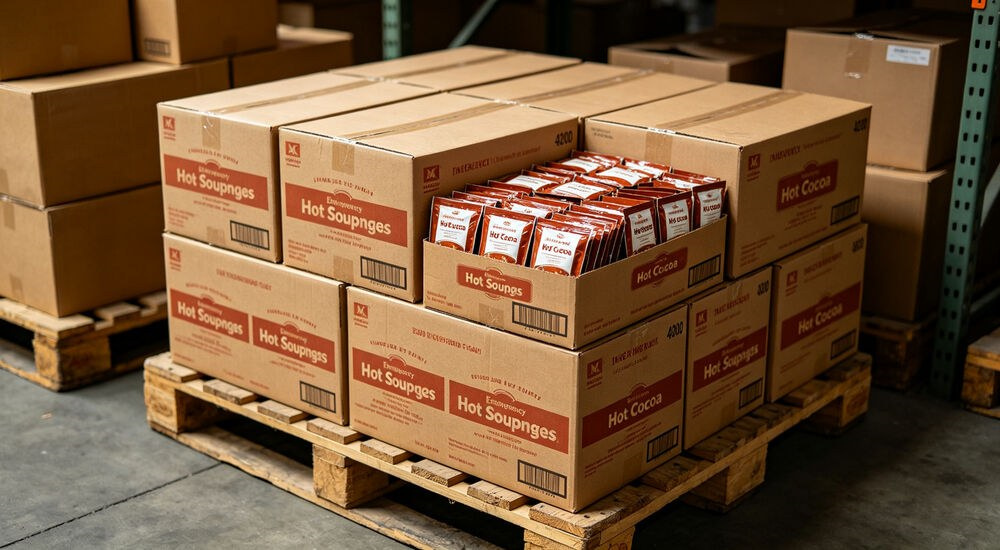
Hot food and warm drinks are just as important as blankets in a winter emergency.
Volunteers and staff work outside in the cold and need insulated waterproof boots, heavy work gloves, warm hats and thermal socks. Without proper cold weather work gear, they cannot operate for more than 30 minutes at a time.
Equip your team before you send them out, and budget the PPE into the program.
Do not skimp on gloves. Cheap gloves get wet and stiff in minutes, so look for waterproof, insulated work gloves that keep hands functional. The same rule applies to boots: cheap boots leak, and wet feet are cold feet.
A thin windproof layer over a warm coat performs better than a thick coat that lets wind blow through it.
Hands and feet fail first in cold work, so winter PPE deserves a dedicated section in the winter storm emergency kit. Insulated waterproof gloves with a grippy palm let volunteers carry hot pots, operate tools and handle wet gear without losing dexterity.
Boots with removable liners dry faster between shifts, and wool or synthetic thermal socks manage moisture better than cotton. Layering beats one thick layer: a moisture-wicking base, an insulating middle and a windproof shell let volunteers adjust as they move between outdoor tasks and warm shelter.
When buying winter PPE, order gloves in multiple sizes rather than one size for everyone, because ill-fitting gear causes more injuries than cold itself.
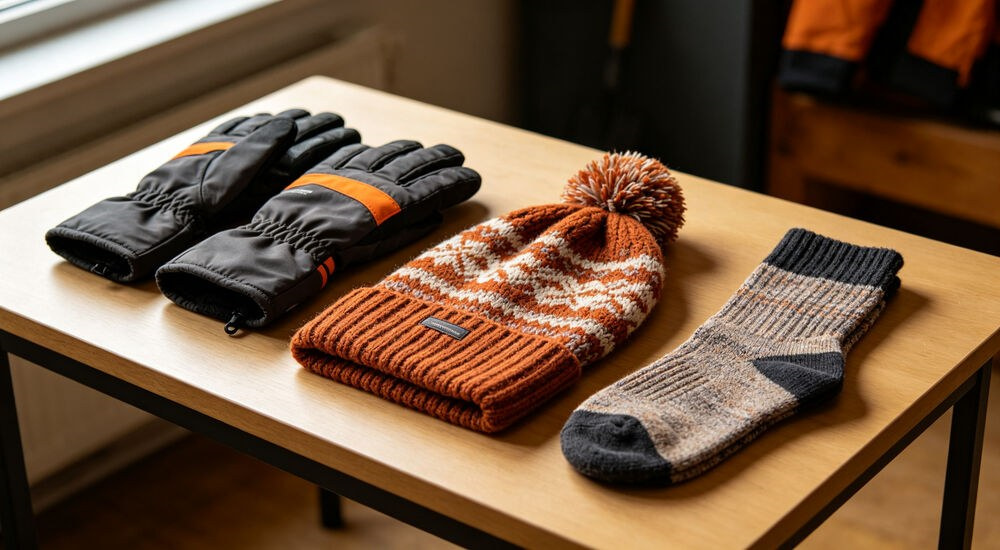
Proper winter PPE keeps your volunteers working safely in sub-zero temperatures.
PPE is not just for staff. Many people arrive at a warming center in sneakers and a thin jacket because they did not plan for the storm.
Keep extra hats, gloves and socks to hand out, and include a warm hat and glove pair for every person in the distribution plan.
Families arrive at warming centers without planning for a storm, often in thin jackets and regular shoes. The distribution plan should include a welcome table with hats, gloves and socks in adult and child sizes, so no one waits for warmth.
Child sizes are the most commonly missed item, and they disappear fastest once distribution starts.
Keep a second stock of dry clothing basics behind the counter for people who arrive wet, because wet clothing is the fastest route to hypothermia even indoors.
Agencies that fold family PPE into relief supplies to avoid the awkward moment where staff give away their own gloves to keep residents warm.
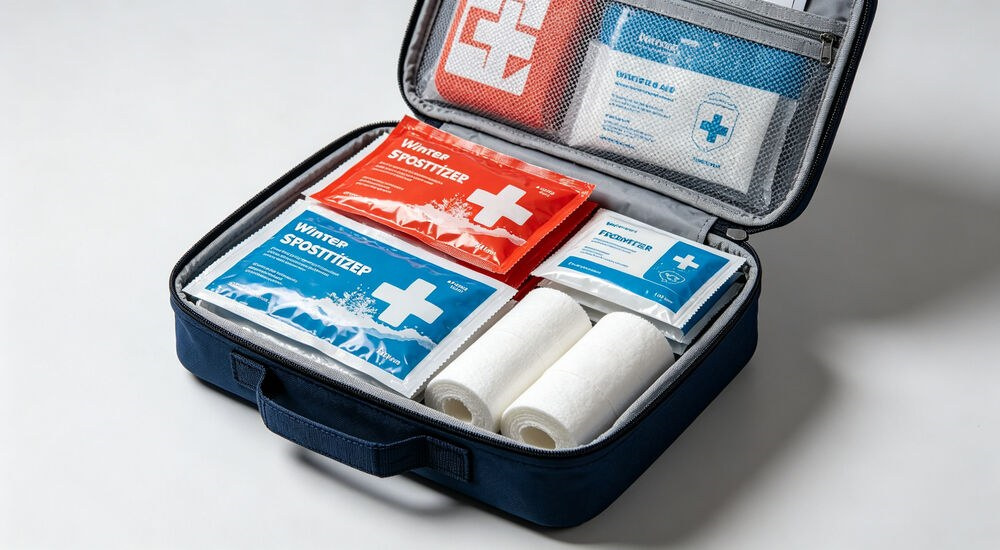
Winter-specific first aid kits include supplies for frostbite and hypothermia treatment.
During the storm, roads are impassable and it is too dangerous to go outside. The job is to set up warming centers, keep families informed and get essential supplies to people who cannot leave their homes.
A clear operating checklist keeps every kit from sitting unused in a warehouse.
Open warming centers early — do not wait for power to fail. Stock them with blankets, heaters and hot drinks, and keep them open late. Extra capacity is always better than not enough.
Put up signs reminding people not to bring generators, grills or camp stoves inside, and keep a working CO detector in every room.
A warming center succeeds on simple routines, not complex planning. The operation supports three routines: arrival, rest and departure. At arrival, check in residents, hand out a blanket and a warm drink, and record basic needs.
In the rest area, keep the temperature above 65 degrees, provide cots with sleeping bags, and run the CO detector check on the hour. At departure, return and disinfect reusable blankets, and restock the arrival table for the next shift.
Post a simple duty card at the entrance so every volunteer can run the same routine.
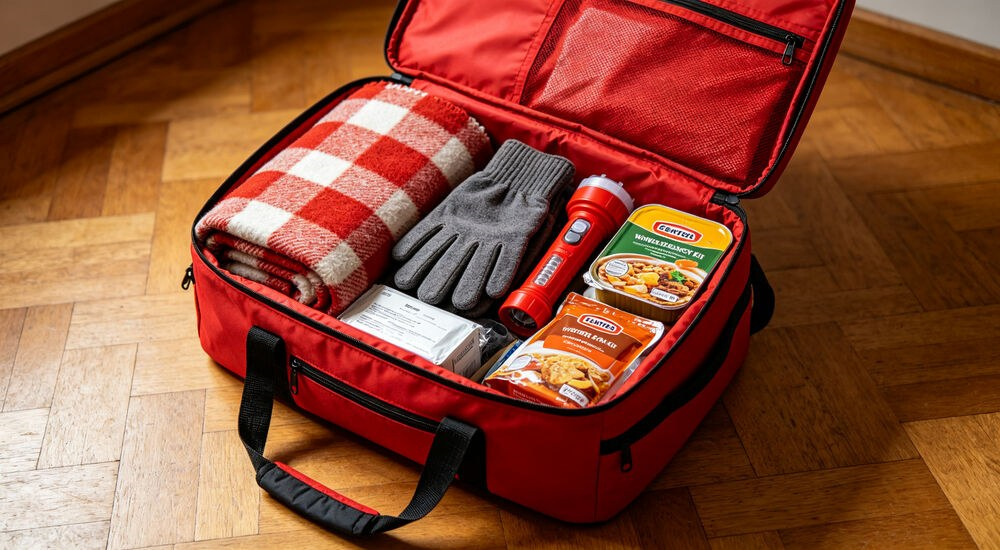
Pre-packed family kits make distribution fast — just hand them out and go.
Make phone lists for elderly residents living alone, families without proper heating and homeless individuals, and check on them every few hours. A five-minute call can catch a problem before it becomes life-threatening. If you cannot reach someone, send a volunteer — do not wait.
Stay off the roads unless it is an emergency, and use 4WD when you must go.
Phone checks are the cheapest life-saving tool in the winter storm emergency kit, but they only work if the list is current. Update the vulnerable-resident list every fall with names, addresses, emergency contacts and any mobility or medical notes.
During the storm, call every few hours and escalate anyone unreachable within the hour.
Volunteers who make home visits should carry a small response pack: flashlight, spare batteries, warm pack, blanket, notebook and a charged phone. Never send a single person into an unfamiliar building at night; pair visits and check in by radio.
These visits are when group supplies turn into individual survival, one family at a time.
Communicate clearly about when power will return, where the nearest warming center is, and how to get help. Use text alerts, social media and local radio, and do not assume people know what to do.
Many residents have never been through a severe winter storm, so the preparedness message needs to reach them before the storm does.
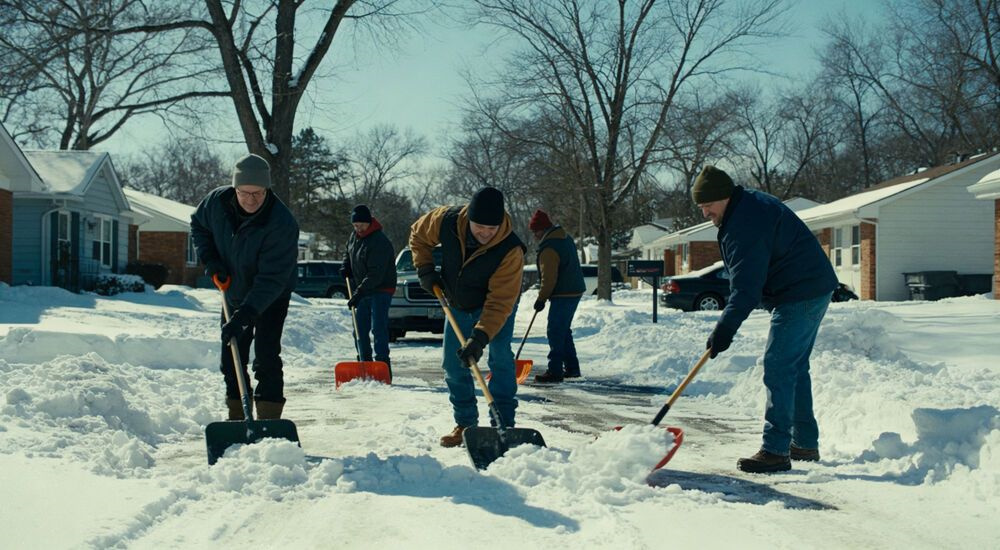
After the storm passes, communities need help digging out — driveways, walkways and access roads.
After the storm passes, the real work begins. Roads are blocked with snow, trees are down and power may still be out for days. Post-storm recovery usually lasts one to two weeks, and the first few days are the most urgent.
The program does not end when the storm stops — it continues through recovery and restocking.
Heavy wet snow is incredibly heavy — about six inches of wet snow weighs roughly 20 pounds per square foot, enough to collapse a weak roof. Check roofs for sagging and clear snow when it looks too heavy.
After thaw, check for frozen and burst pipes, and help families find temporary shelter when homes are uninhabitable.
After the storm, the operation shifts from response to recovery mode. Wet snow is heavy, and roofs with flat spans or older structures can sag or collapse.
Crews should check roofs from a safe distance, clear heavy snow with proper shovels and look for interior water stains that signal ice dams.
Pipes that froze need slow thawing with warm air, never an open flame. Keep a recovery add-on: heavy-duty trash bags, a small pump or wet-vac, buckets, absorbent cloths and mold-prevention supplies. Document every property checked, because insurance claims and grant reports depend on that record.
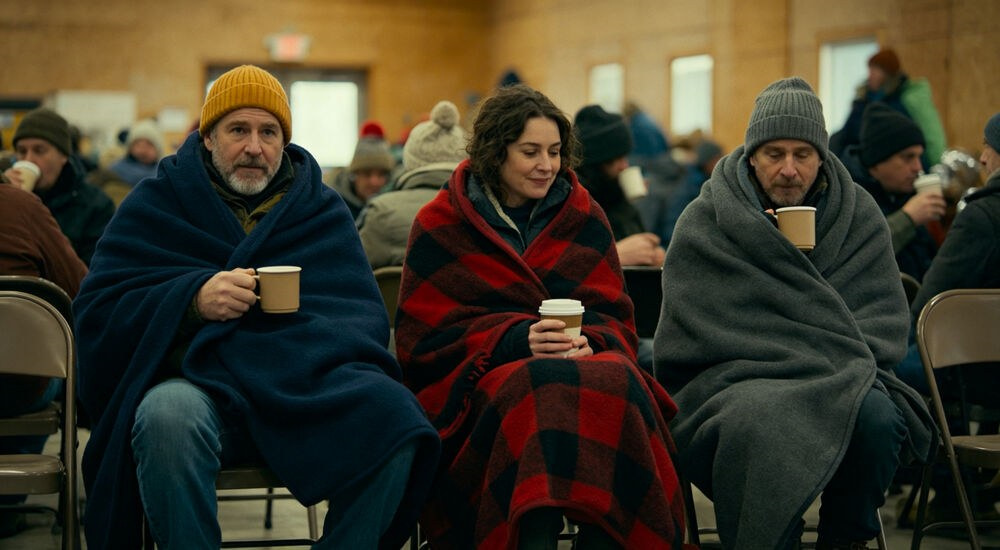
Fast distribution of warm supplies is what communities need most after a winter storm.
Track who you helped, what supplies you gave out and what is still needed. When the next storm comes, that record tells you what worked and what did not, and it supports donor and grant reporting.
Restock bulk cold weather supplies to the per-vehicle minimum immediately after each event, not on the calendar.
Restocking discipline separates professional relief programs from one-off responses. Track issue counts by item during the event, and reconcile them against inventory within 48 hours of the storm ending.
Stock should return to its pre-positioning minimum before the next forecast, not whenever someone remembers to order.
Set automatic reorder triggers for consumables like warmers, batteries and rations at a fixed minimum quantity. Keep a rolling record of what got used, by whom and where, so next season’s quantities reflect real use.
Agencies that close the loop after every event stop repeating the same shortages.
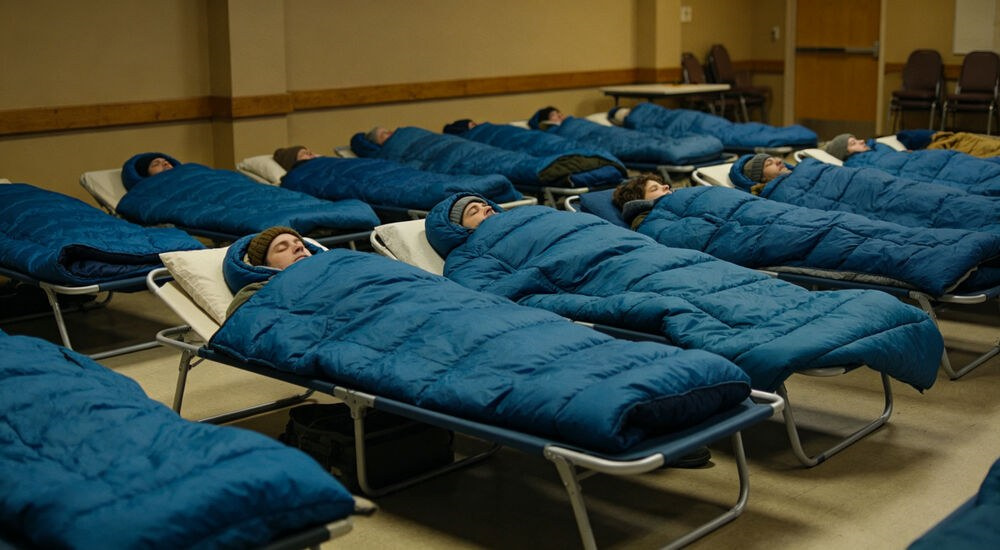
Shelters running for a week need real sleeping bags, not just emergency blankets.
Not every relief organization has the same budget. Whether you are a small local group serving 50 people or a large international team serving thousands, there is a configuration that works. Below is a budget breakdown so you can plan spend by organization size.
|
Organization Size |
Basic Package |
Standard Package (Most Popular) |
Full Package |
|
50 people |
Blankets, hand warmers, basic PPE |
Add sleeping bags, portable heaters, hot food |
Add shelter, full PPE, first aid kits |
|
200 people |
Essential warmth supplies |
Full 72-hour response kit |
2-week sustained response kit |
|
1,000+ people |
Rapid response supplies |
Full relief camp setup |
Logistics plus staffing support |
Start with the standard package for your headcount and upgrade after the first season, when you have real consumption data. The budget should reserve about 20 percent for spares, batteries and fuel.
Everyone orders winter supplies at the same time in October and November. If you wait until the first storm is forecast, you will wait weeks for delivery. Order in August or September, before the rush, and confirm lead times in writing.
Flexible starting volumes are available for smaller relief programs, with pricing improving as quantities scale.
Winter supply lead times stretch exactly when you need them most. Most agencies place orders in August and September to lock capacity before the October and November rush, and confirm lead times in writing before payment.
Flexible starting volumes are available for smaller programs, with pricing improving as quantities scale; exact minimums are confirmed in the quotation rather than published as fixed numbers.
For urgent orders, keep a small buffer of the highest-rotation items so the program never stops while freight moves.
Agencies that plan orders around the calendar instead of the forecast avoid the most common winter procurement failure: the invoice arriving after the storm.
Quantity planning follows a few stable ratios. Blankets at two per person, sleeping bags at two-thirds of headcount, hand warmers at one per person per 24 hours, and flashlights at one per 10 people for the shelter floor plus one per vehicle.
Water is one gallon per person per day, and food is 2,500 calories per person per day. Add 20 percent spare for volunteers, staff and unexpected arrivals. A 50-person program needs about 100 blankets and 35 sleeping bags; a 200-person program needs about 400 blankets and 135 bags.
These anchors give procurement teams a defensible budget before the season begins.
For official guidance, review the National Weather Service winter weather safety page, the NWS winter weather safety guidance, the American Red Cross winter storm preparedness page, and the Red Cross survival kit supplies checklist for hypothermia and frostbite guidance.
For related supply planning, see the flood emergency kit guide and the power outage emergency kit guide.
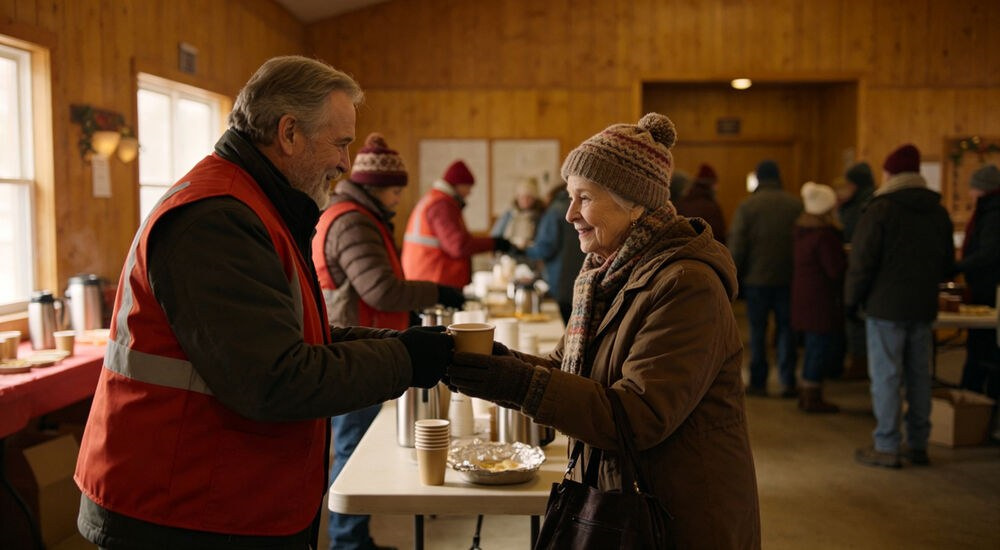
Hot drinks and warm food make a huge difference for people staying in a warming center.
Winter weather might sound routine, but it is one of the most disruptive seasonal hazards relief teams handle each year. A dedicated winter storm emergency kit is what keeps a response from turning into improvisation.
We work with warming-center operators and relief teams who buy winter emergency supplies in bulk every season. They rely on bulk winter relief supplies staged before the season.
Having the right blankets, heaters and PPE on hand means a center opens the same day a storm hits. Staging supplies early prevents the rush when every group orders at once.
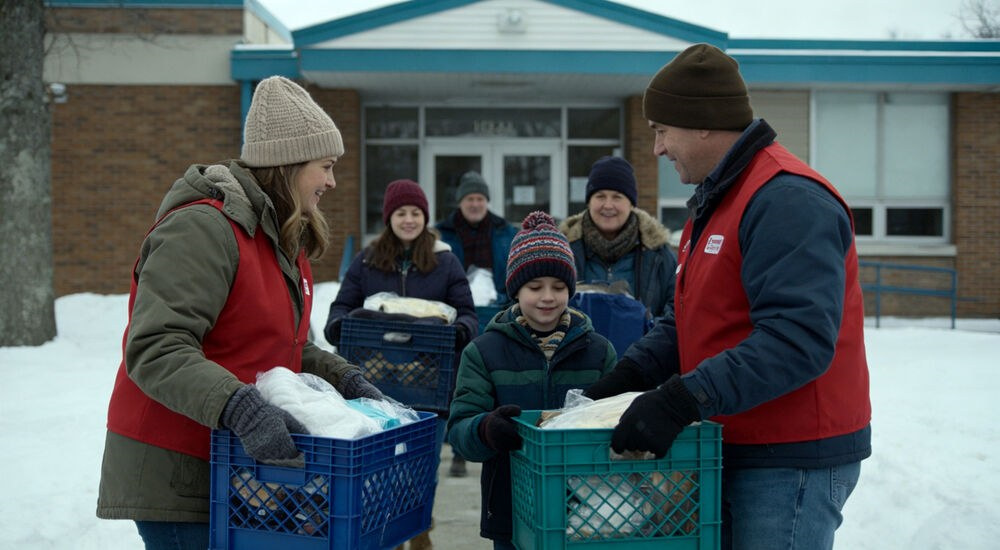
Warming centers are the first stop for families who lose heat during a winter storm.
Operators run shelters for 72 hours or longer and need consistent, durable gear. They order sleeping bags, fleece blankets and portable heaters by the hundred, and rely on bulk winter supplies to keep cots warm through the night.
Teams drive from site to site in dangerous conditions. Each response vehicle needs its own stocked kit, plus PPE that works in wind chill.
We consolidate these into vehicle-ready sets that volunteers can grab in minutes, and we supply cold weather gear for groups across fleets.
Schools keep students indoors during warnings and may shelter children after late closures. They need child-size blankets, warm caps and first aid supplies. Orders over 200 sets can carry the school's own branding as part of bulk winter relief supplies.
Snowplow, delivery and utility crews work outdoors around the clock. They need cold weather gear for groups such as insulated gloves, thermal socks and high-visibility warm layers. We also supply bulk winter relief supplies and cold weather gear for groups across these fleets.
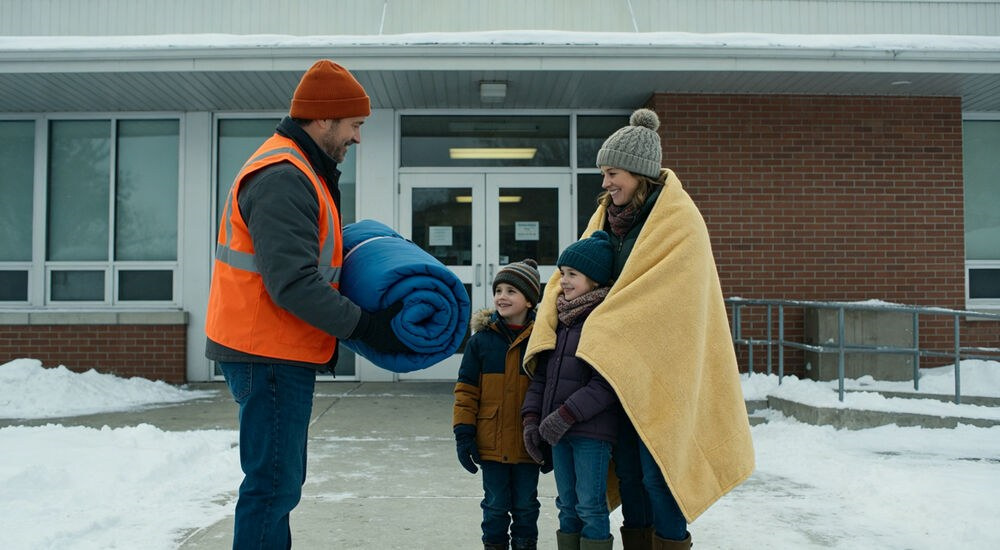
Fast distribution of warm supplies is what communities need most after a winter storm.
When the temperature drops and the power flickers, people panic and make bad decisions. Here are the most common mistakes we see, and why preparing ahead removes the pressure that drives poor choices.
This is the single most dangerous winter habit. Carbon monoxide is invisible and odorless. Generators and grills stay outside, at least ten feet from doors and windows, and every indoor room gets a working CO detector.
Seasonal capacity fills up fast in October and November. Order in August or September, confirm lead times in writing, and pre-position gear so the kit is ready before the first warning.
Mylar blankets are great for the first 24 hours, but a center running for a week needs washable fleece and sleeping bags. Keep both tiers in your kit rather than relying on one.
Elderly and isolated people can deteriorate quickly in a cold home. Build the call list before the season, check every few hours during the storm, and escalate anyone unreachable within the hour.
Not every organization has the same budget or headcount. Here is how to match a kit level to your operation, from a small local group to a large relief team.
|
Option |
Best For |
Config |
Notes |
|
Basic Package |
50 people, small group |
Blankets, hand warmers, basic PPE |
Fast to deploy, low upfront cost |
|
Standard Package |
200 people, most teams |
Sleeping bags, heaters, hot food |
The most popular 72-hour kit |
|
Full Package |
1,000+ people, sustained use |
Shelter, full PPE, first aid |
Covers a two-week response |
Start with the standard package for your headcount and upgrade after the first season, when you have real consumption data. Reserve about 20 percent of the budget for spares, batteries and fuel when you order bulk winter relief supplies.
Your blankets, sleeping bags and heaters need basic care to last across multiple seasons. A few simple habits keep the kit ready year after year.
We supply all of these as bulk winter relief supplies to relief organizations, warming centers and municipal teams, and we kit out cold weather gear for groups such as crews and fleets. Orders over 200 sets support OEM and private-label branding, with exact minimums and lead times confirmed in the quotation for bulk winter relief supplies.
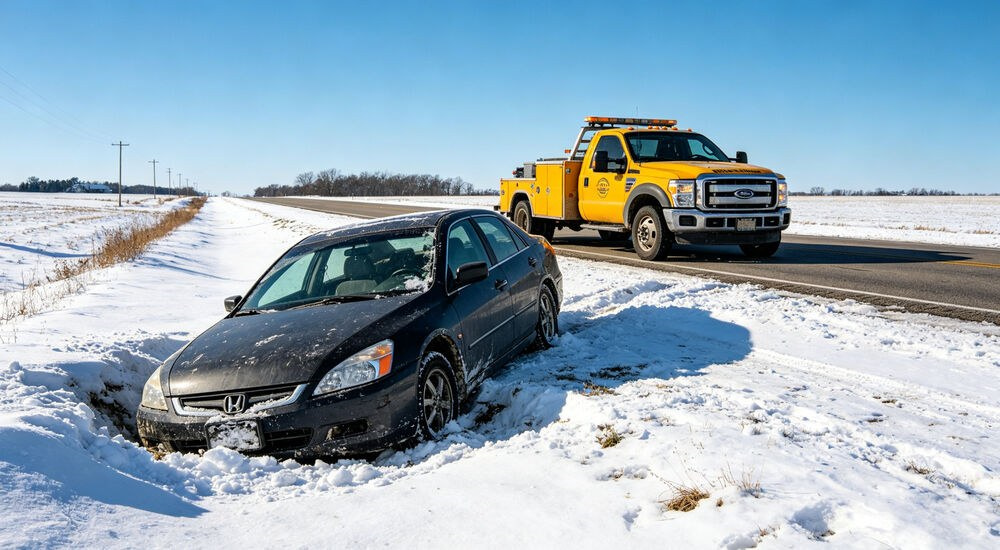
Winter roads stay dangerous even after the storm passes — response vehicles need their own stocked kits.
Q: How do I start planning a winter storm emergency kit?
A: Map the winter risks in your service area first, then build your winter storm emergency kit inventory two to three months before the season. Pre-position thermal blankets, sleeping bags and portable heaters in high-risk areas, and train your team on cold injury treatment.
Q: How many thermal blankets do I need per person?
A: Order two per person: one for use and one spare. For 100 people, order 200 thermal blankets. They are lightweight, compact and the spare stock carries over to the next season.
Q: What temperature rating should sleeping bags have?
A: For most winter storms, sleeping bags rated to 10 degrees Fahrenheit work for most people. For polar vortex events with extreme wind chill, choose bags rated to minus 20 degrees Fahrenheit.
Q: Can I use indoor heaters safely in a warming center?
A: Only if they are rated for indoor use and the space has ventilation. Never run a gas generator or charcoal grill indoors because both cause carbon monoxide poisoning. Keep a working CO detector in every indoor warming space.
Q: What is the minimum order quantity for bulk supplies?
A: Minimum quantities depend on the product line and are confirmed in the quotation. Pricing improves as quantities scale, and flexible starting volumes are available for smaller relief programs.
Q: How do I verify supplier quality before ordering?
A: Check product certifications against international safety standards, confirm documented lead times, and ask for references from other relief buyers. A supplier that shares certificates and sample reports is easier to audit.
Q: When should I place winter supply orders?
A: Order two to three months before your typical winter season. That gives time to inspect the gear, train your team and pre-position supplies. Last-minute ordering collides with the seasonal rush in October and November.
Q: Can you add our organization logo to the kits?
A: Yes. Custom branding is available on most product lines including blankets, sleeping bags and first aid kits. Logo placement and minimum quantities are confirmed in the quotation before production.
Thermal blankets and sleeping bags last over ten years when stored dry. Hand warmers last three to five years, food rations three to five years, and purification tablets about five years. Rotate stock once a year.
Store in a cool, dry place away from direct sunlight. Keep blankets and sleeping bags out of damp basements to avoid mold, and away from chemicals and fuel so they do not absorb odors. Inspect stock once a year.
Emergency blankets use a reflective layer that returns about 90 percent of body heat, are feather-light and fit in a pocket. Regular blankets and sleeping bags are warmer for long-term shelter. Keep both in the kit.
Keep one kit per response vehicle, one reserve at the warehouse and one pre-positioned at the warming center. Assign an owner to each kit, check monthly, and restock by consumption so every vehicle stays above the minimum line, the core discipline of any preparedness program.
Дружні посилання :
Авторське право © Custom Disaster - Relief Bedding: Tents, Sleeping Bags, Blankets Всі права захищені
професійна команда для обслуговування !