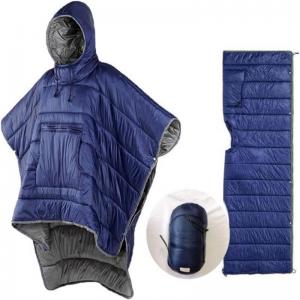
When one order serves several sites, you need one fixed core spec plus a written list of local differences. Without that, each site gets something slightly different, and nobody can compare or reorder cleanly later.

Confirm all product-specific values and documents in the active quotation before production.
Freeze the core spec first
Decide which fields must be identical across every site: product name, material, finished size, weight basis, edge finish, approved sample and document scope. These are the fields that make reorder possible. If they drift site by site, you no longer have one program; you have several small orders that cannot be compared.
List local differences with an owner
Color, label language, carton marks, delivery order, pieces per carton or receiving contact can vary by site. That is fine, but every variation needs a named owner and a version number. A local change that affects product identity or acceptance needs its own sample or approval; a change that only affects delivery handling goes in the destination packing plan.

Do not let one site's convenience change the whole order
If a site asks for different packing or labels after production starts, that change goes through the deviation register, not a phone call. Otherwise one site's exception quietly becomes the default for everyone, and the next reorder does not match the original.
Freeze the fields that must match everywhere (material, size, weight, edges, approved sample, document scope). List local differences (color, label language, carton marks, delivery order, pieces per carton) with a named owner and a version. A local change that affects product identity needs its own approval; a delivery-only change goes in the packing plan.
Allocate quantities, packing and documents by site before production. Keep one approved product baseline and a separate destination schedule, so a site's packing or label change does not quietly alter the product. We return the confirmed product reference, site-by-site packing allocation and records to match dispatch with receiving.

One total number is not enough for multi-site delivery. Split quantity by site, delivery phase and receiving person, and link each split to its carton ID and packing list. If a site cannot take large cartons or needs staged delivery, confirm it before production; a late packing change affects labels, carton data and freight.
Plan reorders from the first order. Future sites need to know which fields must match the original baseline and which can change locally. A controlled record stops old and new stock mixing, or a site getting the right blanket with the wrong label.

Keep three buckets straight: shared baseline stock, site-specific allocations and later reorder quantities. At each handover (central approval, site allocation, local receiving, exception reporting, reorder comparison) the product ID must be visible and someone must own the decision. Send a short RFQ with site list, quantities, shared spec, allowed local differences, label rules and receiving contacts.
Before production, re-check that the chosen spec and site allocations still match the sealed sample and approved labels. If anything changed, record it in writing before goods are made.
If a site later changes color, labels, packing or quantity, do not reuse the old approval. Re-check the baseline and exception list, and decide whether a new sample or packing confirmation is needed.
Map cartons, labels and documents to each receiving location before production. Do not rely on a packing list created at the end. Build the destination split into the order so production, packing and logistics teams use the same allocation and receiving contacts.


These fields stay the same across all sites. Higher or project-specific standards can be customized per requirement:

Record local alternatives and approvals without quietly changing the shared baseline. The register should show requested value, common baseline, local deviation, reason, approver and affected quantity. This prevents one site's exception from becoming the default for all sites.


For a consistent program, these are commonly ordered with the same core spec and managed through the same deviation register:

Define contacts, document timing, shortage reporting and damaged-carton handling for each site. Staged receiving needs a shared rule for partial delivery, document release, shortage reporting and carton damage. Each site should know which issues it can close and which must go up to the program buyer.
When a measurable or visible deviation appears, the site segregates affected cartons, records photos, batch number and quantity, and reports to the central buyer within the agreed window. The buyer and supplier agree the disposition in writing before goods enter service.

Retain the core specification and every approved site variation for future replenishment. At project close, compare site-level receiving results. Repeated local exceptions may justify a future baseline change, while isolated exceptions stay attached only to the affected destination.
Store the sealed sample, approved artwork, deviation register, batch records and final receiving reports in one place. When a new site joins later, it picks from the existing core spec and registers its own local differences, instead of starting from scratch.

Define the buyer role, destination split, quantity, operating process and decision owner. Then confirm product specification, packing, label, document and receiving fields separately in the RFQ.
Start from the matched product detail page and confirm the current specification, sample identity and quotation. Do not transfer composition, size, performance or documents from another blanket line.
Record sample identity, specification version, visible configuration, measurement method, label position, proposed packing and approval owner. A sample supports only the fields actually reviewed.
Packing affects counting, destination splits, storage, internal issue and exception handling. Confirm unit or bulk format, carton quantity, label visibility, destination code and packing-list fields before carton or freight estimates.
Name the exact specification, material, care label, packing or material wording support needed. The supplier only confirms records applicable to the current product, order scope and delivery batch.
Record affected quantity, product or batch identity, photos or measurements and packing condition. Use pre-agreed authority to isolate, accept, rework, replace or reject goods.
Review sample, artwork, quotation and acceptance record when product, material wording, color, construction, labels, packing, document scope, destination or responsible party changes. Confirm differences before production.
"Same as last order" is not a formal spec basis. Compare the new offer with retained specifications, sample records, labels, packing, documents and prior receiving results.

How do we decide the core spec versus local differences?
Core spec covers fields that must match for reorder: material, weight, size, edge, color family and approved sample. Local differences cover label language, carton marks, pack quantity and delivery contact. If a change affects product identity or acceptance, it needs its own approval.
Yes, within the same color family and approved range. Each color needs an approver and a record in the deviation register. Use one dye lot per color across the program so sites do not end up with different shades.
Split quantity by site and phase before production. Each phase gets its own carton marks, packing list and document set. For multiple ports, confirm split bills of lading before booking.
Yes. Tell us the label language per site before labels are printed. We produce sewn-in care labels in the required language; late label changes after printing may incur fees.
Keep the sealed sample, core spec, deviation register and batch records. Every reorder references these. New sites join the existing core spec and add only their own local differences.
Each site counts and checks against its own packing list and reports shortages, damage or wrong labels to the central buyer within the agreed window, with photos and batch numbers. The buyer and supplier agree the disposition in writing.

Share quantities by destination, required specifications, packing, labels, documents, acceptance method and target delivery window.
Continue with the blanket overview, matched product detail, and related procurement article.
Send project requirements for a matched blanket quotation.
Review the blanket product range and prepare a shortlist for
your procurement project.


| Project field | Buyer confirmation | Supplier response |
|---|---|---|
| Quantity and allocation | Destination, lot, packing and replenishment unit | Split quantities, packing method and handover list |
| Receiving and exceptions | Receiving owner, lot identity and discrepancy process | Sample baseline, lot record and close-out method |

YRF | 20 Years Emergency Relief Manufacturer
Авторське право © Custom Disaster - Relief Bedding: Tents, Sleeping Bags, Blankets Всі права захищені
професійна команда для обслуговування !