Whether you are dealing with a flooded street, a confined space or an offshore emergency, the right stretcher can mean the difference between a safe rescue and a delayed evacuation. We supply 7 core rescue stretcher types used by fire departments, water rescue teams and industrial safety buyers across more than 60 countries. When you buy rescue stretcher units for your department, we include free consultation on sizing and configuration.
Each type is built for a specific job: the floating spinal board for water and spinal immobilization, the scoop stretcher for quick side-entry patient pickup, the inflatable stretcher for lightweight water rescue,. the basket stretcher for offshore and hoist operations, the canvas stretcher for general first aid, the vacuum mattress for rigid immobilization, and the roll sked for tight spaces and rough terrain. This folding stretcher packs down to 1/4 its deployed size, making it easy to carry in emergency vehicle compartments.
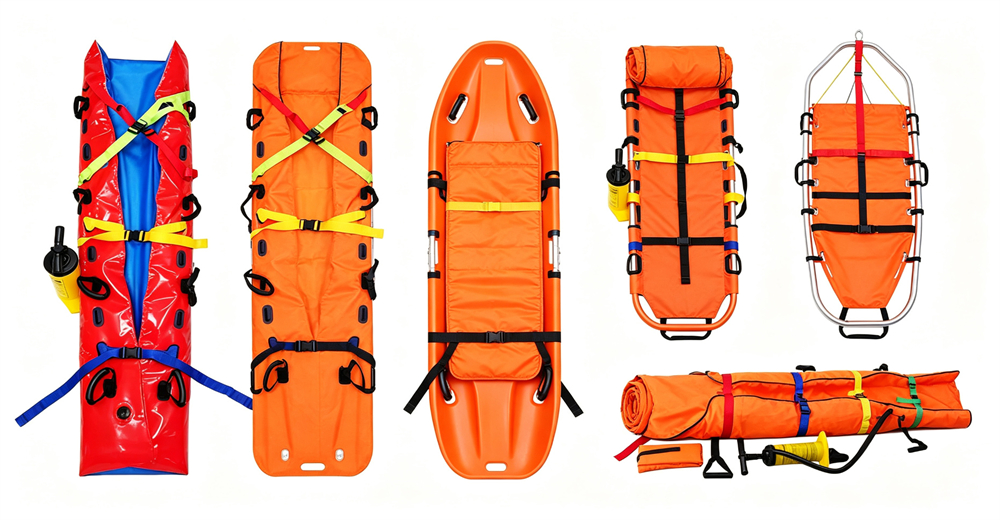
Water Rescue Stretcher | Floating Rescue Stretcher | Spinal Board Stretcher | Scoop Stretcher | Inflatable Rescue Stretcher | Boat Rescue Stretcher. | Vacuum Stretcher | Roll / Sked Stretcher As core marine rescue equipment, these stretchers work reliably in both freshwater and saltwater conditions.
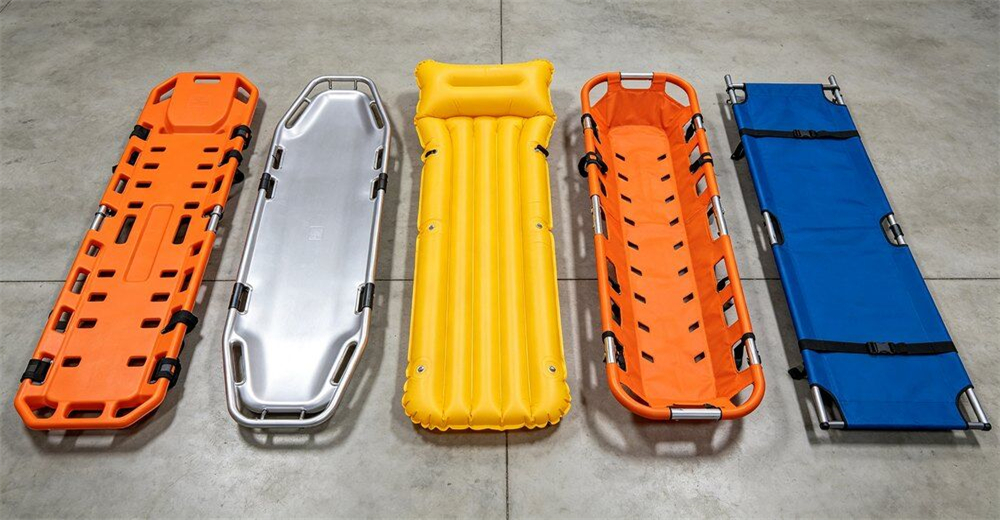
Welcome. If you are sourcing rescue stretchers for a fire department, a search and rescue team, a hospital network,. a government emergency procurement, or a wholesale distribution business, you have landed on the right page. We are a China-based supplier with more than 20 years of hands-on experience supplying rescue gear to teams in Europe, the Middle East, Southeast Asia, Africa and Latin America. On this page we walk you through seven stretcher types we keep in stock, what each one is actually used for,. how to pick the right one, and how bulk orders work. As a long-term rescue stretcher wholesale supplier, we support both one-time bulk orders and recurring scheduled replenishment.
A stretcher is not a stretcher. The tool you pull out of the apparatus at a flood call is not the same tool you would. use inside a crowded ER hallway, and neither is the right choice for hoisting a patient out of rough surf. Pick the wrong one and you either slow the team down, put the patient at further risk, or end up carrying dead weight the whole shift.
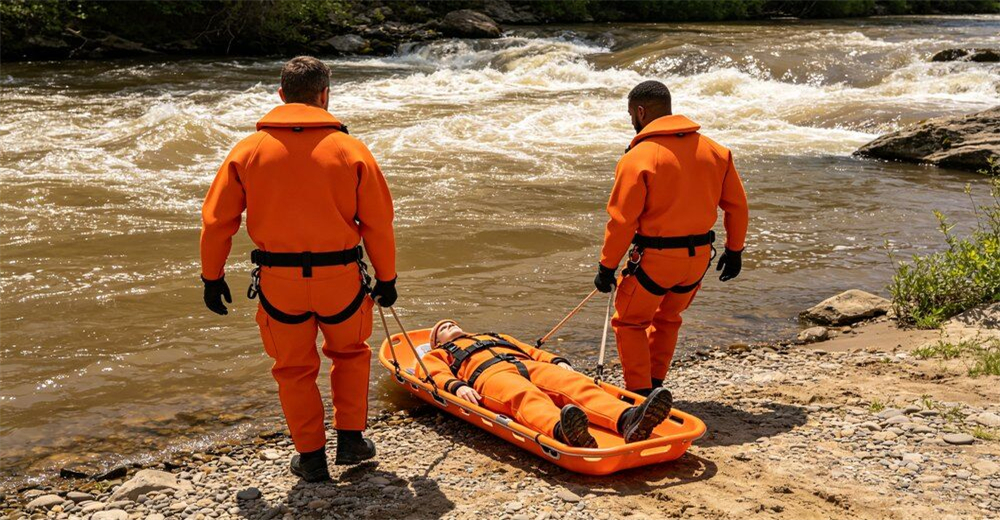
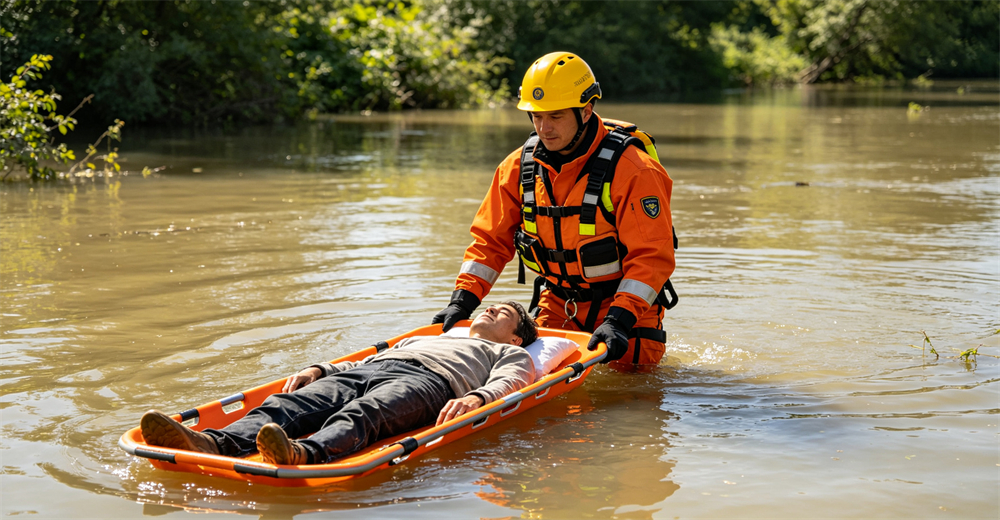
If your crews work near water — rivers, flood zones, coastlines, reservoirs — you need a water rescue stretcher that actually floats. A standard wooden or aluminum stretcher sinks. A floating rescue stretcher keeps the victim's airway above the surface while your team stabilizes the scene. That single property changes the whole rescue plan.
If your crews are dealing with suspected spinal injury, you need a spinal board stretcher (also called a rescue backboard) that locks the patient in neutral alignment. Rolling a trauma victim onto a regular stretcher can turn a bad fall into a permanent spinal cord injury. The board is the tool that prevents that.
If your job is bulk procurement — outfitting a new station, restocking a warehouse, bidding on a government tender — you are usually buying a mix. A fire truck carries a scoop stretcher and a foldable canvas unit. A rescue boat carries a basket stretcher and an inflatable. An ambulance rig carries a spinal board. Nobody buys just one type. We supply the whole kit so your procurement list can be filled in one shipment. When you buy rescue stretcher units for your department, we include free consultation on sizing and configuration.
If you are a distributor or dealer, the questions your customers ask you are the same ones we have heard for two decades: How much does it weigh? Does it float? What is the load rating? Does it fit through a doorway? Can we get our logo on it? How fast can you ship? This page answers all of that.
We are not a glossy-catalog sales operation. We are a supplier who has packed and shipped these units to more than 40 countries, who has. heard the complaints after units failed in the field, and who has adjusted what we stock because of it. What you read below is what our actual customers ask us before they place an order.
Before we go deep on each model, here is the 30-second comparison. We will dig into the details after the table.
The short version: if you only buy one emergency stretcher and your unit works near water, buy the floating spinal board. It is the most versatile single piece of rescue equipment you can put on a truck. When you buy rescue stretcher units for your department, we include free consultation on sizing and configuration.
|
Stretcher Type |
Best For |
Weight (approx.) |
Load Rating |
Floats? |
Folds / Portable? |
|
Four-Fold Floating Spinal Board |
Water rescue, spinal immobilization, ambulance |
~6 kg |
150 kg |
Yes |
Yes — 4-fold |
|
Scoop Stretcher |
Ambulance, in-hospital transfer, suspected spinal injury |
~7 kg |
159 kg |
No |
Yes — splits into two halves |
|
Inflatable Rescue Stretcher |
Water rescue, confined spaces, remote flood zones |
~5 kg (inflated) |
150 kg |
Yes |
Yes — deflates to bag size |
|
Boat / Basket Stretcher |
Helicopter hoist, boat transfer, cliff rescue |
~25 kg |
250 kg+ |
Yes (as a boat) |
Splits into two halves |
|
Folding Canvas Stretcher |
Ground first aid, mass casualty, warehouse storage |
~4 kg |
120 kg |
No |
Yes — folds in half |
|
Vacuum Mattress Stretcher |
Pre-hospital immobilization, fracture / suspected-spine transfer, tight cabin spaces |
~4.2 kg |
160 kg |
No |
Yes - pumps rigid, folds flat when deflated |
|
Roll / Sked Stretcher |
Rubble drag, narrow stairs, snow / mountain terrain |
~8 kg |
160 kg |
No |
Yes - rolls into a tube |
This is the unit we stock the deepest. It is the one that shows up on most of our repeat orders, and it is the backbone of any water rescue equipment kit.
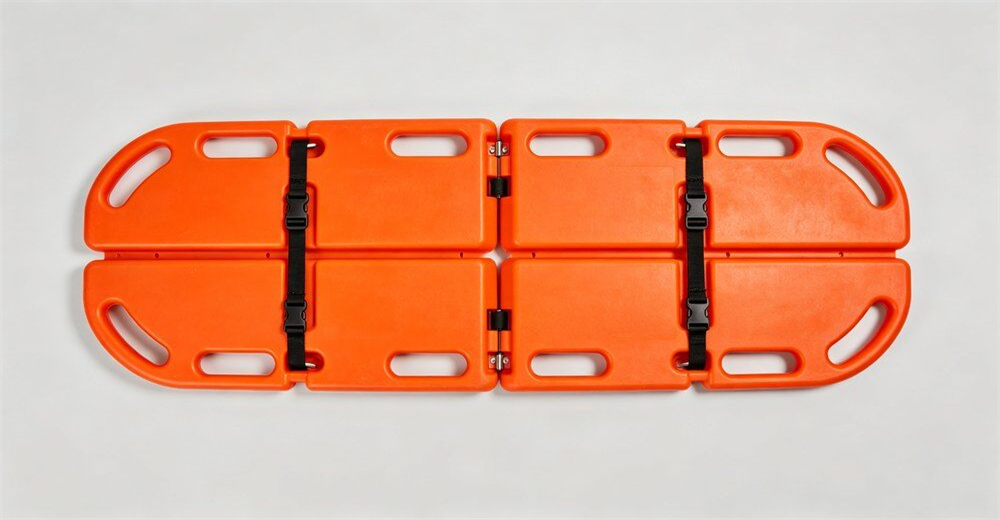
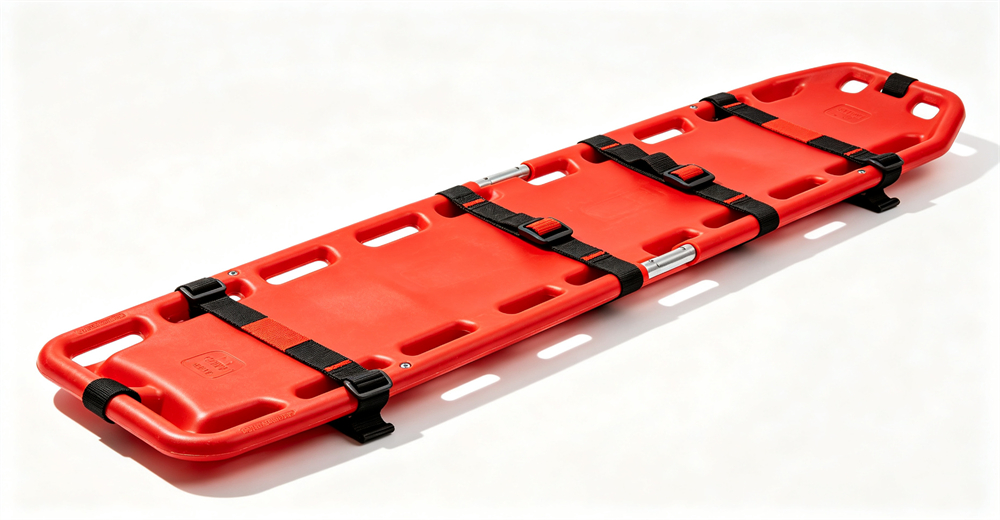
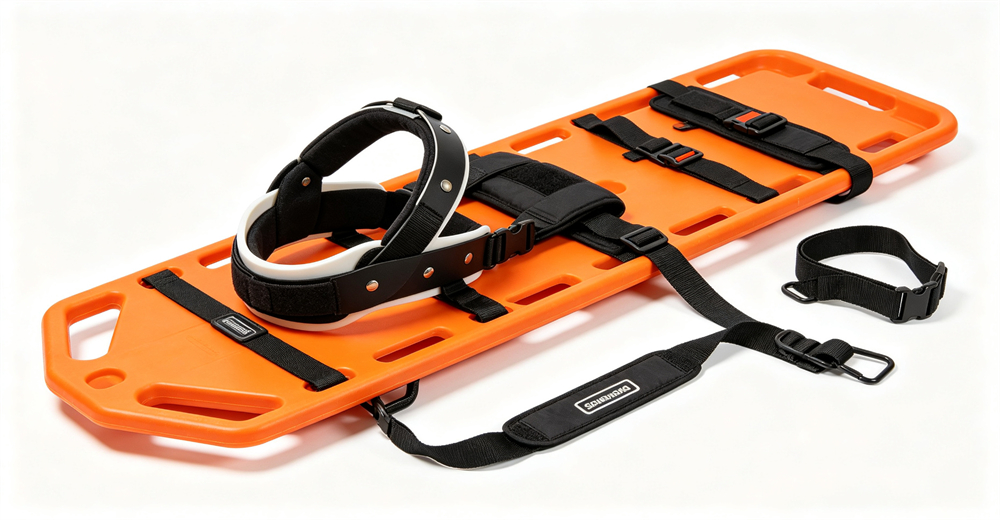
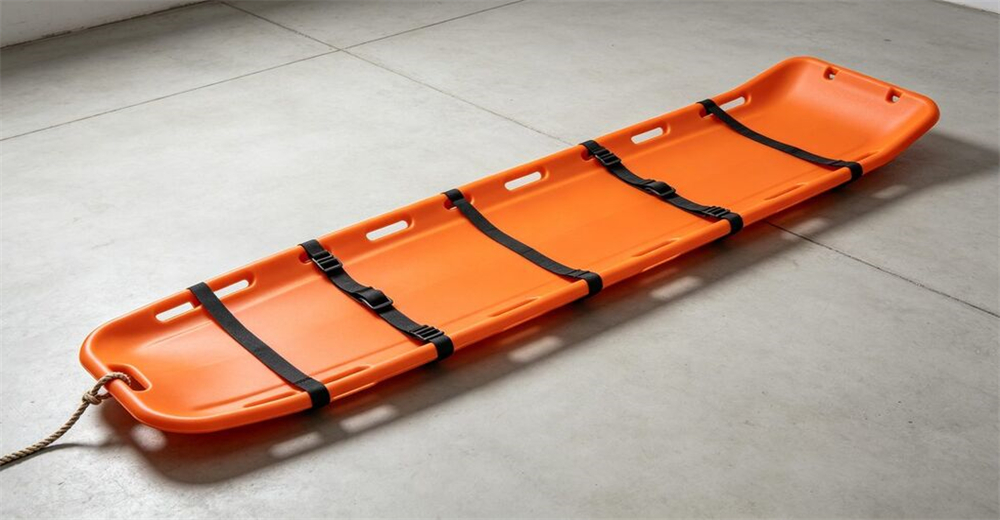
The board is a single rigid rectangle made of high-density polyethylene (PE) plastic. The color is high-visibility orange on purpose — when it is bobbing in turbid flood water or lying in tall grass, your crew needs to spot it fast. The board measures 183 cm long, 45 cm wide, and about 6 cm thick when laid flat.
The four-fold design is what makes it different from a one-piece spine board. A solid spine board is awkward to store — it sticks out of every compartment. This one folds on three hinges into four equal sections, so it collapses to about 46 cm long. It drops cleanly under a boat seat, behind a truck bench, or into a locker. As core marine rescue equipment, these stretchers work reliably in both freshwater and saltwater conditions.
Weighing in around 6 kg, it is light enough for one rescuer to carry but rigid enough to hold a 150 kg patient without flexing. The PE material does not rot, does not absorb water, and shrugs off chlorine, salt spray and road grime.
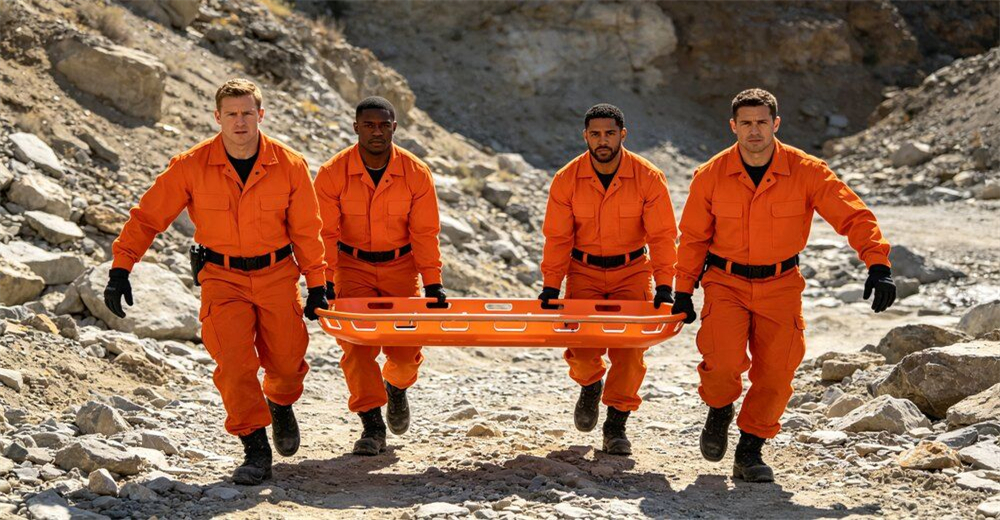
The board has a series of rectangular handhold slots punched along both long edges. When you are moving a patient over uneven ground, those slots give four rescuers safe places to grip without pinching fingers. The ends of the board also have large circular holes for attaching rope, carabiners or a towing line.
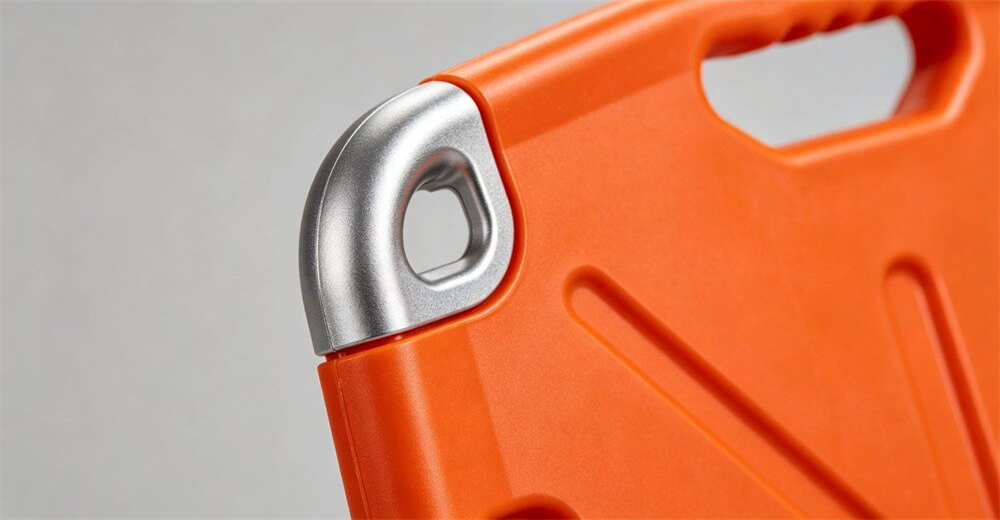
The fold hinges are reinforced with stainless steel or galvanized metal plates. That is the part that fails on cheap boards — a plastic hinge crack after a season of folding. Ours use the plated hinge design that has been proven on export orders for years.
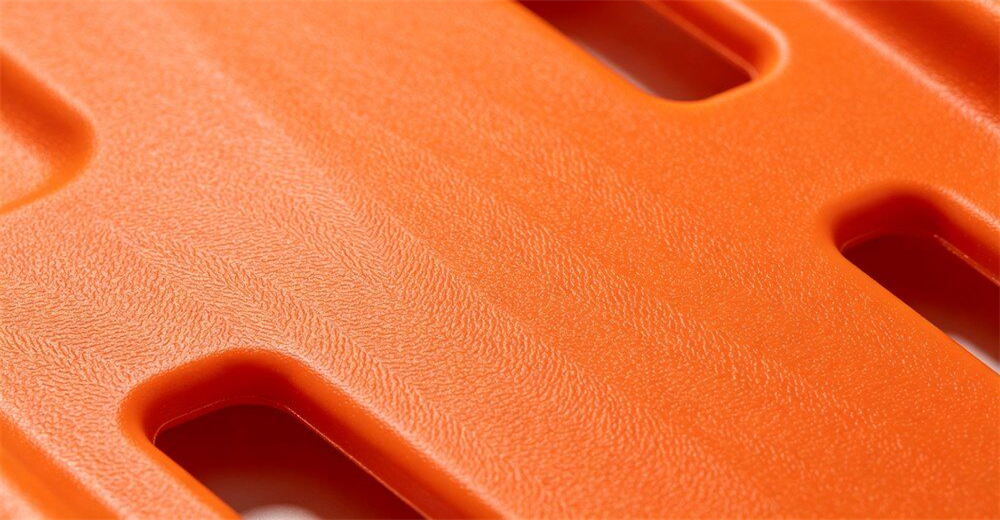
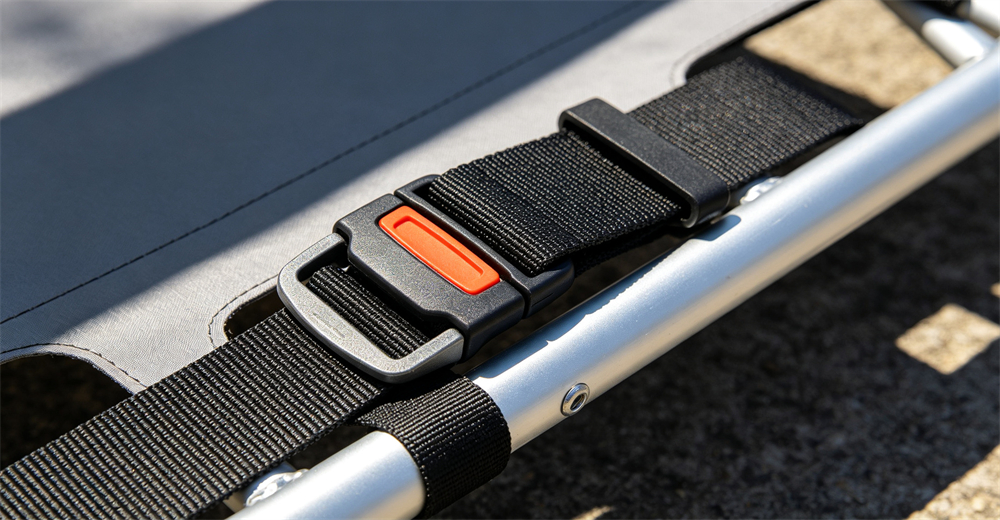
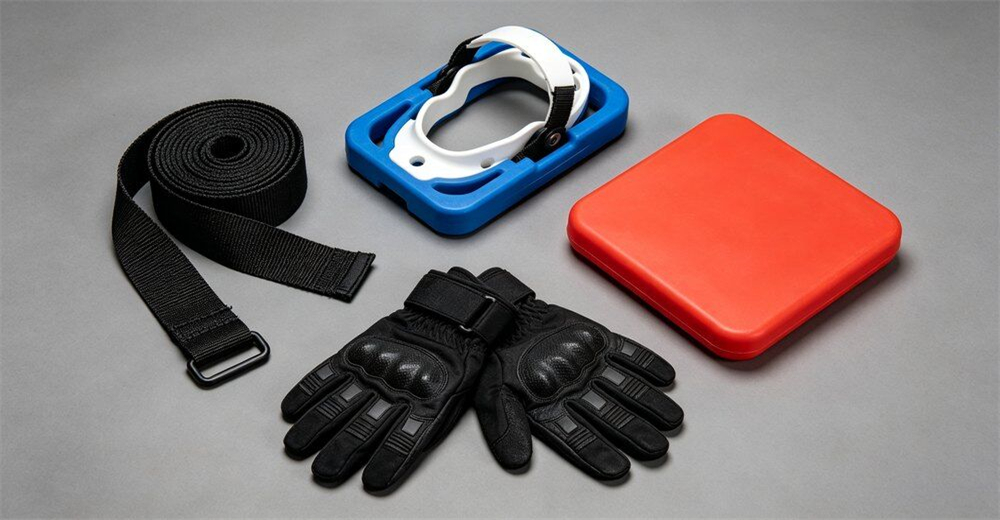
Two black woven nylon straps come standard. They run across the torso and the legs and use a quick-release side-release buckle. You can tighten them one-handed with gloves on. We have supplied extra straps as a separate line item if your SOP requires three or four.
The head immobilizer is an optional add-on. It is a rigid foam block (commonly blue and white) that clips around the patient's head with a chin strap. Without it, the board is fine for a stable patient you are moving horizontally. With it, you can lock the head, neck and torso as a single unit — which is what you want when a fall victim has a suspected cervical injury.
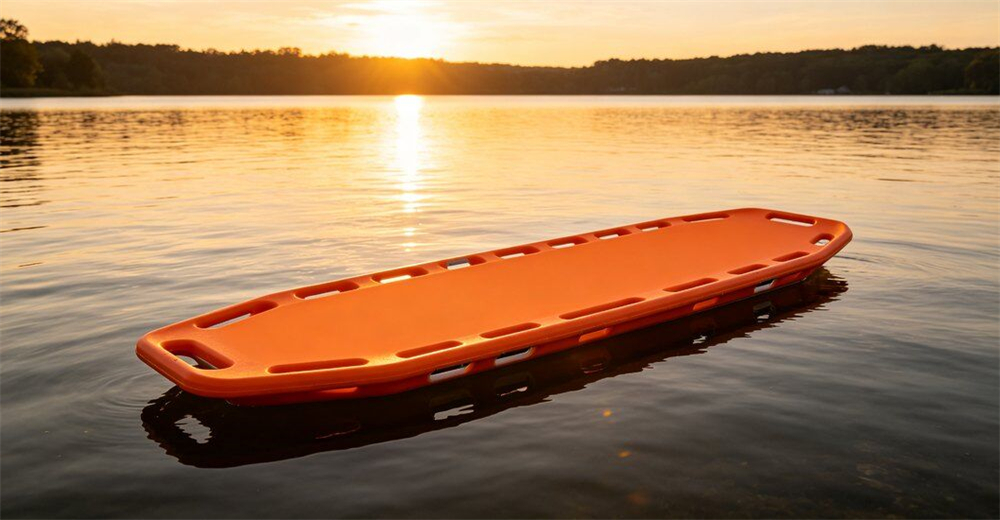
This is the reason to buy this model. Because the PE is closed-cell foam-filled, the board itself floats. Drop it off the side of a rescue boat and it stays on the surface with enough freeboard to support a full adult lying flat. When you buy rescue stretcher units for your department, we include free consultation on sizing and configuration.
On a flood call, the technique is: throw the board, have the victim roll onto it face-up, then tow them to shore with a line. The board keeps the airway out of the water. The rescuer does not need to swim up and grab the victim — the board becomes the floatation platform. That is the whole point of a floating rescue stretcher in moving water.
The board slides onto an ambulance stretcher trolley or locks into the ambulance's own loading system. Because the dimensions are standard (183 x 45 cm), it fits the standard ambulance bracket sizes most fleets already use.
For a four-person carry, each rescuer uses one edge slot. For a two-person carry, use the end holes. The board is rigid enough that it does not sag in the middle, so you can carry a heavier patient over rough ground without them dropping.
The corners are capped with impact-resistant end pieces. Drop it off a truck and the corners take the hit instead of cracking the PE shell. That is a detail that shows up on year-two inspection reports.
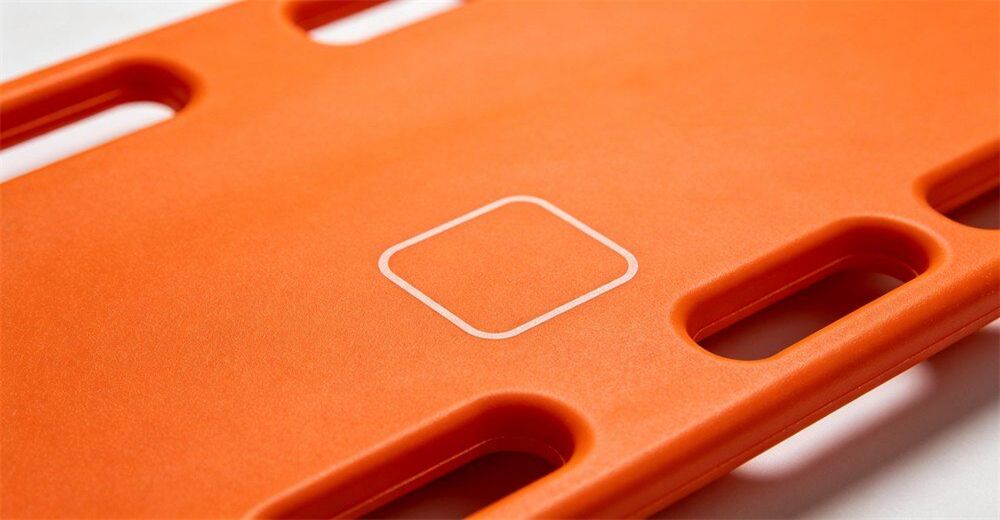
The surface has a subtle textured finish so a patient does not slide around on wet skin. It is not smooth and glossy — it has enough grip to hold position even when wet.
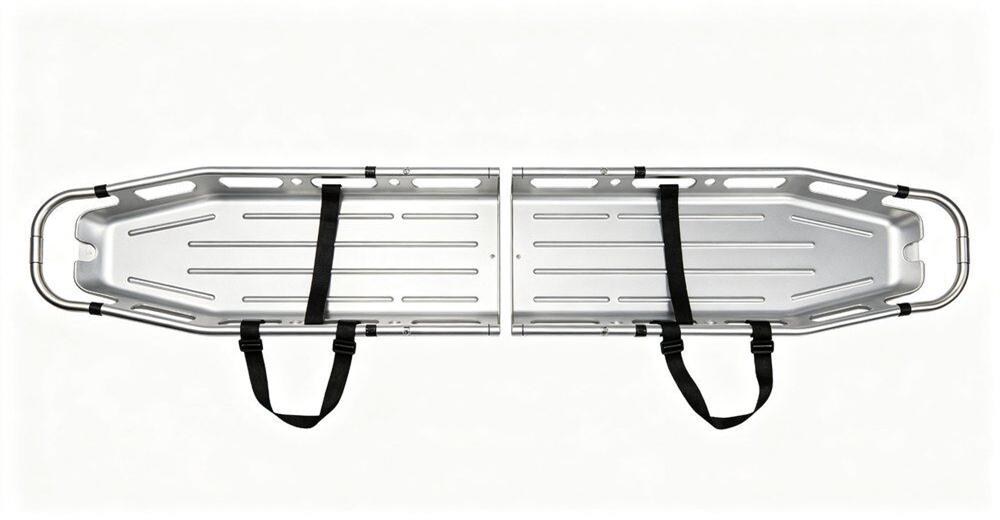
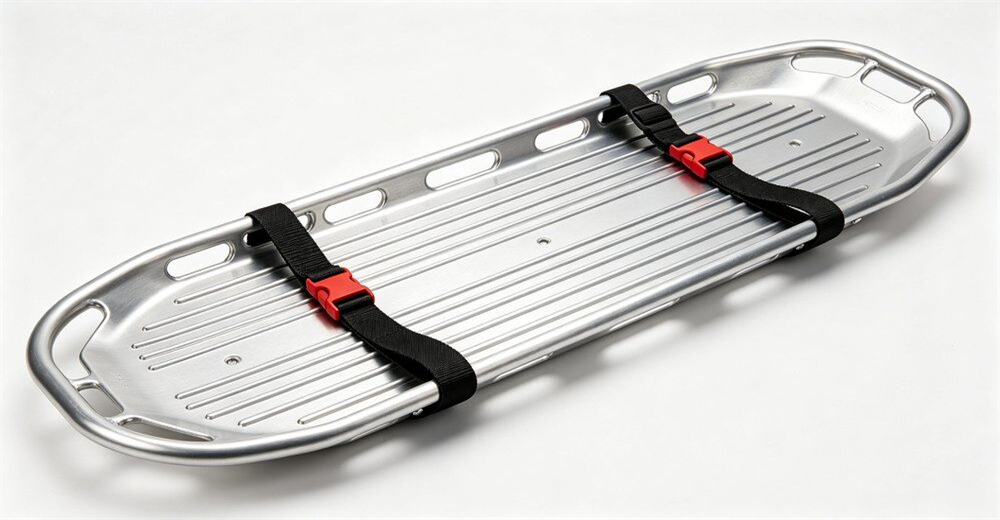
The scoop stretcher is the ambulance crew's workhorse. It gets its name from the way it works: the frame splits longitudinally into two halves. You slide one half under the patient from each side, clip the two halves together underneath,. and the patient is on the stretcher without ever needing to be lifted or rolled.
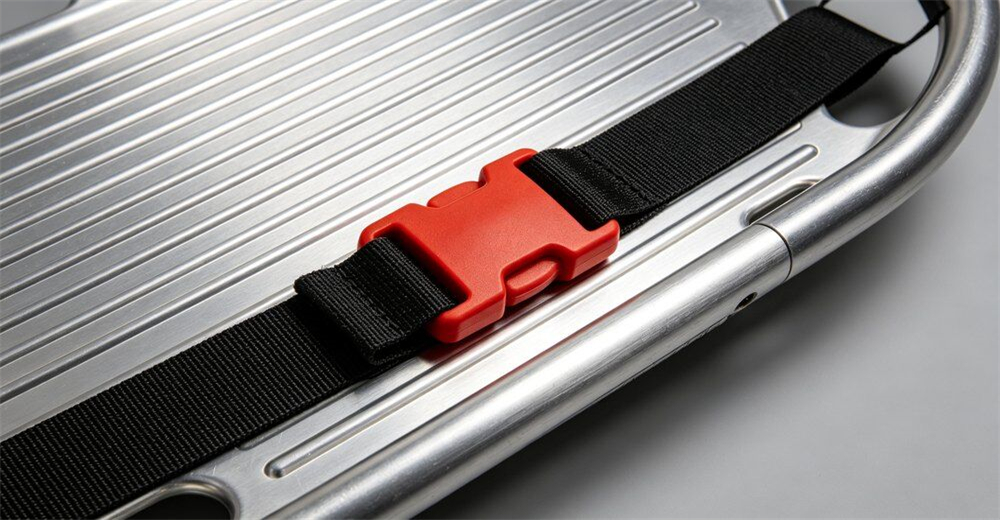
The frame is extruded aluminum alloy — light, strong, and corrosion-resistant. The bed surface has a ribbed non-slip panel. Two or three black nylon straps with quick-release buckles hold the patient down. The ends curve up into tubular handles that let two crew members carry or roll the unit.
Because it splits, you do not need to roll a trauma patient onto it. That is the key advantage over a regular rescue backboard when you are inside a house, an industrial floor, or a narrow hotel hallway. You can bring it to the patient flat and close it around them.
Most scoop models telescope at the head end to adjust from about 165 cm up to 215 cm. That lets you fit a short elderly patient or a tall athlete without the straps hanging off the end. The load rating on the units we supply is around 159 kg (350 lbs), which covers the vast majority of adult patients.
The scoop does not float. It is a land-based tool. It belongs on the ambulance, not in the boat.
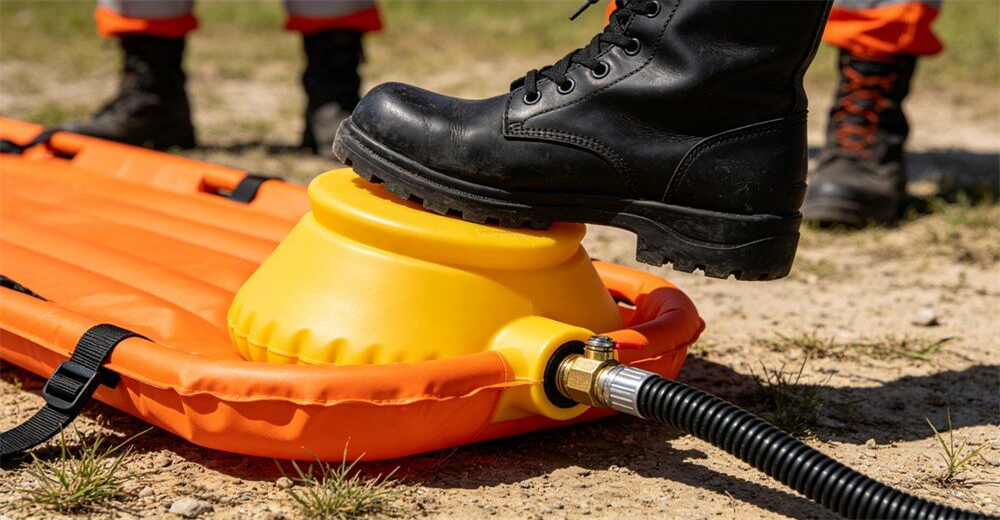
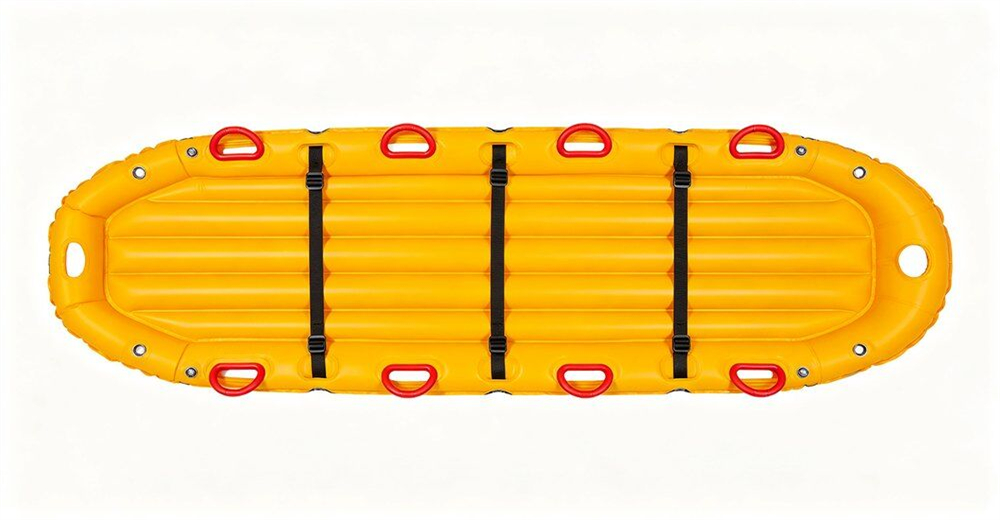
The inflatable stretcher is the wildcard of the lineup. It is a soft mat made of TPU composite fabric that rolls up to the size of a gym bag and inflates in seconds into a rigid floatation platform.
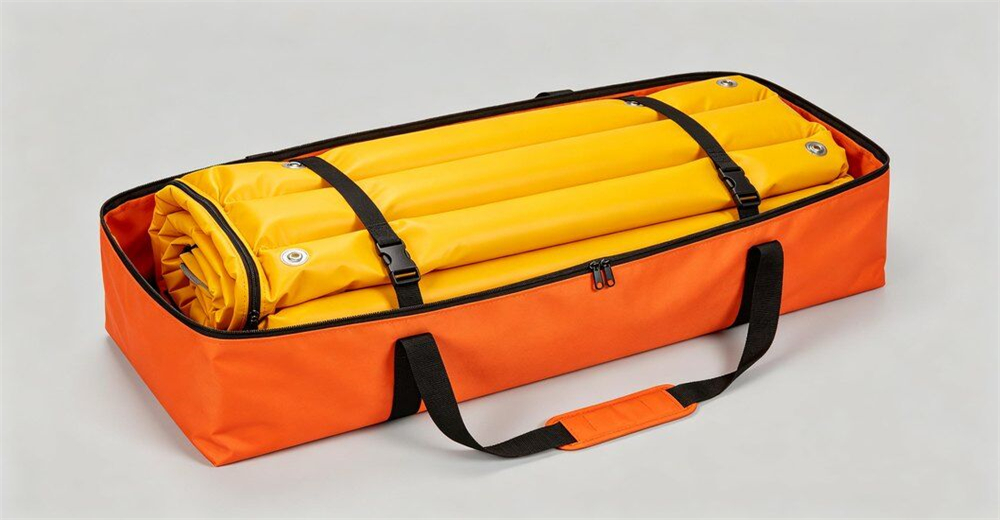
The buoyancy rating is around 1600 N, which is enough to support a full adult comfortably. It is softer on the patient than a hard PE board — no pressure points on a long tow. It also doubles as a water rescue cushion or a temporary flotation pad.
The trade-off: it is not a spinal immobilization tool. If the patient has a neck or back injury, you still need the rigid board underneath. The inflatable is for the conscious, non-traumatic victim in the water.
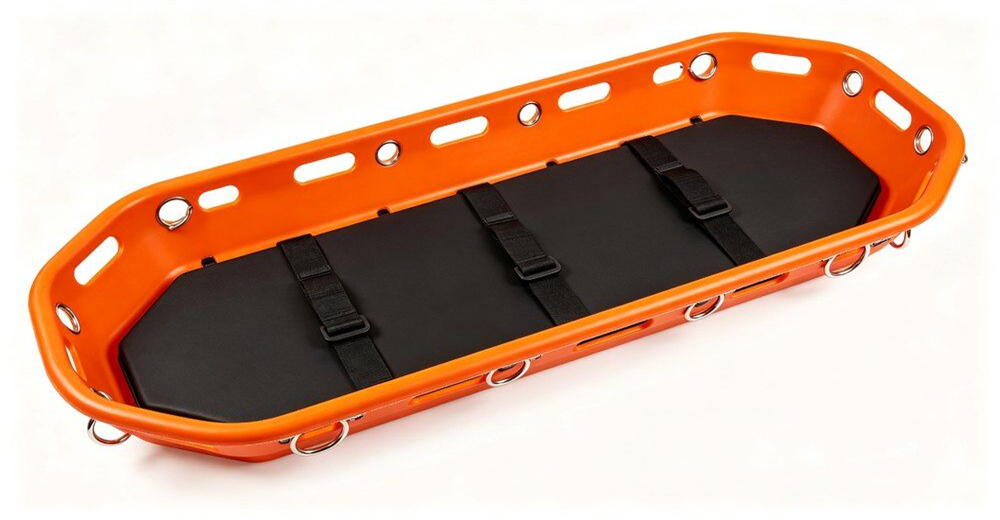
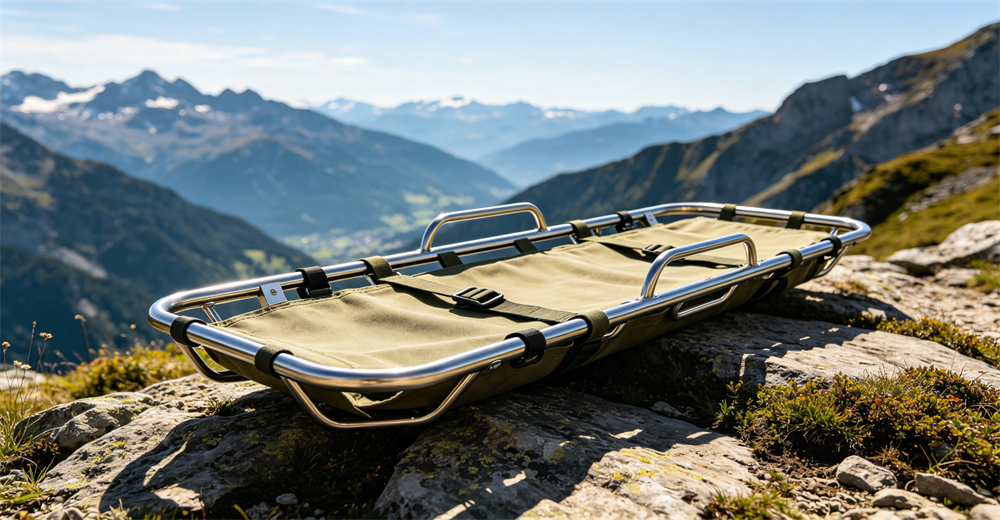
The basket stretcher (also called a Stokes litter or boat stretcher) is the one you hang under a helicopter. It is a rigid, tray-shaped orange shell with high sides that keep the patient from sliding out during a hoist. As core marine rescue equipment, these stretchers work reliably in both freshwater and saltwater conditions.
The shell is molded from fiberglass-reinforced plastic or coated marine aluminum, finished in high-visibility orange. The bottom is a black padded cushion. Black straps run across the chest, pelvis and legs. Multiple D-rings and side holes let you attach a lifting bridle, a tow line, or a seat harness.
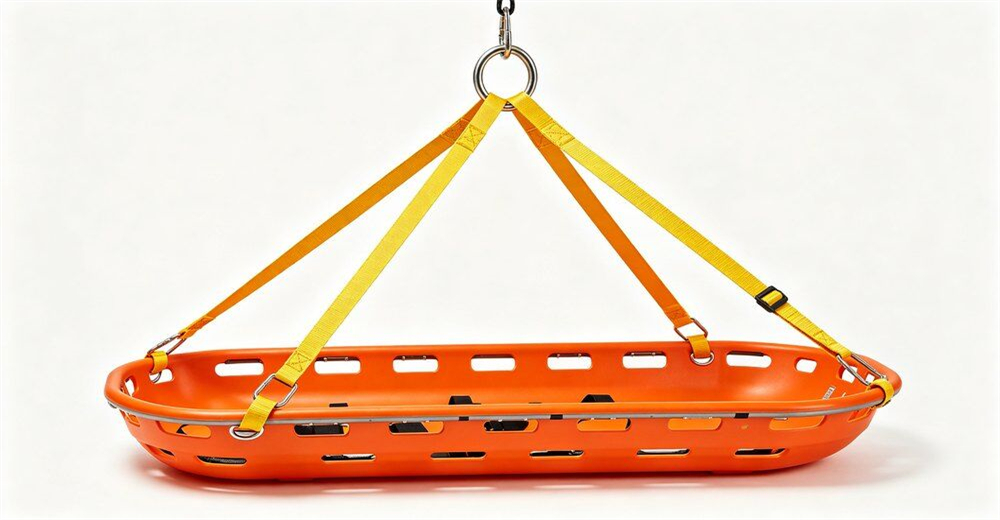
The lifting bridle is a set of four yellow webbing straps that meet at a single ring at the top. That ring connects to the helicopter hoist hook. The geometry of the bridle keeps the basket level as it rises, so the patient does not tip out during the winch.
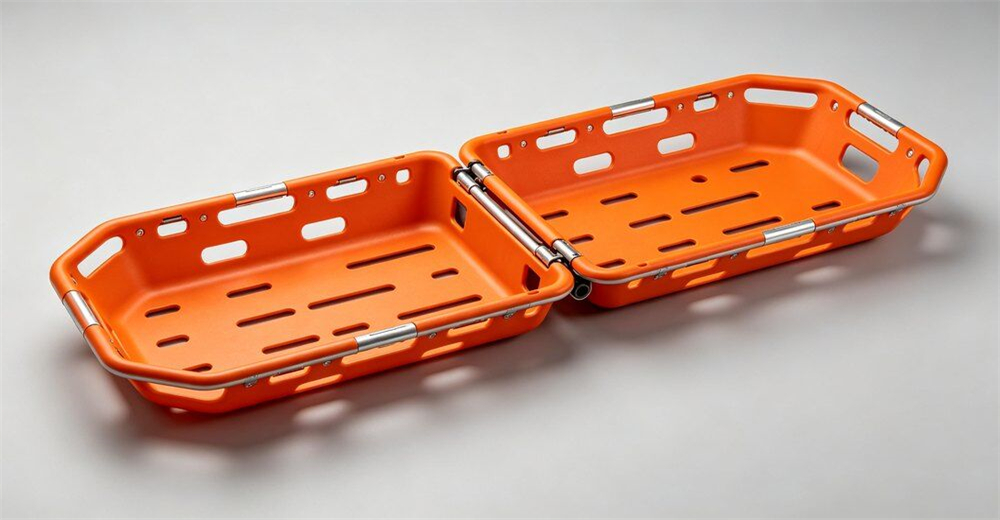
Most basket stretchers we supply split into two halves for transport. That means you can carry it in a standard boat locker or helicopter cabin instead of needing a 2.2 m long crate. Reassemble on scene in under a minute. As core marine rescue equipment, these stretchers work reliably in both freshwater and saltwater conditions.
This is the stretcher for boat rescue stretcher duties, cliff extraction, and any operation where the patient needs to be moved through vertical or rocky terrain. It is heavy (~25 kg) and it is not for indoor hallways — it is a maritime and air-rescue tool. As core marine rescue equipment, these stretchers work reliably in both freshwater and saltwater conditions.
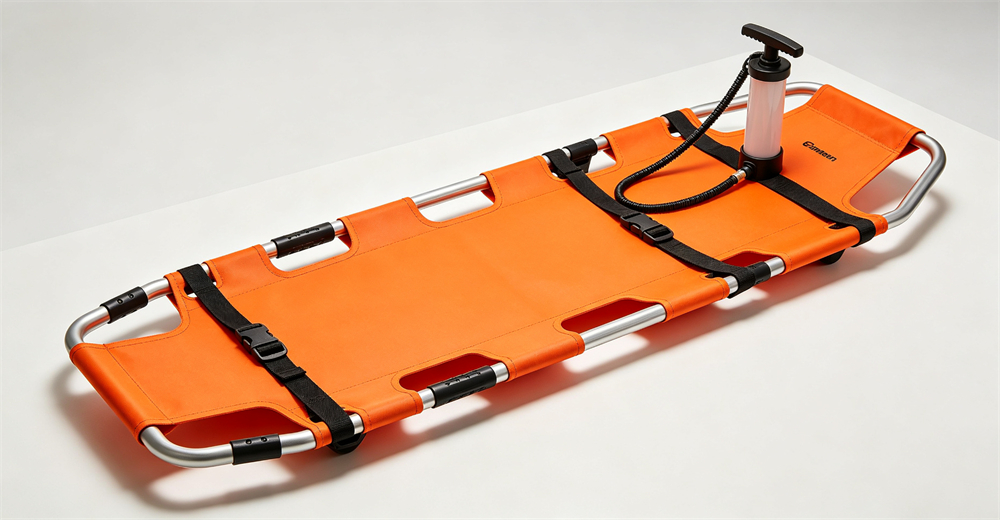
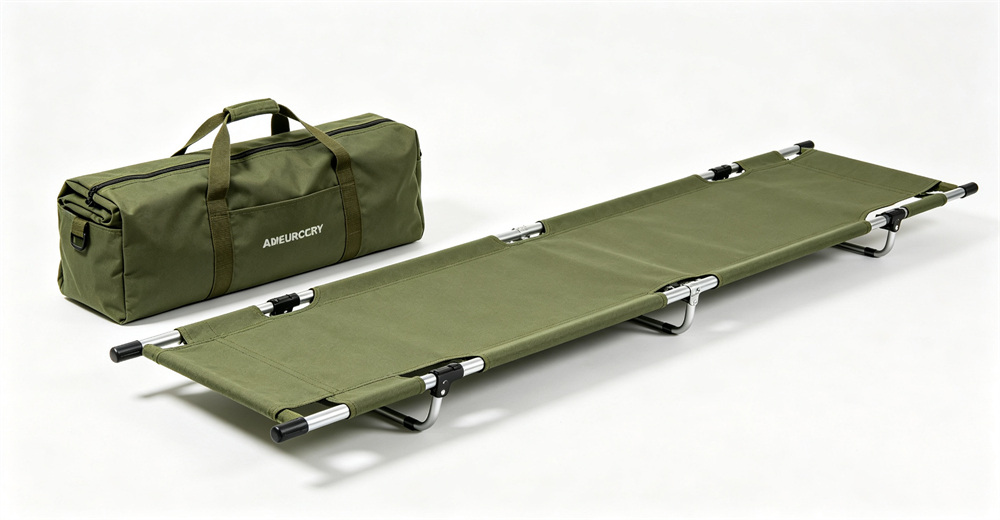
The folding canvas stretcher is the budget workhorse. It is what you stock in quantity for mass-casualty drills, school gyms, workshop first-aid rooms, and government procurement bids where you need 50 units and the budget is tight. This folding stretcher packs down to 1/4 its deployed size, making it easy to carry in emergency vehicle compartments.
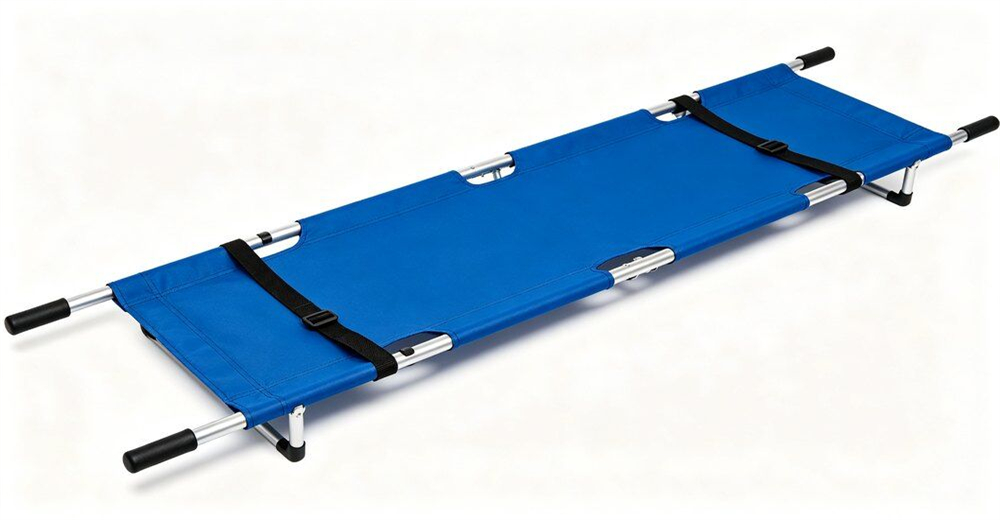
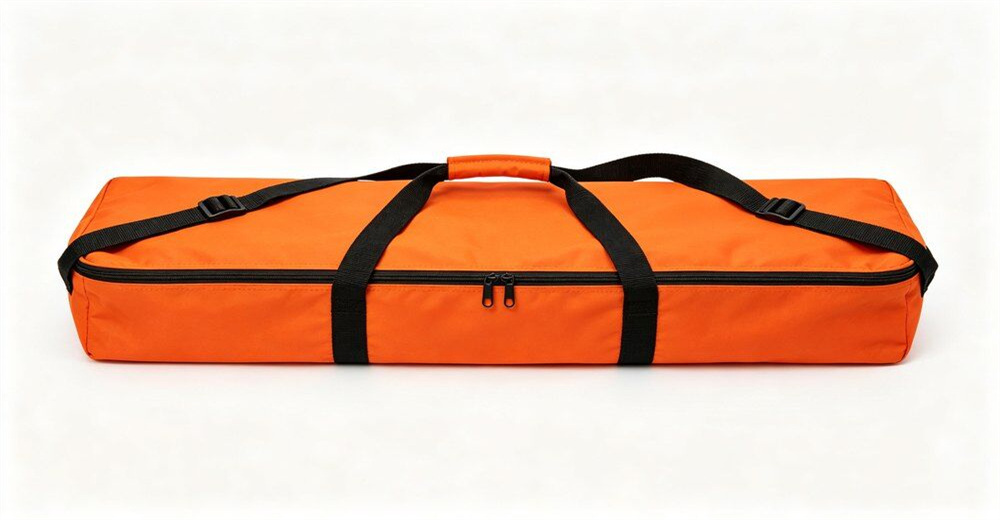
The bed is a heavy-duty oxford canvas or polyester fabric. The frame is lightweight aluminum tubing. It folds in half along the middle hinge, and the whole thing fits into a long nylon carry bag with a shoulder strap. This folding stretcher packs down to 1/4 its deployed size, making it easy to carry in emergency vehicle compartments.
Two black straps hold the patient on. The end grips are covered in black rubber or plastic so rescuers can carry it comfortably even with wet gloves.
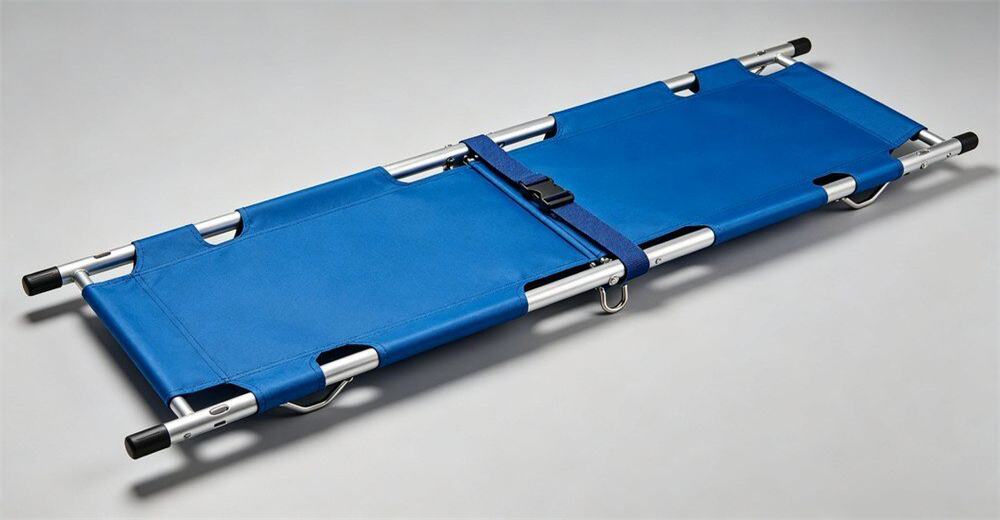
Use it for: conscious, non-trauma patients; mass-casualty transport; short moves inside a building; backup units in every ambulance.
Do not use it for: suspected spinal injury (no rigidity), water rescue (it sinks and it soaks through), hoist operations (no bridle points). It is a simple emergency stretcher for simple moves.
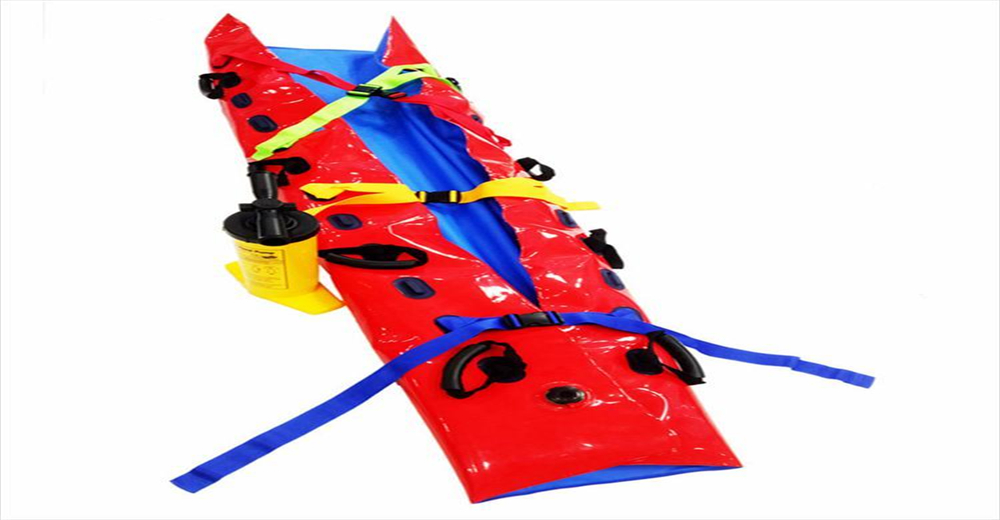
Once sealed, the vacuum stretcher holds its rigid shape for up to 4 hours, even when fully. submerged in flood water — the built-in buoyancy pockets support a 150kg patient plus equipment without sinking. The comparison image shows how it conforms perfectly to a patient's body to reduce spinal movement during transport, making it the preferred choice for suspected spinal injuries in water rescue.
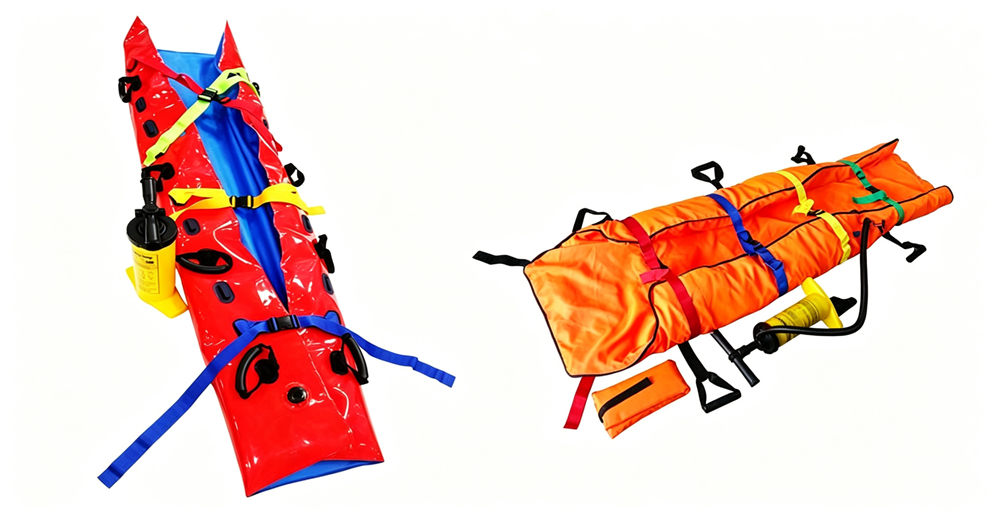
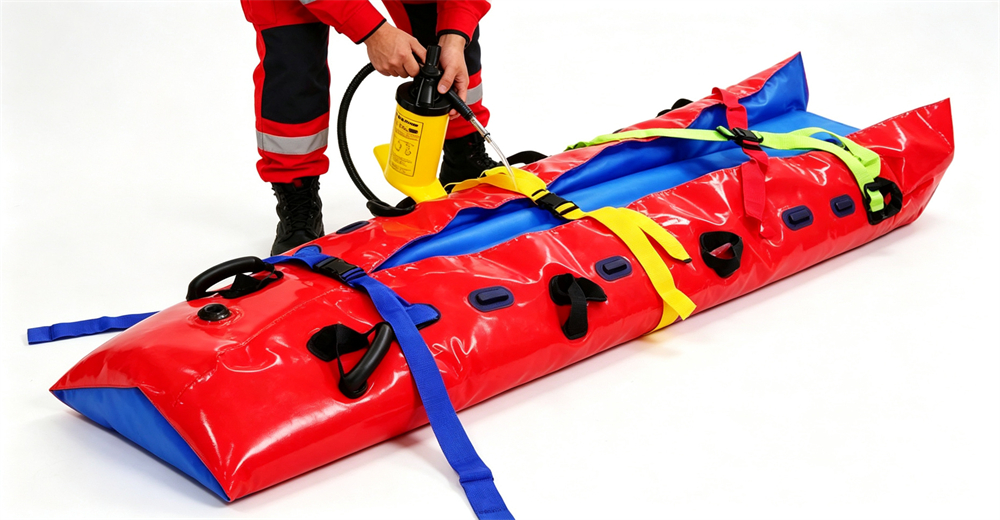
The red and blue heavy-duty vacuum stretcher (shown in the product overview image) features a puncture-resistant PVC. outer layer and an internal bead core that locks into a rigid form once air is pumped out. The orange manual vacuum pump (shown in the detail close-up) allows rescuers to remove air in. under 60 seconds without a power source, which is critical for remote flood zones with no electricity.
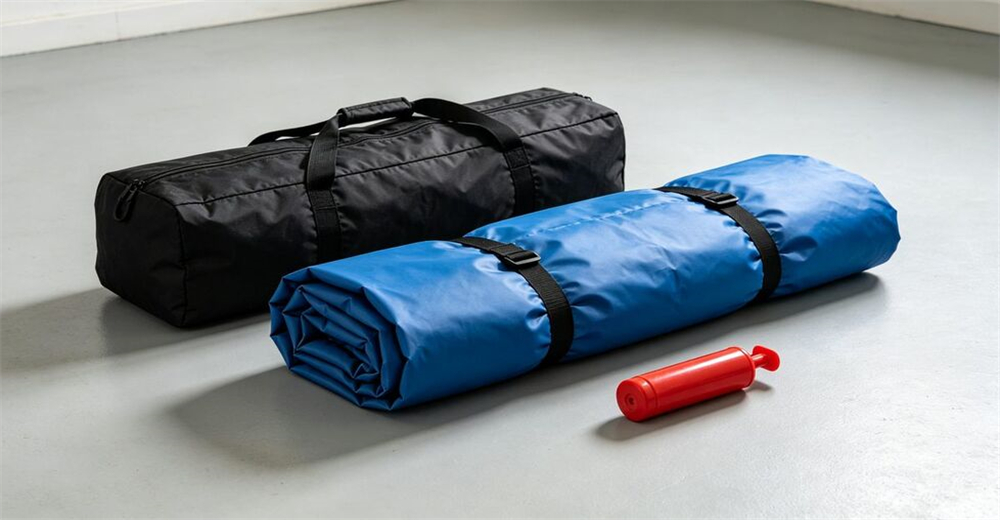
This is the soft one that turns hard. A vacuum mattress stretcher (also called a vacuum stretcher or vacuum mattress) is a padded bed, not a board. The patient lies down, you pump the air out, and the mattress goes from soft to a rigid shell that hugs the body underneath. It is one of the most comfortable immobilization tools we supply, and also one of the most misunderstood, so. we go deep on exactly how it works, when to reach for it, and what the field numbers actually are.
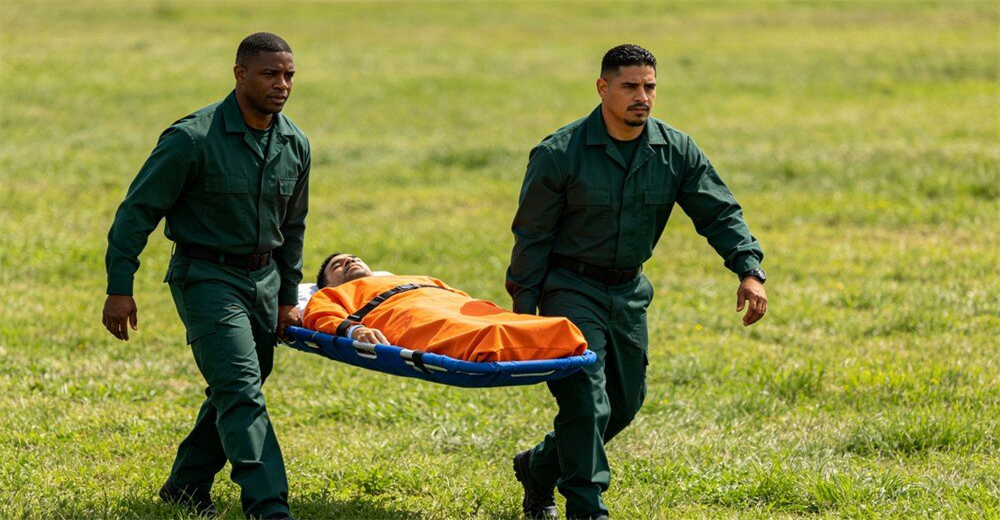
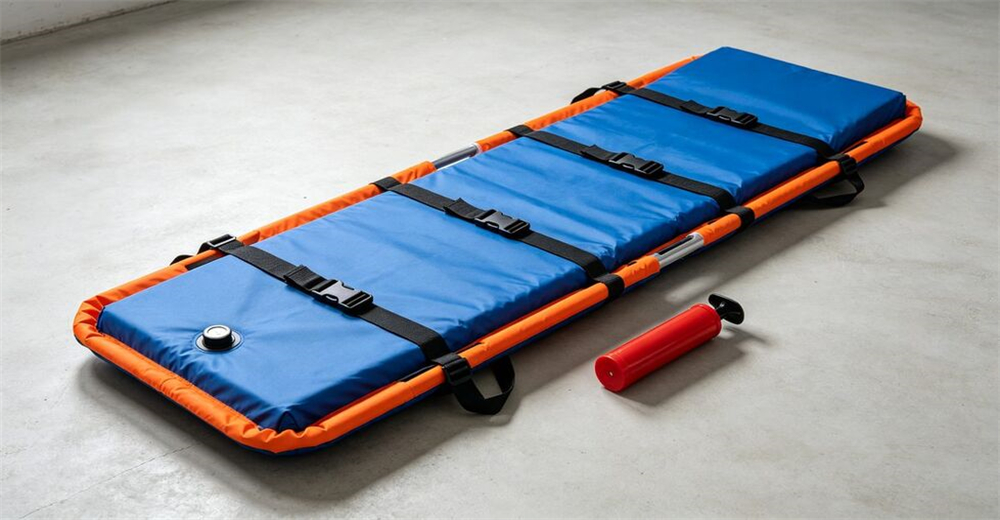
Inside the blue PVC shell is a compartment filled with thousands of tiny closed-cell beads (small foam pellets). When the mattress is open to air, those beads slide freely against each other and the whole. bed is soft and floppy - you can fold it, bend it, roll it around the patient. Once you run the pump and suck the air out, atmospheric pressure crushes the beads together and locks them in place. The whole mattress hardens in roughly 25 seconds into a custom cast that matches every curve of the body underneath - shoulder, pelvis, the natural bend of the knees. It behaves the way a plaster cast does, but it forms in seconds and without plaster.
The shell is about 210 x 110 cm laid flat, made of nylon-reinforced PVC, usually blue on top with orange or red edge binding. It carries several black securing straps, a full-length zipper that seals the patient compartment, and one air valve. A small red hand pump connects to the valve. Pump out the air and it firms up; open the valve and air rushes back in, it goes soft and folds small again into its carry bag.
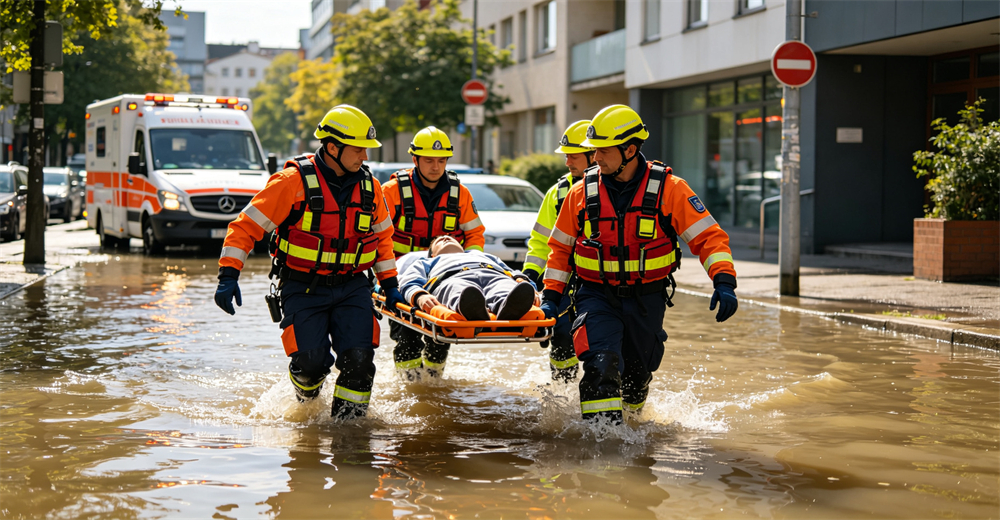
This is the question buyers ask most, so it is worth being precise. A hard spinal board is a rigid rectangle. It is completely flat and completely unforgiving - it holds a suspected spine patient in a neutral line, but because it is flat,. the patient has to conform to the board: shoulders lifted, head on a pad, gaps under the lower back and knees. Pressure concentrates on the heels, sacrum and shoulder blades, which is fine for a 20-minute move but uncomfortable on a long transfer. When you buy rescue stretcher units for your department, we include free consultation on sizing and configuration.
A vacuum stretcher does the opposite. It conforms to the patient. After pumping, it holds the spine in a neutral, slightly flexed position that many EMS protocols prefer,. and it spreads the patient's weight across the whole bed rather than three pressure points. It is also gentler on fracture patients - a broken limb sits in a cradle instead of on a flat shelf. The honest caveat: for a confirmed cervical spine injury in the pre-hospital phase, most protocols still call for the hard board with a head immobilizer. Use the vacuum mattress for the comfortable, body-molded immobilization phase - long transfers, cabin transport,. cold-weather moves - and pair it with the hard board when the neck rule-out is unresolved.

Buyers worry about this, so here are the numbers. A properly sealed unit holds its vacuum for 48 hours and more under normal field conditions. That is far longer than any single patient move - you will hand the patient to the ambulance crew, and the mattress is still rock-hard when they take over. When you buy rescue stretcher units for your department, we include free consultation on sizing and configuration.
The valve is the reason. It is an automatic one-way vacuum valve: when you stop pumping, the valve closes on its own and locks the negative pressure in. You do not have to screw anything shut or hold a button. If the pump slips out of your hand mid-pump, the valve has already sealed. That is a deliberate safety feature, because no one wants to lose a hardening bed mid-load.
Real leaks are rare and predictable. The enemy is sharp objects - broken glass, rebar, a coal-mine shard. One puncture and the bed will soften. That is why we say keep it off debris, and why we sell repair patches for the inevitable tiny nick. It is not a flaw; it is the trade-off for a sealed air bed. The field check is simple: pump it firm, leave it an hour, and if it is still hard when you come back, the seal is good.
The vacuum stretcher is the default tool for: fracture patients (a broken limb sits cradled, not jostled), suspected spinal and pelvic injuries during transfer,. and tight vehicle or cabin spaces where a 1.8 m hard board will not bend around a seat frame. It is widely used in mining and quarry rescue, because it forms around a seated patient inside a narrow truck cab.
Two properties buyers miss. First, it is X-ray and MRI translucent - the beads and PVC do not show up on film,. so you can slide the mattress straight under the X-ray table without unloading the patient. Second, the PVC shell is waterproof. It can go into shallow water, rain and flood conditions; it will not float the way a purpose-built rescue board does,. but it will not absorb water, rot, or fall apart in wet rescue work. When you buy rescue stretcher units for your department, we include free consultation on sizing and configuration.
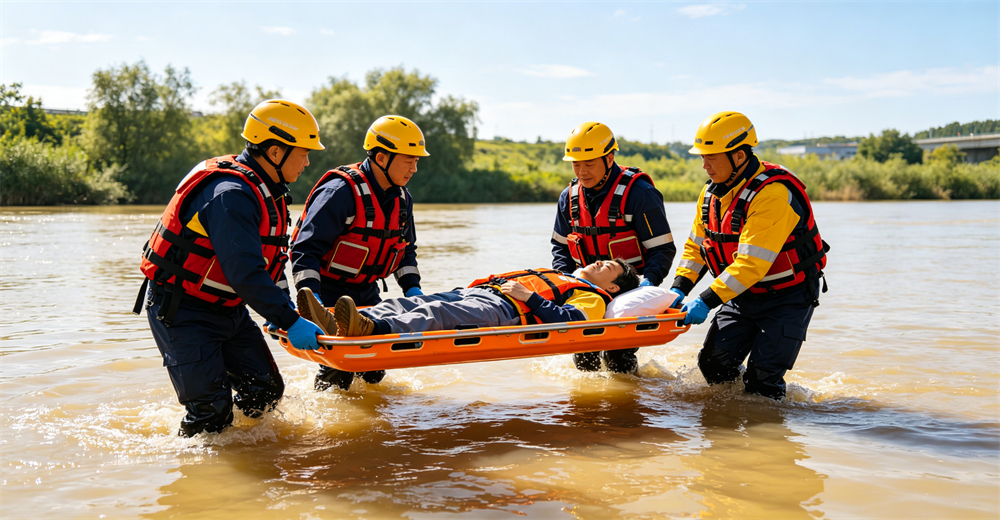
The drill is simple and fast: (1) lay the flat mattress on a clean surface, off any obvious sharp debris. (2) Log-roll or scoop the patient onto the center, in the neutral position. (3) Pull the full-length zipper shut over the patient compartment. (4) Run the hand pump - about 25 to 30 strokes, roughly 25 seconds, until the bed is. firm to the elbow test (push the flat of your hand into the bed; it should not give). (5) Fasten the torso and leg straps over the now-rigid bed. From that point the patient is locked in a custom shell and you can carry them, slide them onto an ambulance cot, or place them inside a helicopter cabin.
When the move is over, twist open the valve, air rushes in, the bed goes soft, wipe the shell, and fold it back into the carry bag.
Pros: body-molded immobilization, even pressure, comfortable on long moves, X-ray and MRI transparent, waterproof, folds to a small bundle. Cons: it needs the hand pump and a clean seal, it is puncture-sensitive, and rushed pumping leaves it soft (teach your crew the elbow test).
Real specs on the units we supply: 210 x 110 cm laid flat, weighs about 4.2 kg empty, load rating 160 kg. Each unit ships with the red hand pump, a full-length zipper, securing straps and a padded carry bag. Replacement pumps and repair patch kits are available as separate line items.
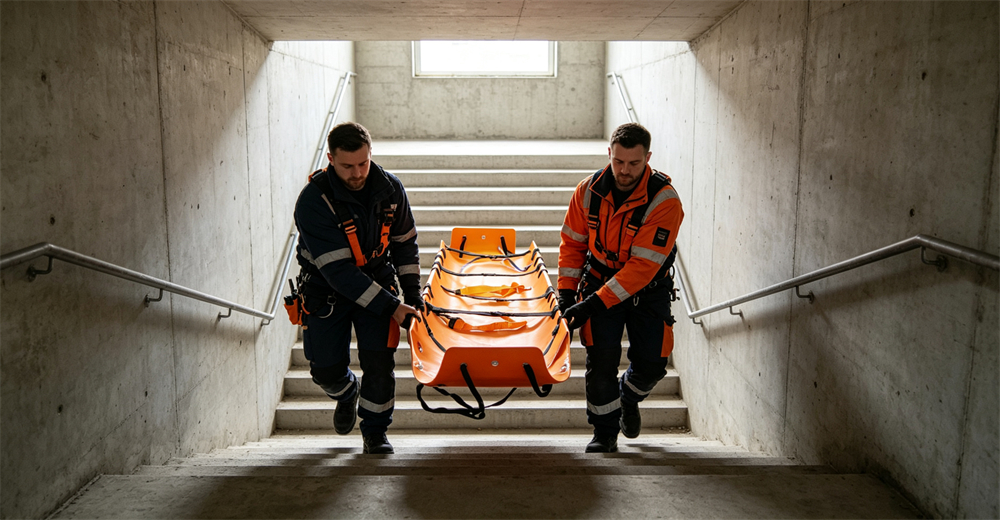
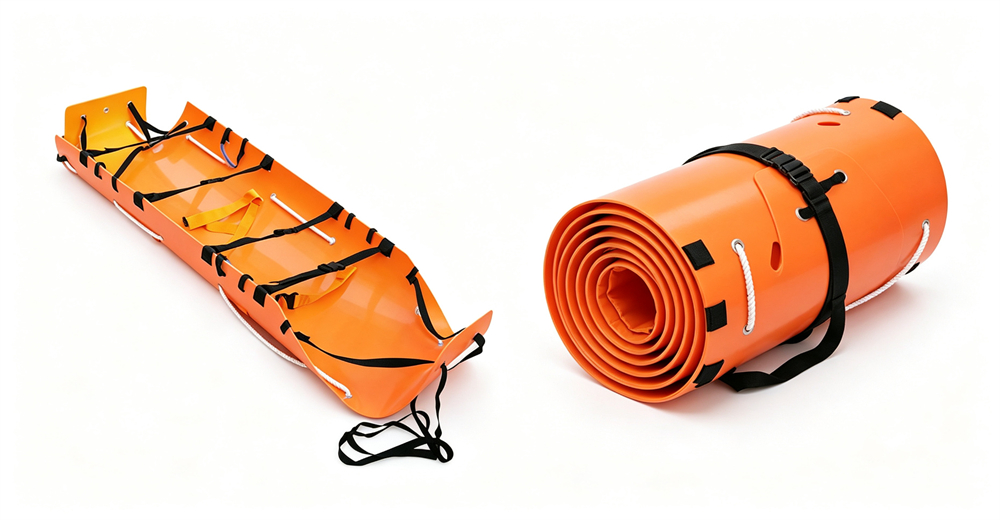
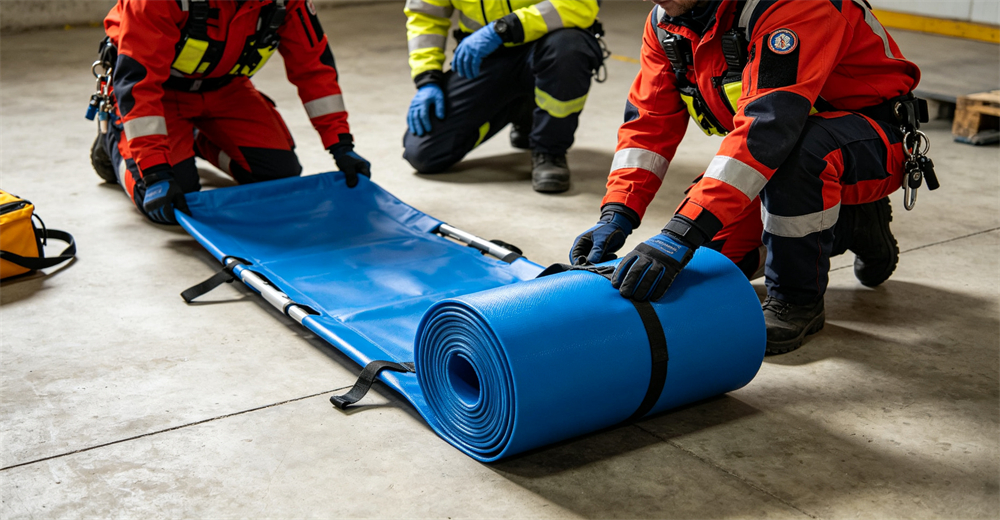
The stair rescue image shows how rescuers slide a patient down a narrow stairwell without lifting, while. the mud rescue image demonstrates how the smooth HDPE surface glides through mud and debris without snagging. The size comparison chart confirms it fits patients up to 200cm tall and 150kg, with integrated attachment points for ropes to lower victims from upper floors during floods.
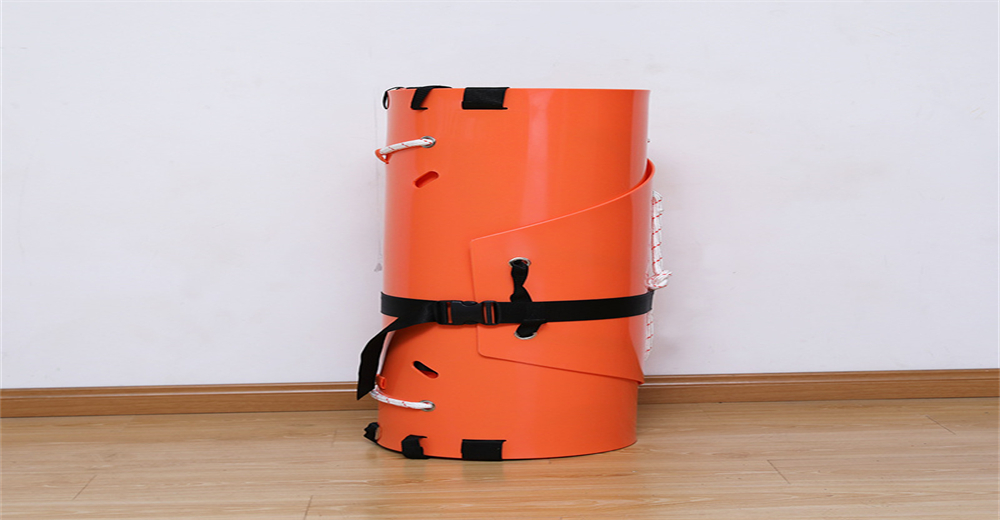
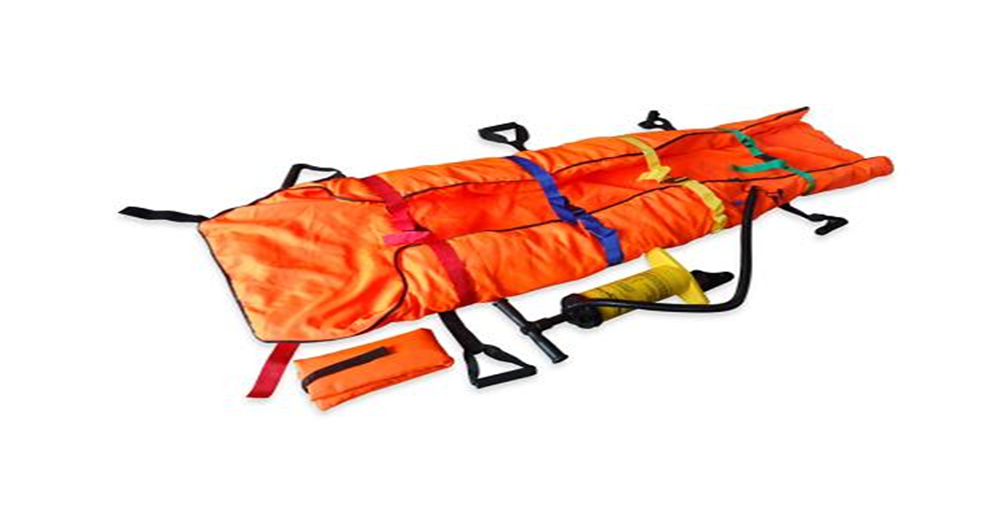
The rolled sked stretcher (shown in the rolled storage image) compresses down to a compact 25cm diameter tube weighing only 8kg, which fits. inside rescue backpacks and narrow boat compartments — ideal for flood teams that need to carry gear through tight alleyways or collapsed buildings. As core marine rescue equipment, these stretchers work reliably in both freshwater and saltwater conditions.
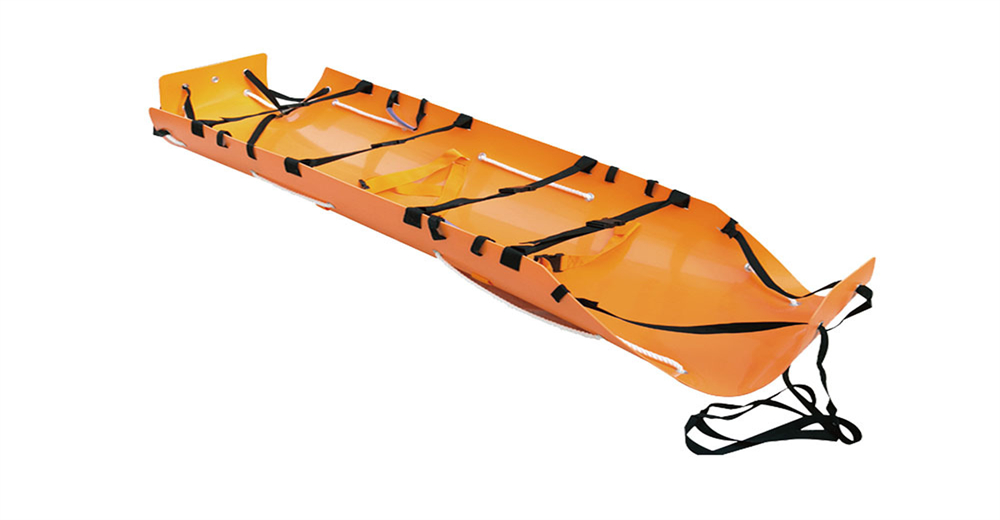
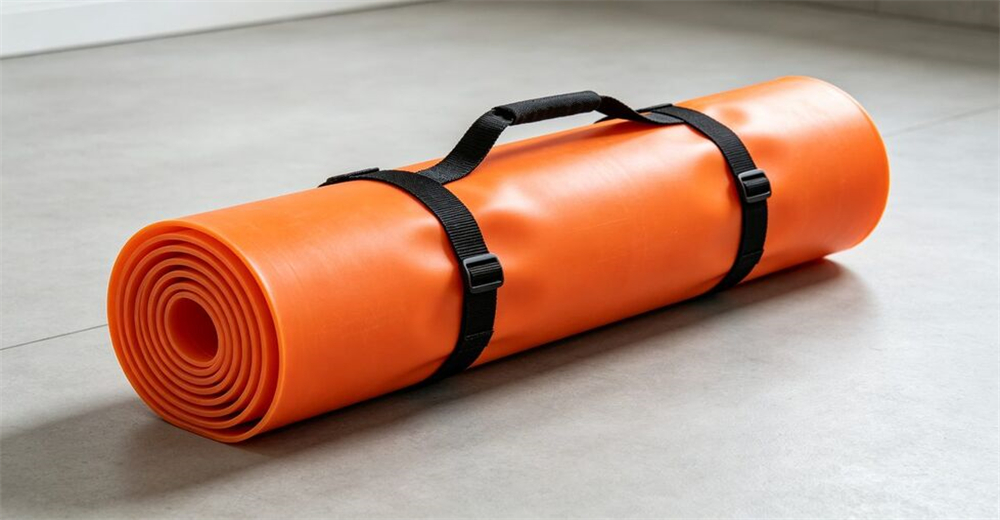
This is the flat orange sheet that rolls up. A roll stretcher (also called a sked stretcher or flexible rescue stretcher) is one continuous flexible plastic sheet, about 250 x 84 cm,. that you unroll, lay the patient on, and either carry or drag over ground a normal stretcher cannot reach. It is the tool you grab when the patient is somewhere a rigid litter physically cannot fit.
Forget the name - it is a single sheet of high-density PE (polyethylene), sometimes blended with EVA for extra flex, molded in one piece. It is not fabric, it is not tubing, it is a smooth orange plastic board roughly the thickness of a cutting board. Along both long edges are molded handhold slots and a row of D-rings for the securing straps. At the head end is a reinforced sling point for the tow rope or helicopter bridle. When the job is done, you roll the whole sheet into a tight tube about. the diameter of a rolled gym mat, and one person can carry it under one arm.
It weighs about 8 kg and is rated to 160 kg. The surface is deliberately smooth and slightly slick, which is exactly what makes dragging work.
This is the reason this stretcher exists. A rigid spine board is 1.8 m long and cannot bend. A basket stretcher is a bulky tray. Inside a mine shaft, a collapsed-building void, a subway car, a narrow stairwell, or the back of a crowded elevator, neither one will go. The sked will, because it bends. You can curve it around a corner, snake it through a rubble gap, or stand it vertically to descend a tight ladder shaft with the patient strapped on. As a long-term rescue stretcher wholesale supplier, we support both one-time bulk orders and recurring scheduled replenishment.
Teams that work in confined-space rescue, mine rescue and urban search-and-rescue carry one specifically for this reason. It is not a luxury item - it is the one piece of equipment that turns a "we cannot reach the patient" situation into a move.
Here is what the smooth surface is for. Because the bottom is slick PE, you can drag it directly across concrete, mud, gravel, snow or wet grass without a liner. Two rescuers can pull the patient out of a trench or across a snowy slope by the head-end tow rope, and the sheet slides instead of catching. That is a real time-save on an uneven extrication.
It also slings. The reinforced head-end point accepts a rescue bridle (sold separately), so a helicopter hoist can. lift the sked - patient strapped on - directly from a slope or a boat deck. The sheet flexes slightly under the load instead of fighting the sway, which is why mountain and cliff teams choose it for short hoists. It is not rated the way a purpose-built Stokes basket is for long hoists, but for the typical valley or cliff pickup it does the job. When selecting rescue tools for your team, match stretcher type to your most common rescue environment.
Will it tear? The PE is high-density and puncture-resistant; in normal rescue use over dirt, rock and snow it does not split. It will gouge if you deliberately scrape it across exposed rebar or razor-sharp wreckage, so on really jagged rubble. you lay a pad under it - but day-to-day dragging over rough ground is what it is built for.
Typical calls: mountain and slope rescue, mine and tunnel extrication, collapsed-building search-and-rescue, stairwell evacuations, snow and avalanche response, and short helicopter pickups. It is also used on the water as a shore-based drag board - the smooth surface slides over a boat gunwale,. though it is not a rated flotation device the way the rescue board is. As core marine rescue equipment, these stretchers work reliably in both freshwater and saltwater conditions.
The drill: (1) unroll the sheet fully flat on the ground (do not leave it coiled). (2) Log-roll the patient onto the center line, or slide the sheet under from one side. (3) Fasten the securing straps - chest, pelvis, thighs, knees, ankles, and a shoulder/forehead strap - in that order, so the patient cannot slide forward in a drag. (4) Either two to four rescuers carry it by the edge handholds, or one rescuer attaches. the tow rope to the head-end ring and pulls in line with the body, never sideways. (5) When slinging for a hoist, clip the bridle to the reinforced head point and keep the patient strapped through the whole lift.
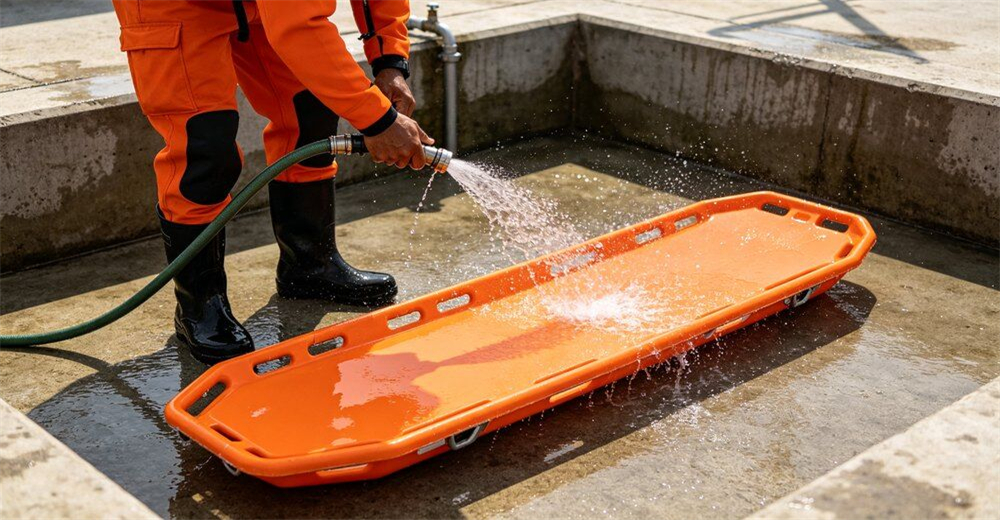
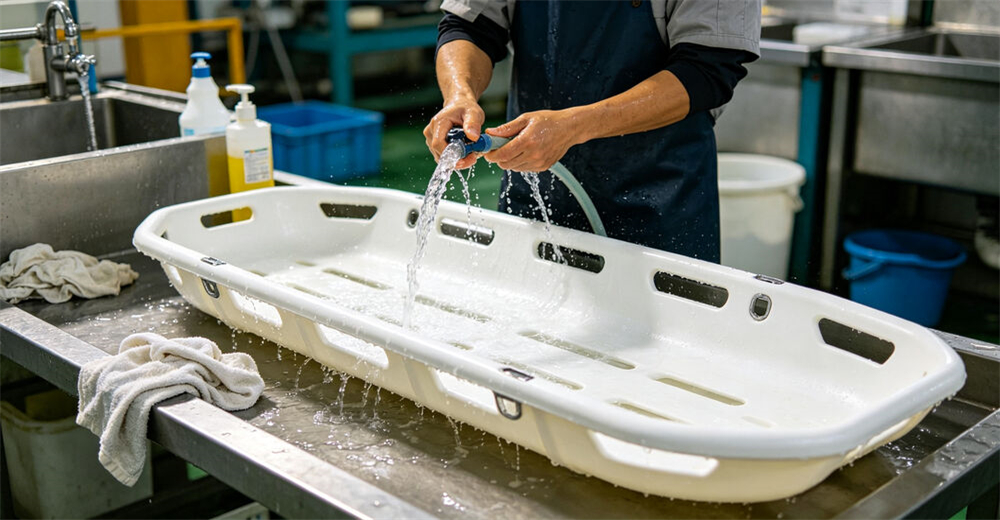
After the move: hose off the mud and grit, wipe the sheet dry, and roll it back onto the same tube. Do not fold it on a sharp crease every time - the rolled storage is what keeps the PE from fatiguing.
Pros: rolls to a small tube, waterproof, smooth surface drags over any ground, slings for short hoists, and one or two people can operate it. Cons: it is slightly heavier than a fabric sheet (8 kg), it is not a spinal immobilizer on its own (add a. cervical collar and pair with a hard board for a neck rule-out), and dragging over truly jagged wreckage can gouge the surface.
Real specs: 250 x 84 cm, weighs 8 kg, load rating 160 kg. Each unit ships with six securing straps, a tow rope and a padded carry bag. The rescue hoist bridle and a spare strap set are available as separate line items.
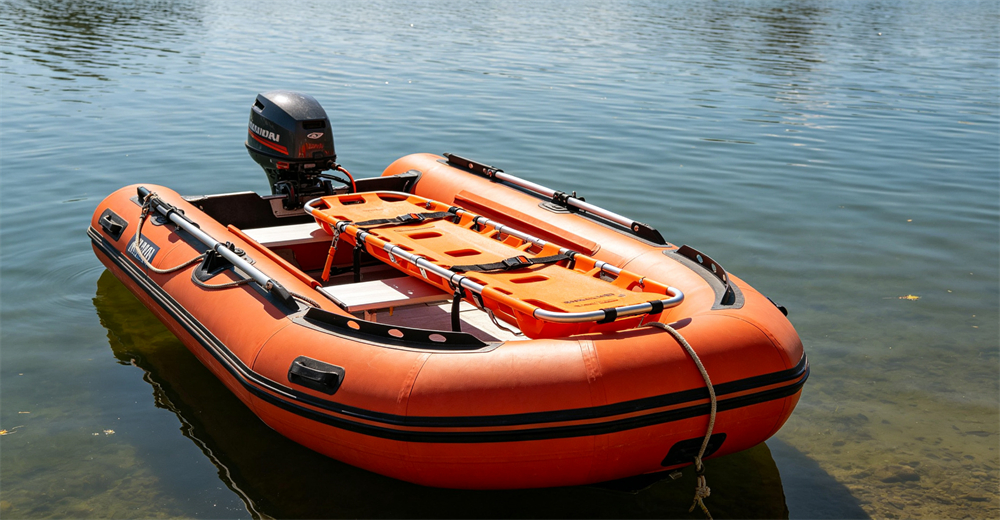
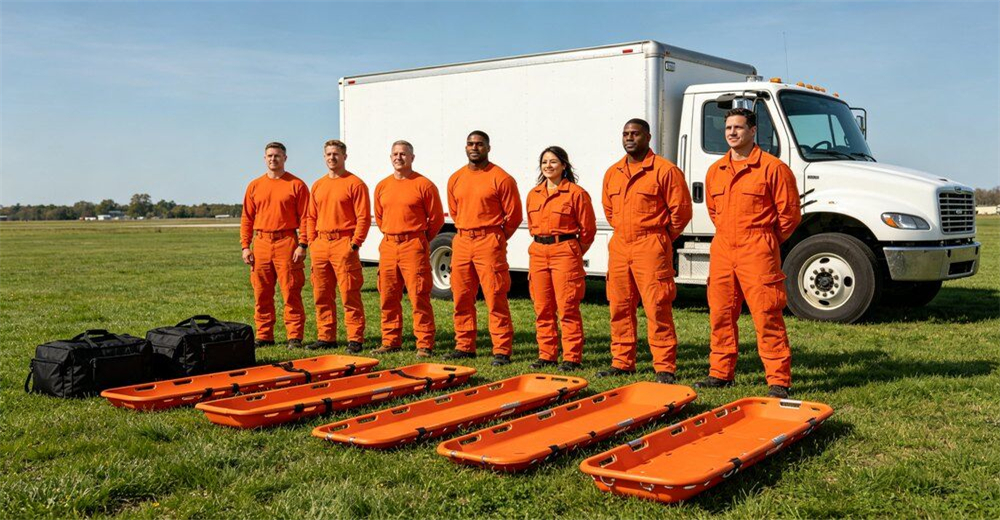
A fire company responding to a river rescue pulls the four-fold spinal board off the truck first. It goes in the water. The scoop and the canvas stay on the truck for the secondary move once the victim is on shore. This folding stretcher packs down to 1/4 its deployed size, making it easy to carry in emergency vehicle compartments.
A hospital or clinic uses the scoop stretcher most often. It fits through doorways, it does not require rolling the patient, and it is easy to clean between patients. The canvas unit stays folded in the first-aid room as a backup. This folding stretcher packs down to 1/4 its deployed size, making it easy to carry in emergency vehicle compartments.
A government procurement buyer stocking a national emergency reserve tends to order a mixed pallet: 40% spinal boards, 30% canvas, 20% scoop, 10% inflatable. That mix covers flood response, building collapse, and hospital backup in a single shipment. When you buy rescue stretcher units for your department, we include free consultation on sizing and configuration.
A wholesale distributor buying for resale typically starts with one container mix, then reorders the top sellers. The spinal board is almost always the first reorder — it is the unit that sells out fastest because every water rescue team wants one. When you buy rescue stretcher units for your department, we include free consultation on sizing and configuration.
For urban flood rescue teams, we recommend the combination of a floating spinal board (for fast. water extractions) + a roll sked (for narrow spaces) + a vacuum stretcher (for patient immobilization). This trio covers 90% of water rescue scenarios without overspending on specialized gear.
1. Is there water involved? If yes, you need a floating unit — either the four-fold spinal board (best all-rounder) or the inflatable (softest, lightest). If no, you can use the scoop or the canvas. This folding stretcher packs down to 1/4 its deployed size, making it easy to carry in emergency vehicle compartments.
2. Is there a suspected spinal injury? If yes, you need rigidity. The spinal board wins. The scoop works indoors but does not float. The basket is for hoist only.
3. How are you moving the patient? On foot over rough ground — board or scoop. Through doorways in a building — scoop or canvas. By helicopter or boat — basket. Over short distances indoors — canvas. This folding stretcher packs down to 1/4 its deployed size, making it easy to carry in emergency vehicle compartments.
4. Do you need soft support in tight spaces? If the job is dragging a patient through rubble, stairs or snow where no board fits, the roll / sked stretcher is the tool. If you need a soft surface that hardens to hold a fracture or suspected spine patient during transfer, the vacuum mattress stretcher is the one. Neither replaces a hard spinal board for a confirmed cervical injury.
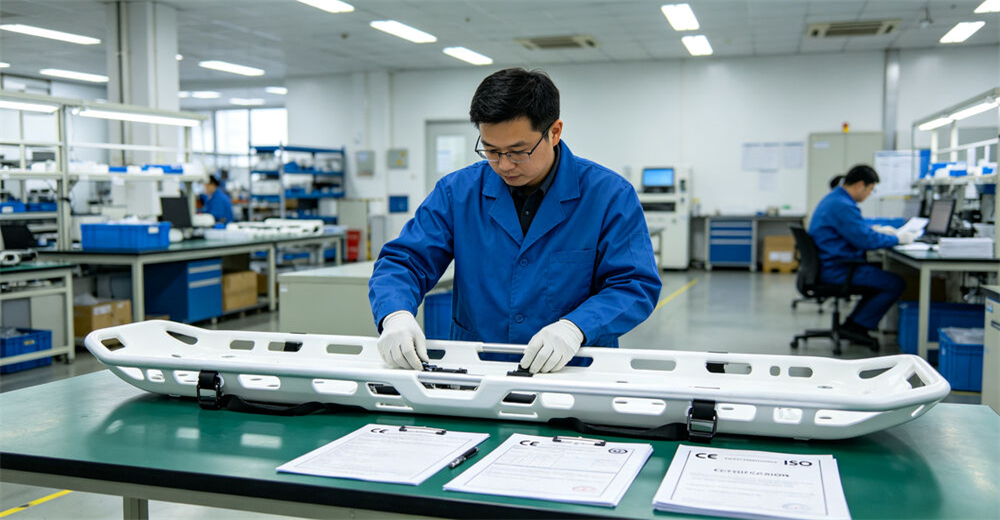
The units we supply are built to align with common international standards. We supply reference documentation on request so your quality team or tender evaluator can review:
We do not claim to issue these certifications ourselves — we supply units from factories whose products carry the relevant markings,. and we share the reference paperwork with your team for verification. Always confirm the current certification status with your importer and local regulatory body before placing a tender-level order.
Load ratings, buoyancy numbers, and dimensions listed on this page are reference figures from the product specifications. Your own test protocol may want to spot-check a sample unit before accepting full container quantities.
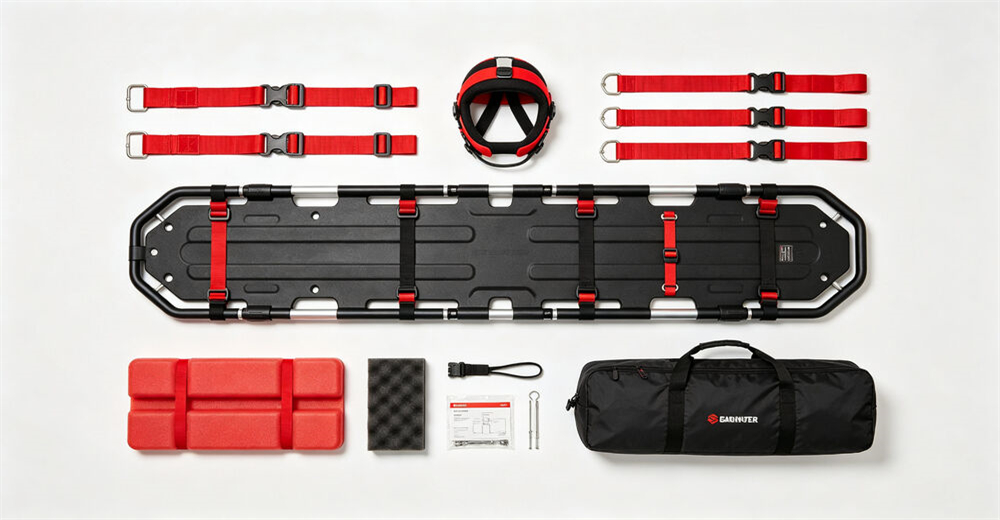
Standard accessories we can supply alongside the stretchers:
How to secure a patient on a spinal board: tape or strap the forehead to the board first,. then secure the torso strap, then the thigh strap, then the shin strap. The patient should not be able to slide sideways or lift the head.
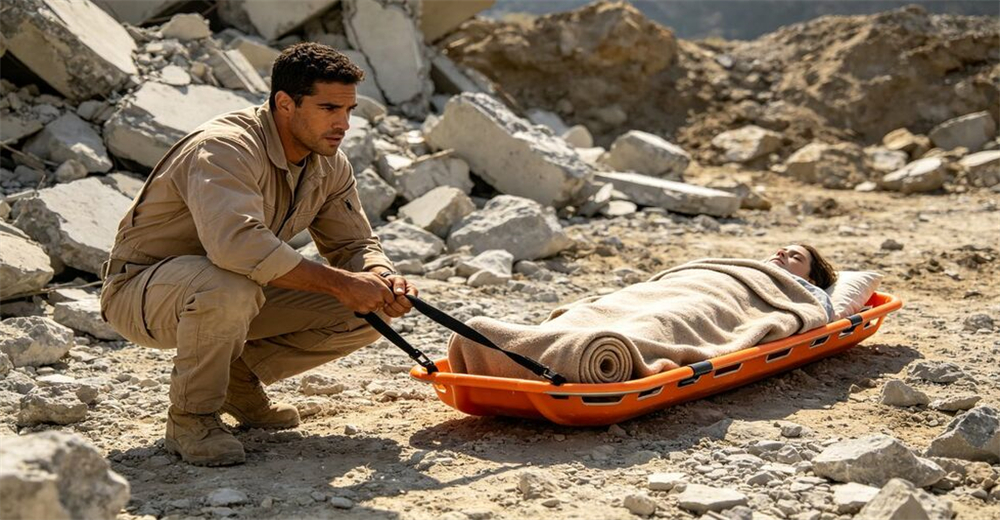
A stretcher that sits dirty in a compartment fails faster than one that is rinsed after every call. Basic routine:
We recommend a monthly quick-check: strap tension, buckle function, hinge action, corner cap security. It takes two minutes and it catches failures before they matter.
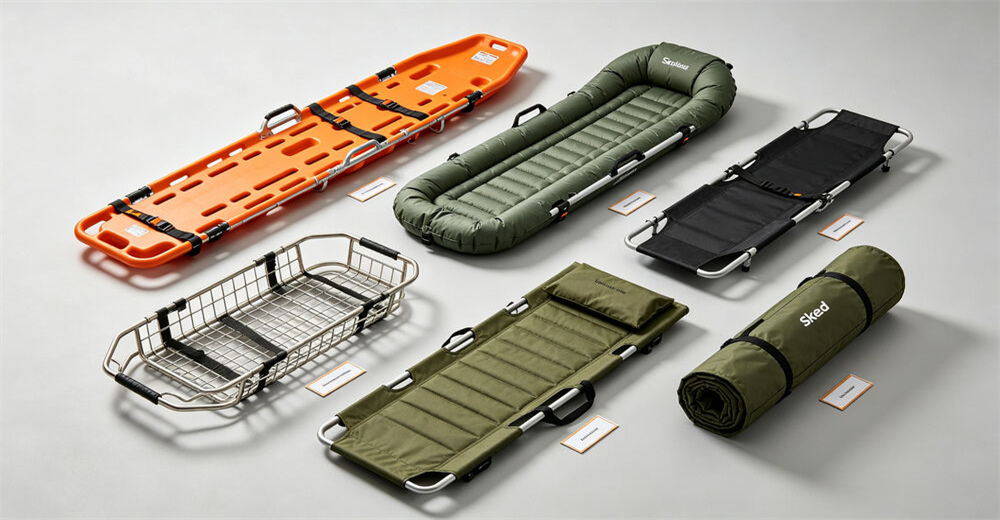
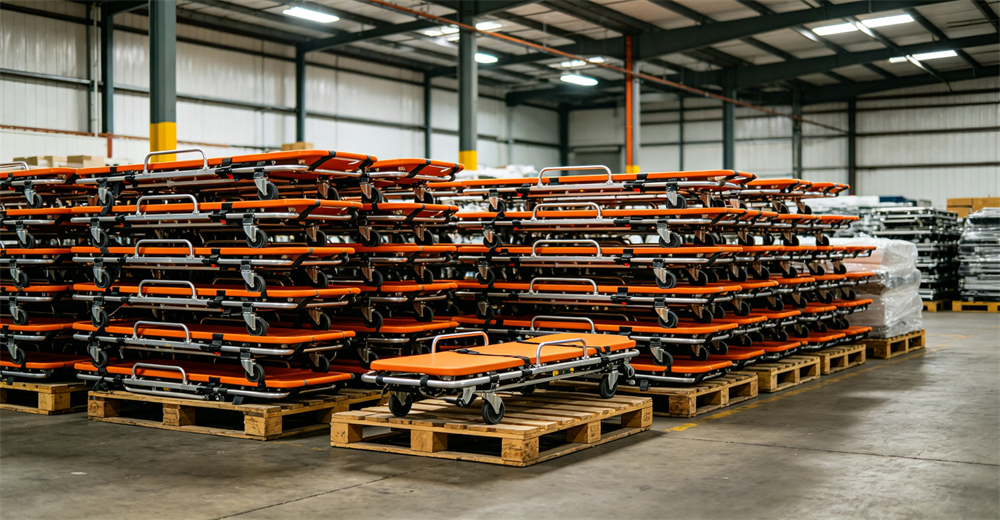
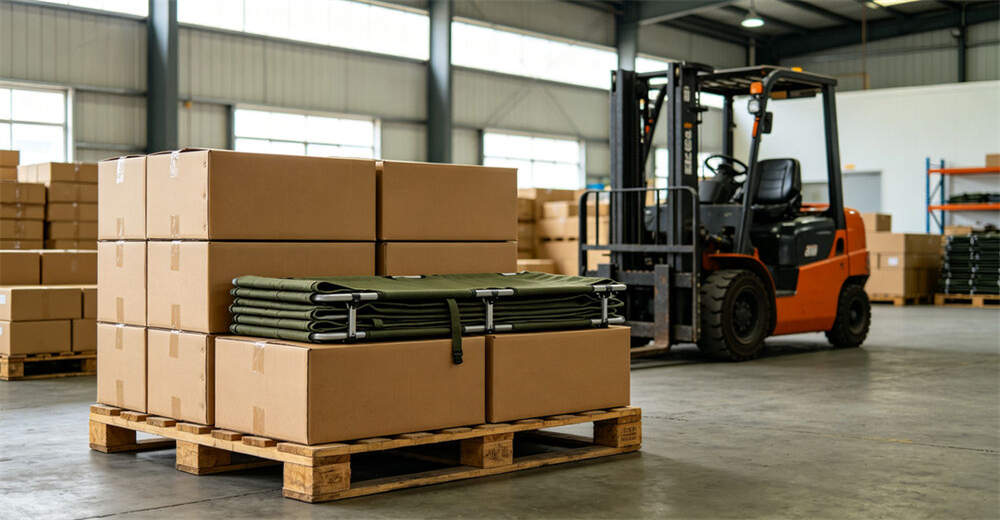
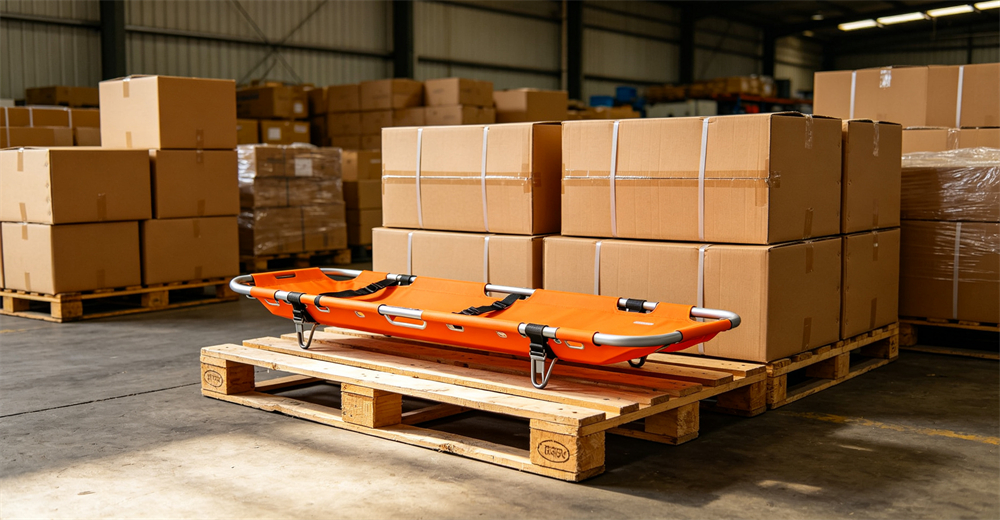
We supply all 7 stretcher types with MOQs starting at 5 pieces per model for mixed container orders, which is designed for small distributors and emergency preparedness agencies. Each stretcher is folded and packed in an individual PE bag, then loaded into export cartons with 10 stretchers per pallet for ocean shipping. Lead time is 15-25 days after deposit, depending on order quantity and custom branding requirements.
We ship worldwide. Typical packaging:
If you are testing the market or outfitting one station, a single sample order is fine - we ship one vacuum mattress, one sked,. or any combination by international express so your team can feel the weight, test the pump action and check the build before you commit. Sample cost is normally refundable against a later bulk order. As a long-term rescue stretcher wholesale supplier, we support both one-time bulk orders and recurring scheduled replenishment.
For wholesale, the pricing steps down with volume. A carton or two is list price. A mixed pallet brings a discount. A full container gets our best tier, and a standing repeat order gets the next tier on top. Tell us your annual estimate and your end customers (fire, hospital, government tender, distributor) and we will quote the tier that fits - we do not quote a one-size price.
Every vacuum mattress ships deflated inside its own padded carry bag (the same bag the crew uses on scene),. then into a standard export carton with the hand pump tucked into a side pocket. Every sked ships rolled tight in its own carry bag with the six straps and tow rope bundled inside, then carton-packed. Outer cartons are standard five-ply export grade, marked with the product code, gross weight and country of origin. We can put your label or carton artwork on at no extra handling cost once the order is in the reprint tier.
These are not consumables. A vacuum mattress, cared for, runs 5 to 10 years in active service; the PE sked runs longer. The failure points are the wearing parts, and we sell them separately so you do not replace the. whole unit: securing straps and buckles, the hand pump, the vacuum valve, the zipper slider, and sked tow ropes. Keep a couple of strap sets and a pump in the kit and a 10-year-old bed still works.
Warranty is one year from dispatch against manufacturing defects - a faulty valve, a seam that opens,. a cracked handle - and we repair or replace free of charge for non-wear, non-human-damage faults. Damage from dragging over exposed rebar, from running over with a vehicle, or from improper storage is outside the warranty,. and we will tell you that honestly rather than argue about it.
Production lead time is 15 to 25 days after deposit for stock configurations; custom logo or non-standard colors add roughly 7 to 10 days. Sea freight to most ports takes 20 to 40 days depending on destination; air freight for samples or urgent replacements is 5 to 7 days door to door. Once the goods ship, you get the bill of lading or airway bill number and we track it with the forwarder until it lands. We can also ship delivered-duty-paid to most of the Middle East and Southeast Asia if you want one landed price with no broker hassle on your side.
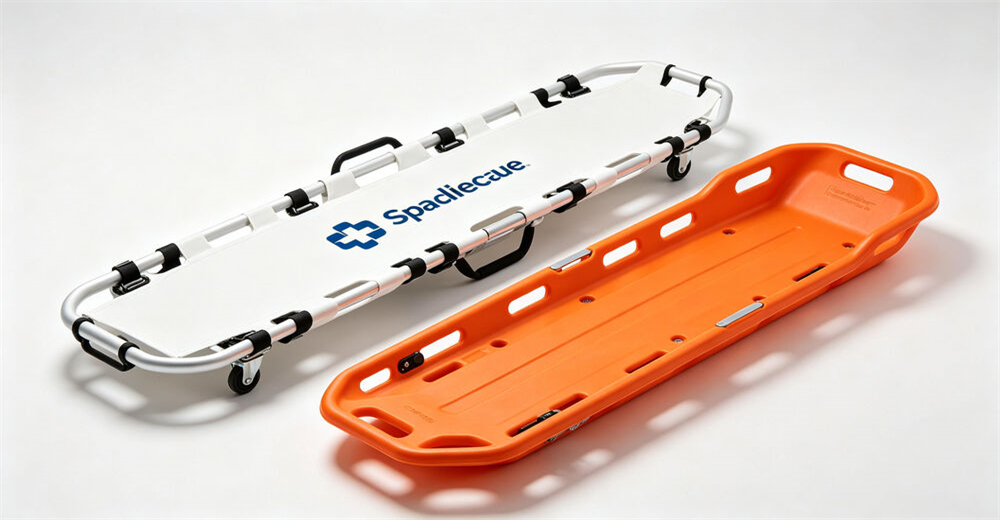
We supply wholesale rescue stretcher units with private labeling options:
Minimum order quantities for custom branding are lower than you might expect for repeat orders. If you are looking to buy rescue stretcher units under your own brand for resale, contact us with your logo artwork and target quantity and we will quote.
Q: What payment terms do you accept?
A: We accept T/T payment (30% deposit, 70% before shipment) for bulk orders, and Alibaba Trade Assurance for small sample orders to protect buyer payment security. When you buy rescue stretcher units for your department, we include free consultation on sizing and configuration.
A: Yes, we provide high-resolution product photos, specification sheets, and test reports to authorized distributors for use on their own websites and catalogs.
Q: How do I choose the right rescue stretcher for my department?
A: We provide free consultation to match your stretcher mix based on your local rescue scenarios: urban flood, wilderness, industrial accident, or EMS transport. Contact us with your requirements for a custom recommendation.
Q: What is the best stretcher for confined space rescue?
A: Roll sked stretchers are the best choice for confined spaces, stairwells, and collapsed buildings — they are flexible, lightweight, and can slide through tight gaps that rigid stretchers cannot.
Q: Do you provide sample orders before bulk purchase?
A: Yes, we provide sample units for quality testing, with sample shipping costs covered by the buyer, and sample fees refundable against bulk orders over 100 pieces. When you buy rescue stretcher units for your department, we include free consultation on sizing and configuration.
Q: How long has your company been making rescue stretchers?
A: We have over 20 years of experience manufacturing and supplying emergency rescue equipment, working. with clients in over 50 countries across North America, Europe, Southeast Asia, and the Middle East.
Q: What accessories are included with the rescue stretchers?
A: All stretchers come with securing straps; we also sell matching head immobilizers, replacement straps, and pump accessories for vacuum stretchers separately.
Q: Are your rescue stretchers suitable for ice rescue?
A: Our roll sked and spinal board stretchers have smooth, non-slip surfaces suitable for ice and frozen surface rescue, with secure strap points to prevent patient sliding.
Q: How do vacuum stretchers work?
A: You lay the patient on the stretcher, then use the manual pump to remove air from the sealed mattress. — the internal bead core locks into a rigid shape that conforms perfectly to the patient's body for safe transport.
Q: Can I order mixed types of rescue stretchers in one container?
A: Yes, we support mixed container orders, so you can combine different stretcher types to match your market demand without ordering large quantities of a single model.
Q: What packaging do you use for bulk shipping?
A: Each stretcher is packed in an individual PE bag, then loaded into export cartons, with 10 stretchers per pallet for ocean shipping, suitable for LCL and FCL orders.
Q: Do your rescue stretchers float in water?
A: Our floating spinal boards, inflatable rescue stretchers, and roll sked stretchers are all buoyant and designed to support patients in flood water without sinking.
Q: How compact is a roll sked stretcher when folded?
A: The roll sked folds down to a 25cm diameter cylinder weighing only 8kg, which fits inside rescue backpacks and narrow rescue boat compartments. As core marine rescue equipment, these stretchers work reliably in both freshwater and saltwater conditions.
Q: What is the difference between a scoop stretcher and a spinal board?
A: A scoop stretcher splits in half to slide under a patient without lifting them, ideal for in-place spinal immobilization, while. a spinal board is a flat rigid board used to float patients in water and carry them out of flood zones.
Q: Can I customize the color and logo on the rescue stretchers?
A: Yes, we support custom logo printing and custom color options for orders over 50 pieces. Common custom colors include fire red, rescue orange, and high-visibility yellow.
Q: What is the minimum order quantity for rescue stretchers?
A: MOQ starts at 5 pieces per model for mixed container orders, ideal for small distributors or agencies testing product lines.
Q: How long is the lead time for bulk rescue stretcher orders?
A: Standard orders take 15-25 days after deposit, depending on quantity. Custom OEM branding (logo printing, color customization) adds 3-5 extra days.
Q: What certifications do your rescue stretchers have?
A: Our rescue stretchers meet CE and EN 1865 emergency transport standard requirements, and we can provide test reports for bulk orders. As a long-term rescue stretcher wholesale supplier, we support both one-time bulk orders and recurring scheduled replenishment.
Q: How do I clean and maintain a vacuum rescue stretcher?
A: After use, wipe the PVC surface with mild soap and water, fully dry before storage, and avoid prolonged direct sunlight which can degrade the material. We provide maintenance instructions with every order.
Q: Do you supply rescue stretchers to distributors and emergency agencies?
A: Yes, we have 20+ years of experience supplying wholesale rescue stretchers to distributors, fire departments, EMS agencies,. and disaster preparedness organizations worldwide, with MOQs as low as 5 pieces per model.
Q: How much weight can a rescue stretcher hold?
A: Most of our rescue stretchers support up to 150kg, and heavy-duty basket stretchers can hold up to 250kg for larger patients or equipment.
Q: What type of rescue stretcher is best for flood water rescue?
A: For flood rescue, we recommend a combination of floating spinal boards for fast water extractions, roll sked stretchers for narrow spaces, and vacuum stretchers for patient immobilization. This three-piece set covers 90% of water rescue scenarios.
If you are outfitting a station, restocking a warehouse, or bidding on a government tender, send us your list. Tell us the stretcher types you need, the quantity, and your destination port. We will come back with a quote within one business day.
We supply bulk rescue equipment to teams and distributors in 40+ countries. Whether you need a single sample or a full container, we can help. As a long-term rescue stretcher wholesale supplier, we support both one-time bulk orders and recurring scheduled replenishment.
Дружні посилання :
Авторське право © Custom Disaster - Relief Bedding: Tents, Sleeping Bags, Blankets Всі права захищені
професійна команда для обслуговування !